The Pressing Need for Public Health Investment

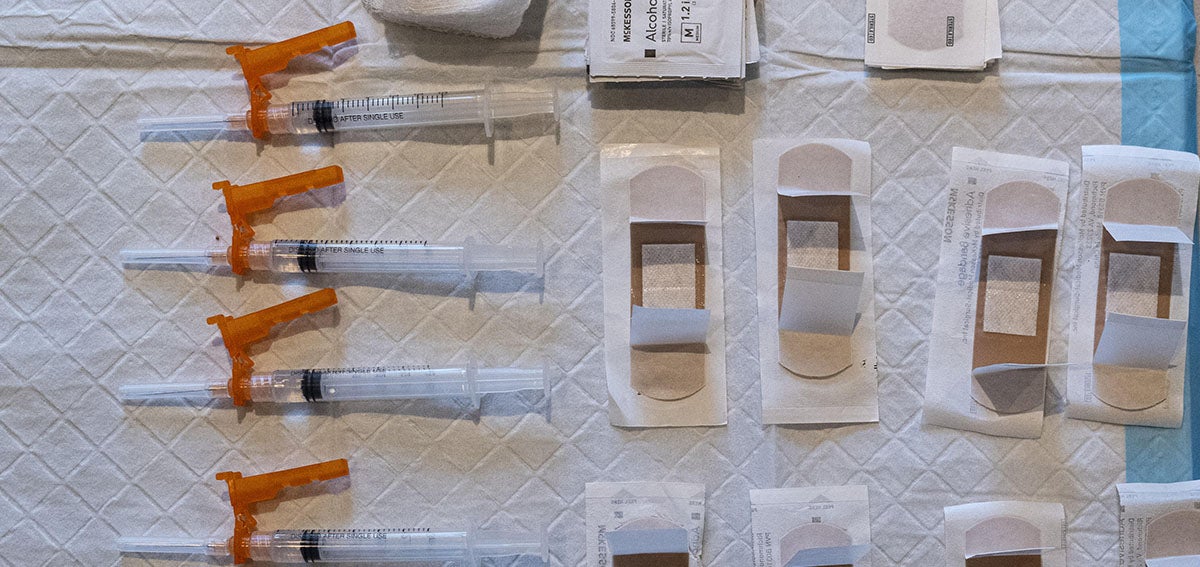
Syringes with prepared doses of the Johnson & Johnson Janssen Covid-19 vaccine and bandages

The COVID-19 pandemic revealed the need for substantial investment in public health. Journalist Anna Maria Barry-Jester, in an investigation published in California Healthline and the Los Angeles Times last week, reported that the need is pressing and that the time is ripe to formulate solutions.

“As we’ve continued to make progress in bringing the COVID-19 emergency under control, many California leaders are turning their attention to the future,” Barry-Jester wrote.

This year’s state budget set aside $3 million for an assessment of California’s public health infrastructure. “Public health leaders believe it will show that staffing and training are major issues,” Barry-Jester reported.

Starting in July 2022, annual state budgets will include $300 million to be spent to improve public health infrastructure.

The pandemic highlighted two significant public health needs in California. One is basic investment in public health infrastructure, as highlighted by Barry-Jester. The other is to address housing, diet, livable wages, and access to quality health care as part of an overarching public health strategy — a necessity highlighted by the stark racial, ethnic, and economic disparities among those who contracted and died from COVID-19.

Many Reasons for Staff Attrition

Before the pandemic, the state’s public health infrastructure already required shoring up. The COVID-19 crisis hammered the already underfunded and understaffed county and state public health systems.

In California, public health workers are leaving their jobs in droves. Counties are “losing experienced staffers to retirement, exhaustion, partisan politics, and higher-paying jobs,” Barry-Jester reported.

The exodus from public health predated this surge of resignations. Since the early days of the pandemic, experienced California public health leaders have been leaving the field, including 17 county public health officers and 27 county-level directors or assistant directors of public health. Both the director and the deputy director of the state’s department of public health resigned during the pandemic.

“Public health nurses, microbiologists, epidemiologists, health officers, and other staff members who fend off infectious diseases like tuberculosis and HIV, inspect restaurants, and work to keep communities healthy are abandoning the field,” Barry-Jester wrote. “The collective expertise lost with those departures is hard to overstate.”

Public health laboratories illustrate how much we rely on public health infrastructure for our everyday safety. The labs are largely invisible to the public but touch every aspect of daily life. “Public health labs sample shellfish to make sure it is safe for eating. They monitor drinking water and develop tests for emerging health threats such as antibiotic-resistant viruses. They also test for serious diseases, such as measles and COVID-19. And they typically do it at a fraction of the cost of commercial labs — and faster.”

Yet labs across the state are unable to hire and retain staff, and they are in danger of closing. “The biggest threat to [public health labs] right now is not the next emerging pathogen,” said Donna Ferguson, director of the public health lab in Monterey County, “but labs closing due to lack of staffing.”

Addressing Social Needs as Public Health Strategy

The pandemic highlighted the effects of income inequality and racial disparities on health in California. Data from the California Department of Public Health highlight the stark disparities in COVID-19 outcomes. The COVID-19 death rate for Latinx people is 19% higher than the statewide death rate, and the death rate for Black people is 16% higher. The case rate for Pacific Islanders is 45% higher than the statewide rate, while the rate of Pacific Islanders earning less than $40,000 annually is 33% higher than average.

Michael Goran, MD, professor of pediatric medicine at the University of Southern California, explained the connections among long-term health, social factors, and COVID-19 infection among Latinx people.

“There is an 80% higher rate of diabetes among Hispanics compared to non-Hispanic whites. We think early life nutrition is very important but also the environment where people live, which can include a combination of factors like poor access to healthy food, poor access to resources, air pollution, even chemical contaminants in the environment we found contribute to this disparity,” he told Los Angeles Times reporter Alejandra Reyes-Velarde.

These chronic diseases then put Latinx people at higher risk for worse COVID outcomes. “One of the most common recurring risk factors, not so much for rates of infection but the severity of the infection, is blood-glucose levels,” he said. “Individuals with higher blood-glucose levels seem to have a more severe response to COVID-19 infection, and of course, higher blood glucose is what contributes to diabetes.”

Health Affairs study from the early days of the pandemic, which drew on data from California’s Sutter hospitals, noted that Black people are similarly at higher risk from the chronic illnesses that make people more susceptible to poor outcomes from COVID infections, including type 2 diabetes and congestive heart failure, as do other populations disproportionately harmed by COVID-19.

“Underfunded and Neglected”

A recent New York Times investigation highlights that California is not alone in dealing with a public health system pushed to the edge by the pandemic.

“Already underfunded and neglected even before the pandemic, public health has been further undermined in ways that could resound for decades to come,” wrote journalists Mike Baker and Danielle Ivory. The Times investigation of hundreds of health departments in all 50 states revealed that “local public health across the country is less equipped to confront a pandemic now than it was at the beginning of 2020.”

Threats, harassment, and anger directed at public health officials and workers drove many out of the field since the beginning of the pandemic and was identified as an ongoing problem by Baker and Ivory. “We have learned all the wrong lessons from the pandemic,” Adriane Casalotti told them. Casalotti is the chief of public and government affairs for the National Association of County and City Health Officials, an organization representing the nearly 3,000 local health departments across the nation. “We are attacking and removing authority from the people who are trying to protect us.”

Officials interviewed by Baker and Ivory noted that while additional funds are crucial to rebuilding public health departments, they aren’t sufficient to address the problems that have long weighed down the system or those that emerged during the pandemic.

Melissa Lyon, public health director for Erie County, Pennsylvania, put it this way: “If a ship is sinking, throwing treasure chests of gold at the ship is not going to help it float.”
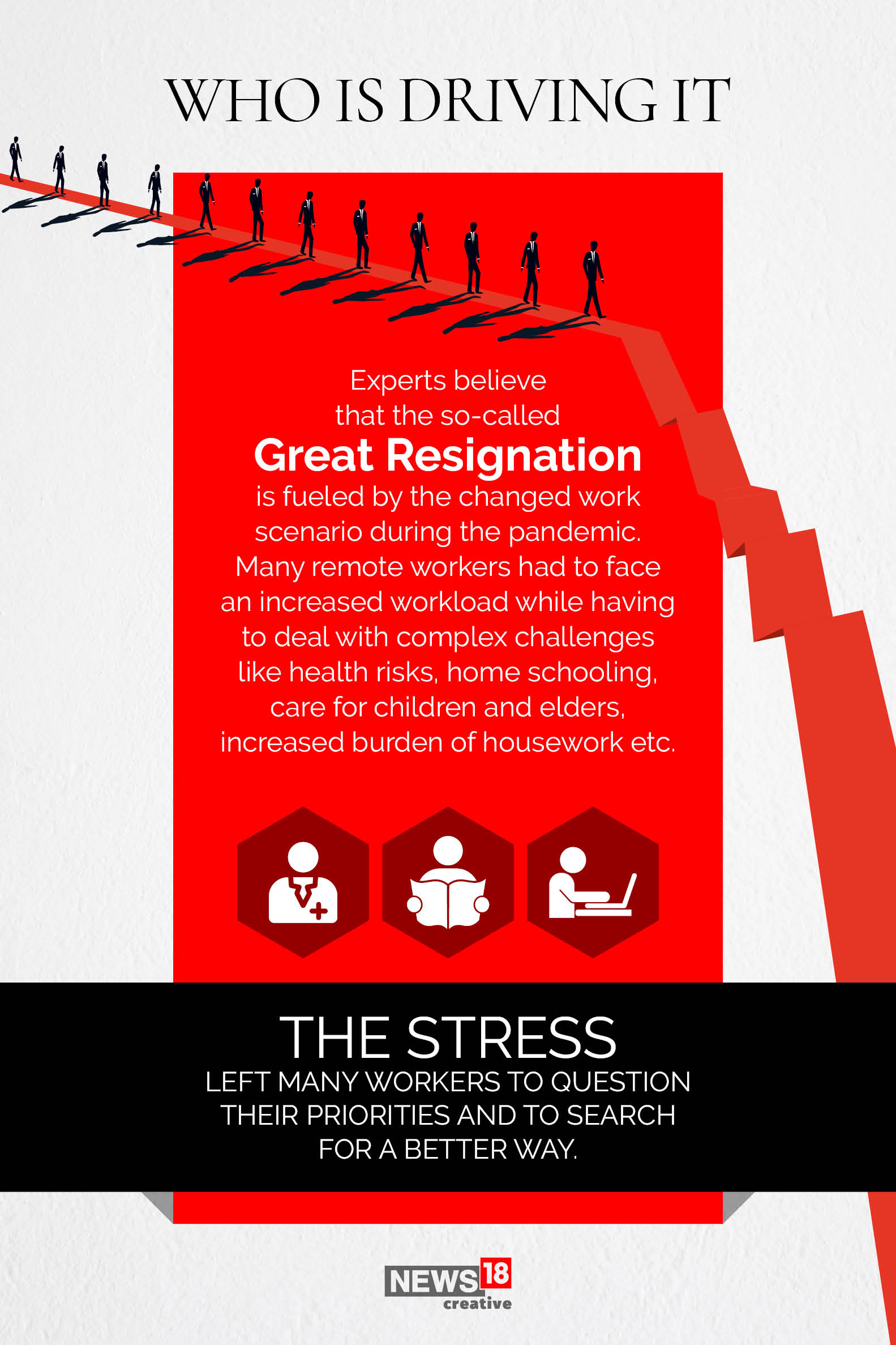
The Great Resignation has burdened those left behind 

Forbes India - Jobs: What Is Fuelling The Great Resignation In America?

The workers who have stayed on at their jobs amid the Great Resignation are struggling to fill the gaps left by former colleagues, CNBC reported Nov. 2. 

The effects of the Great Resignation continue to be felt by companies after a record high of 4.3 million workers quit their jobs in August alone. The workers who remained in their roles, though, are struggling with their new increased workload.

A report by the Society for Human Resource Management that surveyed 1,150 employed Americans in July as well as 220 executives illuminated some of the challenges of the workers who stayed. 

It found that 52 percent of workers who stayed with their companies have taken on more responsibilities, with 30 percent of remaining employees stating they struggle to complete necessary tasks. A majority of workers are questioning whether their pay is high enough, and 27 percent feel less loyalty to their company. 

This worker dissatisfaction opens up a vicious cycle, Johnny Taylor Jr., president and CEO of the Society for Human Resource Management, told CNBC.

“The employees who remain now say, ‘I’m working too hard, I don’t have balance in my life, etc.’ And so then they want to leave and thus a vicious cycle continues” Mr. Taylor told CNBC

Thus, it’s more important now than ever for employers to exercise empathy and listen to what their employees are experiencing in the wake of workplace shifts. 

“Invest in them today,” Alex Durand, a career transition and leadership coach, told CNBC. “Show them you care before they tell you they are leaving.”

Parents Still Have a Thanksgiving Problem

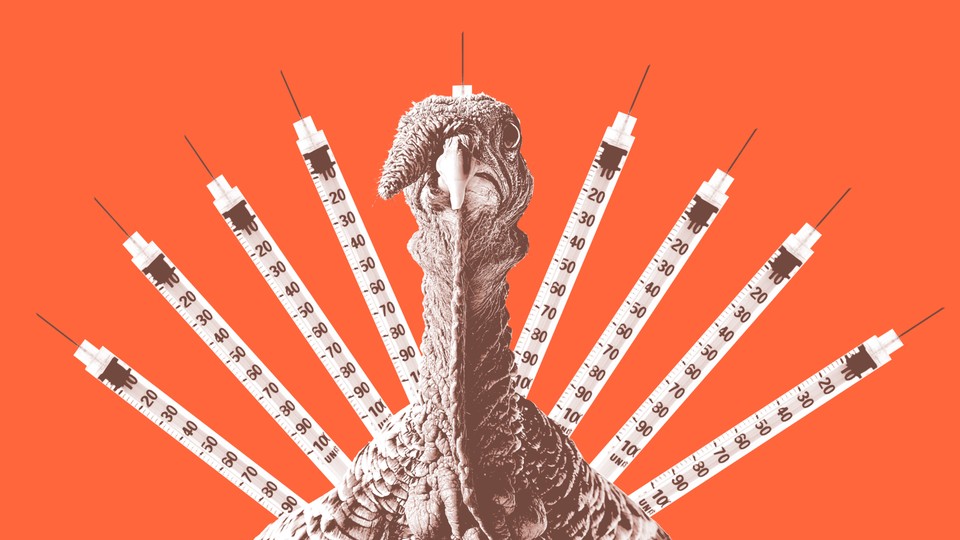
a turkey with vaccine syringes as tail feathers

A first COVID shot will give kids some protection, but none of them will be fully vaccinated until the beginning of December.

For many, many months now, 7-year-old Alain Bell has been keeping a very ambitious list of the things he wants to do after he gets his COVID-19 shots: travel (to Disneyworld or Australia, ideally); play more competitive basketball; go to “any restaurants that have french fries, which are my favorite food,” he told me over the phone.

These are very good kid goals, and they are, at last, in sight. On Tuesday evening, about as early as anyone in the general public could, Alain nabbed his first dose of Pfizer’s newly cleared pediatric COVID-19 vaccine. The needle delivered “a little poke,” he said, but also a huge injection of excitement and relief. Since his father, a critical-care physician, was vaccinated last December (the first time I interviewed Alain), “I’ve been impatient,” Alain said. “I really wanted to get mine.” Now he is finally on his way to joining the adults. When he heard on Tuesday that his shot was imminent, he let out a scream of joy, at “a pitch I have never heard him use before,” his mother, Kristen, told me.

There’s an air of cheer among the grown-ups as well. “It’s cause for celebration,” says Angie Kell, who lives in Utah with her spouse and their soon-to-be-vaccinated 6-year-old son, Beck. Their family, like many others, has been reining in their behavior for months to accommodate their still-vulnerable kid, unable to enjoy the full docket of post-inoculation liberties that so many have. Once Beck is vaccinated, though, they can leave mixed-immunity limbo: “We might have an opportunity to live our lives,” Kell told me.

The past year has been trying for young children, a massive test of patience—not always a kid’s strongest skill. And there’s yet another immediate hurdle to clear: the plodding accumulation of immunological defense. Alain has another 15 days to go until his second dose; after that, it’ll be two more weeks before he reaches a truly excellent level of protection. Only then, on December 7, will he count as fully vaccinated by CDC standards and be able to start adopting the behavioral changes the agency has green-lit. In the intervening weeks, he and the many other 5-to-11-year-olds in his position will remain in a holding pattern. Their wait isn’t over yet.

The timing of this semi-immune stretch might feel particularly frustrating, especially with the winter holidays approaching: At this point, essentially no young kids are slated to be fully vaccinated by Thanksgiving or Hanukkah, except the ones who were enrolled in clinical trials. One shot can offer a level of protection, but experts advise waiting to change behavior for a reason—the extra safeguards that set in about two weeks after the second shot really are that much better, and absolutely worth sitting tight for.

“It takes time for immune cells to get into a position where they’re ready to pounce,” Gigi Gronvall, a senior scholar at the Johns Hopkins Center for Health Security, told me. COVID-19 vaccines teach immune cells to thwart the coronavirus, a process that, like most good boot camps, takes many days to unfold. The second shot is essential to clinch the lesson in the body’s memory, encouraging cells to take the threat more seriously for longer. Immune cells also improve upon themselves over time—the more, the better in these early stages. Gronvall’s own 11-year-old son is also about to get his first shot, and she doesn’t want to risk stumbling so close to the finish line. “I can’t know exactly what his immune system is going to do” after the first dose alone, she said.

Evidence from Pfizer’s original clinical trial, conducted only in adults, hinted that a first, decent defensive bump takes hold after the first shot. Kit Longley, Pfizer’s senior manager of science media relations, pointed to those data when I asked how kids at various points along the vaccination timeline should be approaching behavioral change. “Protection in the vaccinated cohort begins to separate from the placebo arm as early as 12 to 14 days after the first dose,” he told me.

The adult clinical-trial data were collected last year, though, long before the rise of the Delta variant. A more recent study, conducted in the United Kingdom, showed that one dose of Pfizer reduced the risk of symptomatic COVID-19 by only 35.6 percent when the cause was Delta, and by only 47.5 percent with Alpha. (And remember that those numbers apply best on a population scale—not for a single, individual child.) After adding a second dose, though, effectiveness rocketed up to about 90 or 95 percent against either variant. “You really need two doses for adequate, good protection,” Samuel Dominguez, a pediatric-infectious-disease specialist at Children’s Hospital Colorado, told me.

Immunity is so far looking strong in young kids: In a recent trial of thousands of children ages 5 to 11, Pfizer’s vaccine was more than 90 percent effective at blocking symptomatic cases of COVID-19, including ones caused by Delta. Longley said Pfizer expects that the timing of protection will be similar between children and adults—a first dose should lower everyone’s risk to some degree. But the company’s pediatric trial picked up only a few COVID-19 casesnone of them occurred until about three weeks after the first dose was given, or later. So it’s hard to say anything definitive about when “enough” immunity really kicks in for kids.

Some parents are counting on a level of early protection from one shot, including my cousin Joanne Sy, whose 8-year-old son, Jonah, received his first injection on Friday. “He will have good immunity after one dose,” she told me, hopefully enough to guard him on a trip they’re taking to New York for Thanksgiving two weeks from now. “We’re still going to be cautious,” Sy told me: They’ll be watching the Macy’s Thanksgiving Day Parade from a hotel room rather than the streets, and wearing masks, at least on the plane. “But we just need to move forward.”

The calculus is playing out differently for Christy Robinson of Arlington, Virginia, who will again be “hunkering down” with her husband and two daughters, June and Iris, 7 and 5, respectively, this Thanksgiving. The kids got their first Pfizer shot on Saturday, setting their household up for full, full vaccination by mid-December, just in time to hold an indoor gathering with their aunts, uncles, and cousins for Christmas. (Some quick arithmetic: To be fully vaccinated by December 25, a kid would need their first dose by November 20.) June’s also eager to “see my friends inside, because it’s cold outside,” she told me—plus go to movie theaters, and Build-A-Bear, and a trampoline park, and IHOP, and the nail salon.

By the end of this conversation, Robinson looked amused and maybe a little regretful that my question had prompted such an extravagant list. As their mother, she’s especially excited for the possibility of no longer having to quarantine her daughters after viral exposures at school. Heftier decisions are ahead too. She and her husband are still weighing whether to bring their daughters into closer, more frequent indoor contact with their grandparents, who are vaccinated but could still get seriously sick if someone ferries the virus into their midst.

And that risk—of transmitting the virus—is worth keeping in mind, with so much SARS-CoV-2 “still circulating around,” cautions Tina Tan, a pediatrician and infectious-disease specialist at Northwestern University. Immunized people are at much lower risk of picking up the virus and passing it on. There still aren’t enough of them, though, to reliably tamp down spread; uptake of shots among young kids, too, is expected to be sluggish in the months to come. Even fully vaccinated families won’t be totally in the clear while our collective defenses remain weak.

That doesn’t mean Thanksgiving has to be a bust—or even a repeat of 2020, before the vaccines rolled out. The Bells will be cautiously gathering with a few loved ones; all the adults in attendance will be immunized and everyone will get tested beforehand. “Then they can come inside the house, mask off,” Taison Bell, Alain’s father, told me. None of those measures is completely reliable on its own; together, though, they’ll hopefully keep the virus out.

The road ahead might feel a little bumpy for Alain, who’s celebrating his 8th birthday at the end of November, a few days after his second shot. (He’s getting the gift of immunity this year, his father joked.) The Bells will do something special “around when he hits full vaccination,” Kristen said, “with something Alain hasn’t gotten to do in the last two years.” But Alain, who has asthma, which can make COVID-19 worse, knows that his own injections won’t wipe the slate clean for him, or those around him. Some people in his neighborhood have caught the virus even after getting vaccinated, and he understands that he could too.

Alain will keep masking, and treading carefully at school, and even a bit at home. His 3-year-old sister, Ruby, hasn’t yet been able to get a shot. (I asked her how she felt about Alain’s vaccine; she responded, almost imperceptibly, “Jealous.”) Until another regulatory green light comes, she will still be waiting, which means that her family will be too.

U.S. economy adds 531,000 jobs in huge hiring rebound

U.S. economy adds 531,000 jobs in huge hiring rebound

The job market added a stunning 531,000 jobs last month. The unemployment rate ticked down to 4.6% — a new pandemic-era low.

Why it matters: America’s job market recovery has been on track all along.

Between the lines: Revisions to prior months are often overlooked. Not this month: Upgrades to both August and September were so enormous — fully 366,000 jobs higher than originally reported — that they have definitively reversed the narrative that there was a Delta-induced hiring slump in late summer.

By the numbers: America has now recovered 80% of the jobs lost at the depth of the recession in 2020.

The big picture: Leisure and hospitality added 164,000 jobs last month — but jobs growth was widespread. The disappointment — again — came in public sector education. State and local education shed a combined 65,000 jobs.

  • Wages are still rising: Average hourly earnings rose another 11 cents an hour in October, to $30.96. That’s enough to keep up with inflation.

What to watch: Millions of workers remain on the sidelines — and there wasn’t much improvement in pulling them back into the workforce.

The bottom line: “The Fall hiccup is now at best a Fall deep breath,” tweeted University of Michigan economist Justin Wolfers.

Britain authorizes Merck’s molnupiravir, the world’s first approval of oral covid-19 treatment pill

Regulators in Britain granted approval to the experimental drug molnupiravir from U.S. pharmaceutical giant Merck on Thursday, marking the first authorization from a public health body for an oral antiviral treatment for covid-19 in adults.

Experts have said that if widely authorized, the medicine could have huge potential to help fight the coronavirus pandemic: Pills are easier to take, manufacture and store, making them particularly useful in lower- to middle-income countries with weaker infrastructure and limited vaccine supplies.

“We will continue to move with both rigor and urgency to bring molnupiravir to patients around the world as quickly as possible,”Merck President Robert M. Davis said in a statement.

The company, which added that it would submit applications to other regulatory agencies, has applied to the U.S. Food and Drug Administration for emergency use authorization, while the European Medicines Agency has launched a rolling review of the drug.

“Today is a historic day for our country,” British Health Secretary Sajid Javid said in Thursday’s announcement. “This will be a game changer for the most vulnerable … who will soon be able to receive the ground-breaking treatment.”

In a global clinical trial, the pill reduced hospitalizations and deaths by nearly half among higher-risk adult coronavirus patients diagnosed with mild to moderate illness, according to Merck, which developed the drug with Ridgeback Biotherapeutics after it was discovered at Emory University. The first dose given to a volunteer in the trial was in the United Kingdom.

The U.K. medicines regulator approved the use of the treatment in people who are above 60 years old or have at least one other factor that puts them at risk of covid-19 developing into severe illness, such as obesity and heart disease. The agency found it “safe and effective” at curbing the risk after “a rigorous review.”

Britain became known during the pandemic for its speed in authorizing vaccines. It was the first country in the world to approve a coronavirus vaccine tested in a large clinical trial when it granted emergency-use authorization to the Pfizer-BioNTech shot last December.

The United States has made an advance purchase of 1.7 million courses of molnupiravir at a cost of about $1.2 billion, or roughly $700 per treatment course. Other countries have also reached agreements with Merck to buy the pills, including Australia, Singapore and South Korea.

The U.S. drugmakersaid it expects to produce 10 million courses of the treatment by the end of this year, along with at least 20 million in 2022, and that it plans to adopt a “tiered pricing approach” taking into account each country’s ability to pay.

The firm has also agreed to share its license for the pill with several Indian manufacturers and with a U.N.-backed nonprofit organization to allow production around the world and help boost access to more than 100 low- and middle-income countries.

The move stood out in a pandemic that has seen pharmaceutical companies lobbying to keep rights to vaccines. Some advocacy organizations, however, have criticized Merck for leaving out upper-middle-income countries hit hard by the pandemic.

Suerie Moon, co-director of the Global Health Center in Geneva, described the first approval of molnupiravir as “a big step forward.”

“I would say it’s very significant in terms of giving patients and the public a large confidence that this treatment can be widely used,” she said.

The drug — which received a type of conditional market authorization for products that fulfill an unmet medical need — will go by the name Lagevrio in Britain. It works by introducing errors that garble the genetic code of the virus and prevent it from making copies of itself. The window in which it can be administered and still work may be narrow, though, and the British regulator recommended taking it “as soon as possible” after a positive coronavirus test and within five days of symptoms onset.

The U.K. health secretary, Javid, called it “an excellent addition to our armory,” while urging people to keep getting their covid-19 shots. Doctors maintain the vaccines remain the principal tool against the coronavirus, as they seek to help prevent people from catching it rather than treating the disease after infection.

The pill is notably easy to use compared to monoclonal antibodies, a costly treatment that is infused or injected. Virologists have said they are hopeful that as well as limiting the risk of developing severe illness, the treatment could help reduce transmission of the virus too.

The vaccines have kept older Americans out of the hospital

https://www.axios.com/medicare-covid-hospitalizations-vaccines-0a43389b-994b-4180-b300-a328ef9da2c8.html

The vaccines have kept older Americans out of the hospital

The number of COVID-19 hospitalizations among older Americans dropped significantly since the vaccine rollout at the start of the year, new federal data show.

Why it matters: The vaccines have worked extremely well for one of the most vulnerable demographics. Roughly 97% of people 65 and older have at least one vaccine dose, and more than 85% of that age group is fully vaccinated, according to the CDC.

Yes, but: Certain portions of the Medicare population continue to be more susceptible to severe COVID-19 and hospitalization than others.

  • People who are covered by both Medicare and Medicaid — the poorest demographic, who often are in nursing homes — are 2.5 times more likely to be hospitalized, according to federal data.
  • Medicare enrollees who have kidney failure and compromised immune systems also are significantly more likely to be hospitalized from COVID-19 than old or disabled Medicare enrollees.

The future of hospitals will be outside of hospitals

https://www.axios.com/the-future-of-hospitals-will-be-outside-of-hospitals-b3074182-a3cb-466e-89cb-66d2a0a27a72.html

Illustration of a medical red cross with beams of light cast from one side

Hospitals in the future will look far more tech-enabled and consumer-focused — when patients are actually even getting care in a hospital building itself.

Why it matters: Hospitals were already pushing more care outside their four walls before the pandemic. COVID accelerated that shift, forcing hospitals to reimagine what’s possible to deliver in patients’ homes, experts say.

The big picture: One way to picture what hospitals of the future will look like is to look at two brand new hospital buildings opened this fall by competing Pennsylvania health systems.

  • The buildings, by Penn Medicine and Highmark Health both offer hotel-like amenities such as better food, streaming services, and better-positioned outlets for cell phone charging. They’ve also made medical records more accessible to patients, executives say.
  • But they were also designed with the belief that, in the future, only the most complex care might be delivered in them.

State of play: Every medical room in Penn Medicine’s new $1.6 billion health pavilion can be turned into an ICU-capable room when needed.

  • It added 7% in costs to the project, but made sense considering the ICU demands of the pandemic and “not knowing what the future will be,” CEO Kevin Mahoney told Axios.
  • The hospital also offers patients bedside tablets that allow patients to control the light and temperature of the room, and to activate frosted privacy glass on the doors of their rooms.
  • The benefits are two-fold: patients really like it and it can help free up staff to focus on more critical tasks, Mahoney said.

“The pandemic was an amplifier for natural trends that were already starting to develop,” Highmark CEO David Holmberg told Axios. “The complexity of medical procedures [in hospitals] is going to be significantly higher.”

The bottom line: Tech advances will change the entire hospital experience no matter where the care is delivered.

  • Wearables will provide digital biomarkers to allow better patient monitoring from the home. “Smart” infrastructure will help patients find parking and navigate massive hospital campuses when they need to go into the hospital.
  • And 5G will allow doctors to pull up massive amounts of personalized data on a wireless screen in seconds, Hon Pak, chief medical officer at Samsung Electronics told Axios.
  • “The perspective we want to bring to the smart hospital is it’s not just about caring for the condition or the disease, but it’s about caring for the whole,” Pak said.

The in-person interactions CEOs prioritize in the workplace

The Pandemic Conversations That Leaders Need to Have Now - HBS Working  Knowledge

A lot of communication in the workplace is conducted electronically. However, it is essential for hospital and health system leaders to have face-to-face conversations with employees in some situations.

Becker’s asked healthcare executives to share the interactions they prioritize when they’re in person at their organizations. Many expressed their preference for the deeper connections in-person interactions allow, citing inspiration and team building as reasons to facilitate face-to-face communication. Below are their responses:

Russell F. Cox. President and CEO of Norton Healthcare (Louisville, Ky.): Healthcare, by its very nature, requires in-person interactions.

With the onset of the COVID-19 pandemic, we made a quick and successful shift to virtual visits for the safety of our patients and providers. This enabled patients with a variety of time and transportation constraints to receive convenient care from a trusted provider. However, telemedicine will never completely replace in-person visits, and the opportunity for our patients and community to interact in-person with our patient care providers is very important to me, and to our team.

And, although the pandemic created the need for virtual meetings, I have always prioritized in-person interactions and meetings with all team members. Whether that be rounding in our  hospitals and facilities, holding in-person meetings, celebrating employee accomplishments or milestones, or dropping by one of our community vaccine or testing centers — web meetings will never replace what can be accomplished face to face. It became even more important to interact in person with our caregivers and employees during the pandemic. It was important to show my support for their hard work and extraordinary sacrifices during this time. I’m thankful that with the vaccine, more in-person events, with proper safety precautions, are resuming.

Our motto has been and continues to be: Stay safe. Keep the faith.

Jim Dunn, PhD. Executive Vice President and Chief People and Culture Officer of Atrium Health (Charlotte, N.C.): Recognition is part of our organizational DNA, and in-person delivery is an essential component of that — especially as we continue working through the COVID-19 pandemic. One thing our teammates love is the “Surprise Patrol,” which we employ for some of our most special and meaningful awards, such as our annual Pinnacle Award — the highest award given by our organization to those who best exemplify our Culture Commitments: Belong, Work as One, Trust, Innovate and Excellence. Executives, leaders, teammates and loved ones come together to celebrate honorees with balloons, cupcakes, cheers and even a few happy tears. Our honorees are shocked, uplifted and proud to be recognized in-person for their outstanding accomplishments, and our “Surprise Patrol” participants are honored to be a part of such a special moment. Whether we’re celebrating small wins, personal successes, birthdays or prestigious awards, in-person recognition — where and when possible — is a vital part of the teammate experience and culture at Atrium Health.

Robert Gardner. CEO of Banner Ironwood Medical Center (Queen Creek, Ariz.) and Banner Goldfield Medical Center (Apache Junction, Ariz.): Over the past few years in particular, I’ve spent some time reflecting on the differences between motivation and inspiration. More often than not, it seems like leaders don’t know the differences and often confuse the two as being synonymous or interchangeable. Put in overly simplified terms, I see motivation as being the metaphorical carrot or the stick. We can motivate with reward (aka the carrot) and with discipline (aka the stick), and both are used frequently in life. Motivation tends to be more surface level. However, inspiration is something much deeper, more intimate, and therefore much more complex. Inspiration is getting to a point of genuinely desiring to change, do more, be better, etc.

For me, knowing the differences is critical when it comes to prioritizing being in person in the workplace. Virtual meetings, emails, newsletters and other forms of electronic communication can work incredibly well when it comes to items of motivation; and believe me, there are plenty of these items. However, when it comes time to inspire the team, I heavily prioritize these meetings to take place in person. Items that fall into this category will be mission-critical initiatives and overall reminders on living our mission, purpose values, etc. It’s so ironic to me that despite the increasing complexity, regulation, bureaucracy and proverbial red tape that healthcare has become famous for, that an inspirational dose of simplicity has more effect on change than any other bestseller leadership book on how to motivate performance through some sort of complicated multistep process.

Brian Koppy. Chief Financial Officer of Cano Health (Miami): As a rapidly growing primary care provider, we have found that face-to-face interactions at our offices are as essential as they are in our medical centers. Our providers provide the best care when they see patients in person because it builds lifelong bonds that improve patient outcomes. In our offices, our team members feel more connected and integrated into the Cano Health family when we are together, both formally and informally. This, of course, does not mean we do not have a flexible work environment, which we do. It simply means our priority is on the employee benefits and outcomes that come from working in the office.

At the beginning of the pandemic, we moved many corporate employees to remote work and moved about 95 percent of our patient interactions to televisits. That did not last long, however. Within a month or two, our employees were asking to come back to the office. Our medical centers never closed their doors, and our visits rapidly returned to mostly in person. 

It’s the seemingly inconsequential daily interactions that often have the greatest impact on a company’s employees and their connection to the mission, values and culture of the organization. The quick stop-ins to someone’s workstation, the chance hallway encounters, the team lunches — these are so important in developing relationships and, in turn, maximizing efficiency. Employees who know and personally interact with each other work better together.  They discuss ideas, they strategize freely, and they execute on the company’s goals together and more effectively. 

At Cano Health, our high-touch approach to primary care is key to our success. And we believe that daily face-to-face interactions among employees are equally important to create a rewarding experience for our employees, but also expanding Cano Health’s services across the country.

Christopher O’Connor. President and incoming CEO of Yale New Haven (Conn.) Health:We are prioritizing one-on-one meetings and small groups. With our vaccination mandate, we feel it is critical to have that in-person contact and fill that void that video can’t replicate. This is a relationship business, and spending the time to build and nurture those relationships is critical.

Thomas J. Senker. President of MedStar Montgomery Medical Center (Olney, Md.): Before and especially during the pandemic our priority has been the well-being and engagement of our front-line staff and essential personnel. And while in-person activities have been limited, our executive team makes regular rounds visiting each unit, expressing gratitude, providing snacks and refreshments, and sharing important hospital updates directly. We believe these face-to-face interactions are critical opportunities to gain feedback and focus on areas of improvement across different areas of MedStar Montgomery Medical Center’s operations.

Pfizer vaccine 91% effective in kids 5-11, study says

Pfizer says Covid vaccine more than 90% effective in kids

Pfizer’s COVID-19 vaccine is nearly 91 percent effective at preventing symptomatic infections in children between ages 5 and 11, according to a study released by the FDA Oct. 22. 

The study involved 2,268 children given COVID-19 vaccines that are one-third the dosage of the vaccines given to people ages 12 and up. They were given two doses spaced three weeks apart, the same as the adult version of the vaccine. It found that the children developed antibody levels just as strong as older children and adults given the full dosage.

The FDA’s Vaccines and Related Biological Products Advisory Committee is set to meet Oct. 26 to discuss the evidence and vote on whether to recommend FDA authorization for the shots in kids ages 5 to 11. 

The CDC’s vaccine advisory panel is set to meet the first week of November to discuss recommending the shots for the age group. That means shots for kids ages 5 to 11 could be authorized in the first week of November. There are about 28 million children in the age group in the U.S.

The vaccines will come in orange capped vials to make them easily distinguishable from adult doses, according to ABC News.

Find the full study results here

The growing burden of mental health on emergency departments

https://mailchi.mp/9d9ee6d7ceae/the-weekly-gist-october-22-2021?e=d1e747d2d8

The stress, disruption, isolation, and lives lost during the pandemic have exacerbated longstanding challenges in access to mental healthcare. In the graphic above, we highlight how COVID has impacted the state of mental health across generations. 

Younger Americans are faring much worse. This week, the nation’s leading pediatric professional societies declared a national mental health emergency for children and adolescents, and nearly half of “Generation Z” reports that their mental health has worsened during COVID. 

Mental health-related emergency department (ED) visits increased in 2020 across all age groups, with the steepest rise among adolescents. Because of a national shortage of inpatient psychiatric beds, patients with mental health needs are increasingly being “boarded” in the ED—even as nearly two-thirds of EDs lack psychiatric services to adequately manage patients in crisis.

Case in point: research on behavioral health access in Massachusetts shows one in every four ED beds is now occupied by a patient awaiting psychiatric evaluation. ED boarding of patients in mental health crisis not only delays necessary care, but leads to throughput backups in hospitals, and increases caregiver stress and burnout. 

Access to inpatient treatment is most challenged for children and adolescents, as well as “med-psych” patients, who also have significant physical health needs that must be managed. New solutions have emerged during the pandemic: burgeoning telemedicine platforms don’t just increase access to outpatient therapy, they also enable psychiatrists to evaluate emergency patients virtually.

In the long term, a three-part approach is needed—new virtual solutions, expanded inpatient capacity, and greater community resources to address the social needs that often accompany a behavioral health diagnosis.