At UnitedHealth Group’s (UHG’s) 2023 investor conference, Optum Health CEO Amar Desai, MD, revealed that Optum has added nearly 20K physicians in 2023, bringing its total physician count to nearly 90K.
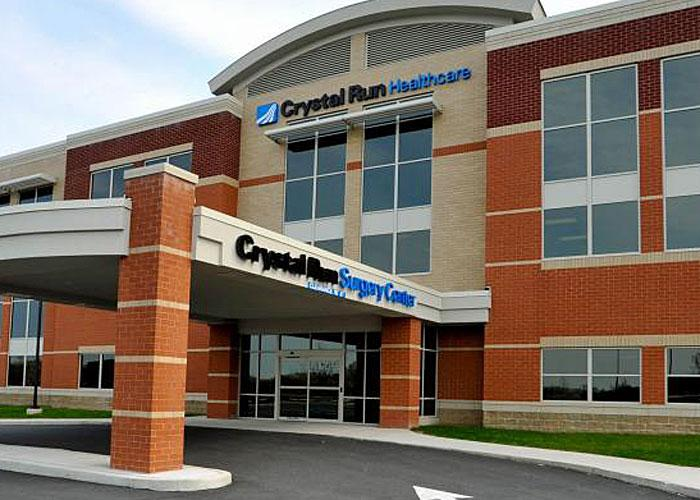
None of these acquisitions were formally disclosed, including this year’s largest known pickup, Crystal Run Healthcare—a Middletown, NY-based group with over 400 doctors—which only became public after an internal email was shared with the press. Optum was already the nation’s largest employer of physicians by far, and its nearly 30 percent growth in 2023 only extends its lead.
The next two largest physician employers, Ascension and HCA Healthcare, manage a combined total of around 100K. Optum also employs or affiliates with an additional 40K advanced practice clinicians.
The Gist: Optum’s physician acquisition binge continues at a stunning pace: it has tripledits physician ranks since 2017, and now controls nearly 10 percent of all physicians in the US. But now that it has amassed a veritable physician army, there are emerging signs that it’s turning attention to right-sizing and rationalizing this massive portfolio.
Recent layoffs at the Everett Clinic and the Polyclinic in greater Seattle suggest an end to Optum’s more hands-off initial approach to integration. While each of Optum’s myriad medical group acquisitions has been too small, relative to total company revenue, to trigger regulatory review, the proposed updates to federal merger reporting requirements could put a damper on its unfettered provider buying spree.
This week we showcase data from a recent American Antitrust Institute study on the growth of private equity (PE)-backed physician practices, and the impact of this growth on market competition and healthcare prices.
From 2012 to 2021, the annual number of practice acquisitions by private equity groups increased six-fold, especially in high-margin specialties. During this same time period, the number of metropolitan areas in which a single PE-backed practice held over 30 percent market share rose to cover over one quarter of the country.
These “hyper-concentrated” markets are especially prevalent in less-regulated states with fast-growing senior populations, like Arizona, Texas, and Florida.
The study also found an association between PE practice acquisitions and higher healthcare prices. In highly concentrated markets, certain specialties, like gastroenterology, were able to raise prices rise by as much as 18 percent.
While new Federal Trade Commission proposals demonstrate the government’s renewed interest in antitrust enforcement, it may be too little, too late to mitigate the impact of specialist concentration in many states.
In late February, Crystal Run Healthcare, a Middletown, NY-based physician group with nearly 400 providers, became part of UHG’s Optum division.
A local paper broke the news after obtaining an email from Crystal Run’s CEO, as neither company issued a press release, though UHG has since confirmed the acquisition. In addition to pandemic-related financial difficulties, Crystal Run recently shuttered its health plan after large losses, and its Medicare accountable care organization failed to earn savings in 2021.
Crystal Run expands Optum’s footprint in the Hudson Valley region north of New York City, following the acquisition of Mount Kisco, NY-based Caremount Medical in 2022. The company’s broader New York metro area footprint includes Connecticut-based ProHEALTH and New Jersey-based Riverside Medical Group, the three of which Optum has since integrated into a single tri-state medical group.
The Gist: Optum continues to secure its place as the country’s largest aggregator of physicians, now employing or aligning with over 70,000 doctors nationwide.
Not only does every new deal by UHG bolster its vertical integration strategy, but they also shine a light on gaps in federal antitrust regulations. UHG must only disclose deals that comprise a “significant” portion of its business, a threshold that excludes physician groups as large as Crystal Run—making it difficult to fully examine transactions that are subscale according to regulations, but may be significant for healthcare delivery in a local market.
Some state governments, including New York, are exploring ways to increase state antitrust scrutiny of provider acquisitions. But inmulti-state markets where only the federal government has the authority for full oversight, UHG’s acquisition strategies are proving difficult to even monitor, much less intervene.
Walgreens’ growing U.S. healthcare segment is continuing to bolster the retail health chain’s financial performance. The business, which includes value-based provider VillageMD, recorded $1.6 billion in sales in the second quarter, an increase of $1.1 billion from last year.
VillageMD sales were up 30%, including a boost from its recent acquisition of medical group Summit Health. Specialty pharmacy Shields Health Solutions grew sales 41%, while at-home care provider CareCentrix’s sales were up 25%.
Thanks in part to a jump in revenue in its healthcare segment, Walgreens’ results beat Wall Street expectations even as profit declined more than 20% amid lower COVID-19 vaccine volumes and test sales, higher salary costs, opioid litigation charges and costs associated with its $3.5 billion investment in its Summit acquisition.
Dive Insight:
Walgreens has been working to expand its business scope beyond pharmacies to more consumer-centric healthcare, and has acquired a number of companies to build out its growing U.S. healthcare division.
In its earnings results for the second quarter ended Feb. 28, the business reported gross profit of $32 million, as income from Shields and CareCentrix was offset by VillageMD expansion costs. VillageMD added 133 clinics compared to the second quarter last year.
“With the closing of VillageMD’s acquisition of Summit Health, [Walgreens] is now one of the largest players in primary care,” CEO Roz Brewer said in the company’s earnings release on Tuesday.
VillageMD also acquired a Connecticut-based medical group in March for an undisclosed amount. That group, called Starling Physicians, operates more than 30 primary care and multi-specialty practices across the state.
Starling “will contribute heavily to revenue and EBITDA growth in the second half of 2023,” said Walgreens CFO James Kehoe on a Tuesday morning call with investors. “Overall, the primary care business and the specialty care business is doing really, really well.”
Despite the recent deals, Walgreens is moving beyond its peak investment period in healthcare, management said on the call. VillageMD, for example, plans to concentrate growth and investments in specific markets where it can be “hyper-relevant” moving forward, according to Walgreens President John Standley.
In the last edition of the Weekly Gist, we illustrated how non-hospital physician employment spiked during the pandemic. Diving deeper into the same report from consulting firm Avalere Health and the nonprofit Physicians Advocacy Institute, the graphic above looks at the specialties that currently have the greatest number of physicians employed by hospitals and corporate entities (which include insurers, private equity, and non-provider umbrella organizations), and those that remain the most independent.
To date, there has been little overlap in the fields most heavily targeted for employment by hospitals and corporate entities. Hospitals have largely employed doctors critical for key service lines, like cancer and cardiology, as well as hospitalists and other doctors central to day-to-day hospital operations.
In contrast, corporate entities have made the greatest strides in specialties with lucrative outpatient procedural business, like nephrology (dialysis) and orthopedics (ambulatory surgery), as well as specialties like allergy-immunology, that can bring profitable pharmaceutical revenue.
Meanwhile, only a few specialties remain majority independent. Historically independent fields like psychiatry and oral surgery saw the number of independent practitioners fall over 25 percent during the pandemic.
While hospitals will remain the dominant physician employer in the near term, corporate employment is growing unabated, as payers and investors, unrestrained by fair market value requirements, can offer top dollar prices to practices.
With recent residency match data showing a 26 percent drop in applications to emergency medicine training programs since 2021, this article in the Washington Post grapples with why the once sought-after profession is now struggling with recruitment.
Some point to high rates of pandemic burnout and the unappealing nature of the work: emergency departments (EDs) are increasingly overcrowded, understaffed, and violent—turning ED docs into “the cops of medicine,” as one ED residency program leader put it. Others suggest that residents are simply following the money elsewhere, discouraged by reports of an impending oversupply of ED physicians in coming years.
The Gist: The days of the television drama ER, which inspired a generation of would-be doctors to pursue emergency medicine, are gone—most medical students graduating today weren’t even born when the show first aired in 1994. The article fails to note the changes in EDs brought on by investor-backed staffing companies, which now staff anywhere from an estimated quarter to half of the nation’s EDs.
They’re accused of cutting costs by hiring fewer ED docs, as well as funding more ED residency spots in an attempt to flood the market and drive down their future labor costs even further. In the wake of COVID, emergency physicians find themselves in EDs largely staffed by advanced practice providers.
While in the near-term hospitals will surely face challenges in staffing these critical roles, shortages may drive momentum to refine and expand technology- and team-based care models.
Radio Advisory’s Rachel Woods sat down with Advisory Board’s Sarah Hostetter and Vidal Seegobin to discuss the good and bad elements of private equity and what leaders can do to make it a valuable partner to their practices.
Private equity (PE) tends to get a bad rap when it comes to health care. Some see it as a disruptive force that prioritizes profits over the patient experience, and that it’s hurting the industry by creating a more consolidated marketplace. Others, however, see it as an opportunity for innovation, growth, and more movement towards value-based care.
Radio Advisory’s Rachel Woods sat down with Advisory Board‘s Sarah Hostetter and Vidal Seegobin to discuss the good and bad elements of PE and what leaders can do to make it be a valuable partner to their practices.
Rachel Woods: Clearly there are a lot of feelings about private equity. I’m frankly not that surprised, because the more we see PE get involved in the health care space, we hear more negative feelings about what that means for health care.
Frankly, this bad guy persona is even seen in mainstream media. I can think of several cable medical dramas that have made private equity, or maybe it’s specific investors, as the literal enemy, right? The enemy of the docs that are the saviors of their hospital or ER or medical practice. Is that the right way we should be thinking about private equity? Are they the bad guy?
Sarah Hostetter: The short answer is no. I think private equity is a scapegoat for a lot of the other problems we’re seeing in the industry. So the influx of money and where it’s going and the influence that that has on health care. I think private equity is a prime example of that.
I also think the horror stories all get lumped together. So we don’t think about who the PE firm is or what is being invested in. We put together physician practices and health systems and SNPs, and we lump every story all together, as opposed to considering those on their individual merits.
Woods: And feeds to this bad guy kind of persona that’s out there.
Hostetter: Yeah. And like you said, the media doesn’t help, right? If the average consumer is watching and seeing different portrayals or lumped portrayals, it’s not helping.
Vidal Seegobin: Private equity, as all actors in our complex ecosystem, is not a monolith, and no one has the monopoly on great decisions in health care, nor do they have a monopoly on the bad decisions in health care. And so if you attribute a bad case to private equity, then you also have to attribute the positive returns done from a private equity investment as well.
Hostetter: Agree with what Vidal’s saying, but bottom line is that every stakeholder is not going to have the same outcomes or ripple effects from a private equity deal. It really depends on the deal itself, the market, and the vantage points that you take.
Woods: I want to actually play out a scenario with the two of you and I want you to talk about the positive and the potentially negative consequences for different sectors or different stakeholders.
So let’s take the newest manifestation that Sarah, you talked to us through. Let’s say that there is a PE packed multi-specialty practice heavily in value-based care. That practice starts to get bigger. They acquire other practices, including maybe even some big practices in a market and they start employing all of the unaffiliated or loosely affiliated practices in the market.
I am guessing that every health system leader listening to this episode is already starting to sweat. What does this mean for the incumbent health system?
Seegobin: So I think one thing that’s going to be pretty clear is that size does confer clear advantages and health care is part and parcel that kind of benefit. What I think is challenging is when we’re entering into a moment where access to capital is challenging for health systems in particular and we’re going to need to scale up investments, health systems could see themselves falling further and further behind as private equity makes smart investments into these practices to both capture and retain volume. And as a consequence of that, reduces the amount of inpatient demand or the demand to their bread and butter services.
Hostetter: And I think it’s really important that you phrase the question, Rae, as health system. Because we so often equate health system and hospital.
But a health system includes lots of hospitals, it includes ambulatory facilities, a range of services. And so I think for systems to equate health system and hospital, it’s really hard when any type of super practice or large backed practice comes into the market.
Whether we are talking about a plan backed practice, a PE backed practice, or just a really large independent group. There are pressures on health systems who think of their job or their primary service as the hospital. And there is a moment where the power dynamics can shift in markets away from the health system, if they aren’t able to pivot their strategy beyond just the hospital.
Woods: Which is exactly why health systems see this scenario as, let’s just say it, threatening. Sarah, then how do the physicians feel? Do they have the opposite feelings as the incumbent health systems?
Hostetter: There’s a huge range. Private equity is incredibly polarizing in the physician practice world, the same way that it is in other parts of the industry. So I think there is a hope from some practices that private equity is a type of investor that is aligned with them.
Physicians who go into private practice historically tend to be more entrepreneurial. They are shareholders in their own practice, so there are some natural synergies between private equity, business minded folks, and these physicians.
Also, even though I go into a small business, it takes a lot to run a small business, so there are potentially welcome synergies and help that you can get from a PE firm. On the flip side of that, there are groups who would never in a million years consider taking a private equity investment and are unwilling to have these conversations.
Woods: There is a tendency, especially in the conversation that we’re having, for folks to think about private equity as being something that primarily impacts the provider space, at least when it comes to health care. But I’m not sure that that’s actually true. So what consequences, good or bad, might the payers feel? Might the life sciences companies feel?
Seegobin: So one common refrain when talking about private equity and their acquisition or partnering with traditional health care businesses like physician practices is that they are immediately focused on cutting costs. So they are going to consolidate all of the purchasing contracts, they are going to make pretty aggressive decisions about real estate, all the types of cost components that run the business.
Now, if you are a kind of life sciences or a diagnostic business for whom you would depend on being an incumbent in those contracting decisions, you’re worried that the private equity is either going to direct you to a lower cost provider, or in many cases, another business that the private equity firm owns as well, right?
They would love to keep synergies within the portfolio of businesses that they’ve acquired and they partner. So if you were relying on incumbent or historical purchasing practices with these physician practices, it can be disrupted, depending on the arrangement.
Hostetter: And then I think there’s a range of potential implications for payers. So you have some payers who themselves are aggregating independent practices, and they’re targeting the same type of practices that the PE firms that are betting on value-based care are targeting. They are targeting primary care groups who are big in Medicare Advantage. So there’s some inherent competition potentially for the physician practice landscape there.
Woods: Well, and I think they’re trying to offer the same thing, right? They’re trying to offer capital. They’re trying to do that with the promise of autonomy. And they’re coming up against a competitive partner that is saying, “I can do both of those things and I can do it better and faster.”
Hostetter: Yeah. And both of them are saying we can do it better and faster than hospitals. That’s the other thing, right?
Woods: Which, that part is probably true.
Hostetter: Yeah. Their goals are aligned and they believe they can get there different ways. And I think autonomy is a big sticking point here for me or a big bellwether for me, because I think whoever can get to value-based care while preserving autonomy is going to win. You have to have some level of standardization to do value-based care well. You can’t just let everyone do whatever they want. You need high quality results for lower cost. That inherently requires standardization. So who can thread the needle of getting that standardization while preserving a degree of autonomy?
It’s fascinating, as we’ve had this call, it was suggested multiple times that payers actually might be the end of the line for some of these PE deals. That there’s a lot of alignment between what payers are trying to do with their aggregation and what PE firms who are investing in primary care do, and hey, payers have a lot of money too. So could we actually see some of these PE deals end with a payer acquisition? Because they’re trying to achieve similar things, just differently.
This week’s contributor is Aditi Sen, the Director of Research and Policy at the Health Care Cost Institute. Her work uses HCCI’s unique data resources to conduct analyses that inform policy to promote a sustainable, accessible and high-value health care system.
High health care prices in the U.S. make it hard for people to access care, difficult for employers to provide insurance, and challenging for policymakers to balance health care spending with other budgetary priorities. That’s why it’s important to understand what drives prices higher and identify policies to keep prices from getting so high.
In a new paper in Health Affairs, Vilsa Curto, Anna Sinaiko and Meredith Rosenthal examined whether hospital and health systems’ acquisition of and contracting with physician practices – two forms of what is often called vertical integration – has led to higher prices for physician services. The researchers combined four sets of data from Massachusetts from 2013-2017 for their analysis.
They found that:
The percent of physicians who joined health systems grew meaningfully: The percent of primary care physicians who remained independent dropped from 42% in 2013 to 31.5% in 2017, and the percent of independent specialists fell from 26% to 17%.
Over this same period, prices for physician services rose. Price increases were especially large – 12% for primary care physicians and 6% for specialists – when physicians joined health systems that had a high share of admissions in their area.
This study stands out for several reasons. First, it shows vertical integration drives up health care prices. Second, the authors highlight actions states can and are considering taking to monitor and curb vertical integration, including antitrust enforcement and enacting laws to promote competition.
Finally, the Massachusetts data allow the public to better appreciate what’s happening across the state. Many earlier studies on health care consolidation have been limited to a subset of insurers, physicians or patients. Massachusetts is a leader when it comes to creating and sharing its data thanks to its all-payer claims database, which pulls together all the health care bills from private insurers and public programs like Medicare and Medicaid in the state. This critical information helps to illuminate patterns of care and prices and connect them to issues like consolidation and competition.Neither the federal government nor most states track how vertical integration mergers influence health care prices.
As these findings demonstrate, acquisitions and other forms of vertical integration impact what people pay for health care services. Given that prices in this sector continue to climb, this paper underscores the need for more state and national data to understand the downstream effects on all of us who use and participate in the U.S. health care system.
We recently shared an updated perspective on the independent physician landscape. Notably absent from this map, but an important player in this space, are entities, like health plans, private equity, and health systems, who partially or wholly fund some independent physician groups.
We intentionally left these funders off the map because they don’t work in a uniform way with all physician groups. The reality is that funders have their handprints all over this map—and just knowing what type of funder you’re working with doesn’t necessarily tell you how they work with physician groups.
Funders work across the physician landscape because they recognize two things:
First, in order to play in today’s physician market, funders need to be flexible in how they work with physicians in order to appeal to the wide variety of groups and build a bigger market presence.
Second, building or buying these physician group archetypes outright is not the only way to work with them. Many funders instead opt to invest in them—either through dollars or resources.
Key funders to watch
There are three key funders we track the closest: private equity, health plans, and health systems. Below are brief overviews of how they commonly work with independent groups and our predictions for where you might see them go next.
Private equity (PE): Consistent approach with still to be proven outcomes
The goal of PE firms is to make money on their investments. To do this, these firms buy shares of practices in order to have partial ownership. In return, physician groups get the capital they need to make investments—investments that in theory drive profits for both the physician shareholders and the PE investors. Unlike other funders, PE is rarely associated with full acquisition.
Two of the places we’ve seen the most private equity investment are in consolidation of specialty practices (usually at the national level) or value-based care investments in primary care practices (across all archetypes).
Private equity is gaining traction as a physician group partner because they often try to preserve some degree of physician autonomy and they’ve learned to nuance their investments and pitches based on the group they’re seeking to work with.
We predict: PE will continue to back the full range of archetypes on this map—investing in both independent groups directly and the national archetypes.
What we’ll be watching:
What will happen to the handful of major PE investments in the independent physician group space that will be reaching their 5-7 year mark
What level of physician autonomy will PE firms continue to preserve as PE gains stronger footholds in the physician landscape
Health plans: The most eager to transform (incrementally)
Health plans are often predominantly associated with a single physician archetype for a given plan. For example, when you think about UnitedHealthcare, you might think of their sister company, OptumCare, and an aggregation strategy. Or, you might think of Blues plans most commonly as service partners.
However, when you dig deeper, the story is much more nuanced. Plans and their parent companies like UnitedHealth Group do often aggregate practices, but they also sell and integrate services via service partner models. And several Blues plans are now building practices from the ground up. To top it off, some plans are even adopting an investment strategy like Anthem with Privia.
Perhaps more than any other funder, health plans often adopt a range of strategies to develop their physician strategy and maintain their existing networks. And even cases where plans aren’t funding entities themselves, they’re thinking of new ways to work with the growing range of physician groups.
We predict: Health plans will move away from a uniform approach to physician practice partnership and towards more multifaceted approaches to appeal to a wide range of providers.
What we’ll be watching:
Will health plans diversify their suite of approaches based on the groups they’re pursuing
Will health plans tailor their value proposition for each partnership approach
Health systems: Playing catch up to evolve
We often tend to think about health systems as aggregators—they buy independent physician groups and add them to their employed medical groups. But we’re seeing two physician market shifts that are causing health systems to move away from a one-size-fits-all approach.
One, the remaining independent groups are growing in size and, two, they are less willing to be acquired. On top of that, as private equity firms and payers continue to diversify their strategies, health systems must adapt to keep pace—or risk being seen as the least attractive partner.
As a result, more health systems are telling us about their new approaches to physician partnerships, like starting an MSO to act as a service partner or convening coalitions between themselves and independent groups.
We predict: Health systems will face increasing pressure to diversify how they are operating with physician groups. Similar to health plans, we expect to see a pivot away from an aggregation-only approach. To learn more, read our take on how health systems and independent groups should think about partnership.
What we’ll be watching:
How quickly will health systems stand up additional partnership approaches
Will health systems in markets where they’re the dominant partner proactively adjust their partnership approach versus wait for the market to shift first
Your checklist to work successfully with today’s physician groups
As you evaluate your partnership strategy, here’s our starter list of questions to ask yourself:
Clarify your partnership goals:
What are my organization’s goals for physician partnership broadly?
What are the archetypes I currently fund or partner with?
Do these archetypes serve my organization’s stated goals?
Identify the right partnership approaches for your organization
What new archetypes should I build or work with to advance my organization’s goals and target new physician groups?
Do I need to build this archetype myself or is it better to fund one that exists?
If funding, should I wholly own or invest in the archetype?
Define your value proposition to physicians
Have I adjusted my value proposition for each of the archetypes I fund or partner with?
Am I clearly articulating my value proposition in a way that speaks to physicians’ needs and wants?
Does my value proposition align with what I’m actually delivering? For example, if I say I’m preserving autonomy, how am I doing that?
How does my value proposition compare and compete with others in the market?
Map out the power dynamics of the archetypes you want to work with
Who has the ultimate decision-making power in the organization? (Hint: Decision-making power gets more diffuse as you move from right to left, national chain to service partner.)
Who are the key stakeholders who influence decision-making?
We’ve historically divided the physician landscape in two parts: hospital-employed or independent. But over time, the “independent” segment has become more complex and inclusive of more types of groups who don’t fit the traditional definition of shareholder-owned and shareholder-governed. Even true independent groups don’t look like they once did, adapting in ways like receiving funding from a range of investors or adding more employed physicians.
So our standard way of thinking—hospital-employed or independent—has become obsolete. It’s time for a more nuanced approach to a diversified market.
When the pace of investment and aggregation in the independent space picked up, we conceptualized the changes primarily in terms of funder: private equity, a health plan, a health system, or another independent group.
That made sense at the time because each type of funder was using similar methods to partner with groups—health systems acquired, private equity invested directly in the independent group, and so forth.
But the market has shifted such that remaining independent groups are both stronger and more committed to independence. So organizations who want to partner with these groups have had to refine and diversify their value propositions—and often times are doing so without all-out acquisition. For more information on themes within these funder organizations, see our companion blog.
We set out to make sense of an ever-changing independent physician landscape in a way that would make it easier to understand for both independent groups and for those who work with them. Instead of dividing the landscape by funder, we assessed organizations based on their level of autonomy vs. integration, their growth model, and their geographic reach.
The map above has five physician practice archetypes and is oriented around two axes: local to national and autonomy to integration. The four archetypes on the top are larger in scale than a traditional independent medical group, often moving regionally and then nationally.
The archetypes are also ordered based on the degree of physician and practice autonomy, with organizations on the right using more of an integrated and standardized model for care delivery and sharing a brand identity.
So far, we’ve tracked two types of trends within this landscape. First, independent groups partner with national archetypes in one of two ways. Either the groups continue to exist as both independent groups and as part of the corporate identity OR they get integrated into the corporate entity. The exception is that we have not seen national chains integrate existing medical groups—though they may in the future.
The other trend we have seen is the evolution of some of these archetypes. We currently see service partners in the market shift to look more like coalitions. We assume we may see coalitions that start to look more like aggregators, and we know many aggregators have ambitions to function more like national chains.
Below you will find a brief description of each archetype as well as a more robust table of key characteristics.
Definitions of physician archetypes
Independent medical group
Independent medical groups are traditional shareholder-owned, shareholder-governed practices. They are governed by a board of physician shareholders, and shareholders derive direct profits from the group.
Service partner
A service partner is an organization whose primary ambition is to make profits through providing a service, such as technology, data, or billing infrastructure, to physician groups. This type of partner may create some sort of alignment between practices since it sells to like-minded practices (e.g., those deep in value-based care, within the same specialty), but that alignment is more of a byproduct than the primary goal.
Coalition
Coalitions are formed from physician practices who want to get benefits of scale without giving up any individual autonomy. They join a national organization to share resources, data, and/or knowledge, but each practice also retains its individual local identity and branding. Common coalition models include IPAs, ACOs, and membership models.
Aggregator
Aggregators are the most traditional approach to getting scale from independent medical groups. They acquire practices and usually employ their physicians. The range of aggregators is very diverse. It includes health plans, health systems, private equity investors, and independent medical groups who have shifted to become aggregators themselves.
National chain
We have historically referred to national chains as disruptors, but that name is inclusive of many organizations who are not physician practices and what qualifies as “disruptive” is ever-changing—so we needed a new name that better suited these groups. National chains are corporate organizations who develop a model (e.g., consumerism, value-based care, virtual health) and bring that model to scale, usually by building new practices or hiring new providers. These are highly integrated organizations, with each new location using the same care delivery model and infrastructure.
As the independent physician landscape evolves, it has implications not only for independent groups but for those who work with them. We hope that a shared terminology helps bridge some of the gaps in understanding this complex landscape.
For those who partner with independent groups, we’d suggest reading our companion blog for our take on the three biggest funders and questions to ask yourself to work successful with today’s physician groups.










 HENRY KOTULA