The Affordable Care Act is Back on Stage: What to Expect

In the last 2 weeks, the Affordable Care Act (ACA) has been inserted itself in Campaign 2024 by Republican aspirants for the White House:

  • On Truth Social November 28, former President Trump promised to replace it with something better: “Getting much better Healthcare than Obamacare for the American people will be a priority of the Trump Administration. It is not a matter of cost; it is a matter of HEALTH. America will have one of the best Healthcare Plans anywhere in the world. Right now, it has one of the WORST! I don’t want to terminate Obamacare, I want to REPLACE IT with MUCH BETTER HEALTHCARE. Obamacare Sucks!!!!” 
  • Then, on NBC’s Meet the Press December 3, Florida Governor Ron DeSantis offered “We need to have a healthcare plan that works,” Obamacare hasn’t worked. We are going to replace and supersede with a better plan….a totally different healthcare plan… big institutions that are causing prices to be high: big pharma, big insurance and big government.”

It’s no surprise. Health costs and affordability rank behind the economy as top issues for Republican voters per the latest Kaiser Tracking Poll. And distaste with the status quo is widespread and bipartisan: per the Keckley Poll (October 2023), 70% of Americans including majorities in both parties and age-cohorts under 65 think “the system is fundamentally flawed and needs major change.” To GOP voters, the ACA is to blame.

Background:

The Affordable Care Act (aka Obamacare aka the Patient Protection and Affordable Care Act) was passed into law March 23, 2013. It is the most sweeping and controversial health industry legislation passed by Congress since Lyndon Johnson’s Medicare and Medicaid Act (1965). Opinions about the law haven’t changed much in almost 14 years: when passed in 2010, 46% were favorable toward the law vs. 40% who were opposed. Today, those favorable has increased to 59% while opposition has stayed at 40% (Kaiser Tracking Poll).

Few elected officials and even fewer voters have actually read the law. It’s understandable: 955 pages, 10 major sections (Titles) and a plethora of administrative actions, executive orders, amendments and legal challenges that have followed. It continues to be under-reported in media and misrepresented in campaign rhetoric by both sides. Campaign 2024 seems likely to be more of the same.

In 2009, I facilitated discussions about health reform between the White House Office of Health Reform and the leading private sector players in the system (the American Medical Association, the American Hospital Association, America’s Health Insurance Plans, AdvaMed, PhRMA, and BIO). The impetus for these deliberations was the Obama administration’s directive that systemic reform was necessary with three-aims:  reduce cost, increase access via insurance coverage and improve the quality of care provided by a private system. In parallel, key Committees in the House and Senate held hearings ultimately resulting in passage of separate House and Senate versions with the Senate’s becoming the substance of the final legislation. Think tanks on the left (I.e. the Center for American Progress et al.) and on the right (i.e. the Heritage Foundation) weighed in with members of Congress and DC influencers as the legislation morphed. And new ‘coalitions, centers and institutes’ formed to advocate for and against certain ACA provisions on behalf of their members while maintaining a degree of anonymity.

So, as the ACA resurfaces in political discourse in coming months, it’s important it be framed objectively. To that end, 3 major considerations are necessary to have a ‘fair and balanced’ view of the ACA:

1-The ACA was intended as a comprehensive health reform legislative platform. It was designed to be implemented between 2010 and 2019 in a private system prompted by new federal and state policies to address cost, access and quality. It allowed states latitude in implementing certain elements (like Medicaid expansion, healthcare marketplaces) but few exceptions in other areas (i.e.individual and employer mandates to purchase insurance, minimum requirements for qualified health plans, et al). The CBO estimated it would add $1.1 trillion to overall healthcare spending over the decade but pay for itself by reducing demand, administrative red-tape and leveraging better data for decision-making. The law included provisions to…

  • To improve quality by modernizing of the workforce, creating an Annual Quality Report obligation by HHS, creating the Patient Centered Outcome Research Institute and expanding the the National Quality Forum, adding requirements that approved preventive care be accessible at no cost, expanding community health centers, increasing residency programs in primary care and general surgery, implementing comparative effectiveness assessments to enable clinical transparency and more.
  • To increase access to health insurance by subsidizing coverage for small businesses and low income individuals (up to 400% of the Federal poverty level), funding 90% of the added costs in states choosing to expand their Medicaid enrollments for households earning up to 138% of the poverty level, extending household coverage so ‘young invincibles’ under 26 years of age could stay on their parent’s insurance plan, requiring insurers to provide “essential benefits” in their offerings, imposing medical loss ratio (MLR) mandates (80% individual, 85% group) and more.
  • To lower costs by creating the CMS Center for Medicare and Medicaid Innovation to construct 5-year demonstration pilots and value-based purchasing programs that shift provider incentives from volume to value, imposing price and quality reporting and transparency requirements and more.

The ACA was ambitious: it was modeled after Romneycare in MA and premised on the presumption that meaningful results could be achieved in a decade. But Romneycare (2006) was about near-universal insurance coverage for all in the Commonwealth, not the triple aim, and the resistance calcified quickly among special interests threatened by its potential.

2-The ACA passed at a time of economic insecurity and hyper-partisan rancor and before many of the industry’s most significant innovations had taken hold. The ACA was the second major legislation passed in the first term of the Obama administration (2009-2012); the first was the $831 billion American Recovery and Reconstruction Act (ARRA) stimulus package that targeted “shovel ready jobs” as a means of economic recovery from the 2008-2010 Great Recession. But notably, it included $138 billion for healthcare including requirements for hospitals and physicians to computerize their medical records, extension of medical insurance to laid off workers and additional funding for states to offset their Medicaid program expenses. The Obama-Biden team came to power with populist momentum behind their promises to lower health costs while keeping the doctors and insurance plans they had. Its rollout was plagued by miscues and the administration’s most popular assurances (‘keep your doctor and hospitals’) were not kept. The Republican Majority in the 111th Congress’ (247-193)) seized on the administration’s miss fueling anti-ACA rhetoric among critics and misinformation.

3-Support for the ACA has grown but its results are mixed. It has survived 7 Supreme Court challenges and more than 70 failed repeal votes in Congress.  It enjoys vigorous support in the Biden administration and among the industry’s major trade groups but remains problematic to outsiders who believe it harmful to their interests. For example, under the framework of the ACA, the administration is pushing for larger provider networks in the 18 states and DC that run their own marketplaces, expanded dental and mental health coverage, extended open enrollment for Marketplace coverage and restoration of restrictions on “junk insurance’ but its results to date are mixed: access to insurance coverage has increased. Improvements in quality have been significant as a result of innovations in care coordination and technology-enabled diagnostic accuracy. But costs have soared: between 2010 and 2021, total health spending increased 64% while the U.S. population increased only 7%.

So, as the ACA takes center stage in Campaign 2024, here are 4 things to watch:

1-Media attention to elements of the ACA other than health insurance coverage. My bet: attention from critics will be its unanticipated costs in addition to its federal abortion protections now in the hands of states. The ACA’s embrace of price and quality transparency is of particular interest to media and speculation that industry consolidation was an unintended negative result of the law will energize calls for its replacement. Thus, the law will get more attention. Misinformation and disinformation by special interests about its original intent as a “government takeover of the health system” will be low hanging fruit for antagonists.

2- Changes to the law necessary intended to correct/mitigate its unintended consequences, modernize it to industry best practice standards and responses to court challenges will lend to the law’s complex compliance challenges for each player in the system. New ways of prompting Medicaid expansion, integration of mental health and social determinants with traditional care, the impact of tools like ChatGPT, quantum computing, generative AI not imagined as the law was built, the consequences of private equity investments on prices and spending, and much more.

3-Public confusion. The ACA is a massive law in a massive industry. Cliff’s Notes are accessible but opinions about it are rarely based on a studied view of its intent and structure. It lends itself to soundbites intended to obscure, generalize or misdirect the public’s attention.  

4-The ACA price tag. In 2010, the CBO estimated its added cost to health spending at $1.1 trillion (2010-2019) but its latest estimate is at least $3 trillion for its added insurance subsidies alone. The fact is no one knows for sure what its costs are nor the value of the changes it has induced into the health system. The ranks of those with insurance coverage has been cut in half. Hospitals, physicians, post-acute providers, drug manufacturers and insurers are implementing value-based care strategies and price transparency (though reluctantly) but annual health cost increases have consistently exceeded 4% annually as the cumulative impact of medical inflation, utilization, consolidation and price increases are felt.

Final thought:

I have studied the ACA, and the enabling laws, executive orders, administrative and regulatory actions, court rulings and state referenda that have followed its passage. Despite promises to ‘repeal and replace’ by some, it is more likely foundational to bipartisan “fix and repair’ regulatory reforms that focus more attention to systemness, technology-enabled self-care, health and wellbeing and more.

It will be interesting to see how the ACA plays in Campaign 2024 and how moderators for the CNN-hosted debates January 10 in Des Moines and January 21 in New Hampshire address it. In the 2-hour Tuscaloosa debate last Wednesday, it was referenced in response to a question directed to Gov. DeSantis about ‘reforming the system’ 101 minutes into the News Nation broadcast. It’s certain to get more attention going forward and it’s certain to play a more prominent role in the future of the system.

The ACA is back on the radar in U.S. healthcare. Stay tuned.

PS The resignations under pressure of Penn President Elizabeth Magill and Board Chair Scott Bok over inappropriate characterization of Hamas’ genocidal actions toward Jews are not surprising. Her response to Congressional questioning was unfortunate. The eventuality turned in 4 days, sparked by student outrage and adverse media attention that tarnished the reputations of otherwise venerable institutions like Penn, MIT and Harvard.

The lessons for every organization, including the big names in healthcare, are not to be dismissed: Beyond the issues of genocide, our industry is home to a widening number of incendiary issues like Hamas.

They’re increasingly exposed to public smell tests that often lead to more: Workforce strikes. CEO compensation. Fraud and abuse. Tax exemptions and community benefits. Prior authorization and coverage denial. Corporate profit. Patient collection and benevolent use policies. Board independence and competence and many more are ripe for detractors and activist seeking attention. 

Public opinion matters. Reputations matter. Boards of Directors are directly accountable for both.  

Tightening the Rules Around Short-Term Health Insurance Plans Won’t Lead to More People Going Without Insurance

Short-term, limited-duration insurance (STLDI) plans are exempt from the Affordable Care Act’s (ACA) essential benefit coverage requirements and from prohibitions on medical underwriting.

This means that consumers with preexisting conditions can be denied coverage and anyone who purchases such a plan may lack coverage for key services.

In August 2018, under the Trump administration, the U.S. Department of Health and Human Services revised the definition of short-term plans to include coverage with an initial term of less than 12 months that could be renewed for up to 36 months. While the purported goal of this change was to increase coverage and reduce uninsured rates, our analysis indicates that it did not accomplish this: coverage did not increase and the uninsured rate did not drop.

In July 2023, the Biden administration issued a notice to limit the initial duration of short-term plans to three months, with an option to renew for one additional month. This change was intended to ensure that people purchasing insurance coverage have meaningful protection and to preserve the preexisting condition protections in the ACA. 

Critics feared and some cost estimates suggested that tightening the STLDI rules could leave many without any coverage at all.

In 2019, the Congressional Budget Office (CBO), using its forecast model (data were not yet available), estimated that 1.5 million people would purchase short-term plans and that 500,000 would gain coverage (relative to being uninsured). Our analysis suggests that these forecasts substantially overstated the effects of the rule change; far fewer people enrolled in STLDI plans and the enrollment that did occur was from people moving off marketplace coverage.

There is no evidence that the number of uninsured people declined because these plans became available.

Using data from the American Community Survey and marketplace enrollment from the Centers for Medicare and Medicaid Services (CMS), we assessed whether the loosening of STLDI regulations (under the Trump administration) led to increased enrollment in off-marketplace nongroup coverage in states that permitted sales compared to those that did not. Plans sold off the marketplace include STLDI as well as ACA-compliant plans, grandfathered coverage, health care sharing ministries, and fixed indemnity plans. Next, we looked to see whether the Trump-era regulations increased nongroup insurance coverage altogether (including marketplace coverage) in these states. Finally, we looked to see whether the broader availability of STLDI was associated with lower uninsured rates. We examined coverage patterns for adults ages 26 to 64 and then focused on young men ages 26 to 35, who may be most sensitive to the presence of regulations similar to those in the ACA because they are less likely to have preexisting conditions or to seek comprehensive coverage.

In 2017, 2.6 million adults ages 26 to 64, about 1.6 percent of that population, purchased private nongroup insurance outside the marketplace. By 2020, about 270,000 more people were enrolled in off-marketplace nongroup plans, across all states, than had been in 2017. There was a larger increase in off-marketplace nongroup enrollment among all adults and among young adults (we cannot separate young men in the CMS data) in states that permitted the sale of STLDI coverage, compared to those that prohibited it. This is consistent with the evidence of growth in sales of these plans. Across all states, about 160,000 more young adults, ages 26 to 34, held off-marketplace nongroup coverage in 2020 than in 2017.

The ACS data show that off-marketplace plans largely substituted for marketplace plans in states that permitted the sale of STLDI. Patterns of enrollment in nongroup plans overall were very similar in states with and without STLDI plans available for purchase over this period. While nongroup coverage was consistently more popular in states with no restrictions, between 2017 and 2020 enrollment in nongroup plans declined slightly more in states where STLDI plans were available for purchase than in those where they were not. The same pattern of marginally greater declines held for young men (and young adults) in states where STLDI plans were available.

Nongroup coverage was slightly higher in states where STLDI plans were available for sale, but the overall uninsured rate is much higher in these states, primarily because many did not expand Medicaid eligibility.

The gap in uninsured rates between states with STLDI plans available and those in which they were not available widened through 2018, narrowed slightly in 2019, and rose again in 2020. Patterns among young men were similar.

The lack of reliable information on STLDI plans and the small size of the market make it difficult to draw strong inferences about how changes in regulations affected participation. Nonetheless, by comparing states where the 2018 regulatory changes took effect and those where they did not, we are able to rule out any notable effects. A modest number of people — no more than one-fifth of the 1.5 million the CBO projected — are likely to have enrolled in STLDI plans that became available after the Trump administration’s regulatory change. This enrollment mainly appears to have displaced marketplace coverage.

There is no evidence that the broader availability of STLDI plans had any meaningful effect on nongroup coverage in general or on uninsurance, either in the full population or among young men.

This suggests that the Biden administration’s proposed tightening of STLDI is unlikely to have substantial negative effects on nongroup coverage or uninsurance. Instead, limiting STLDI will likely strengthen the health insurance marketplaces that offer reliable, comprehensive nongroup coverage.

How Do Democrats and Republicans Rate Healthcare for 2024?

https://mailchi.mp/burroughshealthcare/april-16-9396870?e=7d3f834d2f

It feels as though November 5, 2024 is far away, but for both Democrats and Republicans, the election is now. On the issue of healthcare, the two parties’ approaches differ sharply.


Think back to the behemoth effort by Republicans to “repeal and replace” the Affordable Care Act six years ago, an effort that left them floundering for a replacement, basically empty-handed. Recall the 2022 midterms, when their candidates in 10 of the tightest House and Senate races uttered hardly a peep about healthcare.
 
That reticence stood in sharp contrast to Democrats who weren’t shy about reiterating their support for abortion rights, simultaneously trying hard to ensure that Americans understood and applauded healthcare tenets in the Inflation Reduction Act.
 
As The Hill noted in early August, sounds like the same thing is happening this time around as America barrels toward November 2024. The publication said it reached to 10 of the leading Republican candidates about their plans to reduce healthcare costs and make healthcare more affordable, and only one responded: Rep. Will Hurd (R-Texas).


Healthcare ‘A Very Big Problem’


Maybe the party thinks its supporters don’t care. But, a Pew Research poll from June showed 64% of us think healthcare affordability is a “very big problem,” superseded only by inflation. In that research, 73% of Democrats and 54% of Republicans thought so.


Chuck Coughlin, president and CEO of HighGround, an Arizona-based public affairs firm, told The Hill that the results aren’t surprising.
 
“If you’re a Republican, what are you going to talk about on healthcare?” he said.
 
Observers note that the party has homed in on COVID-lockdowns, transgender medical rights, and yes, abortion.


Republicans Champion CHOICE


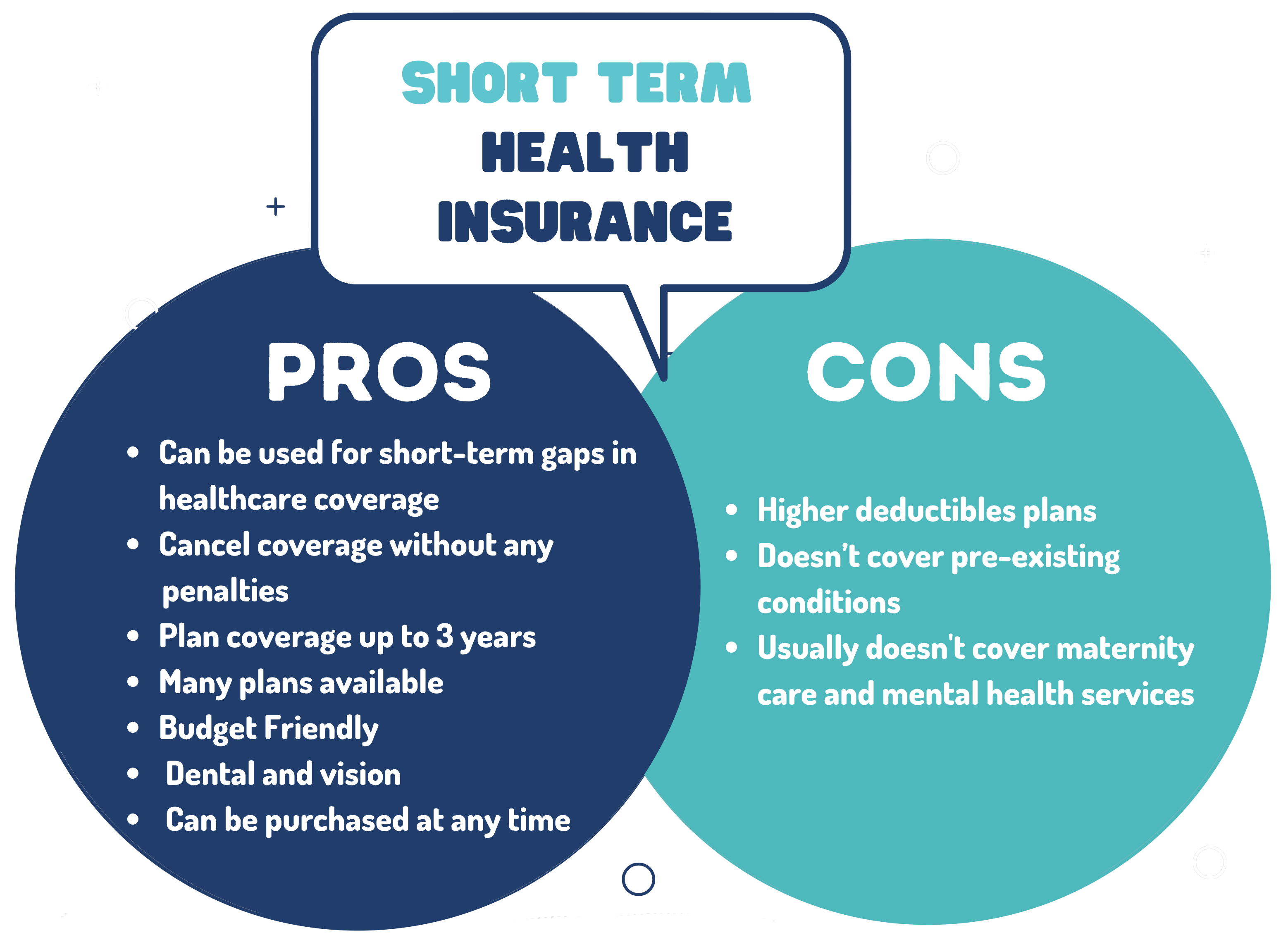
There is action on this front, for in late July, House Republicans passed the CHOICE Arrangement Act. Its future with the Democratic-controlled Senate is bleak, but if Republicans triumph in the Senate and White House next year, it could advance with its focus on short-term health plans. They don’t offer the same broad ACA benefits and have a troubling list of “what we won’t cover” that feels like coverage is going backwards to some.
 

Plans won’t offer coverage for preexisting conditions, maternity care, or prescription drugs, and they can set limits on coverage. The plans will make it easier for small employers to self-insure, so they don’t have to adhere to ACA or state insurance rules.


CHOICE would let large groups come together to buy Association Health Plans, said NPR, which noted that in the past, there have been “issues” with these types of plans.
 
Insurance experts say that the act takes a swing at the very foundation of the ACA. As one analyst described it, the act intends to improve America’s healthcare “through increased reliance on the free market and decreased reliance on the federal government.”


Democrats Tout Reduce-Price Prescriptions


Meanwhile, on Aug. 29, President Joe Biden spoke proudly in The White House: “Folks, there’s a lot of really great Republicans out there. And I mean that sincerely…But we’ll stand up to the MAGA Republicans who have been trying for years to get rid of the Affordable Care Act and deny tens of millions of Americans access to quality, affordable healthcare.” 
 
Current ACA enrollment is higher than 16 million.

 
He said that Big Pharma charges Americans more than three times what other countries charge for medications. And on that date, he announced that “the (Inflation Reduction Act) law finally gave Medicare the power to negotiate lower prescription drug prices.” He wasn’t shy about saying that this happened without help from “the other team.”
 
The New York Times said it feels this push for lower healthcare costs will be the centerpiece of his re-election campaign. The announcement confirmed that his administration will negotiate to lower prices on 10 popular—and expensive drugs—that treat common chronic illnesses.


It said previous research shows that as many as 80% of Americans want the government to have the power to negotiate.


The president also said that “Next year, Medicare will select more drugs for negotiation.” He added that his administration “is cracking down on junk health insurance plans that look like they’re inexpensive but too often stick consumers with big hidden fees.” And it’s tackling the extensive problem of surprise medical bills.
 
Earlier, on August 11, Biden and fellow Democrats celebrated the first anniversary of the PACT Act, legislation that provides healthcare to veterans exposed to toxic burn pits while serving. He said more than 300,000 veterans and families have received these services, with more than 4 million screened for toxic exposure conditions.


Push for High-Deductible Plans


Republicans want to reduce risk of high-deductible plans and make them more desirable—that responsibility is on insurers. According to Politico, these plans count more than 60 million people as members, and feature low premiums and tax advantages. The party said plans will also help lower inflation when people think twice about seeking unneeded care.
 
The plans’ low monthly premiums offer comprehensive preventive care coverage: physicals, vaccinations, mammograms, and colonoscopies, and have no co-payments, Politico said. The “but” in all this is that members will pay their insurers’ negotiated rate when they’re sick, and for medicines and surgeries. Minimum deductible is $1,500 or $3,000 for families—and can be even higher.
 
Members can fund health savings accounts but can’t fund flexible spending accounts.
Proponents cite more access to care, and reduced costs due to promotion of preventive care. Nay-sayers worry about lower-income members facing costly bills due to insufficient coverage.
 

Republican Candidates Diverge on Medicaid
 

The American Hospital Association (AHA) doesn’t love these high deductible plans. It explained that members “find they can’t manage the gap between what their insurance pays and what they themselves owe as a result,” and that, AHA said, contributes to medical debt—something the association wants to change.


An Aug. 3 Opinion in JAMA Health Forum pointed out other ways the two parties diverge on healthcare. For example, the piece cited Biden’s incentives for Medicaid expansion. In contrast, Florida Governor Ron DeSantis, a Republican presidential candidate, has not worked to offer Medicaid to all lower-income residents under the ACA. Former Governor Nikki Haley of South Carolina feels the same, doing nothing. However, former New Jersey Governor Chris Christie has expanded it, as did former Vice President Mike Pence, when he governed Indiana.


Undoubtedly, as in presidential elections past, healthcare will be at least a talking point, with Democrats likely continuing to make it a central focus, as before.

Biden administration proposes rollback of short-term health plan expansion

https://mailchi.mp/cc1fe752f93c/the-weekly-gist-july-14-2023?e=d1e747d2d8

 Last Friday, the Department of Health and Human Services, the Treasury Department, and the Department of Labor jointly issued several proposed rules to shore up consumer healthcare protections, including reversal of a Trump administration policy that allowed consumers to enroll in short-term health plans, which were intended to serve as limited coverage options during transitional periods, for up to three years. Approximately 3M people were enrolled in these plans in 2019.

A new rule would limit consumer access to these plans to just three months, with an optional one-month extension, while also requiring payers to disclose clearly how their plans fall short of comprehensive health insurance. 

The Gist: In an expected move, the Biden administration continues its unwinding of the Trump-era policies it sees as undermining the Affordable Care Act’s (ACA’s) mission of guaranteeing robust, accessible insurance for all. 

Short-term plans, which were granted an exemption from the ACA requirement that health plans cover ten essential health benefits, have been found to discriminate against people with pre-existing conditions, revoke coverage for enrollees retroactively, and generate excess surprise bills due to their limited networks.

It’s time to protect patients from short-term health plans

https://www.lls.org/advocate/protecting-patients-junk-insurance

Leukemia Lymphoma Society (LLS) supports actions that regulate or prohibit “junk insurance” plans that discriminate against people with pre-existing conditions, offer no meaningful coverage in the case of a cancer diagnosis or neglect to cover essential healthcare services like prescription drugs

The problem

LLS advocate Sam Bloechl thought he was doing everything right. After experiencing back pain that wouldn’t go away, he spoke to an insurance broker about upgrading his insurance plan to better cover any treatment he might need. Sam’s broker insisted she had the perfect plan for him. It wasn’t.

A month later, Sam was diagnosed with non-Hodgkin lymphoma. After chemotherapy and radiation, Sam achieved remission. But his health plan refused to cover the bill, leaving Sam with more than $800,000 in medical debt.  It turns out he was sold a short-term, limited-duration plan—a type of “junk insurance.”

Sam isn’t alone. Patients with pre-existing conditions are penalized by low-quality policies, known as “junk insurance” Because such plans are exempt from important consumer protections, they can leave patients vulnerable when they most need timely access to quality, affordable care. 

The patient impact

Most short-term, limited-duration plans leave patients on the hook for thousands of dollars if they face serious health problems—much more than they’d face if they had traditional health insurance, a recent Milliman study funded by LLS reveals. The plans often rely on misleading marketing and are misunderstood by consumers who buy them. And patients have no right to appeal plan decisions.

Moreover, junk plans drive up more than a patient’s out-of-pocket costs—they threaten prices across the health insurance market. As younger and healthier individuals choose these cheaper “junk plans” over comprehensive insurance, premiums for comprehensive insurance are expected to rise.

Solutions

LLS supports actions that regulate or prohibit “junk insurance” plans that discriminate against people with pre-existing conditions, offer no meaningful coverage in the case of a cancer diagnosis or neglect to cover essential healthcare services like prescription drugs. These plans include:

•    Short-term, limited-duration insurance
•    Health care sharing ministries
•    Farm Bureau plans
•    Grandfathered plans
•    Multiple employer welfare arrangements and association health plans
•    Spurious single-employer self-insured group health plans
•    Minimum essential coverage-only plans
•    Excepted benefit plans

report published by 30 patient organizations, including LLS, explains these types of plans in depth—and details how state and federal lawmakers can help protect patients and consumers from these dangerous plans. 

LLS works to stop policy proposals that would allow insurers to reinstitute lifetime limits, eliminate the current cap on patient cost-sharing and cover fewer essential services for cancer patients.

Covid deaths no longer overwhelmingly among the unvaccinated as toll on elderly grows

Unvaccinated people accounted for the overwhelming majority of deaths in the United States throughout much of the coronavirus pandemic. But that has changed in recent months, according to a Washington Post analysis of state and federal data.

The pandemic’s toll is no longer falling almost exclusively on those who chose not to or could not get shots, with vaccine protection waning over time and the elderly and immunocompromised — who are at greatest risk of succumbing to covid-19, even if vaccinated — having a harder time dodging increasingly contagious strains.

The vaccinated made up 42 percent of fatalities in January and February during the highly contagious omicron variant’s surge, compared with 23 percent of the dead in September, the peak of the delta wave, according to nationwide data from the Centers for Disease Control and Prevention analyzed by The Post. The data is based on the date of infection and limited to a sampling of cases in which vaccination status was known.

As a group, the unvaccinated remain far more vulnerable to the worst consequences of infection — and are far more likely to die — than people who are vaccinated, and they are especially more at risk than people who have received a booster shot.

“It’s still absolutely more dangerous to be unvaccinated than vaccinated,” said Andrew Noymer, a public health professor at the University of California at Irvine who studies covid-19 mortality.“A pandemic of — and by — the unvaccinated is not correct. People still need to take care in terms of prevention and action if they became symptomatic.”

A key explanation for the rise in deaths among the vaccinated is that covid-19 fatalities are again concentrated among the elderly.

Nearly two-thirds of the people who died during the omicron surge were 75 and older, according to a Post analysis, compared with a third during the delta wave. Seniors are overwhelmingly immunized, but vaccines are less effective and their potency wanes over time in older age groups.

Experts say they are not surprised that vaccinated seniors are making up a greater share of the dead, even as vaccine holdouts died far more often than the vaccinated during the omicron surge, according to the CDC. As more people are infected with the virus, the more people it will kill, including a greater number who are vaccinated but among the most vulnerable.

The bulk of vaccinated deaths are among people who did not get a booster shot, according to state data provided to The Post. In two of the states, California and Mississippi, three-quarters of the vaccinated senior citizens who died in January and February did not have booster doses. Regulators in recent weeks have authorized second booster doses for people over the age of 50, but administration of first booster doses has stagnated.

Even though the death rates for the vaccinated elderly and immunocompromised are low, their losses numbered in the thousands when cases exploded, leaving behind blindsided families. But experts say the rising number of vaccinated people dying should not cause panic in those who got shots, the vast majority of whom will survive infections. Instead, they say, these deaths serve as a reminder that vaccines are not foolproof and that those in high-risk groups should consider getting boosted and taking extra precautions during surges.

“Vaccines are one of the most important and longest-lasting tools we have to protect ourselves,” said California State Epidemiologist Erica Pan, citing state estimates showing vaccines have shown to be 85 percent effective in preventing death.

“Unfortunately, that does leave another 15,” she said.

‘He did not expect to be sick’

Arianne Bennett recalled her husband, Scott Bennett, saying, “But I’m vaxxed. But I’m vaxxed,” from the D.C. hospital bed where he struggled to fight off covid-19 this winter.

Friends had a hard time believing Bennett, co-founder of the D.C.-based chain Amsterdam Falafelshop, was 70. The adventurous longtime entrepreneur hoped to buy a bar and planned to resume scuba-diving trips and 40-mile bike rides to George Washington’s Mount Vernon estate.

Bennett went to get his booster in early December after returning to D.C. from a lodge he owned in the Poconos, where he and his wife hunkered down for fall. Just a few days after his shot, Bennett began experiencing covid-19 symptoms, meaning he was probably exposed before the extra dose of immunity could kick in. His wife suspects he was infected at a dinner where he and his server were unmasked at times.

A fever-stricken Bennett limped into the hospital alongside his wife, who was also infected, a week before Christmas. He died Jan. 13, among the 125,000 Americans who succumbed to covid-19 in January and February.

“He was absolutely shocked. He did not expect to be sick. He really thought he was safe,’” Arianne Bennett recalled. “And I’m like, ‘But baby, you’ve got to wear the mask all the time. All the time. Up over your nose.’”

Jason Salemi, an epidemiologist at the University of South Florida College of Public Health, said the deaths of vaccinated people are among the consequences of a pandemic response that emphasizes individuals protecting themselves.

“When we are not taking this collective effort to curb community spread of the virus, the virus has proven time and time again it’s really good at finding that subset of vulnerable people,” Salemi said.

While experts say even the medically vulnerable should feel assured that a vaccine will probably save their lives, they should remain vigilant for signs of infection. As more therapeutics become available, early detection and treatment is key.

When Wayne Perkey, 84, first started sneezing and feeling other cold symptoms in early February, he resisted his physician daughter’s plea to get tested for the coronavirus.

The legendary former morning radio host in Louisville had been boosted in October. He diligently wore a mask and kept his social engagements to a minimum. It must have been the common cold or allergies, he believed. Even the physician who ordered a chest X-ray and had no coronavirus tests on hand thought so.

Perkey relented, and the test came back positive. He didn’t think he needed to go to the hospital, even as his oxygen levels declined.

“In his last voice conversation with me, he said, ‘I thought I was doing everything right,’” recalled Lady Booth Olson, another daughter, who lives in Virginia. “I believe society is getting complacent, and clearly somebody he was around was carrying the virus. … We’ll never know.”

From his hospital bed, Perkey resumed a familiar role as a high-profile proponent for vaccines and coronavirus precautions. He was familiar to many Kentuckians who grew up hearing his voice on the radio and watched him host the televised annual Crusade for Children fundraiser. He spent much of the pandemic as a caregiver to his ex-wife who struggled with chronic fatigue and other long-haul covid symptoms.

“It’s the 7th day of my Covid battle, the worst day so far, and my anger boils when I hear deniers talk about banning masks or social distancing,” Perkey wrote on Facebook on Feb. 16, almost exactly one year after he posted about getting his first shot. “I remember times we cared about our neighbors.”

In messages to a family group chat, he struck an optimistic note. “Thanks for all the love and positive energy,” he texted on Feb. 23. “Wear your mask.”

As is often the case for covid-19 patients, his condition rapidly turned for the worse. His daughter Rebecca Booth, the physician, suspects a previous bout with leukemia made it harder for his immune system to fight off the virus. He died March 6.

“Really and truly his final days were about, ‘This virus is bad news.’ He basically was saying: ‘Get vaccinated. Be careful. But there is no guarantee,’” Rebecca Booth said. “And, ‘If you think this isn’t a really bad virus, look at me.’ And it is.”

Hospitals, particularly in highly vaccinated areas, have also seen a shift from covid wards filled predominantly with the unvaccinated. Many who end up in the hospital have other conditions that weakens the shield afforded by the vaccine.

Vaccinated people made up slightly less than half the patients in the intensive care units of Kaiser Permanente’s Northern California hospital system in December and January, according to a spokesman.

Gregory Marelich, chair of critical care for the 21 hospitals in that system, said most of the vaccinated and boosted people he saw in ICUs were immunosuppressed, usually after organ transplants or because of medications for diseases such as lupus or rheumatoid arthritis.

“I’ve cared for patients who are vaccinated and immunosuppressed and are in disbelief when they come down with covid,” Marelich said.

‘There’s life potential in those people’

Jessica Estep, 41, rang a bell celebrating her last treatment for follicular lymphoma in September. The single mother of two teenagers had settled into a new home in Michigan, near the Indiana border. After her first marriage ended, she found love again and got married in a zoo in November.

As an asthmatic cancer survivor, Estep knew she faced a heightened risk from covid-19, relatives said. She saw only a tight circle of friends and worked in her own office in her electronics repair job. She lived in an area where around 1 in 4 residents are fully vaccinated. She planned to get a booster shot in the winter.

“She was the most nonjudgmental person I know,” said her mother, Vickie Estep. “It was okay with her if people didn’t mask up or get vaccinated. It was okay with her that they exercised their right of choice, but she just wanted them to do that away from her so that she could be safe.”

With Michigan battling back-to-back surges of the delta and omicron variants, Jessica Estep wasn’t able to dodge the virus any longer — she fell ill in mid-December. After surviving a cancer doctors described as incurable, Estep died Jan. 27. Physicians said the coronavirus essentially turned her lungs into concrete, her mother said.

Estep’s 14-year-old daughter now lives with her grandparents. Her widower returned to Indianapolis just months after he moved to Michigan to be with his new wife.

Her family shared her story with a local television station in hopes of inspiring others to get vaccinated, to protect people such as Estep who could not rely on their own vaccination as a foolproof shield. In response to the station’s Facebook post about the story, several commenters shrugged off their pleas and insinuated it was the vaccines rather than covid causing deaths.

Immunocompromised people and those with other underlying conditions are worth protecting, Vickie Estep said. “There’s life potential in those people.”

A delayed shot

As Arianne Bennett navigates life without her husband, she hopes the lesson people heed from his death is to take advantage of all tools available to mitigate a virus that still finds and kills the vulnerable, including by getting boosters.

Bennett wore a music festival shirt her husband gave her as she walked into a grocery store to get her third shot in March. Her husband urged her to get one when they returned to D.C., but she became sick at the same time he did. She scheduled the appointment for the earliest she could get the shot: 90 days after receiving monoclonal antibodies to treat the disease.

My booster! Yay!” Bennett exclaimed in her chair as the pharmacist presented an updated vaccine card.

“It’s been challenging, but we got through it,” the pharmacist said, unaware of Scott Bennett’s death.

Tears welled in Bennett’s eyes as the needle went in her left arm, just over a year after she and her husband received their first shots.

“Last time we got it, we took selfies: ‘Look, we had vaccines,’” Bennett said, beginning to sob. “This one leaves me crying, missing him so much.”

The pharmacist leaned over and gave Bennett a hug in her chair.

“He would want you to do this,” the pharmacist said. “You have to know.”

Methodology

Death rates compare the number of deaths in various groups with an adjustment for the number of people in each group. The death rates listed for the fully vaccinated, the unvaccinated and those vaccinated with boosters were calculated by the CDC using a sample of deaths from 23 health departments in the country that record vaccine status, including boosters, for deaths related to covid-19. The CDC study assigns deaths to the month when a patient contracted covid-19, not the month of death. The latest data published in April reflected deaths of people who contracted covid as of February. The CDC study of deaths among the vaccinated is online, and the data can be downloaded.

The death rates for fully vaccinated people, unvaccinated people and fully vaccinated people who received an additional booster are expressed as deaths per 100,000 people. The death rates are also called incidence rates. The CDC estimated the population sizes from census data and vaccination records. The study does not include partially vaccinated people in the deaths or population. The CDC adjusted the population sizes for inaccuracies in the vaccination data. The death data is provisional and subject to change. The study sample includes the population eligible for boosters, which was originally 18 and older, and now is 12 and older.

To compare death rates between groups with different vaccination status, the CDC uses incidence rate ratios. For example, if one group has a rate of 10 deaths per 100,000 people, the death incidence rate would be 10. Another group may have a death incidence rate of 2.5. The ratio between the first group and the second group is the rate of 10 divided by the rate of 2.5, so the incidence rate ratio would be 4 (10÷2.5=4). That means the first group dies at a rate four times that of the second group.

The CDC calculates the death incidence rates and incidence rate ratios by age groups. It also calculates a value for the entire population adjusted for the size of the population in each age group. The Post used those age-adjusted total death incidence rates and incidence rate ratios.

The Post calculated the share of deaths by vaccine status from the sample of death records the CDC used to calculate death incidence rates by vaccine status. As of April, that data included 44,000 deaths of people who contracted covid in January and February.

The share of deaths for each vaccine status does not include deaths for partially vaccinated people because they are not included in the CDC data.

The Post calculated the share of deaths in each age group from provisional covid-19 death records that have age details from the CDC’s National Center for Health Statistics. That data assigns deaths by the date of death, not the date on which the person contracted covid-19. That data does not include any information on vaccine status of the people who died.

Health Agency Preparing for Lapse in Extra ACA Subsidies

https://news.bloomberglaw.com/pharma-and-life-sciences/health-agency-preparing-for-lapse-in-extra-obamacare-subsidies?mkt_tok=ODUwLVRBQS01MTEAAAGDWuGQisFiXP1YU7ldhH-D-v-Qezz0Y7Ol85lQV_EWybFJCX5nhwm1xijPeqwqKvJ4KM_KHbGLJ6Tq5fpqr7aHTFGKPLChP3FMmQbI5dZoOR8W

  • Obamacare enrollment at a record-high 14.5 million
  • Congress may not fund premium subsidies in 2023

The Affordable Care Act marks its 12th anniversary Wednesday, and despite a record 14.5 million enrollees, the Biden administration is preparing for the possibility that millions could lose coverage next year.

The $1.9 trillion pandemic stimulus package (Public Law 117-2), signed March 2021, reduced Obamacare premiums to no more than 8.5% of income for eligible households and expanded premium subsidies to households earning more than 400% of the federal poverty level. The rescue plan also provided additional subsidies to help with out-of-pocket costs for low-income people. As a result, 2.8 million more consumers are receiving tax credits in 2022 compared to 2021.

But without congressional action, the subsidies—and the marketplace enrollment spikes they ushered in—could be lost in 2023. new HHS report released Wednesday, shows an estimated 3.4 million Americans would lose marketplace coverage and become uninsured if the premium tax credits aren’t extended beyond 2022.

In a briefing with reporters Tuesday, Chiquita Brooks-LaSure, administrator for the Centers for Medicare & Medicaid Services, said her agency is “confident that Congress will really understand how important the subsidies were” to enrolling more people this year. The CMS would “pivot quickly,” however, to implement new policies and outreach plans if the subsidies aren’t extended as open enrollment for 2023 begins in November.

“That said, today and tomorrow we are celebrating the Affordable Care Act,” Brooks-LaSure added. “As part of that process, we’ve been reminding ourselves that sometimes it takes some time to pass legislation. And just like the Affordable Care Act took time, we’re confident that Congress is going to address these critical needs for the American people.”

After years of legal and political brawls that turned the landmark legislation into a political football, Obamacare “is at its strongest point ever,” Brooks-LaSure said. The 14.5 million total enrollees—those who extended coverage and those who signed up for the first time—is a 21% increase from last year. The number of new consumers during the 2022 open enrollment period increased by 20% to 3.1 million from 2.5 million in 2021.

This week, the Department of Health and Human Services will highlight the impact of the ACA and the Biden administration’s efforts to strengthen the law. The CMS recently announced a new special enrollment period opportunity for people with household incomes under 150% of the federal poverty level who are eligible for premium tax credits. The new special enrollment period will make it easier for low-income people to enroll in coverage throughout the year.

Troubled times could be around the corner, however, as millions of people with Medicaid coverage could become uninsured after the public health emergency ends. Under the Families First Coronavirus Response Act (Public Law 116-127), signed March 2020, states must maintain existing Medicaid enrollment until the end of the month that the public health emergency is lifted. Once the continuous enrollment mandate ends, states will resume Medicaid redeterminations and disenrollments for people who no longer meet the program’s requirements.

Dan Tsai, deputy administrator and director of the Center for Medicaid and CHIP Services at CMS, said the agency is working with states to make sure people who lose Medicaid coverage can be transferred into low- and no-cost Obamacare coverage.

“A substantial portion of individuals who will no longer be eligible for Medicaid will be eligible for other forms of coverage,” including marketplace coverage, Tsai told reporters Tuesday.

In a statement, President Joe Biden acknowledged the law’s great impact. “This law is the reason we have protections for pre-existing conditions in America. It is why women can no longer be charged more simply because they are women. It reduced prescription drug costs for nearly 12 million seniors. It allows millions of Americans to get free preventive screenings, so they can catch cancer or heart disease early—saving countless lives. And it is the reason why parents can keep children on their insurance plans until they turn 26.”

The Affordable Care Act: Twelve Years and Nine Lives Later

http://healthaffairs.activehosted.com/index.php?action=social&chash=de905148259ea27fa49e2303ef2e0017.5360&s=a9eec07a130d7809d93928ad264a482b

A new spring brings another anniversary of the Affordable Care Act. Twelve (sometimes tumultuous) years later, this remarkably resilient law is on firmer ground than ever before.

So what are some highlights?

The uninsured rate remained stable even in the face of a global pandemic. Congress leveraged parts of the ACA to quickly cover COVID-19 tests and vaccines without cost sharing.

The American Rescue Plan Act supercharged marketplace subsidies, leading to record-high marketplace enrollment.

And there are currently no existential legal threats to the law working their way through federal courts.

In some ways, this rosy report feels unremarkable. Why expect otherwise with the law now in place for more than a decade and baked into every part of the health care system?

But this outcome was far from inevitable.

Just five years ago, Congress tried to repeal as much of the law as possible. When those broader efforts failed, Congress eliminated the much-maligned individual mandate penalty. We appeared to have reached a stalemate: Democrats could not improve the law while Republicans could not repeal it.

Could this be the moment we moved on from ACA politics?!

Enter the courts. In early 2018, Republican attorneys general sued to invalidate the mandate and, with it, the rest of the law. That lawsuit—California v. Texas—was ultimately heard by a new Supreme Court one week after the 2020 election, and the ACA was upheld just last summer.

This marked the third time that the Supreme Court largely rebuffed what could have been a crippling legal challenge to the law. It feels like ancient history now, but it is worth remembering that we were still playing “will they or won’t they?” with the Supreme Court and ACA only one year ago.

In the meantime, the Trump administration tried to undermine access to coverage under the law—except when it didn’t. I won’t list all the relevant Trump-era policies, but they had an impact: the uninsured rate rose, and marketplace enrollment declined until the 2021 plan year.

Ironically, one policy meant to destabilize the market had the opposite effect: so-called “silver loading” led to more generous marketplace subsidies and likely helped stave off even greater coverage losses.

This is the recent history that is top of mind as I reflect on the year ahead—and the work left to do to achieve universal coverage. Here are just some of the major issues facing policymakers:

     • The clock is ticking to extend the American Rescue Plan Act subsidies. If Congress fails to do so, millions will face premium hikes next year and marketplace enrollment will likely drop.

     • More than 2 million low-income people remain stuck in the Medicaid coverage gap in the 12 states that have not yet expanded their Medicaid program.

     • Up to 15 million people, including nearly 6 million children, could lose Medicaid coverage at the end of the COVID-19 public health emergency.

     • There is increasingly an affordability and underinsurance crisis, including for those with job-based coverage: an estimated 87 million people were underinsured in 2018.

Congress and the White House are working to address these challenges, but much uncertainty remains.
“It feels like ancient history now, but it is worth remembering that we were still playing ‘will they or won’t they?’ with the Supreme Court and Affordable Care Act only one year ago.” – Katie Keith

Looking beyond Congress, 2022 will be an important year for regulatory changes. The Biden administration has proposed, but has not yet finalized, major marketplace changes. Other already-identified priorities include fixing the family glitch, limiting short-term limited duration insurance, and enhancing nondiscrimination protections. We could see movement on at least some of these rules soon.

While the Biden administration may be waiting out Congress before initiating some rulemaking, time is of the essence. New rules take many months to adopt and then take effect—followed by more time to deal with the legal challenges that typically follow.

Follow along as I dive deep on these issues and more in a new Health Affairs’ Health Reform newsletter.

We’ll highlight the latest health policy developments—from legislation to litigation—and explain what these changes mean for patients, payers, providers, and other key health care stakeholders.
It’s Your Birthday, Affordable Care Act!
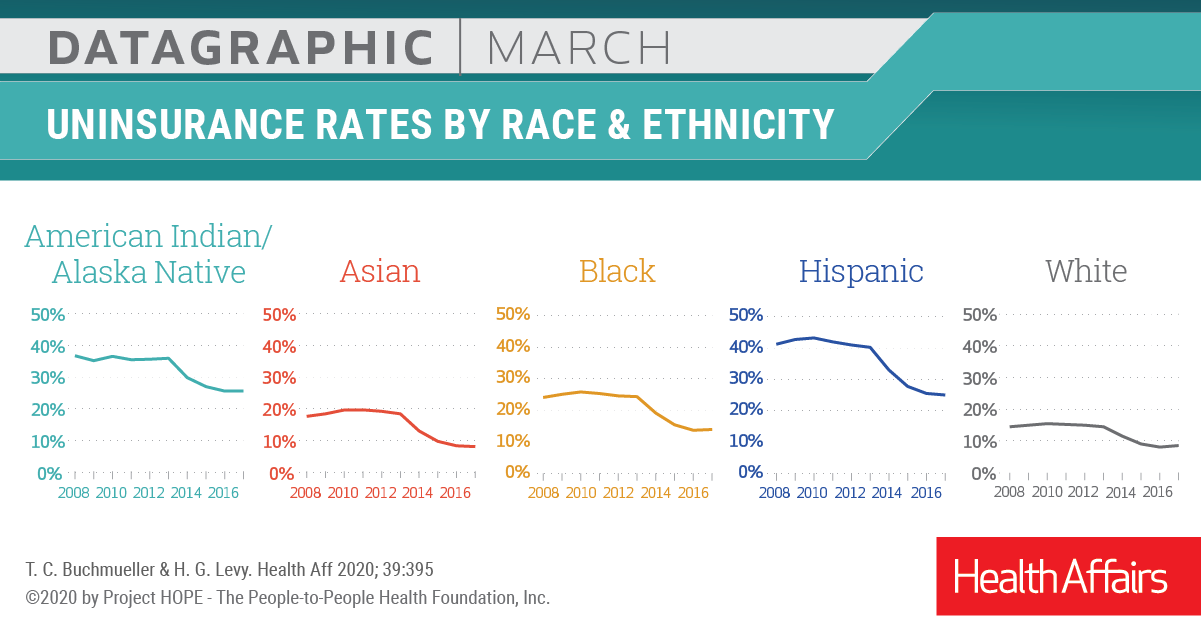
In March 2020, Health Affairs published a theme issue to celebrate the tenth anniversary of the Affordable Care Act. The issue contains many illuminating research articles on the landmark legislation, from its impact on “the cost curve” to Medicaid expansion.

Above is a datagraphic from the issue showing how the ACA affected insurance coverage.

Too Many Kids are Uninsured or Underinsured in the US

Too Many Kids are Uninsured in the US - YouTube

Access to healthcare in childhood has long term effects on health outcomes, but many children in the US are either uninsured or underinsured, meaning they often don’t have access to the care they need. Why is that and what can we do about it?

If Economists Chose the Health Care System

If Economists Chose the Health Care System - YouTube

Health economists study the economic determinants of health. They also analyze how health care resources are utilized and allocated, and how health care policies and quality of care can be improved. In this episode, we discuss what exactly a healthcare system would look like if these professionals were calling all the shots.