2019 WAS A ROUGH YEAR FOR RURAL HOSPITALS

https://www.healthleadersmedia.com/clinical-care/2019-was-rough-year-rural-hospitals?spMailingID=16767558&spUserID=MTg2ODM1MDE3NTU1S0&spJobID=1781791709&spReportId=MTc4MTc5MTcwOQS2

Since 2005, 162 rural hospitals have shuttered, with 60% of the closures occurring in southern states that did not expand Medicaid enrollment.


KEY TAKEAWAYS

19 rural hospitals closed in 2019, up from 15 closures in 2018, and continuing a steady double-digit trend in closures since 2013.

Most hospitals closed because of financial problem, and 38% of rural hospitals are unprofitable.

Patients in communities affected by closure travel 12.5 miles on average for care. However, 43% of the closed hospitals are more than 15 miles to the nearest hospital, and 15% are more than 20 miles.

Despite a booming national economy, 2019 was the worst year for hospital closings since at least 2005.

The North Carolina Rural Health Research Program says that 19 rural hospitals closed this year, up from 15 closures in 2018, and continuing a steady double-digit trend in closures since 2013.

Since 2005, the North Carolina researchers tracked 162 hospital closings, with 60% of the closures occurring in southern states that did not expand Medicaid enrollment.

Texas led the way, with 23 hospital closures since 2005, followed by Tennessee with 13, and North Carolina with 11.

The closures have been blamed on a number of factors, including: the older, sicker, poorer, and less-concentrated rural demographic; bypassing by local residents seeking care at regional hospitals; hospital consolidation; value-based care; referral patterns of larger hospitals; the transition to outpatient services; and mismanagement.

Among the findings highlighted by the North Carolina Rural Health Research Program:

  • More than half of the rural hospitals that close cease to provide any type of health care, which were define as abandoned.
  • Most closures and “abandoned” rural hospitals are in South (60%), where poverty rates are higher, people are generally less healthy and less likely to have public or private health insurance.
  • Most hospitals closed because of financial problems. 38% of rural hospitals are unprofitable.
  • In 2016, 1,375 acute care hospitals out of 4,471 urban and rural acute care hospitals (31%) were unprofitable, including 847 rural hospitals (versus 528 unprofitable urban hospitals).
  • Patients in communities affected by closure travel 12.5 miles on average for care. However, 43% of the closed hospitals are more than 15 miles to the nearest hospital, and 15% are more than 20 miles.
  • The typical rural hospital employs about 300 people, serves a community of about 60,000. When the only hospital in a county closes, there is a decrease of about $1,400 in per capita income in the county.
  • University of Minnesota research shows that between 2004 and 2014, 179 rural counties lost all hospital-based OB services.
  • Over the last 15 years, the difference in mortality between rural and urban areas has tripled – from a 6% difference to an 18% difference in 2015.


Number of Americans with a primary care provider declined 2% over a decade, new study shows

https://www.fiercehealthcare.com/practices/moving-wrong-direction-fewer-americans-have-a-primary-care-provider-new-study-shows?mkt_tok=eyJpIjoiTTJOalpXTXdOV0ZoWkdGbCIsInQiOiJZMlwvUGpSNHhPVGp6ZkdVdkhmSXdza2hJcElGRTJiTDNjWGR0ZnFsOFc4K0Q1eExXR3ZBNWpsTVZ3cmVhRGlMZ1VaOTVyTUlWd2NWQmVPYlBMUkFkTzV0WGNjRWxuNHhuZUFUTVY0dDdsUlwvczdmd0VHVHBBb013b25LMEx5YzhXIn0%3D&mrkid=959610

social determinants

Despite the health benefits, fewer Americans have a primary care provider, according to a new study.

The number of patients in the U.S. who have a primary care provider declined by 2% in a little over a decade, according to the study published in JAMA Internal Medicine.

While that may not sound like much, that decline translates to millions of Americans who do not have primary care, the researchers said.

In the study, researchers from Harvard Medical School looked at primary care use from 2002 to 2015, which raises concerns given that primary care is associated with better health among patients.

“Primary care is the thread that runs through the fabric of all healthcare, and this study demonstrates we are potentially slowly unweaving that fabric,” said the lead author David M. Levine, M.D., a Harvard Medical School instructor in medicine at Brigham and Women’s Hospital in Boston, where he practices internal medicine and primary care, in an announcement about the study.

“America is already behind the curve when it comes to primary care; this shows we are moving in the wrong direction,” Levine said.

The study found that in 2002, 77% of adult Americans had an identified primary care physician, a level that dropped to 75% in 2015. In addition, the study found a particularly marked decline in primary care among younger Americans and those without complex medical issues.

Having a primary care provider decreased across the board for Americans in their 30s, 40s, and 50s. Among 30-year-olds, the number dropped from 71% to 64% from 2002 to 2015.

Among those with no complex conditions, having primary care declined in every decade of age through their 60s. The exception to the decline were less healthy patients. People with three or more chronic health conditions having a primary care physician remained relatively stable, the study found.

Patients who are male, Latino, black or Asian without insurance and lived in the South were much less likely to have a primary care doctor, the study found.

The researchers suggested several steps to stop the decline and increase the rates of Americans with primary care providers, including changes in the primary care payment system, a move toward value-based care and investments in new technology. They also called for creating incentives to encourage more physicians to choose primary care, particularly in rural areas, and increasing the number of Americans with health insurance.

“To improve Americans’ health, we should prioritize investments to reinvigorate the American primary care system,” said senior author Bruce E. Landon, M.D., professor of healthcare policy in the Blavatnik Institute at Harvard Medical School and professor of medicine at Beth Israel Deaconess Medical Center, where he practices internal medicine.

A study released earlier this year from the Patient-Centered Primary Care Collaborative found states that spend more on primary care have better patient outcomes, including fewer hospitalizations and emergency department visits. A separate study found a direct link between the number of primary care doctors and an increase in life expectancy.


10 Health Care Trends To Watch In 2020

https://blog.providence.org/news/10-health-care-trends-to-watch-in-2020?_ga=2.242868994.1447754200.1576610293-1113187070.1573499391

Image result for 10 Health Care Trends To Watch In 2020

With 2020 shaping up to be another big year for health care, executives at Providence, one of the largest health systems in the country, today released their annual New Year’s predictions.

External forces will continue to bear down on health care, Providence leaders said. Politics, technology, social issues, labor shortages and heightened consumer expectations will all play a role. As a result, providers will feel more intense pressure to accelerate the transformation of health care.

“The question is whether providers can pivot fast enough,” said Rod Hochman, M.D., president and CEO of Providence. “In 2020, health systems that can get ahead of the major trends will be best positioned to meet the future needs of their communities.”

What can you expect next year? Here are Providence’s top 10 predictions.

  1. The value of health system consolidation will come to fruition in the form of large scale improvements in clinical quality and outcomes.

One of the most important reasons health systems have consolidated in recent years is to improve clinical quality and spread best practice across scale. Because clinical integration takes time, this will be the year that significant results begin coming to fruition. For example, Providence has leveraged its seven-state system to reverse the alarming national rise in U.S. mothers dying in childbirth. Thanks to collaboration among its clinical teams, Providence is one of the safest places for moms to give birth, having nearly eliminated preventable maternal deaths over the last three years. At the same time, Providence has reduced the cost of caring for moms covered by Medicaid, as well as the cost of NICU care. Expect more examples of improved outcomes and costs to emerge in 2020 as proven practices in other clinical areas begin bearing fruit on a large scale.

  1. Corporate social responsibility will take on a bigger role in tackling homelessness, suicide, the opioid crisis and other social issues that affect health.  

More companies will partner with health systems, government agencies, social services and other nonprofits to take action on the social determinants of health. Be Well OC is one example of the type of coalition that will make a significant impact in 2020. The public-private partnership in Orange County, Calif., brings diverse organizations together to meet the urgent need for mental health and addiction services in the community. Meanwhile, in cities like Seattle, Wash., health systems like Providence are partnering with the business community and other not-for-profits to address the growing homelessness epidemic.

  1. Personalized medicine and population health, two seemingly opposite approaches to health care, will begin working hand in hand to improve outcomes in the U.S.

The path to a healthier nation will be accelerated by treating both the unique needs of the individual down to the DNA level, as well as common issues shared by people in similar demographics. Health systems like Providence, for example, are using genomics to pinpoint a person’s biologic age, as well as tailor medical interventions to the individual. At the same time, Providence is coordinating care and resources across broad segments of people through steps such as cancer screenings and improving access to housing and nutrition. Combining the power of these two disciplines will help catapult the health of the nation.

  1. Health systems will prioritize digital access to care, convenience and personalization to compete with disruptors and collaborate with big tech.

Delivering same-day access to care – how, when and where people want it – will be a burning priority for health systems in 2020. New entrants will continue to disrupt the space and raise consumer expectations. Leading health systems like Providence will stay ahead of the curve with digital platforms that integrate telehealth, its in-store clinics at Walgreens and its vast network of specialty, primary care and urgent care clinics across the Western U.S. To help patients navigate these care options, Providence will also continue to develop its artificial intelligence capability, making its AI bot, “Grace,” more pervasive, helpful and capable. Providence will also continue to engage patients between episodes of care by providing personalized content and services to keep them healthy while developing a long-term, digitally engaged relationship with patients.

  1. As more health systems partner with tech companies to bring health care into the digital age, patients will count on providers to serve as the guardians of their personal health information. 

Machine learning and artificial intelligence will raise the potential for new breakthroughs in medicine and care delivery, and data will be key to this level of innovation. But whether tech companies are prioritizing the best interest of patients will remain a lingering question for the American public. Patients will look to providers to be their voice and advocates when it comes to protecting their health information. Expect providers to stand up for data privacy and security and take the lead in ensuring data is used responsibly for the common good.

  1. The race to bring voice-activated technology to health care will heat up and will be a central feature in the hospital and clinic of the future.

Just as Alexa and Siri are transforming the way we live our personal lives, voice and natural language processing are the future of health care. Expect innovation to accelerate around smart clinics and hospitals that make it easier for clinicians to treat and care for patients.  Voice commands that process and analyze information will support clinical decision making at the bedside and the exam room. As part of a new partnership between Providence and Microsoft to build the “care site of the future,” clinical communications and voice-activated technology will be a central feature.

  1. Simplifying the electronic medical record will become a rallying cry for clinicians.

With burnout on the rise among physicians, nurses and other caregivers, reducing the time it takes to chart in the electronic medical record will be key to improving the work environment for clinicians. Shifting the national conversation from EMR “interoperability” to “usability” will take on greater urgency. A simplified, more intuitive EMR means clinicians can spend less time on the computer and more time focused directly on patients, creating a better experience for clinicians and the patients they serve.

  1. The health care workforce will continue to evolve and adopt new skill sets. At the same time, talent shortages will become more pronounced.

As the sector changes at a rapid pace, the health care workforce will need to add new skill sets to keep up with innovations in medicine and care delivery. Clinicians will also need to become more proficient in managing the social determinants of health and caring for the whole person, not just physically, but also mentally and emotionally. Health systems will seek to stay competitive in a tough labor market by offering attractive pay and benefit packages. A commitment to investing in education and career development, as well as creating engaging work environments, will also be a key focus for retaining and recruiting top talent.

  1. Price transparency will remain a hot issue. But the focus needs to shift to giving patients the information they want most: what their out-of-pocket costs will be.   

Patients deserve to know what their health care costs will be up front, so they can make informed decisions as they shop for care. Rather than inundating them with a deluge of prices and negotiated rates for hundreds of services that may or may not be relevant to their personal situation, more emphasis needs to be placed on helping them understand what their specific out-of-pocket costs will be. The amount individuals pay is typically based on their insurance coverage. That’s why health systems like Providence are actively developing price estimator tools and self-service portals, based on blockchain and AI technology, to help patients more quickly and easily access this information.

  1. New alternatives to “Medicare for All” will emerge in the presidential debates. One viable option that should be taken seriously: free primary care for every American.

In the 2020 elections, concerns will be raised over whether Americans will lose their private commercial or employer-sponsored insurance under a Medicare for All plan. A new campaign platform — free primary care for all — should be considered as a more effective, affordable alternative. By guaranteeing access to primary care, the nation can focus on prevention, chronic disease management and helping Americans live their healthiest life possible. Providence is participating in the current administration’s innovative primary care pilots, which are showing positive results in terms of better outcomes and reduced costs.


‘An Arm and a Leg’: How much for stitches in the ER? Hard to gauge upfront

https://www.news-medical.net/news/20191205/e28098An-Arm-and-a-Lege28099-How-much-for-stitches-in-the-ER-Hard-to-gauge-upfront.aspx

Image result for ‘An Arm and a Leg’: How much for stitches in the ER? Hard to gauge upfront

Sarah Macsalka had heard the stories about how expensive an emergency room visit can be, even for a minor complaint.

http://aca.st/b26519

So when her 7-year-old son, Cameron, tripped and gashed his knee in the backyard, the ER was not where her family headed first. In fact, Macsalka did just about everything she could to avoid paying a big, fat bill to get Cameron’s knee stitched up.

Ultimately, she failed.

Her adventure raises a big question: In a system where consumers are encouraged to “shop” for the best deal in health care, why is it so hard to get simple information, like a price?

On this week’s episode of “An Arm and a Leg,” we get some answers.

Instead of taking her son to the local emergency room for stitches, Macsalka took him to an urgent care clinic, one that provides patients with prices ahead of the service. There, the staff said stitching up Cameron’s knee would cost $150.

But there was a problem. The clinic didn’t have the topical anesthetic the doctor would need to numb Cameron’s skin first.

“And Cameron is like screaming and crying,” Macsalka said. “He doesn’t take pain well.”

So, reluctantly, the family headed to the local emergency room.

Macsalka tried to be a smart shopper there, too. When a staff member came to take her insurance information, Macsalka grilled him about how much the visit would cost.

“He was like, ‘I don’t know. Just walking through the ER [door] costs $600,'” she said.

To Macsalka, that sounded like a “facility fee” — a cover charge of sorts, separate from any health care services. And it sounded pricey. But she was over a barrel.

“The kid is still screaming and crying,” she said. “His knee’s a mess.” She wasn’t about to drive him back to the urgent care place and start over again.

They got the stitches in the ER. And, as it happened, the anesthetic wasn’t very effective.

Macsalka said her son’s screams were ear-piercing. “Yeah, Cameron’s lungs did not give out,” she said. “Those are very healthy lungs.”

As it turned out, Macsalka’s attempts to figure out what the final price would be weren’t very effective either.  A few weeks after the ER visit, she got a bill for the doctor’s services and paid it: $214 after insurance.

Then there was another bill from the hospital. One line: $2,824.

Macsalka went back into smart-consumer mode. She called the hospital billing department and asked if there had been a mistake.

Macsalka said the person she spoke with on the phone told her that “just walking through the doors” of the emergency room cost $4,200. That amount matches a number on her insurance statement — an amount before the insurance company’s negotiated discount.

After that discount, the bill was $2,824 – and because Macsalka’s family had a high deductible, they were responsible for paying it all.

Macsalka said she tried another tactic and asked the billing representative: What if I didn’t have insurance? She said the billing rep told her: In that case, the hospital would accept 10% of its total bill to make sure it collected something. Without a negotiated rate from insurance, the total would have been about $6,000, so 10% would have been about $600.

It was more than Macsalka had hoped to pay. But less than $3,000.

“So I was like, ‘Fine, cool, I’ll take it.’ And she’s like, ‘Oh no. You can’t because it’s already gone through your insurance company. So that’s not an option for you.'”

Having insurance — with a high deductible — meant Macsalka was on the hook for the $2,800 charge.

She wishes someone could have told her the price upfront.

“I would’ve said thank you very much. And walked out and gone back to our lovely urgent care and been like, Cameron, bite on this stick,” she said.

For Episode 4, we also rounded up a hospital consultant and a journalist to better understand the perspectives of the hospital and insurance company.


UnitedHealth projects major revenue boost in 2020 on the back of continued Optum growth

https://www.fiercehealthcare.com/payer/unitedhealth-projects-242b-2019-revenue-offers-2020-guidance-262b-revenue?mkt_tok=eyJpIjoiWkdObE5HRTJNMlptT0RkayIsInQiOiJiaFk3K2s2TDl5OGNrMmJ5XC9EWWEyb3VacEVjUGpOUVhrdE5wQmxkaTN6TUNTbkVJaUJlTnl3eldXcmRaVU1nN3k4UUhKRFEzb1B3XC9pYWNJaHVcL0NqS29QSmI4RFR1aWEwWlNNRUE2QmdqaVJINkNIa090XC9lUzMxUUpUbG1yY24ifQ%3D%3D&mrkid=959610

The outside of Optum's headquarters

UnitedHealth Group projected it will generate $242 billion in revenue in 2019 and expects to report another 7% to 8% increase in top-line growth in 2020.

The insurance group presented updated figures during its investor conference that kicked off Tuesday with officials saying they expect to increase the company’s 2020 revenue to between $260 billion and $262 billion.

They project between $21 billion and $22 billion in operating earnings in 2020.

In comparison, UnitedHealth Group generated $17.3 billion in profits on $226 billion in revenue in 2018. The company is projecting to report $19 billion in profits in 2019.

The biggest driver of growth this year has been UnitedHealth’s Optum, the company’s pharmacy benefit management and care services group. Optum revenue is projected to have increased by 11% from 2018 to 2019, earning UnitedHealth $112 billion in revenue compared to $101 billion in 2018.Optum is expected to continue to be a major growth driver for the company in its 2020 earnings projection, with UnitedHealth pegging growth to increase again between 13% and 14%. UnitedHealth executives said that Optum is expected to make up 50.5% of the company’s total after tax operating earnings this year.. 

Optum could also be the key for UnitedHealth to improve its Medicare Advantage business.

“We don’t like being third, that’s fundamentally where we landed for the year,” said UnitedHealth Group CEO David Wichmann, “Over time I think we will continue to grow and outpace the market.”

Executives said that the key to growth is to keep its networks consistent as well as pharmacists and pharmacies consistent for seniors. 

“We believe we maintain in the Medicare market a strategic cost advantage because of the capacities we have as an organization,” Wichmann said.

UnitedHealth pointed to the success of OptumCare, the company’s primary and specialty care provider.  The highest performing Medicare Advantage plans were in markets that had an OptumCare presence. Wichmann said that growing the OptumCare platform is a majority priority for UnitedHealth over the next seven years.


5 Things Consumers Want From Healthcare

https://www.managedhealthcareexecutive.com/news/5-things-consumers-want-healthcare?rememberme=1&elq_mid=9853&elq_cid=876742&GUID=A13E56ED-9529-4BD1-98E9-318F5373C18F

Demanding

The healthcare system is not meeting the needs of the people who need it most, according to a new focus group study.

Based on nine focus groups of low-income consumers with complex health and social needs, “In Their Words: Consumers’ Vision for a Person-Centered Primary Care System, from the Center for Consumer Engagement In Health Innovation (the Center) at Community Catalyst, also reported:

Poll participants reported:

• The primary care system is not meeting the needs of the people who need it most because they do not have the ability to form meaningful primary care relationships and the system does not address the impact that problems like transportation, housing insecurity, mental health issues, and more have on their overall health. “Consumers expressed the desire for a primary care relationship that is not necessarily tied to a credential [e.g., an MD], but rather one that is rooted in empathy for the significant challenges and barriers this population faces in their day to day life,” says Ann Hwang, MD, director of the Center for Consumer Engagement in Health Innovation, a national, non-profit consumer health advocacy organization based in Boston. “These consumers don’t feel that doctors have the time to listen to them, that their stuck on a profit-driven treadmill, regardless of if the institution is for- or not-for-profit.”

• Unhappiness at a system they see as profit-driven.

• Strong desire for supportive services they do not get now, such as:

  • An ongoing relationship with a trusted provider;
  • Help navigating the complex health and social services system;
  • Providers with greater cultural sensitivity and empathy; and
  • A centralized place which would include mental healthcare and supportive services in addition to primary care (a “one-stop shop”).

“The healthcare system has been going through major changes that are too often designed without meaningful input from the very people it exists to serve,” Hwang says. “Because primary care is often the first point of entry for a consumer into the larger healthcare system, these focus groups were conducted to capture the perspective of consumers with complex health and social needs about what they need and want from their primary care relationship.”

This reflects the mission of the Center for Consumer Engagement in Health Innovation which is to bring the consumer experience to the forefront of health system transformation to deliver better care, better value, and better health for every community, particularly vulnerable and historically underserved populations, according to Hwang.

“The voices in this report belong to people with complex health and social needs—a group that tends to include some of the highest-need and highest-cost patients.,” she says. “As systems shift toward value-based payment and try to understand and address non-medical drivers of good health (i.e., social determinants of health), this kind of insight is critical to designing and delivering care that actually meets the needs of the people it serves.”

Based on the poll, there are five takeaways for healthcare executives, according to Hwang:

  1. Consumers want a long-term, trusting relationship with their primary care provider.
  2. Consumers value a coordinator or navigator who can help them manage their care, connect them to social services and advocate for them when needed.
  3. Consumers welcome a broader conversation with their primary care provider, not just focused on their medical treatment, but exploring the needs of the whole person.
  4. Consumers want a “one-stop shop” where they could receive a wide variety of services under one roof, including medical services, mental health treatment and counseling, and social services.
  5. Consumers hope for a provider who is culturally sensitive, able to relate to their life experience and struggle, and who uses language they can understand.


GEISINGER OFFERS DEBT-FREE PRIMARY CARE MEDICAL SCHOOL

https://www.healthleadersmedia.com/clinical-care/geisinger-offers-debt-free-primary-care-medical-school?spMailingID=16548061&spUserID=MTg2ODM1MDE3NTU1S0&spJobID=1760517984&spReportId=MTc2MDUxNzk4NAS2

Program offered for medical students who’ll commit to primary care at the Pennsylvania-based health system after graduating.


KEY TAKEAWAYS

The program will pick 40 first- and second-year students in each medical class through a competitive application process.

Selection criteria include  financial need, academic merit, diversity, and predictors of whether the applicant will stay in Geisinger’s service area.

The program will provide full coverage of tuition and fees plus a monthly $2,000 stipend through four years of medical school. 

Geisinger and Geisinger Commonwealth School of Medicine have created the Geisinger Primary Care Scholars Program that will offer debt-free medical school and living assistance to medical students who agree to work within primary care at the health system after they graduate.

Medical students often carry $200,000 or more in debt, which pushes them into higher-paying specialties. Geisinger President and CEO Jaewon Ryu, MD, says that removing the financial strain in exchange for a four-year commitment to practice at Geisinger will make it easier for more med students to pursue primary care.

“At Geisinger, we’ve been able to prove that by focusing on primary care we can improve outcomes, lower costs and improve satisfaction among patients and providers,” Ryu said.

“We’ve built some innovative programs that expand upon the notion of what is primary care and where it is delivered. With all of these different offerings, we are thrilled to welcome anyone who shares this passion around new and exciting ways to deliver this core care,” Ryu said.

“So, it’s only natural that we extend that commitment to training the next generation of physicians. These scholars have the opportunity to learn and later work in Geisinger’s innovative primary care environment without the worry of how they will pay for their education,” he said.

The program will pick 40 first- and second-year students in each incoming medical class through a competitive application process. Selection criteria include demonstrated financial need, academic merit, diversity, passion for serving their communities, and predictors of whether the applicant is likely to stay in Geisinger’s service area.

The program will provide full coverage of tuition and fees plus a monthly $2,000 stipend through the four years of medical school.

“I can’t think of a better opportunity for these scholars to pursue their commitment to primary care than by providing debt-free medical schooling,” said Steven J. Scheinman, MD, executive vice president and chief academic officer at Geisinger and Dean of the Geisinger Commonwealth School of Medicine.

Last year Geisinger started the Abigail Geisinger Scholars Program. Which gives 10 students in each class up to four years of tuition in the form of a loan, which is forgiven upon completion of a service commitment as a Geisinger physician in any specialty.

“I CAN’T THINK OF A BETTER OPPORTUNITY FOR THESE SCHOLARS TO PURSUE THEIR COMMITMENT TO PRIMARY CARE THAN BY PROVIDING DEBT-FREE MEDICAL SCHOOLING. ”


Today’s health problems are tomorrow’s health crises

https://www.axios.com/public-health-crisis-trends-future-c24f9720-4657-45f2-ab73-05a8bb9a4d3e.html

Image result for Today's health problems are tomorrow's health crises

The health troubles we’re seeing now — especially among young people — will continue to strain the system for years and even decades to come.

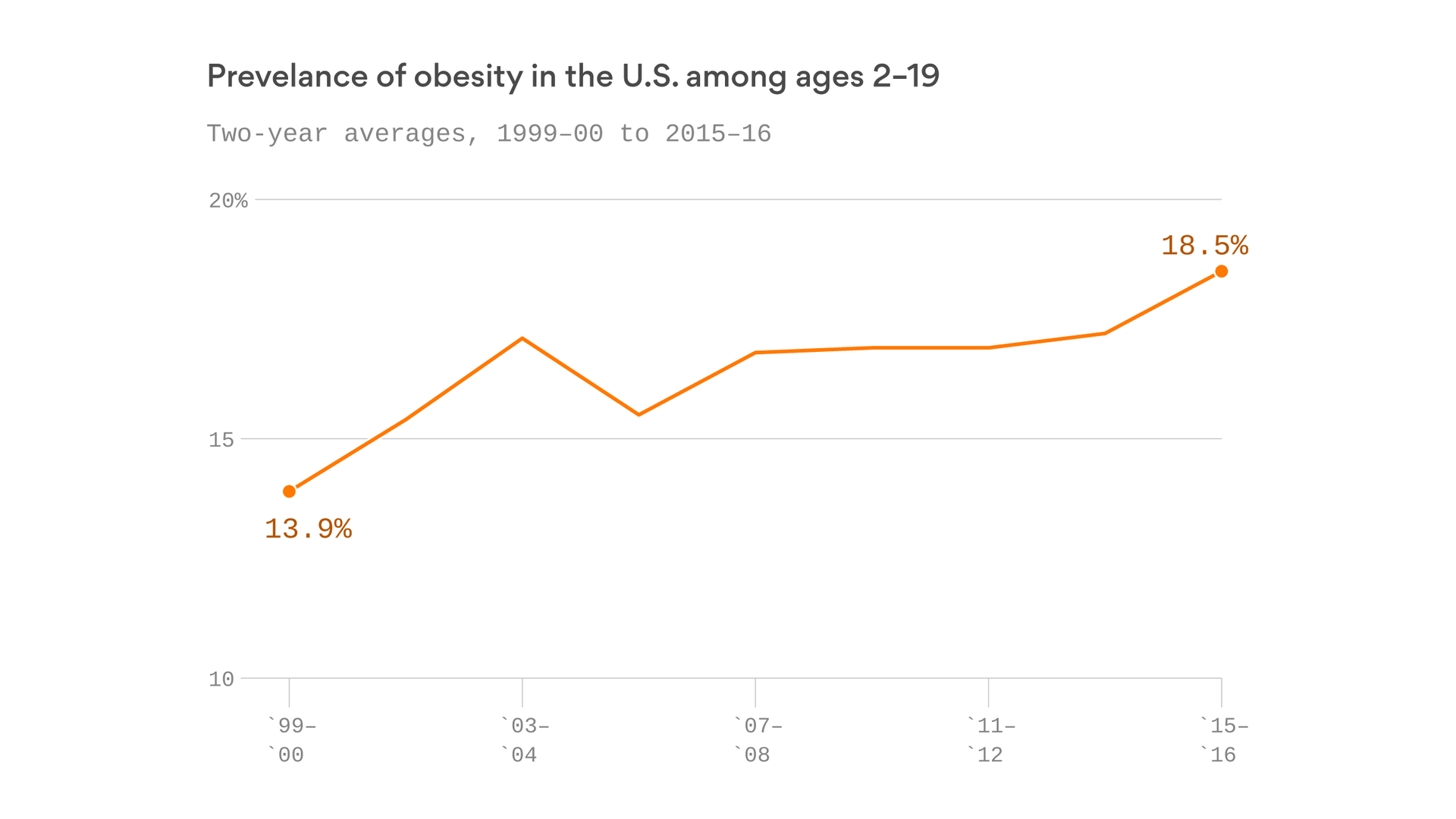
The big picture: Rising obesity rates now will translate into rising rates of type 2 diabetes and heart disease. The costs of the opioid crisis will continue to mount even after the acute crisis ends. And all of this will strain what’s already the most expensive health care system in the world.

By the numbers: 18% of American kids are now obese, according to new CDC data. So are roughly 40% of adults. And it’s projected to get worse.

  • That helps explain why diabetes rates are also rising, and why roughly 30% of adults have high blood pressure.

Why it matters: More obese children means there will be more adults down the road with chronic conditions like diabetes — which can’t be cured, only managed — and these diseases in turn increase the risk of further complications, such as kidney disease and stroke.

  • Diabetes roughly doubles your lifetime health care bills, according to the CDC, and costs the U.S. a total of $245 billion per year.
  • As the price of insulin continues to skyrocket, the disease only gets harder for patients to manage, if they can afford treatment at all.

We’re only beginning to see the full costs of the opioid crisis, even though it has raged for years.

  • A White House report earlier this week pegged the cost of the epidemic at a staggering $696 billion last year alone, including the cost of productivity lost to addiction.
  • The tide has only barely begun to turn on overall overdose deaths — they still numbered around 68,000 last year.
  • And many survivors of the epidemic will face long-term health costs. Addiction recovery can be a lifelong process requiring sustained investments. It has also led to skyrocketing rates of Hepatitis C — some states have seen their infection rates rise by more than 200% over the past decade.

Groundbreaking new treatments offer the first-ever cure for Hepatitis C, but at price tags so high that states are experimenting with entirely new ways of paying for the drugs, fearing the status quo simply can’t bear these costs all at once.

The bottom line: The flaws in the U.S. health care system compound one another.

  • They reward doctors and hospitals for performing more treatment on sick people, and those treatments are expensive. That leaves big gaps in prevention, which drives the need for more expensive treatment.
  • That’s how we ended up with the world’s most expensive health care system, but without a particularly healthy population to show for it. And that trajectory isn’t changing.


Walgreens shying away from in-store clinics

https://www.axios.com/walgreens-shying-away-from-in-store-clinics-37dfff5f-87a3-4f98-ba65-82c5c6cd6628.html

Walgreens

Walgreens is inviting outside providers to deliver medical services to its pharmacies as it tries to move away from in-store clinics, the Wall Street Journal reports.

The big picture: The drugstore chain’s decision signals a shift from treating minor issues to treating chronic conditions such as diabetes, heart disease and hypertension.

Treatment for chronically ill patients could offset slowing revenue from prescription drugs and competition from online retailers.

By the numbers: Chronic conditions account for about 90% the U.S.’s annual health-care spending of $3.3 trillion, according to the Centers for Disease Control and Prevention.

  • Walgreens has about 400 walk-in clinics and CVS Health has 1,000 Minute Clinic locations, which have “barely broken even,” WSJ writes.
  • The company will close 160 of its in-store clinics.


Walmart tests dentistry and mental care as it moves deeper into primary health

https://www.cnbc.com/2019/08/29/walmart-is-piloting-health-clinic-at-walmart-health-in-georgia.html

GP: Walmart Pharmacy 120912

Key Points
  • Walmart is opening up a new health clinic, called Walmart Health, in Georgia.
  • The company has previously opened clinics inside retail locations in Texas, South Carolina and Georgia.
  • At the new clinic, the company will offer hearing tests, 60-minute counseling sessions and vision tests.

Walmart, the world’s biggest retailer, is moving deeper into the primary care and mental health market, opening a new clinic called Walmart Health in Georgia.

The company recently updated its website with a link to Walmart Health, describing its “newest location in Dallas, GA.” It also went online with the site “Walmarthealth.com,” where patients can set up appointments. Walmart is testing the concept with the initial clinic and could open more in the future, according to people familiar with the matter who asked not to be named because the plans are confidential.

The Dallas location, which is set to open its doors next month, will give patients access to comprehensive and low-cost primary care, including for mental health issues. The clinic is in a separate building next door to a Walmart store to give a sense of privacy for patients.

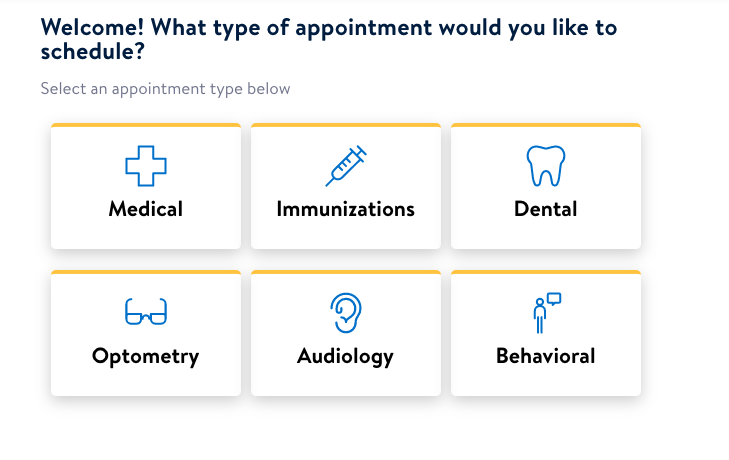
The website indicates that first appointments are available on Sept. 13, and the company will offer primary care, dental, counseling, labs, X-rays and audiology, among other services. Sean Slovenski, who Walmart recruited from Humana, is leading the clinic efforts, the people familiar said.

Walmart is already one of the largest pharmacy companies in the U.S., offering in-store sections for prescription drugs in almost all of its 4,700 locations across the U.S. The company said health and wellness, which includes pharmacy, clinical and optical services, accounted for about 9%, or $36 billion, of its roughly $332 billion in U.S. sales last fiscal year.

The company hasn’t previously offered mental health services, but it did lease space in one of its Texas stores to a third-party behavioral health company in 2018 because of a shortage of professionals in the region. That experience has helped inform the company’s view of how it can have a bigger impact in the space, the people said.

A Walmart spokesperson confirmed the opening of the clinic.

“Walmart is committed to making healthcare more affordable and accessible for customers in the communities we serve,” the representative said. “The new Walmart Health center in our Dallas, Georgia, store will provide low, transparent pricing for key health services for local customers. We look forward to sharing more details when the facility opens next month.”

Primary care is a newer market for Walmart and puts it in competition with a different set of companies, ranging from large health systems to emerging businesses like One Medical, Circle Medical and Forward. Walmart’s distinct opportunity is that roughly 140 million people visit its stores every week, and it has about 1.5 million U.S. employees spread across cities of all sizes, including in rural areas where there’s a shortage of health-care services.

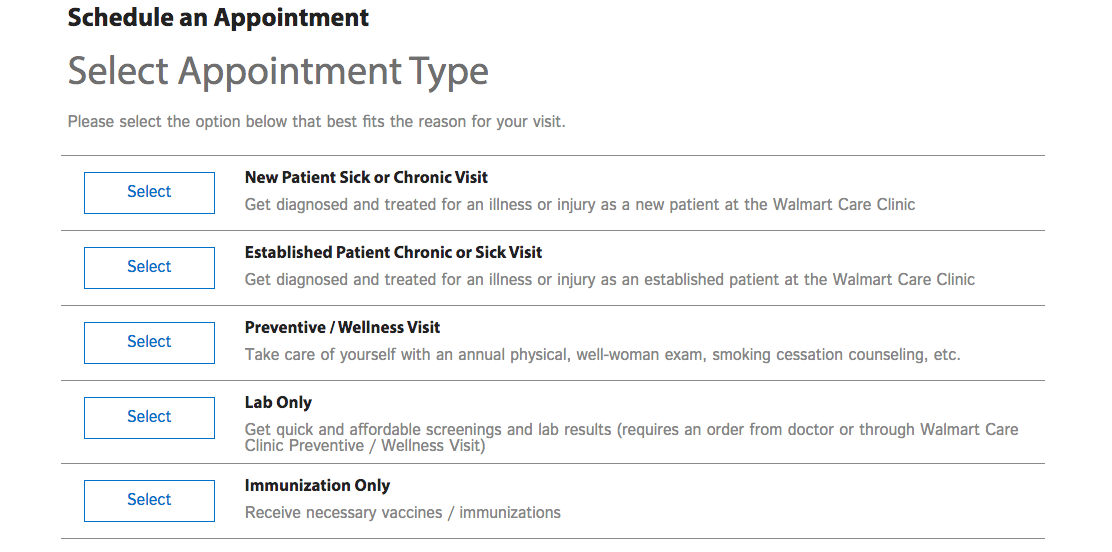
vs. the new Walmart Health

“I would put this in the broad category of retailers looking for services that give them opportunity for growth,” said Tom Lee, the founder of One Medical and CEO of primary care start-up Galileo Health, in an interview. “In-store concepts have had mixed success and this is an attempt to try something more standalone.” Lee said he wasn’t aware of Walmart’s plans.

Walmart has previously offered what it calls Care Clinics in Texas, South Carolina and Georgia, but these are incorporated into existing retail stores rather than its own site. The cost of an appointment varies from $59 to $99, although the company accepts many of the largest health insurance plans.

The new clinic will have on-site health providers, including nurses, to offer consultations, immunizations and lab tests, people familiar with the matter said. Added services include hearing tests, 60-minute counseling sessions and vision tests.

Amazon, Walmart’s rival, has also been making a bigger push into health. CNBC previously reported the company has been opening primary care clinics at its main office in Seattle. It acquired online pharmacy PillPack for about $750 million in 2018 in a bid to go deeper into prescription medication and take on companies like CVS and Walgreens.

Walmart has a culture of piloting new ideas in smaller settings, including testing delivering groceries inside of customers’ homes and experimenting with artificial intelligence at a Neighborhood Market store in Levittown, New York. If it can prove the model works, the company typically looks to scale the offerings across its locations.