The Value-based Care Agenda in Trump 2.0 Healthcare

This week, the House Energy and Commerce and Ways and Means Committees begins work on the reconciliation bill they hope to complete by Memorial Day. Healthcare cuts are expected to figure prominently in the committee’s work.

And in San Diego, America’s Physician Groups (APG) will host its spring meeting “Kickstarting Accountable Care: Innovations for an Urgent Future” featuring Presidential historian Dorris Kearns Goodwin and new CMS Innovation Center Director Abe Sutton. Its focus will be the immediate future of value-based programs in Trump Healthcare 2.0, especially accountable care organizations (ACOs) and alternative payment models (APMs).

Central to both efforts is the administration’s mandate to reduce federal spending which it deems achievable, in part, by replacing fee for services with value-based payments to providers from the government’s Medicare and Medicaid programs. 

The CMS Center for Medicare and Medicaid Innovation (CMMI) is the government’s primary vehicle to test and implement alternative payment programs that reduce federal spending and improve the quality and effectiveness of services simultaneously.

Pledges to replace fee-for-service payments with value-based incentives are not new to Medicare.  Twenty-five years ago, they were called “pay for performance” programs and, in 2010, included in the Affordable Care as alternative payment models overseen by CMMI.

But the effectiveness of APMs has been modest at best: of 50+ models attempted, only 6 proved effective in reducing Medicare spending while spending $5.4 billion on the programs. Few were adopted in Medicaid and only a handful by commercial payers and large self-insured employers. Critics argue the APMs were poorly structured, more costly to implement than potential shared savings payments and sometimes more focused on equity and DEI aims than actual savings.

The question is how the Mehmet Oz-Abe Sutten version of CMMI will approach its version of value-based care, given modest APM results historically and the administration’s focus on cost-cutting.

Context is key:

Recent efforts by the Trump Healthcare 2.0 team and its leadership appointments in CMS and CMMI point to a value-agenda will change significantly. Alternative payment models will be fewer and participation by provider groups will be mandated for several. Measures of quality and savings will be fewer, more easily measured and and standardized across more episodes of care. Financial risks and shared savings will be higher and regulatory compliance will be simplified in tandem with restructuring in HHS, CMS and CMMI to improve responsiveness and consistency across federal agencies and programs.

Sutton’s experience as the point for CMMI is significant. Like Adam Boehler, Brad Smith and other top Trump Healthcare 2.0 leaders, he brings prior experience in federal health agencies and operating insight from private equity-backed ventures (Honest Health, Privia, Evergreen Nephrology funded through Nashville-based Rubicon Founders). Sutton’s deals have focused on physician-driven risk-bearing arrangements with Medicare with funding from private investors.

The Trump Healthcare 2.0 team share a view that the healthcare system is unnecessarily expensive and wasteful, overly-regulated and under-performing. They see big hospitals and drug companies as complicit—more concerned about self-protection than consumer engagement and affordability.

They see flawed incentives as a root cause, and believe previous efforts by CMS and CMMI veered inappropriately toward DEI and equity rather than reducing health costs.

And they think physicians organized into risk bearing structures with shared incentives, point of care technologies and dependable data will reduce unnecessary utilization (spending) and improve care for patients (including access and affordability).

There’s will be a more aggressive approach to spending reduction and value-creation with Medicare as the focus: stronger alternative payment models and expansion of Medicare Advantage will book-end their collective efforts as Trump Healthcare 2.0 seeks cost-reduction in Medicare.

What’s ahead?

Trump Healthcare 2.0 value-based care is a take-no prisoners strategy in which private insurers in Medicare Advantage have a seat at their table alongside hospitals that sponsor ACOs and distribute the majority of shared savings to the practicing physicians. But the agenda will be set, and re-set by the administration and link-minded physician organizations like America’s Physician Groups and others that welcome financial risk-sharing with Medicare and beyond.

The results of the Trump Healthcare 2.0 value agenda will be unknown to voters in the November 2026 mid-term but apparent by the Presidential campaign in 2028. In the interim, surrogate measures for performance—like physician participation and projected savings–will be used to show progress and the administration will claim success. It will also spark criticism especially from providers who believe access to needed specialty care will be restricted, public and rural health advocates whose funding is threatened, teaching and clinical research organizations who facing DOGE cuts and regulatory uncertainty, patient’s right advocacy groups fearing lack of attention and private payers lacking scalable experience in Medicare Advantage and risk-based relationships with physicians.

Last week, the American Medical Association named Dr. John Whyte its next President replacing widely-respected 12-year CEO/EVP Jim Madara. When he assumes this office in July, he’ll inherit an association that has historically steered clear of major policy issues but the administration’s value-based care agenda will quickly require his attention.

Physicians including AMA members are restless:

At last fall’s House of Delegates (HOD), members passed a resolution calling for constraints on not-for-profit hospital’ tax exemptions due to misleading community benefits reporting and more consistency in charity care reporting by all hospitals.

The majority of practicing physicians are burned-out due to loss of clinical autonomy and income pressures—especially the 75% who are employees of hospitals and private-equity backed groups. And last week, the American College of Physicians went on record favoring “collective action” to remedy physician grievances. All impact the execution of the administration’s value-based agenda.

Arguably, the most important key to success for the Trump Healthcare 2.0 is its value agenda and physician support—especially the primary care physicians on whom the consumer engagement and appropriate utilization is based. It’s a tall order.

The Trump Healthcare 2.0 value agenda is focused on near-term spending reductions in Medicare. Savings in federal spending for Medicaid will come thru reconciliation efforts in Congress that will likely include work-requirements for enrollees, elimination of subsidies for low-income adults and drug formulary restrictions among others. And, at least for the time being, attention to those with private insurance will be on the back burner, though the administration favors insurance reforms adding flexible options for individuals and small groups.

The Trump Healthcare 2.0 value-agenda is disruptive, aggressive and opportunistic for physician organizations and their partners who embrace performance risk as a permanent replacement for fee for service healthcare. It’s a threat to those that don’t.


The Value-based Care Agenda in Trump 2.0 Healthcare

This week, the House Energy and Commerce and Ways and Means Committees begins work on the reconciliation bill they hope to complete by Memorial Day. Healthcare cuts are expected to figure prominently in the committee’s work.

And in San Diego, America’s Physician Groups (APG) will host its spring meeting “Kickstarting Accountable Care: Innovations for an Urgent Future” featuring Presidential historian Dorris Kearns Goodwin and new CMS Innovation Center Director Abe Sutton. Its focus will be the immediate future of value-based programs in Trump Healthcare 2.0, especially accountable care organizations (ACOs) and alternative payment models (APMs).

Central to both efforts is the administration’s mandate to reduce federal spending which it deems achievable, in part, by replacing fee for services with value-based payments to providers from the government’s Medicare and Medicaid programs. The CMS Center for Medicare and Medicaid Innovation (CMMI) is the government’s primary vehicle to test and implement alternative payment programs that reduce federal spending and improve the quality and effectiveness of services simultaneously.

Pledges to replace fee-for-service payments with value-based incentives are not new to Medicare.  Twenty-five years ago, they were called “pay for performance” programs and, in 2010, included in the Affordable Care as alternative payment models overseen by CMMI. But the effectiveness of APMs has been modest at best: of 50+ models attempted, only 6 proved effective in reducing Medicare spending while spending $5.4 billion on the programs. Few were adopted in Medicaid and only a handful by commercial payers and large self-insured employers. Critics argue the APMs were poorly structured, more costly to implement than potential shared savings payments and sometimes more focused on equity and DEI aims than actual savings.

The question is how the Mehmet Oz-Abe Sutten version of CMMI will approach its version of value-based care, given modest APM results historically and the administration’s focus on cost-cutting.

Context is key:

Recent efforts by the Trump Healthcare 2.0 team and its leadership appointments in CMS and CMMI point to a value-agenda will change significantly. Alternative payment models will be fewer and participation by provider groups will be mandated for several. Measures of quality and savings will be fewer, more easily measured and and standardized across more episodes of care. Financial risks and shared savings will be higher and regulatory compliance will be simplified in tandem with restructuring in HHS, CMS and CMMI to improve responsiveness and consistency across federal agencies and programs.

Sutton’s experience as the point for CMMI is significant. Like Adam Boehler, Brad Smith and other top Trump Healthcare 2.0 leaders, he brings prior experience in federal health agencies and operating insight from private equity-backed ventures (Honest Health, Privia, Evergreen Nephrology funded through Nashville-based Rubicon Founders). Sutton’s deals have focused on physician-driven risk-bearing arrangements with Medicare with funding from private investors.

The Trump Healthcare 2.0 team share a view that the healthcare system is unnecessarily expensive and wasteful, overly-regulated and under-performing. They see big hospitals and drug companies as complicit—more concerned about self-protection than consumer engagement and affordability. They see flawed incentives as a root cause, and believe previous efforts by CMS and CMMI veered inappropriately toward DEI and equity rather than reducing health costs. And they think physicians organized into risk bearing structures with shared incentives, point of care technologies and dependable data will reduce unnecessary utilization (spending) and improve care for patients (including access and affordability).

There’s will be a more aggressive approach to spending reduction and value-creation with Medicare as the focus: stronger alternative payment models and expansion of Medicare Advantage will book-end their collective efforts as Trump Healthcare 2.0 seeks cost-reduction in Medicare.

What’s ahead?

Trump Healthcare 2.0 value-based care is a take-no prisoners strategy in which private insurers in Medicare Advantage have a seat at their table alongside hospitals that sponsor ACOs and distribute the majority of shared savings to the practicing physicians. But the agenda will be set, and re-set by the administration and link-minded physician organizations like America’s Physician Groups and others that welcome financial risk-sharing with Medicare and beyond.

The results of the Trump Healthcare 2.0 value agenda will be unknown to voters in the November 2026 mid-term but apparent by the Presidential campaign in 2028. In the interim, surrogate measures for performance—like physician participation and projected savings–will be used to show progress and the administration will claim success. It will also spark criticism especially from providers who believe access to needed specialty care will be restricted, public and rural health advocates whose funding is threatened, teaching and clinical research organizations who facing DOGE cuts and regulatory uncertainty, patient’s right advocacy groups fearing lack of attention and private payers lacking scalable experience in Medicare Advantage and risk-based relationships with physicians.

Last week, the American Medical Association named Dr. John Whyte its next President replacing widely-respected 12-year CEO/EVP Jim Madara. When he assumes this office in July, he’ll inherit an association that has historically steered clear of major policy issues but the administration’s value-based care agenda will quickly require his attention.

Physicians including AMA members are restless: at last fall’s House of Delegates (HOD), members passed a resolution calling for constraints on not-for-profit hospital’ tax exemptions due to misleading community benefits reporting and more consistency in charity care reporting by all hospitals. The majority of practicing physicians are burned-out due to loss of clinical autonomy and income pressures—especially the 75% who are employees of hospitals and private-equity backed groups. And last week, the American College of Physicians went on record favoring “collective action” to remedy physician grievances. All impact the execution of the administration’s value-based agenda.

Arguably, the most important key to success for the Trump Healthcare 2.0 is its value agenda and physician support—especially the primary care physicians on whom the consumer engagement and appropriate utilization is based. It’s a tall order.

The Trump Healthcare 2.0 value agenda is focused on near-term spending reductions in Medicare. Savings in federal spending for Medicaid will come thru reconciliation efforts in Congress that will likely include work-requirements for enrollees, elimination of subsidies for low-income adults and drug formulary restrictions among others. And, at least for the time being, attention to those with private insurance will be on the back burner, though the administration favors insurance reforms adding flexible options for individuals and small groups.

The Trump Healthcare 2.0 value-agenda is disruptive, aggressive and opportunistic for physician organizations and their partners who embrace performance risk as a permanent replacement for fee for service healthcare. It’s a threat to those that don’t.

Cone Health to join Kaiser Permanente subsidiary Risant Health

https://www.kaufmanhall.com/insights/blog/gist-weekly-june-28-2024

Last Friday, Greensboro, NC-based Cone Health announced that it signed a definitive agreement to join Risant Health, Kaiser Permanente’s not-for-profit subsidiary.

Launched in April 2023, Risant aims to acquire and support not-for-profit health systems focused on value-based care.

If the deal is approved by regulators, Cone Health, a $2.8B not-for-profit system with five hospitals and an insurance arm, would join Danville, PA-based Geisinger as Risant’s second member.

As part of the deal, Risant will invest an undisclosed sum into Cone, but Cone will continue to operate independently, retaining its branding, leadership, and ability to work with multiple insurers. The two parties expect to close the deal in the next six months.

The Gist: Like Geisinger, Cone has a strong track record of value-based care, including a 15K-member health plan and a high-performing accountable care organization.

Neither Risant nor Kaiser has operations in North Carolina, a state currently seeing strong population growth

Risant has previously said that is looking to acquire four or five more systems in addition to Geisinger, in order to reach a combined revenue target of $30-35B over the next five years.

    The Healthcare Economy: Three Key Takeaways that Frame Public and Private Sector Response

    Last week, 2 important economic reports were released that provide a retrospective and prospective assessment of the U.S. health economy:

    The CBO National Health Expenditure Forecast to 2032: 

    “Health care spending growth is expected to outpace that of the gross domestic product (GDP) during the coming decade, resulting in a health share of GDP that reaches 19.7% by 2032 (up from 17.3% in 2022). National health expenditures are projected to have grown 7.5% in 2023, when the COVID-19 public health emergency ended. This reflects broad increases in the use of health care, which is associated with an estimated 93.1% of the population being insured that year… During 2027–32, personal health care price inflation and growth in the use of health care services and goods contribute to projected health spending that grows at a faster rate than the rest of the economy.”

    The Congressional Budget Office forecast that from 2024 to 2032:

    • National Health Expenditures will increase 52.6%: $5.048 trillion (17.6% of GDP) to $7,705 trillion (19.7% of GDP) based on average annual growth of: +5.2% in 2024 increasing to +5.6% in 2032
    • NHE/Capita will increase 45.6%: from $15,054 in 2024 to $21,927 in 2032
    • Physician services spending will increase 51.2%: from $1006.5 trillion (19.9% of NHE) to $1522.1 trillion (19.7% of total NHE)
    • Hospital spending will increase 51.6%: from $1559.6 trillion (30.9% of total NHE) in 2024 to $2366.3 trillion (30.7% of total NHE) in 2032.
    • Prescription drug spending will increase 57.1%: from 463.6 billion (9.2% of total NHE) to 728.5 billion (9.4% of total NHE)
    • The net cost of insurance will increase 62.9%: from 328.2 billion (6.5% of total NHE) to 534.7 billion (6.9% of total NHE).
    • The U.S. Population will increase 4.9%: from 334.9 million in 2024 to 351.4 million in 2032.

    The Bureau of Labor Statistics CPI Report for May 2024 and Last 12 Months (May 2023-May2024): 

    “The Consumer Price Index for All Urban Consumers (CPI-U) was unchanged in May on a seasonally adjusted basis, after rising 0.3% in April… Over the last 12 months, the all-items index increased 3.3% before seasonal adjustment. More than offsetting a decline in gasoline, the index for shelter rose in May, up 0.4% for the fourth consecutive month. The index for food increased 0.1% in May. … The index for all items less food and energy rose 0.2% in May, after rising 0.3 % the preceding month… The all-items index rose 3.3% for the 12 months ending May, a smaller increase than the 3.4% increase for the 12 months ending April. The all items less food and energy index rose 3.4 % over the last 12 months. The energy index increased 3.7%for the 12 months ending May. The food index increased 2.1%over the last year.

    Medical care services, which represents 6.5% of the overall CPI, increased 3.1%–lower than the overall CPI. Key elements included in this category reflect wide variance: hospital and OTC prices exceeded the overall CPI while insurance, prescription drugs and physician services were lower.

    • Physicians’ services CPI (1.8% of total impact): LTM: +1.4%
    • Hospital services CPI (1.0% of total impact): LTM: +7.3%
    • Prescription drugs (.9% of total impact) LTM +2.4%
    • Over the Counter Products (.4% of total impact) LTM 5.9%
    • Health insurance (.6% of total) LTM -7.7%

    Other categories of greater impact on the overall CPI than medical services are Shelter (36.1%), Commodities (18.6%), Food (13.4%), Energy (7.0%) and Transportation (6.5%).

    Three key takeaways from these reports:

    • The health economy is big and getting bigger. But it’s less obvious to consumers in the prices they experience than to employers, state and federal government who fund the majority of its spending. Notably, OTC products are an exception: they’re a direct OOP expense for most consumers. To consumers, especially renters and young adults hoping to purchase homes, the escalating costs of housing have considerably more impact than health prices today but directly impact on their ability to afford coverage and services. Per Redfin, mortgage rates will hover at 6-7% through next year and rents will increase 10% or more.
    • Proportionate to National Health Expenditure growth, spending for hospitals and physician services will remain at current levels while spending for prescription drugs and health insurance will increase. That’s certain to increase attention to price controls and heighten tension between insurers and providers.
    • There’s scant evidence the value agenda aka value-based purchases, alternative payment models et al has lowered spending nor considered significant in forecasts.

    The health economy is expanding above the overall rates of population growth, overall inflation and the U.S. economy. GDP.  Its long-term sustainability is in question unless monetary policies enable other industries to grow proportionately and/or taxpayers agree to pay more for its services. These data confirm its unit costs and prices are problematic.

    As Campaign 2024 heats up with the economy as its key issue, promises to contain health spending, impose price controls, limit consolidation and increase competition will be prominent.

    Public sector actions

    will likely feature state initiatives to lower cost and spend taxpayer money more effectively.

    Private sector actions

    will center on employer and insurer initiatives to increase out of pocket payments for enrollees and reduce their choices of providers.

    Thus, these reports paint a cautionary picture for the health economy going forward. Each sector will feel cost-containment pressure and each will claim it is responding appropriately. Some actually will.

    PS: The issue of tax exemptions for not-for-profit hospitals reared itself again last week.

    The Committee for a Responsible Federal Budget—a conservative leaning think tank—issued a report arguing the exemption needs to be ended or cut.  In response,

    the American Hospital Association issued a testy reply claiming the report’s math misleading and motivation ill-conceived.

    This issue is not going away: it requires objective analysis, fresh thinking and new voices.  For a recap, see the Hospital Section below.

    Preparing for Medicare Advantage’s Make-or-Break Moment

    https://www.kaufmanhall.com/insights/article/preparing-medicare-advantages-make-or-break-moment

    In recent years, the Medicare Advantage (MA) program enjoyed both rapid membership growth and positive attention from healthcare organizations and advocates. As of the beginning of 2024, 33.4 million Americans were enrolled in MA, up 7% from 2023.

    More than half of all Medicare-eligible individuals are now enrolled in MA.

    Interest and growth in MA has been buoyed by a number of factors: a growing eligible population as Baby Boomers continue to age into Medicare eligibility; affordable benefit packages with low or zero monthly premiums; regulatory changes providing for more flexibility in plan and member design; consumer-centric programs and care models tailored to the needs of beneficiaries; increased marketing and sales efforts through direct mailings, telemarketing, and online advertising.

    The program has also delivered meaningful value to members, who are more likely than traditional Medicare beneficiaries to have an annual income less than $40,000. In addition, the average monthly premium for Medicare beneficiaries enrolled in an MA plan has dropped by almost one-third in the last four years, reaching $18 per month in 2023.

    Ideally, success in MA can take the form of a virtuous cycle: an improved margin on MA for a plan enables reinvestment in related products to grow membership and better manage health outcomes, which leads to further reinvestment (Figure 1). Sustained success is contingent on meaningful collaboration between payers and providers.

    FIGURE 1: The Virtuous Cycle of MA Success

    MA Hits Headwinds

    However, after several high-growth years, payers and providers are currently confronting multiple MA-related challenges. Many providers have recently posted losses as their contractual yields decrease and authorizations for care have become more restrictive. The bar for risk adjustment and Star Ratings is also rising. Only 6% of plans received a 5-star rating from the Center for Medicare & Medicaid Services (CMS) for 2024, down from 22% in 2023. CMS also recently confirmed plans for rate cuts in 2025, with critics arguing that benefits for beneficiaries may become more limited. Providers are also reeling from related bureaucratic headaches.

    As a result of these concerns, some providers are going out of network from MA plans, while some have asked CMS to investigate administrative denialsNineteen percent of health system chief financial officers stopped accepting one or more MA plans in 2023—and 61% either plan to do so in 2024 or are considering doing so—according to a recent survey by the Healthcare Financial Management Association and Eliciting Insights.

    Current MA members also have expressed concerns with the program’s trajectory. While roughly two-thirds of MA and traditional Medicare beneficiaries recently surveyed by the Commonwealth Fund said their coverage has met their expectations, MA members were more likely to report delays in care while awaiting prior approval (22% vs. 13%) or difficulty affording care due to copayments or deductibles (12% vs. 7%).

    Some industry experts are warning senior citizens about the costs associated with switching back to traditional Medicare after enrolling in MA plans. Their concerns are creating political and regulatory scrutiny.

    Collaborating for Value

    Despite current challenges, many providers and health plans believe they need to continue to participate in and/or prioritize MA, given the program’s scale and overall benefits to their organizations and the communities they serve.

    For instance, the success of MA risk contracts predicated on collaborating around delivering healthcare value suggests a possible path forward.

    According to a JAMA study of more than 300,000 Medicare Advantage beneficiaries, members in value-based care MA arrangements with risk for both payers and providers had lower rates of inpatient admission, emergency department visits, and readmissions. In addition, CMS’s robust risk scoring model ensures that providers are paid fairly for the true cost of providing care to the populations they serve.

    Percent of premium contracts, where payers delegate a share of the premium to providers to manage, are predictable, align payer and provider interests, easy to understand, and increasingly common.

    In addition, the high cost of caring for Medicare enrollees makes the population health focus on VBC arrangements economical. Medicare members have the highest utilization of any insurance class, so intensive services like care management, disease management, and care coordination are more likely to have a positive return on investment.

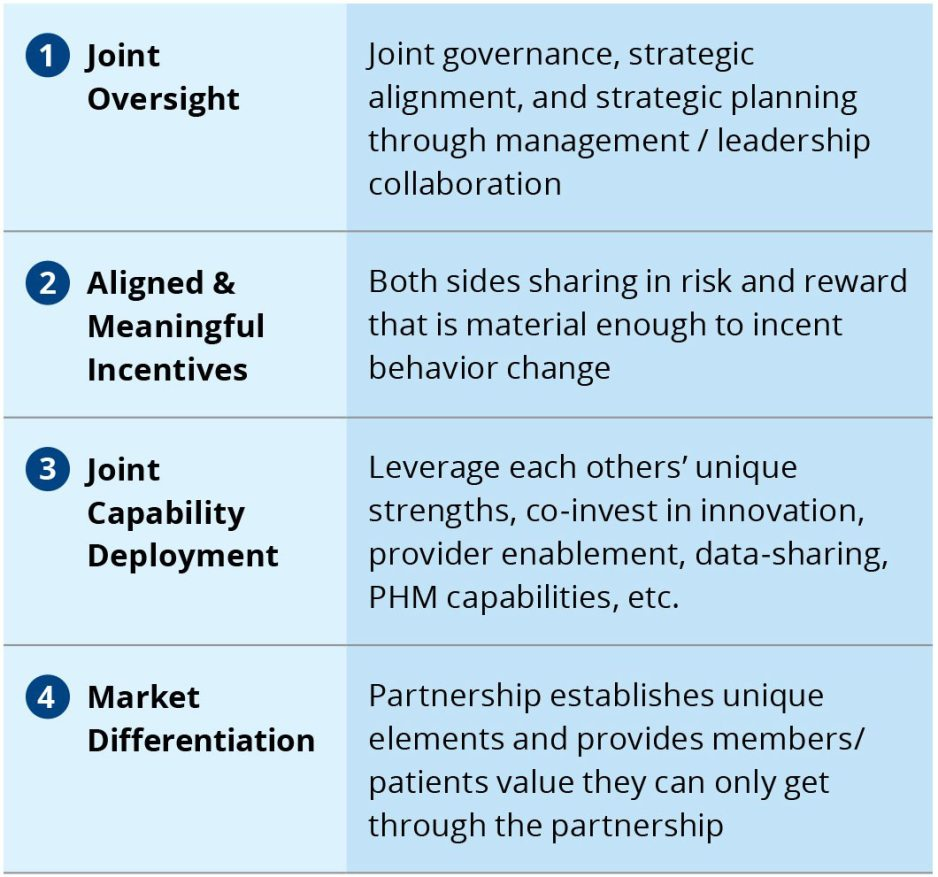
    Successful VBC arrangements share several core tenets, grounded in the need for close collaboration between participating parties (Figure 2).

    FIGURE 2: Core Tenets of Successful Payer-Provider Value-Based Care Models

    However, VBC arrangements are not the only option. Value-centric collaborations can take on a wide range of forms, depending on the amount of risk providers are willing to assume and the partnerships’ risk-related capabilities. The full continuum of value-centric collaborations runs the gamut from shared savings contracts with no downside risk for providers to full vertical integration into a single organization (Figure 3).

    FIGURE 3: Understanding the Continuum of Value-Based Care Arrangements

    Looking Into the Crystal Ball: Three Future State Scenarios

    As the MA market confronts new headwinds after years of growth and favorable attention, we anticipate three possible future state scenarios. These possibilities can be applied to both the outlook nationally, as well as the actions of payers and providers within specific markets.

    Scenario 1: A renewal of growth

    In this scenario, better sense prevails, and plans and providers collaborate to address the core issues facing the program. A pause/adjustment in the market is followed by a period of renewed growth. From a national standpoint, this scenario is contingent on neutral to favorable regulatory treatment.

    Scenario 2: Uneasy stabilization

    In this scenario, contention is partially resolved through some degree of collaboration between payers and providers. This scenario is also dependent on neutral to favorable regulatory treatment.

    Scenario 3: Implosion

    In this scenario, high levels of contention continue, and more providers go out of network. Middle-income Medicare members opt out of MA and go back to traditional Medicare when feasible. This scenario accounts for heightened regulatory pressure on risk adjustment and utilization management practices, which further pressures margins.

    Conclusion

    Despite MA’s recent, publicly documented challenges, the program now accounts for more than half of all Medicare beneficiaries—a patient population that every healthcare organization must engage in some form or fashion.

    As providers and payers decide how to approach the program—and each other—amid uncertainty and contention, the path forward can appear unclear. However, healthcare leaders seeking to emerge from the current environment of MA contention have an opportunity to shape the future of MA and will play a major role determining which of the three scenarios outlined in this article comes to fruition.

    Ultimately, organizations must be able to develop a business model that both delivers quality care and manageable per capita costs—and critically, find ways to work through today’s pressing concerns with other MA stakeholders and partners.

    Medicare Advantage rate change bedevils UnitedHealth’s 2024 outlook

    https://www.healthcaredive.com/news/unitedhealth-2024-pressure-medicare-advantage-rate-change/700945/

    UnitedHealth is bracing for a struggle next year with the financial effects of shifting Medicare Advantage payment rates.

    The health insurance giant released 2024 guidance on Tuesday that included a number of less favorable metrics than analysts expected.

    During the company’s investor day in New York City on Wednesday, UnitedHealth executives blamed the outlook on an MA rate change issued by regulators earlier this year that insurers slam as a payment cut.

    Pressured metrics include slower MA membership growth, lower margins at UnitedHealthcare and a higher medical loss ratio. UnitedHealth forecast a 2024 MLR of 84%, a full percentage point higher than analysts’ consensus expectation.

    Despite the MA headwind, UnitedHealthcare’s financial targets overall still came in in-line or ahead of analyst expectations.

    MA rates ‘ripple’ through UnitedHealth’s 2024

    UnitedHealth is a behemoth in the U.S. healthcare industry, with one of the largest pharmacy benefits managers, an expanding healthcare IT arm and a growing presence in care delivery, including a network of tens of thousands of physicians.

    UnitedHealth is also the dominant health insurer in many markets, including in MA. The Minnesota-based company is the largest provider of the privately-run Medicare plans.

    Management has said they expect their share of the market to grow as more seniors age into the government insurance program and select MA over traditional Medicare.

    However, UnitedHealth is now saying that MA growth could be depressed next year thanks to a rate notice from the CMS that’s deeply unpopular with insurers.

    Earlier this year, the CMS finalized MA rates for 2024 that regulators said should result in a 3.3% increase in revenue for health insurers in the program. The changes also include a new approach to risk adjustment meant to curb upcoding, a practice where insurers inflate their members’ sicknesses to get higher payments from the government.

    However, insurers have said the changes, which are being phased in over the next three years, will result in a net decrease to MA revenue overall.

    “That rate notice has a material impact in terms of revenues associated with our Medicare Advantage portfolio, and as you can see that ripples through the metrics of the organization,” CEO Andrew Witty said during UnitedHealth’s investor day.

    UnitedHealthcare, UnitedHealth’s health insurance division, now expects slower Medicare revenue and membership growth next year than analysts expected.

    UnitedHealth expects to add between 325,000 and 375,000 Medicare Advantage members next year, representing almost 4% growth at the midpoint — “well below our model,” commented JP Morgan analyst Lisa Gill in a note.

    That’s compared to 11% membership growth year to date in 2023, according to CMS data cited in a TD Cowen note. Previously, UnitedHealth leadership said they expected to grow above the overall MA industry growth rate in 2024, so “this appears to be a disappointment,” TD Cowen analyst Gary Taylor wrote.

    However, “we are not materially surprised to see the slower growth rate in 2024 given the changes with the risk adjustment,” Gill said.

    Some payers have said the rate changes could force them to cut benefits in MA. Yet, UnitedHealth has spent the last six months reconfiguring its plans in response to the rate notice, looking for ways to contain costs without curtailing benefits, Witty said.

    UnitedHealthcare should bring in about $303 billion in revenue next year, mostly driven by Medicaid upside, the company said. TD Cowen’s Taylor noted he was unsure why UnitedHealth forecast the Medicaid improvement, given Medicaid payers are shedding members as states recheck eligibility for the safety-net insurance coming out of the COVID-19 pandemic.

    UnitedHealth thinks its Medicaid enrollment will drop by up to 200,000 members next year due to redeterminations, the company said.

    Eye on Optum Health

    UnitedHealth leadership devoted half of their investor day to talking about the insurer’s plans to expand value-based care arrangements — a “core objective” for the next several years, Witty said.

    A key actor in striving for that objective is Optum Health, UnitedHealth’s care delivery network that’s under the umbrella of its health services business Optum.

    Optum released stronger 2024 guidance than analysts expected. Much of that growth is due to better-than-expected margins for Optum Health, analysts said.

    Optum Health has been working to transition commercial lives into more lucrative value-based arrangements, management said in comments earlier this year.

    Currently, Optum Health has about 4 million lives in fully accountable payment arrangements — a number that’s nearly doubled from 2021, said UnitedHealthcare CEO Brian Thompson during the investor day.

    Optum Health expects to add another 750,000 lives by the end of next year.

    ”You should expect us to grow that number substantially each year,” Thompson said. “Our long-term ambition is to transition as many people as possible into value-based care.”

    Overall, UnitedHealth expects 2024 adjusted profit of $27.50 to $28 a share, largely in line with what analysts expected.

    Expected revenue is $400 billion to $403 billion, higher than Wall Street consensus.

    What to expect in US healthcare in 2024 and beyond

    A new perspective on how technology, transformation efforts, and other changes have affected payers, health systems, healthcare services and technology, and pharmacy services.

    The acute strain from labor shortages, inflation, and endemic COVID-19 on the healthcare industry’s financial health in 2022 is easing. Much of the improvement is the result of transformation efforts undertaken over the last year or two by healthcare delivery players, with healthcare payers acting more recently. Even so, health-system margins are lagging behind their financial performance relative to prepandemic levels. Skilled nursing and long-term-care profit pools continue to weaken. Eligibility redeterminations in a strong employment economy have hurt payers’ financial performance in the Medicaid segment. But Medicare Advantage and individual segment economics have held up well for payers.

    As we look to 2027, the growth of the managed care duals population (individuals who qualify for both Medicaid and Medicare) presents one of the most substantial opportunities for payers. On the healthcare delivery side, financial performance will continue to rebound as transformation efforts, M&A, and revenue diversification bear fruit. Powered by adoption of technology, healthcare services and technology (HST) businesses, particularly those that offer measurable near-term improvements for their customers, will continue to grow, as will pharmacy services players, especially those with a focus on specialty pharmacy.

    Below, we provide a perspective on how these changes have affected payers, health systems, healthcare services and technology, and pharmacy services, and what to expect in 2024 and beyond.

    The fastest growth in healthcare may occur in several segments

    We estimate that healthcare profit pools will grow at a 7 percent CAGR, from $583 billion in 2022 to $819 billion in 2027. Profit pools continued under pressure in 2023 due to high inflation rates and labor shortages; however, we expect a recovery beginning in 2024, spurred by margin and cost optimization and reimbursement-rate increases.

    Several segments can expect higher growth in profit pools:

    • Within payer, Medicare Advantage, spurred by the rapid increase in the duals population; the group business, due to recovery of margins post-COVID-19 pandemic; and individual
    • Within health systems, outpatient care settings such as physician offices and ambulatory surgery centers, driven by site-of-care shifts
    • Within HST, the software and platforms businesses (for example, patient engagement and clinical decision support)
    • Within pharmacy services, with specialty pharmacy continuing to experience rapid growth

    On the other hand, some segments will continue to see slow growth, including general acute care and post-acute care within health systems, and Medicaid within payers (Exhibit 1).

    Exhibit 1

    Several factors will likely influence shifts in profit pools. Two of these are:

    Change in payer mix. Enrollment in Medicare Advantage, and particularly the duals population, will continue to grow. Medicare Advantage enrollment has grown historically by 9 percent annually from 2019 to 2022; however, we estimate the growth rate will reduce to 5 percent annually from 2022 to 2027, in line with the latest Centers for Medicare & Medicaid Services (CMS) enrollment data.1 Finally, the duals population enrolled in managed care is estimated to grow at more than a 9 percent CAGR from 2022 through 2027.

    We also estimate commercial segment profit pools to rebound as EBITDA margins likely return to historical averages by 2027. Growth is likely to be partially offset by enrollment changes in the segment, prompted by a shift from fully insured to self-insured businesses that could accelerate as employers seek to cut costs if the economy slows. Individual segment profit pools are estimated to expand at a 27 percent CAGR from 2022 to 2027 as enrollment rises, propelled by enhanced subsidies, Medicaid redeterminations, and other potential favorable factors (for example, employer conversions through the Individual Coverage Health Reimbursement Arrangement offered by the Affordable Care Act); EBITDA margins are estimated to improve from 2 percent in 2022 to 5 to 7 percent in 2027. On the other hand, Medicaid enrollment could decline by about ten million lives over the next five years based on our estimates, given recent legislation allowing states to begin eligibility redeterminations (which were paused during the federal public health emergency declared at the start of the COVID-19 pandemic2).

    Accelerating value-based care (VBC). Based on our estimates, 90 million lives will be in VBC models by 2027, from 43 million in 2022. This expansion will be fueled by an increase in commercial VBC adoption, greater penetration of Medicare Advantage, and the Medicare Shared Savings Program (MSSP) model in Medicare fee-for-service. Also, substantial growth is expected in the specialty VBC model, where penetration in areas like orthopedics and nephrology could more than double in the next five years.

    VBC models are undergoing changes as CMS updates its risk adjustment methodology and as models continue to expand beyond primary care to other specialties (for example, nephrology, oncology, and orthopedics). We expect established models that offer improvements in cost and quality to continue to thrive. The transformation of VBC business models in response to pressures from the current changes could likely deliver outsized improvement in cost and quality outcomes. The penetration of VBC business models is likely to lead to shifts in health delivery profit pools, from acute-care settings to other sites of care such as ambulatory surgical centers, physician offices, and home settings.

    Payers: Government segments are expected to be 65 percent larger than commercial segments by 2027

    In 2022, overall payer profit pools were $60 billion. Looking ahead, we estimate EBITDA to grow to $78 billion by 2027, a 5 percent CAGR, as the market recovers and approaches historical trends. Drivers are likely to be margin recovery of the commercial segment, inflation-driven incremental premium rate rises, and increased participation in managed care by the duals population. This is likely to be partially offset by margin compression in Medicare Advantage due to regulatory pressures (for example, risk adjustment, decline in the Stars bonus, and technical updates) and membership decline in Medicaid resulting from the expiration of the public health emergency.

    We estimate increased labor costs and administrative expenses to reduce payer EBITDA by about 60 basis points in 2023. In addition, health systems are likely to push for reimbursement rate increases (up to about 350 to 400 basis-point incremental rate increases from 2023 to 2027 for the commercial segment and about 200 to 250 basis points for the government segment), according to McKinsey analysis and interviews with external experts.3

    Our estimates also suggest that the mix of payer profit pools is likely to shift further toward the government segment (Exhibit 2). Overall, the profit pools for this segment are estimated to be about 65 percent greater than the commercial segment by 2027 ($36 billion compared with $21 billion). This shift would be a result of increasing Medicare Advantage penetration, estimated to reach 52 percent in 2027, and likely continued growth in the duals segment, expanding EBITDA from $7 billion in 2022 to $12 billion in 2027.

    Exhibit 2

    Profit pools for the commercial segment declined from $18 billion in 2019 to $15 billion in 2022. We now estimate the commercial segment’s EBITDA margins to regain historical levels by 2027, and profit pools to reach $21 billion, growing at a 7 percent CAGR from 2022 to 2027. Within this segment, a shift from fully insured to self-insured businesses could accelerate in the event of an economic slowdown, which prompts employers to pay greater attention to costs. The fully insured group enrollment could drop from 50 million in 2022 to 46 million in 2027, while the self-insured segment could increase from 108 million to 113 million during the same period.

    Health systems: Transformation efforts help accelerate EBITDA recovery

    In 2023, health-system profit pools continued to face substantial pressure due to inflation and labor shortages. Estimated growth was less than 5 percent from 2022 to 2023, remaining below prepandemic levels. Health systems have undertaken major transformation and cost containment efforts, particularly within the labor force, helping EBITDA margins recover by up to 100 basis points; some of this recovery was also volume-driven.

    Looking ahead, we estimate an 11 percent CAGR from 2023 to 2027, or total EBITDA of $366 billion by 2027 (Exhibit 3). This reflects a rebound from below the long-term historical average in 2023, spurred by transformation efforts and potentially higher reimbursement rates. We anticipate that health systems will likely seek reimbursement increases in the high single digits or higher upon contract renewals (or more than 300 basis points above previous levels) in response to cost inflation in recent years.

    Exhibit 3

    Measures to tackle rising costs include improving labor productivity and the application of technological innovation across both administration and care delivery workflows (for example, further process standardization and outsourcing, increased use of digital care, and early adoption of AI within administrative workflows such as revenue cycle management). Despite these measures, 2027 industry EBITDA margins are estimated to be 50 to 100 basis points lower than in 2019, unless there is material acceleration in performance transformation efforts.

    There are some meaningful exceptions to this overall outlook for health systems. Although post-acute-care profit pools could be severely affected by labor shortages (particularly nurses), other sites of care might grow (for example, non-acute and outpatient sites such as physician offices and ambulatory surgery centers). We expect accelerated adoption of VBC to drive growth.

    HST profit pools will grow in technology-based segments

    HST is estimated to be the fastest-growing sector in healthcare. In 2021, we estimated HST profit pools to be $51 billion. In 2022, according to our estimates, the HST profit pool shrank to $49 billion, reflecting a contracting market, wage inflation pressure, and the drag of fixed-technology investment that had not yet fulfilled its potential. Looking ahead, we estimate a 12 percent CAGR in 2022–27 due to the long-term underlying growth trend and rebound from the pandemic-related decline (Exhibit 4). With the continuing technology adoption in healthcare, the greatest acceleration is likely to happen in software and platforms as well as data and analytics, with 15 percent and 22 percent CAGRs, respectively.

    Exhibit 4

    In 2023, we observed an initial recovery in the HST market, supported by lower HST wage pressure and continued adoption of technology by payers and health systems searching for ways to become more efficient (for example, through automation and outsourcing).

    Three factors account for the anticipated recovery and growth in HST. First, we expect continued demand from payers and health systems searching to improve efficiency, address labor challenges, and implement new technologies (for example, generative AI). Second, payers and health systems are likely to accept vendor price increases for solutions delivering measurable improvements. Third, we expect HST companies to make operational changes that will improve HST efficiency through better technology deployment and automation across services.

    Pharmacy services will continue to grow

    The pharmacy market has undergone major changes in recent years, including the impact of the COVID-19 pandemic, the establishment of partnerships across the value chain, and an evolving regulatory environment. Total pharmacy dispensing revenue continues to increase, growing by 9 percent to $550 billion in 2022,4 with projections of a 5 percent CAGR, reaching $700 billion in 2027.5 Specialty pharmacy is one of the fastest growing subsegments within pharmacy services and accounts for 40 percent of prescription revenue6; this subsegment is expected to reach nearly 50 percent of prescription revenue in 2027 (Exhibit 5). We attribute its 8 percent CAGR in revenue growth to increases in utilization and pricing as well as the continued expansion of pipeline therapies (for example, cell and gene therapies and oncology and rare disease therapies) and expect that the revenue growth will be partially offset by reimbursement pressures, specialty generics, and increased adoption of biosimilars. Specialty pharmacy dispensers are also facing an evolving landscape with increased manufacturer contract pharmacy pressures related to the 340B Drug Pricing Program. With restrictions related to size and location of contract pharmacies that covered entities can use, the specialty pharmacy subsegment has seen accelerated investment in hospital-owned pharmacies.

    Exhibit 5

    Retail and mail pharmacies continue to face margin pressure and a contraction of profit pools due to reimbursement pressure, labor shortages, inflation, and a plateauing of generic dispensing rates.7 Many chains have recently announced8 efforts to rationalize store footprints while continuing to augment additional services, including the provision of healthcare services.

    Over the past year, there has also been increased attention to broad-population drugs such as GLP-1s (indicated for diabetes and obesity). The number of patients meeting clinical eligibility criteria for these drugs is among the largest of any new drug class in the past 20 to 30 years. The increased focus on these drugs has amplified conversations about care and coverage decisions, including considerations around demonstrated adherence to therapy, utilization management measures, and prescriber access points (for example, digital and telehealth services). As we look ahead, patient affordability, cost containment, and predictability of spending will likely remain key themes in the sector. The Inflation Reduction Act is poised to change the Medicare prescription Part D benefit, with a focus on reducing beneficiary out-of-pocket spending, negotiating prices for select drugs, and incentivizing better management of high-cost drugs. These changes, coupled with increased attention to broad-population drugs and the potential of high-cost therapies (such as cell and gene therapies), have set the stage for a shift in care and financing models.


    The US healthcare industry faced demanding conditions in 2023, including continuing high inflation rates, labor shortages, and endemic COVID-19. However, the industry has adapted. We expect accelerated improvement efforts to help the industry address its challenges in 2024 and beyond, leading to an eventual return to historical-average profit margins.

    What to Consider Before Renegotiating Your Value-Based Care Contracts

    https://www.linkedin.com/pulse/what-consider-before-renegotiating-your-value-based-care-steven-shill/?trackingId=oNRUyVkaRJ%2B0kpOrjYkMNQ%3D%3D

    Over the past 20 years, we’ve seen an evolution in payor contracts from fee-for-service to value-based care (VBC). This evolution is occurring across payor types: Commercial, Medicare, and Medicaid. In recent years, many providers have signed VBC contracts, which often provide better reimbursement rates as a reward for improvements in care delivery and care outcomes.  

    Specifically, a significant number of providers signed incentive-laden 5-10-year VBC contracts in 2020 moving away from traditional fee-for-service models, which helped improve their financial positioning throughout the pandemic. However, recent economic shifts have changed the landscape in which these contracts exist. Current contracts fail to take into account the rate of inflation and heightened financial distress we are seeing in the industry today. They also do not take into consideration the fact that many COVID-19-era government relief options — such as the CARES Act, Provider Relief Fund, and American Rescue Plan of 2021 — are sunsetting.

    Simply stated, VBC contracts negotiated pre-pandemic are not only obsolete but likely contain pricing provisions that do not consider either unprecedented cost increases or difficulty in meeting performance incentives due to changes in patient behaviors. The result is an urgent need to reassess payor contracts of all types across all payor types.

    However, before you renegotiate your contracts, you need to carefully consider your organization’s structure and business model so that you can ensure you’re working toward the best possible outcome.

    To begin, take some time to examine the following considerations:

    ·        Market Position: Having greater market share often leads to better-negotiated rates. Your organization should understand its market position before renegotiating its VBC contracts to understand what advantages you may have.

    ·        Total Reimbursement & Total Value: Assess your total reimbursement rates, base reimbursement, and incentive reimbursement opportunity.

    ·        Current Yield: Determine the percentage of total cost and the value of your denials and write-offs.

    ·        Fee-for-service vs. Risk-based Models: Fee-for-service-based models should assess their steerage. Risk-based models should identify actuarily sound allocations, percentage of premium reconciliations, and risk adjustments/risk scores.

    ·        IT Infrastructure: Evaluate your IT infrastructure. For example, is your EHR system set up for data analysis and able to benchmark KPIs? It’s important that your systems are designed to provide this information for negotiations and to ensure you have a complete picture of your patient population.

    ·        Business Structure: Some provider organizations benefit from VBC models more than others. For example, a primary care provider (PCP) is more likely to coordinate along the continuum of care than a specialist. This enables the PCP to potentially have more control over the cost of care and revenue streams than specialists, making them a better candidate for a risk-based contract.

    Carefully considering these six factors is a crucial first step to renegotiating your value-based contracts. Once you’ve made these considerations, you’re ready to move forward.

    Ready to get started renegotiating your value-based contracts? Read our insight to get five tips for negotiation success.

    Read the Insight

    Retail giants vs. health systems: Fight will come down to ‘system-ness’

    https://www.linkedin.com/pulse/retail-giants-vs-health-systems-fight-come-down-robert-pearl-m-d-/?trackingId=163%2Bb4FP3L%2B%2BO9I24fNl0Q%3D%3D

    Value-based healthcare, the holy grail of American medicine, has three parts: excellent clinical quality, convenient access and affordability for all.

    And as with the holy grail of medieval legend, the quest for value-based care has been filled with failure.

    In the 20th century, U.S. medical groups and hospital systems could—at best—achieve two elements of value-based care, but always at the sacrifice of the third. Until recently, American medicine lacked the clinical knowhow, technology and operational excellence to accomplish all three, simultaneously. We now have the tools. The only thing missing is “system-ness.”

    What Is System-ness?

    System-ness is the effective and efficient coordination of healthcare’s many parts: outpatient and inpatient, primary and specialty care, financing and care delivery, prevention and treatment.

    By bringing these disparate pieces together within a well-functioning system, healthcare providers have the opportunity to maximize clinical outcomes, weed out waste, lower overall costs and provide greater levels of convenience and access.

    Who Are The Search Parties? 

    In the future, system-ness will be the variable that determines whether healthcare transformation is led by (a) incumbent health systems like Kaiser Permanente and Geisinger Health or (b) the retail giants like Amazon, CVS and Walmart. The latter group has become an ever-growing threat in the healthcare arms race, quickly amassing their own (though still modest) systems of care through billion-dollar acquisitions.

    Although both the incumbents and new entrants will struggle to implement value-based care on a national scale, the victor stands to earn hundreds of billions of dollars in added revenue and tens of billions in profits.

    To better understand the power of system-ness, and the challenges all organizations will face in providing it, here are three examples of value-based-care solutions implemented successfully by Kaiser Permanente.

    1. Preventing Problems, Managing Disease

    Research demonstrates that preventive medicine and early intervention reduce heart attacks, strokes and cancer. Yet our nation falls far short in these areas when compared to its global peers.

    One example is hypertension, the leading cause of strokes and a major contributor to heart attacks. With help from doctors, nearly all patients can keep high blood pressure under control. Yet, nationally, hypertension is controlled only 60% of the time.

    We see similarly poor rates of performance when it comes to prevention and screening for cancers of the colon, breast and lung.

    Undoing these troubling trends requires system-ness. In Kaiser Permanente, 90% of patients had their blood pressure controlled and were screened for cancer. Getting there required a comprehensive electronic health record, a willingness for every doctor (regardless of specialty) to focus on prevention, leadership that communicated the value of prevention and a salary structure that rewarded group excellence.

    2. Continuous Care, Without Interruption  

    Most doctors’ offices are open Monday to Friday during normal business hours—only one-fourth of the time that a medical problem might occur.

    At night and on weekends, patients have no choice but to visit ERs. There, they often wait hours for care, surrounded by people with communicable diseases. Their non-emergent problems generate bills 12-times higher than if they’d waited to be seen in a doctor’s office.

    There’s a better way. In large-enough medical groups, hundreds of clinicians can provide round-the-clock care on a rotating, virtual basis—using video to assess patients and make evidence-based recommendations.

    This approach, pioneered by physicians in the Mid-Atlantic Permanente Medical group, solved the patient’s problem immediately 70% of the time without a trip to the ER and, for the other 30%, enabled coordination of medical care with the ER staff.

    3. Specialized Medicine, Immediate Attention

    When a primary care physician needs added expertise (from a dermatologist, urologist or orthopedist), it’s usually the responsibility of the patient to make their own specialty appointments, check with insurance for coverage and provide their medical records.

    This takes hours or days to coordinate and can delay care by weeks, resulting in avoidable complications.

    But in a well-structured system, there’s no need to wait. Using telehealth tools at Kaiser Permanente, primary care doctors can connect instantly with dozens of different specialists—often while the patient is still in the exam room. Once connected, the specialist evaluates the patient and provides immediate expertise.

    This way, care is not only faster and less expensive, but also better coordinated. Data from within Kaiser Permanente show that these virtual consultations resolve the patient’s problem 40% of the time without having to schedule another appointment. For the other 60%, the diagnostic process can begin immediately.

    The Foundations For System-ness

    Few organizations in the U.S. can or do offer these system-based improvements. Doing so requires skilled physician leadership, a shift in the financial model and a willingness to accept risk.

    In fact, most organizations across the U.S. that claim to operate “value-based” systems actually rely on doctors who are scattered across the community, disconnected from each other and paid on the basis of volume (fee-for-service) rather than value (capitation).

    As a result, patient care is fragmented and uncoordinated, leading to repeated tests and ineffective treatments, thus increasing medical costs and compromising medical outcomes.

    Value-based care (superior quality, access and affordability) requires teams of clinicians working together as one—all paid on a capitated basis.

    Without capitation, dermatologists will insist on seeing every patient in their office where they can bill insurance five-times more than with a tele-dermatology visit. And gastroenterology specialists will insist that all patients have colonoscopy rather than recommending low-risk patients do a safe, convenient, at-home colon cancer screening (called a fecal immunochemical test or “FIT”) at 5% of the cost.

    In these cases, individual doctors don’t consciously make care inconvenient for patients. Rather, it is the only choice they have when working in a fee-for-service payment model. Ultimately, system-ness is best achieved when health systems are integrated, prepaid, tech-enabled and physician-led

    Amazon, CVS, Walmart Know About Systems

    These three companies are global leaders in “system-ness,” at least in retail. Combined, they have a market cap of $1.88 trillion, employ 3.4 million Americans and are looking to take a slice of U.S. healthcare’s $4.3 trillion annual expenditures.

    Already, they manage complex order-entry and fulfillment systems. They use technology to streamline everything from customer service to supply-chain management. They are led through a clear and effective reporting structure.

    In terms of competing for healthcare’s holy grail, these are huge competitive advantages compared to today’s uncoordinated, individualized, leaderless healthcare industry.

    As retailers vie to bring their system knowhow to American medicine, they are acquiring the pieces needed to compete with the healthcare incumbents. They’ve spent tens of billions of dollars on medical groups that are committed to value-based care (One Medical, Oak Street Health, etc.). They’ve also spent massive sums on home-health companies (Signify) and on pharmacies (PillPak), along with expanding their in-store, at-home and online care options. Many of these care-delivery subsidiaries are focused on Medicare Advantage, the capitated half of Medicare where financial success is dependent on high quality medical care provided at lower cost.

    What’s more, all these retailers have a national presence with brick-and mortar facilities in nearly every community in the country—a leg up on nearly every existing health system.

    Who Will Win—And Why?

    Trying to pick the victor in the battle to transform American medicine at this point is like selecting the winner of a heavy-weight championship boxing match after three evenly matched rounds. Intangibles like stamina, courage and willingness to absorb pain have yet to be tested.  

    In The Innovator’s Dilemma, the late Clayton Christensen examined historical battles between incumbent organizations and new entrants. After analyzing dozens of industries, he concluded new entrants routinely become the victors because the incumbents move too slowly and fail to embrace the need for major change.

    And from that perspective, if I had to wager, I’d put my money on the retail giants.

    But there’s an even more worrisome potential outcome: neither those inside nor outside of healthcare will make the necessary investments or accept the risk of leading systemic change. As a result, the movement toward value-based healthcare will stall and die.

    In that context, purchasers of healthcare (businesses, the government and patients) will encounter a difficult reality: over the next eight years, medical costs will nearly double, creating an unaffordable and unsustainable scenario. As a result, our nation will likely experience reduced medical coverage, increased rationing, ever-longer delays for care and a growth in health disparities.

    If that day arrives, our country will regret its inaction.

    What Kaiser’s Acquisition Of Geisinger Means For Us All

    Healthcare’s most recent billion-dollar deal took the industry by surprise, leaving medical experts and hospital leaders grappling to comprehend its implications.

    In case you missed it, California-based Kaiser Foundation Health Plan and Hospitals, which make up the insurance and facilities half of Kaiser Permanente, announced the acquisition of Geisinger, a Pennsylvania-based health system once acknowledged by President Obama for delivering “high-quality care.”

    Upon regulatory approval, Geisinger will become the first organization to join Risant Health, Kaiser Foundation’s newly created $5 billion subsidiary. According to Kaiser, the aim is to build “a portfolio of likeminded, nonprofit, value-oriented, community-based health systems anchored in their respective communities.” 

    Having spent 18 years as CEO of The Permanente Medical Group, the half of Kaiser Permanente responsible for the delivery of medical care, I took great interest in the announcement. And I wasn’t alone. My phone rang off the hook for weeks with calls from reporters, policy experts and healthcare executives.

    After hundreds of conversations, here are the three most common questions I received about the acquisition—and the implications for doctors, insurers, health-system competitors and patients all over the country.

    Question 1: Why did Kaiser acquire Geisinger?

    Most callers wanted to know about Kaiser’s motivation, figuring there must’ve been more to the acquisition than the press release indicated. Although I don’t have inside information, I believe they were right. Here’s why:

    Kaiser Permanente has a long and ongoing reputation for delivering nation-leading care. The organization has consistently earned the highest quality and patient-satisfaction rankings from the National Committee for Quality Assurance (NCQA), Leapfrog Group, JD Power and Medicare.

    And yet, despite a 78-year history, dozens of hospitals and 13 million members across eight states, Kaiser Permanente is still considered a coastal—not national—health system. It maintains a huge market share in California and a strong presence in the Mid-Atlantic states, yet the organization has failed repeatedly to replicate that success in other geographies.

    With that context, I see two compelling reasons why the Kaiser Foundation Health Plan and Hospitals wish to become a national brand:

    1. Influence. Elected officials and regulatory bodies often turn to healthcare’s biggest players to set legislative agendas and carve out national policy. At that table, there are a limited number of seats. By shedding its reputation as a “local” health system, Kaiser could earn one.
    2. Survival. In recent years, companies like Amazon, CVS and Walmart have been scooping up organizations that provide primary care, telehealth, home health and specialty care services. These “retail giants” are spending up to $13 billion per acquisition. And they’re consuming already-successful healthcare companies like One Medical, Oak Street Health, Signify, Pill Pack and many others. Like an army preparing for war, these corporate behemoths are amassing the components needed to battle the traditional healthcare incumbents and ultimately oust them entirely.

    The Geisinger deal expands Kaiser’s footprint, adding 600,000 patients, 10 hospitals and 100 specialty and primary care clinics. These assets lend gravitas, even though Geisinger also comes with a 2022 operating loss of $239 million.

    The lesson to draw from this first question is clear: size matters. The days of solo physicians and stand-alone hospitals are over. Nostalgia for medicine’s folksy, home-spun past is understandable but futile. To survive, healthcare players must get bigger quickly or team up with someone who can. That insight leads to the next question and lesson.

    Question 2: How much value will Kaiser give Geisinger?

    Almost everyone I’ve spoken with understands Kaiser’s desire for greater national influence, but they’re less sure how this deal will affect Geisinger Health.

    Geisinger’s Pennsylvania-based hospitals and clinics have been locked in territorial battles for years with surrounding health systems. More recently, the pandemic, combined with staffing shortages and national inflation, have challenged Geisinger’s clinical performance and eroded its bottom line.

    Assuming Kaiser plans to invest roughly $1 billion in each of the four to five health systems it’s planning to acquire, that surge in cash inflow will provide Geisinger with temporary financial safety. But the bigger question is how will Kaiser improve Geisinger’s value-proposition enough to grow its market share?

    In public comments, Kaiser leaders spoke of the acquisition as an opportunity for Risant to “improve the health of millions of people by increasing access to value-based care and coverage, and raising the bar for value-based approaches that prioritize patient quality outcomes.”

    Many of the experts I spoke with understand Kaiser’s value intent. But they question how Kaiser can could deliver on that promise since The Permanente Medical Group (TPMG) wasn’t involved in the deal.

    If, hypothetically, Kaiser and Permanente leaders were to strike a deal to collaborate in the future, TPMG’s physician leaders could bring tremendous knowledge, experience and expertise to the table. Otherwise, I agree with those who’ve expressed doubt that Kaiser, alone, will be able to significantly improve Geisinger’s clinical performance.

    Health plans and insurance companies play an important role in financing medical care. They possess rich data on performance and can offer incentives that boost access to higher-quality care. But insurers don’t work directly with individual doctors to coordinate medical care or advance clinical solutions on behalf of patients. And without strong physician leadership, the pace of positive change slows to a crawl. As a example, research conducted within The Permanente Medical Group found that it takes only three years to turn a proven clinical advance into standard practice—that’s nearly six times faster than the national average.

    For decades, the secret sauce for Kaiser Permanente has been the cohesive success of its three parts: Kaiser Health Plan, Kaiser Foundation Hospitals and The Permanente Medical Group.

    And KP’s results speak for themselves:

    • 90% control of hypertension for members (compared to 60% for the rest of the country)
    • 30% fewer deaths from heart attack and stroke (compared to the rest of the country)
    • 20% fewer deaths from colon cancer

    The big lesson: insurance, by itself, doesn’t drive major improvements in medicine. It must be a combined effort between forward-looking insurers and innovative, high-performing clinicians.

    But there’s another takeaway here for doctors everywhere: now is the time to join forces with other clinicians in your community. Together, you can collaborate to improve clinical quality. You can augment access and make care more affordable for patients. Simultaneously, this is the time for the insurers and the retail giants to figure out which medical groups can deliver the best care and make the best partners. Neither side will flourish alone. And this leads to a third question and lesson.

    Question 3: Will the deal work?

    Almost all of my conversations ended with this query. I say it’s too early to tell. But as I look years down the road, one part of the deal, in particular, gives me doubt.

    Today, Geisinger uses a hybrid reimbursement model—blending both “value-based” care payments with traditional “fee-for-service” insurance plans. In addition to offering its own coverage, it contracts with a variety of other insurance companies. Rarely have I seen this scattered approach succeed.

    Most healthcare observers understand the inherent flaw in the “fee for service” (FFS) model is also its greatest appeal to providers: the more you do the more you earn. FFS is how nearly all financial transactions take place in America (i.e., provide a service, earn a fee). In medicine, however, this financial model results in frequent over-testing and over-treatment with minimal if any improvement in clinical outcomes, according to researchers.

    The “value-based” alternative to FFS involves prepaying for care—a model often referred to as “capitation.” In short, capitation involves a single fee, paid upfront for all the medical care provided to a defined population of patients for one year based on their age and health status. The better an organization at preventing disease and avoiding complications from chronic illness, the greater its success in both clinical quality and affordability.

    Within the small world of capitated healthcare payments, there’s an important element that often gets overlooked. It makes a big difference who receives that lump-sum payment.

    In the case of Kaiser Permanente, capitated payments are made directly to the medical group and the physicians who are responsible for providing care. In almost every other health system, an insurance company collects capitated payments but then pays the medical providers on a fee-for-service basis. Even though the arrangement is referred to as capitated, the incentives are overwhelmingly tied to the volume of care (not the value of that care).

    In a mixed-payment model, doctors and hospitals invariably prioritize the higher paying FFS patients over the capitated ones. When I think about these conflicting incentives, I’m reminded of a prominent medical group in California. It had a main entrance for its fee-for-service patients and a second, smaller one off to the side for capitated patients.

    I doubt the time spent with the patient—or the overall care provided—was equal for both groups. When income is based on quantity of care, not quality, clinicians focus more on treating the complications of chronic disease and medical errors rather than preventing them in the first place. Geisinger has walked this tightrope in the past, but as economic pressures mount, I fear doctors will find the two sets of incentives conflicting and difficult to navigate.

    The big lesson: as financial pressures mount, the most effective approaches of the past will likely fail in the future. All healthcare organizations will need to make a decision: keep trying to drive volume and prices up through FFS or shift to capitation. Getting caught in the middle is a prescription for failure.

    Examining the healthcare acquisitions made by Amazon and CVS, it’s clear these giants have decided to move aggressively toward a model more like Kaiser Permanente’s—one that brings insurance, pharmacy, physicians and sophisticated IT systems under one roof. These companies, along with Walmart, are aggressively marching down a path toward capitation, focusing on Medicare Advantage (the value-based option for Americans 65+) as an entry point.

    So far, Geisinger has hedged its bets by maintaining a hybrid revenue stream. I doubt they can do so successfully in the future. That brings us to a final question.

    The biggest question remaining  

    Over the next decade, hospital systems, insurers and retailers will battle for healthcare supremacy. The most recent Kaiser-Geisinger deal reflects an industry that’s undergoing massive change as health systems face intensifying pressure to remain relevant.  

    The most important issue to resolve is whether these shifts will ultimately help or harm patients. I’m optimistic for a positive outcome.

    Whether or not the retail giants displace the incumbents, they will redefine what it takes to win. For all their faults, companies like Amazon and Walmart care a lot about meeting the needs of customers—a mindset rarely found in today’s healthcare world. As these companies grow ever larger, they’ll place consumer-oriented demands on doctors and hospitals. This will require care providers to deliver higher quality care at more affordable prices.

    The retailers will only do deals with the best of the best. And they’ll kick the underachievers to the curb. They’ll use their sophisticated IT systems to better coordinate and innovate medical care. Insurers, hospitals and doctors who fail to keep up will be left behind.

    Over time, patients will find themselves with far more choices and control than they have today. And I’m optimistic that will be good for the health of our nation.