US Postal Service is Critical to American Healthcare.

https://www.linkedin.com/pulse/us-postal-service-critical-american-healthcare-julie-kliger/

The Role of The USPS In Health Delivery

When I worked in the emergency department, almost all patients had to get some sort of test—a blood test or an xray. And lots of times those test results took a few days to determine the results. Like, if a patient had an infection that required a specific type of antibiotic, that took a few days to figure out.  Of course, by then, most of emergency department patients had been discharged ‘to home.’

Even though the patient had been discharged, the medical staff still needed to reach the patient to let them know about the need to come back for treatment. Of course, the staff would try to reach the patient by phone, but often patients did not have phones, or, the call went to voice mail—and personal medical information cannot be left on voice mail…Nor can it be texted.

So, how did the medical staff communicate important medical findings to patients? Especially to those patients that needed to come back to the hospital for medical treatment? Why, through the US Postal Service—by sending the patient an actual, physical letter. Not email, not a phone call, not text, not twitter or Facebook—only through the US mail, can medical institutions prove that they’ve tried to reach the patient. This is the necessary ‘physical paper trail’ that hospitals and doctors offices need to protect themselves should the patient never come back for medical treatment.


USPS Is A Branch of HealthCare

Actually, lots of healthcare happens via the mail. Lots. Without this ‘pony express highway’ running efficiently, patient safety and patient wellness is compromised. Consider this:

·        At least 1 million prescriptions are sent through the USPS every single week.

·        80% of medications are sent to veterans by mail. These are important medications that control blood pressure, diabetes, heart disease, depression and many other critical medical conditions.

·        Medical notices for lab and x-ray results, and upcoming appointments are sent via mail.


USPS Is an Economic Engine for the USA

Additionally the USPS is a critical ‘super highway’ for getting

·        Upwards of 72 million social security checks are mailed every single month.

·        472 million letters, checks, legal notices, love letters (remember those?) are delivered each and every day, regardless of snow, sleet or snow (as the saying goes) gets delivered to every American household.

·        And still, today, some mail is delivered by mules (think bottom of the Grand Canyon).

·        And, the USPS is as American as it gets—every single Founding Father supported the creation of the postal system. It’s even in the Articles of Confederation

Also, loads of Americans work for the USPS—roughly 600,000 Americans! One of those Americans included my father, who got a job as a letter carrier (or, back in those days, ‘a mailman’), to help him afford college.


The USPS Is Santa’s Helper

And let’s not forget that the Postal Service also sends letters to Santa Claus—several hundred thousand letters (True statement). If the postal service is cut, compromised or decommissioned, who will deliver all those letters? And more importantly, who will respond? Because—and this is true—the postal service employees will respond to the letters with a hand written response signed by Santa and—this is also true—some employees will purchase gifts for the children!


The Cost of Knee-Capping the USPS

So, this discussion about dismantling or knee-capping the postal service is not only a very serious healthcare concern, it is also a workforce and American identity crisis—for what is America without our 6-days-a-week US mail service? 

If this non-partisan, non-profit organization goes away or is severely limited who or what will, in the absence of this Great American Institution, replace it? Goodness help us all if it becomes privatized.  We know what happens when institutions ‘get privatized…’ Private for-profit companies will close post offices to save money, which means households in rural areas might not get home delivery but only regional delivery. Services will probably be cutback from 6 days a week to 4 days a week. For all that ‘great service’ of fewer days and no home delivery, these private companies will charge you more to mail a letter so that the executives can raise their stock share price.


The Best Value Money Can Buy

What organization that you know of can deliver 212 billion pieces of mail each year, to anywhere in the USA for 55 cents? Anywhere, any letter, 6 days a week for 55 cents… (Honestly, what can you possibly buy for 55 cents that produces that much value?)


USPS is More American Than Baseball

No question about this—the USPS is not only ‘like’ Mom, Apple Pie and Baseball, it is Mom and Apple Pie and Baseball of our Great United States. Stand united for the USPS because in doing so, We The People, are standing up for ourselves.


Can we ‘TRUST’ the ‘CARES ACT’ to ‘HEAL’ our nation?

https://www.washingtonpost.com/business/2020/08/01/cares-trust-heals-heroes-congress-stimulus/?utm_campaign=wp_post_most&utm_medium=email&utm_source=newsletter&wpisrc=nl_most

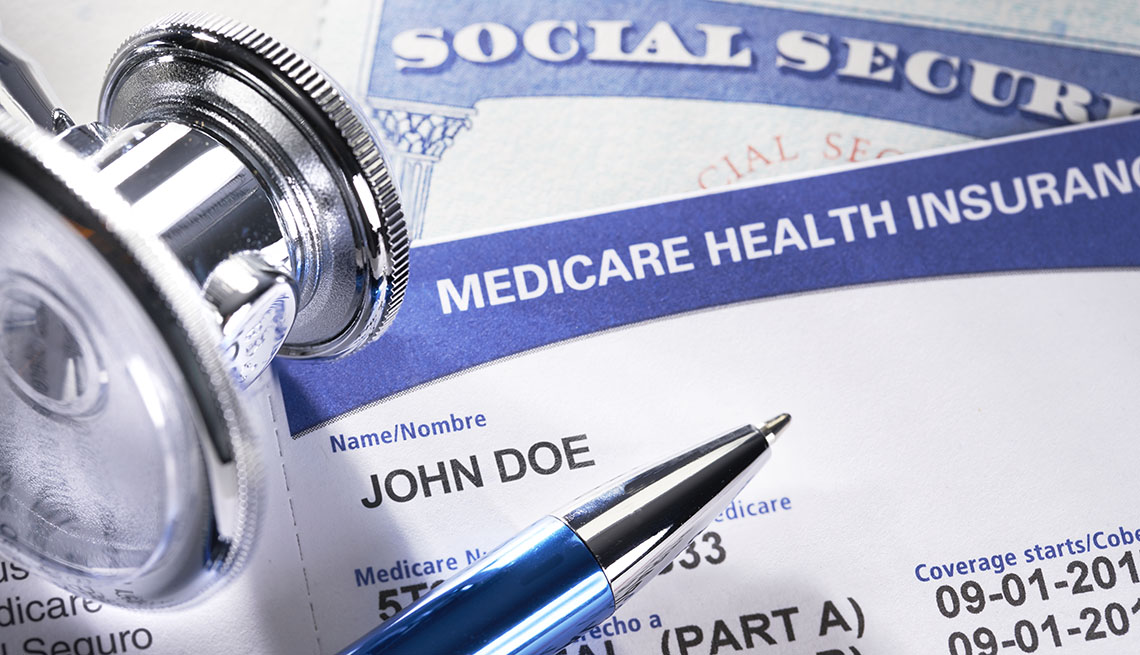
Social Security Error Leads to Unpaid Medicare Coverage

A groan-up look at Congress’s aspirational acronyms for its various stimulus bills.

Two of the things missing from the increasingly bitter debate about how to handle covid-19’s effect on our people, our businesses and our economy are a sense of humor and bipartisanship.

So as a public service, let me try to bring both of those to bear by doing a deep dive into the various pieces of stimulus legislation currently running around in Our Nation’s Capital.

No, I’m not going to give you a detailed, sleep-inducing analysis featuring numbers and experts opining about various provisions. Instead, I’m going to look at the names — which I find hilariously tortured — of the various pieces of legislation.

Possibly because I’m both a recovering English major and a non-Washingtonian, I like to know the full names of the legislation — like the Cares Act — that I’m writing about. And these names are just great. Let’s start with the Cares (or as I prefer to call it, CARES) Act.

Do you know what the full name of that legislation is? Probably not. Okay, I’ll tell you. It’s the Coronavirus Aid, Relief and Economic Security Act. A name clearly invented to produce a seemingly empathetic acronym.

Now, let’s move on to two total groaners — the Democrats’ and Republicans’ proposals for more stimulus legislation. Remember, I’m not talking about the proposals’ provisions — I’m talking about their names. The Democrats’ candidate in the current stimulus battle is the Heroes (or rather HEROES) Act. The full name of this piece of work, which has been passed by the House, is the Health and Economic Recovery Omnibus Emergency Solutions Act. My favorite part is “Omnibus,” which clearly is in the title because an acronym meister needed an O, and Omnibus was better than Outsized or Over-the-top.

Showing that they would not be out-acronymed, the Republicans named their legislation, which is currently kicking around (and being kicked around) in the Senate, the Heals (or HEALS) Act. That stands for Health, Economic Assistance, Liability protection and Schools Act. The lowercase p in “protection” let the acronym mavens call the legislation HEALS rather than HEALPS.

And finally, there’s legislation that’s been around for several years but that I discovered only recently when Mitch McConnell and his crew stuck it into the HEALS Act. It’s a proposal that would let a congressional committee, operating outside of public sight, propose cuts and changes to Social Security, Medicare and some other federal programs that use trust funds. It’s called the Time to Rescue United States Trusts (or TRUST) Act. I’ve looked at it only superficially — but from what I’ve seen, I don’t think there’s any reason to trust it.

I hope you’ve noticed that I’m doing equal-opportunity name mocking: the Cares and Trust acts, which are bipartisan; the Heroes Act, which is Democratic; and the Heals (or HEALPS) Act, which is Republican.

What do I propose to do about these contorted names? I’m glad you asked. My answer, naturally, is to propose a piece of legislation of my own: The Get Rid Of Acronyms Now Act. That, my friends, would be a true GROAN-er.


Cartoon – Importance of Transparency

Government Transparency Cartoons and Comics - funny pictures from ...

Three Predictable Covid Nightmares — and How Congress Can Help Prevent Them

https://www.politico.com/news/agenda/2020/07/29/states-congress-covid-nightmare-vaccine-385217?mkt_tok=eyJpIjoiTVRNNU0yWXpNMlk1TVRsaiIsInQiOiJ1Vlg3dlBCYytaWTdtcGtMd3ZaUVh6TTBZRlMxXC9MaW9UMk9MRHhpdkFpSFFJMHFVWWpocUhWR1ZEZTM2NFBXb0xOVUZTSXNJMzYxWk90Yld

Opinion | Three Predictable Covid Nightmares — and How Congress ...

The good news is that they aren’t partisan, and they’re fixable.

In our response to the Covid-19 pandemic, the United States has all too often been caught flat-footed. Our public officials have tried to avoid or deny problems until they have been right on top of us, and legislative measures have tended to react to major challenges rather than avert them.

That has left policymakers with a lot to react to. And the relief and assistance bill now being worked out in the Senate will need to do that on several fronts. But to do better in the future, that bill should also take on several predictable problems that will face our country over the remainder of the year and which could benefit enormously from some advance attention and action.

Three sets of such predictable problems stand out above all, and in all three cases there are measures that can be taken now that should be able to attract bipartisan support.

First, states are going to face a monumental fiscal crisis.

The pandemic and the ensuing shutdowns of economic activity have left state governments with immense revenue shortages. Balanced-budget amendments in all but one state severely restrict their capacity to run deficits, in many cases even in major emergencies. That means states will have to either find other ways to raise revenue quickly or make major cuts to basic services. Such cuts in spending, jobs and public assistance would exacerbate the deep recession we are in and leave millions who need help in the lurch.

Most state fiscal years begin in July, so in many cases budgets designed or enacted before the severity of the crisis was clear are now starting to take effect, leaving states facing gaps they can easily predict but haven’t formally accounted for. In fact, 16 states are now starting the second year of biennial budgets enacted in 2019, before anyone could have imagined the sort of crisis we now face. Over the coming months, there will be no avoiding the fiscal crunch.

The states have already begun pleading with Congress for help, and sooner or later Congress will need to provide it. Taking steps sooner rather than later would make an enormous difference. The federal government has often been called on to serve as a fiscal backstop for states in extreme emergencies, since its borrowing power vastly exceeds that of the states. And that role is particularly appropriate in a truly national—indeed global—crisis of this magnitude.

But to provide such help responsibly, Congress will need to clearly delineate what kinds of assistance it can offer and on what terms. Congressional Republicans are not wrong to be wary of state efforts to use the emergency to fill fiscal holes dug over decades of irresponsible state policies. Yet that can’t mean that they deny state governments the help they need to contend with this crisis. Rather, it means they must draw some distinctions.

As I’ve argued elsewhere, Congress would do well to divide state needs into three tranches: direct pandemic spending (which should be covered by federal dollars), lost state revenue (which states should be given the opportunity to make up with federally guaranteed loans on favorable terms), and longstanding obligations like pension and retiree health costs made untenable by the recession (for which affected states should be given options only for strictly conditional support, like a new state bankruptcy code or federal support conditioned on major pension reforms).

To be effective, that sort of response would need to take shape now, before states have truly hit the wall. It should be part of the bill the parties are now beginning to negotiate.

Second, this fall’s election is going to be seriously complicated by the pandemic.

There is pretty much no way around that. We’ll be voting while the virus is still spreading, which means that far more people than usual will vote by mail. Only a few states have real experience with voting by mail in large numbers, and the logistics involved are not simple. Primary elections in many states have already made the challenge clear.

To take just one example among many, mailed ballots require signature verification. In states that haven’t spent years building the required infrastructure, such verification will probably need to be done by hand, creating huge risks of confusion and error. States will need to develop new processes to handle this, to train election workers to use unfamiliar equipment, and to take on problems in real time. Signature verification also requires a process for notifying voters whose handwriting is challenged and giving them time to respond. All that, and similar challenges on other election administration fronts, makes it easy to imagine that many races will be impossible to call on election night, and perhaps for quite some time afterward.

Particularly in an era already overflowing with cynical mistrust and conspiracy mongering, such problems raise the prospect of a legitimacy crisis around the election. And policymakers need to take steps now to reduce the risk of such a crisis.

The first step must be to prepare the public. Elected officials, candidates, journalists and others must start speaking plainly about the likelihood of logistical challenges around the election so that voters are not shocked if things don’t go smoothly. People must know in advance that we should not expect every race to be called straight away and that results which take days or even weeks to determine are not therefore illegitimate.

But beyond setting voter expectations, policymakers should also be looking for ways to reduce the strain on the system and to deal with predictable problems. One simple step Congress could take now is to push back the deadlines involved in the work of the Electoral College, to give the states more time to count votes in the presidential race if they need it. A simple change in the federal law governing these dates, which wouldn’t give either party an advantage, could give every state about three more weeks to count. Such a change would be essentially impossible after the election—when partisans looking at partial results would argue over which side it would advantage. But it could easily be done today, it would just take a few sentences of legislative language, and it too should be part of the relief bill now being worked out.

Opinion | Three Predictable Covid Nightmares — and How Congress ...

Finally, if we’re lucky, we’re going to need to figure out how to distribute a Covid-19 vaccine early next yearThat would be a good problem to have, of course, but a huge problem nonetheless. And getting it wrong could catastrophically undermine the effort to defeat the virus.

Vaccine development itself is one area where our country has not been behind the curve: The federal government has invested heavily in the effort, the National Institutes of Health has played a key coordinating role, and the administration is prepared to pay for “at risk” manufacturing of millions of doses of any vaccine that makes it into Phase III trials, so that if a vaccine is found to be safe and effective there will immediately be doses to provide to high-risk individuals. But who will be first in line to get these early doses? And who will decide?

Here, too, there is an enormous danger of a legitimacy crisis. Both public fear about the safety of a vaccine (building on decades of anti-vaccine conspiracy theories on the right and left alike) and the danger of corruption, or at least perceived corruption, in the distribution of doses could undermine the potential of effective vaccination to end the nightmare of this pandemic.

Widespread uptake is essential to the effectiveness of any vaccine. It is not so much by protecting each vaccinated individual as by vaccinating enough Americans to achieve broad-based communal (or “herd”) immunity that a vaccine could truly change the game. That means public trust in the process and wholesale vaccination across our society will be crucial.

To achieve that, it is essential that both the safety of the vaccine-development process and the basic fairness of the ultimate distribution formula be established in advance, and in a very public way. Congress has a crucial role to play here, too. Hearings should begin very soon to put before the public all available information about the efforts taken by the Food and Drug Administration to ensure the safety of the vaccine-development process, even as that process proceeds with unprecedented speed. And Congress should establish, ideally in this next relief bill, a public commission to develop a formula for equitable distribution of early vaccine doses: setting out tiers of priority (for front-line health workers, vulnerable populations, the elderly, and those with particular preexisting conditions), and seeking out ways to make sure that economic and other disadvantages do not translate into lesser or later access to vaccination.

The work of such a group should be reasonably transparent and would need to begin very soon if it is to bear fruit in time to be useful. Policymakers must not underestimate the danger of a loss of public confidence in a Covid-19 vaccine, and must take steps now to avoid such a foreseeable disaster.

The same is true on all three of these fronts. These may not be the greatest problems we confront in the remainder of this dark and difficult year, but they share some features that ought to make them high priorities: All three are predictable and serious, each would amount to a disaster if left unchecked, but each could be made much easier to handle with some straightforward preparation. The relief bill being negotiated this summer could easily, without sparking a partisan war, take concrete steps on all three fronts.

Leadership in a crisis demands a combination of planning for foreseeable difficulties and responding to the unexpected. Getting the former right can make the latter far more doable. To make the rest of this year less disastrous, our leaders need to look ahead.


Trump sparks debate over merits of voting by mail

Trump sparks debate over merits of voting by mail

Trump criticism too late: Swing states already have mail-in voting

President Trump is taking a hard stand against expanding alternatives to in-person voting amid the coronavirus pandemic, arguing that mail-in voting risks “tremendous potential for fraud” and hands an advantage to Democrats.

While voting rights and elections experts say there may be some truth to Trump’s claim that mail-in voting is more susceptible to fraud, they note that electoral fraud of any form is exceedingly rare. And they say there are security measures that can mitigate those risks.

At the same time, experts argued that policymakers should be wary of restricting an already-existing alternative to in-person voting that has the potential to expand the electorate and limit the spread of the coronavirus.

“Perhaps there’s more potential for fraud than in in-person voting, but both can be done safely and securely,” said George Hornedo, the former deputy political director and national delegate director for former South Bend, Ind., Mayor Pete Buttigieg’s presidential campaign. “Election fraud in all instances is extremely rare.”

Hornedo suggested several measures to cut down on the risks of fraud in mail voting, including ballot tracking, pre-paid postage and setting up ballot drop boxes that would “eliminate the need for voters to hand over ballots to third parties.”

Vote-by-mail programs are already extremely common and have been in use for years.

Five states — Colorado, Hawaii, Oregon, Utah and Washington — now conduct their elections almost entirely by mail. And in about two-thirds of states, voters can request a mail-in ballot without providing an “excuse” for not being able to vote in person on Election Day.

Trump acknowledged at a press briefing this week that he voted by mail in Florida’s presidential primary last month, though he said that he was “allowed to” because he lived out of state and wasn’t able to vote in person. In other instances, he said, mail-in voting “is a terrible, terrible thing.”

“There’s a lot of dishonesty going on with mail-in voting, mail-in ballots,” he said at a media briefing.

Myrna Pérez, the director of the Brennan Center’s Voting Rights and Elections Program, said that the idea that mail-in voting is some “brand new thing” is “not consistent with the real world.”

“We are in the middle of an emergency situation, and the appropriate thing to be doing right now is to be looking at all things we know and figuring out how to make those things work for us in this crisis,” she said.

Pérez said that policymakers should look at the experiences of states with robust vote-by-mail programs and use them to guide efforts to expand those programs in other states.

“The challenge our country has to figure out is how to get this up to scale,” Pérez said. “That’s something that’s going to require thinking and resources, but we should not be starting from the premise that this is a brand new untested thing.”

Lonna Atkeson, a political science professor at the University of New Mexico, said there are still risks involved with mail-in voting. Fraud, for instance, becomes harder to detect when people don’t have to show up to vote in person, she said.

“If you show up the polls and you say you’re John Doe and you’re 25, and that John Doe is 50, you know there’s a problem,” Atkeson said. “Those kinds of catches are possible.”

“Where we see fraud, we tend to see it in absentee voting,” she added, pointing to the 2018 election in North Carolina’s 9th congressional district, when a contractor working for Republican candidate Mark Harris was charged with election fraud in connection to an absentee ballot collections scheme.

State officials eventually overturned the results of that race and called a special election for the House seat.

Experts also warn that external threats, such as foreign adversaries, could also pose a greater threat with absentee, or remote voting.

“The manipulation campaigns, Russia, China, Iran, and maybe some unscrupulous domestic operatives could seize this opportunity to actually promote downloads of bogus, basically absentee ballots and direct people’s votes to the wrong place,” said Theresa Payton, CEO of Fortalice Solutions and author of the forthcoming book “Manipulated: Inside the Cyberwar to Hijack Elections and Distort the Truth.”

Payton recommended holding mock elections as a means of working out any potential risk and pitfalls in the process.

“Let’s pretend, we got these ballots in the mail. Let’s scan them. How long does it take to scan a ballot? What is our error defect rate?” Payton said. “How we will audit an all absentee ballot, or maybe as high as 40 percent absentee ballot election because they’re not used to that yet.”

Democrats and election rights advocates are some of the most vocal voices pushing for expanded vote by mail. Democratic lawmakers, led by Sens. Amy Klobuchar (D-Minn.) and Ron Wyden (D-Ore.), are calling on the federal government to send at least $1.6 billion to states as part of the next coronavirus spending package and that Congress impose requirements to ensure states permit vote-by-mail.

However, Republicans have continued to voice skepticism about vote-by-mail measures.

“I don’t think the Republicans are going to embrace any of the language that we’ve seen Senators Klobuchar and Wyden put forward to make the election universally accessible for every American,” said Matt Liebman, of the left-leaning group the Voter Protection Project.

“Republicans are going to take advantage of the situation to suppress voter turnout, and not only try to use that to hold the presidency, the United States Senate, but, you know, some of these critical state legislative races across the country,” he continued.

Trump and Republicans have also pushed the argument that expanding the use of mail-in ballots lends a partisan advantage to Democrats. That line of reasoning hinges on the notion that such programs increase the number of people who cast ballots and that high-turnout elections tend to favor Democrats.

But experts said there’s little evidence that one party or another benefits more from the widespread use of mail-in ballots.

“I have not seen any conclusive data on that and I cannot understand how anyone can pretend to know that,” Pérez said.

However, not all Republicans are opposed to the measures. Maryland’s Republican Gov. Larry Hogan ordered the state’s June 2 primary to be vote-by-mail.

“If one is in a pandemic, and you sit and you say, we’re not going to allow you to keep safe, and vote by mail and exercise your right to vote, that’s outrageous,” said Page Gardner, the founder of the Voter Participation Center.” “It’s a weakening of our democracy. It’s a weakening of our democratic institutions.”


Biden, Sanders, Warren clash over Medicare for All in Houston

Biden, Sanders, Warren clash over Medicare for All in Houston

Image result for Biden, Sanders, Warren clash over Medicare for All in Houston

The battle over health care that has dominated the Democratic race for the White House took center stage in Houston, where for the first time the top three candidates tangled over whether the nation is ready for sweeping reforms.

Former Vice President Joe Biden went back and forth at the opening of Thursday’s debate with the two progressives who are his leading challengers atop the polls, Sens. Bernie Sanders (I-Vt.) and Elizabeth Warren (D-Mass.).

Arguing that the “Medicare for All” proposal championed by Sanders would cost people their insurance, Biden called out the Vermont senator as a socialist and said his proposals would be too costly.

At one point in the debate, Biden said of Warren and Sanders that “nobody’s yet said how much it’s gonna cost for the taxpayer.”

He also pointed to the taxes that would have to increase for middle class people to pay for Medicare for All.

“There will be deductible in your paycheck,” Biden said, referencing the chunk that taxes would take out of people’s pay.

Sanders said most Americans were getting a raw deal in terms of their present health care costs compared with countries that have systems more similar to his Medicare for All approach.

“Let us be clear, Joe, in the United States of America we are spending twice as much per capita on health care as the Canadians or any other major country on earth,” Sanders said. 

“This is America,” Biden retorted. 

“Yeah, but Americans don’t want to pay twice as much as other countries and they guarantee health care to all people,” Sanders responded. 

Health care is a top issue in the race according to polls, and Democrats believe they can win the White House if the general election against President Trump is focused on the issue.

But it is also the issue that divides the Democratic candidates the most, with Biden and other centrists proposing more modest steps, such as reforms to ObamaCare.

The battle over health care is intertwined with the debate Democrats are having over which of their candidates is best positioned to defeat President Trump, with some in the party worried that Warren and Sanders are too liberal to win a general election. Others say their bold ideas are what is needed for the party to defeat Trump.

Biden argues Medicare for All means scrapping former President Obama’s signature achievement, the Affordable Care Act, instead of building on it.

While Sanders touted that everyone would have coverage under his plan and that it would be more generous, with no premiums or deductibles, Biden countered with the cost of the proposal, which estimates put at around $32 trillion over 10 years.

In the debate’s first hour, Biden was already hitting Sanders and Warren over the cost of the plan.

“The senator says she’s for Bernie,” Biden said of Warren’s support for Sanders’s Medicare for All plan. “Well I’m for Barack.”

Warren, pressed by host George Stephanopolous on whether middle class taxes would rise from Medicare for All, did not directly answer, pivoting to argue that overall costs for the middle class would go down once the abolition of premiums and deductibles is taken into account.

“What families have to deal with is cost, total cost,” Warren said, adding: “The richest individuals and the biggest corporations are going to pay more, and middle class families are going to pay less.”

Other candidates were also in the middle of the Medicare for All exchanges.

Sen. Kamala Harris (D-Calif.), who drew flak in the early months of the campaign for seeming to change her position on health care several times, touted the plan she eventually developed, to allow some private insurance to remain under Medicare for All by allowing private companies to administer some plans in a tightly regulated way.

“I want to give credit to Bernie. Take credit, Bernie,” Harris said, while adding, “I wanted to make the plan better, which I did.”

At another point in the debate, Biden dismissed the idea that employers would raise workers’ wages if employers no longer had to provide health insurance under a Medicare for All system. 

“My friend from Vermont thinks the employer’s going to give you back what you’ve negotiated as a union all these years … they’re going to give back that money to the employee?” Biden said.

“As a matter of fact they will,” Sanders interjected.

“Let me tell you something, for a Socialist you’ve got a lot more confidence in corporate America than I do,” Biden responded. 

While all of the Democrats advocate large additional government spending to expand health insurance coverage, the debates over whether private insurance should remain as an option has proven to be a particularly fierce source of debate.

Republicans have sensed an opening on that point as well, eagerly bashing Democrats for wanting to take away employer-sponsored coverage that millions of Americans have. Sanders and Warren counter that Medicare for All coverage would be better insurance, with no deductibles at all, so people would not miss it.

“I’ve actually never met anybody who likes their health insurance company,” Warren said, noting people like their doctors, which they would be able to keep. 

Sen. Amy Klobuchar (D-Minn.), who has staked out a more moderate ground, tore into Sanders, though, over his plan’s elimination of private insurance.

“While Bernie wrote the bill, I read the bill, and on page eight of the bill it says that we will no longer have private insurance as we know it,” Klobuchar said.

“I don’t think that’s a bold idea, I think it’s a bad idea,” she added. 

Amid the division, Harris tried to strike a unifying note.

“I think this discussion is giving the American people a headache,” she said. “What they want to know is that they’re going to have health care and cost will not be a barrier to getting it.”