A subvariant of omicron known as BA.2 is now the dominant strain in the United States, according to new data from the Centers for Disease Control and Prevention (CDC).
The variant has been steadily rising in proportion because of its increased transmissibility compared to the original omicron strain, and it represented 54.9 percent of new cases for the week ending March 26, according to CDC data. That is up from about 27 percent two weeks earlier.
The BA.2 subvariant is thought to be about 30 percent more transmissible than the original BA.1 omicron strain, which itself was already more contagious than earlier versions of the virus.
Importantly, though, experts say there is no evidence that BA.2 causes more severe disease than the original omicron strain or that it evades the protection from vaccines to a greater degree.
The subvariant may cause some increase in cases after weeks of steady declines that have led to a relative lull in the virus. But it is unclear how sharp the increase will be, and people who are vaccinated and boosted are still well-protected against severe disease.
The Food and Drug Administration on Tuesday authorized a fourth COVID-19 vaccine shot for people 50 and older, which could further help protect the most vulnerable from the subvariant.
“CDC says the BA.2 subvariant of Omicron is now dominant in the US,” tweeted Leana Wen, a public health professor at George Washington University. “Reminder that while this appears to be even more contagious than the original Omicron, it is not more virulent than previous strains, and existing vaccines still protect well against severe disease.”
CDC Director Rochelle Walensky said last week that her agency was monitoring the subvariant, particularly in the Northeast, where it has been concentrated so far.
“Over the past week, we have seen a small increase in reported COVID-19 cases in New York state and New York City, and some increases in people in the hospital with COVID-19 in New England, specifically where the BA.2 variant has been reaching levels above 50 percent,” she said.
“This small increase in cases in the Northeast is something that we are closely watching as we look for any indication of an increase in severe disease from COVID-19 and track whether it represents any strain on our hospitals. We have not yet seen this so far.”
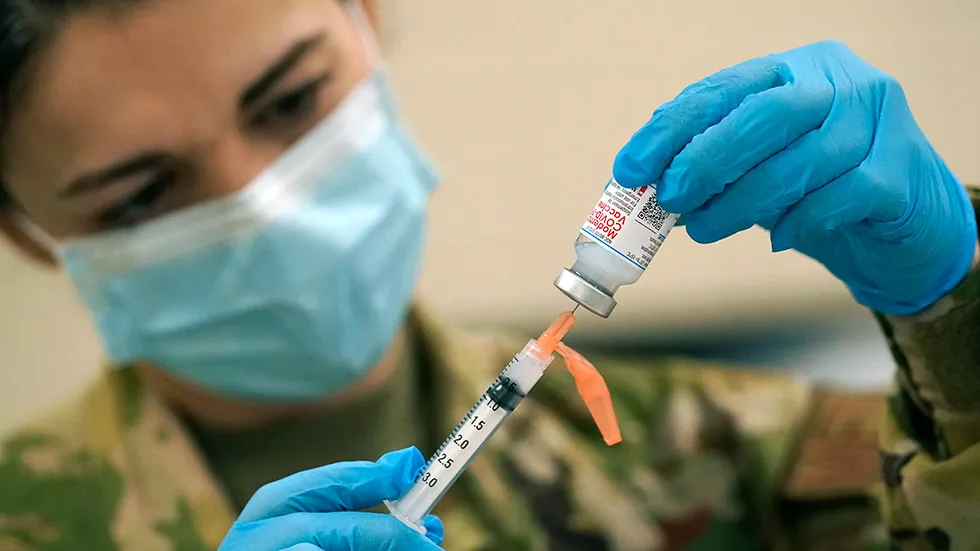
The Food and Drug Administration (FDA) gave the green light on Tuesday to a second coronavirus vaccine booster shot for people aged 50and older in an effort to ward off another potential spike in infections due to a subvariant of omicron.
The agency said anyone aged 50 and older can get a second booster dose of an mRNA vaccine at least four months after the first booster, regardless of which vaccine was administered the first time.
FDA granted emergency use authorization to the vaccines from Pfizer as well as Moderna. Pfizer had initially requested authorization for people aged 65 and older, while Moderna requested broader authorization for all adults.
Peter Marks, head of the FDA’s vaccine division, told reporters Tuesday the agency went with the lower age limit because those people are most likely to have medical conditions that put them at high risk of serious outcomes.
The Centers for Disease Control and Prevention (CDC) director Rochelle Walensky updated the agency’s guidance to match FDA’s action, though the agency stopped short of making a full recommendation. The CDC said anyone age 50 and older who wants a second booster is now able to get one.
“Boosters are safe, and people over the age of 50 can now get an additional booster 4 months after their prior dose to increase their protection further,” Walensky said in a statement. “This is especially important for those 65 and older and those 50 and older with underlying medical conditions … as they are the most likely to benefit from receiving an additional booster dose at this time.”
The FDA said there’s emerging evidence that the effectiveness against symptomatic infection and severe disease caused by the omicron variant wanes three to six months after receipt of an initial booster dose.
“Based on an analysis of emerging data, a second booster dose of either the Pfizer-BioNTech or Moderna COVID-19 vaccine could help increase protection levels for these higher-risk individuals,” Marks said in a statement. “Additionally, the data show that an initial booster dose is critical in helping to protect all adults from the potentially severe outcomes of COVID-19. So, those who have not received their initial booster dose are strongly encouraged to do so.”
Health officials did not convene any advisory panels on the applications for second booster shots. In the past, an FDA panel of outside experts has disagreed with the decisions of agency leaders to broadly expand access to booster shots.
Marks said there wasn’t a need to convene a panel because the move was a “relatively straightforward” data-based decision.
The evidence in favor of the extra booster came primarily from Israel, one of the only other countries that has already authorized a fourth dose for people aged 60 and older. But the results were mixed at best. The studies showed an additional booster for that age group was lifesaving, and kept people out of the hospital even if they got sick.
In younger people, the booster was not effective at preventing symptomatic infection, and breakthrough infections were common. People also were observed to have large viral loads, even with mild infections, meaning they could easily spread the virus to others.
Marks indicated federal officials could broaden the recommendation in the fall to include all adults, including those who get boosters in the coming months, because the next phase of the booster campaign could be variant-specific.
“At some point we’re going to have to realize that this is a virus that’s going to be with us and that we have to come to grips with dealing with it on a regular basis,” Marks said.
But there are major questions hanging over the decision, including how long protection from a second booster will last. The move is likely to reignite a heated debate about who might need booster shots and the broader goals of the U.S. vaccination campaign.
Much of the debate has centered on whether the goal is to prevent people from being hospitalized with COVID-19 or to prevent them from getting sick at all, even if symptoms are milder.
There’s clear evidence that the vaccines’ protection against infection wanes after several months across all age groups. Still, many health experts have questioned the effectiveness of repeated booster shots in younger, healthy people.
Booster shots are currently authorized for everyone 12 and older on an emergency use basis, and people who are immunocompromised are already eligible for a fourth dose. The FDA and CDC on Tuesday said those people are also eligible for a second booster— a fifth dose.
The authorization comes as COVID-19 cases have been falling in the U.S., and the CDC said most areas in the country no longer need mask mandates indoors.
However, officials are carefully watching the BA.2 subvariant of omicron, which is responsible for a major spike of infections in Europe.
The omicron subvariant is now the dominant strain in the U.S., according to the CDC, responsible for about 55 percent of all new infections. There’s no evidence the BA.2 version of omicron is any more severe, though it is more contagious.
Atul Gawande leads global health and is co-chair of the Covid-19 Task Force at the U.S. Agency for International Development.
Nearly a year ago, President Biden announced that the United States would be the “arsenal of vaccines for the world,” just as America served as an arsenal for democracies during World War II. With the president’s leadership and the consistent bipartisan support of Congress, the United States has delivered more than half a billion coronavirus vaccines to 114 lower-income countries free of charge, a historic accomplishment. This example spurred contributions from other wealthy nations and contributed to vaccination of almost 60 percent of the world.
But the global battle against covid-19 is not done. Instead, the challenge has changed. The lowest-income countries, where vaccinations have reached less than 15 percent of people, are now declining free vaccine supply because they don’t have the capacity to get shots in arms fast enough.
We must therefore not just provide an arsenal; to protect our allies against future variants, we must also provide the support they need to ramp up their vaccination campaigns. That effort requires money, and despite generously funding our covid-19 response up to this point, Congress is now failing to provide the resources we need.
I am writing to say: This bodes serious trouble for the world.
Despite a period of relative calm here at home, we’re again seeing cases and hospitalizations spike in Europe and Asia, even in places with higher levels of vaccination than the United States. These surges are due to the more-transmissible BA.2 subvariant of the already highly infectious omicron strain. Without additional funding, we risk not having the tools we need — vaccines, treatments, tests, masks and more — to manage future surges at home. And no less troubling, if we don’t close the vaccine gap between richer and poorer countries, we will give the virus more chances to mutate into a new variant.
Since the virus first emerged, the package of tools we’ve developed to fight it has proved resilient against all coronavirus variants. But there’s no guarantee that will remain true. A new variant that evades our defenses might once again fuel new surges of severe illness and batter the global economy. Helping all countries protect their populations by supercharging vaccination campaigns is our best hope to prevent future strains from emerging and ending this pandemic once and for all.
Turning vaccines into actual vaccinations has been difficult even in wealthy countries, where capable health systems, state-of-the-art cold chains and public awareness campaigns mean that anyone who wants a vaccine can get one. In countries without strong health infrastructure — without enough freezers and refrigerated trucks to keep vaccines from spoiling or enough health-care workers to reach rural populations living miles from the nearest health facility — it’s much tougher. We’ve also seen the same vaccine myths and disinformation that swirl through our media ecosystem spread just as rapidly through social media and hurt public trust abroad.
But we’ve also learned how to successfully tackle these challenges. In December, the Biden administration launched an initiative called Global VAX to help low-income countries train health workers, strengthen health infrastructure and raise vaccine access and awareness. While vaccine coverage in those countries remains far below the global average, the rapid progress we’ve supported in places such as Ivory Coast, Uganda and Zambia show what is possible when governments that are committed to fighting covid-19 have the global support they need.
Without more funding, we would have to halt our plans to expand the Global VAX initiative. The United States would have to turn its back on countries that need urgent help to boost their vaccination rates. And many countries that finally have the vaccines they need to protect their populations would risk seeing them spoil on the tarmac.
We can’t let this happen. It not only endangers people abroad but also risks the health and prosperity of all Americans. The virus is not waiting on Congress to negotiate; it is infecting people and mutating as we speak.
Over the past two years, both parties in Congress have repeatedly stepped up to fight covid-19 in an inspiring show of bipartisan unity. Now, we need our leaders to come together once more. With an effective strategy in place and the tools to transform covid-19 from a killer pandemic to a manageable respiratory disease, the United States has the expertise and capabilities the world needs to win the fight against this virus. We need Congress to let us take the fight to the front lines.
It’s not just you, and it’s not just in healthcare: Poor behavior ranging from the impolite to the violent is having a moment in society right now.
The Atlantic’s Olga Khazan spoke with more than a dozen experts on crime, psychology and social norms to suss out contributing factors to the spike in poor behavior, which she details in her piece, “Why People Are Acting So Weird,” published March 30.
Stress is one likely explanation for the bad behavior. Keith Humphreys, PhD, a psychiatry professor at Stanford, told Ms. Khazan the pandemic has created a lot of “high-stress, low-reward” situations, in which someone who has experienced a lot of loss due to the pandemic may be pushed over the edge by an inoffensive request.
Not only are people encountering more provocations — like staff shortages or mask mandates — but their mood is worse when provoked.
“Americans don’t really like each other very much right now,” Ryan Martin, PhD, a psychology professor at the University of Wisconsin at Green Bay who studies expressions of anger, told Ms. Khazan.
It doesn’t help that rudeness can be contagious. At work, people can spread negative emotions to colleagues, bosses and clients regardless of whether those people were the source of the negativity.
“People who witness rudeness are three times less likely to help someone else,” Christine Porath, PhD, a business professor at Georgetown University, said in the report.
Just as the pandemic has reaped high-stress, low-reward moments, it has brought on a level of isolation that has affected how people behave.
“We’re more likely to break rules when our bonds to society are weakened,” Robert Sampson, PhD, a Harvard sociologist, told Ms. Khazan. “When we become untethered, we tend to prioritize our own private interests over those of others or the public.”
Richard Rosenfeld, PhD, a criminologist at the University of Missouri at St. Louis, went one step further to describe society operating with “a generalized sense that the rules simply don’t apply.”
Ms. Khazan makes a point to distinguish mental health in the broader conversation about poor behavior.
“People with severe mental illness are only a tiny percentage of the population, and past research shows that they commit only 3 to 5 percent of violent acts, so they couldn’t possibly be responsible for the huge surge in misbehavior,” she said.
For a quantified look at how problematic behavior — including crime, dangerous driving, unruly passenger incidents and student disciplinary problems — has spiked, turn to journalist Matthew Yglesias’ deep dive, born from his observation that “the extent to which we seem to be living through a pretty broad rise in aggressive and antisocial behavior” is underdiscussed.
Colorado Gov. Jared Polis signed a law designed to prevent “doxxing” of healthcare workers.
Doxxing refers to an act that reveals private or identifying information about an individual on the internet, opening them up to harassment or intimidation.
The state Senate passed House Bill 1041 on March 4, after the House passed it Feb. 14. Mr. Polis signed the bill into law March 24.
“(The protected workers) do have a public-facing job, but just because you have a public-facing job doesn’t mean you should have threats against your family or yourself for doing the work you’ve been tasked with doing,” bill sponsor and state Rep. Andrew Boesenecker, said, according toThe Denver Post.
In 2021, Colorado banned doxxing of public health workers. That law, in part, allowed public health workers to seek redaction of their personal information from publicly available government databases, according to the Post.
The new law expands protections to include child representatives, code enforcement officers, healthcare workers, mortgage servicers, and office of the respondent parents’ counsel staff members and contractors.
Under the new law, these individuals are people “whose personal information may be withheld from the internet if the protected person believes dissemination of such information poses an imminent and serious threat to the protected person or the safety of the protected person’s immediate family.”
Personal information includes the protected person’s full name and home address.
The number of departing hospital CEOs is on the rise as C-level executives are grappling with challenges tied to the COVID-19 pandemic.
Twelve hospital CEOs exited their roles in January, double the number who stepped down from their positions in the same month a year earlier, according to a report from Challenger, Gray & Christmas, an executive outplacement and coaching firm.
While some hospital and health system CEOs are retiring, others are stepping down from their posts into C-level roles at other organizations. At least eight hospital and health system CEOs have stepped down from their positions since mid-February.
The increase in CEO departures isn’t unique to healthcare. More than 100 CEOs of U.S.-based companies left their posts in January, up from 89 in the same month a year earlier, according to the Challenger, Gray & Christmas report.
The uptick in executive exits shouldn’t be surprising given the challenges presented by the COVID-19 pandemic, experts told NBC News. CEOs and other executives aren’t immune to the pressures that are prompting people to leave their jobs.
“It’s many factors — the burnout, the pandemic, the school closures, the need to take stock of life,” Julia Pollack, chief economist at ZipRecruiter, told NBC News in January. “It’s a whole wide range of shocks.”
The Federal Trade Commission and the Justice Department are seeking comments on ways merger guidelines should be updated, and physicians are raising concerns about private equity-backed buyouts of provider practices.
The FTC and the Justice Department announced in January that they’re seeking to revamp merger guidelines for businesses. Comments on how to “modernize the merger guidelines to better detect and prevent anticompetitive deals,” can be submitted to the agencies through April 21.
Comments are pouring in from physicians. Many of the comments are anonymous, but the commenters self-identify as physicians.
The physicians’ top concern are private equity-backed buyouts, according to an analysis by Law360. They’re also concerned by the profit-first attitude of healthcare and consolidation in the industry, according to the report.
The comments are coming in as private equity firms continue to buy up physician practices.
Private equity firms acquired 59 physician practices in 2013, and that number increased to 136 practices by 2016, according to a research letter published in JAMA.
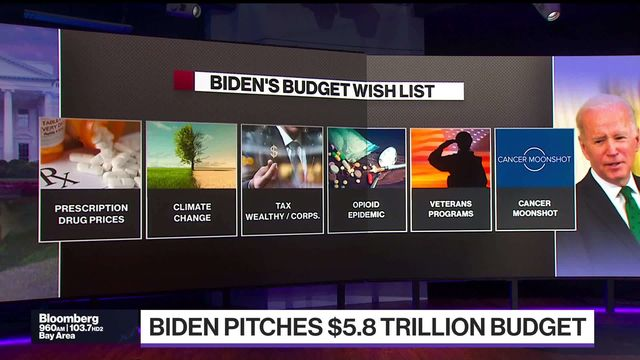
President Joe Biden proposed a $5.8 trillion budget March 28 for fiscal year 2023, which includes funding for healthcare.
Nine healthcare takeaways:
1. Pandemic preparedness. The budget calls for a five-year investment of $81.7 billion to plan ahead for future pandemics. The funding would help support research and development of vaccines, improve clinical trial infrastructure and expand domestic manufacturing.
2. Mental health parity. Under the proposed budget, federal regulators would get the power to levy fines against health plans that violate mental health parity rules. The budget calls for $275 million over 10 years to increase the Labor Department’s capacity to ensure health plans are complying with the requirements and take action against those plans that do not. The budget also proposes funding to bolster the mental healthcare workforce and boost funding for suicide prevention programs.
3. Vaccines for uninsured adults. The proposed budget calls for establishing a new Vaccines for Adults program that would provide uninsured adults access to recommended vaccines at no cost.
4. Title X funding. The budget proposes providing $400 million in funding for the Title X Family Planning Program, which provides family planning and other healthcare services to low-income individuals.
5. Cancer Moonshot initiative. The budget proposes several investments across the FDA, CDC, National Cancer Institute and Advanced Research Projects Agency for Health to advance President Biden’s Cancer Moonshot initiative. The initiative aims to reduce the cancer death rate by 50 percent over the next 25 years.
6. Spending to reduce HIV. The proposed budget includes $850 million to reduce new HIV cases by increasing access to HIV prevention services and support services.
7. Veterans Affairs medical care. President Biden’s proposed budget allocates $119 billion, or a 32 percent increase, to medical care for veterans. The money will fully fund inpatient, outpatient, mental health and long-term care services, while also investing in training programs for clinicians to work in the VA.
8. Discretionary funding for HHS. President Biden is asking Congress to approve $127.3 billion in discretionary funding for HHS in fiscal 2023, representing a $26.9 billion increase from the department’s allotment for fiscal 2021.
9. Mandatory spending for the Indian Health Service. The budget request for the Indian Health Service calls for shifting the healthcare agency from discretionary to mandatory funding. The budget calls for $9.1 billion in funding, a 20 percent increase from the amount allocated in fiscal 2021.










 HENRY KOTULA