


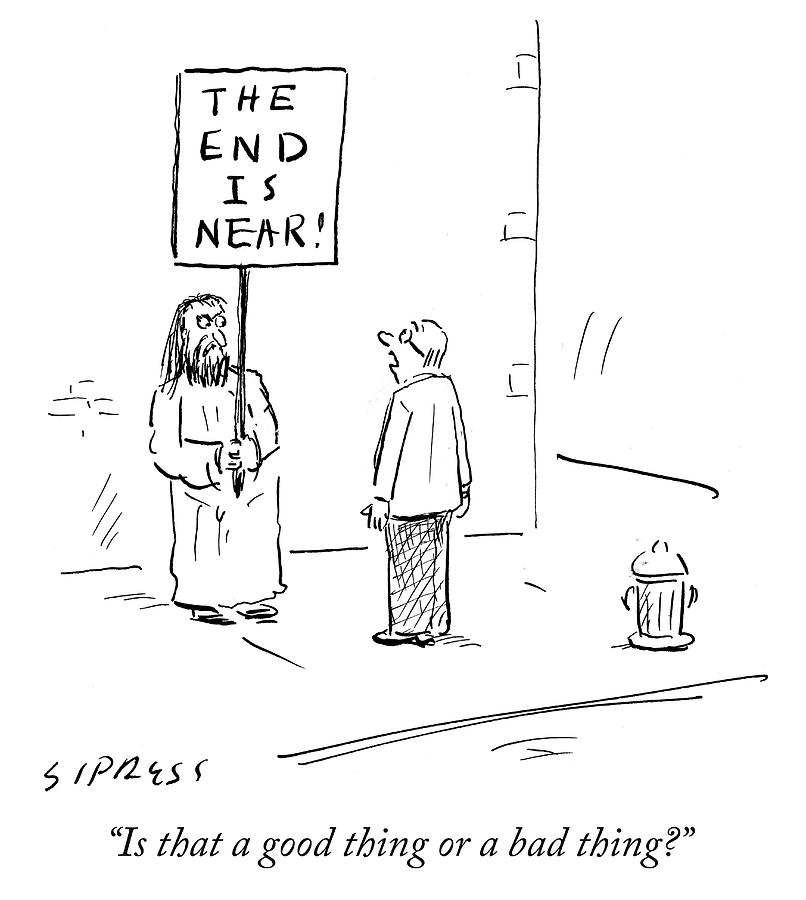
Cartoon – Sidestepping the Real Issue




The COVID-19 pandemic’s postponement of elective surgeries and regular care has created a surplus in revenue for insurers due to lower spending.
Health plans are mandated to spend at least 80% of their revenues on medical care. When they make more than that, they have to give money back to the purchasers.
Insurers are doing this now, rather than later, according to the Advisory Board’s practice manager Rachel Sokol, who spoke during the company’s weekly meeting on the impact of COVID-19 to payers.
Insurers want to create immediate value for members, instead of waiting for 2021, she said.
“That’s why we’re seeing the premium discounts now,” Sokol said.
Among those insurers refunding money, UnitedHealthcare said it would provide more than $1.5 billion in initial assistance, including customer premium credits, because its members have been unable to access routine or planned care due to the COVID-19 pandemic.
UnitedHealthcare has seen a lower volume of medical care being delivered than it anticipated when it set premiums.
Commercial fully insured individual and employer customers will get credits ranging from 5% to 20% – depending upon the specific plan – which will be applied to premium billings in June.
WHY THIS MATTERS
Insurers are mandated to provide refunds, but also they want to motivate members to return for regular care, to prevent more costly and complex outcomes later.
While hospitals have taken a financial hit from COVID-19, the major health insurers have shown minimal impact.
In fact, insurers could see a benefit to earnings in 2020 as medical services decline, according to Moody’s Investors Service.
THE LARGER TREND
Under the Affordable Care Act, insurers are required to rebate some premiums to their customers if medical claims fall short of expectations, based on a three-year average of medical costs.
The Medical Loss Ratio of the Affordable Care Act requires insurance companies that cover individuals and small businesses to spend at least 80% of their premium income on healthcare claims and quality improvement, leaving the remaining 20% for administration, marketing, and profit.
The MLR threshold is higher for large group insured plans, which must spend at least 85% of premium dollars on healthcare and quality improvement, according to the Kaiser Family Foundation.
Insurers may either issue rebates in the form of a premium credit or a check payment and, in the case of people with employer coverage, the rebate may be shared between the employer and the employee, Kaiser said.
Using preliminary data reported by insurers to state regulators and compiled by Market Farrah Associates, Kaiser estimates that insurers will be issuing a total of about $2.7 billion across all markets – nearly doubling the previous record high of $1.4 billion last year.

While health insurers have saved money by the cancellation of elective surgeries and many are currently refunding excess revenue under the Medical Loss Ratio, premiums for the 2021 plan year are still in question.
There is a lot of uncertainty, America’s Health Insurance Plans said. Without comprehensive data, insurers are working to estimate 2021 healthcare costs and must base their rates on projected costs, AHIP explained in an infographic.
It is too soon to know what the real healthcare costs of COVID-19 will be. Also, delayed elective and non-urgent care will likely be delivered – and paid for – later.
That care could be more complex and costly because it was delayed, AHIP said.
WHY THIS MATTERS
Insurers are working to meet state deadlines to file 2021 premiums in the individual market.
THE LARGER TREND
Federal law requires insurers to spend 80-85 cents of every premium dollar on medical services and care. The rest, under the Medical Loss Ratio, may go towards administrative expenses, regulatory costs, federal and state taxes, customer service and other expenses.
The COVID-19 pandemic’s postponement of elective surgeries and regular care has created a surplus in revenue for insurers due to lower spending, which many are refunding now.
ON THE RECORD
“COVID-19 has had a very real impact on the economic, physical, and mental health of millions of Americans,” said Jeanette Thornton, senior vice president of Product, Employer, and Commercial Policy at AHIP. “Our members are working through this uncertainty to strengthen access to affordable care as the fight against the coronavirus continues. COVID-19 dramatically changed the healthcare landscape–in 2020 and for years to come.

UPMC, which operates 40 hospitals in Pennsylvania, New York and Ohio, has been growing steadily in recent years. However, its growth in the first quarter collided head-on with the COVID-19 pandemic.
The system posted a $41 million operating loss on revenues of $5.5 billion, according to the financial report. For the first quarter of 2019, it reported an operating profit of $44 million on revenue of $5.1 billion. The system did not disclose its net numbers.
Investment losses reached nearly $800,000, compared to a gain of more than $224,000 in the prior-year period.
While overall outpatient revenue increased 1% during the quarter, revenue from physician services was down 3% while hospital admissions and observations dropped by 4%.
UPMC is the latest nonprofit healthcare provider to report losses blamed on COVID-19, although its numbers are not as big as those reported by Kaiser Permanente and CommonSpirit Health, both of which reported quarterly losses exceeding $1 billion apiece.
UPMC did note in a statement that its business was moving back toward normal in recent weeks.
“During the COVID-19 crisis, UPMC’s leaders, scientists, clinicians and front-line workers throughout our … system were prepared to care for the potential surge of COVID-positive patients while also safely providing essential, life-saving care to our non-COVID patients,” Edward Karlovich, UPMC’s interim chief financial officer, said in a statement. “However, many patients who had scheduled surgeries and procedures before the crisis postponed their care. With assurances that all our facilities are safe for all patients and staff, we are seeing our patients returning for their essential care that had been postponed and our current volumes are beginning to approach near-normal levels.”
The system also noted that it was sitting on $7 billion in cash and liquid investments. It reported 99 days cash on hand.
UPMC’s insurance division remained in the black, but was under strain. Its operating income was $39 million — compared to $89 million for the first quarter of 2019. However, membership grew by 7% during the quarter to 3.8 million enrollees.
https://www.healthcaredive.com/news/outpatient-visits-rebounding-transunion-report/578894/

The report echos several others suggesting patients are still cautious about returning to the hospital and other care settings. The Kaiser Family Foundation found that the pandemic has forced nearly half of patients to postpone medical care. About 32% of those who have postponed care said they would get the service in the next three months and 10% said they will do so in four months to a year.
The overall sluggish outlook led Transunion to suggest patient volumes may not be restored to pre-pandemic levels soon enough to both sustain operational and clinical functions and repay advanced Medicare payments that many systems large and small have taken advantage of from CMS.
Because of the demographic trends, systems may have greater success scheduling appointments by checking in first with younger generations, the report suggests.
“We think as providers are beginning to really drive their patient engagement strategies that it’s best if they start reaching out to them, because it’s likely they’ll be willing to re-enter the care setting,” John Yount, vice president for TransUnion Healthcare, told Healthcare Dive.
Providers are taking steps to ease patient fears upon returning to medical settings by implementing temperature checks, spacing out waiting rooms to allow for social distancing and taking other safety measures.
But a sluggish recovery is still likely as patients plan to continue delaying care, especially older adults who are at higher risk for COVID-19 and in some states have been told to continue following stay at home orders.
The slowest return to growth in emergency room visits raises concerns that patients who need emergency care may be avoiding hospital settings due to COVID-19 fears, according to the report.
Older patients are leading the pack in returning to ERs, and they also experienced the largest decline in inpatient volumes from March 1-7 and April 5-11.
Comparatively, younger generations had smaller declines in visit activity overall and are returning to care settings faster, Yount said.
“These deferrals will have implications for both patients and providers — high-acuity and chronically-ill patients risk waiting too long to seek care, and a continued reduction in visit volume will further amplify existing financial challenges for hospitals,” David Wojczynski, president of TransUnion Healthcare, said in a statement.

 HENRY KOTULA