An Unpleasant Surprise

An Unpleasant Surprise

An Unpleasant Surprise - Tradeoffs

Surprise medical bills have become a major issue for Americans, but federal legislation to protect consumers continues to stall. ICongress getting closer to halting this practice?

Listen to the full episode below, read the transcript or scroll down for more information.

https://podcasts.google.com/feed/aHR0cHM6Ly9yc3MuYWNhc3QuY29tL3RyYWRlb2Zmcw/episode/YTQzMDkzOGYtY2Q3MS00ZTU0LWI0ZTAtZGIyMGM3YWQ0ZTk4?sa=X&ved=2ahUKEwiRrfOb48zrAhXvmnIEHT-bBvgQkfYCegQIARAF&hl=en

The Basics: The Scope of the Problem

Surprise bills can occur when patients with insurance unknowingly receive care from an out-of-network provider while at an in-network facility (such as a bill from an anesthesiologist for a scheduled surgery).

That provider is not bound by a set rate negotiated with an insurer and may charge more for a service than the insurer is willing to pay, and patients can end up on the hook for the difference.

It is difficult to capture the full extent of the problem, but research shows that surprise bills, also called balance bills, occur often, and have only been increasing in frequency and size over the past few years. 

42% of hospital and ER visits may come with an unexpected charge
$2,000 average size of a surprise bill for a hospital visit
66% of Americans fear surprise bills
80% of Americans support surprise bill protections

The Source: Who’s To Blame?

Physicians

Hospitals employ some physicians directly, but many also contract with speciality physician groups of surgical assistants, anesthesiologists, radiologists, emergency medicine doctors and pathologists who may not be in the same insurance networks as the hospital. This is why most surprise bills occur. Research shows that private equity firms also play an important role, buying up speciality physician groups and using surprise billing as a core part of their business model.

Insurers

Insurers often take a lot of heat for the price of health care, but they play a more limited role in surprise billing. They can create narrow networks that leave hospitals or doctors out and open the door to balance billing. Insurers also do a poor job of maintaining accurate in-network provider directories, which means patients may think they’re choosing an in-network doctor when they are not.

Hospitals

While surprise bills from hospitals are less common than from physicians, they do occur when, for instance, a hospital is not in a patient’s network, but the patient is rushed there because of an emergency.

Ambulances

Air and ground ambulances rides are another source of surprise bills. One analysis showed that air ambulances resulted in median potential surprise bills of almost $21,700.

The Fixes: The Legislation Landscape

Federal Proposals

Over the past two years, Congress has considered at least four bipartisan bills to protect patients from surprise charges, but all four have stalled. The proposals offer different approaches to determine how much insurers will pay out-of-network providers. These bills typically address the problem by adopting a payment standard, arbitration process or a hybrid of the two.

Payment Standard

Insurers reimburse providers for out-of-network bills based on a set amount. Most bills propose using established in-network rates.

Arbitration

This process requires an insurer and provider to submit payment offers to a neutral party who makes the final call.

Hybrid

This approach combines the payment standard with arbitration to resolve disputes. An insurer pays a set amount, and if the provider disagrees, it can initiate arbitration.

State Laws

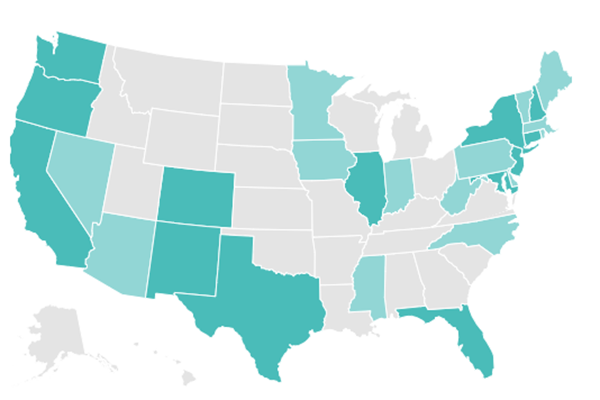
With federal solutions at a standstill, 30 states have passed varying levels of protections from surprise billing. As of July, 2020, 16 states have more comprehensive protections, which ensure that insured patients are only responsible for paying in-network costs, even when receiving care from out-of-network providers or emergency services at an out-of-network facility. Georgia was the latest state to pass such a law in July 2020. The other 14 states offer far more limited protections.

But even states with comprehensive protections cannot protect all patients from surprise medical bills. States are not able to regulate job-based coverage that falls under a federal law known as the Employee Retirement Income Security Act, which applies to most employer sponsored insurance. These patients remain vulnerable to surprise medical bills until Congress takes action to ban the practice.

Click on the map below for an interactive map from the Commonwealth Fund that details each state’s protections.

State Balance-Billing Protections | Commonwealth Fund

The Sticking Point: Will Congress Pass Protections?

Despite strong bipartisan support for protecting patients from surprise bills, disagreement comes over how much physician groups should charge and how much insurers should pay. Essentially, resolving this issue may mean Congress has to pick sides.

As a result, stakeholders such as hospitals and private equity-backed physician groups, in particular, have pushed back on federal legislation, arguing that banning surprise billing will cripple their bottom line. These equity-backed physician groups have powerful lobbying groups, and in 2019, spent at least $5 million to persuade lawmakers to halt the legislation.

The pandemic has increased the risk that patients will unknowingly receive care from an out-of-network provider or at an out-of-network facility. The Trump administration tried to limit surprise bills for those in need of COVID-19 treatment by banning hospitals and providers that receive money from its Provider Relief Fund from sending balance bills to patients. But this approach leaves significant gaps and has had mixed success.


How important is the ACA for people who lose their jobs?

https://us3.campaign-archive.com/?u=6ab1fc39a0b1b15521551487c&id=6f9ac3fd86&e=ad91541e82

https://www.nejm.org/doi/full/10.1056/NEJMp2023312

This week’s contributor is Larry Levitt, the Executive Vice President for Health Policy at the Kaiser Family Foundation.

For the first time in an economic downturn, the Affordable Care Act (ACA) exists as a health care safety net for people losing their jobs and employer-provided health insurance. A new study provides some clues as to how well the health care law works for people who lose their jobs and insurance.

The study – by Sumit Agarwal and Benjamin Sommers, published in the New England Journal of Medicine – compares people who lost their jobs before and after the ACA went into effect in 2014 to see if there is a difference in how many people retained health insurance. During the pre-ACA period (2011-2013), there was about a 5% increase in the uninsured rate for people following a job loss. After the ACA went into effect (2014-2016), no such increase occurred. Instead, Medicaid and the marketplaces saw large increases in utilization.

With millions of Americans losing their jobs during the pandemic, the number of people without health coverage has undoubtedly risen. However, by how much is unknown, since we don’t track insurance coverage in real-time like we do employment. Many who have lost jobs may not have had employer-sponsored insurance in the first place, if they worked an industry like food service or retail. And the vast majority of people who are unemployed are classified as on temporary layoff, with employers who may be continuing health benefits for their furloughed workers, at least for now. However, the share of unemployed workers who have permanently lost their jobs is growing.

If the economic crisis persists, the number of people losing job-based health insurance will climb, making the ACA’s role as a safety net more relevant than ever.


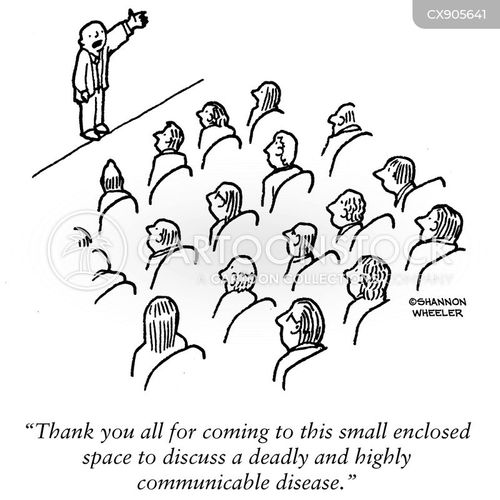
Cartoon – State of the Union: Thank You All for Coming

Medical Conferences Cartoons and Comics - funny pictures from CartoonStock

Cartoon – Federal Coronavirus Testing Guidelines

This company boasted to Trump about its COVID-19 vaccine. Experts are  skeptical. - Hartford Courant

Cartoon – Something that would greatly Prevent Covid 19

U.S. sets record for new coronavirus cases, surpassing 53,000 - The  Washington Post

Cartoon – Federal Coronavirus Response

10 Dilbert Cartoons That Get Project Management Just Right

Poll: Half of Americans worried about medical bankruptcy

https://www.upi.com/Top_News/US/2020/09/01/Poll-Half-of-Americans-worried-about-medical-bankruptcy/5561598958953/?fbclid=IwAR328ND-qsLKiHR-ogO7migi7sIwkIQU8W2yFpKg_216MhyNwGBNfEpByVY

New Poll: Half in US Fear Bankruptcy From Major Health Event | Common  Dreams News

About half of Americans in the COVID-19 era fear a health-related incident could drive them into bankruptcy, according to a new survey Tuesday by Gallup and West Health.

Gallup and West Health said 50% of respondents said they’re concerned about medical bankruptcy — a 5% increase from early this year, before the pandemic. That concern rose 12 points among U.S. adults between 18 and 29 and non-White Americans.

“Dovetailing with the new health-related concerns brought on by the coronavirus outbreak is the economic catastrophe that — despite the recouping of millions of jobs since May — persists in form of 28 million people receiving some form of unemployment aid at the end of July,” Gallup wrote.

“As such, Americans’ concerns about a major health event putting them in bankruptcy, while substantial in early 2019, are likely only intensified today because of the pandemic.

The study found that 15% of respondents said at least one person in their home currently has medical debt that will not be repaid in the next 12 months.

“Those in households earning less than $40,000 per year are more than four times as likely as those in households earning $100,000 or more to be carrying long-term medical debt (28% vs. 6%, respectively),” Gallup added. “The rate is also about twice as high among self-identified political independents (18%) and Democrats(16%) as among Republicans (8%).”

More than a quarter of adults said they’d need to borrow to pay a medical bill of just $500. Many others said they would have to go into debt.

Gallup polled more than 1,000 U.S. adults for the survey, which has a margin of error of 4 points.


C.D.C. Tells States How to Prepare for Covid-19 Vaccine by Early November

As President Trump pushes the possibility of a vaccine this year, the C.D.C. has outlined technical scenarios to state public health officials for an unidentified Vaccine A and Vaccine B.

The Centers for Disease Control and Prevention has notified public health officials in all 50 states and five large cities to prepare to distribute a coronavirus vaccine to health care workers and other high-risk groups as soon as late October or early November.

The new C.D.C. guidance is the latest sign of an accelerating race for a vaccine to ease a pandemic that has killed more than 184,000 Americans. The documents were sent out on the same day that President Trump told the nation in his speech to the Republican National Convention that a vaccine might arrive before the end of the year.

Over the past week, both Dr. Anthony S. Fauci, the country’s top infectious disease expert, and Dr. Stephen Hahn, who heads the Food and Drug Administration, have said in interviews with news organizations that a vaccine may be available for certain groups before clinical trials have been completed, if the data is overwhelmingly positive.

Public health experts agree that agencies at all levels of government should urgently prepare for what will eventually be a vast, complex effort to vaccinate hundreds of millions of Americans. But the possibility of a rollout in late October or early November has heightened concerns that the Trump administration is seeking to rush the distribution of a vaccine — or simply to hype that one is possible — before Election Day on Nov. 3.

For an administration that has struggled with the logistical challenges of containing the coronavirus, the distribution of millions of vaccines that must be stored in subzero temperatures and provided first to high-risk groups through America’s flawed, fragmented health care system would be a daunting challenge. Even the C.D.C.’s guidance acknowledged that its plan was hypothetical and based on the need to immediately begin organizing the gigantic effort that would be required if the F.D.A. were to allow the use of a vaccine or two this year.

The C.D.C. plans lay out technical specifications for two candidates described as Vaccine A and Vaccine B, including requirements for shipping, mixing, storage and administration. The details seem to match the products developed by Pfizer and Moderna, which are the furthest along in late-stage clinical trials. On Aug. 20, Pfizer said it was “on track” for seeking government review “as early as October 2020.”

Credit…

“This timeline of the initial deployment at the end of October is deeply worrisome for the politicization of public health and the potential safety ramifications,” said Saskia Popescu, an infection prevention epidemiologist based in Arizona. “It’s hard not to see this as a push for a pre-election vaccine.”

Three documents were sent to public health officials in all states and territories as well as officials in New York, Chicago, Philadelphia, Houston and San Antonio on Aug. 27. They outlined detailed scenarios for distributing two unidentified vaccine candidates, each requiring two doses a few weeks apart, at hospitals, mobile clinics and other facilities offering easy access to the first targeted recipients.

The guidance noted that health care professionals, including long-term care employees, would be among the first to receive the product, along with other essential workers and national security employees. People 65 or older, as well as Native Americans and those who are from “racial and ethnic minority populations” or incarcerated — all communities known to be at greater risk of contracting the virus and experiencing severe disease — were also prioritized in the documents.

That’s a positive development, “so it doesn’t just all wind up in high-income, affluent suburbs,” said Dr. Cedric Dark, an emergency medicine physician at Baylor College of Medicine in Texas.

The C.D.C. noted in its guidance that “limited Covid-19 vaccine doses may be available by early November 2020.” The documents were dispatched the same day that Dr. Robert Redfield, director of the C.D.C., sent a letter to governors asking them to prepare vaccine distribution sites by Nov. 1, as McClatchy reported.

The agency also said its plans were as yet hypothetical, noting, “The Covid-19 vaccine landscape is evolving and uncertain, and these scenarios may evolve as more information is available.” A C.D.C. spokeswoman confirmed that the documents were sent but declined to comment further.

Many of the details listed for the two vaccines — including required storage temperature, the number of days needed between doses, and the type of medical center that can accommodate the product’s storage — match what Pfizer and Moderna have said about their products, which are based on so-called mRNA technology. Neither company responded to requests for comment.

The scenarios, which assume that the two vaccines will demonstrate sufficient safety and effectiveness for an emergency authorization from the F.D.A. by the end of October, noted that Vaccine A, which seems to match Pfizer’s, would have about two million doses ready within this time frame, and that Vaccine B, whose description matches Moderna’s, would have about one million doses ready, with tens of millions of doses of each vaccine ready by the end of the year. Although it’s possible that some promising preliminary data may emerge by the end of October, experts are skeptical.

“The timeline that’s reported seems a bit ambitious to me,” Dr. Dark said. “October’s like 30 days away.”

Trials that test a vaccine’s effectiveness can take years to yield reliable results. It’s possible to draw conclusions sooner “if there is an overwhelming effect” in which vaccinated people appear to be far better protected from disease, said Padmini Pillai, a vaccine researcher and immunologist at M.I.T.

But there can be significant risks in approving a vaccine for broad use in the public before Phase 3 clinical trials involving tens of thousand of participants are completed. Rare but dangerous side effects may only surface over time, after such large numbers of people have received the vaccine.

And data gathered early in a trial might not hold true months down the line. Researchers also need time to test large numbers of people from a variety of backgrounds to determine how well the vaccine works in different populations — including the vulnerable communities identified in the guidelines.

Should any of these snags occur, Dr. Pillai said, “all of this together could diminish public trust in the vaccine.”

James S. Blumenstocksenior vice president of pandemic response and recovery at the Association of State and Territorial Health Officials, confirmed that the three C.D.C. documents were sent to all state and territorial health departments last week. “It is now the time to enhance organizational structure and involve all partners in this planning process going forward,” he said.

Lisa Stromme, a spokeswoman for the Washington State Department of Health, said that her state’s health officials were still at “a very early stage in a planning process,” but were already working toward developing infrastructure that would accommodate the assumptions laid out by the C.D.C.

The C.D.C. documents said that public health administrators should review lessons learned from the 2009 H1N1 pandemic vaccination campaign, which did not have enough doses at the beginning to meet demand.

“It’s good to have a plan out for hospitals and health care systems to prepare” for a potential rollout, said Dr. Taison Bell, a pulmonary and critical care physician at the University of Virginia. But Dr. Bell added that he was concerned that the timeline outlined in the documents “is incredibly ambitious and makes me worry that the administration will prioritize this arbitrary deadline rather than maintaining diligence with following the science.”

The technical comparison of Vaccine A and Vaccine B has some echoes of what was discussed at an Aug. 26 meeting of the Advisory Committee on Immunization Practices of the C.D.C. At the meeting, Dr. Kathleen Dooling, a C.D.C. medical officer, laid out three scenarios: Vaccine A, or the Pfizer vaccine, is approved, Vaccine B, the Moderna vaccine, is approved, or both. The requirement that Pfizer’s vaccine be stored at minus 70 degrees Celsius would mean that it couldn’t be administered at most small sites, she said. The C.D.C. documents noted that orders of Vaccine A would go “to large administration sites only.” The Moderna vaccine requires storage at minus 20 degrees Celsius.

The C.D.C. documents said the vaccine would be free to patients, but that providers might not be reimbursed for administrative costs if the vaccine was given an emergency authorization, rather than a standard approval.

Experts worry that the process is unlikely to go off without a hitch, given the last-minute scramble and the mixed messaging so far. “I think distribution is going to be very tricky for the vaccine, particularly if there is a cold storage requirement,” Dr. Bell said.

There are also likely to be challenges administering both doses of the proposed vaccines, which must be given weeks apart, Dr. Dark said. “How are you going to make sure people get both?”