Seconds Count Survey Highlights New research shows fear of COVID-19 is stopping people from seeking care during medical emergencies, like heart attacks or strokes.
As States start to re-open, more than one-third of Americans (36 percent) consider going to the hospital to be one of the riskiest behaviors to take part in compared to going to a hair salon (27 percent) or going to the beach (16 percent)
61 percent of respondents think they are either somewhat likely or very likely to acquire COVID-19 in a hospital
Half of respondents are more afraid of contracting COVID-19 than experiencing a heart attack or stroke
Nearly 60 percent of respondents are more afraid of a family member or loved one contracting COVID-19 than experiencing a heart attack or stroke
When asked which are you more afraid of, contracting COVID-19, experiencing a heart attack or experiencing a stroke – twice as many people over the age of 60 are more afraid of contracting COVID-19 (52 percent) than they are of experiencing a heart attack (23 percent) or stroke (25 percent)
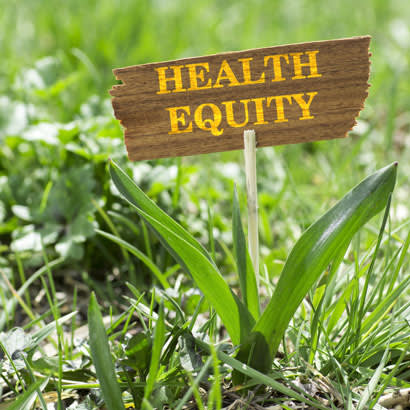
“Health equity means that everyone has a fair and just opportunity to be as healthy as possible. This requires removing obstacles to health such as poverty, discrimination, and their consequences, including powerlessness and lack of access to good jobs with fair pay, quality education and housing, safe environments, and health care.”
COVID-19 has unleashed a dual threat to health equity in the United States: a pandemic that has sickened millions and killed tens of thousands and counting, and an economic downturn that has resulted in tens of millions of people losing jobs—the highest numbers since the Great Depression. The COVID pandemic underscores that:
Our health is inextricably linked to that of our neighbors, family members, child- and adult-care providers, co-workers, school teachers, delivery service people, grocery store clerks, factory workers, and first responders, among others;
Our current health care, public health, and economic systems do not adequately or equitably protect our well-being as a nation; and
Every community is experiencing harm, though certain groups are suffering disproportionately, including people of color, workers with low incomes, and people living in places that were already struggling financially before the economic downturn.
For communities and their residents to recover fully and fairly, state and local leaders should consider the following health equity principles in designing and implementing their responses. These principles are not a detailed public health guide for responding to the pandemic or reopening the economy, but rather a compass that continually points leaders toward an equitable and lasting recovery.
Pandemics and economic recessions exacerbate disparities that ultimately hurt us all. Therefore, state and local leaders cannot design equitable response and recovery strategies without monitoring COVID’s impacts among socially and economically marginalized groups.¹ Data disaggregation should follow best practices and extend not only to public health data on COVID cases, hospitalizations, and fatalities, but also to: measures of access to testing, treatment, personal protective equipment (PPE), and safe places to isolate when sick; receipt of social and economic supports; and the downstream consequences of COVID on well-being, ranging from housing instability to food insecurity.
Geographic identifiers would allow leaders and the public to understand the interplay between place and social factors, as counties with large black populations account for more than half of all COVID deaths, and rural communities and post-industrial cities generally fare worse in economic downturns. Legal mandates for data disaggregation are proliferating, but 11 states are still not reporting COVID deaths by race; 16 are not reporting by gender; and 26 are not reporting based on congregate living status (e.g., nursing homes, jails). Only three are reporting testing data by race and ethnicity.
While states and cities can do more, the federal government should also support data disaggregation through funding and national standards.
Our communities are stronger, more stable, and more prosperous when every person, including the most disadvantaged residents, is healthy and financially secure. Throughout the response and recovery, state and local leaders should ask: Are we making sure that people facing the greatest risks have access to PPE, testing and treatment, stable housing, and a way to support their families? And, are we creating ways for residents—particularly those hardest hit—to meaningfully participate in and shape the government’s recovery strategy?
Accordingly, policymakers should create space for leaders from these communities to be at decision-making tables and should regularly consult with community-based organizations that can identify barriers to accessing health and social services, lift up grassroots solutions, and disseminate public health guidance in culturally and linguistically appropriate ways. For example, they could recommend trusted, accessible locations for new testing sites and advise on how to diversify the pool of contact tracers, who will be crucial to tamping down the spread of infection in reopened communities. They could also collaborate with government leaders to ensure that all people who are infected with coronavirus (or exposed to someone infected) have a safe, secure, and acceptable place to isolate or quarantine for 14 days. Key partners could include community health centers, small business associations, community organizing groups, and workers’ rights organizations, among others. Ultimately, state and local leaders should measure the success of their response based not only on total death counts and aggregate economic impacts but also on the health and social outcomes of the most marginalized.
Race or ethnicity should not determine anyone’s opportunity for good health or social well-being, but, as COVID has shown, we are far from this goal. People of color are more likely to be front-line workers, to live in dense or overcrowded housing, to lack health insurance, and to experience chronic diseases linked to unhealthy environments and structural racism. Therefore, state and local leaders should empower dedicated teams to address COVID-related racial disparities, as several leaders, Republican and Democrat, have already done.
To be effective, these entities should: include leaders of color from community, corporate, academic, and philanthropic sectors; be integrated as key members of the broader public health and economic recovery efforts; and be accountable to the public. These teams should foster collaboration between state, local, and tribal governments to assist Native communities; anticipate and mitigate negative consequences of current response strategies, such as bias in enforcement of public health guidelines; address racial discrimination within the health care system; and ensure access to tailored mental health services for people of color and immigrants who are experiencing added trauma, stigma, and fear. Ultimately, resourcesmatter. State and local leaders must ensure that critical health and social supports are distributed fairly, proportionate to need, and free of undue restrictions to meet the needs of all groups, including black, Latino, Asian, and Indigenous communities.
The Congressional response to COVID has been historic in its scope and speed, but significant gaps remain. Additional federal resources are needed for a broad range of health and social services, along with fiscal relief for states and communities facing historically large budget deficits due to COVID. Despite these challenges, state and local leaders must still find ways to take targeted policy actions. The following questions can help guide their response.
Who is left out?Inclusion of all populations will strengthen the public health response and lessen the pandemic’s economic fallout for all of society, but federal actions to date have not included all who have been severely harmed by the pandemic. As a result, many states and communities have sought to fill gaps in eviction protections and paid sick and caregiving leave. Others are extending support to undocumented immigrants and mixed-status families through public-private partnerships, faith-based charities, and community-led mutual aid systems. Vital health care providers, including safety net hospitals and Indian Health Service facilities, have also been disadvantaged and need targeted support.
Will protections last long enough?Many programs, such as expanded Medicaid funding, are tied to the federal declaration of a public health emergency, which will likely end before the economic crisis does. Other policies, like enhanced unemployment insurance and mortgage relief, are set to expire on arbitrary dates. And still others, such as stimulus checks, were one-time payments. Instead, policy extensions should be tied to the extent of COVID infection in a state or community (or its anticipated spread) and/or to broader economic measures such as unemployment. This is particularly important as communities will likely experience re-openings and closings over the next six to 12 months as COVID reemerges.
Have programs that meet urgent needs been fully and fairly implemented?Allexisting federal resources should be used in a time of great need. For example, additional states should adopt provisions that would allow families with school-age children to receive added Supplemental Nutrition Assistance Program (SNAP) benefits, and more communities need innovative solutions to provide meals to young children who relied on schools or child care providers for breakfast and lunch. States should also revise eligibility, enrollment, and recertification processes that deter Medicaid use by children, pregnant women, and lawfully residing immigrants.
Health, public health, and social infrastructure are critical for recovery and for our survival of the next pandemic, severe weather event, or economic downturn. A comprehensive public health system is the first line of defense for rural, tribal, and urban communities. While a sizable federal reinvestment in public health is needed, states and communities must also reverse steady cuts to the public health workforce and laboratory and data systems.
Everyone in this country should have paid sick and family leave to care for themselves and loved ones; comprehensive health insurance to ensure access to care when sick and to protect against medical debt; and jobs and social supports that enable families to meet their basic needs and invest in the future. As millions are projected to lose employer-sponsored health insurance, Medicaid expansion becomes increasingly vital for its proven ability to boost health, reduce disparities, and provide a strong return on investment. In the longer term, policies such as earned income tax credits and wage increases for low-wage workers can help secure economic opportunity and health for all. Finally, states and communities should invest in affordable, accessible high-speed internet, which is crucial to ensuring that everyone—not just the most privileged among us—is informed, connected to schools and jobs, and engaged civically.
These principles can guide our nation toward an equitable response and recovery and help sow the seeds of long-term, transformative change. States and cities have begun imagining and, in some cases, advancingtoward this vision, putting a down payment on a fair and just future in which health equity is a reality. Returning to the ways things were is not an option.
President Trump said Friday the U.S. would halt its funding of the World Health Organization and pull out of the agency, accusing it of protecting China as the coronavirus pandemic took off. The move has alarmed health experts, who say the decision will undermine efforts to improve the health of people around the world.
In an address in the Rose Garden, Trump said the WHO had not made reforms that he said would have helped the global health agency stop the coronavirus from spreading around the world.
“We will be today terminating our relationship with the World Health Organization and redirecting those funds to other worldwide and deserving urgent global public health needs,” Trump said. “The world needs answers from China on the virus.”
It’s not immediately clear whether the president can fully withdraw U.S. funding for the WHO without an act of Congress, which typically controls all federal government spending. Democratic lawmakers have argued that doing so would be illegal, and House Speaker Nancy Pelosi threatened last month that such a move would be “swiftly challenged.”
The United States has provided roughly 15% of the WHO’s total funding over its current two-year budget period.
The WHO has repeatedly said it was committed to a review of its response, but after the pandemic had ebbed. Last month, Robert Redfield, the director of the Centers for Disease Control and Prevention, also said the “postmortem” on the pandemic should wait until the emergency was over.
As the Trump administration’s response to pandemic has come under greater scrutiny, with testing problems and a lack of coordination in deploying necessary supplies, Trump has sought to cast further blame on China and the WHO for failing to snuff out the spread when the virus was centered in China.
During his remarks, Trump alleged, without evidence, that China pressured WHO to mislead the world about the virus. Experts say that if the U.S. leaves the WHO, the influence of China will only grow.
“The world is now suffering as a result of the malfeasance of the Chinese government,” Trump said. “China’s coverup of the Wuhan virus allowed the disease to spread all over the world, instigating a global pandemic that has cost more than 100,000 American lives, and over a million lives worldwide.” (That last claim is not true; globally, there have been about 360,000 confirmed deaths from Covid-19, the disease caused by the coronavirus.)
When Trump earlier this month threatened to yank U.S. funding in a letter, Tedros Adhanom Ghebreyesus, the WHO director-general, would only say during a media briefing that the agency was reviewing it. But he and other officials stressed that the agency had a small budget — about $2.3 billion every year — relative to the impact the agency had and what it was expected to do.
Mike Ryan, head of the WHO’s emergencies program, said the U.S. funding provided the largest proportion of that program’s budget.
“So my concerns today are both for our program and … working on how we improve our funding base for WHO’s core budget,” Ryan said. “Replacing those life-saving funds for front-line health services to some of the most difficult places in the world — we’ll obviously have to work with other partners to ensure those funds can still flow. So this is going to have major implications for delivering essential health services to some of the most vulnerable people in the world and we trust that other donors will if necessary step in to fill that gap.”
But a Vox analysis suggests that most states haven’t made the preparations needed to contain future waves of the pandemic — putting themselves at risk for a rise in Covid-19 cases and deaths should they continue to reopen.
Experts told me states need three things to be ready to reopen.State leaders, from the governor to the legislature to health departments, need to ensure the SARS-CoV-2 virus is no longer spreading unabated. They need the testing capacity to track and isolate the sick and their contacts. And they need the hospital capacity to handle a potential surge in Covid-19 cases.
More specifically, states should meet at least five basic criteria. They should see a two-week drop in coronavirus cases, indicating that the virus is actually abating. They should have fewer than four daily new cases per 100,000 people per day — to show that cases aren’t just dropping, but also below dangerous levels. They need at least 150 new tests per 100,000 people per day, letting them quickly track and contain outbreaks. They need an overall positive rate for tests below 5 percent — another critical indicator for testing capacity. And states should have more than 40 percent of their ICU beds free to actually treat an influx of people stricken with Covid-19 should it be necessary.
These metrics line up with experts’ recommendations, as well as the various policy plans put out by both independent groups and government officials to deal with the coronavirus.
Meeting these metrics doesn’t mean that a state is ready to reopen its economy — a process that describes a wide range of local and state actions. And failing them doesn’t mean a state is in immediate danger of a coronavirus outbreak if it starts to reopen; with Covid-19, there’s always an element of luck and other factors.
But with these metrics, states can gauge if they have repressed the coronavirus while building the capacity to contain future outbreaks should they come. In other words, the benchmarks show how ready states are for the next phase of the fight.
So far, most states are not there. As of May 27, just three states — Alaska, Kentucky, and New York — met four or five of the goals, which demonstrates strong progress. Thirty states hit two or three of the benchmarks. The other 17, along with Washington, DC, achieved zero or one.
Even the states that have made the most progress aren’t necessarily ready to safely reopen. There’s a big difference between Alaska — which has not suffered from a high number of coronavirus cases — and New York, and no expert would say that all of New York is ready to get back to normal.
Nor do the metrics cover everything that states should do before they can reopen. They don’t show, for example, if states have the capacity to do contact tracing, in which people who came into contact with someone who’s sick with Covid-19 are tracked down by “disease detectives” and quarantined. Contact tracing is key to containing an epidemic, but states don’t track how many contact tracers they’ve hired in a standardized, readily available way.
They also don’t have ready data for health care workers’ access to personal protective equipment, such as masks and gloves — a critical measure of the health care system’s readiness that is difficult to track.
But the map gives an idea of how much progress states have made toward containing the coronavirus and keeping it contained.
States will have to follow these kinds of metrics as they reopen. If the numbers — especially coronavirus cases — go in the wrong direction again, experts said governments should be ready to bring back restrictions. If states move too quickly to reopen or respond too slowly to a turn for the worse, they could see a renewed surge in Covid-19 cases.
“Planning for reclosing is part of planning for reopening,” Mark McClellan, a health policy expert at Duke, told me. “There will be outbreaks, and there will be needs for pauses and going back — hopefully not too much if we do this carefully.”
So this will be a work in progress, at least until we get a Covid-19 vaccine or the pandemic otherwise ends, whether by natural or human means. But the metrics can at least help give states an idea of how far along they are in finally starting to open back up.
Goal 1: A sustained two-week drop in coronavirus cases
What’s the goal? A 10 percent drop in daily new coronavirus cases compared to two weeks ago and a 5 percent drop in cases compared to one week ago, based on data from the New York Times.
Which states meet the goal? Colorado, Connecticut, Delaware, Hawaii, Indiana, Kansas, Kentucky, Massachusetts, Michigan, Missouri, Nebraska, New Jersey, New York, Oregon, Pennsylvania, Rhode Island, and Texas — 17 states in all. Washington, DC, did as well.
Why is this important? Guidance from the White House and several independent groups emphasize that states need to see coronavirus cases drop consistently over two weeks before they can say they’re ready to begin reopening. After all, nothing shows you’re out of an outbreak like a sustained reduction in infections.
“The first and foremost [metric] is you want to have a continued decrease in cases,” Saskia Popescu, an infectious disease epidemiologist, told me. “It’s a huge piece.”
A simple reduction in cases compared to two weeks prior isn’t enough; it has to be a significant drop, and it has to be sustained over the two weeks. So for Vox’s map, states need at least a 10 percent drop in daily new cases compared to two weeks prior and at least a 5 percent drop compared to one week prior.
Reported cases can be a reflection of testing capacity: More testing will pick up more cases, and less testing will pick up fewer. So it’s important that the decrease occur while testing is either growing or already sufficient. And since states have recently boosted their testing abilities, increases in Covid-19 cases can also reflect improvements in testing.
Even after meeting this benchmark, continued caution is warranted. If a state meets the goal of a reduction in cases compared to one and two weeks ago but cases seemed to go up in recent days, then perhaps it’s not time to reopen just yet. “You have to use common sense,” Cyrus Shahpar, a director at the public health policy group Resolve to Save Lives, told me.
For states with small outbreaks, this goal is infeasible. Montana has seen around one to two new Covid-19 cases a day for several weeks. Getting that down to zero would be nice, but the current level of daily new cases isn’t a big threat to the whole state. That’s one reason Vox’s map lets states meet four or five of the five goals — in case they miss one goal that doesn’t make sense for them but hit others.
Still, the two-week reduction in cases is the most cited by experts and proposals to ease social distancing.
Goal 2: A low number of daily new Covid-19 cases
What’s the goal? Fewer than four daily new coronavirus cases per 100,000 people per day, based on data from the New York Times and Census Bureau.
Which states meet the goal? Alaska, Florida, Hawaii, Idaho, Kentucky, Maine, Michigan, Missouri, Montana, Oklahoma, Oregon, South Carolina, Texas, Vermont, Washington, West Virginia, and Wyoming — 17 states.
Why is this important? One of the best ways to know you’re getting away from a disease outbreak is to no longer see a high number of daily new infections. While there’s no universally accepted number, experts said that four daily new coronavirus cases per 100,000 people is a decent ceiling.
“If I go from one to two to three [coronavirus cases a day], it’s different than going from 1,000 to 2,000 to 3,000, even though the percent difference is the same,” Shahpar said. “That’s why you have to take into account the overall level, too.”
This number can balance out the shortcomings in other metrics on this list. For example, New York — which has suffered the worst coronavirus outbreak in the country — has seen its reported daily new coronavirus cases drop for weeks, meeting the goal of a sustained drop in cases. But since that’s coming down from a huge high, even a month of sustained decreases may not be enough. New York has to make sure it falls below a threshold of new cases, too.
At the same time, if your state is now below four daily new cases per 100,000 but it’s seen a recent uptick in cases, that’s a reason for caution. New York, after all, saw just a handful of confirmed coronavirus cases before an exponential explosion of the disease took the state to thousands of new cases a day.
But if your state is below the threshold, it’s in a pretty solid place relative to most other states.
Which states meet the goal? Alaska, Connecticut, Delaware, Georgia, Illinois, Louisiana, Nevada, New Jersey, New Mexico, New York, North Dakota, and Rhode Island — for a total of 12 states.
Why is this important? Since the beginning of the coronavirus pandemic, experts have argued that the US needs the capacity for about 500,000 Covid-19 tests a day. Controlling for population, that adds up to about 150 new tests per 100,000 people per day.
Testing is crucial to getting the coronavirus outbreak under control. When paired withcontact tracing, testing lets officials track the scale of the outbreak, isolate the sick, quarantine those the sick came into contact with, and deploy community-wide efforts as necessary. Testing and tracing are how other countries, like South Korea and Germany, have managed to control their outbreaks and started to reopen their economies.
The idea, experts said, is to have enough surveillance to detect embers before they turn into full wildfires.
“States should be shoring up their testing capacity not just for what it looks like right now while everyone’s in their homes, but as people start to move more,” Jen Kates, the director of global health and HIV policy at the Kaiser Family Foundation, told me. “As people start doing more movement, you’ll have to test more, because people are going to come into contact with each other more.”
This goal is supposed to be for diagnostic tests, not antibody tests. Diagnostic tests gauge whether a person has the virus in their system and is, therefore, sick right at the moment of the test. Antibody tests check if someone ever developed antibodies to the virus to see if they had ever been sick in the past. Since diagnostic tests give a more recent gauge of the level of infection, they’re seen as much more reliable for evaluating the current state of the Covid-19 outbreak in a state.
But some states have included antibody tests in their overall counts. Experts said states shouldn’t do this. But since the data they report and the Covid Tracking Project collects is the best testing data we have, it’s hard to tease out how much antibody tests are skewing the total.
In particular, Georgia’s data suggested it met the goal of 150 daily tests per 100,000 people, but the state only started separating antibody tests from its total after the data was collected. Without the antibody tests, Georgia very likely wouldn’t meet the goal.
Some states’ numbers, like Missouri’s, also may appear significantly worse than they should due to recent efforts to decouple diagnostic testing data from antibody testing data, which can temporarily warp the overall test count.
“The virus isn’t going to care whether they were manipulating the numbers or not in order to look more favorable; it’s going to continue to spread,” Crystal Watson, a senior scholar at the Johns Hopkins Center for Health Security, told me. “It’s better to really understand what’s going on and report that accurately.”
For states honestly reporting these numbers, though, they’re a critical measure of their ability to detect, control, and contain coronavirus outbreaks.
Goal 4: A low test-positive rate
What’s the goal? Below 5 percent of coronavirus tests coming back positive over the past week, based on data from the Covid Tracking Project.
Which states meet the goal? Alaska, California, Florida, Georgia, Hawaii, Kentucky, Louisiana, Maine, Michigan, Montana, Nevada, New Hampshire, New Mexico, New York, North Dakota, Oklahoma, Oregon, South Carolina, Tennessee, Vermont, Washington, West Virginia, and Wyoming — for a total of 23 states.
Why is this important? The positive or positivity rate, which tracks how many tests come back positive for Covid-19, is another way to measure testing capacity.
Generally, a higher positive rate suggests there’s not enough testing happening. An area with adequate testing should be testing lots and lots of people, many of whom don’t have the disease or don’t show severe symptoms. The positive testing rate in South Korea, for example, is below 2 percent. High positive rates indicate only people with obvious symptoms are getting tested, so there’s not quite enough testing to match the scope of an outbreak.
The positive rate data is subject to the same limitations as the overall testing data from the Covid Tracking Project. So if a state includes antibody tests in its test count, it could skew the positive rate to look better than it is. States only risk hurting themselves if they do this.
Which states meet the goal? Alaska, Arizona, Arkansas, California, Connecticut, Delaware, Idaho, Illinois, Indiana, Iowa, Kansas, Kentucky, Minnesota, Missouri, Montana, New Hampshire, New Jersey, New Mexico, New York, North Dakota, Ohio, Oklahoma, Pennsylvania, South Dakota, Utah, Vermont, Virginia, Washington, Wisconsin, and Wyoming — for a total of 30 states.
Why is this important? If a pandemic hits, the health care system needs to be ready to treat the most severe cases and potentially save lives. That’s the key goal of “flattening the curve” and “raising the line,” in which social distancing helps reduce the spread of the disease so the health care system can maintain and grow its capacity to treat an influx of Covid-19 patients.
“There’s this idea that in six weeks we can open more things,” Amesh Adalja, a senior scholar at the Johns Hopkins Center for Health Security, told me. “But the virus is still there. It’s all about making sure that the case count isn’t too immense for our hospital system to deal with.”
The aim is to avoid the nightmare scenario that Italy went through when it had more Covid-19 cases than its health care system could handle, leading to hospitals turning away even dangerously ill patients.
To gauge this, experts recommended looking at ICU capacity, with states aiming to have less than 60 percent occupancy in their ICUs.
A big limitation in the metric: It’s based on data collected by the Centers for Disease Control and Prevention of only some hospitals in each state. So it might not be fully representative of hospital capacity throughout an entire state. But it’s the best current data available, and it suggests that the majority of states meet that standard.
That’s extremely good news. It shows that America really has flattened the curve, at least for now. But it’s done that so far through extreme social distancing. If the next step is to keep the curve flattened while easing restrictions, that will require meeting the other metrics on this list.
Hitting the benchmarks is the beginning, not the end
Vox’s map is just one way of tracking success against the coronavirus. Other groups have come up with their own measures, including Covid Act Now, Covid Exit Strategy, and Test and Trace. Vox’s model uses more up-to-date data than some of these other examples, while focusing not just on the state of the pandemic but states’ readiness to contain Covid-19 outbreaks in the future.
Very few states hit all the marks recommended by experts. But even those that do shouldn’t consider the pandemic over. They should continue to improve — for example, getting the positive rate below even 1 percent, as in New Zealand — and look at even more granular metrics, such as at the city or county level.
Meeting the benchmarks, however, indicates a state is better equipped to contain future coronavirus outbreaks as it eases previous restrictions.
Experts emphasized that states have to keep hitting all these goals week after week and day after day — Covid-19 cases must remain low, testing ability needs to stay high, and hospital capacity should be good enough for an influx of patients — until the pandemic is truly over, whether thanks to a vaccine or other means. Otherwise, a future wave of coronavirus cases, as seen in past pandemics, could kill many more people.
“You need to have all the metrics met,” Popescu said. “This needs to be a very incremental, slow process to ensure success.”
And if the numbers do start trending in the wrong direction, states should be ready to shut down at least some parts of the economy again. Maybe not as much as before, as we learn which places are truly at risk of increasing spread. But experts caution that future shutdowns will likely be necessary to some extent.
“I do worry we’re going to see surges of cases and hot spots,” Watson said. “We do need to keep pushing on building those capacities. … Otherwise, we’re just rolling the dice on the spread of the virus. It’s better if we have more control of the spread.”
That’s another reason these metrics, along with broader coronavirus surveillance, are so important: They not only help show how far along states are in dealing with their current Covid-19 outbreaks, but will help track progress to stop and prevent future crises as well.
PCR tests are precise, but they can also detect the presence of the virus well after it’s no longer contagious.
Dr. Matthew Binnicker, an expert in the diagnosis of infectious disease, explains why someone might still test positive for Covid-19 weeks after they’ve recovered.
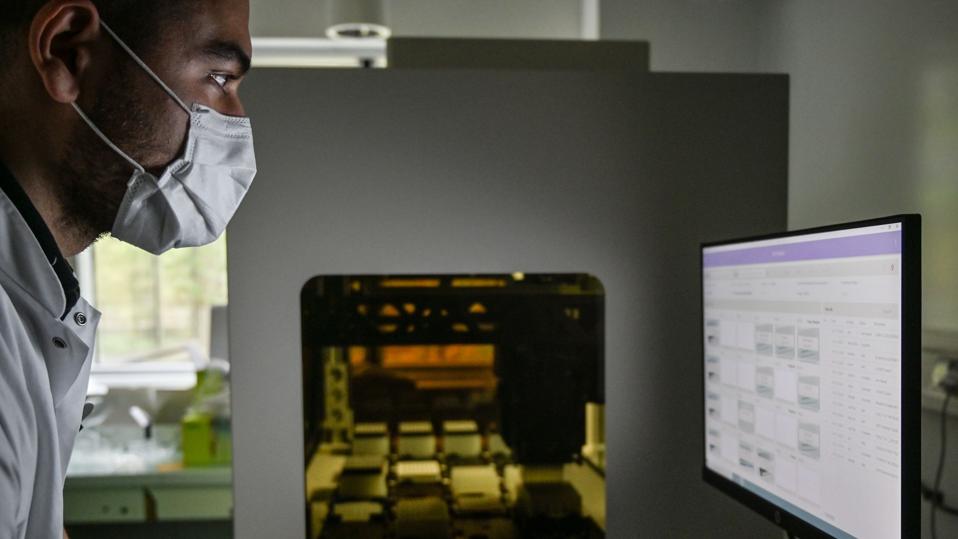
To date, the majority of patients with Covid-19 have been diagnosed using a laboratory test called PCR, which detects the virus’ genetic material (i.e., RNA) in clinical samples (e.g., nasal swabs). PCR is a very sensitive laboratory method – meaning it can detect minute amounts of viral RNA – and has been used for nearly 2 decades to diagnose a variety of infectious diseases, including influenza and strep throat. Despite being a rapid and inherently sensitive test, PCR has certain limitations that need to be carefully considered when interpreting the results.
One of those key limitations of PCR is its inability to determine whether a patient is infectious, or not. This is because the test is designed to detect the virus’ RNA, which is generally present when a virus is causing an active infection. However, RNA can also be present, and therefore, detected by PCR after a virus has broken down (i.e., become non-infectious) and released its genome into host cells or body fluids. From prior experience with other infectious diseases, we know that PCR tests can be positive for days or weeks after a patient has recovered from the illness and is no longer infectious.
As more testing is being performed for Covid-19, we are learning that some patients can test positive for weeks following their initial diagnosis. A recent study showed that 16% of patients with Covid-19 continued to test positive for SARS-CoV-2 RNA up to 24 days after resolution of symptoms and discharge from the hospital. In addition, some Covid-19 patients who recover from their illness and test negative by PCR may again test positive (i.e., go from PCR positive to negative to positive). So does this mean they never fully recovered? Are they still infectious? Or did they become reinfected with a new strain of the virus?
Here are some things to understand.
RNA from SARS-CoV-2 might be found in your body long after you’ve recovered from the disease.
Even though they inform isolation and return-to-work decisions, PCR tests don’t measure if someone is contagious
When an individual tests positive for Covid-19, it is a common policy to require that they remain in isolation for a period of 10-14 days. In fact, the Centers for Disease Control and Prevention (CDC) recommends that those who test positive for Covid-19 remain in isolation until they have received two negative PCR results on samples collected at least 24 hours apart.
This is a conservative approach, but has been justified during the early stages of the Covid-19 pandemic due to the lack of data on the period of infectiousness of SARS-CoV-2, as well as the significant repercussions of allowing an infected individual to return-to-work or interact with others before there is confidence they are no longer infectious. However, PCR is not typically used as a ‘test of cure’ for other infectious diseases, since it can remain positive after a patient has cleared an infection.
What does it mean when a patient tests positive after recovering from Covid-19?
While studies are being performed to definitively answer this question, new data are emerging that suggest the period of SARS-CoV-2 infectiousness may not correlate with PCR positivity. In other words, an individual may not be able to infect others for as long as they test positive by PCR. To determine this, researchers have investigated two important questions. First, can the virus be cultured, or grown, from samples that are collected weeks after resolution of a patient’s symptoms but test positive by PCR? And second, do close contacts (e.g., family members, coworkers) of patients with persistently positive PCR tests become sick with Covid-19?
Last week, the South Korean CDC published important data aimed at addressing these questions. The study followed approximately 800 contacts of Covid-19 patients after they had recovered from their illness, tested negative, but once again tested positive by PCR. The researchers found no evidence that the contacts became ill with Covid-19. In addition, the South Korean scientists were unable to grow the virus from samples that were PCR positive at the latest time point.
Although these results suggest that Covid-19 patients may not be infectious for weeks or months following resolution of their symptoms, the exact timeframe over which an individual can transmit the virus to others remains unclear. Additional studies are needed to better define the period of viral infectivity, so that we can prevent the spread of Covid-19 but allow recovered patients the opportunity to emerge from isolation as soon as it is safe to do so.
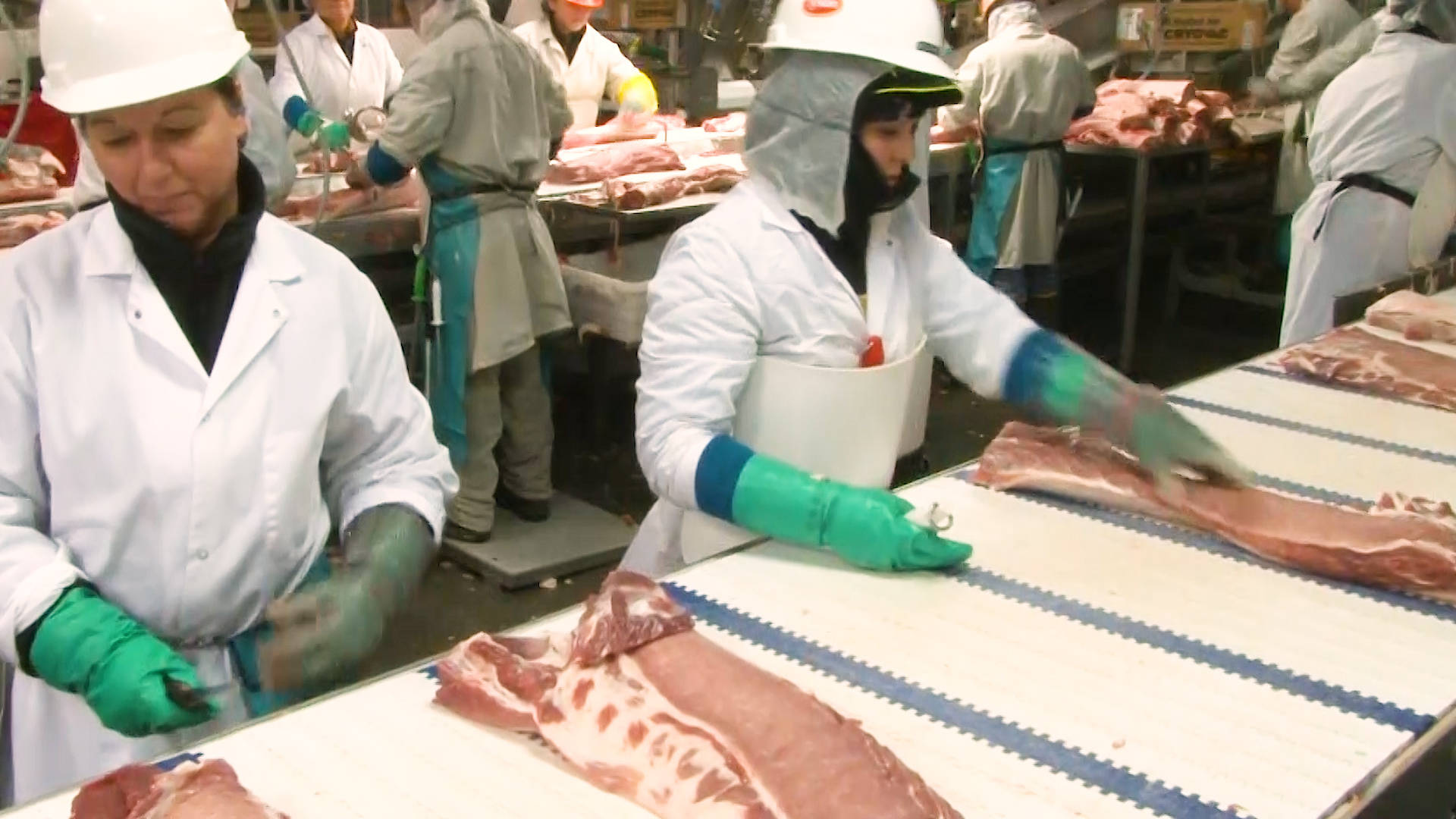
Coronavirus has swept through a Tyson pork processing plant in Storm Lake, Iowa, with 555 employees of 2,517 testing positive, fueling renewed concerns over safety measures at meatpacking plants.
KEY FACTS
On Wednesday, with suspicions the plant was the site of a new outbreak, Iowa’s Department of Public Health Deputy Director Sarah Reisetter said the state would only confirm outbreaks at businesses where 10% of employees test positive and only if the news media inquires about them specifically.
According to the Des Moines Register, cases in Buena Vista County more than doubled on Tuesday, and Reisetter is now confirming around 22% of the employees at the Storm Lake facility tested positive.
“We’ve determined confirming outbreaks at businesses is only necessary when the employment setting constitutes a high-risk environment for the potential of Covid-19 transmission,” Reisetter added.
On April 28, President Trump signed an executive order using the authority of the Defense Production Act to compel meat processing plants to remain open, but it hasn’t stopped facilities from shuttering to address low staffing and safety issues.
Tyson was previously forced to shut down its largest pork processing facility, located in Waterloo, Iowa, on April 22 following a number of coronavirus cases stemming from the plant, as well as worker absenteeism.
Other meatpacking facilities across the state have also been forced to address outbreaks, including plants owned by Smithfield Foods and JBS.
CHIEF CRITICS
State lawmakers and mayors in Iowa have complained about not getting information about the ongoing situations at meatpacking facilities until it’s too late. Sioux City Mayor Bob Scott said because Tyson isn’t based in the state, they don’t need to report numbers to them. Iowa Rep. Ras Smith criticized Governor Kim Reynolds and the Department of Health’s stance on the delays in reporting numbers.
KEY BACKGROUND
Food processing facilities have been the site of numerous outbreaks around the country, with Trump pushing for them to remain open amid fears of food shortages. Earlier in May, the United Food and Commercial Workers International Union, the largest meatpacking workers union, derided Trump’s executive order, saying that since its signing, “The administration has failed to take the urgent action needed to enact clear and enforceable safety standards at these meatpacking plants.” There are 18,524 confirmed cases of the coronavirus in Iowa.
CVS Health Thursday said it is delivering as promised to open 1,000 testing locations for the Coronavirus strain Covid-19.
The scale of the openings comes more than two months after CVS, Walgreens Boots Alliance, Rite Aid, Walmart and other retailers pledged in White House meetings to use their thousands of locations, including parking lots to expand U.S. testing for COVID-19. In CVS Health’s case, the sites that will all be open Friday will use “self-swab tests” as part of a newer phase of testing by the giant drugstore chain.
“It’s no small feat to operationalize 1,000 test sites in weeks under trying circumstances, which is a credit to our employees and their unwavering commitment to being part of the solution,” CVS Health president and chief executive Larry Merlo said. “Our testing strategy will continue to evolve and make the most effective use of our resources as we work to help safely re-open the economy.”
CVS is hoping to dramatically ramp up testing by processing up to 1.5 million tests every month. Currently, CVS processes about 30,000 tests for COVID-19 a week in five states as part of a rollout that began several weeks ago with a focus on front-line healthcare workers and first responders.
“Since first offering COVID-19 testing at a pilot site outside a CVS Pharmacy in Shrewsbury, Mass., in mid-March, the company has performed nearly 200,000 tests nationwide,” the company said in a statement released Thursday.
CVS Health’s announcement should be welcome news for the Trump administration, which announced the participation of the retailers in March and has been vowing to provide access to COVID-19 testing to all Americans, but has been dogged by criticism.
Percent change of the 7-day average of new cases on May 19 and May 26, 2020
Overall, new coronavirus infections in the U.S. are on the decline. But a small handful of states, mainly clustered in the South, aren’t seeing any improvement.
The big picture: Our progress, nationwide, is of course good news. But it’s fragile progress, and it’s not universal. Stubborn pockets of infection put lives at risk, and they can spread, especially as state lockdowns continue to ease.
Where it stands: Each week, Axios is tracking the change in confirmed coronavirus infections in every state.
We’re using a seven-day average, to minimize the distortions of reporting delays or similar technical issues.
Ten states have not seen a single week of significant improvement — their caseloads have either gotten worse or have held steady all month.
Most of them are in the South: Alabama, Mississippi, North Carolina, South Carolina and Virginia.
But a handful of other, more populous states —California, Minnesota and Wisconsin — also stand out for their consistently lagging progress. Maine and Utah also have not reported a single week of significant improvement.
Neither has Puerto Rico.
Between the lines: The number of total cases is a flawed but important metric.
The number of confirmed cases will go up as testing improves, so spikes in some areas may simply reflect a more accurate handle on the situation, and not a situation that’s getting worse.
Even so, to get this pandemic under control and safely continue getting back out into the world, we still need the total number of new cases to decline.
The other side: The areas making the most progress — those reporting the biggest, steadiest declines in new cases — are, for the most part, the places that had it worse to begin with.
New York, New Jersey and Massachusetts— all one-time hotspots — have reported fewer cases every week.
A handful of other states, including Colorado and Pennsylvania, have either gotten better or held steady each week.
What we’re watching: This analysis is a snapshot. Any number of states have seen their case numbers yo-yo — up one week and down the next, or vice versa.
Every reduction in new cases is a good sign, and there are a lot of those good signs, but we’re still not quite to the point of a sustained, across-the-board improvement.
The nation beat back COVID-19 with more than its large number of tests. Can it maintain this success?
SEOUL, SOUTH KOREA – The COVID-19 testing center at H Plus Yangji Hospital in southern Seoul doesn’t look like much from the outside. Resembling a mobile home, the temporary building sits in a parking lot near a loading ramp, propped up on one end by a wooden plank. Its walls are wrapped in red and white, and billboard-like signage proclaims that the hospital was named one of the 100 best in the Republic of Korea.
But inside is a gleaming bank of four booths with transparent plastic walls; rubber gloves embedded through them in a manner similar to a high-grade biosafety lab. When a person walks into a booth, they consult over an intercom with a doctor who remains outside. The doctor can swab their nose and throat using the gloves without ever coming into contact with the patient. The booths maintain negative air pressure, which sucks in any virus-carrying airborne droplets. After the test, a staff member in protective gear disinfects the booth, scrubbing the walls with a squeegee.
Hundreds of similar “walk-in” testing booths located all over the country have been one of the pillars of South Korea’s highly successful strategy to contain COVID-19, helping officials roll out rapid and extensive diagnostic testing.
The nation of 51 million people has also taken a big data approach to contact tracing, using credit card history and location data from cell phone carriers to retrace the movements of infected people. Surveys show most Korean citizens are OK with sacrificing digital privacy to stop an outbreak. At the same time, authorities have pushed an intense—but mostly voluntary—social distancing campaign, leaving most bars, restaurants, and movie theaters free to operate.
The viral scourge is far from over in South Korea—a recent outbreak connected to several nightclubs was reported with 102 cases as of May 12. Despite this, the country’s response could serve as a model for the rest of the world, but achieving this level of speedy success in the face of a pandemic was not easy.
Lessons from the past
A major factor shaping South Korea’s response was its ability to apply lessons learned during previous outbreaks, especially the country’s MERS coronavirus outbreak in 2015, which resulted in 186 cases and 38 deaths.
In the immediate aftermath, South Korea’s legislature created the legal foundation for a comprehensive strategy for contact tracing—whereby anyone who has interacted with an infected person is traced and placed in quarantine. Amendments explicitly authorized health authorities to request patients’ transaction history from credit card companies and location data from cell phone carriers—and to release the reconstructed movements in the form of anonymous “travel logs” so people could learn the times and places where they might have been exposed.
A huge push with contact tracing and testing managed to corral an early rise in cases that threatened to spiral out of control—hundreds were reported each day, peaking at 909 cases on February 29 with most associated with a religious sect in the city of Daegu. The strategy also managed to snuff out several subsequent coronavirus clusters at churches, computer gaming cafes, and a call center. By April 15, South Korea safely held a national election, in which 29 million people participated. Voters wore masks and gloves; polling centers took everyone’s temperature and separated anyone with a fever. No cases have been traced to the election.
While people in other countries may consider Korea’s data collection a violation of patient privacy, the measures have broad support from the South Korean public. In a March 4 poll led by the Seoul National University Graduate School of Public Health, 78 percent of 1,000 respondents agreed that human rights protections should be eased to strengthen virus containment efforts. Experience with past outbreaks also meant people were quick to stay at home and wear masks in public even before the government began issuing formal guidelines.
Crucially, South Korea had built up its diagnostic testing capabilities after the 2015 MERS outbreak. Unlike the U.S., which relied on testing kits developed by its Centers for Disease Control and Prevention (CDC) in Atlanta, South Korea enlisted the private sector. At a meeting in late January, officials urged local biotech companies to develop testing kits. Within a month, the nation was running more than 10,000 tests daily.
A recent boom in South Korea’s biotech scene, long predating the pandemic, helped with the ramp-up, says Thomas Shin, the CEO of TCM Biosciences, a company in Pangyo, south of Seoul. “During the last five years, there were many new bioscience companies,” says Shin. TCM was one of the companies that heeded the government’s call to develop kits, and it received approval from the country’s Ministry of Food and Drug Safety in April.
Shin says the decision wasn’t necessarily an easy one from a business perspective—new diseases are difficult to forecast, and if they’re snuffed out quickly, it can be hard to recoup the costs of initial development. But with South Korea’s close connections to the outbreak’s epicenter in China, Shin says TCM could see a similar situation developing rapidly on the home front—and projected a business opportunity in the global market. So far, the company has shipped kits worth roughly $2.6 million.
On April 30, the nation reported just four cases, all of them travelers arriving from abroad, marking the first day with zero local infections in two and a half months. As case numbers have continued to fall, the government has cautiously relaxed its guidelines, while signaling a shift to “everyday quarantine” measures, such as wearing masks and temperature checks at schools.
People’s attitudes have also relaxed, leading some officials to worry about complacency and a second wave of infections. The nightclub outbreak may heighten those fears, but the government has already responded aggressively, tracing and testing thousands of people in a matter of days.
Last mile is the toughest
Though testing companies were quick to respond to the demand, rolling out the kits presented difficulties. Through February, demand for tests was still outpacing supply, and there were only enough kits to distribute to a select number of hospitals.
Furthermore, hospitals struggled to administer the tests to potentially contagious patients safely and quickly—testing areas needed to be sanitized after each patient, long queues meant the virus could spread while people waited in line, and health workers were running low on protective gear. At Yangji Hospital, this also led to exhausted staff, says hospital director Sang Il Kim.
“Even when we did have kits, the waiting times were just too long for everybody to get tested, so they would have to go to other hospitals,” adds Yoona Chung, a doctor in the hospital’s surgery department.
According to Yangji’s data, the hospital was conducting roughly 10 tests a day by late February—but many more were being turned away due to the wait. Other hospitals in Korea started experimenting with drive-through testing centers, where patients could get tested without leaving their cars. But Yangji Hospital is near a subway station in a crowded neighborhood in southern Seoul; for many of its patients, cars aren’t an option.
So, Kim devised the walk-in booths, which went into pilot operation on March 10. Within days, the number of tests administered in a day had tripled. By the end of the month, the hospital could handle more than 90 patients a day. Hospitals elsewhere in Korea and around the world quickly adopted their own variations on the concept. A hospital in Busan had a similar idea independently but others have had help from Kim.
At Massachusetts General Hospital in Boston, hospital leadership saw news reports on Yangji’s booths and asked an in-house team to create a version, hoping to better protect their health workers and conserve precious protective gear. A bit of Googling and two phone calls later, hospital staff connected her with Kim via email.
“I remember it was 10 p.m., we’re all frustrated, up all night, trying to figure out how to make this work,” says Nour Al-Sultan, a business strategy analyst at the MGH Springboard Studio, the team of researchers and designers tasked with reverse engineering the booths. “I go to bed, and I wake up the next morning, and Dr. Kim is the one who answers all of my questions.”
MGH has now installed about eight booths at three hospitals in the Boston region. According to preliminary data, they’ve reduced the need for protective gowns, which are in short supply, by 96 percent, saving more than 500 gowns a week. The MGH team is now working with colleagues in Uganda to help them develop their own versions of the booths.
“The fact that he took the time to provide me with such generous insights is just a testament to this spirit of global collaboration against the pandemic,” Al-Sultan says.



/cdn.vox-cdn.com/uploads/chorus_image/image/66858616/GettyImages_1220891781.0.jpg)
:no_upscale()/cdn.vox-cdn.com/uploads/chorus_asset/file/20005583/coronavirus_reopen_map.png)
:no_upscale()/cdn.vox-cdn.com/uploads/chorus_asset/file/20007678/coronavirus_cases_map.png)
:no_upscale()/cdn.vox-cdn.com/uploads/chorus_asset/file/20005708/coronavirus_cases_per_capita_map.png)
:no_upscale()/cdn.vox-cdn.com/uploads/chorus_asset/file/20005705/coronavirus_test_map.png)
:no_upscale()/cdn.vox-cdn.com/uploads/chorus_asset/file/20005702/coronavirus_positive_rate_map.png)
:no_upscale()/cdn.vox-cdn.com/uploads/chorus_asset/file/20005695/coronavirus_icu_maps.png)



 HENRY KOTULA