Bill Gates: U.S. Needs To ‘Own Up To The Fact That We Didn’t Do A Good Job’

https://www.forbes.com/sites/mattperez/2020/09/20/bill-gates-us-needs-to-own-up-to-the-fact-that-we-didnt-do-a-good-job/?utm_source=newsletter&utm_medium=email&utm_campaign=coronavirus&cdlcid=5d2c97df953109375e4d8b68#54d6544f3fb8

TOPLINE

The United States needs to “own up to the fact that we didn’t do a good job” up until this point of the Covid-19 pandemic, billionaire and philanthropist Bill Gates said during a Fox News Sunday interview, adding that the slow turnaround for testing results remains “outrageous.”

KEY FACTS

“Unfortunately we did a very poor job and you can just see that in the numbers,” Gates said.

Despite having around 4% of the world’s population, the U.S. has around 22% of all cases with 6,782,083 and about 21% of all reported deaths with 199,411.

The inability to create a testing structure as seen in countries like South Korea “led to us having not just a bad spring, we’ve had a pretty tough summer and sadly because of the seasonality, until we get these new tools, the fall is looking to shape up as pretty tough as well,” Gates said.

“Part of the reluctance I think to fix the testing system now is that nobody wants to admit that it’s still outrageous,” Gates said, adding, “The U.S. has more of these machines, more capacity than other countries by a huge amount, and so partly the reimbursement system is creating perverse incentive.”

After remaining fairly stagnant through the end of summer into September, the U.S. performed a record 1,061,106 Covid-19 tests on Saturday, according to Johns Hopkins University, but labs are still dealing with supply shortages and delays in results.

“We’ll have time to look at those mistakes, which in February and March were really super unfortunate, but we can’t pretend like we get a good grade even today,” Gates said.

CRUCIAL QUOTE

“Even today, people don’t get their results in 24 hours, which it’s outrageous that we still have that,” Gates said.

BIG NUMBER

4.7%. That’s the average positivity percentage in the past week, according to Johns Hopkins.

TANGENT

President Trump has excused the world-leading cases of the coronavirus as a result of the number of tests performed in the country, even saying that he instructed officials to slow testing down. The Centers for Disease Control and Prevention sparked outrage in August when it published new guidelines on testing, recommending people exposed to the virus but not showing symptoms should not get tested. Reports indicate that the guidance was dictated by the Health and Human Services and Trump administration as opposed to CDC scientists. The guidelines were changed again on Friday.


The N95 shortage America can’t seem to fix

https://www.washingtonpost.com/graphics/2020/local/news/n-95-shortage-covid/?utm_campaign=wp_post_most&utm_medium=email&utm_source=newsletter&wpisrc=nl_most

Nurses and doctors depend on respirator masks to protect them from covid-19. So why are we still running low on an item that once cost around $1?

The patient exhaled. She lifted her tongue for a thermometer. She raised her finger for a blood sugar test, and that’s when she started coughing. One cough can send 3,000 droplets into the air, one droplet can contain millions of coronavirus particles, and now some of those particles were heading for the face of emergency department nurse Kelly Williams.

The nurse inhaled. Strapped over her mouth and nose was an N95 respirator, the disposable filtering mask that has become the world’s most reliable and coveted defense against the virus.

N95s were designed to be thrown away after every patient. By this July afternoon, Williams had been wearing the same one for more than two months.

To get to her, the N95 had traveled from a British factory to a Baltimore warehouse, in a supply chain as tangled and layered as the web of microscopic fibers inside the mask’s filter.

It was purchased by Johns Hopkins Hospital, the famed medical institution that has tracked cases of the novel coronavirus around the world since the pandemic’s start. When its map of dots marking clusters of infections began to show pools of red across the United States, Hopkins was quietly unpacking a stock of personal protective equipment it had been building for over a year — a literal lifesaver when the onslaught of covid-19 cases led to a massive shortage of N95s.

Six months later, that shortage persists, leaving health-care workers exposed, patients at risk and public health experts flummoxed over a seemingly simple question: Why is the world’s richest country still struggling to meet the demand for an item that once cost around $1 a piece?

At Hopkins, nurses are asked to keep wearing their N95s until the masks are broken or visibly dirty. Williams, a 30-year-old from Georgia with a marathoner’s endurance and a nurse’s practicality, went into health care after working for three years in the corporate offices of retailers Abercrombie & Fitch and Under Armour. She understood supply chains. She believed that the makers of N95s, anticipating the pandemic’s eventual end, would invest only so much in expanding production. She believed it was her duty, on top of risking her life for her patients, to make her disposable respirator mask last through as many 12-hour shifts as she could.

When the country was short of ventilators, the companies that made them shared their trade secrets with other manufacturers. Through the powers of the Defense Production Act, President Trump ordered General Motors to make ventilators. Other companies followed, many supported by the government, until the terrifying problem of not enough ventilators wasn’t a problem at all.

But for N95s and other respirators, Trump has used this authority far less, allowing major manufacturers to scale up as they see fit and potential new manufacturers to go untapped and underfunded. The organizations that represent millions of nurses, doctors, hospitals and clinics are pleading for more federal intervention, while the administration maintains that the government has already done enough and that the PPE industry has stepped up on its own.

As the weather cools and the death toll climbs, America’s health-care workers fear that when winter comes, they still won’t have enough respirators. And the longer the shortage lasts, the longer N95s will remain largely out of reach for millions of others who could be protected by them — teachers and day-care workers, factory employees and flight attendants, restaurant servers and grocery store clerks.

While the pandemic that has killed almost 200,000 Americans drags on, Williams will keep trying to conserve her respirator, wearing it as she rushes in and out of virus-filled rooms, touches virus-shedding patients, and now, comforts a covid-positive woman who is having a coughing fit.

“How can I help you feel a little more comfortable?” Williams asked her patient, who was in her 80s. The woman was about to be admitted to the hospital. Her oxygen level was too low, so they had to run tubes of air into her nostrils. If her situation didn’t improve, a ventilator could come next.

This was the routine in the part of the emergency department Williams called “Covidland.” She’d just risked exposure to care for this woman, but she would never get to find out what happened to her.

She could only take a deep breath through her N95, roll her patients upstairs and hope that she would never become one of them.

‘The gauntlet’

Before the N95 was on her face, it was in a plastic wrapper, in a box, on a shelf inside an East Baltimore warehouse four miles from the hospital. The 165,000-square-foot building had concrete floors, rolling doors, overhead lighting — unremarkable, except to a man named Burton Fuller.

Fuller, a 38-year-old father of three, had once planned on becoming a doctor. Instead, he went into hospital supply chains. It was the kind of job that didn’t earn many follow-up questions at dinner parties. But six months after Fuller was hired at Hopkins, the pandemic made him the person that everyone relied on and no one envied. It was up to him to keep 40,000 employees in six hospitals safe.

Even before covid-19, masks were key to that equation. There are surgical masks, which protect a patient from a nurse’s germs, and respirator masks, which protect a nurse from the patient. Humans have recognized the need for protective masks since at least A.D. 77, when Pliny the Elder wrote about wearing animal bladders as face coverings to make breathing easier in lead-filled mines.

The evolution of early masks brought leather beaks stuffed with straw and herbs to ward off the bubonic plague, and long beards that firefighters would wet and clamp between their teeth. Once the far more effective gas mask became standard for coal miners breathing in silica and soldiers facing chemical weapons, engineers at the Minnesota Mining and Manufacturing Company, better known as 3M, started trying to make a protective respirator that wasn’t so bulky. They realized in the 1960s that the technology used to make pre-made gift bows could also make a mask that was a lightweight, molded cup. And so began the single-use respirator as it exists today.

Inside that cup, and more recently, inside the flat-fold versions, is the key component: fibers 1/50th the width of a human hair, blown together in an intricate web that creates an obstacle course for dangerous particles. An electrostatic charge works like a magnet to trap the floating menaces and attach them to the fibers. If an N95 is fitted properly — a metal nose piece folded snugly, no beard in the way — less than 5 percent of even the most difficult-to-catch particles will make it into the lungs.

At Hopkins, Fuller’s job was to get manufacturers to deliver N95s and other equipment directly to the warehouse, rather than through a distributor. In 2019, the shelves started to fill up, and on one of them was the N95 that would make its way to nurse Kelly Williams. The respirator had been made by 3M at a plant in Aycliffe, a town of 7,000 in northern England.

But this Hopkins stockpile was rare in the world of hospitals, where costs were cut by using medical supply companies to provide equipment when it was needed, rather than letting PPE pile up.

Hospital administrators knew that in cases of natural disaster, chemical warfare or what global health officials used to call “Disease X,” the federal government had its own warehouses in secret locations, filled with PPE.

Except that in 2009, while Fuller was in his first job out of college, the H1N1 flu epidemic depleted 85 million N95s from the national stockpile — and the supply was never replenished. In 2013, 2014, 2016 and 2017, public health officials published alarming reports warning of a “massive gap” in what remained. Even more concerning, they said, the vast majority of N95s and the materials needed to manufacture them were now being made in Asia.

The Department of Health and Human Services did fund the invention of a “one-of-a-kind, high-speed machine” that could make 1.5 million N95s per day. But when the design was completed in 2018, the Trump administration did not purchase it.

This year, as the virus spread from Wuhan to Washington state, HHS turned down a January offer from a manufacturer who could make millions of N95s. The agency didn’t start ordering N95s from multiple companies until March 21. Paul Mango, deputy chief of staff for policy at HHS, would later call that timeline “friggin’ light speed … the fastest this has ever been done.”

By then, the United States had 8,000 reported coronavirus cases and 85 deaths, and health-care workers were panicking over PPE shortages.

Fuller’s orders began being canceled. As the Hopkins emergency department was being readied for covid-19 patients, and Williams was being told she would need to start wearing an N95, the hospital’s administration decided not to reveal how many N95s were in the warehouse.

“Only a half a dozen people know,” Fuller said. “Behavioral economics say that if we communicate a number someone perceives as high, they will use the supply more gratuitously. If we communicate a number they perceive as low, they may hoard to ensure there is enough.”

As the boxes of N95s were loaded into trucks headed for Hopkins hospitals, Fuller and a dozen staff members entered what he would come to call “the gauntlet.” Every hospital and health department in the country was competing for N95s and other PPE, a mess of bidding wars, price gouging and worthless knockoff masks. Fuller uncovered one scam when a company CEO, claiming to be based in Indianapolis, didn’t recognize the name of the city’s most famous steakhouse.

“For every mask shipment we have been able to bring in,” Fuller said, “there are 10 or 15 transactions we have had to terminate.”

He worked so much that his wife, home with their children, received flowers from Hopkins executives. He joked about the other crucial stockpile in his life, his wine collection.

Fuller was desperate to make the stockpiled N95s last as long as possible. He wanted every employee wearing one to also wear a face shield, but those, too, were impossible to find.

So at the end of March, the warehouse filled with folding tables spaced six feet apart. Volunteers were given foam strips, elastic straps and sheets of plastic to make homemade shields. At one of the most prestigious medical institutions in the country, they were trying to fix the problem for themselves, with scissors, staplers and hot glue guns.

‘Bracing yourself’

A face shield was clipped to Williams’s belt in the middle of May, when for only the fourth time during the pandemic, she unwrapped a new N95.

After nine weeks in and out of Covidland, she had come to trust in her disposable respirator. It hurt her nose, gave her acne and made breathing hard. But the power of its protection was starting to give her back the feeling of safety she’d lost in March when she and the dozens of colleagues who worked alongside her each shift watched the areas where they’d cared for gunshot victims and heart attack patients turn into isolation rooms. They were tested to make sure the N95s fit their faces and taught to use other respirators that looked like gas masks or blew clean air into a hood.

And then, they were slammed. The first covid patient to go on a ventilator at Hopkins was a 40-year-old who worked out every day. The ambulance bay became a testing center. Williams’s co-workers were crying in the break room. Her patients couldn’t breathe, and then tubes were going down their throats, and then it felt like she couldn’t breathe, like everything she knew about nursing would never be enough.

“Our lives changed overnight,” she said. “You’re bracing yourself for people to die.”

She started silently saying a prayer she knew, every morning, every few hours, then sometimes 20 times a day in Covidland.

God, grant me the serenity to accept the things I cannot change, it began. She said it before her patient started violently shaking and flailing, seizing in his bed. She couldn’t run out the door to ask for help, because to leave the room without potentially taking the virus out, she had to sanitize her gloves, trash them, take her gown off, trash it, exit into an antechamber, take off her first layer of gloves, sanitize her hands and wipe down her face shield. So she ran to the window and banged on it, then ran back to her patient, trying to hold him down, her face inches from his.

Courage, to change the things I can, the prayer continued. Williams said it in the car that she drove to work and wouldn’t let any member of her family touch. Its speakers blared Lizzo-filled playlists she used to pump herself up for what she told her friends was an “awesome learning experience.” She had been a nurse for only two years. Her job in merchandising at Under Armour had brought her to Baltimore, where she met her husband, Sean, and his two children. They were the ones to make her realize that she wanted a job where she could actually see the impact of all those hours she worked. Now, every day might be the day she took the virus home to them.

Grant me the serenity to accept the things I cannot change, courage, to change the things I can, and wisdom to know the difference. Another day in Covidland, and Williams was wearing her new N95, pumping her palms into an unconscious man’s chest, not thinking of all the particles flying out of his airways. Another, and her face shield popped off and clattered to the floor. Another, and a young Latina mother told Williams she couldn’t self-quarantine because she could not afford to stay home from work.

Another, and Williams was watching the chest of a middle-aged man rise and fall by the force of a ventilator. Outside the walls of the hospital on this day in July, America seemed to have moved on from the conversation about the shortage of N95s. Instead, people were fighting over simple cloth masks.

Maybe this patient had worn one. Maybe he’d said he didn’t believe in them. Either way, it was her job to take care of him. Williams suctioned virus-filled fluid from his airways, and breathed in again.

‘Not profitable’

The radio advertisements could be heard across South Dakota, playing inside cars passing billboards plastered with the same message: 3M is hiring in Aberdeen. In a state that hosted 460,000 people at an August motorcycle rally and requires no one to wear a mask sits the largest respirator plant in the United States.

Its N95 manufacturing lines have been running 24 hours a day, 7 days a week since Jan. 21, the same day public health officials announced the arrival of the coronavirus in Washington state.

Plant manager Andy Rehder hired 200 new employees this year and was still looking for more this summer so he could staff another N95 line being built. Rehder, whose wife wears an N95 as a hospital social worker, had a Bloomberg Magazine article from March displayed in his office. The headline asked, “How do you make more masks yesterday?”

The question still hangs over the plant, and the entire country, nearly six months after that article was published.

Ask the Trump administration, and the N95 shortage is nearly solved. Rear Adm. John Polowczyk, whom Trump put in charge of securing PPE, said that by December, 160 million N95s will be made in the United States per month. By his calculations, that will be enough to handle a “peak surge” from hospitals, clinics, independent physicians, nursing homes, dentists and first responders. The Strategic National Stockpile has 60 million N95s on hand, and states are rebuilding their stockpiles.

“I’ve got production up to what we think is the limits of what we need,” Polowczyk said. “I believe now that hospital systems are making management decisions that might lead to an appearance that we still don’t have masks, which is the farthest from the truth.”

But ask the people inside hospitals, and the shortage is far from over. An August survey of 21,500 nurses showed 68 percent of them are required to reuse respirators, many for more than the five times recommended by the CDC, and some even more than Kelly Williams. One Texas nurse reported she’s still wearing the same five N95s she was given in March.

Many health-care facilities that ordered KN95s, Chinese-made masks meant to have a similar filtering efficiency, gave up on them after realizing that the looser fit left workers in danger. The N95 shortage is more acute for primary care physicians, home health aides and hospice workers. But even for many hospital systems, the situation remains “fragile and challenging,” the American Hospital Association said this month.

“Maddening, frustrating, mind-blowing, aggravating, that’s the polite language for it,” said American Medical Association President Susan Bailey, who still hears from doctors who do not have respirators. “There has been such an outpouring for support for ‘health-care heroes.’ Everybody knows now how important it is for our front-line health-care workers to be able to work in a safe environment. … And yet, that desire doesn’t seem to be turning into a reality.”

The AMA, AHA, American Nurses Association and the AFL-CIO all point to the same solution: broader use of the Defense Production Act, which gives the president power over funding for the production and distribution of critical supplies during crises.

In August, Trump stood before a group of socially distanced reporters, praising himself for using the DPA “more comprehensively than any president in history.”

“There was a time,” he said, “when the media would say, ‘Why aren’t you using it? Why aren’t you using it?’ Well, we have used it a lot, where necessary. Only where necessary.”

That’s not what it looks like to the man who used to run Trump’s DPA program within the Federal Emergency Management Agency. Larry Hall, who retired last year, said the authority has been executed in an “ad hoc, haphazard fashion.”

Along with ordering 3M to import 166.5 million masks from China, the administration has used the DPA to invest $296.9 million in bolstering the N95 and filter-making supply chains. The Department of Defense, which oversees that funding, spends more per year on instruments, uniforms and travel for military bands.

“By not having a national strategy,” Hall said, “we have fewer masks.”

Ask the PPE industry and the refrain is that without long-term guarantees that the government will keep buying respirators, N95 manufacturers are wary of investing too much, and other companies that could start making respirators or the filters for them are hesitant to do so.

Peter Tsai, the scientist who invented a method to charge the fibers inside the respirator filter, knows why: “It is not profitable to make respirators in the United States,” he said. It can take six months just to create one manufacturing line that makes the N95′s filter.

But there is a workaround, Tsai said. Companies that already make similar filters — for vehicle emissions, air pollution and water systems — can modify their equipment to make N95 filters.

While Tsai, 68, has been fielding hundreds of calls from hospitals and researchers trying to sanitize N95s with heat and ultraviolet light, he has been working with Oak Ridge National Laboratory in Tennessee to woo the 15 to 20 American companies that have the potential to produce respirator filters more quickly.

The government has funded just three of these companies through the DPA.

Others have gradually joined in on their own. But then those filters have to be made into respirators, and those respirators have to be approved by NIOSH, the National Institute for Occupational Safety and Health.

The entire process has moved at a glacial pace in comparison with the flurry of activity that rid the country of its ventilator shortage. Ventec, a company known for its efficient, toaster-size ventilators, handed its plans over to General Motors so that the auto company, under the DPA, could mass produce a product that was known to work. Other ventilator companies followed, handing over their trade secrets to Ford, Foxconn and other major manufacturers.

But when GM started making N95s, engineers with expertise in car interiors and air bags were charged with figuring out the process from scratch, the company said. Although they received advice from major mask makers, there were no groundbreaking corporate partnerships this time. The first N95s GM made were rejected by NIOSH. The second design didn’t correctly fit most people.

Other potential manufacturers went through the same challenges as GM, failing tests and making flat-fold N95s that experts worry do not offer a tight enough seal.

“If there was some kind of intellectual sharing, they wouldn’t be doing that,” said Christopher Coffey, who was the associate director for science in the NIOSH approvals program before retiring in January.

The DPA does have a provision that would allow manufacturers to work together without being subject to antitrust laws. But it has yet to be used for N95s.

Instead, established U.S. makers of N95s, whose products have been successfully protecting miners, construction workers and health-care professionals for decades, have continued to protect their processes as intellectual property.

Though 3M helped Ford make the far more expensive powered respirators, which blow clean air into a hood, the company has not entered into any major partnerships with outside manufacturers to make N95s. Asked why, 3M declined to explain, instead pointing to its other pandemic partnerships.

Ford gained its own approval to manufacture disposable respirators but has made just 16,000 of them while focusing instead on face shields and surgical masks. Other major U.S. manufacturers of N95s, including Honeywell and Moldex, have kept their manufacturing in-house, too.

“Folks aren’t likely to share that information outside of their own company,” said Jeff Peterson, who now oversees NIOSH approvals. NIOSH employees may know how 3M makes its respirators and the filters inside them. But by contract, they can’t tell other manufacturers how to do the same.

Meanwhile, 3M continues to dominate the American N95 market. While other parts of its business, such as office supplies and industrial adhesives, have struggled during the pandemic, 3M has invested $100 million to expand domestic production of respirators from 22 million to 50 million per month. Once the new production line is up and running in South Dakota in October, that number is expected to reach 95 million per month in the United States.

It still won’t be enough.

“Even though we are making more respirators than ever before and have dramatically increased production,” 3M spokeswoman Jennifer Ehrlich said, “the demand is more than we, and the entire industry, can supply for the foreseeable future.”

‘I just don’t get it’

Her N95 was already on, but Williams’s hands were slipping as she tried to force on a pair of gloves. She could hear the alarms going off. One of her patients was crashing, and she had to get into the room.

She should be able to just go, her runner’s legs carrying her to the bedside. But in Covidland, there were two closed doors standing in her way. She had started wearing her N95 all day so she could be ready for this moment. She pulled on her gown and another set of gloves and her face shield, reached for the door — and realized the patient inside was her 13-year-old stepson Kellen.

She jolted awake. She was in her bed. Her husband was asleep beside her. She slid out from her sheets and went downstairs to check on her stepchildren. Kellen and 19-year-old Alle were sleeping, too.

The nurse inhaled. She could still hear the alarms.

This is what it meant now, to be a health-care worker: across the country, nurses and doctors were reporting increased sleeplessness, anxiety, depression and post-traumatic stress.

Williams reminded herself that she’d always had an N95, and the heavier, more protective respirators she sometimes wore instead.

But she knew, too, that covid-19 had taken the lives of more than 1,000 health-care workers, including a New Jersey primary care doctor who, determined to keep his practice open, doubled up on surgical masks when his N95 orders didn’t come. And a California nurse who rushed into a covid patient’s room to perform chest compressions. She saved his life, then doused her hair in hand sanitizer. She hadn’t been given an N95 at the beginning of her shift.

And then there was the news that shook every health-care worker Williams knew: Less than two miles from Hopkins, the head of the ICU at Mercy Hospital died after contracting the virus in July.

Joseph Costa was one of the people who’d guided the hospital through its PPE shortage early in the pandemic. His husband, David Hart, remembered him coming home and saying, “This is my mask for the week.” Neighbors pushed N95s through their mailbox slot.

“This is the United States of America, and we can’t seem to get factories built to deliver this stuff? I just don’t get it,” Hart said.

He will never know exactly how his husband, who insisted on caring for covid patients alongside his staff, became infected. Costa died in the ICU, the gloved hands of his colleagues on him as he went. Minutes later, they returned to caring for other patients.

At Mercy, at Hopkins, at every hospital that had found a way to get N95s, health-care workers wore their PPE to try to save the lives of people who contracted the virus because they had none.

Williams and her colleagues didn’t need to see the statistics to know that the pandemic was disproportionately affecting Black and Brown people, especially those deemed essential workers. They saw it in their patients and heard it from their families and friends.

Williams worked side by side with Shanika Young, a nurse whose brother seemed to have every known covid-19 symptom before he started to recover.

Afraid of infecting anyone in her community, Young went weeks without seeing her parents and newborn niece. She adopted a hound-mix puppy to have a friend when she couldn’t see her own. In the weeks that followed the killing of George Floyd, she agonized over her decision to stay away from the protests. She knew there wouldn’t be N95s there.

On a sweltering August morning, she left her dog in her apartment and packed her respirator in her car. She, too, re-wore her mask, but usually for four or five 12-hours shifts.

Now Young was taking it across Baltimore, not toward the hospital, but to a predominantly Hispanic neighborhood with one of the worst infection rates in the city.

During the pandemic, Baltimore has seen outbreaks in its homeless shelters, its trash-collecting facility and its jail. Now every place Young drove by fell on one side or the other of a new dividing line in America: those who have PPE and those who don’t. Bodegas, restaurants, nail salons and funeral homes. Downtown, a nonprofit’s dental clinic remained shuttered. She passed a mental health counseling center where sessions were still conducted only by video, and a physical therapist who wore KN95s to see clients. She parked near a school that, without N95s, had no way of ensuring its teachers were protected. It serves primarily Latino children, all of whom would be forced to learn online.

In the parking lot of the church, a booth that used to sell $1 snow cones had been transformed into a coronavirus testing center run by a team of Hopkins doctors and nurses.

On her day off, Young volunteered to work with them, spending hours sweating in her scrubs, sending swabs deep into nose after nose. She wore a surgical mask on top of her N95.

“I don’t think there’s any science that says this is actually safer,” she said. “But it’s just a mental thing.”

The line of people sweating on the asphalt was so long, Young couldn’t see the people at the end: a man in painter’s clothes, a mother pushing a stroller and a woman who, like Young, was wearing scrubs. Stitched onto the chest was the name of a retirement home.

‘Hazard’

The coughing patient was starting to fall asleep when Williams left her in the covid unit. Her shift had been over for more than 30 minutes. She checked in to make sure there was no one else who needed her help and headed for the locker room. She washed her hands twice. She used alcohol wipes to sanitize her phone, glasses, ID badges and pens.

She took off her N95, and she inhaled.

For the first time in two months, she decided that this respirator was done. Its straps were starting to feel too stretched. The shape of it looked just a little too warped.

Instead of hanging the N95 from a hook in her locker to air dry, she stuffed it in a bag marked “hazard.”

A new mask, still in its plastic packaging, was waiting for her next shift. She would wear it as long as possible, especially after learning that the Hopkins stockpile had run out of the British-made mask she wore and couldn’t get any more. She needed to change to a different type of N95, one that felt unfamiliar once again. She told herself that she was grateful just to have it. She told herself that it would protect her just the same.


High numbers of Los Angeles patients complained about coughs as early as December, study says

https://www.washingtonpost.com/science/2020/09/10/los-angeles-patients-covid-coughing/?utm_campaign=wp_main&utm_medium=social&utm_source=facebook&fbclid=IwAR35fvTDN4Tq476ktGM0O8aIT3cvjVP1wP7I104tEQU3bRRgiLZs_nk6PYE

The number of patients complaining of coughs and respiratory illnesses surged at a sprawling Los Angeles medical system from late December through February, raising questions about whether the novel coronavirus was spreading earlier than thought, according to a study of electronic medical records.

The authors of the report, published Thursday in the Journal of Medical Internet Research, suggested that coronavirus infections may have caused this rise weeks before U.S. officials began warning the public about an outbreak. But the researchers cautioned that the results cannot prove that the pathogen reached California so soon, and other disease trackers expressed skepticism that the findings signaled an early arrival.

The debate about the findings underscores just how much remains to be known about the coronavirus, which has killed at least 187,000 people in the United States, according to a Washington Post analysis.

“This is consistent with the growing body of data that suggests that there’s been community spread much earlier than we had anticipated,” said study author Joann G. Elmore, a doctor and epidemiologist at the David Geffen School of Medicine at the University of California at Los Angeles.

The researchers examined six years of electronic health records, representing nearly 10 million patients, at the UCLA health system from July 2014 through February. That included patient visits to three UCLA hospitals and to nearly 200 associated outpatient clinics.

Health agencies have surveillance systems in place to detect the early signals of disease outbreaks, such as a rise in patients with fever checking into hospitals. But medical records were an under-tapped resource, Elmore said. “People weren’t paying attention to the outpatient setting,” she said.

The study authors searched outpatient and emergency department reports that used the word “cough,” and tallied the number of people hospitalized for acute respiratory failure.

That approach revealed an uptick in patients that began the week of Dec. 22 and remained elevated for 10 weeks. The number of extra people exceeded the researchers’ predictions by 50 percent, totaling about 1,000 more patients compared with the previous five flu seasons.

Influenza cannot be ruled out as a cause of the increase, Elmore said. “And, you know, we did see a bad bout of flu this year,” she said. But what gave her pause was the consistent, weeks-long trend found only in this most recent season and not others.

Some experts said they doubted that coronavirus infections were the likely cause of respiratory problems in California so far back in time. “The data countywide would suggest that it really began to spread in March,” said Brad Spellberg, chief medical officer at the Los Angeles County+USC Medical Center, who was not involved with the new research.

Although the virus may have infected a small number of people sooner than previously reported, Spellberg said he doubted that “meaningful transmission” occurred in December or January.

Using data from emergency departments that reported patients with flu-like illnesses, Spellberg and his colleagues observed two peaks in patients in December and February, as they reported in JAMA this spring.

Those increases were consistent with a severe flu season, Spellberg said. Los Angeles’s third spike in flu-like illnesses, this time caused by the coronavirus, came later.

What’s more, between March 2 and March 18, only 5 percent of 131 patients with flu-like illnesses tested positive for the coronavirus in the JAMA study. Spellberg said that if the virus had an earlier foothold in California, he would have expected that percentage to be higher. “You would have seen an explosion of cases,” he said.

Understanding how long the virus circulated within a population helps refine epidemiological models of transmission. Infectious-disease scientists and doctors in many pockets of the world are eager to uncover when the coronavirus first spread outside of China.

In late December 2019, Chinese health officials identified clusters of viral pneumonia in Wuhan. Researchers sequenced the culprit’s genome, describing the new coronavirus strain, in early January. The first officially reported U.S. case of coronavirus, a man who traveled home from Wuhan, occurred two weeks later.

A few observations indicate that the virus may have traveled farther, earlier, before it flared into a global pandemic. A study of Italian sewage revealed traces of the virus in December. When researchers retested a nasal swab from a man hospitalized near Paris dating to Dec. 27, they detected the coronavirus.

Genetic sequencing of coronavirus samples in New York suggests that the virus was spreading there by the end of January. In April, two autopsies in Santa Clara County, Calif., pushed back the first U.S. covid-19 deaths from late to early February.

Study author Judith Currier, a UCLA infectious-disease physician, said that when it comes to people who wonder whether they were exposed to the virus many months ago, she does not recommend “antibody testing for people who never had a symptomatic illness,” citing guidelines from the Centers for Disease Control and Prevention.

“If someone had a compatible clinical illness but never had testing for covid during that time, antibody testing could help to confirm,” she said. “Although we don’t know how long the antibodies last, so it would not be definitive.”


A New Front in America’s Pandemic: College Towns

The coronavirus is spiking around campuses from Texas to Iowa to North Carolina as students return.

Last month, facing a budget shortfall of at least $75 million because of the pandemic, the University of Iowa welcomed thousands of students back to its campus — and into the surrounding community.

Iowa City braced, cautious optimism mixing with rising panic. The university had taken precautions, and only about a quarter of classes would be delivered in person. But each fresh face in town could also carry the virus, and more than 26,000 area residents were university employees.

“Covid has a way of coming in,” said Bruce Teague, the city’s mayor, “even when you’re doing all the right things.”

Within days, students were complaining that they couldn’t get coronavirus tests or were bumping into people who were supposed to be in isolation. Undergraduates were jamming sidewalks and downtown bars, masks hanging below their chins, never mind the city’s mask mandate.

Now, Iowa City is a full-blown pandemic hot spot — one of about 100 college communities around the country where infections have spiked in recent weeks as students have returned for the fall semester. Though the rate of infection has bent downward in the Northeast, where the virus first peaked in the U.S., it continues to remain high across many states in the Midwest and South — and evidence suggests that students returning to big campuses are a major factor.

In a New York Times review of 203 counties in the country where students comprise at least 10 percent of the population, about half experienced their worst weeks of the pandemic since Aug. 1. In about half of those, figures showed the number of new infections is peaking right now.

Despite the surge in cases, there has been no uptick in deaths in college communities, data shows. This suggests that most of the infections are stemming from campuses, since young people who contract the virus are far less likely to die than older people. However, leaders fear that young people who are infected will contribute to a spread of the virus throughout the community.

The surge in infections reported by county health departments comes as many college administrations are also disclosing clusters on their campuses.

*Brazos County, Tex., home to Texas A&M University, added 742 new coronavirus cases during the last week of August, the county’s worst week so far, as the university reported hundreds of new cases.

*Pitt County, N.C., site of East Carolina University, saw its coronavirus cases rise above 800 in a single week at the end of August. The Times has identified at least 846 infections involving students, faculty and staff since mid-August.

*In South Dakota’s Clay and Brookings counties, ballooning infections in the past two weeks have reflected outbreaks at the state’s major universities. In McLean County, Ill., the virus has been spreading as more than 1,200 people have contracted the virus at Illinois State University.

*At Washington State University and the University of Idaho, about eight miles apart, combined coronavirus cases have risen since early July to more than 300 infections. In the surrounding communities — rural Whitman County, Wash., and Latah County, Idaho — cases per week have climbed from low single-digits in the first three months of the pandemic, to double-digits in July, to more than 300 cases in the last week of August.

The Times has collected infection data from both state and local health departments and individual colleges. Academic institutions generally report cases involving students, faculty and staff, while the countywide data includes infections for all residents of the county.

It’s unclear precisely how the figures overlap and how many infections in a community outside of campus are definitively tied to campus outbreaks. But epidemiologists have warned that, even with exceptional contact tracing, it would be difficult to completely contain the virus on a campus when students shop, eat and drink in town, and local residents work at the college.

The potential spread of the virus beyond campus greens has deeply affected the workplaces, schools, governments and other institutions of local communities. The result often is an exacerbation of traditional town-and-gown tensions as college towns have tried to balance economic dependence on universities with visceral public health fears.

In Story County, Iowa, a local outcry following a burst of new Iowa State University cases pressured the university on Wednesday to reverse plans to welcome 25,000 football fans for its Sept. 12 opener against the University of Louisiana at Lafayette. In Monroe County, Indiana, the health department quarantined 30 Indiana University fraternity and sorority houses, prompting the university to publicly recommend that members shut them down and move elsewhere.

In Johnson County, where the University of Iowa is located, cases have more than doubled since the start of August, to more than 4,000. Over the past two weeks, Iowa City’s metro area added the fourth-most cases per capita in the country. The university has recorded more than 1,400 cases for the semester.

With a population of roughly 75,000, Iowa City relies on the university as an economic engine. The University of Iowa is by far the community’s largest employer, and its approximately 30,000 students are a critical market. Hawkeye football alone brings $120 million a year into the community, said Nancy Bird, executive director of the Iowa City Downtown District.

When the pandemic first hit in March, the university sent students home and pivoted to remote instruction, like most of the country’s approximately 5,000 colleges and universities. That exodus, heightened by health restrictions, has been an existential challenge for many downtown businesses, Ms. Bird said.

Jim Rinella, who owns The Airliner bar and restaurant, said the 76-year-old landmark across the street from campus “had zero revenue the whole month of April.” May was almost as scant, he said, and in June, he shut down after a couple of employees became infected.

By the time he reopened after July 4, too few students were in town to come close to making up the losses. He and his wife, Sherry, had hoped the campus reopening in August might be a lifeline.

The Rinellas live in Detroit, where they have other businesses, and Mr. Rinella said he was out of town when crowds jammed downtown on the weekend before the Aug. 24 start of classes. He said he immediately called his manager to make sure they were following state and local health rules.

But the photos taken by the local press from outside his establishment and others were damning. In an open letter, the university president lashed out, saying he was “exceedingly disappointed” in the failure of local businesses to keep students masked and socially distanced. Days later, the governor cited high infection rates among young people as she closed bars and restricted restaurants in Johnson County and five other counties with high concentrations of students.

Now The Airliner — where a booth is named for the University of Iowa’s most famous dropout, Tom Brokaw, and a modeling scout is said to have discovered Ashton Kutcher — has to close at 10 p.m. as well as require customers to buy a meal and sit far apart if they want to drink there.

“I’m at a pain point,” Mr. Rinella said. “If my grandfather hadn’t started the place, I’d question whether I want to be in the restaurant business.” A recent lunch hour visit found one customer at the bar drinking a beer.

The rise in local case counts reverberated at the county’s community college, which decided to start its fall semester with continued online instruction. Iowa City’s K-12 schools followed suit, which also meant canceling extracurricular activities, including sports, until students come back to the classroom in person.

“This is one of our last chances for college coaches to see us play or to get recent films sent out to college coaches. For some of us, playing in college is a goal we have been working toward since we were 11 or 12,” Lauren Roman, a 17-year-old high school volleyball player, told the school board last month. She burst into tears as she explained that she has waited since March for college recruiters to see her play. “Some of us really do need that scholarship money.”

“This sucks,” the board vice-president Ruthina Malone, agreed at the same meeting, choking up as she described emails she had received from families of children whose education relies on in-person instruction. But, she told the board, “we do not operate in isolation.” Her husband, she said, is an art teacher who would like nothing more than to teach again in person, and she works at the university.

The pandemic has hurt colleges’ finances in multiple ways, adding pressure on many schools to bring students back to campus. It has caused enrollment declines as students have opted for gap years or chosen to stay closer to home, added substantial costs for safety measures, reduced revenue from student room and board and canceled money-generating athletic events.

Governments have not always stepped into the breach: In Iowa, the state cut $8 million from its higher education appropriation even after the Board of Regents, which oversees the state’s universities, requested an $18 million increase. Over the summer, the University of Iowa announced a salary freeze and other significant cuts. This was before the Big Ten Conference postponed fall competition, erasing more than $60 million from the university’s athletics program.

When the university announced its plans for reopening with a combination of in-person and virtual instruction, it did not mention its finances as a factor, though it froze tuition rather than reduce it, as some universities have done. It also mandated mask wearing inside buildings and said it would test students with symptoms or who had been exposed to the virus.

Still, its decision to hold in-person classes drew criticism from some faculty. “We’re scared for our health and yours,” one group of instructors wrote in an open letter to students in July.

And its decision not to test asymptomatic students unless they had been exposed unnerved some city officials. Dr. Dan Fick, the campus health officer, said the university wanted to avoid a false sense of security.

But Janice Weiner, who represented the City Council in meetings with the business community and campus, questioned the approach. “We have a robust and capable medical community, we have good public health officials, we have everything we need,” she said. “But then the university didn’t require everyone coming back to campus to be tested.”

Iowa City is a blue town in a state with a pro-Trump Republican governor, Kim Reynolds, who has clashed with the state’s cities over masks and Covid policies.

Though the governor in March restricted large gatherings, closed Iowa schools and banned indoor operations of many businesses, she began relaxing those orders in May and has argued that face-mask mandates couldn’t be legally enforced.

Several municipalities have nonetheless passed ordinances requiring face masks, including Johnson County and Iowa City — largely in preparation for the return of students. But because state health rules have become a patchwork, not all returning students come from places where mask wearing is required, said Ms. Weiner. And, she said, the inconsistency offers an excuse to those who don’t want to wear them.

Interviews with students suggested that concern had at least some justification.

“If people get sick, they get sick — it happens,” Mady Hanson, a 21-year-old exercise science major, said last week on campus. She added that she and her family had survived Covid-19 and that she resented the city’s “ridiculous” restrictions.

“We’re all farmers and don’t really care about germs, so if we get it, we get it and we have the immunity to it.”

Both university and city officials said they believe the spike in cases has been a wake-up. “When we look back,” said Dr. Fick, “I think we’ll be proud that when students got the message, a majority stepped up.”

On the City Council, Ms. Weiner was less upbeat.

“There’s not a whole use in placing blame — we have to figure out a way forward,” she said. “But it’s going to take a herculean effort here for our numbers to start to go down.”


The coronavirus and a $12 billion motorcycle rally

https://www.axios.com/newsletters/axios-vitals-9f3757d6-dde4-4b75-a994-9572837e9d3f.html?utm_source=newsletter&utm_medium=email&utm_campaign=newsletter_axiosvitals&stream=top

The coronavirus outbreak tied to the annual motorcycle rally in Sturgis, South Dakota, ended up generating more than $12 billion in public health costs, according to a new discussion paper.

Why it matters: The analysis puts a point on just how bad these superspreader events can be — and the difficulty of preventing them solely with voluntary policies.

Background: The annual rally was held this year over 10 days in August, and included a Smash Mouth concert. The nearly 500,000 attendees came from all over the country, and social distancing and mask-wearing were mostly optional.

By the numbers: The rally led to 266,796 additional cases, or 19% of the new cases in the U.S. between Aug. 2 and Sept. 2., the paper found.

  • The event led to a 35% increase in cases in South Dakota. In counties that are home to the highest number of rally attendees, cases rose by 10.7% compared to counties without any attendees.
  • If each coronavirus case costs $46,000, that’s an additional $12.2 billion added on to the pandemic’s price tag.

The other side: “Overall, I think the ‘Sturgis Effect’ that the authors document is in large part just a Midwest surge that took place during this time period. There is likely still a small Sturgis Effect … but the results are likely biased upward,” tweeted Devin Pope, a professor at the University of Chicago.

The big picture: Given the state of contact tracing in the U.S. (bad), we’ll never know how many coronavirus cases were actually tied to the Sturgis rally.

  • But it’s a reminder that it takes collective action to contain the virus: As Sturgis revelers head back home, this South Dakota-centered outbreak has the potential to infect people who never went anywhere near Sturgis and thought they were doing everything right.


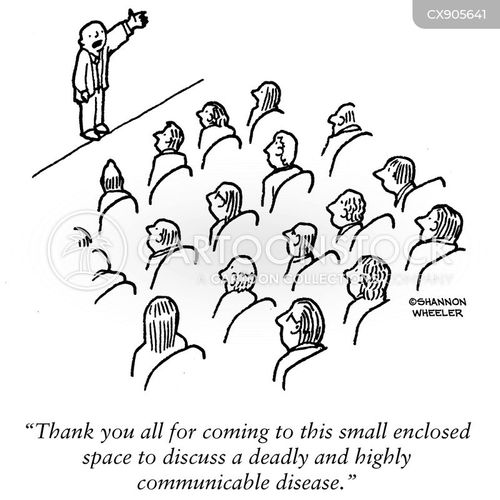
Cartoon – State of the Union: Thank You All for Coming

Medical Conferences Cartoons and Comics - funny pictures from CartoonStock

Cartoon – Federal Coronavirus Testing Guidelines

This company boasted to Trump about its COVID-19 vaccine. Experts are  skeptical. - Hartford Courant

Cartoon – Federal Coronavirus Response

10 Dilbert Cartoons That Get Project Management Just Right

C.D.C. Tells States How to Prepare for Covid-19 Vaccine by Early November

As President Trump pushes the possibility of a vaccine this year, the C.D.C. has outlined technical scenarios to state public health officials for an unidentified Vaccine A and Vaccine B.

The Centers for Disease Control and Prevention has notified public health officials in all 50 states and five large cities to prepare to distribute a coronavirus vaccine to health care workers and other high-risk groups as soon as late October or early November.

The new C.D.C. guidance is the latest sign of an accelerating race for a vaccine to ease a pandemic that has killed more than 184,000 Americans. The documents were sent out on the same day that President Trump told the nation in his speech to the Republican National Convention that a vaccine might arrive before the end of the year.

Over the past week, both Dr. Anthony S. Fauci, the country’s top infectious disease expert, and Dr. Stephen Hahn, who heads the Food and Drug Administration, have said in interviews with news organizations that a vaccine may be available for certain groups before clinical trials have been completed, if the data is overwhelmingly positive.

Public health experts agree that agencies at all levels of government should urgently prepare for what will eventually be a vast, complex effort to vaccinate hundreds of millions of Americans. But the possibility of a rollout in late October or early November has heightened concerns that the Trump administration is seeking to rush the distribution of a vaccine — or simply to hype that one is possible — before Election Day on Nov. 3.

For an administration that has struggled with the logistical challenges of containing the coronavirus, the distribution of millions of vaccines that must be stored in subzero temperatures and provided first to high-risk groups through America’s flawed, fragmented health care system would be a daunting challenge. Even the C.D.C.’s guidance acknowledged that its plan was hypothetical and based on the need to immediately begin organizing the gigantic effort that would be required if the F.D.A. were to allow the use of a vaccine or two this year.

The C.D.C. plans lay out technical specifications for two candidates described as Vaccine A and Vaccine B, including requirements for shipping, mixing, storage and administration. The details seem to match the products developed by Pfizer and Moderna, which are the furthest along in late-stage clinical trials. On Aug. 20, Pfizer said it was “on track” for seeking government review “as early as October 2020.”

Credit…

“This timeline of the initial deployment at the end of October is deeply worrisome for the politicization of public health and the potential safety ramifications,” said Saskia Popescu, an infection prevention epidemiologist based in Arizona. “It’s hard not to see this as a push for a pre-election vaccine.”

Three documents were sent to public health officials in all states and territories as well as officials in New York, Chicago, Philadelphia, Houston and San Antonio on Aug. 27. They outlined detailed scenarios for distributing two unidentified vaccine candidates, each requiring two doses a few weeks apart, at hospitals, mobile clinics and other facilities offering easy access to the first targeted recipients.

The guidance noted that health care professionals, including long-term care employees, would be among the first to receive the product, along with other essential workers and national security employees. People 65 or older, as well as Native Americans and those who are from “racial and ethnic minority populations” or incarcerated — all communities known to be at greater risk of contracting the virus and experiencing severe disease — were also prioritized in the documents.

That’s a positive development, “so it doesn’t just all wind up in high-income, affluent suburbs,” said Dr. Cedric Dark, an emergency medicine physician at Baylor College of Medicine in Texas.

The C.D.C. noted in its guidance that “limited Covid-19 vaccine doses may be available by early November 2020.” The documents were dispatched the same day that Dr. Robert Redfield, director of the C.D.C., sent a letter to governors asking them to prepare vaccine distribution sites by Nov. 1, as McClatchy reported.

The agency also said its plans were as yet hypothetical, noting, “The Covid-19 vaccine landscape is evolving and uncertain, and these scenarios may evolve as more information is available.” A C.D.C. spokeswoman confirmed that the documents were sent but declined to comment further.

Many of the details listed for the two vaccines — including required storage temperature, the number of days needed between doses, and the type of medical center that can accommodate the product’s storage — match what Pfizer and Moderna have said about their products, which are based on so-called mRNA technology. Neither company responded to requests for comment.

The scenarios, which assume that the two vaccines will demonstrate sufficient safety and effectiveness for an emergency authorization from the F.D.A. by the end of October, noted that Vaccine A, which seems to match Pfizer’s, would have about two million doses ready within this time frame, and that Vaccine B, whose description matches Moderna’s, would have about one million doses ready, with tens of millions of doses of each vaccine ready by the end of the year. Although it’s possible that some promising preliminary data may emerge by the end of October, experts are skeptical.

“The timeline that’s reported seems a bit ambitious to me,” Dr. Dark said. “October’s like 30 days away.”

Trials that test a vaccine’s effectiveness can take years to yield reliable results. It’s possible to draw conclusions sooner “if there is an overwhelming effect” in which vaccinated people appear to be far better protected from disease, said Padmini Pillai, a vaccine researcher and immunologist at M.I.T.

But there can be significant risks in approving a vaccine for broad use in the public before Phase 3 clinical trials involving tens of thousand of participants are completed. Rare but dangerous side effects may only surface over time, after such large numbers of people have received the vaccine.

And data gathered early in a trial might not hold true months down the line. Researchers also need time to test large numbers of people from a variety of backgrounds to determine how well the vaccine works in different populations — including the vulnerable communities identified in the guidelines.

Should any of these snags occur, Dr. Pillai said, “all of this together could diminish public trust in the vaccine.”

James S. Blumenstocksenior vice president of pandemic response and recovery at the Association of State and Territorial Health Officials, confirmed that the three C.D.C. documents were sent to all state and territorial health departments last week. “It is now the time to enhance organizational structure and involve all partners in this planning process going forward,” he said.

Lisa Stromme, a spokeswoman for the Washington State Department of Health, said that her state’s health officials were still at “a very early stage in a planning process,” but were already working toward developing infrastructure that would accommodate the assumptions laid out by the C.D.C.

The C.D.C. documents said that public health administrators should review lessons learned from the 2009 H1N1 pandemic vaccination campaign, which did not have enough doses at the beginning to meet demand.

“It’s good to have a plan out for hospitals and health care systems to prepare” for a potential rollout, said Dr. Taison Bell, a pulmonary and critical care physician at the University of Virginia. But Dr. Bell added that he was concerned that the timeline outlined in the documents “is incredibly ambitious and makes me worry that the administration will prioritize this arbitrary deadline rather than maintaining diligence with following the science.”

The technical comparison of Vaccine A and Vaccine B has some echoes of what was discussed at an Aug. 26 meeting of the Advisory Committee on Immunization Practices of the C.D.C. At the meeting, Dr. Kathleen Dooling, a C.D.C. medical officer, laid out three scenarios: Vaccine A, or the Pfizer vaccine, is approved, Vaccine B, the Moderna vaccine, is approved, or both. The requirement that Pfizer’s vaccine be stored at minus 70 degrees Celsius would mean that it couldn’t be administered at most small sites, she said. The C.D.C. documents noted that orders of Vaccine A would go “to large administration sites only.” The Moderna vaccine requires storage at minus 20 degrees Celsius.

The C.D.C. documents said the vaccine would be free to patients, but that providers might not be reimbursed for administrative costs if the vaccine was given an emergency authorization, rather than a standard approval.

Experts worry that the process is unlikely to go off without a hitch, given the last-minute scramble and the mixed messaging so far. “I think distribution is going to be very tricky for the vaccine, particularly if there is a cold storage requirement,” Dr. Bell said.

There are also likely to be challenges administering both doses of the proposed vaccines, which must be given weeks apart, Dr. Dark said. “How are you going to make sure people get both?”


What it’s like to be a nurse after 6 months of COVID-19 response

https://www.healthcaredive.com/trendline/labor/28/?utm_source=HD&utm_medium=Library&utm_campaign=Vituity&utm_term=Healthcare%20Dive#story-2

Those on the front lines of the fight against the novel coronavirus worry about keeping themselves, their families and their patients safe.

This story is part of a series examining the state of healthcare six months into the public health emergency declared for COVID-19.

There’s no end in sight for the country as it grapples with another surge of COVID-19 cases.

That’s especially true for nurses seeking the reprieve of their hospitals returning to normal operations sometime this year. Many in the South and West are now treating ICUs full of COVID-19 patients they hoped would never arrive in their states, largely spared from spring’s first wave.

And like many other essential workers, those in healthcare are falling ill and dying from COVID-19. The total number of nurses stricken by the virus is still unclear, though the Centers for Disease Control and Prevention has reported 106,180 cases and 552 deaths among healthcare workers. That’s almost certainly an undercount.

National Nurses United, the country’s largest nurses union, told Healthcare Dive it has counted 165 nurse deaths from COVID-19 and an additional 1,060 healthcare worker deaths.

Safety concerns have ignited union activity among healthcare workers during the pandemic, and also given them an opportunity to punctuate labor issues that aren’t new, like nurse-patient ratios, adequate pay and racial equality.

At the same time, the hospitals they work for are facing some of their worst years yet financially, after months of delayed elective procedures and depleted volumes that analysts predict will continue through the year. Many have instituted furloughs and layoffs or other workforce reduction measures.

Healthcare Dive had in-depth conversations with three nurses to get a clearer picture of how they’re faring amid the once-in-a-century pandemic. Here’s what they said.


Elizabeth Lalasz, registered nurse, John H. Stroger Hospital in Chicago

Elizabeth Lalasz has worked at John H. Stroger Hospital in Chicago for the past 10 years. Her hospital is a safety net facility, catering to those who are “Black, Latinx, the homeless, inmates,” Lalasz told Healthcare Dive. “People who don’t actually receive the kind of healthcare they should in this country.”

Data from the CDC show racial and ethnic minority groups are at increased risk of getting COVID-19 or experiencing severe illness, regardless of age, due to long-standing systemic health and social inequities.

CDC data reveal that Black people are five times more likely to contract the virus than white people.

This spring Lalasz treated inmates from the Cook County Jail, an epicenter in the city and also the country. “That population gradually decreased, and then we just had COVID patients, many of them Latinx families,” she said.

Permission granted by Elizabeth Lalasz

Once Chicago’s curve began to flatten and the hospital could take non-COVID patients, those coming in for treatment were desperately sick. They’d been delaying care for non-COVID conditions, worried a trip to the hospital could risk infection.

A Kaiser Family Foundation poll conducted in May found that 48% of Americans said they or a family member had skipped or delayed medical care because of the pandemic. And 11% said the person’s condition worsened as a result of the delayed care.

When patients do come into Lalasz’s hospital, many have “chest pain, then they also have diabetes, asthma, hypertension and obesity, it just adds up,” she said.

“So now we’re also treating people who’ve been delaying care. But after the recent southern state surges, the hospital census started going down again,” she said.

Amy Arlund, registered nurse, Kaiser Permanente Medical Center in Fresno, California:

Amy Arlund works the night shift at Kaiser Fresno as an ICU nurse, which she’s done for the past two decades.

She’s also on the hospital’s infection control committee, where for years she’s fought to control the spread of clostridium difficile colitis, or C. diff., in her facility. The highly infectious disease can live on surfaces outside the body for months or sometimes years.

The measures Arlund developed to control C. diff served as her litmus test, as “the top, most stringent protocols we could adhere to,” when coronavirus patients arrived at her hospital, she told Healthcare Dive.

But when COVID-19 cases surged in northern states this spring, “it’s like all those really strict isolation protocols that prior to COVID showing up would be disciplinable offenses were gone,” Arlund said.

Widespread personal protective equipment shortages at the start of the pandemic led the CDC and the Occupational Safety and Health Administration to change their longstanding guidance on when to use N95 respirator masks, which have long been the industry standard when dealing with novel infectious diseases.

The CDC also issued guidance for N95 respirator reuse, an entirely new concept to nurses like Arlund who say those changes go against everything they learned in school.

“I think the biggest change is we always relied on science, and we have always relied heavily on infection control protocols to guide our practice,” Arlund said. “Now infection control is out of control, we can no longer rely on the information and resources we always have.”

Permission granted by Amy Arlund

The CDC says experts are still learning how the coronavirus spreads, though person-to-person transmission is most common, while the World Health Organization recently acknowledged that it wouldn’t rule out airborne transmission of the virus.

In Arlund’s ICU, she’s taken care of dozens of COVID positive patients and patients ruled out for coronavirus, she said. After a first wave in the beginning of April, cases dropped, but are now rising again.

Other changing guidance weighing heavily on nurses is how to effectively treat coronavirus patients.

“Are we doing remdesivir this week or are we going back to the hydroxychloroquine, or giving them convalescent plasma?”Arlund said. “Next week I’m going to be giving them some kind of lavender enema, who knows.”


Erik Andrews, registered nurse, Riverside Community Hospital in Riverside, California:

Erik Andrews, a rapid response nurse at Riverside Community Hospital in California, has treated coronavirus patients since the pandemic started earlier this year. He likens ventilating them to diffusing a bomb.

“These types of procedures generate a lot of aerosols, you have to do everything in perfectly stepwise fashion, otherwise you’re going to endanger yourself and endanger your colleagues,” Andrews, who’s been at Riverside for the past 13 years, told Healthcare Dive.

He and about 600 other nurses at the hospital went on strike for 10 days this summer after a staffing agreement between the hospital and its owner, HCA Healthcare, and SEIU Local 121RN, the union representing RCH nurses, ended without a renewal.

The nurses said it would lead to too few nurses treating too many patients during a pandemic. Insufficient PPE and recycling of single-use PPE were also putting nurses and patients at risk, the union said, and another reason for the strike.

But rapidly changing guidance around PPE use and generally inconsistent information from public officials are now making the nurses at his hospital feel apathetic.

“Unfortunately I feel like in the past few weeks it’s gotten to the point where you have to remind people about putting on their respirator instead of face mask, so people haven’t gotten lax, but definitely kind of become desensitized compared to when we first started,” Andrews said.

Permission granted by Erik Andrews

With two children at home, Andrews slept in a trailer in his driveway for 12 weeks when he first started treating coronavirus patients. The trailer is still there, just in case, but after testing negative twice he felt he couldn’t spend any more time away from his family.

He still worries though, especially about his coworkers’ families. Some coworkers he’s known for over a decade, including one staff member who died from COVID-19 related complications.

“It’s people you know and you know that their families worry about them every day,” he said. “So to know that they’ve had to deal with that loss is pretty horrifying, and to know that could happen to my family too.”