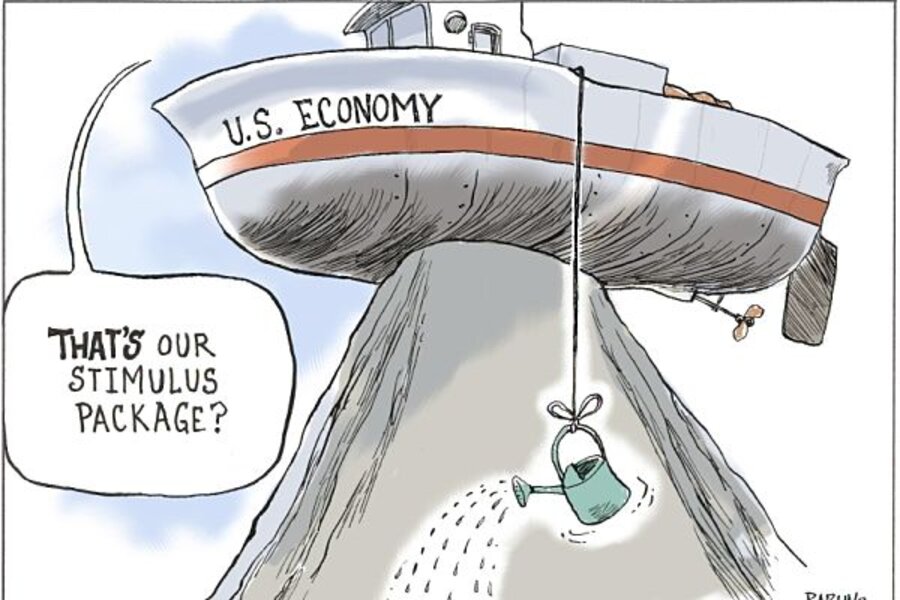
Cartoon – New Economic Stimulus Package

Obama's stimulus did NOT raise government spending - CSMonitor.com

Executive Order On Housing Doesn’t Guarantee An Eviction Moratorium

https://www.forbes.com/sites/advisor/2020/08/10/trumps-executive-order-on-housing-doesnt-guarantee-an-eviction-moratorium/?tid=newsletter-dailydozen&utm_source=newsletter&utm_medium=email&utm_campaign=dailydozen&cdlcid=5d2c97df953109375e4d8b68#3a33cbc3359a

After negotiations for another stimulus package hit a dead end in Washington last week, President Donald Trump signed executive orders to extend relief in the meantime. One order, according to the president, would extend the federal eviction moratorium. 

The original moratorium, included in the CARES Act, prohibited landlords or housing authorities from filing eviction actions, charging nonpayment fees or penalties or giving notice to vacate. It expired on July 24 and only applied to federally subsidized or federally backed housing.

But housing advocates are pushing back, saying Trump’s executive order to extend an eviction moratorium actually does nothing at all—and keeps struggling Americans at risk of losing their housing. 


Details on the Order

Trump’s order doesn’t actually extend the federal eviction moratorium. Instead, it calls on the Department of Health and Human Services and the Centers for Disease Control and Prevention to “consider” whether an additional eviction ban is needed.

“The Secretary of Health and Human Services and the Director of CDC shall consider whether any measures temporarily halting residential evictions of any tenants for failure to pay rent are reasonably necessary to prevent the further spread of COVID-19 from one State or possession into any other State or possession,” reads the order.

Additionally, the executive order does not provide any new money to help struggling renters during the pandemic. Instead, it says the secretary of Treasury and the secretary of Housing and Urban Development—Steven Mnuchin and Ben Carson, respectively—can identify “any and all available federal funds” to provide temporary rental assistance to renters and homeowners who are facing financial hardships caused by COVID-19.

During a White House press briefing on Monday, Kayleigh McEnany said the president did “did what he can within his executive capacity…to prevent resident evictions.”At the time of publishing, officials mentioned in Trump’s executive order have not released guidelines on extending the federal eviction moratorium.


Housing Advocates React to Trump’s Eviction Order

Housing advocates have not reacted positively to Trump’s executive order, suggesting officials extend an eviction moratorium.

“The executive order that he signed this weekend is really nothing more than an empty shell that creates chaos and confusion, and it offers nothing more than false hope to renters who are at risk of eviction because that executive order does literally nothing to prevent or stop evictions,” Diane Yentel, president and CEO of the National Low Income Housing Coalition, said on Sunday during an MSNBC interview.

The House of Representatives included a more thorough plan to prevent evictions in its HEROES Act proposal. The proposal included $175 billion in rent and mortgage assistance and would replace the original federal eviction moratorium with a 12-month moratorium from all rental housing, not just federally subsidized ones. There also would be funds available to provide homeowners with assistance to cover mortgage and utility payments, property taxes or other resources to help keep Americans housed.

Sen. Richard Shelby (R-AL) introduced the Coronavirus Response Additional Supplemental Appropriations Act as part of the GOP’s HEALS Act proposal. Shelby’s bill included significantly less money for housing assistance than the HEROES Act—$3.2 billion—and would be used for tenant-based rental assistance. Shelby’s proposal did not include any language about extending the CARES Act eviction moratorium. 

A recent report by a group of housing advocates finds there could be as much as 40 million renters at risk of eviction in the coming months. The U.S. unemployment rate currently sits at 10.2%. 

Individuals who are struggling to pay rent might have assistance options available. Some cities and states have implemented their own eviction moratoriums—you can learn more about them by visiting the Eviction Lab at Princeton University. There are also legal aid options, like Just Shelter, that will help tenants who are facing eviction for low-cost or free.


THE BIG DEAL—Five takeaways from the July jobs report

https://thehill.com/policy/finance/510987-july-jobs-report-unemployment-economy-coronavirus

July U.S. Job Gains Top Expectations

The Friday release of the July jobs report gave a clearer view into a labor market clouded by mixed signals from real-time data and concerns about rising coronavirus cases across the country. The U.S. recovered another 1.8 million jobs last month—a bit above economists’ expectations, but well below the gains of May and June — and pushed the unemployment rate down to 10.2 percent.

While the U.S. economy is continuing to recover from the shock of pandemic, the report is a bit more complicated than the headline numbers indicate. Here are five key points to make sense of the July jobs report.


The recovery is still going, but slowing: The story of the coronavirus recession is a story of declines of record-breaking size and speed. Between March and April, the U.S. lost roughly 10 years of job gains and followed it up with a 32-percent annualized decline in economic growth in the second quarter.

The U.S. made solid progress recovering part of the more than 20 million jobs lost to the pandemic with gains of 2.7 million in May and 4.8 million in June. But the 1.8 million jobs gained in July marks a notable slowdown in the pace of recovery.

Economists have warned since coronavirus cases began spiking in mid-June that the resurgence would hinder the pace of growth, even if states don’t reimpose business closures. Those warnings bore out in the July jobs report, reinforcing the need to control the virus before the economy can fully recover.


The report gives both sides ammo in stimulus talks: The state of the economy rarely fits into a neat political narrative and the July jobs report is no exception.

Democrats can point to the slowing pace of job growth and the long road to recovery to support their calls for another $3 trillion in stimulus.

“The latest jobs report shows that the economic recovery spurred by the investments Congress has passed is losing steam and more investments are still urgently needed to protect the lives and livelihoods of the American people,” said House Speaker Nancy Pelosi (D-Calif.) and Senate Minority Leader Charles Schumer (D-N.Y.) in a Friday statement.

But the White House and Republican lawmakers are seizing on the expectations-beating job gain and lack of increase in permanent layoffs to make the case behind a pared down bill focused on reopening the economy.

“The most responsible thing we can do is to take proactive measures to allow people to return to work safely, instead of continuing to lock down the economy,” said Rep. Kevin Brady (R-Texas), ranking member of the House Ways and Means Committee.


The job market is still a long way from recovery: Despite three months of seven-figure job gains, the U.S. economy is still in a deeply damaged state. The July unemployment rate of 10.2 percent is roughly even with the peak of joblessness during the Great Recession of 10 percent in October 2009. And the true level of U.S. unemployment may be higher given how the pandemic has made it harder to define and track who is truly in the labor force.

It took a decade of steady economic recovery— the longest in modern U.S. history — for unemployment to drop to a 50-year low of 3.5 percent in February, so the nation remains a long way from where it was before the pandemic.

“At the current pace, it would take well into 2021 to recoup the 12.9 million jobs lost since February,” wrote Diane Swonk, chief economist at Grant Thornton, in a Friday analysis of the jobs report.


The increase in government jobs is likely misleading: Employment in government — which includes public schools — rose by 301,000 in July.

At first glance, that’s a welcome sign of resilience as state and local governments face severe budget crunches driven by falling tax revenues and staggering unemployment claims. But economists warn that the rise is likely the result of a seasonal adjustment designed to account for the large numbers of teachers and school employees that roll off of payrolls during the summer before coming back to work in the fall.

Elise Gould, senior economist at the left-leaning Economic Policy Institute, noted that public sector employment is still 1 million jobs below its February level after loads of layoffs during the beginning of the pandemic.

“We’ve seen large reductions in state and local public sector employment — a sector which disproportionately employs women and Black workers — over the last few months,” Gould wrote.

“I’d warn data watchers to consider those gains with a grain of salt, and to look at the overall changes from February (pre-COVID-19) to July.”

Aid to state and local governments is one of the biggest obstacles to gathering GOP support behind another stimulus bill, so this rise could factor into the rhetoric around the negotiations.


The report poses hard questions for negotiators: Every monthly jobs report has about two weeks of lag between the time the data was compiled — around the 12th of that month — and the report’s release.

While economic conditions don’t typically change drastically in that time, July was an exception. The $600 weekly boost to jobless benefits and the federal eviction and foreclosure ban enacted in March both lapsed in between the jobs report survey period and release, and much of the money lent through the Paycheck Protection Program had been spent by the end of the month. That means lawmakers are looking at a glimpse of the economy with much more fiscal support than it currently has, posing tough choices about how much more is needed to keep the economy afloat.

Even so, economists are urging  lawmakers not to rest on their laurels as the U.S. faces a difficult road ahead.

“Any notion that the improvement in the top line provides a convenient excuse for policymakers to avoid hard decisions around a fifth round of fiscal aid aimed at the unemployed should be summarily dismissed,” wrote Joe Brusuelas, chief economist at tax and audit firm RSM, in a Friday analysis.

Talks on a new coronavirus relief package were going poorly before the report and collapsed hours after it was released. 


LEADING THE DAY

Trump embraces jobs report signaling slowdown: The White House is trying to capitalize on the latest jobs numbers, arguing they point to a strong economic recovery under President Trump even as millions remain out of work and states grapple with increases in coronavirus infections.

But the data nevertheless point to an economic slowdown, challenging the White House’s bullish predictions for a speedy V-shaped recovery. The figures also come amid collapsed talks between the Trump administration and Democratic leaders on a coronavirus relief package, which economists say is desperately needed to prevent a deeper recession.

“This is not a rocket ship,” said Martha Gimbel, senior manager of economic research at Schmidt Futures. “It’s really unclear if the economy is going to achieve escape velocity before the lack of government spending crashes down or before … we have to shut down again, which is a total possibility.”

The Hill’s Morgan Chalfant and I explain why here.

The White House view: White House economic adviser Larry Kudlow, who did the rounds on cable news Friday morning, declared that the numbers evidenced a “self-sustaining recovery” and predicted that the United States would see unemployment head into the single digits in the fall months.

“The worries that some partial shutdowns or some pausing shutdowns would wreck the jobs numbers did not pan out. I think that shows signs of strength,” Kudlow said on Fox Business.

The economists’ take: Economic analysts say that despite the jobs report, there remains a need for additional fiscal stimulus. Many point to an extension of the expanded unemployment benefits and additional aid to states as necessary steps to shepherd the economy through recovery until there is a vaccine for the coronavirus.

“This jobs number doesn’t change the undeniable need for additional federal support,” said Isaac Boltansky, director of policy research at investment bank Compass Point Research & Trading.


Executive Orders won’t cut it. Congress needs to make a deal.

https://www.washingtonpost.com/opinions/trumps-executive-orders-wont-cut-it-congress-needs-to-make-a-deal/2020/08/08/3ad733d4-d98e-11ea-9c3b-dfc394c03988_story.html

One $1,200 stimulus check won't cut it. Give Americans $2,000 a ...

AN INK-BLOT test of sorts on the U.S. economic situation, the July unemployment numbers can be seen optimistically or pessimistically. The jobless rate of 10.2 percent and the net total of new jobs created of 1.76 million were both slightly better than forecast. At the same time, the rate of recovery was slower than in June, when 4.8 million jobs came back.

The rational response for both Democrats and the White House is to stay focused on the big picture: however you look at last month, total employment is 13 million below what it was in February, the last full month before pandemic-related business shutdowns began. The economy remains too weak to recover its lost ground without another substantial injection of federal money.

Yet an impasse continues between congressional Democrats, who previously passed a $3.4 trillion package, and the White House, whose position is in flux but was at least partly defined in a $1.1 trillion bill unveiled by Senate Majority Leader Mitch McConnell (R-Ky.) last month. In hindsight, everyone would have been better off if Mr. McConnell had engaged earlier this year. Sensing the national political tide flowing their way, House Speaker Nancy Pelosi (D-Calif.) and Senate Minority Leader Charles E. Schumer (D-N.Y.) are driving a hard bargain, refusing, for now, to compromise on a key issue: how to renew the $600-per-week unemployment insurance (UI) supplement.

President Trump, desperate for negotiating leverage, and a political comeback, announced Saturday that he was resorting to executive action to impose a scaled-back version of UI, renewing the supplement at a reduced rate. The president also said he intends to suspend the payroll tax, beginning next month, which even Republicans in Congress regard as an ineffective trickle of relief. Even if Mr. Trump can be do these things lawfully — a doubtful proposition — they are likely to create more uncertainty at a time when the economy, and the country, need the opposite. Congress should continue working toward a permanent fix on UI and other pressing needs.

Those needs are clear and far from fully addressed by Mr. Trump’s unilateral action: a renewal of unemployment benefits at an elevated rate without disincentives to work; help to state and local governments ; support for small businesses; money for safe school reopenings where possible; funding for safe and fair elections in this unique public health environment; and an enhancement to housing and nutrition programs, targeted at the poorest Americans.

Though a faction of congressional Republicans oppose such spending, based on selective concern about the federal debt, others recognize the need — if only to aid the party’s dwindling chances of holding the White House and Senate. Democratic leaders on Friday indicated a willingness to reduce their bill’s cost by $1 trillion over 10 years, if Republicans would raise theirs by the same amount. That would mean a roughly $2 trillion deal. It’s a place to start when talks get serious, which they should have long ago.


Cartoon – Unemployment Insurance vs. Raising the Minimum Wage

If you make less than $600 week, you’re underpaid. Period.

No photo description available.

US surpasses 5 million coronavirus cases

US surpasses 5 million coronavirus cases

The U.S. has recorded more than 5 million coronavirus cases since the start of the outbreak in the country, according to data compiled by Johns Hopkins University.

More than 1.5 million people have recovered from the disease in the country while the U.S. has also reported more than 162,000 coronavirus-related deaths, according to Johns Hopkins.

The U.S. has reported the most confirmed COVID-19 cases and deaths of any other country. The number of new infections across the U.S. have showed signs of easing recently, though the number of cases remains at a high level compared to earlier in the pandemic.

In some states, governors responded to spikes in June and July by implementing mandatory statewide mask policies and reimposing a number of restrictions. Other states, however, have largely kept nonessential businesses open despite the summer uptick.

In Georgia, for example, Gov. Brian Kemp (R) refused to implement a statewide mask mandate despite COVID-19 spikes and has sought to prohibit localities from imposing similar orders.

In Florida, another hotspot for the virus, Gov. Ron DeSantis (R) declined to impose a statewide order, though some local leaders across the state have put in place mandatory face covering requirements.

States like Florida, Arizona and Texas saw their peak in cases in mid- and late July, though they have dropped the past couple weeks. For many states, the number of cases has started to trend downward, though is at a high level, underscoring the difficulty of quickly getting the disease under control.

President Trump maintained in an interview with Axios released Monday that the pandemic is “under control as much as you can control it” in the U.S., saying that the death toll “is what it is.”

“They are dying, that’s true. And you have — it is what it is,” he said. “But that doesn’t mean we aren’t doing everything we can. It’s under control as much as you can control it. This is a horrible plague.”

The interview was recorded before the coronavirus-related death toll in the U.S. surpassed 150,000. 

Trump has touted the push for developing a vaccine by the end of the year. He said Thursday he believes a vaccine will be ready around Election Day in November. 


US economy added 1.8 million jobs in July but still down nearly 13 million jobs during the pandemic

https://edition.cnn.com/2020/08/07/economy/july-2020-jobs-report/index.html?fbclid=IwAR2ZKuCxrp3mzH_GizAoLlCe3ZRAleJbzjCSYYmxiJ6Efiq_qfbU9eq2N2o

July jobs report 2020: US economy added 1.8 million jobs in July ...

The US economy added another 1.8 million jobs in July, a sharp slowdown from June and a small step for an economy that’s still down 12.9 million jobs during the pandemic.

It was the third-straight month of improvement after the spring lockdown that decimated the labor market, and the July job gain exceeded economists’ expectations. Even so, it was far fewer than the 4.8 million jobs added in June.
The unemployment rate fell to 10.2%, the Bureau of Labor Statistics reported Friday, but remains above the Great Recession high of 10% that was reached in October 2009.
Friday’s report had good and bad parts, and economists are still trying to come to grips with how the labor market is behaving in this unparalleled situation.
For example, the number of people working part-time rose by 803,000 to 24 million in total in July. The government defines part-time work as anything under 35 hours per week.
“We added more jobs than most people expected, but the gains really were disproportionately part-time workers,” said Kate Bahn, economist and director of labor market policy at the Washington Center for Equitable Growth. “To me that means even if workers are coming back it’s to jobs that pay less, and families will be worse off.”
Meanwhile, the unemployment rate fell in all demographic groups. The rate remains by far the highest for Black workers at 14.6%, which is concerning, Bahn said.
“Research from previous downturns suggests that Black workers are the most likely to be displaced,” she added.
Then there are seasonal adjustments, which are based on historical trends in the job market — but because the pandemic is unlike any other moment in history, they’re distorting the data at the moment. Without seasonal adjustments, only 591,000 jobs were added in July.
That said, one positive sign in this jobs report is the number of permanent job losses: it was more or less flat from June at 2.9 million. This might not sound exciting, but it would have been very bad news for the recovery had the number gone up.
“Granted still more than double from before the crisis, but we’ll take the one-month reprieve,” said Daniel Zhao, senior economist at Glassdoor.
Since the pandemic hit, the government has struggled to count the enormous number of people who are out of work. That’s in part because it has been increasingly difficult for workers themselves to discern whether they have been temporarily laid off or employed but not at work.
The share of misclassified responses was smaller in June and July than in the months before, the BLS said. Including the misclassified workers, the July unemployment rate would have been about one percentage point higher than reported.
The reopening of the economy and a resurgence in Covid-19 infections in some states, paired with business and individuals running out of federal aid, has created a unique set of conditions for the jobs market.
survey from Cornell University showed that 31% of workers who were recently rehired have lost their jobs for a second time during the pandemic. Another 26% have been told that they might get laid off again.
Meanwhile, the Federal Reserve Bank of St. Louis said states with more Covid cases since June also registered the weakest employment recovery. This was most notably true for Arizona, Florida and Texas.

Head-butting in Washington

Friday’s jobs report comes during tense times in Washington, as Republicans and Democrats are butting heads over the next stimulus bill. One point of contention is the government’s boost of unemployment benefits. The CARES act provided a weekly boost of $600 to regular jobless aid. But this provision ran out on July 31.
Now Congress is arguing about how to proceed: Democrats want to keep the $600 weekly supplement for the rest of the year, while Republicans want to cut it to $400 a week.
For millions of Americans, the benefit expansion contributes a large portion of their income at the moment — so cutting it could hamper the recovery. At the same time, some economists believe that too much unemployment aid actually keeps people from returning to work. The question is what is too much aid during an economic crisis of unprecedented proportions.
“The primary reasoning behind the reducing those benefits it that it would push more Americans back into the labor force. But there doesn’t seem to be a lot of evidence for the need to push people back, because the jobs aren’t’ there,” said Zhao, the Glassdoor economist.
This could mean workers who are forced back to work by the lower benefits may have to take part-time or riskier jobs than they would otherwise choose.


The Unique U. S. Failure to Control the Coronavirus

The Unique U.S. Failure to Control the Virus - The New York Times

Nearly every country has struggled to contain the coronavirus and made mistakes along the way.

China committed the first major failure, silencing doctors who tried to raise alarms about the virus and allowing it to escape from Wuhan. Much of Europe went next, failing to avoid enormous outbreaks. Today, many countries — Japan, Canada, France, Australia and more — are coping with new increases in cases after reopening parts of society.

Yet even with all of these problems, one country stands alone, as the only affluent nation to have suffered a severe, sustained outbreak for more than four months: the United States.

Over the past month, about 1.9 million Americans have tested positive for the virus.

That’s more than five times as many as in all of Europe, Canada, Japan, South Korea and Australia, combined.

Even though some of these countries saw worrying new outbreaks over the past month, including 50,000 new cases in Spain …

the outbreaks still pale in comparison to those in the United States. Florida, with a population less than half of Spain, has reported nearly 300,000 cases in the same period.

When it comes to the virus, the United States has come to resemble not the wealthy and powerful countries to which it is often compared but instead far poorer countries, like Brazil, Peru and South Africa, or those with large migrant populations, like Bahrain and Oman.

As in several of those other countries, the toll of the virus in the United States has fallen disproportionately on poorer people and groups that have long suffered discrimination. Black and Latino residents of the United States have contracted the virus at roughly three times as high of a rate as white residents.

How did this happen? The New York Times set out to reconstruct the unique failure of the United States, through numerous interviews with scientists and public health experts around the world. The reporting points to two central themes.

First, the United States faced longstanding challenges in confronting a major pandemic. It is a large country at the nexus of the global economy, with a tradition of prioritizing individualism over government restrictions. That tradition is one reason the United States suffers from an unequal health care system that has long produced worse medical outcomes — including higher infant mortality and diabetes rates and lower life expectancy — than in most other rich countries.

“As an American, I think there is a lot of good to be said about our libertarian tradition,” Dr. Jared Baeten, an epidemiologist and vice dean at the University of Washington School of Public Health, said. “But this is the consequence — we don’t succeed as well as a collective.”

The second major theme is one that public health experts often find uncomfortable to discuss because many try to steer clear of partisan politics. But many agree that the poor results in the United States stem in substantial measure from the performance of the Trump administration.

In no other high-income country — and in only a few countries, period — have political leaders departed from expert advice as frequently and significantly as the Trump administration. President Trump has said the virus was not serious; predicted it would disappear; spent weeks questioning the need for masks; encouraged states to reopen even with large and growing caseloads; and promoted medical disinformation.

In recent days, Mr. Trump has continued the theme, offering a torrent of misleading statistics in his public appearances that make the situation sound less dire than it is.

Some Republican governors have followed his lead and also played down the virus, while others have largely followed the science. Democratic governors have more reliably heeded scientific advice, but their performance in containing the virus has been uneven.

“In many of the countries that have been very successful they had a much crisper strategic direction and really had a vision,” said Caitlin Rivers, an epidemiologist at the Johns Hopkins Center for Health Security, who wrote a guide to reopening safely for the American Enterprise Institute, a conservative research group. “I’m not sure we ever really had a plan or a strategy — or at least it wasn’t public.”

Together, the national skepticism toward collective action and the Trump administration’s scattered response to the virus have contributed to several specific failures and missed opportunities, Times reporting shows:

  • a lack of effective travel restrictions;

  • repeated breakdowns in testing;

  • confusing advice about masks;

  • a misunderstanding of the relationship between the virus and the economy;

  • and inconsistent messages from public officials.

Already, the American death toll is of a different order of magnitude than in most other countries. With only 4 percent of the world’s population, the United States has accounted for 22 percent of coronavirus deaths. Canada, a rich country that neighbors the United States, has a per capita death rate about half as large. And these gaps may worsen in coming weeks, given the lag between new cases and deaths.

For many Americans who survive the virus or do not contract it, the future will bring other problems. Many schools will struggle to open. And the normal activities of life — family visits, social gatherings, restaurant meals, sporting events — may be more difficult in the United States than in any other affluent country.


In retrospect, one of Mr. Trump’s first policy responses to the virus appears to have been one of his most promising.

On Jan. 31, his administration announced that it was restricting entry to the United States from China: Many foreign nationals — be they citizens of China or other countries — would not be allowed into the United States if they had been to China in the previous two weeks.

It was still early in the spread of the virus. The first cases in Wuhan, China, had been diagnosed about a month before, and the first announced case in the United States had come on Jan. 21. In announcing the new travel policy, Alex M. Azar II, the secretary of health and human services, declared that the virus posed “a public health emergency.” Mr. Trump described the policy as his “China ban.”

After the Trump administration acted, several other countries quickly announced their own restrictions on travel from China, including Japan, Vietnam and Australia.

But it quickly became clear that the United States’ policy was full of holes. It did not apply to immediate family members of American citizens and permanent residents returning from China, for example. In the two months after the policy went into place, almost 40,000 people arrived in the United States on direct flights from China.

Even more important, the policy failed to take into account that the virus had spread well beyond China by early February. Later data would show that many infected people arriving in the United States came from Europe. (The Trump administration did not restrict travel from Europe until March and exempted Britain from that ban despite a high infection rate there.)

The administration’s policy also did little to create quarantines for people who entered the United States and may have had the virus.

Authorities in some other places took a far more rigorous approach to travel restrictions.

South Korea, Hong Kong and Taiwan largely restricted entry to residents returning home. Those residents then had to quarantine for two weeks upon arrival, with the government keeping close tabs to ensure they did not leave their home or hotel. South Korea and Hong Kong also tested for the virus at the airport and transferred anyone who was positive to a government facility.

Australia offers a telling comparison. Like the United States, it is separated from China by an ocean and is run by a conservative leader — Scott Morrison, the prime minister. Unlike the United States, it put travel restrictions at the center of its virus response.

Australian officials noticed in March that the travel restrictions they had announced on Feb. 1 were not preventing the virus from spreading. So they went further.

On March 27, Mr. Morrison announced that Australia would no longer trust travelers to isolate themselves voluntarily. The country would instead mandate that everyone arriving from overseas, including Australian citizens, spend two weeks quarantined in a hotel.

The protocols were strict. As people arrived at an airport, the authorities transported them directly to hotels nearby. People were not even allowed to leave their hotel to exercise. The Australian military helped enforce the rules.

Around the same time, several Australian states with minor outbreaks shut their own borders to keep out Australians from regions with higher rates of infection. That hardening of internal boundaries had not happened since the 1918 flu pandemic, said Ian Mackay, a virologist in Queensland, one of the first states to block entry from other areas.

The United States, by comparison, imposed few travel restrictions, either for foreigners or American citizens. Individual states did little to enforce the rules they did impose.

“People need a bit more than a suggestion to look after their own health,” said Dr. Mackay, who has been working with Australian officials on their pandemic response. “They need guidelines, they need rules — and they need to be enforced.”

Travel restrictions and quarantines were central to the success in controlling the virus in South Korea, Hong Kong, Taiwan and Australia, as well as New Zealand, many epidemiologists believe. In Australia, the number of new cases per day fell more than 90 percent in April. It remained near zero through May and early June, even as the virus surged across much of the United States.

In the past six weeks, Australia has begun to have a resurgence — which itself points to the importance of travel rules. The latest outbreak stems in large part from problems with the quarantine in the city of Melbourne. Compared with other parts of Australia, Melbourne relied more on private security contractors who employed temporary workers — some of whom lacked training and failed to follow guidelines — to enforce quarantines at local hotels. Officials have responded by banning out-of-state travel again and imposing new lockdowns.

Still, the tolls in Australia and the United States remain vastly different. Fewer than 300 Australians have died of complications from Covid-19, the illness caused by the virus. If the United States had the same per capita death rate, about 3,300 Americans would have died, rather than 158,000.

Enacting tough travel restrictions in the United States would not have been easy. It is more integrated into the global economy than Australia is, has a tradition of local policy decisions and borders two other large countries. But there is a good chance that a different version of Mr. Trump’s restrictions — one with fewer holes and stronger quarantines — would have meaningfully slowed the virus’s spread.

Traditionally, public health experts had not seen travel restrictions as central to fighting a pandemic, given their economic costs and the availability of other options, like testing, quarantining and contact tracing, Dr. Baeten, the University of Washington epidemiologist, said. But he added that travel restrictions had been successful enough in fighting the coronavirus around the world that those views may need to be revisited.

“Travel,” he said, “is the hallmark of the spread of this virus around the world.”


On Jan. 16, nearly a week before the first announced case of the coronavirus in the United States, a German hospital made an announcement. Its researchers had developed a test for the virus, which they described as the world’s first.

The researchers posted the formula for the test online and said they expected that countries with strong public health systems would soon be able to produce their own tests. “We’re more concerned about labs in countries where it’s not that easy to transport samples, or staff aren’t trained that thoroughly, or if there is a large number of patients who have to be tested,” Dr. Christian Drosten, the director of the Institute for Virology at the hospital, known as Charité, in Berlin.

It turned out, however, that the testing problems would not be limited to less-developed countries.

In the United States, the Centers for Disease Control and Prevention developed their own test four days after the German lab did. C.D.C. officials claimed that the American test would be more accurate than the German one, by using three genetic sequences to detect the virus rather than two. The federal government quickly began distributing the American test to state officials.

But the test had a flaw. The third genetic sequence produced inconclusive results, so the C.D.C. told state labs to pause their work. In meetings of the White House’s coronavirus task force, Dr. Robert R. Redfield, the C.D.C. director, played down the problem and said it would soon be solved.

Instead, it took weeks to fix. During that time, the United States had to restrict testing to people who had clear reason to think they had the virus. All the while, the virus was quietly spreading.

By early March, with the testing delays still unresolved, the New York region became a global center of the virus — without people realizing it until weeks later. More widespread testing could have made a major difference, experts said, leading to earlier lockdowns and social distancing and ultimately less sickness and death.

“You can’t stop it if you can’t see it,” Dr. Bruce Aylward, a senior adviser to the director general at the World Health Organization, said.

While the C.D.C. was struggling to solve its testing flaws, Germany was rapidly building up its ability to test. Chancellor Angela Merkel, a chemist by training, and other political leaders were watching the virus sweep across northern Italy, not far from southern Germany, and pushed for a big expansion of testing.

By the time the virus became a problem in Germany, labs around the country had thousands of test kits ready to use. From the beginning, the government covered the cost of the tests. American laboratories often charge patients about $100 for a test.

Without free tests, Dr. Hendrik Streeck, director of the Institute of Virology at the University Hospital Bonn, said at the time, “a young person with no health insurance and an itchy throat is unlikely to go to the doctor and therefore risks infecting more people.”

Germany was soon far ahead of other countries in testing. It was able to diagnose asymptomatic cases, trace the contacts of new patients and isolate people before they could spread the virus. The country has still suffered a significant outbreak. But it has had many fewer cases per capita than Italy, Spain, France, Britain or Canada — and about one-fifth the rate of the United States.

The United States eventually made up ground on tests. In recent weeks, it has been conducting more per capita than any other country, according to Johns Hopkins researchers.

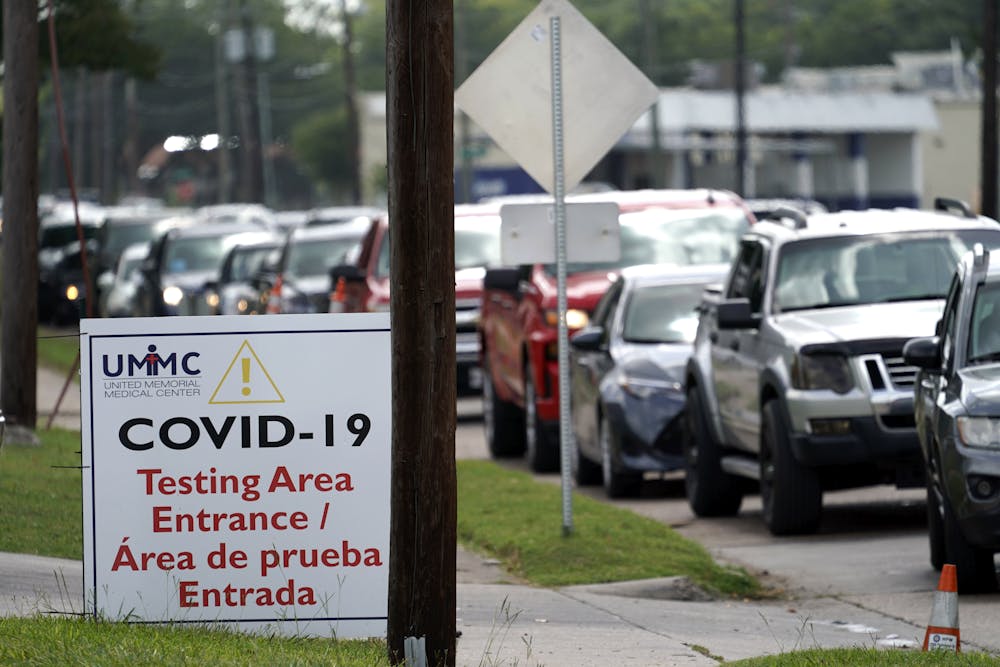
But now there is a new problem: The virus has grown even more rapidly than testing capacity. In recent weeks, Americans have often had to wait in long lines, sometimes in scorching heat, to be tested.

One measure of the continuing troubles with testing is the percentage of tests that come back positive. In a country that has the virus under control, fewer than 5 percent of tests come back positive, according to World Health Organization guidelines. Many countries have reached that benchmark. The United States, even with the large recent volume of tests, has not.

“We do have a lot of testing,” Ms. Rivers, the Johns Hopkins epidemiologist, said. “The problem is we also have a lot of cases.”

The huge demand for tests has overwhelmed medical laboratories, and many need days — or even up to two weeks — to produce results. “That really is not useful for public health and medical management,” Ms. Rivers added. While people are waiting for their results, many are also spreading the virus.

In Belgium recently, test results have typically come back in 48 to 72 hours. In Germany and Greece, it is two days. In France, the wait is often 24 hours.


For the first few months of the pandemic, public health experts could not agree on a consistent message about masks. Some said masks reduced the spread of the virus. Many experts, however, discouraged the use of masks, saying — somewhat contradictorily — that their benefits were modest and that they should be reserved for medical workers.

“We don’t generally recommend the wearing of masks in public by otherwise well individuals because it has not been up to now associated with any particular benefit,” Dr. Michael Ryan, a World Health Organization official, said at a March 30 news conference.

His colleague Dr. Maria Van Kerkhove explained that it was important to “prioritize the use of masks for those who need them most.”

The conflicting advice, echoed by the C.D.C. and others, led to relatively little mask wearing in many countries early in the pandemic. But several Asian countries were exceptions, partly because they had a tradition of mask wearing to avoid sickness or minimize the effects of pollution.

By January, mask wearing in Japan was widespread, as it often had been during a typical flu season. Masks also quickly became the norm in much of South KoreaThailandVietnamTaiwan and China.

In the following months, scientists around the world began to report two strands of evidence that both pointed to the importance of masks: Research showed that the virus could be transmitted through droplets that hang in the air, and several studies found that the virus spread less frequently in places where people were wearing masks.

On one cruise ship that gave passengers masks after somebody got sick, for example, many fewer people became ill than on a different cruise where people did not wear masks.

Consistent with that evidence was Asia’s success in holding down the number of cases (after China’s initial failure to do so). In South Korea, the per capita death rate is about one-eightieth as large as in the United States; Japan, despite being slow to enact social distancing, has a death rate about one-sixtieth as large.

“We should have told people to wear cloth masks right off the bat,” Dr. George Rutherford of the University of California, San Francisco, said.

In many countries, officials reacted to the emerging evidence with a clear message: Wear a mask.

Prime Minister Justin Trudeau of Canada began wearing one in May. During a visit to an elementary school, President Emmanuel Macron of France wore a French-made blue mask that complemented his suit and tie. Zuzana Caputova, the president of Slovakia, created a social media sensation by wearing a fuchsia-colored mask that matched her dress.

In the United States, however, masks did not become a fashion symbol. They became a political symbol.

Mr. Trump avoided wearing one in public for months. He poked fun at a reporter who wore one to a news conference, asking the reporter to take it off and saying that wearing one was “politically correct.” He described former Vice President Joseph R. Biden Jr.’s decision to wear one outdoors as “very unusual.”

Many other Republicans and conservative news outlets, like Fox News, echoed his position. Mask wearing, as a result, became yet another partisan divide in a highly polarized country.

Throughout much of the Northeast and the West Coast, more than 80 percent of people wore masks when within six feet of someone else. In more conservative areas, like the Southeast, the share was closer to 50 percent.

A March survey found that partisanship was the biggest predictor of whether Americans regularly wore masks — bigger than their age or whether they lived in a region with a high number of virus cases. In many of the places where people adopted a hostile view of masks, including Texas and the Southeast, the number of virus cases began to soar this spring.


Throughout March and April, Gov. Brian Kemp of Georgia and staff members held long meetings inside a conference room at the State Capitol in Atlanta. They ordered takeout lunches from local restaurants like the Varsity and held two daily conference calls with the public health department, the National Guard and other officials.

One of the main subjects of the meetings was when to end Georgia’s lockdown and reopen the state’s economy. By late April, Mr. Kemp decided that it was time.

Georgia had not met the reopening criteria laid out by the Trump administration (and many outside health experts considered those criteria too lax). The state was reporting about 700 new cases a day, more than when it shut down on April 3.

Nonetheless, Mr. Kemp went ahead. He said that Georgia’s economy could not wait any longer, and it became one of the first states to reopen.

“I don’t give a damn about politics right now,” he said at an April 20 news conference announcing the reopening. He went on to describe business owners with employees at home who were “going broke, worried about whether they can feed their children, make the mortgage payment.”

Four days later, across Georgia, barbers returned to their chairs, wearing face masks and latex gloves. Gyms and bowling alleys were allowed to reopen, followed by restaurants on April 27. The stay-at-home order expired at 11:59 p.m. on April 30.

Mr. Kemp’s decision was part of a pattern: Across the United States, caseloads were typically much higher when the economy reopened than in other countries.

As the United States endured weeks of closed stores and rising unemployment this spring, many politicians — particularly Republicans, like Mr. Kemp — argued that there was an unavoidable trade-off between public health and economic health. And if crushing the virus meant ruining the economy, maybe the side effects of the treatment were worse than the disease.

Dan Patrick, the Republican lieutenant governor of Texas, put the case most bluntly, and became an object of scorn, especially from the political left, for doing so. “There are more important things than living,” Mr. Patrick said in a television interview the same week that Mr. Kemp reopened Georgia.

It may have been an inartful line, but Mr. Patrick’s full argument was not wholly dismissive of human life. He was instead suggesting that the human costs of shutting down the economy — the losses of jobs and income and the associated damages to living standards and people’s health — were greater than the costs of a virus that kills only a small percentage of people who get it.

“We are crushing the economy,” he said, citing the damage to his own children and grandchildren. “We’ve got to take some risks and get back in the game and get this country back up and running.”

The trouble with the argument, epidemiologists and economists agree, was that public health and the economy’s health were not really in conflict.

Early in the pandemic, Austan Goolsbee, a University of Chicago economist and former Obama administration official, proposed what he called the first rule of virus economics: “The best way to fix the economy is to get control of the virus,” he said. Until the virus was under control, many people would be afraid to resume normal life and the economy would not function normally.

The events of the last few months have borne out Mr. Goolsbee’s prediction. Even before states announced shutdown orders in the spring, many families began sharply reducing their spending. They were responding to their own worries about the virus, not any official government policy.

And the end of lockdowns, like Georgia’s, did not fix the economy’s problems. It instead led to a brief increase in spending and hiring that soon faded.

In the weeks after states reopened, the virus began surging. Those that opened earliest tended to have worse outbreaks, according to a Times analysis. The Southeast fared especially badly.

In June and July, Georgia reported more than 125,000 new virus cases, turning it into one of the globe’s new hot spots. That was more new cases than Canada, France, Germany, Italy, Japan and Australia combined during that time frame.

Americans, frightened by the virus’s resurgence, responded by visiting restaurants and stores less often. The number of Americans filing new claims for unemployment benefits has stopped falling. The economy’s brief recovery in April and May seems to have petered out in June and July.

In large parts of the United States, officials chose to reopen before medical experts thought it wise, in an attempt to put people back to work and spark the economy. Instead, the United States sparked a huge new virus outbreak — and the economy did not seem to benefit.

“Politicians are not in control,” Mr. Goolsbee said. “They got all the illness and still didn’t fix their economies.”

The situation is different in the European Union and other regions that have had more success reducing new virus cases. Their economies have begun showing some promising signs, albeit tentative ones. In Germany, retail sales and industrial production have risen, and the most recent unemployment rate was 6.4 percent. In the United States, it was 11.1 percent.


The United States has not performed uniquely poorly on every measure of the virus response.

Mask wearing is more common than throughout much of Scandinavia and Australia, according to surveys by YouGov and Imperial College London. The total death rate is still higher in Spain, Italy and Britain.

But there is one way — in addition to the scale of the continuing outbreaks and deaths — that the United States stands apart: In no other high-income country have the messages from political leaders been nearly so mixed and confusing.

These messages, in turn, have been amplified by television stations and websites friendly to the Republican Party, especially Fox News and the Sinclair Broadcast Group, which operates almost 200 local stations. To anybody listening to the country’s politicians or watching these television stations, it would have been difficult to know how to respond to the virus.

Mr. Trump’s comments, in particular, have regularly contradicted the views of scientists and medical experts.

The day after the first American case was diagnosed, he said, “We have it totally under control.” In late February, he said: “It’s going to disappear. One day — it’s like a miracle — it will disappear.” Later, he incorrectly stated that any American who wanted a test could get one. On July 28, he falsely proclaimed that “large portions of our country” were “corona-free.”

He has also promoted medical misinformation about the virus. In March, Mr. Trump called it “very mild” and suggested it was less deadly than the common flu. He has encouraged Americans to treat it with the antimalarial drug hydroxychloroquine, despite a lack of evidence about its effectiveness and concerns about its safety. At one White House briefing, he mused aloud about injecting people with disinfectant to treat the virus.

These comments have helped create a large partisan divide in the country, with Republican-leaning voters less willing to wear masks or remain socially distant. Some Democratic-leaning voters and less political Americans, in turn, have decided that if everybody is not taking the virus seriously, they will not either. State leaders from both parties have sometimes created so many exceptions about which workplaces can continue operating normally that their stay-at-home orders have had only modest effects.

“It doesn’t seem we have had the same unity of purpose that I would have expected,” Ms. Rivers, the Johns Hopkins epidemiologist, said. “You need everyone to come together to accomplish something big.”

Across much of Europe and Asia, as well as in Canada, Australia and elsewhere, leaders have delivered a consistent message: The world is facing a deadly virus, and only careful, consistent action will protect people.

Many of those leaders have then pursued aggressive action. Mr. Trump and his top aides, by contrast, persuaded themselves in April that the virus was fading. They have also declined to design a national strategy for testing or other virus responses, leading to a chaotic mix of state policies.

“If you had to summarize our approach, it’s really poor federal leadership — disorganization and denial,” said Andy Slavitt, who ran Medicare and Medicaid from 2015 to 2017. “Watch Angela Merkel. Watch how she communicates with the public. Watch how Jacinda Ardern in New Zealand does it. They’re very clear. They’re very consistent about what the most important priorities are.”

New York — both the city and the state — offers a useful case study. Like much of Europe, New York responded too slowly to the first wave of the virus. As late as March 15, Mayor Bill de Blasio encouraged people to go to their neighborhood bar.

Soon, the city and state were overwhelmed. Ambulances wailed day and night. Hospitals filled to the breaking point. Gov. Andrew M. Cuomo — a Democrat, like Mr. de Blasio — was slow to protect nursing home residents, and thousands died. Earlier action in New York could have saved a significant number of lives, epidemiologists say.

By late March, however, New York’s leaders understood the threat, and they reversed course.

They insisted that people stay home. They repeated the message every day, often on television. When other states began reopening, New York did not. “You look at the states that opened fast without metrics, without guardrails, it’s a boomerang,” Mr. Cuomo said on June 4.

The lockdowns and the consistent messages had a big effect. By June, New York and surrounding states had some of the lowest rates of virus spread in the country. Across much of the Southeast, Southwest and West Coast, on the other hand, the pandemic was raging.

Many experts now say that the most disappointing part of the country’s failure is that the outcome was avoidable.

What may not have been avoidable was the initial surge of the virus: The world’s success in containing previous viruses, like SARS, had lulled many people into thinking a devastating pandemic was unlikely. That complacency helps explains China’s early mistakes, as well as the terrible death tolls in the New York region, Italy, Spain, Belgium, Britain and other parts of Europe.

But these countries and dozens more — as well as New York — have since shown that keeping the virus in check is feasible.

For all of the continuing uncertainty about how this new coronavirus is transmitted and how it affects the human body, much has become clear. It often spreads indoors, with close human contact. Talking, singing, sneezing and coughing play a major role in transmission. Masks reduce the risk. Restarting normal activity almost always leads to new cases that require quick action — testing, tracing of patients and quarantining — to keep the virus in check.

When countries and cities have heeded these lessons, they have rapidly reduced the spread of the virus and been able to move back, gingerly, toward normal life. In South Korea, fans have been able to attend baseball games in recent weeks. In Denmark, Italy and other parts of Europe, children have returned to school.

In the United States, the virus continues to overwhelm daily life.

“This isn’t actually rocket science,” said Dr. Thomas R. Frieden, who ran the New York City health department and the C.D.C. for a combined 15 years. “We know what to do, and we’re not doing it.”


Making coronavirus testing easy, accurate and fast is critical to ending the pandemic – the US response is falling far short

https://theconversation.com/making-coronavirus-testing-easy-accurate-and-fast-is-critical-to-ending-the-pandemic-the-us-response-is-falling-far-short-142366

Making coronavirus testing easy, accurate and fast is critical to ...

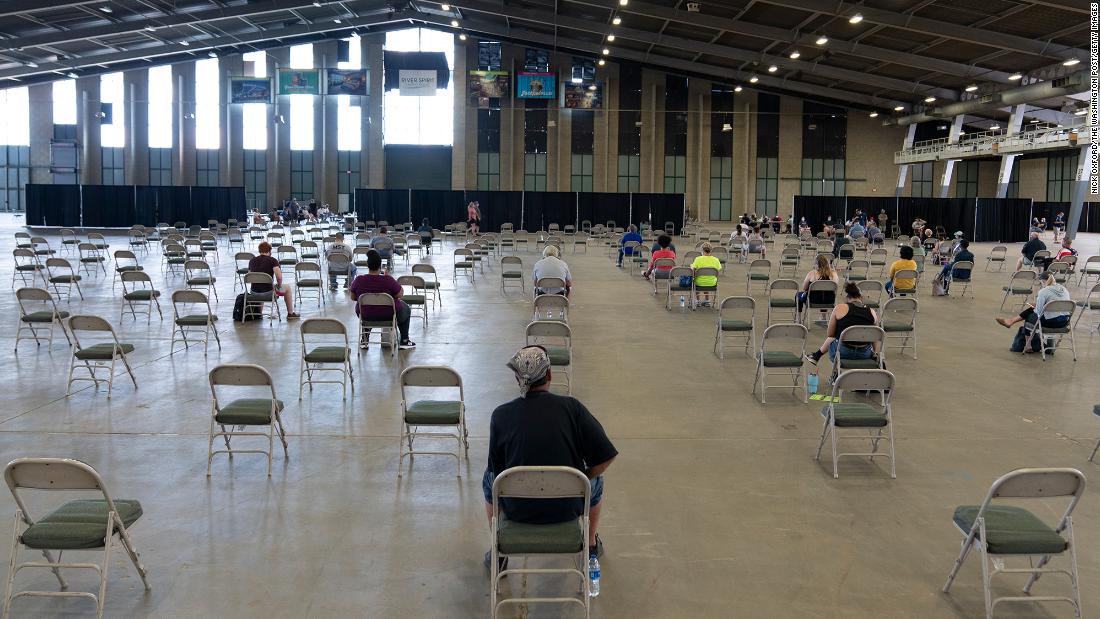
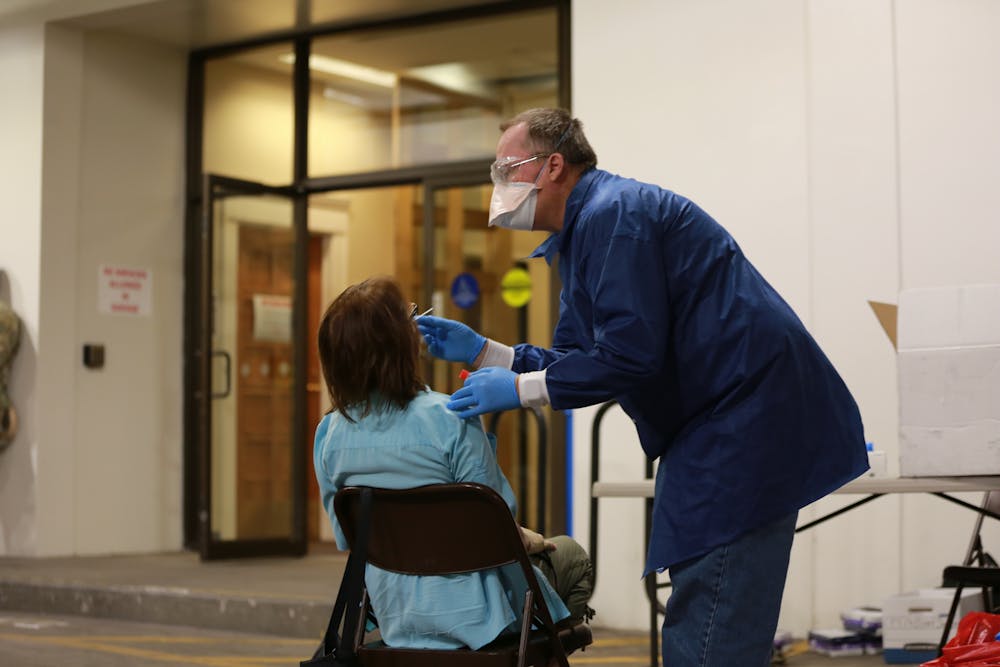
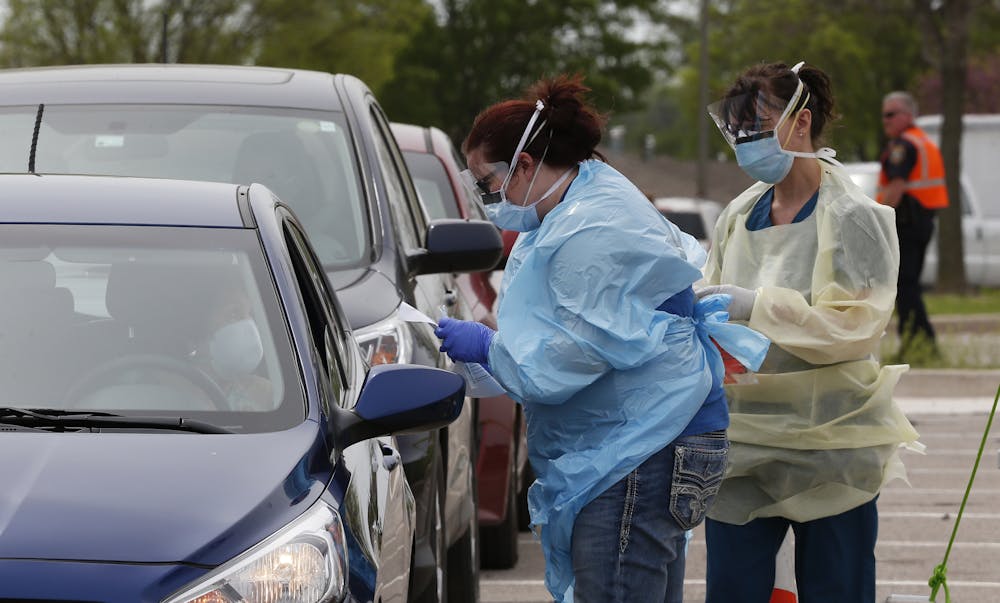
For many people in the U.S., getting tested for COVID-19 is a struggle. In Arizona, testing sites have seen lines of hundreds of cars stretching over a mile. In Texas and Florida, some people were waiting for five hours for free testing.

The inconvenience of these long waits alone discourages many people from getting tested. With the surge in cases, many public testing sites have been reaching maximum capacity within hours of opening, leaving many people unable to get tested for days. Those that do get tested often face a week-long wait to get their test results.

Every person who isn’t tested could be spreading COVID-19 unknowingly. These overstretched testing programs are a weak link in the U.S. pandemic response.

study public health policy to combat infectious disease epidemics. The key to overcoming this pandemic is to slow transmission of the virus by preventing contagious people from infecting others. A widespread quarantine would accomplish this, but is economically and socially burdensome. Testing offers a way to identify contagious people so they can be isolated to prevent the spread of the disease. This is especially important for COVID-19 because an estimated 40% or more of all people infected with SARS-CoV-2 have few or no symptoms so testing is the only way to identify them.

Some states are doing much better than others. But as a whole, the U.S. is falling far short of the amount of testing needed to control the pandemic. What are the challenges the U.S. is facing? And what is the way forward?

Testing should be free, easy, fast and accurate

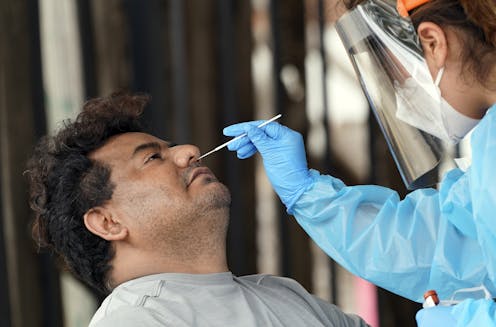
The ultimate goal of testing is for everyone, regardless of symptoms, to know at all times whether they are infected with the coronavirus. To achieve this level of testing, tests should be free, very easy to perform and provide accurate results quickly.

Ideally, free COVID-19 tests would be delivered to everyone directly. The tests would be simple to perform – like a saliva test – and would give a perfectly accurate result within minutes. Everyone could test themselves weekly or anytime they were going to be in close contact with other people.

In this ideal scenario, most, if not all, contagious people would be detected before they could spread the virus to others. And because of the rapid results, there would be no burden of quarantining between doing the test and getting the result.

Researchers are working on better-quality tests, but access is a problem of infrastructure, not science. Right now, nowhere in the U.S. comes close to meeting surging demand for testing.

One of the worst cases: Texas

The difficulty of getting a COVID-19 test varies by state, but currently, people in Texas face some of the biggest obstacles, which results in far fewer tests being done than is needed to control the pandemic.

First, Houston – which is experiencing a surge in cases – and many testing sites across the state recommend or offer testing only to people who have symptoms, were exposed to a COVID-19 case or are a member of a high-risk group.

Even people recommended for testing still face challenges. It is possible to request an appointment for a free COVID-19 test, but testing facilities can handle only so many patients a day and testing slots fill up quickly. Even if someone gets an appointment, they may face an hours-long wait at the testing site.

Finally, public health experts recommend that people who may have been exposed to COVID-19 should quarantine at home for 14 days or until they receive a negative test result. In Texas, patients are supposed to get results through an online portal in three to five days, but many labs have been taking seven to nine days to return results. These long delays mean people face a much higher burden of quarantining while waiting for results.

All of these challenges make it clear that Texas is simply not testing enough people to keep the spread of COVID-19 in check.

To gauge the success of COVID-19 testing programs, epidemiologists use a measure called test positivity. This is simply the percentage of tests that come back positive. The lower the test positivity, the better, because that means very few cases are going undetected. A high test-positivity rate is usually a sign that only the sickest people are getting tested and many cases are being missed.

The World Health Organization guidelines say that if more than 1 out of 20 COVID-19 tests comes back positive – a test positivity of more than 5% – this is an indication that a lot of cases are not diagnosed and the epidemic is not under control. 

Texas currently has a test-positivity of around 16%, which means that a lot of infected people are not getting tested and may be unknowingly spreading the disease.

One of the best cases: New Mexico

In stark contrast to Texas is New Mexico, which has one of the strongest testing programs in the U.S.

First, public health officials there encourage everyone to get tested for COVID-19 regardless of symptoms or exposure. The state has also prohibited health providers from charging patients for tests. People seeking a test have the option to walk in or to make an appointment ahead of time, whichever is more convenient.

All of this relatively good access to testing has resulted in one of the highest per capita testing rates in the country, at over 20,000 tests per 100,000 people, and test-positivity rate of around 4%. New Mexico’s testing program is diagnosing a relatively high proportion of cases despite the state experiencing a recent surge.

New Mexico still has room for improvement. Long lines, wait times and limited capacity are becoming more common as cases surge, but the foundation of a strong testing program has helped the state cope with the increase in cases.


The big-picture problems

The pre-pandemic infectious disease testing capabilities in the U.S. are clearly unable to meet the current demand. A nationwide response is needed, and there are three things that Congress, the federal government and local governments can do to help ensure COVID-19 tests will be easy to get, fast and accurate.

First, Congress can provide funding to stimulate the testing supply chain, scale up existing testing programs and promote innovation in test development.

Second, governments can improve the management and coordination of testing programs to more efficiently use existing resources.

And third, innovative testing methods that reduce the need for lab capacity – like paper-strip tests and pooled testing – need be approved and implemented more quickly.

Every little improvement in testing capabilities means more COVID-19 cases can be caught before the virus is transmitted. And slowing the spread of the virus is the key to overcoming the pandemic.


Test positivity rate: How this one figure explains that the US isn’t doing enough testing yet

https://theconversation.com/test-positivity-rate-how-this-one-figure-explains-that-the-us-isnt-doing-enough-testing-yet-143340

Test positivity rate: How this one figure explains that the US isn ...

The U.S. has performed more coronavirus tests than any other country in the world. Yet, at the same time, the U.S. is notably underperforming in terms of suppressing COVID-19. Confirmed cases – as well as deaths – are surging in many parts of the country. Some people have argued that the increase in cases is solely due to increased testing.

I am a statistician who studies how mathematics and statistics can be used to track diseases. The claim that the increase in cases is only caused by increases in testing is just not true. But how do public health officials know this?

Testing, confirmed cases and total cases

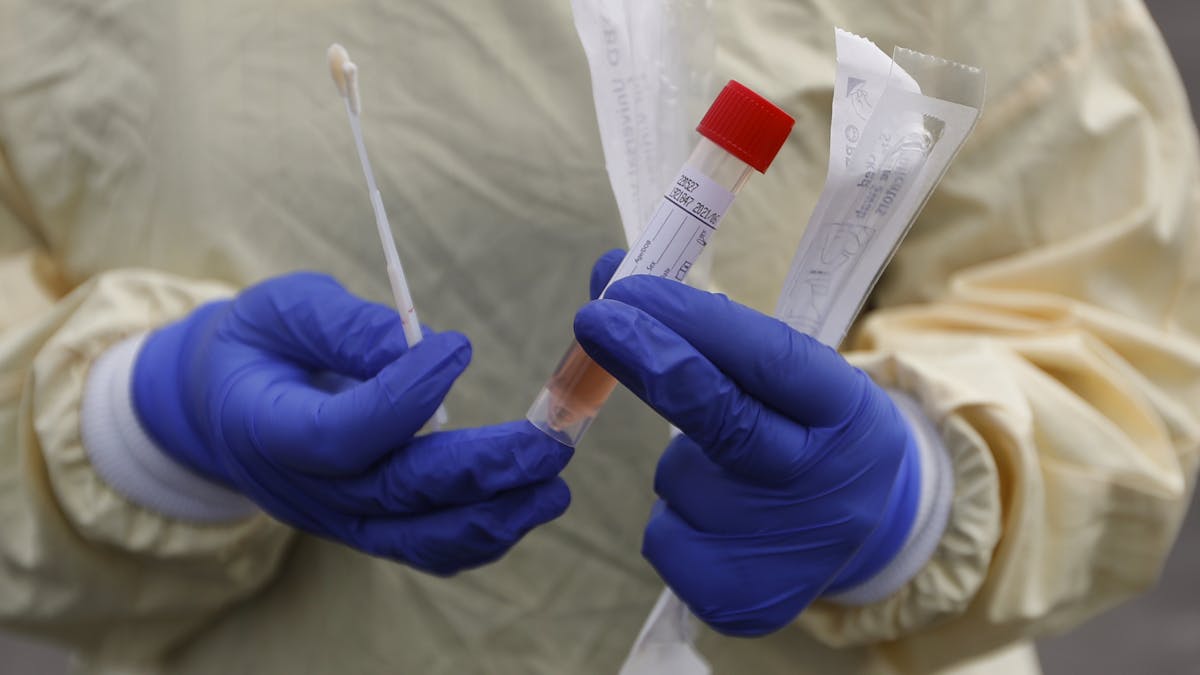
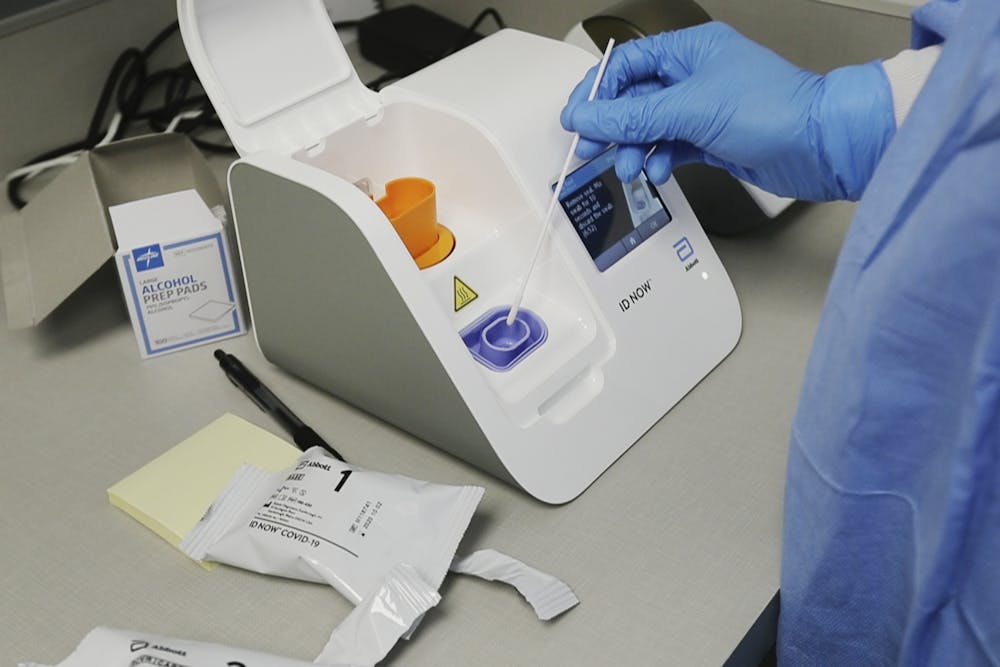
COVID-19 testing has two purposes. The first is to confirm a diagnosis so that medical treatment can be appropriately rendered. The second is to do surveillance for tracking and disease suppression – including finding those who may be asymptomatic or only have mild symptoms – so that individuals and public health officials can take actions to slow the spread of the virus.

At a White House briefing on July 13, the president said, “When you test, you create cases.”

The problem with this statement is that anyone who is infected with the coronavirus is, by definition, a case. Since taking a COVID-19 test does not cause a person to get coronavirus, just like taking a pregnancy test does not cause one to become pregnant, the president’s claim is false. Testing does not create cases.

However, because many COVID-19 cases are asymptomatic, many people are infected and don’t know it. What COVID-19 testing does do is identify unknown cases. And thus it does increase the number of cases that are known, or otherwise called the confirmed case count.

Finding unknown cases is good, not bad, because identifying those who are COVID-19-positive allows individuals and public health officials to take actions that slow the spread of the disease. When public health officials find cases, they can begin contract tracing. When a person finds out they are infected, they will know to quarantine.

Since the beginning of the pandemic, the U.S. has performed more total tests and more tests per capita than any other country, though as of late July the U.K., Russia and Qatar were performing more tests per capita per day. But counting the total number of tests or the tests per capita is not the right way to judge success of a testing program.

As it says on the Johns Hopkins testing comparison page, a country’s “testing program should be scaled to the size of their epidemic, not the size of the population.” Sure, the U.S. might have a big testing program, but it has a massive epidemic. The U.S. needs an equally massive testing program if health officials want to have an accurate picture of what’s really going on.

Test positivity rate

So how do public health officials know if they are doing enough testing?

Better than simply counting total number of tests, the test positivity rate is a useful measure of whether enough tests are being done. The test positivity rate is simply the fraction of tests that come back positive. It is calculated by dividing the number of positive tests by the total number of tests. Generally, a lower test positivity rate is good.

A good way to think about test positivity is to think about fishing with a net. If you catch a fish almost every time you send the net down – high test positivity – that tells you there are probably a lot of fish around that you haven’t caught – there are a lot of undetected cases. On the other hand, if you use a huge net – more testing – and only catch a fish every once in a while – low test positivity – you can be pretty sure that you’ve caught most of the fish in the area.

According to the World Health Organization, before a region can relax restrictions or begin reopening, the test positivity rate from a comprehensive testing program should be at or below 5% for at least 14 days.

There are two ways to lower a test positivity rate: either by decreasing the number of positive tests or by increasing the total number of tests. A comprehensive testing program does both. By conducting a large number of tests, most cases in the community are detected. Then, individual and government actions can be taken that contain the virus. This results in a declining number of positive tests.

Returning to the fishing metaphor, the goal of a comprehensive testing program is to use a huge net to overfish in the coronavirus lake until there are very few COVID-19 cases left. Using the test positivity rate as a measure of success helps ensure that a testing program is appropriately scaled to the size of an epidemic.

As of July 27, the U.S. as a whole had a test positivity rate of 10%. States where testing programs are robust and the virus is fairly well controlled have test positivity rates well below 5%, like Massachusetts at 2.68% and New York at 1.09%. In places like Mississippi and Arizona that are experiencing large outbreaks, test positivity rates are above 20%.

The right amount of testing

The increases in confirmed cases aren’t occurring just because there is more testing. The high test positivity rates in some locations show that the virus is in fact spreading and growing so testing needs to grow with it. I believe that if the U.S. wants to beat back this virus, one of the first things that needs to happen is to increase testing. We need to deploy larger nets to catch more fish. Yes, we’ll find more cases, but that’s the point.