

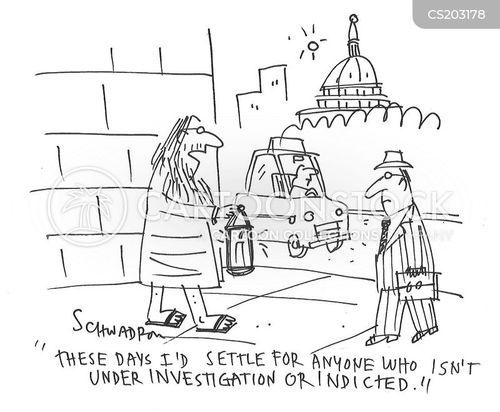
Cartoon – These days I’d settle for

https://www.axios.com/trump-biden-debate-coronavirus-14b6e962-e968-4547-933d-6d7105df24b9.html

President Trump repeated baseless claims at the final presidential debate that the coronavirus “will go away” and that the U.S. is “rounding the turn,” while Joe Biden argued that any president that has allowed 220,000 Americans to die on his watch should not be re-elected.
Why it matters: The U.S. is now averaging about 59,000 new coronavirus infections a day, and added another 73,000 cases on Thursday, according to the Covid Tracking Project. The country recorded 1,038 deaths due to the virus Thursday, the highest since late September.
What they’re saying: “More and more people are getting better,” Trump said. We have a problem that’s a worldwide problem. This is a worldwide problem. But I’ve been congratulated by the heads of many countries on what we’ve been able to do … It will go away and as I say, we’re rounding the turn. We’re rounding the corner. It’s going away.”
Biden responded: “Anyone responsible for that many deaths should not remain as president of the United States of America.”
The bottom line: Biden and Trump are living in two different pandemic realities, but Biden’s is the only one supported by health experts.
Go deeper: The pandemic is getting worse again
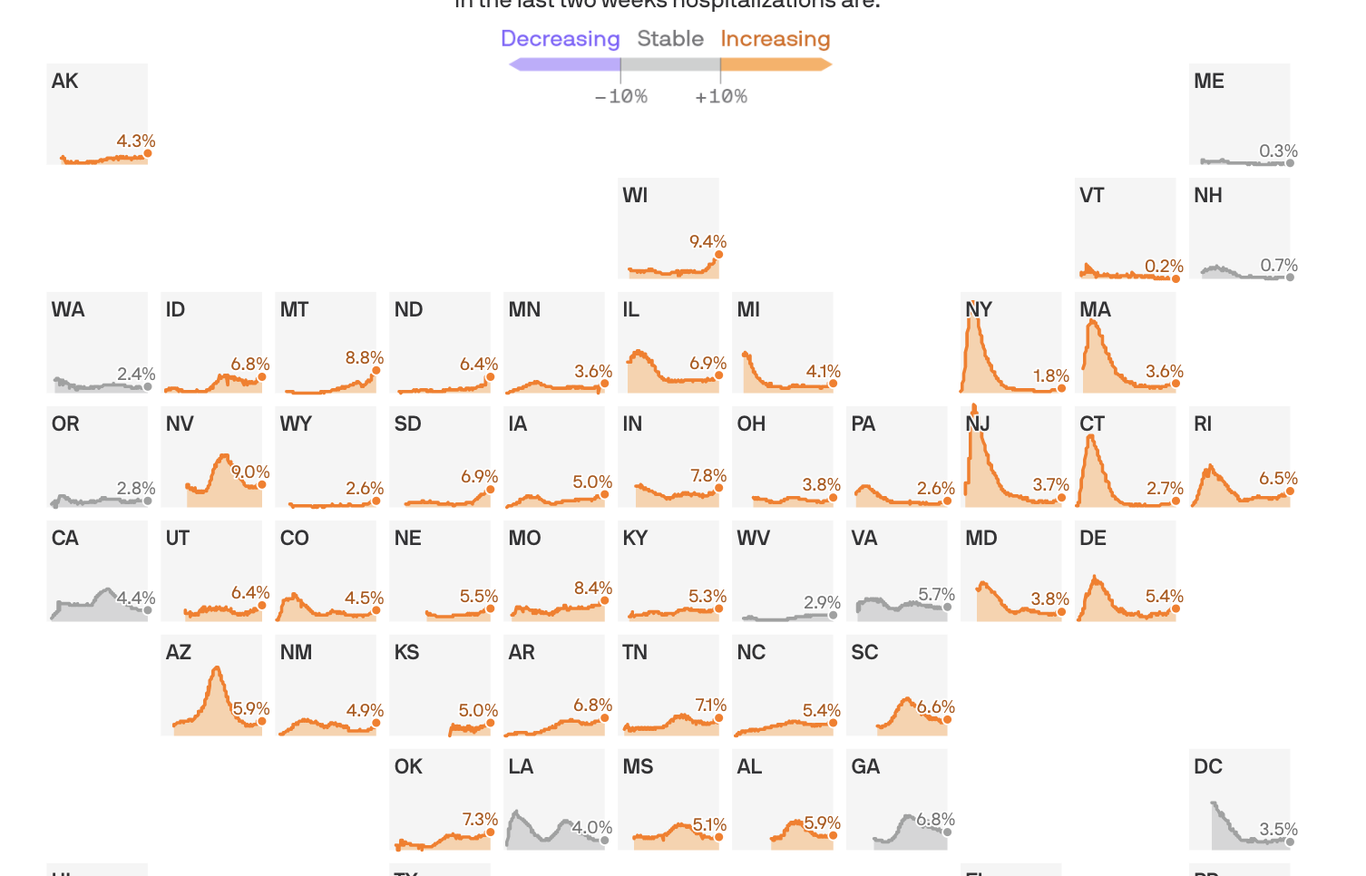
Coronavirus hospitalizations are increasing in 39 states, and are at or near their all-time peak in 16.
The big picture: No state is anywhere near the worst-case situation of not having enough capacity to handle its COVID-19 outbreak. But rising hospitalization rates are a sign that things are getting worse, at a dangerous time, and a reminder that this virus can do serious harm.
By the numbers: 39 states saw an increase over the past two weeks in the percentage of available hospital beds occupied by coronavirus patients.
Yes, but: The all-time peak of coronavirus hospitalizations happened in the spring, when 40% of New Jersey’s beds were occupied by COVID patients. Thankfully, even the the worst-performing states today are still a far cry from that.
Between the lines: These numbers, combined with the nationwide surge in new infections, confirm that the pandemic in the U.S. is getting worse — just as cold weather begins to set in in some parts of the country, which experts have long seen as a potentially dangerous inflection point.


President Trump presented his “America First Healthcare Plan” during a speech to healthcare professionals in Charlotte, North Carolina, on Thursday — a plan that mentioned preexisting condition coverage protections and surprise billing but did not seem to include comprehensive changes to the healthcare system.
“Under the America First Healthcare Plan, we will ensure the highest standard of care anywhere in the world, cutting-edge treatments, state-of-the-art medicine, groundbreaking cures, and true health security for you and your loved ones,” Trump said. “And we will do it rapidly, and it’s in very good order, and some of it has already been implemented.”
Executive Order Provisions
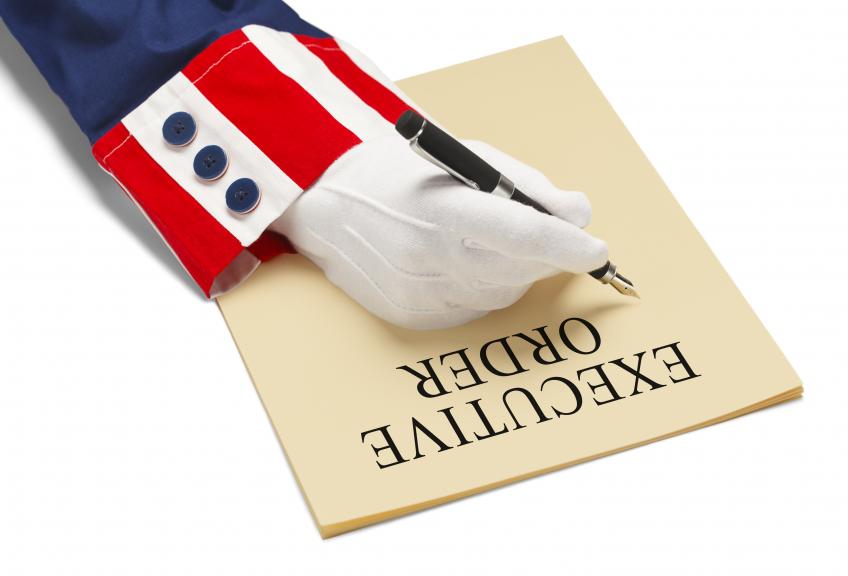
The president signed an executive order outlining the plan, but the order contained initiatives in only a few areas, including:
Trump also announced another initiative, this one aimed at seniors. “Under my plan, 33 million Medicare beneficiaries will soon receive a card in the mail containing $200 that they can use to help pay for prescription drugs … The cards will be mailed out in coming weeks,” Trump said. The $6.6 billion cost of the cards will be paid for under the auspices of a Medicare demonstration program. These funds are ostensibly available via savings generated through Trump’s “most favored nation” executive order allowing Medicare to pay no more for certain prescription drugs than the price paid by other developed countries, a White House official said. That executive order has not yet been implemented, however, and court challenges are expected.
Final Rule Issued on Drug Importation
Trump also noted that the FDA issued a final rule on Thursday implementing the president’s July executive order earlier this month to allow for importation of certain less expensive prescription drugs from Canada. “This means a state or whatever — can go to Canada and buy drugs for a fraction of the price that they’re charging right now,” he said.
He also highlighted individual actions his administration had taken that mostly affected particular groups, including lowering insulin prices for certain Medicare beneficiaries, investing in childhood cancer research, and expanding health reimbursement accounts that employers can use to reimburse employees for medical expenses. The COVID-19 pandemic received scant mention other than a reference to slashing red tape to accelerate development of treatments for the disease, and a sentence about how the pandemic had greatly increased the use of telehealth.
During a telephone briefing with reporters Thursday afternoon, HHS Secretary Alex Azar highlighted the surprise billing provision. “The President is saying that all the relevant players — hospitals, doctors, insurance companies — had better get their act together and get legislation passed through Congress that protects patients against surprise medical bills from anybody — hospitals or doctors, doesn’t matter,” he said.
“Those special interest groups need to sort it out and figure out how that would work,” he continued. “There have been legislative packages that have come quite close on the Hill that are bipartisan, but…. the president is saying the time is now. And if they do not get legislation passed by January 1st, he is instructing me to use the full regulatory power of the U.S. government to protect patients against surprise medical bills.”
Sen. Lamar Alexander (R-Tenn.), outgoing chairman of the Senate Health, Education, Labor, & Pensions (HELP) Committee, praised the surprise billing announcement. “The president is right to call on Congress to pass legislation this year to end surprise medical billing,” Alexander said in a statement, adding that a bill currently going through the House and Senate addresses the issue effectively. “Ending surprise medical bills is a problem that requires a permanent solution passed by Congress this year. The American people can’t afford to wait any longer.”
Preexisting Condition Provision Panned
The preexisting condition provision drew scorn from Democratic legislators. The provision “offers no protection not already available through the existing Affordable Care Act (ACA) and no protection for millions of Americans with preexisting conditions if Trump is successful in packing the Supreme Court to destroy the ACA,” Rep. Lloyd Doggett (D-Texas), chairman of the House Ways & Means Health Subcommittee, said in a statement.
But Azar said during the briefing that the ACA’s clause requiring insurers to cover preexisting conditions does no good if people aren’t able to afford insurance in the first place. “If you’re a couple, aged 55, living in Missouri, making $70,000 a year, Obamacare is going to cost you $30,000 in premiums and a $12,000 deductible,” he said.
Azar promised that the administration “will work with Congress or otherwise to ensure” that people with pre-existing conditions are protected, but he did not indicate how that would be made affordable to individuals without government subsidies of the sort Republicans have long opposed.
Bob Laszewski, president of Health Policy and Strategy Associates in Alexandria, Virginia, questioned how much good the executive order’s preexisting condition provision would do. “Trump and the Republicans couldn’t pass an alternative to Obamacare in 2017 when they controlled the White House and both houses of Congress,” he wrote in a blog post. “But, now he can just sign an executive order and everything is fixed? He has signed a number of healthcare-related executive orders and just about all of them are tied up in the byzantine federal regulatory process, or have faded away. This is just an election-year gimmick in an attempt to persuade voters that Trump has healthcare policy under control. There are a lot of governments in the world that operate by executive fiat. Ours is not one of them.”

https://www.visualcapitalist.com/wp-content/uploads/2020/09/state-of-democracy.html
View the full-sized interactive version of this infographic by clicking here
From Norway to North Korea, governing systems differ around the world. But has the world become more or less free in the past decade?
This visualization from Preethi Lodha demonstrates how democracy levels of 167 countries have changed since 2006. The original data comes from the Democracy Index, which is compiled annually by the Economist Intelligence Unit.
First, it’s important to understand the classifications made by the Democracy Index.
Based on answers to 60 questions across a nation’s electoral process, civil liberties, government functions, political participation and political culture, countries are assigned a range of scores in the Democracy Index.
Based on these scores, a nation automatically falls into one of the following four types of governance. Here’s which category fits the bill, depending on the range of scores:

One thing that stands out is that many hybrid regimes and flawed democracies are also considered high potential emerging markets, but are held back by their political instability.
In recent times, public demonstrations have been a major cause behind increases in Democracy Index scores and changes in governance classifications.
Algeria moved from authoritarian to hybrid regime in 2019, the only country in the Arab region to do so in the index. This came after sustained protests against the previous president, Abdelaziz Bouteflika—who had served for 20 years.
Chile experienced similar turmoil, for the better. After a spike in the scale of middle class unrest over inequality and unfair policies in late 2019, the political participation moved it up from a flawed to full democracy.
The U.S. has one of the oldest democracies in the world. However, it was downgraded from a full to a flawed democracy as of the 2016 index, a status that had been “teetering” since before then, according to the report that year.
Venezuela dropped into an authoritarian regime in 2017, and it doesn’t seem to be improving anytime soon. The state was found to use the COVID-19 pandemic as an excuse to crack down on any dissent against the government.
All in all, the average global democracy score worldwide emerged at 5.48 in 2019, although it’s clear that certain countries pull this value towards the opposite extremes.
North Korea, an authoritarian regime with a 1.08 score, has remained consistently one of the lowest ranked countries in the index. Meanwhile, its alphabetical successor Norway steadily keeps up its high score streak, with 9.87 being the best example of a full democracy in 2019.
Here’s how many countries made up each system of governance over the years, and the global Democracy Index score for that year.

Authoritarian regimes peaked in 2010 with 57 countries, whereas the full democracy category peaked in 2008 with 28 countries.
Since 2006, the average global score has slid from 5.52 to 5.48, and the total of countries categorized under full democracy decreased from 26 to 22.
Does this signal an increasingly divided world? And will the global pandemic—which is already delaying elections—have a further pronounced effect on backsliding these democracy scores?
 HENRY KOTULA