NY Local employers predict 3.6% increase in health benefit costs in 2020

https://www.crainsnewyork.com/health-pulse/local-employers-predict-36-increase-health-benefit-costs-2020?utm_source=health-pulse-tuesday&utm_medium=email&utm_campaign=20191028&utm_content=hero-readmore

Image result for chronic care management

Employers in the metro area expect their spending on benefits to rise 3.6% next year after accounting for changes designed to hold down costs, according to an analysis by Mercer.

That trend would be lower than the 3.9% increase employers experienced this year, with local organizations spending $16,059 per active employee. That’s more than 20% higher than the average cost per employee nationwide.

The benefits consultant broke out the responses of 170 employers in New York City, its surrounding counties, northern New Jersey and southern Connecticut for Crain’s from its 2019 National Survey of Employer-Sponsored Health Plans.

In the area, the average contribution to premiums for an individual employee is $199 a month in a PPO plan, $169 a month in an HMO and $107 a month in a consumer-directed health plan, which tends to have a higher deductible.

The median deductible for members in a PPO plan was $500 locally.

Nationwide, there was a split, with the average deductible for businesses between 10 and 499 employees increasing nearly 13%, to $2,285, while employers with 500 or more workers raised the average deductible in a PPO plan just $10, or 1%, to $992.

Companies are looking to telemedicine and management programs for their highest-cost members as ways to keep fees down, said Mary Lamattina, a senior consultant at Mercer. She said most clients she works with have at least one beneficiary with $1 million in annual medical expenses.

“Employers are getting away from cost shifting and looking at other ways to tackle affordability,” she said.

Nationwide, employers spent 3% more on health costs this year, driven in part by specialty drug spending. Costs for specialty drugs rose 10.5% this year.

Ninety percent of employers with 500 workers or more said they viewed monitoring or managing high-cost claimants as important or very important. One strategy companies reported using was introducing a tech-enabled chronic care management program for conditions such as diabetes.

About 88% of large employers said they offer telemedicine as an option, but only 9% of eligible employees had taken advantage of the programs.

Lamattina pointed out that utilization was nearly four times higher at organizations that waived a copay for telemedicine use, compared with employers that charged a $40 copay. “

“Utilization can be driven by the cost,” she said. “Convenience is really key to getting people to use the benefit.” —Jonathan LaMantia


Gainesville health system paying patients’ out-of-network costs

https://www.albanyherald.com/news/gainesville-health-system-paying-patients-out-of-network-costs/article_5a82d58a-f4f1-11e9-b7b5-8bebc4253708.html

gainesville hospital.jpg

With a contract impasse in its third week, a Gainesville-based health system is spending millions of dollars so that thousands of patients are not having to pay more when visiting the system’s doctors and hospitals.

Northeast Georgia Health System’s contract with Anthem ended Sept. 30, which means that since then, Georgians with Anthem insurance have been out of network for NGHS facilities and physicians.

But in an unusual move, the Northeast Georgia system is making up the financial difference between in-network and out-of-network prices through Dec. 31. That way, Anthem patients won’t pay higher fees when visiting NGHS medical providers, the system said.

“While it will cost millions of dollars per month to protect our patients from out-of-network costs, we’d rather do that than agree to a proposal that would jeopardize the health of our community for years to come,’’ Steve McNeilly, vice president of managed care for NGHS, said.

Most contract disputes between health systems and insurers get resolved before the end of the previous deal, although some agreements come just hours before the end of the expiring pact. The terminated contract between NGHS and Anthem is an exception, and this particular stalemate doesn’t show any sign of progress. Neither side has mentioned any negotiations or even indicated that talks are being scheduled.

The standoff comes at a time when many Georgians are entering their open enrollment period for the 2020 health plan year.

Anthem is by far the state’s biggest health insurer. Northeast Georgia’s hospitals in Gainesville, Braselton, Winder and Dahlonega, as well as its urgent care facilities and many physician group locations, are now out of network for Anthem patients.

“Anthem has only contacted NGHS once since the end of September – and that was only to inform us that they would be processing all claims as out-of-network,’’ McNeilly said. He said Northeast Georgia has proposed a contract with concessions, but that Anthem “refuses to take any meaningful action.’’

“Unfortunately, it appears that Anthem intends for us to be out of network for an extended period of time, so we’re urging patients to switch to a different health insurance plan during open enrollment,’’ McNeilly added.

Northeast Georgia said patients can call its Patient Access Service Center at (770) 219-7678 to get a personalized estimate of hospital charges for upcoming surgeries or procedures. If patients have questions about charges for physician office visits, they can call their physician’s office for more information, NGHS said.

Anthem said Monday that it is “standing firm for our consumers who need greater affordability.’’

The latest proposals from NGHS would increase costs “well above other health systems in the state,’’ Christina Gaines, an Anthem spokeswoman, said. “These increases place a significant burden on consumers because any substantial price increase in the services at these facilities would be directly reflected in increases in medical expenses covered by employer-sponsored group health plans, as well as to member premiums and cost share amounts.’’

What NGHS proposed “was simply not sustainable’’ for Anthem members, she said.

“We provided a revised proposal to them two days before the contract expired and did not receive a response,’’ Gaines said. “We are willing to resume talks so we can come to a new agreement that is fair, provides flexibility and protects affordability.”

Anthem said it can’t guarantee that Northeast Georgia will continue to charge patients the same rates as under the previous contract.

“To protect against unexpected balance billing, and other expenses associated with out-of-network providers, we are urging members to use in-network physicians and facilities,’’ Gaines said. “Anthem continues to have a broad, statewide provider network that delivers access to other quality health care options that remain in-network for our consumers.” Anthem directed consumers to visit www.anthem.com/nghs for information.

Craig Savage, a consultant with CMBC Advisors in North Carolina, said he had not heard previously of a hospital-based system covering the cost gap for patients who are forced out of network by a contract dispute.

“I think it’s a demonstration of good faith to patients,’’ Savage said. “It puts a little marketing pressure on Anthem.’’

But he added that even losing the business of 40,000 patients is “not going to have a huge [financial] impact on Anthem in Georgia.’’

And Savage said the contract standoff may put pressure on local physicians who could lose many patients to another insurer during open enrollment season.


FTC to probe impacts of state antitrust protections for local hospital mergers

https://www.fiercehealthcare.com/hospitals-health-systems/ftc-to-probe-impacts-state-antitrust-protections-for-local-hospital?mkt_tok=eyJpIjoiT0RZNE4yTm1PV1psTmpNeSIsInQiOiJ5R3gxMEwrdUhPWUdZVlBTZ3NWWkdMV08xOCtObDdFaGdHaE1hN0o4Z2p5WnBaN3hjd2lDVm5ybnBhWUtUNFdlTW1LcndtaTN1WUtNVzg1NmUrQjJmWEhqTWpJR3BkUmVuZmVNS2FzdmRWdENuMEtNT0tJMXozUW93N0lVQmZ5WSJ9&mrkid=959610

The Federal Trade Commission (FTC) issued orders to five health insurance companies and two health systems seeking data to study the effects of state-level regulatory approvals known as certificates of public advantage (COPAs) that protect local hospital mergers from antitrust scrutiny.

Federal officials said they want to study the impact of COPAs and hospital consolidation on prices, quality, access, the innovation of healthcare services and employee wages.

The FTC issued orders to Aetna, Anthem, BlueCross BlueShield of Tennessee, Cigna and United Healthcare for patient-level commerical claims data. 

Orders were also issued to Ballad Health in Tennessee and Virginia as well as Cabell Huntington Hospital in West Virginia for aggregated patient billing and discharge data, along with health system employee wage data and other information relevant for analyzing the health systems’ prices, quality, access and innovation. Both health systems were approved for COPAs last year.

Ballad Health was formed in 2018 through the merger of Mountain States Health Alliance and Wellmont Health System. Under a COPA in Tennessee and a similar agreement in Virginia, officials said they agreed to serve oversight and enforceable commitments that include investing $308 million over 10 years to improve population health, expanding access to care and supporting health research and medical education.

Cabell Huntington Hospital was allowed to acquire nearby St. Mary’s Medical Center under a similar cooperative agreement with the state that was initially challenged by federal regulators.

Tennessee regulators describe COPAs as written approvals governing mergers among two or more hospitals that provide “state action immunity to the hospitals from state and federal antitrust laws by replacing competition with state regulation and active supervision. The goal of the COPA process is to protect the interests of the public in the region affected and the state.”

However, the feds say while COPAs “purport to immunize mergers and collaborations from antitrust scrutiny under the state action doctrine,” the approvals are in need of further study. As Kaiser Health News reported, the federal antitrust exemption dates back to a Supreme Court ruling in the 1940s and has been rarely used to allow hospital mergers. There has been little research (PDF) on the impacts of COPAs.

In June, the FTC held a public workshop examining research on the price effects of three COPAs approved in the 1990s—including Benefis Health System in Montana, Palmetto Health in South Carolina and Mission Health in North Carolina—to inform the current study design. Officials said they intend to collect information over the next several years to conduct retrospective analyses of the Ballad Health and Cabell COPAs.

Once the study is complete, the FTC intends to report publicly the study’s findings and will use them to help in future advocacy and enforcement by the agency and to better inform stakeholders about COPAs. 


A group of Republicans has unveiled its healthcare plan. Here is what’s new and what isn’t

https://www.fiercehealthcare.com/payer/a-group-republicans-have-a-new-healthcare-plan-here-what-new-and-what-isn-t?mkt_tok=eyJpIjoiT0RZNE4yTm1PV1psTmpNeSIsInQiOiJ5R3gxMEwrdUhPWUdZVlBTZ3NWWkdMV08xOCtObDdFaGdHaE1hN0o4Z2p5WnBaN3hjd2lDVm5ybnBhWUtUNFdlTW1LcndtaTN1WUtNVzg1NmUrQjJmWEhqTWpJR3BkUmVuZmVNS2FzdmRWdENuMEtNT0tJMXozUW93N0lVQmZ5WSJ9&mrkid=959610

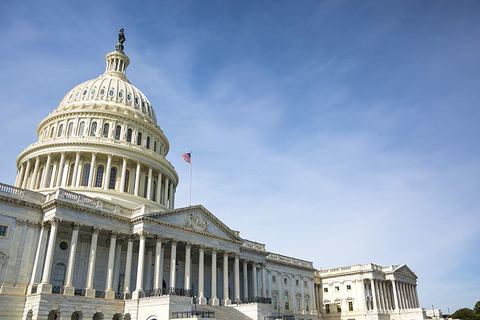
Capitol building in Washington

The Republican Study Committee (RSC), a group of 145 House GOP lawmakers, rolled out a new healthcare plan to counter Democrats’ call for “Medicare for All.”

However, the plan itself closely resembles the Affordable Care Act (ACA) repeal bill called the American Health Care Act (AHCA) that the House passed in 2017 and contributed greatly to the loss of the GOP House majority in 2018.

For the plan to become law, Republicans would have to retake the House in 2020, and President Donald Trump would need to be reelected. However, if those victories happen, the plan could be a blueprint for how a GOP-controlled Congress would move forward on healthcare, as the committee counts among its members both GOP leadership and rank and file.

Here are three takeaways from the plan:

Shifting to high-risk pools

The plan would retain the ACA’s requirement that individual market plans cover pre-existing conditions. However, it takes out provisions that ensure patients with pre-existing conditions get affordable coverage such as requirements that prevent plans from charging sicker people higher premiums than healthy customers.

The plan does introduce high-risk pools that would be used by people with high healthcare costs, a commonly deployed tactic by states for the individual market before the ACA. The high-risk pools would be funded by repackaging the funding used for the ACA’s subsidies and the Medicaid expansion.

However, the plan doesn’t identify the full amount that should be devoted to high-risk pools, which segregate high-cost customers on the individual market.

The plan cites a 2017 report from consulting firm Milliman that estimated a federally supported high-risk pool could require $3.3 billion to $16.7 billion a year. The AHCA also called for high-risk pools but only gave $2.5 billion a year to help states fund them.

While the “$17 billion annual price tag may not seem ideal, it sets up a sustainable path for the individual market,” the RSC report said.

The desire for more funding for high-risk pools is likely a nod to Democratic attacks during the 2018 midterms that the AHCA threatened pre-existing condition protections. The nonpartisan Congressional Budget Office said the AHCA, which let states waive pre-existing condition protections, would lead to people in those states not getting affordable coverage for their pre-existing conditions.

While the AHCA had funding for high-risk pools, experts across the healthcare spectrum said that it wasn’t enough. It would remain to be seen how much more funding would be needed.

Doubling down again on health savings accounts

Bolstering health savings accounts has been a very popular reform idea among Republicans, and that enthusiasm is clear in the RSC plan.

The plan proposes to increase how much an employee can contribute to a health savings account. Currently, an individual can contribute $3,500 and a family can contribute $7,000.

A 2018 bill that passed out of the House but didn’t make it through Congress increased the contribution cap to $6,650 for an individual and $13,300 for a family.

Now, the RSC plan wants to increase the figures again, this time to $9,000 per individual and $18,000 for families, in line with a proposal from libertarian think tank Cato Institute.

“The RSC plan would also expand health savings accounts so that they could be used for a number of health services and products that currently must be paid for with after-tax dollars,” the plan said.

Replace Medicaid expansion with a block grant

This is another common reform in ACA repeal plans. The bill would phase out the enhanced federal matching rate for the Medicaid expansion to pre-expansion levels.

In addition, the bill would replace the existing open-ended federal match with a fixed amount in a block grant.

But the plan has a new twist in a new “flex-grant” that would give more funding to states that adopt a work requirement. However, half of the funding for any flex-grant must go toward supporting the purchase of private plans for low-income individuals.

So far, 12 states have gotten approval from the Trump administration to install work requirements for their Medicaid expansion population. But of those 12 states, three have had their work requirement programs struck down by legal challenges.

Some states are also considering installing their own block grants. Tennessee has released a draft proposal for a block grant but has yet to get federal approval.


Health-care stocks are in their longest losing streak since 2016

https://www.cnbc.com/2019/10/01/health-care-stocks-are-in-their-longest-losing-streak-since-2016.html?

Image result for Health-care stocks are in their longest losing streak since 2016

The health-care sector just closed out a third straight month in the red, its longest losing streak in three years.

A fourth monthly decline would be its worst stretch since 2011, and one trader says there could be more pain ahead.

“I view the whole sector as a wounded target right now,” said Boris Schlossberg of BK Asset Management on CNBC’s “Trading Nation” on Monday. “Health care, in my opinion, is the most bloated, the most bureaucratic, the most inefficient sector of the economy. At 20% of the GDP and at $20,000 premium per capita at this point, they pretty much have squeezed all the rentier profits out of the system that they can at this point.”

The sector also has a target on its back as the 2020 presidential election draws closer. The XLV health care ETF has fallen more than 3% in the past three months as Democratic presidential candidates such as Elizabeth Warren have pushed for a “Medicare For All” solution.

“Even if the Democrats do not win, there’s going to be tremendous amount of pressure to cut costs, control drug prices,” said Schlossberg. “Any way you slice it, basically the sector is a ‘sell the rally’ trade at this point. Any time you have a pop in the sector, it’s going to be a sell for quite a long time.”

Health-care stocks faced similar pressure in 2015 and 2016 as Democratic presidential candidate Hillary Clinton pledged health-care reform. At its worst, the XLV ETF plummeted 11% in the third quarter of 2015.

However, Miller Tabak equity strategist Matt Maley does not see that degree of decline this time.

“I don’t think it’ll be anywhere near as bad as it was four years ago because the setup is much, much different. In the 12 months leading into the summer before the election year the last time around, the XLV had outperformed the S&P by two times,” said Maley on “Trading Nation” on Monday. “This group had become very overbought, and very over-owned.”

This time around, Maley says the XLV ETF had performed in line with the S&P 500 before beginning its breakdown in April.

“I don’t think you’ll have that forced selling or at least that reweighting that you had going forward. So even though I think it’s a problem, it’s not as big a problem,” said Maley.


Hospitals, insurers object to rule posting their negotiated rates

https://www.healthcarefinancenews.com/news/hospitals-object-posting-negotiated-rates-and-other-payment-rules?mkt_tok=eyJpIjoiWkdNMU56WmxabVl3TWpRMSIsInQiOiI0dlhaYUJpT2xBU0FqeDNmWkRlZHVZYnRsZ2xBK3pxMmN6RG5kS3Q1UWgrWFYyNllIK2lLZEYzclRDWUYyTFwvOGdhUzRVSnlscG5MQjBtY0NwT2d1TjZHdXJYRUlYRGszVEhrQmY5b0xhRDlFTWNTNUEwWnVvWGUwZXE3ME9kdGgifQ%3D%3D

CMS is proposing that hospitals make public their payer-specific negotiated charges for a limited set of “shoppable” services.

Hospitals and insurers have made clear their opposition to the Centers for Medicare and Medicaid Services proposed rule requiring the disclosure of their privately negotiated contract rates.

CMS is proposing that hospitals make public their payer-specific negotiated charges for a limited set of “shoppable” services or face civil monetary penalties, in a rule to go into effect on January 1, 2020. Comments were due by September 27.

Under the rule, hospitals would display payer-specific negotiated charges for at least 300 shoppable services, including 70 selected by CMS and 230 by the provider.

The American Hospital Association called it the wrong approach, even though it said it supported ensuring patients have the information they need, including knowing what their expected out-of-pocket costs would be. However, the AHA said, “Instead of helping patients estimate their out-of-pocket obligations, it would introduce confusion and fuel anticompetitive behavior among commercial health insurers in an already highly-concentrated insurance industry, seriously limiting the choices available to patients.”

America’s Essential Hospitals said, “We are particularly concerned that the agency’s proposals regarding the public posting of charges, in particular the posting of negotiated rates, offer little benefit to the consumer, add substantial burden to hospitals, and pose harm to competition, potentially driving up prices.”

America’s Health Insurance plans said that forcing disclosure of privately and competitively negotiated rates will not provide consumers with information that is actionable or helpful. I

“Instead,”AHIP said, “it will hamper competitive negotiations and push healthcare prices and premiums higher for patients, consumers, businesses and taxpayers. This proposed rule also has significant implications for, and is interconnected with, other proposed rules regarding interoperability of health care data. We are concerned that unknown entities will have open access to the data, with few restrictions on how they may use it.”

WHY THIS MATTERS

CMS released the proposals on July 29 in the 2020 hospital outpatient prospective payment and ambulatory surgical center payment rule.

The rule also has three additional proposed policies that run afoul of the law, the AHA said.

Specifically, the AHA opposes completion of the phase-in of payment reductions for the hospital outpatient clinic visit in excepted off-campus provider-based departments to the “physician fee schedule equivalent” rate of 40% of the outpatient prospective payment system rate.

The AHA said the proposal “exceeds the Administration’s legal authority and should be abandoned.”

The AHA has already won a case in court on the government’s site neutral payment policy.

“On the clinic visit policy, we remind CMS that the agency was recently found by the courts to have exceeded its statutory authority when it cut the payment rate for clinic services at excepted off-campus provider-based departments,” the AHA said.

Hospitals also object to continuing the current policy that pays for separately payable drugs acquired through the 340B drug savings program at the rate of average sales price minus 22.5%.

And the AHA objects to the implementation of a prior authorization process for five categories of outpatient department services.

THE LARGER TREND

On September 17, a federal judge ruled in favor of the AHA and hospital organizations, saying CMS exceeded its statutory authority when it reduced payments for hospital outpatient services provided in off-campus provider-based departments that were grandfathered under the Bipartisan Budget Act of 2015.

The AHA, joined by the Association of American Medical Colleges and several member hospitals, had filed the lawsuit in December.

ON THE RECORD

America’s Essential Hospitals said, “These cuts deter hospitals from expanding access in communities with the most need for healthcare services and run counter to CMS’ goal of integrated, coordinated healthcare.

“Taken together, these proposals would have a chilling effect on beneficiary access to care while also increasing regulatory burden,” the AHA said.


Can Washington deliver on drug costs amid impeachment probe?

https://apnews.com/1c5c5dc43950421a9ab4ff7edb9fe678?omnicid=CFC1688174&mid=henrykotula@yahoo.com

Major legislation to reduce prescription drug costs for millions of people may get sidelined now that House Democrats have begun an impeachment inquiry of President Donald Trump. Proposals had been moving in Congress, but there are more ways for the process to break down than to succeed. Still, nobody says they’re giving up.

Some questions and answers about the legislation and its uncertain prospects:


Q: Why, now, is there a big push to lower drug prices?

A: Some would say it’s overdue. Drug prices emerged as the public’s top health care concern near the end of the Obama administration as people with health insurance got increasingly worried about their costs.

In the 2016 campaign, Trump and Democrat Hillary Clinton called for authorizing Medicare to negotiate prices. But after Trump won the White House, his focus shifted to the failed Republican drive to repeal the Affordable Care Act. A year went by before the administration reengaged on prescription drugs .

Now, facing the 2020 election, Trump and lawmakers of both parties in Congress have little to show for all their rhetoric about high drug prices. For there to be a deal , enough Democrats and Republicans have to decide they’re better off delivering results instead of election-year talking points.


Q: What are the major plans on the table?

A: On the political left is House Speaker Nancy Pelosi’s plan authorizing Medicare to negotiate prices for the costliest drugs. In the middle is bipartisan legislation from Sens. Chuck Grassley, R-Iowa, and Ron Wyden, D-Ore., to restrain drug price increases. The wild card is Trump. He doesn’t share the traditional Republican aversion to government as price negotiator and keeps complaining that it’s unfair for Americans to pay more than patients in other countries.

There’s significant overlap among the major approaches.

Trump, the Senate bill, and Pelosi would all limit what Medicare enrollees pay annually in prescription copays. That would be a major change benefiting more than 1 million seniors with high costs.

Pelosi and the Senate bill would require drugmakers to pay rebates if they raise their prices to Medicare beyond the inflation rate. Long-available medicines like insulin have seen steep price hikes.

Pelosi and the administration would use lower international prices to determine what Medicare pays for at least some drugs. Pelosi is echoing Trump’s complaint that prices are unfair for Americans.

“If they wanted to do a deal, it’s sitting right there in front of them,” said John Rother, president of the National Coalition on Health Care, an umbrella group representing a cross-section of organizations.


Q: How would any of these plans reduce what I pay for prescription drugs?

A: Under Pelosi’s bill, private purchasers such as health insurers and employer-sponsored plans would be able to get the same price that Medicare negotiates. Medicare would focus on the costliest medications for individual patients and the health care system as whole.

People on Medicare could be the biggest winners. There’s consensus that seniors should get an annual limit on out-of-pocket costs for medications — $2,000 in the Pelosi bill or $3,100 in the Senate bill. Older people are the main consumers of prescription medicines.


Q: What would “Medicare for All” do about drug prices?

A: Under Medicare for All, the government would negotiate prices for prescription drugs.

Whether or not they support Medicare for All, Democratic presidential candidates are calling for Medicare to negotiate prices.


Q: Why are drug prices so much higher in the U.S. than in other countries?

A: It’s not the case for all drugs. U.S. generics are affordable for the most part.

The biggest concern is over cutting-edge brand-name drugs that can effectively manage life-changing diseases, or even cure them. Drugs with a $100,000 cost are not unusual any more. In other countries, governments take a leading role in setting prices.

In the U.S., some government programs such as Medicaid and the veterans’ health system get special discounts. But insurers and pharmacy benefit managers negotiate on behalf of Medicare and private health plans. Federal law protects the makers of a new drug from generic competition, which gives the manufacturer a lot of leverage.

Pharmaceutical companies say high initial prices are justified to recoup the costs of research and development.

However, a major case study — the 2015 Senate investigation of costly breakthrough drugs for hepatitis C infection — found that drugmaker Gilead Sciences priced the medication to maximize profits, not to foster access.


Q: What’s the outlook for drug pricing legislation?

A: Impeachment could suck the air out of the room.

“It is extremely difficult to get things done in that type of environment, and certainly for a president who is largely incapable of compartmentalizing,” said longtime Democratic health care adviser Chris Jennings. “Having said that, the work of policymakers in power must include being responsive to here-and-now domestic problems.”

Trump has pointedly refrained from criticizing Pelosi’s bill even as other Republicans called it “socialist.”

Pelosi’s legislation had its first committee consideration last week, and the leading Democrat on that committee promoted it using Trump-like rhetoric that it’s unfair for Americans to pay more. The bill will get a floor vote, and it could gain political momentum if a pending budget analysis finds big savings.

Democrats would be hard-pressed to drop their demand for Medicare negotiations. But could Trump agree to a more limited form of negotiations than what’s now in Pelosi’s bill? Could he sell that to Senate Republicans?

“It boils down to the crude political calculus of whether in the end this will help my side,” said health economist Joe Antos of the business-oriented American Enterprise Institute. “Will Democrats be able to stomach Donald Trump taking credit for all of this? On the Trump side, it is going to be more of a legacy issue for him.”


On same day of hospital concentration study, AMA says payers are the ones with less competition

https://www.beckershospitalreview.com/payer-issues/on-same-day-of-hospital-concentration-study-ama-says-payers-are-the-ones-with-less-competition.html?oly_enc_id=2893H2397267F7G

Image result for highly concentrated health insurance market


In 2018, 75 percent of commercial health insurance markets were highly concentrated, according to a study published by the American Medical Association.

For its study, AMA analyzed market concentration in 382 metropolitan areas across the nation. AMA estimated that 73 million Americans with commercial health plans live in highly concentrated markets and don’t have many health plans to choose from. 

“Americans in three-quarters of commercial health insurance markets have a limited number of health insurers from which to choose,” AMA President Patrice Harris, MD, said in a prepared statement. “In almost half of metropolitan areas, a single health insurer has 50 percent or more of the market, and patients are not benefiting from this degree of market power. While health insurers grow corporate profits, networks are too narrow, premiums are too high, and benefits are too watered down.”

The study was published the same day the Health Care Cost Institute published an analysis finding a growing number of metropolitan areas have highly concentrated hospital markets. HCCI found that by 2016, hospital markets in the majority (72 percent) of 112 metro areas the institute studied were highly concentrated. HCCI said this “reflects the fact that most metros became increasingly concentrated over time.”

Read the full AMA study here.