While the ongoing pandemic has impacted all Americans, Covid has been most detrimental to the elderly and people with disabilities, many of whom depend on long-term services and supports (LTSS). This has placed greater emphasis on alternative care models that allow elderly Americans with LTSS needs to live at home, where a vast majority of this population prefers to receive care. Today, more than 800,000 people are on waitlists to receive home and community-based services. This transition of care to the home is a theme that has become prevalent during Covid and warrants attention going forward.
Additionally, value-based care has emerged as a fixture of the healthcare landscape. More than a trend, this secular theme has brought with it a proliferation of new companies. While value-based care has different meanings depending on application, the core concept is that all stakeholders win. Members receive better care, payers see cost savings and providers are less encumbered with administrative work, allowing them to be more engaged with members. Value-based care underscores the concept that the best outcomes are achieved when all stakeholders are aligned.
One of these models that inherently encompasses value-based care AND offers an alternative LTSS model that is home and community-based is the Program of All-Inclusive Care for the Elderly (“PACE”). PACE is a fully integrated, highly coordinated care model that provides comprehensive medical and social services to frail, medically complex, elderly individuals, most of whom are dually eligible for Medicare and Medicaid benefits. PACE addresses the social determinants of health – transportation, meals, and social isolation, to name a few. 95% of PACE participants live safely in the community. PACE is a fully capitated model, which allows providers to deliver all services participants need, rather than limit them to those reimbursable under Medicare and Medicaid fee-for-service plans.
PACE produces tangible outcomes for all stakeholders:
Members experience reduced hospital admissions, decreased rehospitalizations, reduced ER visits, fewer nursing home admissions and better preventive care;
States pay PACE programs 13% less than the cost of other Medicaid services; Seniors receive better quality outcomes and can remain living in their communities; and importantly 97.5% of family caregivers would recommend PACE to someone in a similar situation.
The PACE model is roughly 50 years old, and in recent years enrollment has grown at a healthy 9% CAGR. Yet, while there are approximately 58,000 PACE participants, there are ~2 million Americans that could qualify, representing a penetration rate of just 3%. This is low. There are many reasons for this: regulation and policy challenges, limited access to the program, lack of awareness of the program by seniors, and capital-intensity to develop.
In Cain Brothers’ view, as we look to emerge from this pandemic, PACE is well positioned for an acceleration. There are a number of factors we have been watching that support this:
The current administration is pushing to expand home and community-based services. In April 2021, Senator Bob Casey (D-PA), Chairman of the Special Committee on Aging, introduced the PACE Plus Act that would strengthen and expand access to the PACE program;
The existing PACE landscape remains very fragmented and many players would benefit from scale and innovation;
Over the last few years, more private investment has come into the sector, which should help to fuel growth and expansion; and
More state Medicaid programs are planning for or are in the process of (most recently, DC and Illinois) developing and expanding PACE programs creating an opportunity for new entrants.
How might the PACE landscape change over the next few years? We could see consolidation of current players, new entrants, or partnerships between not-for-profits and for-profits. Whatever the form, PACE clearly benefits all stakeholders. The pandemic has cast a light on this value proposition and carved a path for adoption to meaningfully accelerate.
This week the Biden Administration unveiled actions to make at-home COVID tests and N95 masks available, free of charge, to hundreds of millions of Americans. However, even as US COVID hospitalizations have now surpassed last winter’s previous peak, two newly-approved COVID antiviral drugs remain scarce. Just as fast as Omicron has surged across the country, it may be starting to recede, with cases beginning to drop in several states in the Northeast. Modelers now project the incredibly contagious variant will infect 40 percent of Americans and more than half the human race by the end of March.
The Gist:Absent another significant variant, experts are cautiously optimistic that enough of the US population will soon have either infection-acquired or vaccine-induced immunity that we may be nearing the end of the pandemic, and the beginning of “endemic COVID.”
The US must now shift from COVID “war footing” to learning how to live with the virus long term. That will mean tackling difficult and politically-charged decisions, such as what level of testing and masking are sustainable, and how many COVID deaths we are willing to tolerate.
More than 13.8 million consumers have signed up for 2022 healthcare coverage through the Affordable Care Act health insurance marketplaces, on HealthCare.gov and state-based marketplaces. Coverage began on January 1.
This year’s open enrollment period, which started on November 1, 2021 and ends on January 15, continues to outpace previous years’ enrollment, including a 21% increase in plan selections through December 15, 2021, compared to the last year’s open enrollment in the 33 states using the HealthCare.gov platform.
In all, 4.6 million new enrollees gained coverage in 2021 through the ACA health insurance marketplaces.
WHAT’S THE IMPACT?
The latest national snapshot shows that the more than 13.8 million sign-ups include over 9.7 millionpeople enrolled in, or being automatically re-enrolled, through December 15, 2021, in marketplace coverage in the 33 states using HealthCare.gov.
The 18 state-based marketplaces that use their own platforms reported to CMS that through December 25, 2021, more than 4 million people selected plans or were automatically re-enrolled in a plan for 2022 health coverage, which is an increase of 240,000 consumers since the last published report.
The U.S. Department of Health and Human Services credits the Biden Administration’s outreach efforts, including additional funding and the quadrupling of the number of Navigators who are available to assist consumers.
As the January deadline approaches, there are 59 Navigator grantee organizations, with more than 1,500 certified Navigators ready to help consumers enroll. Navigators have held outreach and education events, focusing on meeting consumers in their communities at places such as local libraries, vaccination clinics, food drives, county fairs and job fairs.
THE LARGER TREND
Upon extending the open enrollment deadline in September, the Centers for Medicare and Medicaid Services also expanded services provided by federally-facilitated marketplace navigators – experts who help consumers, especially those in underserved communities, understand their benefits and rights, review options and enroll in marketplace coverage.
The agency also announced it’s relaunching its “Champions for Coverage” program. The program currently includes more than 1,000 local organizations that are active in providing outreach and education about the health insurance marketplace and how consumers can enroll in coverage through HealthCare.gov, Medicaid or the Children’s Health Insurance Program (CHIP).
According to CMS data, about 8.3 million people selected individual market plans through the marketplaces using the federal platform during the 2021 open enrollment period.
This total enrollment is nearly the same as enrollments during the 2020 open enrollment period, despite the fact that New Jersey and Pennsylvania transitioned to state-based exchange platforms starting with the 2021 open enrollment period.
After removing these states from the total plan selection totals in the 2020 open enrollment period and comparing year-over-year trends, the results show plan selections this year increased by 7% from 2020, despite a decline in new consumers. Also, for the fourth straight year, the consumer satisfaction rate at the call center remained high – averaging over 90% – throughout the entire stretch.
A top Medicare advisory board did not recommend any new payment hikes for acute care hospitals or doctors for 2023, stating that targeted relief funding has helped blunt the impact of the COVID-19 pandemic.
The Medicare Payment Advisory Commission (MedPAC), which makes recommendations to Congress and the federal government on Medicare issues, voted on the payment changes to Congress during its Thursday meeting. The panel decided against recommending any pay hikes.
The commission unanimously voted to update 2023 rates for acute care hospitals by the amounts determined under current law. The Centers for Medicare & Medicaid Services will publish its update to the current law payment rates this summer.
MedPAC estimated that the rates will increase 2% and that there would be 3.1% growth in hospital wages and benefits, but these “may be higher or lower by the time this is finalized,” said MedPAC staff member Alison Binkowski.
She added there will be another estimated 0.5% increase in inpatient rates.
MedPAC decided not to recommend any pay rates beyond current law after looking at the financial picture for hospitals and found the indicators of payment adequacy are generally positive.
“Hospitals maintained strong access to capital thanks to substantial federal support, including targeted federal relief funds to rural hospitals which raised their all-payer total margin to a near-record total high,” Binkowski said.
She added fewer hospitals closed, and facilities continued to have positive marginal Medicare profits.
It was also difficult to interpret changes in quality that traditionally would determine whether a payment boost would be needed.
“For example, mortality rates increased in 2020, but this reflects the tragic effects of the pandemic on the elderly rather than a change in the quality of care provided to Medicare beneficiaries or the adequacy of Medicare payments,” Binkowski said.
Even though commission members agreed with the recommendation for hospitals, they were concerned whether it was enough to help facilities meet drastic increases in labor expenses.
“With labor, it is more than just a salary increase these hospitals are seeing,” said commission member Brian DeBusk.
He noted that hospitals haven’t just seen an increase in rates for contract or temporary nurses, but in nursing education as well.
MedPAC also recommended no changes to the statutory payment update for dialysis facilities and shouldn’t give a payment update to ambulatory surgery centers (ASCs) due to confidence in payment adequacy for the facilities.
“Despite the public health emergency, the number of ASCs increased by 2% in 2020,” said MedPAC staff member Daniel Zabinski. “The growth that we saw in the number of ASCs also suggests access to capital remains adequate.”
Physician fee schedule recommendation
The commission decided to take a similar estimate with the physician fee schedule, calling for any update to be tied to current law, which is estimated to have no change in spending.
Medicare payments to clinicians declined by $9 billion in 2020 but were offset thanks to congressional relief funds. Physicians also got a 4% bump to payments through 2022 compared to prior law.
The temporary rate hike is expected to go away at the start of 2023, but physician groups are likely to lobby Congress to keep the pay bump intact.
Physician groups already blasted the recommendation from MedPAC.
Anders Gilberg, senior vice president of government affairs for the Medical Group Management Association, tweeted that the recommendation was out of touch, especially after new reports of inflation.
“Hard to conceive of a more misguided recommendation to Congress at a time when practices face massive staffing shortages and skyrocketing expenses,” he tweeted.
Even as daily new COVID cases set all-time records and hospitals fill up, epidemiologists have arrived at a perhaps surprising consensus. Yes, the latest Omicron variant of the novel coronavirus is bad. But it could have been a lot worse.
Even as cases have surged, deaths haven’t—at least not to the same degree. Omicron is highly transmissible but generally not as severe as some older variants—“lineages” is the scientific term.
We got lucky. But that luck might not hold. Many of the same epidemiologists who have breathed a sigh of relief over Omicron’s relatively low death rate are anticipating that the next lineage might be much worse.
Fretting over a possible future lineage that combines Omicron’s extreme transmissibility with the severity of, say, the previous Delta lineage, experts are beginning to embrace a new public health strategy that’s getting an early test run in Israel: a four-shot regimen of messenger-RNA vaccine.
“I think this will be the strategy going forward,” Edwin Michael, an epidemiologist at the Center for Global Health Infectious Disease Research at the University of South Florida, told The Daily Beast.
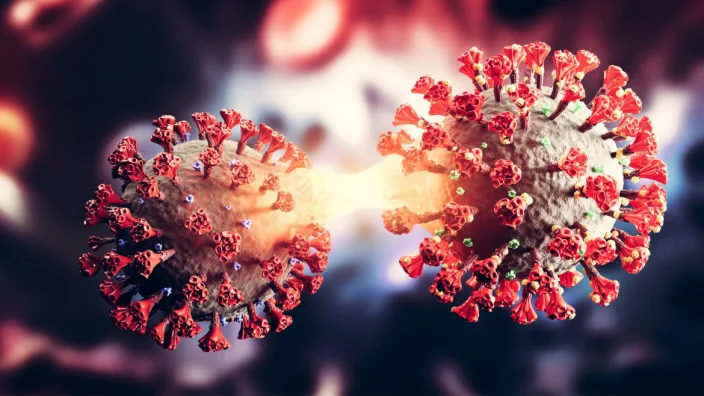
Omicron raised alarms in health agencies all over the world in late November after officials in South Africa reported the first cases. Compared to older lineages, Omicron features around 50 key mutations, some 30 of which are on the spike protein that helps the virus to grab onto our cells.
Some of the mutations are associated with a virus’s ability to dodge antibodies and thus partially evade vaccines. Others are associated with higher transmissibility. The lineage’s genetic makeup pointed to a huge spike in infections in the unvaccinated as well as an increase in milder “breakthrough” infections in the vaccinated.
That’s exactly what happened. Health officials registered more than 10 million new COVID cases the first week of January. That’s nearly double the previous worst week for new infections, back in May. Around 3 million of those infections were in the United States, where Omicron coincided with the Thanksgiving, Christmas, and New Year holidays and associated traveling and family gatherings.
But mercifully, deaths haven’t increased as much as cases have. Worldwide, there were 43,000 COVID deaths the first week of January—fewer than 10,000 of them in the U.S. While deaths tend to lag infections by a couple weeks, Omicron has been dominant long enough that it’s increasingly evident there’s been what statisticians call a “decoupling” of cases and fatalities.
“We can say we dodged a bullet in that Omicron does not appear to cause as serious of a disease,” Stephanie James, the head of a COVID testing lab at Regis University in Colorado, told The Daily Beast. She stressed that data is still being gathered, so we can’t be certain yet that the apparent decoupling is real.
Assuming the decoupling is happening, experts attribute it to two factors. First, Omicron tends to infect the throat without necessarily descending to the lungs, where the potential for lasting or fatal damage is much, much higher. Second, by now, countries have administered nearly 9.3 billion doses of vaccine—enough for a majority of the world’s population to have received at least one dose.
In the United States, 73 percent of people have gotten at least one dose. Sixty-two percent have gotten two doses of the best mRNA vaccines. A third have received a booster dose.
Yes, Omicron has some ability to evade antibodies, meaning the vaccines are somewhat less effective against this lineage than they are against Delta and other older lineages. But even when a vaccine doesn’t prevent an infection, it usually greatly reduces its severity.
For many vaccinated people who’ve caught Omicron, the resulting COVID infection is mild. “A common cold or some sniffles in a fully vaxxed and boosted healthy individual,” is how Eric Bortz, a University of Alaska-Anchorage virologist and public health expert, described it to The Daily Beast.
All that is to say, Omicron could have been a lot worse. Viruses evolve to survive. That can mean greater transmissibility, antibody-evasion or more serious infection. Omicron mutated for the former two. There’s a chance some future Sigma or Upsilon lineage could do all three.
When it comes to viral mutations, “extreme events can occur at a non-negligible rate, or probability, and can lead to large consequences,” Michael said. Imagine a lineage that’s as transmissible as Omicron but also attacks the lungs like Delta tends to do. Now imagine that this hypothetical lineage is even more adept than Omicron at evading the vaccines.
That would be the nightmare lineage. And it’s entirely conceivable it’s in our future. There are enough vaccine holdouts, such as the roughly 50 million Americans who say they’ll never get jabbed, that the SARS-CoV-2 pathogen should have ample opportunities for mutation.
“As long as we have unvaccinated people in this country—and across the globe—there is the potential for new and possibly more concerning viral variants to arise,” Aimee Bernard, a University of Colorado immunologist, told The Daily Beast.
Worse, this ongoing viral evolution is happening against a backdrop of waning immunity. Antibodies, whether vaccine-induced or naturally occurring from past infection, fade over time. It’s not for no reason that health agencies in many countries urge booster doses just three months after initial vaccination. The U.S. Centers for Disease Control and Prevention is an outlier, and recommends people get boosted after five months.
A lineage much worse than Omicron could evolve at the same time that antibodies wane in billions of people all over the world. That’s why many experts believe the COVID vaccines will end up being annual or even semi-annual jabs. You’ll need a fourth jab, a fifth jab, a sixth jab, et cetera, forever.
Israel, a world leader in global health, is already turning that expectation into policy. Citing multiple studies that showed a big boost in antibodies with an additional dose of mRNA and no safety concerns, the country’s health ministry this week began offering a fourth dose to anyone over the age of 60, who tend to be more vulnerable to COVID than younger people.
That should be the standard everywhere, Ali Mokdad, a professor of health metrics sciences at the University of Washington Institute for Health, told The Daily Beast. “Scientifically, they’re right,” he said of the Israeli health officials.
If there’s a downside, it’s that there are still a few poorer countries—in Africa, mostly—where many people still struggle to get access to any vaccine, let alone boosters and fourth doses. If and when other richer countries follow Israel’s lead and begin offering additional jabs, there’s some risk of even greater inequity in global vaccine distribution.
“The downside is for the rest of the world,” Mokdad said. “I’m waiting to get my first dose and you guys are getting a fourth?”
The solution isn’t to deprive people of the doses they need to maintain their protection against future—and potentially more dangerous—lineages. The solution, for vaccine-producing countries, is to further boost production and double down on efforts to push vaccines out to the least privileged communities.
A sense of urgency is key. For all its rapid spread, Omicron has actually gone fairly easy on us. Sigma or Upsilon might not.
Over the past two years, historians and analysts have compared the coronavirus to the 1918 flu pandemic. Many of the mitigation practices used to combat the spread of the coronavirus, especially before the development of the vaccines, have been the same as those used in 1918 and 1919 — masks and hygiene, social distancing, ventilation, limits on gatherings (particularly indoors), quarantines, mandates, closure policies and more.
Yet, it may be that only now, in the winter of 2022, when Americans are exhausted with these mitigation methods, that a comparison to the 1918 pandemic is most apt.
The highly contagious omicron variant has rendered vaccines much less effective at preventing infections, thus producing skyrocketing caseloads. And that creates a direct parallel with the fall of 1918, which provides lessons for making January as painless as possible.
In February and March 1918, an infectious flu emerged. It spread from Kansas, through World War I troop and material transports, filling military post hospitals and traveling across the Atlantic and around the world within six months. Cramped quarters and wartime transport and industry generated optimal conditions for the flu to spread, and so, too, did the worldwide nature of commerce and connection. But there was a silver lining: Mortality rates were very low.
In part because of press censorship of anything that might undermine the war effort, many dismissed the flu as a “three-day fever,” perhaps merely a heavy cold, or simply another case of the grippe (an old-fashioned word for the flu).
Downplaying the flu led to high infection rates, which increased the odds of mutations. And in the summer of 1918, a more infectious variant emerged. In August and September, U.S. and British intelligence officers observed outbreaks in Switzerland and northern Europe, writing home with warnings that went largely unheeded.
Unsurprisingly then, this seemingly more infectious, much more deadly variant of H1N1 traveled west across the Atlantic, producing the worst period of the pandemic in October 1918. Nearly 200,000 Americans died that month. After a superspreading Liberty Loan parade at the end of September, Philadelphia became an epicenter of the outbreak. At its peak, nearly 700 Philadelphians died per day.
Once spread had begun, mitigation methods such as closures, distancing, mask-wearing and isolating those infected couldn’t stop it, but they did save many lives and limited suffering by slowing infections and spread. The places that fared best implemented proactive restrictions early; they kept them in place until infections and hospitalizations were way down, then opened up gradually, with preparations to reimpose measures if spread returned or rates elevated, often ignoring the pleas of special interests lobbying hard for a complete reopening.
In places in the United States where officials gave in to public fatigue and lobbying to remove mitigation methods, winter surges struck. Although down from October’s highs, these surges were still usually far worse than those in the cities and regions that held steady.
In Denver, in late November 1918, an “amusement” lobby — businesses and leaders invested in keeping theaters, movie houses, pool halls and other public venues open — successfully pressured the mayor and public health officials to rescind and then revise a closure order. This, in turn, generated what the Rocky Mountain News called “almost indescribable confusion,” followed by widespread public defiance of mask and other public health prescriptions.
In San Francisco, where resistance was generally less successful than in Denver, there was significant buy-in for a second round of masking and public health mandates in early 1919 during a new surge. But opposition created an issue. An Anti-Mask League formed, and public defiance became more pronounced. Eventually anti-maskers and an improving epidemic situation combined to end the “masked” city’s second round of mask and public health mandates.
The takeaway: Fatigue and removing mitigation methods made things worse. Public officials needed to safeguard the public good, even if that meant unpopular moves.
The flu burned through vulnerable populations, but by late winter and early spring 1919, deaths and infections dropped rapidly, shifting toward an endemic moment — the flu would remain present, but less deadly and dangerous.
Overall, nearly 675,000 Americans died during the 1918-19 flu pandemic, the majority during the second wave in the autumn of 1918. That was 1 in roughly 152 Americans (with a case fatality rate of about 2.5 percent). Worldwide estimates differ, but on the order of 50 million probably died in the flu pandemic.
In 2022, we have far greater biomedical and technological capacity enabling us to sequence mutations, understand the physics of aerosolization and develop vaccines at a rapid pace. We also have a far greater public health infrastructure than existed in 1918 and 1919. Even so, it remains incredibly hard to stop infectious diseases, particularly those transmitted by air. This is complicated further because many of those infected with the coronavirus are asymptomatic. And our world is even more interconnected than in 1918.
That is why, given the contagiousness of omicron, the lessons of the past are even more important today than they were a year ago. The new surge threatens to overwhelm our public health infrastructure, which is struggling after almost two years of fighting the pandemic. Hospitals are experiencing staff shortages (like in fall 1918). Testing remains problematic.
And ominously, as in the fall of 1918, Americans fatigued by restrictions and a seemingly endless pandemic are increasingly balking at following the guidance of public health professionals or questioning why their edicts have changed from earlier in the pandemic. They are taking actions that, at the very least, put more vulnerable people and the system as a whole at risk — often egged on by politicians and media figures downplaying the severity of the moment.
Public health officials also may be repeating the mistakes of the past. Conjuring echoes of Denver in late 1918, under pressure to prioritize keeping society open rather than focusing on limiting spread, the Centers for Disease Control and Prevention changed its isolation recommendations in late December. The new guidelines halved isolation time and do not require a negative test to reenter work or social gatherings.
Thankfully, we have an enormous advantage over 1918 that offers hope. Whereas efforts to develop a flu vaccine a century ago failed, the coronavirus vaccines developed in 2020 largely prevent severe illness or death from omicron, and the companies and researchers that produced them expect a booster shot tailored to omicron sometime in the winter or spring. So, too, we have antivirals and new treatments that are just becoming available, though in insufficient quantities for now.
Those lifesaving advantages, however, can only help as much as Americans embrace them. Only by getting vaccinated, including with booster shots, can Americans prevent the health-care system from being overwhelmed. But the vaccination rate in the country remains a relatively paltry 62 percent, and only a scant 1 in 5 have received a booster shot. And as in 1918, some of the choice rests with public officials. Though restrictions may not be popular, officials can reimpose them — offering public support where necessary to those for whom compliance would create hardship — and incentivize and mandate vaccines, taking advantage of our greater medical technology.
As the flu waned in 1919, one Portland, Ore., health official reflected that “the biggest thing we have had to fight in the influenza epidemic has been apathy, or perhaps the careless selfishness of the public.”
The same remains true today.
Vaccines, new treatments and century-old mitigation strategies such as masks, distancing and limits on gatherings give us a pathway to prevent the first six weeks of 2022 from being like the fall of 1918. And encouraging news about the severity of omicron provides real optimism that an endemic future — in which the coronavirus remains but poses far less of a threat — is near. The question is whether we get there with a maximum of pain or a minimum. The choice is ours.
Job losses from the COVID-19 pandemic are the highest since the Great Depression. A year and a half later, most Americans who lost their health insurance along with their job remain uninsured.
Most Americans who lost their jobs and health insurance more than a year ago remain uninsured.
Over 1,200 Americans who are still unemployed due to COVID-19 were surveyed by AffordableHealthInsurance.com. At least four out of five in all participants don’t have insurance coverage.
To be exact, 56% of Americans who remain unemployed since being laid off due to the COVID-19 pandemic lost their health insurance along with their job. In addition, 23% of workers did not have employer-provided health insurance prior to losing their jobs.
Even before the pandemic, small businesses struggled to absorb the cost of providing health insurance to their employees, said health insurance advisor and nursing consultant Tammy Burns in the Affordable Health Insurance study.
“Companies have cut costs by going with high-deductible plans and sharing less of the cost towards the insurance,” Burns said. “This makes it cheaper for employees to get their own health insurance through the Affordable Care Act (ACA) marketplace. At larger companies, health care costs are growing faster than worker wages, so a large amount of an employee’s check goes to insurance. Therefore, many workers opt out because they can’t afford it.”
Majority of Those Who Lost Health Insurance Still Lack Coverage
Of the 56% of unemployed Americans who lost their health insurance along with their job, 81% are still uninsured.
This lack of coverage is impacting certain groups more than others. There are also several contributing factors to why the number of unemployed Americans without health insurance remains high.
These factors are:
Men more likely to remain uninsured than women
When broken down by gender, men are more likely than women to have lost their health insurance when they lost their jobs at 66% and 44%, respectively. However, women are twice as likely as men to have not had health insurance in the first place at 31% and 16%, respectively.
Currently, men are slightly more likely to still be uninsured. Eighty-four percent of male survey respondents do not currently have health insurance, compared to 75% of women.
Majority of unemployed Millennials, Gen Xers still uninsured
Our survey also found that certain age groups are more likely than others to still be uninsured after a pandemic-related job loss.
Eighty-six percent of individuals ages 35 to 44, and 84% of both 25 to 34 year-olds and 45 to 54 year-olds remain without health insurance after being laid off. Comparatively, 67% of unemployed individuals 18 to 24, and 58% of those older than 55 are still uninsured.
Americans ages 25 to 44 are also the age group most likely to have lost their health insurance when they were let go from their jobs (66%).
Inability to Afford Private Insurance The Top Reason to Remain Uninsured
The high cost of individual insurance is the number one reason Americans still unemployed from the pandemic remain uninsured.
Sixty-seven percent of those uninsured can’t afford private health insurance. Eleven percent of people who still lack health insurance say they did not qualify for government-funded health insurance, despite the fact that a number of states expanded access to Medicaid during the pandemic.
A lack of understanding about how the ACA marketplace works may also play a role in why uninsured Americans are not pursuing all possible avenues to get health insurance.
“People are scared of the ACA because it involves a lot of personal information, like taxes,” Burns said. “I have found that many people are afraid it is ‘the government being in my business.’ There is a lack of knowledge about how helpful and affordable the ACA is now. There needs to be better education about this program.”
One in five uninsured Americans choose not to have health insurance
The survey also found 20% of unemployed Americans who are uninsured choose to forgo health insurance altogether.
This is particularly true for men, 22% of whom are choosing not to have health insurance, compared to 15% of women.
Younger adults are also more likely than older Americans to opt out of health insurance if they are unemployed. Twenty-five percent of 25 to 34 year-olds, and 20% of 25 to 34 year-olds choose not to have health insurance.
Medication, Routine Checkups Skipped Due to Lack of Insurance
A lack of insurance has serious short- and long-term implications for individuals’ health and well-being. The biggest impact: 58% of uninsured individuals are no longer getting routine care, which could hinder their ability to identify more serious underlying issues.
Other impacts include no longer taking doctor-prescribed medication (56%); delaying planned medical procedures (46%); not seeking treatment for chronic issues (44%), and no longer receiving mental health treatment (41%).
Three-quarters of older Americans not getting regular check-ups
Our survey also found that those at greater risk for medical issues, based on age, are the most likely to be skipping their routine check-ups. Three-fourths of uninsured individuals over the age of 55 (76%) say they are not going for regular doctor visits because of their lack of insurance, the highest percentage of any age group.
Meanwhile, 64% of individuals 35 to 44 are not taking doctor-prescribed medication, which can have both short- and long-term negative effects.
Majority of Uninsured Americans “Very likely” to be Financially Devastated by Medical Emergency
Given that so many individuals are already hard-pressed to afford health insurance, it’s not surprising that many of them will also be in a dangerous place financially if there is a medical emergency.
Fifty-nine percent of uninsured people are “very likely” to be financially devastated by a medical emergency, while another quarter are “somewhat likely” to face financial ruin in the event of a medical emergency.
On the spectrum from active outbreak to eradication, control is the most likely path forward for COVID-19 in the U.S., NIAID Director Anthony Fauci, MD, said during a National Press Club briefing today.
Fauci’s words served as a reality check for those holding out hope that COVID-19 one day might be as rare as measles or polio in America.
“We’re never going to eradicate this,” he said. “We’ve only eradicated one virus, and that’s smallpox. Elimination may be too aspirational, because we’ve only done that with infections for which we’ve had a massive vaccination campaign like polio and measles. Even though we haven’t eradicated [those viruses] from the planet, we have no cases, with few exceptions, in the U.S.”
Fauci said the country should focus on control — a level of infection “that isn’t zero, but that with the combination of the vast majority of the population vaccinated and boosted, together with those who recovered from infection and also are hopefully boosted, that we will get a level of control that will be non-interfering with our lives, our economy, and the kinds of things we would do, namely to get back to some degree of normality.”
“It’s not going to be eradication, and it’s likely not going to be elimination,” he said again later in the briefing. “It’s going to be a low, low, low level of infection that really doesn’t interfere with our way of life, our economy, our ability to move around in society, our ability to do things in closed indoor spaces.”
Fauci said the only way to achieve this will be with vaccinations, boosters, and mitigation strategies such as wearing masks in congregate settings.
“Over time, we feel confident we will get this under control,” he said. While he said he “hopes” this comes in the “next several months,” he cautioned that he “never predict[s], because you never get it right. Sure enough, someone will come back and say, ‘You said this in December and you were wrong.'”
In terms of boosters, Fauci said it’s possible that a third shot — “and maybe an additional one” — will be enough to provide durable immunity, but that “we’ll just have to wait and see. We don’t know yet.”
Kids under age 5 who have yet to be vaccinated will have to wait a few more months to get their shots, he added. While the lower, 3 μg dose of the Pfizer vaccine looked sufficient for children ages 6 months up to 2 years, that dose was not sufficient for those ages 2 to 5, he said.
“The company decided that they believe this is really a three-dose vaccine, and there’s no doubt if you give three doses you’re going to get an effective and safe vaccine,” he said. “But they haven’t proven it yet, so that’s the delay.”
“I can guarantee you it’s going to be effective,” Fauci added.
Data aren’t expected until the end of the first quarter of 2022, he said, meaning vaccines for this pediatric population likely won’t be available until “a few months into 2022.”
Top government health officials on Sunday warned that the United States will probably see record numbers of coronavirus cases and hospitalizations as the omicron variant spreads rapidly and forces Americans to again grapple with the dangers of a pandemic that has upended life around the globe.
“Unfortunately, I think that that is going to happen. We are going to see a significant stress in some regions of the country on the hospital system, particularly in those areas where you have a low level of vaccination,” Anthony S. Fauci, the nation’s leading infectious-disease specialist, said on CNN’s “State of the Union” when asked whether the United States could see record numbers of cases, hospitalizations and deaths.
Fauci described the variant as “extraordinary” in its transmissibility, with a doubling time of two to three days. It accounts for 50 percent of coronavirus cases in parts of the country, which meant it would almost certainly take over as the dominant variant in the United States, he added.
“It is going to be a tough few weeks, months, as we get deeper into the winter,” Fauci said.
On CBS News’s “Face the Nation,” Francis Collins, director of the National Institutes of Health, said that cases will rise steeply over the next couple of weeks and that the country could soon see 1 million new cases a day tied to the omicron variant, dramatically exceeding the record of about 250,000 new cases per day set in January.
“The big question is, are those million cases going to be sick enough to need health care and especially hospitalization?” Collins said. “We’re just holding our breath to see how severe this will be.”
Fauci and Collins painted a stark but realistic picture of the winter ahead, on the heels of a week of coronavirus-related setbacks. Coronavirus cases, hospitalizations and deaths rose across much of the country last week, with officials warning of a surge just as millions of Americans — already weary after nearly two years of the pandemic — are expected to travel for Christmas and New Year’s. On Friday, Pfizer and BioNTech announced that coronavirus vaccines for children younger than 5 would be pushed back further into 2022, as the companies modified their trials to include a third dose. On Sunday, New York, one of the country’s early epicenters in the pandemic, reported 22,478 cases.
Health officials have continued to urge the unvaccinated to get their shots and those who have received only two doses of either the Pfizer or Moderna mRNA vaccines to get booster doses. Vaccines cannot be the only layer of protection against the omicron variant, Fauci said, but defeating the pandemic would not be possible without them.
There are still safe ways for vaccinated people to get together for the holidays, including wearing a mask while traveling, testing beforehand and knowing the vaccination status of everyone present at indoor celebrations, Fauci said on “Face the Nation.”
“If you do these things, I do believe that you can feel quite comfortable with a family setting,” he said. “Nothing is 100 percent risk-free, but I think if you do the things that I just mentioned, you’d actually mitigate that risk enough to feel comfortable about being able to enjoy the holiday.”
Collins stopped short of urging people to cancel holiday plans but said travel will be risky even for vaccinated people.
“This virus is going to be all around us,” he said. “I’m not going to say you shouldn’t travel, but you should do so very carefully. … People are going, ‘I’m so sick of hearing this,’ and I am, too. But the virus is not sick of us, and it is still out there looking for us, and we’ve got to double down on these things if we’re going to get through the next few months.”
Doctors, nurses and others are warning that the nation’s health system continues to be strained by an unending stream of coronavirus cases. Confirmed U.S. coronavirus infections have surpassed more than 128,000 per day and confirmed virus deaths are near 1,300 per day, according to The Washington Post’s rolling seven-day average.
“For people trained to save lives, this moment is frustrating, exhausting and heartbreaking,” the American Hospital Association, the American Medical Association and the American Nurses Association said in a joint statement on Friday, urging more Americans to get booster shots.
Public health experts are bracing for a winter surge of cases driven by the omicron variant, which can evade some protection conferred by vaccinations and prior infections, as well as cases linked to the delta variant. Officials caution that they are still relying on preliminary data about the omicron variant’s severity compared with earlier forms of the virus.
President Biden plans to address the nation Tuesday on the status of the country’s fight against the virus, the White House said Saturday.
“We are prepared for the rising case levels,” White House press secretary Jen Psaki wrote on Twitter, adding that Biden “will detail how we will respond to this challenge. He will remind Americans that they can protect themselves from severe illness from COVID-19 by getting vaccinated and getting their booster shot when they are eligible.”
The speech, coming just before Christmas and New Year’s Day, underlines Biden’s struggle to contain the pandemic nearly a year into office. On top of the emergence of new variants and attendant challenges, the administration has at times faced criticism for what some have described as mixed signals.
Biden won high marks from the public during the first half of the year as cases declined, the country opened up from shutdowns and vaccines became widely available. But the past few months have been more difficult. After he gave a speech on July 4 saying the country was “closer than ever to declaring our independence from a deadly virus,” the situation started changing. Case rates increased as the delta variant gained a foothold and many Americans refused to get vaccinated.
And despite Biden’s promise that at-home rapid tests would become a widely available tool to fight the coronavirus, the tests remain hard to find in many parts of the country and are more expensive than in some other places across the globe.
Fauci conceded Sunday that the administration needed to do better on increasing the availability of at-home coronavirus rapid tests, though he emphasized that the country was in a much better place than it was a year ago, with 200 million to 500 million tests available per month, many of them free.
“We’re going in the right direction,” he said on CNN. “We really need to flood the system with testing. We need to have tests available for anyone who wants them, particularly when we’re in a situation right now where people are going to be gathering.”
The omicron variant also has challenged the nation’s coronavirus medicine cabinet, with evidence that mutations will wipe out or weaken the effectiveness of treatments that can reduce the virus’s severity and keep people out of hospitals. As a result, the Biden administration around Thanksgiving paused distribution of sotrovimab, the one monoclonal antibody that remains effective against the omicron variant, with senior officials such as David Kessler calculating that the drug should be maximally deployed when the variant becomes more prevalent.
By Thursday, administration officials decided to resume shipments of the drug, amid indicators that the omicron variant was spreading faster in states such as New York and Washington than data published by the Centers for Disease Control and Preventionearlier in the week indicated, said two officials with knowledge of the deliberations.
“Shipment of product will begin soon, and jurisdictions will see product arrive as early as Tuesday, December 21, 2021,” the federal health agency said in a statement on Friday, announcing that about 55,000 doses of sotrovimab would soon go out.
Doctors said they were desperate for treatments like sotrovimab as emergency rooms begin to crowd and case numbers soar.
“Too slow! We are already seeing widespread omicron,” texted one infectious-disease doctor at a large New York City hospital, who estimated that at least 50 percent of patients had contracted the variant and requested confidentiality to discuss patient care. “It’s a lot of hospitalizations that could have potentially [been] averted because of slow response.”
Fauci said Sunday that he expected it to be months before antiviral drugs can be mass-produced and available to anyone who needs them. While he did not foresee the kind of shutdowns that were put in place in the early days of the pandemic, Fauci also noted that it would be difficult to keep the virus under control when there remained “about 50 million people in the country who are eligible to be vaccinated who are not vaccinated.”
Similarly, several governors on Sunday shied away from the possibility of implementing more shutdowns to fight the spread of the new variant. Maryland Gov. Larry Hogan (R) said on “Fox News Sunday” that his state, which has seen a 150 percent increase in hospitalizations over the past two weeks, was not considering shutdowns and instead was putting more resources into testing and encouraging vaccinations and boosters. New Jersey Gov. Phil Murphy (D) said on the same show that shutdowns remained “on the table” but that he didn’t think such a move was likely because a high percentage of the state’s population was vaccinated.
“That’s certainly where it’s headed,” Polis said on NBC News’s “Meet the Press.” “I wish they’d stop talking about [the third shot] as a booster. It really is a three-dose vaccine.”
The big picture: The data showed nearly a six-fold increase in Omicron’s share of COVID-19 infections in just one week.
The variant was only detected in the U.S. a few weeks ago. Still, the strain has spread rapidly throughout the country and threatens to overturn the new normal.
What they’re saying: “These numbers are stark, but they’re not surprising,” said Rochelle Walensky, the CDC’s director, adding that the growing infections reflect what has been seen in other countries.
While the Delta variant still drives up a lot of new infections, Walensky told AP she anticipates “that over time that Delta will be crowded out by Omicron.”
What’s next: President Biden on Tuesday will deliver a speech outlining new steps the administration will take to address the rapid spread of the new variant.






 HENRY KOTULA