How important is the ACA for people who lose their jobs?

https://us3.campaign-archive.com/?u=6ab1fc39a0b1b15521551487c&id=6f9ac3fd86&e=ad91541e82

https://www.nejm.org/doi/full/10.1056/NEJMp2023312

This week’s contributor is Larry Levitt, the Executive Vice President for Health Policy at the Kaiser Family Foundation.

For the first time in an economic downturn, the Affordable Care Act (ACA) exists as a health care safety net for people losing their jobs and employer-provided health insurance. A new study provides some clues as to how well the health care law works for people who lose their jobs and insurance.

The study – by Sumit Agarwal and Benjamin Sommers, published in the New England Journal of Medicine – compares people who lost their jobs before and after the ACA went into effect in 2014 to see if there is a difference in how many people retained health insurance. During the pre-ACA period (2011-2013), there was about a 5% increase in the uninsured rate for people following a job loss. After the ACA went into effect (2014-2016), no such increase occurred. Instead, Medicaid and the marketplaces saw large increases in utilization.

With millions of Americans losing their jobs during the pandemic, the number of people without health coverage has undoubtedly risen. However, by how much is unknown, since we don’t track insurance coverage in real-time like we do employment. Many who have lost jobs may not have had employer-sponsored insurance in the first place, if they worked an industry like food service or retail. And the vast majority of people who are unemployed are classified as on temporary layoff, with employers who may be continuing health benefits for their furloughed workers, at least for now. However, the share of unemployed workers who have permanently lost their jobs is growing.

If the economic crisis persists, the number of people losing job-based health insurance will climb, making the ACA’s role as a safety net more relevant than ever.


Poll: Half of Americans worried about medical bankruptcy

https://www.upi.com/Top_News/US/2020/09/01/Poll-Half-of-Americans-worried-about-medical-bankruptcy/5561598958953/?fbclid=IwAR328ND-qsLKiHR-ogO7migi7sIwkIQU8W2yFpKg_216MhyNwGBNfEpByVY

New Poll: Half in US Fear Bankruptcy From Major Health Event | Common  Dreams News

About half of Americans in the COVID-19 era fear a health-related incident could drive them into bankruptcy, according to a new survey Tuesday by Gallup and West Health.

Gallup and West Health said 50% of respondents said they’re concerned about medical bankruptcy — a 5% increase from early this year, before the pandemic. That concern rose 12 points among U.S. adults between 18 and 29 and non-White Americans.

“Dovetailing with the new health-related concerns brought on by the coronavirus outbreak is the economic catastrophe that — despite the recouping of millions of jobs since May — persists in form of 28 million people receiving some form of unemployment aid at the end of July,” Gallup wrote.

“As such, Americans’ concerns about a major health event putting them in bankruptcy, while substantial in early 2019, are likely only intensified today because of the pandemic.

The study found that 15% of respondents said at least one person in their home currently has medical debt that will not be repaid in the next 12 months.

“Those in households earning less than $40,000 per year are more than four times as likely as those in households earning $100,000 or more to be carrying long-term medical debt (28% vs. 6%, respectively),” Gallup added. “The rate is also about twice as high among self-identified political independents (18%) and Democrats(16%) as among Republicans (8%).”

More than a quarter of adults said they’d need to borrow to pay a medical bill of just $500. Many others said they would have to go into debt.

Gallup polled more than 1,000 U.S. adults for the survey, which has a margin of error of 4 points.


C.D.C. Tells States How to Prepare for Covid-19 Vaccine by Early November

As President Trump pushes the possibility of a vaccine this year, the C.D.C. has outlined technical scenarios to state public health officials for an unidentified Vaccine A and Vaccine B.

The Centers for Disease Control and Prevention has notified public health officials in all 50 states and five large cities to prepare to distribute a coronavirus vaccine to health care workers and other high-risk groups as soon as late October or early November.

The new C.D.C. guidance is the latest sign of an accelerating race for a vaccine to ease a pandemic that has killed more than 184,000 Americans. The documents were sent out on the same day that President Trump told the nation in his speech to the Republican National Convention that a vaccine might arrive before the end of the year.

Over the past week, both Dr. Anthony S. Fauci, the country’s top infectious disease expert, and Dr. Stephen Hahn, who heads the Food and Drug Administration, have said in interviews with news organizations that a vaccine may be available for certain groups before clinical trials have been completed, if the data is overwhelmingly positive.

Public health experts agree that agencies at all levels of government should urgently prepare for what will eventually be a vast, complex effort to vaccinate hundreds of millions of Americans. But the possibility of a rollout in late October or early November has heightened concerns that the Trump administration is seeking to rush the distribution of a vaccine — or simply to hype that one is possible — before Election Day on Nov. 3.

For an administration that has struggled with the logistical challenges of containing the coronavirus, the distribution of millions of vaccines that must be stored in subzero temperatures and provided first to high-risk groups through America’s flawed, fragmented health care system would be a daunting challenge. Even the C.D.C.’s guidance acknowledged that its plan was hypothetical and based on the need to immediately begin organizing the gigantic effort that would be required if the F.D.A. were to allow the use of a vaccine or two this year.

The C.D.C. plans lay out technical specifications for two candidates described as Vaccine A and Vaccine B, including requirements for shipping, mixing, storage and administration. The details seem to match the products developed by Pfizer and Moderna, which are the furthest along in late-stage clinical trials. On Aug. 20, Pfizer said it was “on track” for seeking government review “as early as October 2020.”

Credit…

“This timeline of the initial deployment at the end of October is deeply worrisome for the politicization of public health and the potential safety ramifications,” said Saskia Popescu, an infection prevention epidemiologist based in Arizona. “It’s hard not to see this as a push for a pre-election vaccine.”

Three documents were sent to public health officials in all states and territories as well as officials in New York, Chicago, Philadelphia, Houston and San Antonio on Aug. 27. They outlined detailed scenarios for distributing two unidentified vaccine candidates, each requiring two doses a few weeks apart, at hospitals, mobile clinics and other facilities offering easy access to the first targeted recipients.

The guidance noted that health care professionals, including long-term care employees, would be among the first to receive the product, along with other essential workers and national security employees. People 65 or older, as well as Native Americans and those who are from “racial and ethnic minority populations” or incarcerated — all communities known to be at greater risk of contracting the virus and experiencing severe disease — were also prioritized in the documents.

That’s a positive development, “so it doesn’t just all wind up in high-income, affluent suburbs,” said Dr. Cedric Dark, an emergency medicine physician at Baylor College of Medicine in Texas.

The C.D.C. noted in its guidance that “limited Covid-19 vaccine doses may be available by early November 2020.” The documents were dispatched the same day that Dr. Robert Redfield, director of the C.D.C., sent a letter to governors asking them to prepare vaccine distribution sites by Nov. 1, as McClatchy reported.

The agency also said its plans were as yet hypothetical, noting, “The Covid-19 vaccine landscape is evolving and uncertain, and these scenarios may evolve as more information is available.” A C.D.C. spokeswoman confirmed that the documents were sent but declined to comment further.

Many of the details listed for the two vaccines — including required storage temperature, the number of days needed between doses, and the type of medical center that can accommodate the product’s storage — match what Pfizer and Moderna have said about their products, which are based on so-called mRNA technology. Neither company responded to requests for comment.

The scenarios, which assume that the two vaccines will demonstrate sufficient safety and effectiveness for an emergency authorization from the F.D.A. by the end of October, noted that Vaccine A, which seems to match Pfizer’s, would have about two million doses ready within this time frame, and that Vaccine B, whose description matches Moderna’s, would have about one million doses ready, with tens of millions of doses of each vaccine ready by the end of the year. Although it’s possible that some promising preliminary data may emerge by the end of October, experts are skeptical.

“The timeline that’s reported seems a bit ambitious to me,” Dr. Dark said. “October’s like 30 days away.”

Trials that test a vaccine’s effectiveness can take years to yield reliable results. It’s possible to draw conclusions sooner “if there is an overwhelming effect” in which vaccinated people appear to be far better protected from disease, said Padmini Pillai, a vaccine researcher and immunologist at M.I.T.

But there can be significant risks in approving a vaccine for broad use in the public before Phase 3 clinical trials involving tens of thousand of participants are completed. Rare but dangerous side effects may only surface over time, after such large numbers of people have received the vaccine.

And data gathered early in a trial might not hold true months down the line. Researchers also need time to test large numbers of people from a variety of backgrounds to determine how well the vaccine works in different populations — including the vulnerable communities identified in the guidelines.

Should any of these snags occur, Dr. Pillai said, “all of this together could diminish public trust in the vaccine.”

James S. Blumenstocksenior vice president of pandemic response and recovery at the Association of State and Territorial Health Officials, confirmed that the three C.D.C. documents were sent to all state and territorial health departments last week. “It is now the time to enhance organizational structure and involve all partners in this planning process going forward,” he said.

Lisa Stromme, a spokeswoman for the Washington State Department of Health, said that her state’s health officials were still at “a very early stage in a planning process,” but were already working toward developing infrastructure that would accommodate the assumptions laid out by the C.D.C.

The C.D.C. documents said that public health administrators should review lessons learned from the 2009 H1N1 pandemic vaccination campaign, which did not have enough doses at the beginning to meet demand.

“It’s good to have a plan out for hospitals and health care systems to prepare” for a potential rollout, said Dr. Taison Bell, a pulmonary and critical care physician at the University of Virginia. But Dr. Bell added that he was concerned that the timeline outlined in the documents “is incredibly ambitious and makes me worry that the administration will prioritize this arbitrary deadline rather than maintaining diligence with following the science.”

The technical comparison of Vaccine A and Vaccine B has some echoes of what was discussed at an Aug. 26 meeting of the Advisory Committee on Immunization Practices of the C.D.C. At the meeting, Dr. Kathleen Dooling, a C.D.C. medical officer, laid out three scenarios: Vaccine A, or the Pfizer vaccine, is approved, Vaccine B, the Moderna vaccine, is approved, or both. The requirement that Pfizer’s vaccine be stored at minus 70 degrees Celsius would mean that it couldn’t be administered at most small sites, she said. The C.D.C. documents noted that orders of Vaccine A would go “to large administration sites only.” The Moderna vaccine requires storage at minus 20 degrees Celsius.

The C.D.C. documents said the vaccine would be free to patients, but that providers might not be reimbursed for administrative costs if the vaccine was given an emergency authorization, rather than a standard approval.

Experts worry that the process is unlikely to go off without a hitch, given the last-minute scramble and the mixed messaging so far. “I think distribution is going to be very tricky for the vaccine, particularly if there is a cold storage requirement,” Dr. Bell said.

There are also likely to be challenges administering both doses of the proposed vaccines, which must be given weeks apart, Dr. Dark said. “How are you going to make sure people get both?”


ANALYSIS: ADMINISTRATION’S CORONAVIRUS ADVICE IS SECRET, FRAGMENTED AND CONTRADICTORY

Analysis: Trump administration’s coronavirus advice is secret, fragmented and contradictory

Analysis: Trump administration's coronavirus advice is secret, fragmented  and contradictory – Center for Public Integrity

ANALYSIS: TRUMP ADMINISTRATION’S CORONAVIRUS ADVICE IS SECRET, FRAGMENTED AND CONTRADICTORY

Dr. Deborah Birx speaks to reporters in the rotunda of the State Capitol in Lincoln, Neb., Aug. 14, 2020, after meeting with Gov. Pete Ricketts and community and state health officials. (AP Photo/Nati Harnik)

Private calls and unpublished reports leave many Americans and local officials in the dark.


INTRODUCTION

This is a news analysis from the Center for Public Integrity.

From behind a podium and a black mask, Tulsa mayor G.T. Bynum faced the press. It was late July, and one percent of his city had tested positive for COVID-19 since the beginning of the pandemic.


A reporter had a question: What did Bynum have to say about the newly leaked White House Coronavirus Task Force document that recommended Tulsa close bars and limit gatherings to 10 people?

The “alleged White House document” was “never officially presented to us … by either the federal government or the state government,” the mayor said. But he was familiar with the document’s recommendations, having read them online. “All of that remains very much on the table.” 

Fast-forward a month, at a press conference that looked exactly like the last, and Bynum still hadn’t received any of the weekly reports from the White House. “It was news to me that there had been eight different reports. I only knew about the one that was leaked to the media,” he said. “That’s all data that, of course, we would like to know.”

Indeed, the White House reports — chock full of local data and recommendations — would be useful for many city leaders, many of whom still don’t know what percentage of coronavirus tests in their metro areas are positive. But Bynum and others didn’t have that information. The White House was sending each state’s report directly to its governor and a select group of other officials instead of distributing the documents widely or posting them publicly.

The nation’s coronavirus response must be “locally executed, state managed, federally supported,” White House officials have said repeatedly. In fact, much of their public health advice has been secret, segmented and inconsistent. Federal guidance isn’t always reaching the local officials it’s meant to support. And scattershot messages mean that average citizens weighing visits to grandparents or countless other daily risks have limited  — and sometimes conflicting — information from the officials they are expected to trust.


THE SUMMER OF SECRET WARNINGS

In late June, the White House Coronavirus Task Force began sending reports to governors showing how their states were faring in the pandemic. Dr. Deborah Birx, a leader of the task force, held the documents aloft at a press conference July 8, but they weren’t distributed to reporters. Birx said several states were in the coronavirus “red zone — with high numbers of cases — and should take special precautions, but Vice President Mike Pence delivered the primary message of the press conference: Reopen schools.

Later that month, the Center for Public Integrity obtained a copy of the compiled report for all 50 states and published it, revealing that 18 states were in the red zone. The next morning, presidential adviser Kellyanne Conway suggested Public Integrity, a  30-year-old nonprofit, nonpartisan newsroom, had nefarious motives for disclosing public information: “I don’t know about that particular document, and respectfully the Center for Public Integrity is an outside organization that I’m sure doesn’t support the president’s election,” she told reporters.

A spokesman for Pence, Devin O’Malley, later acknowledged the document’s authenticity. But the White House still didn’t release the reports and stayed mum on why it was keeping them secret. Weeks later, White House spokesman Judd Deere sent an email to Public Integrity that didn’t quite answer the question: “The White House Coronavirus Task Force is providing tailored recommendations weekly to every governor and health commissioner for their states and counties,” he wrote. “Local leaders are best positioned to make on-the-ground decisions for their communities … The United States will not be shut down again.”

Meanwhile, Birx hit the road, zigzagging across the country to meet with governors in person and privately urge some of them to ratchet up virus precautions. On closed-to-the-press conference calls with state and local officials, Birx warned individual cities that they should take “aggressive action” to curb the coronavirus, according to recordings obtained by Public Integrity.

But officials from those cities weren’t always on the calls: Baltimore and Cleveland leaders missed a call in which Birx pinpointed them. And some of them weren’t getting the reports she was referencing. In late August, the most recent White House report the Arkansas Department of Health had was three weeks old. 

Public health experts say the reports should be public. “This is a pandemic,” Harvard epidemiologist Bill Hanage told Public Integrity in July. “You cannot hide it under the carpet.”

Dr. David Rubin, who has provided epidemiological modeling to the task force as director of PolicyLab at the Children’s Hospital of Philadelphia Research Institute, is also befuddled as to why the reports are secret. “I think we’d be in a lot different place today if we had national standards around certain things,” he said. But he doesn’t blame Birx or other scientists working with the White House. “They’re playing the hand that they were dealt.”


CUSTOM-MADE OR CONFUSING?

In mid-March, a 4×6” blue-and-white postcard appeared in mailboxes across the nation, emblazoned with “President Trump’s Coronavirus Guidelines for America” and both the White House and Centers for Disease Control and Prevention logos. On the back were a dozen lines of advice, including: “Even if you are young, or otherwise healthy, you are at risk and your activities can increase the risk for others.”

The postcard appeared in the days when the president, vice president, Birx and National Institute of Allergy and Infectious Diseases Director Anthony Fauci together updated the nation daily on television about the state of the coronavirus. The administration had already pressed the mute button on the CDC (though the agency posted guidance online, it wasn’t giving the regular briefings it had in past epidemics), but the White House was still attempting to send out a cohesive public health message.  

Then, as the economy cratered, Trump shifted gears to reopening and pushed responsibility for the pandemic response to the states. After decades of relying on national entities for public health advice and regulation — the CDC, the Food and Drug Administration, the surgeon general and others — America handed responsibility for infectious-disease containment to the states. 

Doing so allows governors to respond to their unique virus conditions, defenders of the administration said. The U.S. needs “a decentralized approach” said Heritage Foundation visiting fellow Doug Badger, because states have police powers to enforce lockdowns and because they are “better suited to responding to this pandemic, where there is great variation between and within states. […] There’s no one-size-fits-all policy.” Indeed, epidemics unfold at different rates in different geographies, and it makes sense to adjust advice based on whether people live close together or far apart, and how widely the virus is spreading in their communities.

But experts say that even though some public health warnings should be specific to local areas, many messages, such as the need to wear masks, should be nationally consistent. Contradictory guidance undermines trust, and the virus exploits the communities with weakest defenses. “Diseases don’t care about national or state borders,” said Jessica Malaty Rivera, Science Communication Lead at the Covid Tracking Project, a volunteer organization collecting pandemic data. “You can’t look at this in a fragmented way otherwise we’re going to continue this fragmented progress.”


“Diseases don’t care about national or state borders.”

JESSICA MALATY RIVERA, SCIENCE COMMUNICATION LEAD AT THE COVID TRACKING PROJECT


And some think the Trump administration’s advice isn’t as tailored or helpful as it should be. “For weeks, the Trump Administration has been issuing these cookie-cutter reports based on little or no review of existing regulations or conditions on the ground, while failing to pull together a national strategy for COVID-19 testing, contact tracing, and response,” Charles Boyle, a spokesman for Oregon Gov. Kate Brown, wrote in an email. “None of the recommendations in these weekly reports have been paired with the resources or the federal support to implement them.”

In addition, Trump’s desire for state leadership has been selective. After weeks of insisting on a governor-led response, in July Trump Tweeted, “SCHOOLS MUST OPEN IN THE FALL!!!” and threatened to withhold federal funding from school districts that did not open their doors. 


WHO DO YOU LISTEN TO?

Splitting public health advice into pieces means that some of those fragments don’t line up. On a private call with state and local leaders earlier this month, Birx said colleges should be testing students as they return to campus, and even be prepared to do 5,000 or 10,000 tests in one day. But the CDC hasn’t endorsed such testing because its effectiveness hasn’t been “systematically studied.”

Nowhere has the fractured advice been more evident than on the topic of how to reopen K-12 schools. The CDC in May issued guidelines, but later replaced them with a more lenient version after the president objected. After insisting schools open their doors, Trump acknowledged that some hot spots may need to delay opening. CDC director Robert Redfield said that schools should go virtual if their areas have more than 5 percent test positivity — a threshold that only 17 states and the District of Columbia met as of Aug. 26 according to a New York Times tracker. Birx has stayed noticeably quiet on the topic. The secret reports from her task force recently endorsed West Virginia’s school reopening guidelines, which say schools must switch to virtual learning if daily new cases in a county exceed 25 per 100,000 residents.

All this leaves local officials with a dizzying set of choices and advice, stuck making the decisions others don’t want blame for.

“This really stinks for local health departments,” said Lori Tremmel Freeman, CEO of the National Association of County and City Health Officials. “Everybody wants to relinquish authority to the local health department. The authority ends up coming and going depending on how hard it is to address the issue. And it just is not fair to them.”

In addition, perhaps due in part to the mixed messaging, whatever advice the White House does have isn’t always followed. In Arkansas, where the task force has recommended that bars close, they remain open. In Georgia, where the task force recommended a state mask mandate, Gov. Brian Kemp sued to block Atlanta from requiring face coverings, though he later relented. In Tennessee in July, Gov. Bill Lee ignored Birx’s suggestion that he close bars, limit indoor dining and mandate masks.

All this has meant that in the first major pandemic in a century, despite the feeble and disjointed efforts of the White House to corral them, the United States were not united, not even in the messages sent to citizens. That has some experts worried about what’s to come in the fall, when the reluctance of some to be vaccinated could mean the nation fails to reach the threshold for herd immunity that would protect everyone. Rivera, of the Covid Tracking Project, is “absolutely terrified” about that possibility; united messaging is key when trying to help people understand the scientific rigor behind a vaccine, she said. “All it takes is one rumor to completely shift public health behavior.”


HELP FROM THE FOURTH ESTATE

In Tulsa, Bynum can now see all the White House reports. That’s because Public Integrity published a recent Oklahoma report, and local journalists pressed the governor on why he hadn’t handed it out. Last week he agreed to post all of the state’s White House reports.

In other parts of the country, people still don’t know what White House experts are saying about their states or counties. The federal map of red, yellow and green zones — an easy-to-understand stoplight that could help people quickly decide whether to cross state lines, for example — remains off limits to the public. President Trump resumed daily coronavirus briefings this month, but Birx remains relegated to private calls and local press briefings on her treks across states. The CDC continues its silence; Fauci is recovering from a vocal cord surgery and can’t speak.

For more than a century, Congress has given the federal government a prominent role in helping stop the spread of disease from state to state. Americans can debate whether governors or the president should make the big decisions in this particular pandemic. But neither statute nor scientific wisdom puts limits on the federal government’s ability to dole out health advice. And there is no national security reason to make such advice secret.


U.S. says it won’t join WHO-linked effort to develop, distribute coronavirus vaccine

https://www.washingtonpost.com/world/coronavirus-vaccine-trump/2020/09/01/b44b42be-e965-11ea-bf44-0d31c85838a5_story.html?utm_campaign=wp_main&utm_medium=social&utm_source=facebook&fbclid=IwAR31G0QRSO-t6-OnkJxpPFGyIv5d9EW7Zmq4nLVs63OzYf2yR5v1RJ5MtNA

The Trump administration said it will not join a global effort to develop, manufacture and equitably distribute a coronavirus vaccine, in part because the World Health Organization is involved, a decision that could shape the course of the pandemic and the country’s role in health diplomacy.

More than 170 countries are in talks to participate in the Covid-19 Vaccines Global Access (Covax) Facility, which aims to speed vaccine development and secure doses for all countries and distribute them to the most high-risk segment of each population.

The plan, which is co-led by the WHO, the Coalition for Epidemic Preparedness Innovations and Gavi, the vaccine alliance, was of interest to some members of the Trump administration and is backed by traditional U.S. allies, including Japan, Germany and the European Commission, the executive arm of the European Union.

But the United States will not participate, in part because the White House does not want to work with the WHO, which President Trump has criticized over what he characterized as its “China-centric” response to the pandemic.

“The United States will continue to engage our international partners to ensure we defeat this virus, but we will not be constrained by multilateral organizations influenced by the corrupt World Health Organization and China,” said Judd Deere, a spokesman for the White House.

The Covax decision, which has not been previously reported, is effectively a doubling down by the administration on its bet that the United States will win the vaccine race. It eliminates the chance to secure doses from a pool of promising vaccine candidates — a potentially risky strategy.

“America is taking a huge gamble by taking a go-it-alone strategy,” said Lawrence Gostin, a professor of global health law at Georgetown University.

Kendall Hoyt, an assistant professor at Dartmouth’s Geisel School of Medicine, said it was akin to opting out of an insurance policy.

The United States could be pursuing bilateral deals with drug companies and simultaneously participating in Covax, she said, increasing its odds of getting some doses of the first safe vaccine. “Just from a simple risk management perspective, this [Covax decision] is shortsighted, she said.

The U.S. move will also shape what happens elsewhere. The idea behind Covax is to discourage hoarding and focus on vaccinating high-risk people in every country first, a strategy that could lead to better health outcomes and lower costs, experts said.

U.S. nonparticipation makes that harder. “When the U.S. says it is not going to participate in any sort of multilateral effort to secure vaccines, it’s a real blow,” said Suerie Moon, co-director of the Global Health Center at the Graduate Institute of International and Development Studies in Geneva.

“The behavior of countries when it comes to vaccines in this pandemic will have political repercussions beyond public health,” she added. “It’s about, are you a reliable partner, or, at the end of the day, are you going to keep all your toys for yourself?”

Some members of the Trump administration were interested in a more cooperative approach but were ultimately overruled.

Health and Human Services Secretary Alex Azar and Deputy Secretary of State Stephen Biegun had interest in exploring some type of role in Covax, a senior administration official said, speaking on the condition of anonymity because they were not authorized to discuss the decision-making.

But there was resistance in some corners of the government and a belief that the United States has enough coronavirus vaccine candidates in advanced clinical trials that it can go it alone, according to the official and a former senior administration official who learned about it in private discussions.

The question of who wins the race for a safe vaccine will largely influence how the administration’s “America first” approach to the issue plays out.

An unlikely worst-case scenario, experts said, is that none of the U.S. vaccine candidates are viable, leaving the United States with no option since it has shunned the Covax effort.

Another possibility is that a U.S. vaccine does pan out, but the country hoards doses, vaccinating a large number of Americans, including those at low risk, while leaving other countries without.

Experts in health security see at least two problems with this strategy: The first is that a new vaccine is unlikely to offer complete protection to all people, meaning that a portion of the U.S. population will still be vulnerable to imported cases — especially as tourism and trade resume.

The second, related problem is that a U.S. recovery depends on economic recovery elsewhere. If large parts of the world are still in lockdown, the global economy is smarting and supply chains are disrupted, the United States will not be able to bounce back.

“We will continue to suffer the economic consequences — lost U.S. jobs — if the pandemic rages unabated in allies and trading partners,” said Thomas J. Bollyky, a senior fellow at the Council on Foreign Relations and the director of its global health program.

Proponents of a multilateral approach to global public health would like to see all countries coordinate through Covax. Perhaps unsurprisingly, interest is strongest from poor countries, while some larger economies are cutting deals directly with drugmakers.

WHO officials have argued that countries need not choose — they can pursue both strategies by signing bilateral deals and also joining Covax.

“By joining the facility at the same time that you do bilateral deals, you’re actually betting on a larger number of vaccine candidates,” Mariângela Simao, a WHO assistant director for drug and vaccine access, said at an Aug. 17 briefing.

If nothing else, the United States could pledge surplus vaccine doses to Covax to ensure they are distributed in a rational and equitable way, experts said.

Some cautioned against a focus on “winning” the race. Given the complexity of supply chains, vaccine development will necessarily be a global effort, regardless of whether countries want to cooperate.

The decision to steer clear of Covax comes at a time of tremendous change for health diplomacy.

The United States has long been the biggest donor to the WHO and a major funder of vaccine initiatives.

In the early days of the coronavirus pandemic, Trump praised both China and the WHO for their handling of the outbreak. But as the crisis intensified in the United States, he turned on the U.N. health agency.

In April, he announced a freeze on new U.S. funding. Not long after, the State Department started stripping references to the WHO from fact sheets and rerouting funds to other programs.

By July, the administration had sent a letter signaling its intent to withdraw from the WHO.

But untangling the United States from the agency it helped found and shape is not simple — and the terms of the separation are still being assessed.

It is not yet clear, for instance, whether a U.S. withdrawal means the United States will just stop its contributions to the WHO or whether it will stop funding any initiative linked to the agency in any way.

For instance, the White House no longer wants to work with the WHO, but the United States is a major supporter of Gavi, which co-leads the Covax project.

Asked to comment on the Covax decision, a State Department spokeswoman pointed to U.S. funding for Gavi, as well as money for such programs as UNICEF and the Global Fund to Fight AIDS, Tuberculosis and Malaria.

J. Stephen Morrison, director of the Global Health Policy Center at the Center for Strategic and International Studies, said the White House could still reverse course and join Covax, or at least let the Senate fund through Gavi — a political workaround.

“This just shows how awkward, contradictory and self-defeating all of this,” he said. “For the U.S. to terminate its relationship with the WHO in the middle of a pandemic is going to create an endless stream of self-defeating moments.”


Cartoon – State of the Union on Health Insurance

Medical Billing Blog | MBR | Health Plan

Cartoon – Modern Health Policy

MSSNYeNews: October 18, 2019 - Foul Turns FairMSSNYeNews Surprise Medical  Bills -

Cartoon – Acme Health Services

Cartoon – Acme Health Services | HENRY KOTULA

Cartoon – Modern Healthcare

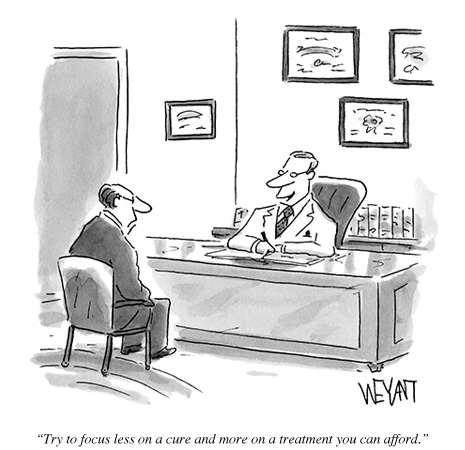
Out Of Pocket Cartoons and Comics - funny pictures from CartoonStock


Cartoon – Employees’s Carrying the Load

The Cost of Employer Insurance Is a Growing Burden for Middle-Income Families ← Health Over Profit