U.S. sets one-day record with more than 60,500 COVID cases; Americans divided

https://www.reuters.com/article/us-health-coronavirus-usa/u-s-sets-one-day-record-with-more-than-60500-covid-cases-americans-divided-idUSKBN24A28B?utm_source=Sailthru&utm_medium=email&utm_campaign=Issue:%202020-07-10%20Healthcare%20Dive%20%5Bissue:28416%5D&utm_term=Healthcare%20Dive

Texas, Florida and Arizona see increase in COVID-19 deaths | Daily ...

More than 60,500 new COVID-19 infections were reported across the United States on Thursday, according to a Reuters tally, setting a one-day record as weary Americans were told to take new precautions and the pandemic becomes increasingly politicized.

The total represents a slight rise from Wednesday, when there were 60,000 new cases, and marks the largest one-day increase by any country since the pandemic emerged in China last year.

As infections rose in 41 of the 50 states over the last two weeks, Americans have become increasingly divided on issues such as the reopening of schools and businesses. Orders by governors and local leaders mandating face masks have become particularly divisive.

“It’s just disheartening because the selfishness of (not wearing a mask) versus the selflessness of my staff and the people in this hospital who are putting themselves at risk, and I got COVID from this,” said Dr. Andrew Pastewski, ICU medical director at Jackson South Medical Center in Miami.

“You know, we’re putting ourselves at risk and other people aren’t willing to do anything and in fact go the other way and be aggressive to promote the disease. It’s really, it’s really hard,” he said.

Stephanie Porta, 41, a lifelong Orlando, Florida, resident, said only about half the shoppers at her grocery store wore masks, though that was more than she saw two weeks ago.

“They’re trying to make everything seem normal, when it’s not. People are dying, people are getting sick. It’s insane,” she said.

Florida on Thursday announced nearly 9,000 new cases and 120 new coronavirus deaths, a record daily increase in lives lost. Governor Ron DeSantis called the rising cases a “blip” and urged residents not to be afraid.

“I know we’ve had a lot of different blips,” DeSantis said. “We’re now at a higher blip than where we were in May and the beginning of June.”

Florida is one of the few states that does not disclose the number of hospitalized COVID patients. But more than four dozen Florida hospitals reported their intensive care units reached full capacity earlier this week.

In Texas a group of bar owners sued Governor Greg Abbott, a Republican, saying his June 26 order closing them down violates the state constitution, the Dallas Morning News reported.

Dr. Robert Redfield, director of the U.S. Centers for Disease Control and Prevention, said Thursday that keeping schools closed would be a greater risk to children’s health than reopening them.

California and Texas, the two most populous states, announced record increases in COVID deaths on Wednesday.

California has seen cases and hospitalizations surge, even though it imposed one of the strictest lockdowns. After several lawmakers and staffers at the state Capitol in Sacramento were infected, lawmakers said the legislature would not return from summer break until July 27.

Riverside University Health System, east of Los Angeles, expanded its 44-bed intensive care unit after it filled up with patients.

“It’s been very consistent every day in the last couple of weeks. Every day has been like a full moon,” Riverside emergency room physician Stephanie Loe said, referring to doctors’ beliefs that a full moon brings more patients to the emergency room.

Governors in California, Florida and Texas have either ruled out forced business closures and quarantines or called them a last resort. But Los Angeles Mayor Eric Garcetti warned he would impose a new stay-at-home order in two weeks if the latest surge did not ease.

The rise in infections also weighed on the stock market Thursday on fears of new lockdowns, which would take a toll on the economic recovery. The Dow .DJI and the S&P 500 .SPX ended down about 1%.


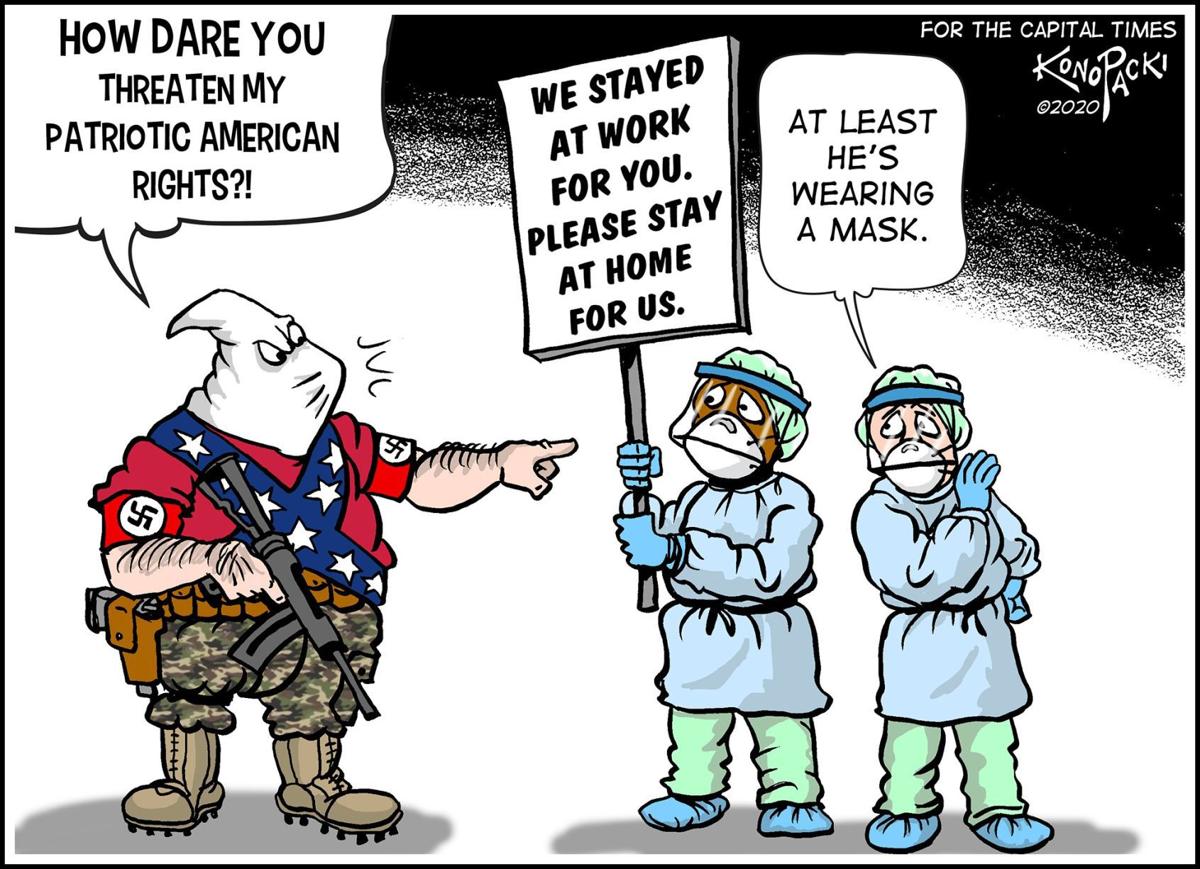
Cartoon – Current State of the Union

Plain Talk: Refusing to wear a mask isn't patriotic, it's just ...

Few U.S. adults say they’ve been diagnosed with coronavirus, but more than a quarter know someone who has

https://www.pewresearch.org/fact-tank/2020/05/26/few-u-s-adults-say-theyve-been-diagnosed-with-coronavirus-but-more-than-a-quarter-know-someone-who-has/?utm_source=Pew+Research+Center&utm_campaign=ef5ba73bf3-EMAIL_CAMPAIGN_2020_05_29_05_11&utm_medium=email&utm_term=0_3e953b9b70-ef5ba73bf3-400197657

28% of U.S. adults say they know someone diagnosed with COVID-19 ...

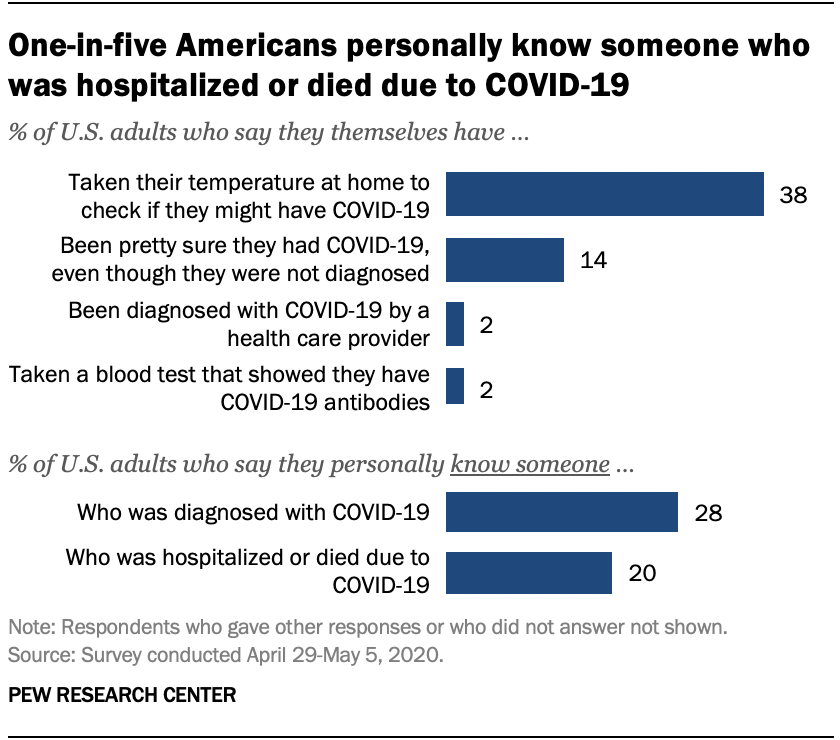
Relatively few Americans say they have been diagnosed with COVID-19 or tested positive for coronavirus antibodies, but many more believe they may have been infected or say they personally know someone who has been diagnosed.

Only 2% of U.S. adults say they have been officially diagnosed with COVID-19 by a health care provider, according to a new Pew Research Center survey. And 2% say they have taken a blood test that showed they have COVID-19 antibodies, an indication that they previously had the coronavirus. But many more Americans (14%) say they are “pretty sure” they had COVID-19, despite not getting an official diagnosis. And nearly four-in-ten (38%) say they’ve taken their temperature to check if they might have the disease.

Although few Americans have been diagnosed with COVID-19 themselves, many more say they know someone with a positive diagnosis. More than one-in-four U.S. adults (28%) say they personally know someone who has been diagnosed by a health care provider as having COVID-19. A smaller share of Americans (20%) say they know someone who has been hospitalized or who has died as a result of having the coronavirus.

Some groups are more likely than others to report personal experiences with COVID-19. For instance, black adults are the most likely to personally know someone who has been hospitalized or died as a result of the disease. One-third of black Americans (34%) know someone who has been hospitalized or died, compared with 19% of Hispanics and 18% of white adults. Black Americans (32%) are also slightly more likely than Hispanic adults (26%) to know someone diagnosed with COVID-19. Public health studies have found black Americans are disproportionately dying or requiring hospitalization as a result of the coronavirus.

28% of U.S. adults say they know someone diagnosed with COVID-19 ...

Areas in the northeastern United States have recorded some of the highest rates of coronavirus cases and fatalities, and this is reflected in the Center’s survey. About four-in-ten adults living in the Northeast (42%) say they personally know someone diagnosed with COVID-19, significantly more than among adults living in any other region. People living in the Northeast (31%) are also the most likely to know someone who has been hospitalized or died as a result of the disease.

One aspect of personal risk for exposure to the coronavirus is whether someone is employed in a setting where they must have frequent contact with other people, such as at a grocery store, hospital or construction site. Given the potential for the spread of the coronavirus within households, risk to individuals is also higher if other members of the household are employed in similar settings. Among people who are currently employed full-time, 35% are working in a job with frequent public contact. Among those working part-time, almost half work (48%) in such a setting. For those living in a household with other adults, 35% report that at least one of those individuals is working in a job that requires frequent contact with other people.

Taken together, nearly four-in-ten Americans (38%) have this type of exposure – either currently working in a job that requires contact with others, living in a household with others whose jobs require contact, or both.

Hispanics (at 48%) are more likely than either blacks (38%) or whites (35%) to have this type of personal or household exposure. An earlier Center analysis of government data found Hispanic adults were slightly more likely to work in service-sector jobs that require customer interaction, and that are at higher risk of layoffs as a result of the virus. In fact, the current Center survey found Hispanics were among the most likely to have experienced pay cuts or job losses due to the coronavirus outbreak.

28% of U.S. adults say they know someone diagnosed with COVID-19 ...

Interpersonal exposure in the workplace is also more widespread among younger adults. And there is a 10 percentage point difference between upper- and lower-income Americans in exposure, with lower-income adults more likely to work in situations where they have to interact with the public, or to live with people who do.

Health experts warn that COVID-19 is particularly dangerous to people who have underlying medical conditions. In the survey, one-third of adults say they have such a condition. Among this group, nearly six-in-ten (58%) say that the coronavirus outbreak is a major threat to their personal health. Among those who do not report having an underlying medical condition, just 28% see the outbreak as a major threat to their health. Americans who have an underlying health condition are also more likely than those who do not to say they’ve taken their temperature to check if they might have COVID-19 (47% vs. 33% of those without a health condition).

Self-reports of an underlying health condition vary greatly by age. Among those ages 18 to 29, just 16% say they have a condition; this rises steadily with age to 56% among those 65 and older. Whites are a little more likely than blacks and Hispanics to report having a health condition, but both blacks (at 54%) and Hispanics (52%) are far more likely than whites (32%) to say that the coronavirus outbreak is “a major threat” to their health.


CVS Reaches Goal To Open 1,000 Coronavirus Test Sites

https://www.forbes.com/sites/brucejapsen/2020/05/28/cvs-hits-goal-to-open-1000–coronavirus-test-sites/?utm_source=newsletter&utm_medium=email&utm_campaign=news&utm_campaign=news&cdlcid=#529f289841b4

CVS Reaches Goal To Open 1,000 Coronavirus Test Sites

CVS Health Thursday said it is delivering as promised to open 1,000 testing locations for the Coronavirus strain Covid-19.

The scale of the openings comes more than two months after CVS, Walgreens Boots Alliance, Rite Aid, Walmart and other retailers pledged in White House meetings to use their thousands of locations, including parking lots to expand U.S. testing for COVID-19. In CVS Health’s case, the sites that will all be open Friday will use “self-swab tests” as part of a newer phase of testing by the giant drugstore chain.

“It’s no small feat to operationalize 1,000 test sites in weeks under trying circumstances, which is a credit to our employees and their unwavering commitment to being part of the solution,” CVS Health president and chief executive Larry Merlo said. “Our testing strategy will continue to evolve and make the most effective use of our resources as we work to help safely re-open the economy.”

CVS is hoping to dramatically ramp up testing by processing up to 1.5 million tests every month. Currently, CVS processes about 30,000 tests for COVID-19 a week in five states as part of a rollout that began several weeks ago with a focus on front-line healthcare workers and first responders.

“Since first offering COVID-19 testing at a pilot site outside a CVS Pharmacy in Shrewsbury, Mass., in mid-March, the company has performed nearly 200,000 tests nationwide,” the company said in a statement released Thursday.

CVS Health’s announcement should be welcome news for the Trump administration, which announced the participation of the retailers in March and has been vowing to provide access to COVID-19 testing to all Americans, but has been dogged by criticism.

Patients can register at CVS’ web site to get tested.


100,000 Lives Lost to COVID-19. What Did They Teach Us?

https://www.propublica.org/article/100000-lives-lost-to-covid-19-what-did-they-teach-us?utm_source=pardot&utm_medium=email&utm_campaign=dailynewsletter&utm_content=feature

May 27 data: Four new Utah COVID-19 deaths as US count tops ...

Each person who has died of COVID-19 was somebody’s everything. Even as we mourn for those we knew, cry for those we loved and consider those who have died uncounted, the full tragedy of the pandemic hinges on one question: How do we stop the next 100,000?

The United States has now recorded 100,000 deaths due to the coronavirus.

It’s a moment to collectively grieve and reflect.

Even as we mourn for those we knew, cry for those we loved and consider also those who have died uncounted, I hope that we can also resolve to learn more, test better, hold our leaders accountable and better protect our citizens so we do not have to reach another grim milestone.

Through public records requests and other reporting, ProPublica has found example after example of delays, mistakes and missed opportunities. The CDC took weeks to fix its faulty test. In Seattle, 33,000 fans attended a soccer match, even after the top local health official said he wanted to end mass gatherings. Houston went ahead with a livestock show and rodeo that typically draws 2.5 million people, until evidence of community spread shut it down after eight days. Nebraska kept a meatpacking plant open that health officials wanted to shut down, and cases from the plant subsequently skyrocketed. And in New York, the epicenter of the pandemic, political infighting between Gov. Andrew Cuomo and Mayor Bill de Blasio hampered communication and slowed decision making at a time when speed was critical to stop the virus’ exponential spread.

COVID-19 has also laid bare many long-standing inequities and failings in America’s health care system. It is devastating, but not surprising, to learn that many of those who have been most harmed by the virus are also Americans who have long suffered from historical social injustices that left them particularly susceptible to the disease.

This massive loss of life wasn’t inevitable. It wasn’t simply unfortunate and regrettable. Even without a vaccine or cure, better mitigation measures could have prevented infections from happening in the first place; more testing capacity could have allowed patients to be identified and treated earlier.

The COVID-19 pandemic is not over, far from it.

At this moment, the questions we need to ask are: How do we prevent the next 100,000 deaths from happening? How do we better protect our most vulnerable in the coming months? Even while we mourn, how can we take action, so we do not repeat this horror all over again?

Here’s what we’ve learned so far.

Though we’ve long known about infection control problems in nursing homes, COVID-19 got in and ran roughshod.

From the first weeks of the coronavirus outbreak in the United States, when the virus tore through the Life Care Center in Kirkland, Washington, nursing homes and long-term care facilities have emerged as one of the deadliest settings. As of May 21, there have been around 35,000 deaths of staff and residents in nursing homes and long-term care facilities, according to the nonprofit Kaiser Family Foundation.

Yet the facilities have continued to struggle with basic infection control. Federal inspectors have found homes with insufficient staff and a lack of personal protective equipment. Others have failed to maintain social distancing among residents, according to inspection reports ProPublica reviewed. Desperate family members have had to become detectives and activists, one even going as far as staging a midnight rescue of her loved one as the virus spread through a Queens, New York, assisted living facility.

What now? The risk to the elderly will not decrease as time goes by — more than any other population, they will need the highest levels of protection until the pandemic is over. The CEO of the industry’s trade group told my colleague Charles Ornstein: “Just like hospitals, we have called for help. In our case, nobody has listened.” More can be done to protect our nursing home and long term care population. This means regular testing of both staff and residents, adequate protective gear and a realistic way to isolate residents who test positive.

Racial disparities in health care are pervasive in medicine, as they have been in COVID-19 deaths.

African Americans have contracted and died of the coronavirus at higher rates across the country. This is due to myriad factors, including more limited access to medical care as well as environmental, economic and political factors that put them at higher risk of chronic conditions. When ProPublica examined the first 100 recorded victims of the coronavirus in Chicago, we found that 70 were black. African Americans make up 30% of the city’s population.

What now? States should make sure that safety-net hospitals, which serve a large portion of low-income and uninsured patients regardless of their ability to pay, and hospitals in neighborhoods that serve predominantly black communities, are well-supplied and sufficiently staffed during the crisis. More can also be done to encourage African American patients to not delay seeking care, even when they have “innocent symptoms” like a cough or low-grade fever, especially when they suffer other health conditions like diabetes.

Racial disparities go beyond medicine, to other aspects of the pandemic. Data shows that black people are already being disproportionately arrested for social distancing violations, a measure that can undercut public health efforts and further raise the risk of infection, especially when enforcement includes time in a crowded jail.

Essential workers had little choice but to work during COVID-19, but adequate safeguards weren’t put in place to protect them.

We’ve known from the beginning there are some measures that help protect us from the virus, such as physical distancing. Yet millions of Americans haven’t been able to heed that advice, and have had no choice but to risk their health daily as they’ve gone to work shoulder-to-shoulder in meat-packing plants, rung up groceries while being forbidden to wear gloves, or delivered the mail. Those who are undocumented live with the additional fear of being caught by immigration authorities if they go to a hospital for testing or treatment.

What now? Research has shown that there’s a much higher risk of transmission in enclosed spaces than outdoors, so providing good ventilation, adequate physical distancing, and protective gear as appropriate for workers in indoor spaces is critical for safety. We also now know that patients are likely most infectious right before or at the time when symptoms start appearing, so if workplaces are generous about their sick leave policies, workers can err on the side of caution if they do feel unwell, and not have to choose between their livelihoods and their health. It’s also important to have adequate testing capacity, so infections can be caught before they turn into a large outbreak.

Frontline health care workers were not given adequate PPE and were sometimes fired for speaking up about it.

While health workers have not, thankfully, been dying at conspicuously higher rates, they continue to be susceptible to the virus due to their work. The national scramble for ventilators and personal protective equipment has exposed the just-in-time nature of hospitals’ inventories: Nurses across the country have had to work with expired N95 masks, or no masks at all. Health workers have been suspended, or put on unpaid leave, because they didn’t see eye to eye with their administrators on the amount of protective gear they needed to keep themselves safe while caring for patients.

First responders — EMTs, firefighters and paramedics — are often forgotten when it comes to funding, even though they are the first point of contact with sick patients. The lack of a coherent system nationwide meant that some first responders felt prepared, while others were begging for masks at local hospitals.

What now? As states reopen, it will be important to closely track hospital capacity, and if cases rise and threaten their medical systems’ ability to care for patients, governments will need to be ready to pause or even dial back reopening measures. It should go without saying that adequate protective gear is a must. I also hope that hospital administrators are thinking about mental health care for their staffs. Doctors and nurses have told us of the immense strain of caring for patients whom they don’t know how to save, while also worrying about getting sick themselves, or carrying the virus home to their loved ones. Even “heroes” need supplies and support.

What we still have to learn:

There continue to be questions on which data is lacking, such as the effects of the coronavirus on pregnant women. Without evidence-based research, pregnant women have been left to make decisions on their own, sometimes trying to limit their exposure against their employer’s wishes.

Similarly, there’s a paucity of data on children’s risk level and their role in transmission. While we can confidently say that it’s rare for children to get very ill if they do get infected, there’s not as much information on whether children are as infectious as adults. Answering that question would not just help parents make decisions (Can I let my kid go to day care when we live with Grandma?) but also help officials make evidence-based decisions on how and when to reopen schools.

There’s some research I don’t want to rush. Experts say the bar for evidence should be extremely high when it comes to a vaccine’s safety and benefit. It makes sense that we might be willing to use a therapeutic with less evidence on critically ill patients, knowing that without any intervention, they would soon die. A vaccine, however, is intended to be given to vast numbers of healthy people. So yes, we have to move urgently, but we must still take the time to gather robust data.

Our nation’s leaders have many choices to make in the coming weeks and months. I hope they will heed the advice of scientists, doctors and public health officials, and prioritize the protection of everyone from essential workers to people in prisons and homeless shelters who does not have the privilege of staying home for the duration of the pandemic.

The coronavirus is a wily adversary. We may ultimately defeat it with a vaccine or effective therapeutics. But what we’ve learned from the first 100,000 deaths is that we can save lives with the oldest mitigation tactics in the public health arsenal — and that being slow to act comes with a terrible cost.

I refuse to succumb to fatalism, to just accepting the ever higher death toll as inevitable. I want us to make it harder for this virus to take each precious life from us. And I believe we can.


Administration Killed Rule Designed To Protect Health Workers From Pandemic Like COVID-19

https://www.npr.org/2020/05/26/862018484/trump-team-killed-rule-designed-to-protect-health-workers-from-pandemic-like-cov?utm_source=Sailthru&utm_medium=email&utm_campaign=Issue:%202020-05-27%20Healthcare%20Dive%20%5Bissue:27567%5D&utm_term=Healthcare%20Dive

Trump Team Killed Rule Designed To Protect Health Workers From ...

When President Trump took office in 2017, his team stopped work on new federal regulations that would have forced the health care industry to prepare for an airborne infectious disease pandemic such as COVID-19. That decision is documented in federal records reviewed by NPR.

“If that rule had gone into effect, then every hospital, every nursing home would essentially have to have a plan where they made sure they had enough respirators and they were prepared for this sort of pandemic,” said David Michaels, who was head of the Occupational Safety and Health Administration until January 2017.

There are still no specific federal regulations protecting health care workers from deadly airborne pathogens such as influenza, tuberculosis or the coronavirus. This fact hit home during the last respiratory pandemic, the H1N1 outbreak in 2009. Thousands of Americans died and dozens of health care workers got sick. At least four nurses died.

Studies conducted after the H1N1 crisis found voluntary federal safety guidelines designed to limit the spread of airborne pathogens in medical facilities often weren’t being followed. There were also shortages of personal protective equipment.

“H1N1 made it very clear OSHA did not have adequate standards for airborne transmission and contact transmission, and so we began writing a standard to do that,” Michaels said.

HIV/AIDS rule set the standard for protecting workers

OSHA experts were confident new airborne infectious disease regulations would make hospitals and nursing homes safer when future pandemics hit. That’s because similar rules had already been created for bloodborne pathogens such as Ebola and hepatitis.

Those rules, implemented during the HIV/AIDS epidemic, forced the health care industry to adopt safety plans and buy more equipment designed to protect staff and patients.

But making a new infectious disease regulation, affecting much of the American health care system, is time-consuming and contentious. It requires lengthy consultation with scientists, doctors and other state and federal regulatory agencies as well as the nursing home and hospital industries that would be forced to implement the standard.

Federal records reviewed by NPR show OSHA went step by step through that process for six years, and by early 2016 the new infectious disease rule was ready. The Obama White House formally added it to a list of regulations scheduled to be implemented in 2017.

Then came the presidential election.

An emphasis on deregulation

In the spring of 2017, the Trump team formally stripped OSHA’s airborne infectious disease rule from the regulatory agenda. NPR could find no indication the new administration had specific policy concerns about the infectious disease rules.

Instead, the decision appeared to be part of a wider effort to cut regulations and bureaucratic oversight.

“Earlier this year we set a target of adding zero new regulatory costs onto the American economy,” Trump said in December 2017. “As a result, the never-ending growth of red tape in America has come to a sudden, screeching and beautiful halt.”

The impact on the federal effort to protect health care workers from diseases such as COVID-19 was immediate.

“The infectious disease standard was put on the back burner. Work stopped,” said Michaels, now a professor at George Washington University.

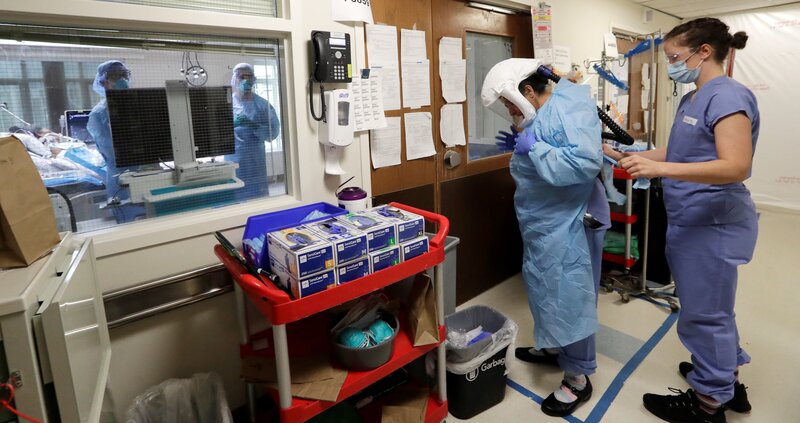
A medical worker is assisted into personal protective equipment on May 8 before stepping into a patient’s room in the COVID-19 intensive care unit at Harborview Medical Center in Seattle.

Elaine Thompson/AP

A deadly escalation of the H1N1 crisis

This spring, hospitals and nursing homes found themselves facing much of the same crisis they experienced during the H1N1 outbreak, with many facilities unprepared and unequipped. Only this time the scale was larger and deadlier.

The federal government reports that at least 43,000 front-line health care workers have gotten sick, many infected, while caring for COVID-19 patients in facilities where personal protective equipment was being rationed.

“Even just a few months ago, I couldn’t have imagined that I would have been on a Zoom call reading out the names of registered nurses who have died on the front lines of a pandemic,” said Bonnie Castillo, who heads the National Nurses United union.

“The memorial was not only about grief. It was also about anger.”

OSHA’s infectious disease rule debated in Washington

Castillo said Congress should immediately implement the infectious disease regulations shelved by the Trump administration as an emergency rule before a second wave of the coronavirus hits.

“Which obviously would mandate that employers have the highest level of PPE, not the lowest,” she said.

Democrats in the House of Representatives passed a bill in mid-May that would do so, but the Republican-controlled Senate has blocked the measure, and the White House still opposes the rules.

The Trump administration hasn’t responded to NPR’s repeated inquiries about the infectious disease rule. But in a briefing call with lawmakers this month, the current head of OSHA, Loren Sweatt, argued enough rules are already in place to protect workers.

“We have mandatory standards related to personal protective equipment and bloodborne pathogens and sanitation standards,” Sweatt said in a recording provided to NPR. “We have existing standards that can address this area.”

The hospital industry also opposes the new safety rules. Nancy Foster with the American Hospital Association said voluntary guidelines for airborne pandemics are adequate.

“You’re right; they’re not regulations, but they are the guidance that we want to follow,” Foster said. “They set forth the expectation for infection control, so in a sense they’re just like regulations.”

But the infectious disease standard would have required the health care industry to do far more. It sets out specific standards for planning and training. It would also have forced facilities to stockpile personal protective equipment to handle “surges” of sick patients such as the ones seen with COVID-19.

NPR also found the lack of fixed regulations allowed the Trump administration to relax worker safety guidelines. Federal agencies did so repeatedly this spring as COVID-19 spread and shortages of personal protective equipment worsened.

As a consequence, hospitals could say they were meeting federal guidelines while requiring doctors and nurses to reuse masks and protective gowns after exposure to sick patients.


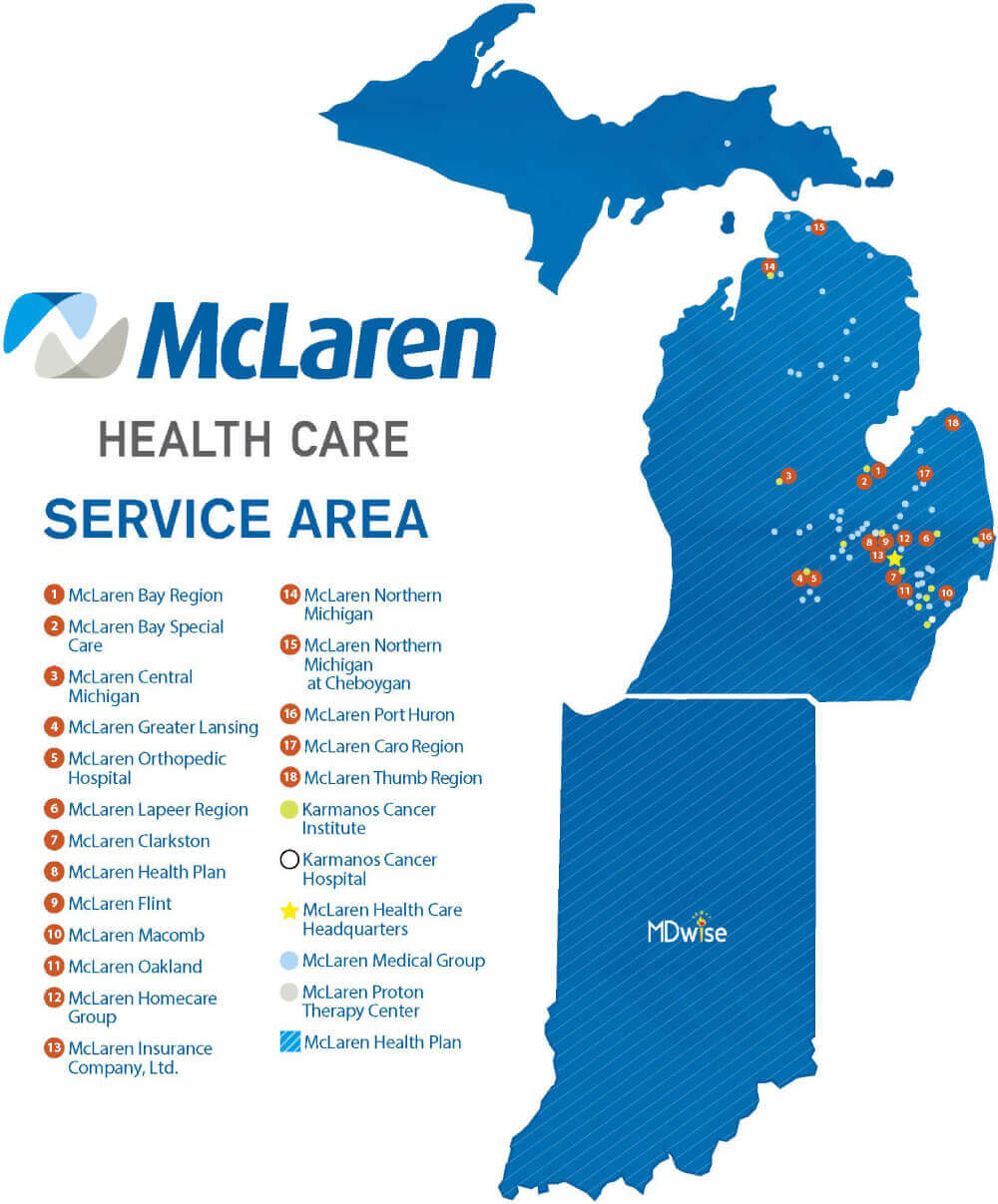
McLaren Health Care’s too secretive about finances, PPE, Michigan nurse union says

https://www.beckershospitalreview.com/workforce/mclaren-health-care-s-too-secretive-about-finances-ppe-michigan-nurse-union-says.html?utm_medium=email

About McLaren Health Care

Ten nurse unions in Michigan are accusing McLaren Health Care of not being transparent about its finances and personal protective equipment supply during the COVID-19 pandemic, but the health system said it has shared some of that information.

Many of the nurse unions have filed unfair labor practice charges with the National Labor Relations Board, alleging that by not sharing information with front-line healthcare workers the Grand Blanc, Mich.-based health system is violating federal labor law, a media release from the Michigan Nurses Association states.

According to the association, each of its 10 unions received a letter from the health system May 15, in which the system refused to divulge how much funding it received in federal COVID-19 grants. The health system also has refused to provide details about its protective gear inventory, the unions allege.

“The fact that they won’t share basic financial information with those of us working on the front lines makes you wonder if they have something to hide,” said Christie Serniak, a nurse at McLaren Central Michigan hospital in Mount Pleasant and president of the Michigan Nurses Association affiliate.

But the health system maintains it has been transparent and has worked with labor unions and bargaining units across the system since the beginning of the coronavirus pandemic.

“We’ve openly shared information about our operations, the challenges of restrictions on elective procedures, our plans for managing influxes of patients and our supplies of personal protective equipment,” Shela Khan Monroe, vice president of labor and employment relations at McLaren Health Care told Becker’s Hospital Review.

Ms. Khan Monroe said that the information has been shared through weekly meetings, departmental meetings and several union negotiation sessions over the last two months.

The unions also say that the health system has not offered its workers hazard pay or COVID-19 paid leave that is on par with other systems. They say that only workers who test positive for COVID-19 can take additional paid time off.

In a written statement, McLaren disputed the union’s claims about employee leave, saying that employees “dealing with child care and other COVID-related family matters” can take time off to care for loved ones.

McLaren did not specify if this time off is paid. Becker’s has reached out for clarification and will update the article once more information is available.

“We have negotiations pending with several of the unions involved in the coalition, and while we are deeply disappointed in these recent tactics, we will continue to work towards productive outcomes for all concerned,” said Ms. Khan Monroe.

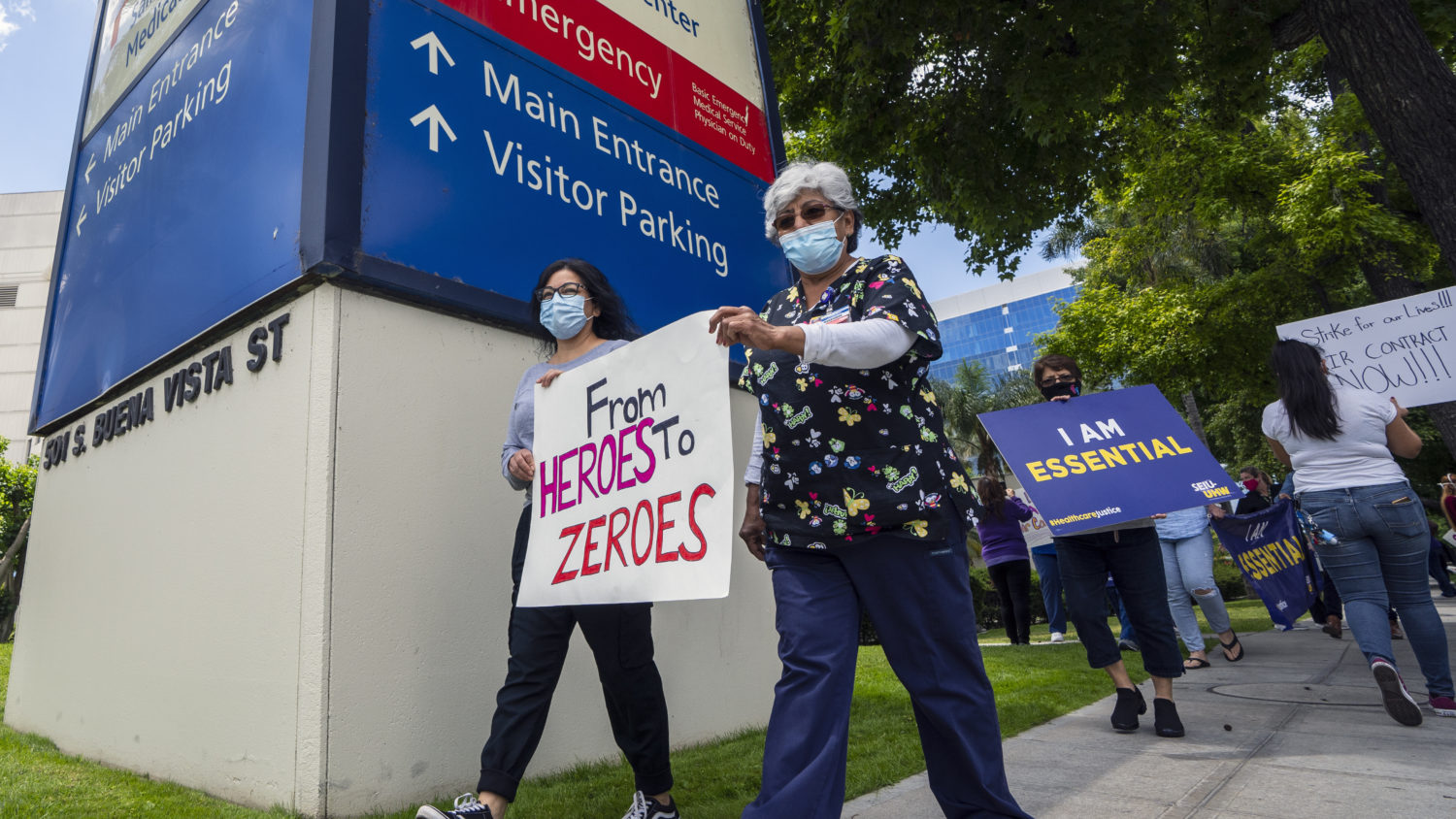
Recently, a coalition of unions urged McLaren Health Care executives to reduce their own salaries before laying off employees.


Mask shortage for most health-care workers extended into May, Post-Ipsos poll shows

https://www.washingtonpost.com/health/mask-shortage-for-most-health-care-workers-extended-into-may-post-ipsos-poll-shows/2020/05/20/1ddbe588-9a21-11ea-ac72-3841fcc9b35f_story.html?fbclid=IwAR3rcjsPTuDjJODTBeJTRCqqJ4RbMTmWTih5jP91Vy9pn_S4NzWcVErobbY&utm_campaign=wp_main&utm_medium=social&utm_source=facebook

Feds uncover an alleged scheme to fraudulently sell 39 million N95 ...

Front-line health-care workers still experienced shortages of critical equipment needed for protection from the coronavirus into early May — including nearly two-thirds who cited insufficient supplies of the face masks that filter out most airborne particles, according to a Washington Post-Ipsos poll.

More than 4 in 10 also saw shortages of less protective surgical masks and 36 percent said their supply of hand sanitizer was running low, according to the poll. Roughly 8 in 10 reported wearing one mask for an entire shift, and more than 7 in 10 had to wear the same mask more than once.

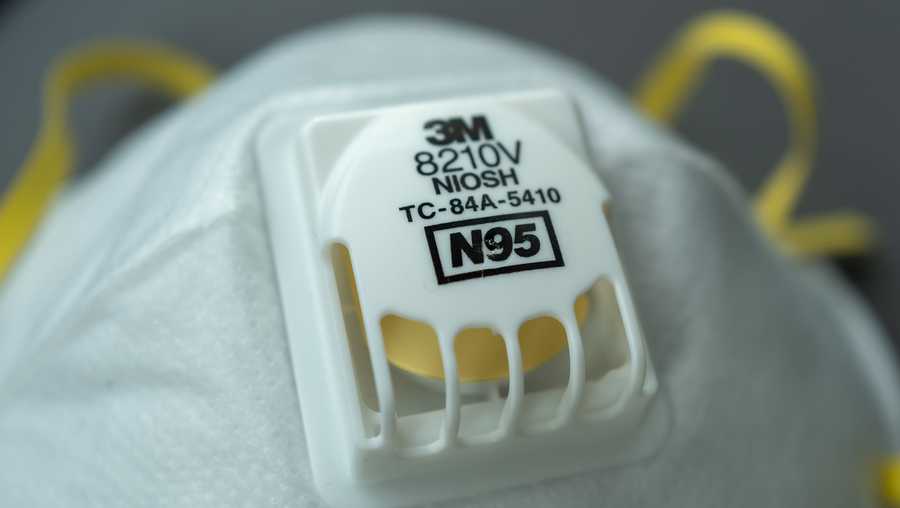
The dire shortage of personal protective equipment for health-care workers emerged in March as one of the earliest signals of the country’s lack of preparation for the coronavirus pandemic. Nurses and others have said they were forced to put their own health at risk caring for highly infectious patients because they lacked adequate supplies, in particular N95 masks, which filter out 95 percent of airborne particles.

Image without a caption

State governments and medical facilities went to extraordinary lengths to obtain, preserve, sanitize and reuse masks designed to be disposed after a single use if necessary. Health authorities asked a frightened public not to worsen the shortage by snapping them up.

The Post-Ipsos poll may provide the clearest nationwide measure to date of the shortages during those weeks, when the virus surged through parts of the country, overwhelming some hospitals in New York City and placing others across the nation under tremendous strain. The survey interviewed a national sample of 8,086 U.S. adults, including 278 people who work with patients in health-care settings, such as doctors’ offices, clinics, hospitals and nursing homes. The poll was conducted from April 27 to May 4; results among health workers have a 6.5-point margin of sampling error.

“Covid hit like a tidal wave. We went from nothing to insanity,” said Ronnie Dubrowin, a certified nurse midwife from Connecticut who responded to the poll. “It was like one week no one had heard of this disease and the next week everybody had it.”

Dubrowin, who sees obstetric patients in two hospitals and one office setting, said masks were in such short supply during the early days of the outbreak that she resorted to heating hers in an oven to kill the virus.

“Getting protective gear was difficult for everybody,” Dubrowin said. “It became a mission of so many people in hospital settings to get protective gear for their employees.”

Despite shortages, 75 percent of the health-care workers said their employer was doing enough to ensure their safety. They also gave high marks to state officials, with 71 percent approving of their governor’s handling of the crisis.

They had much less confidence in President Trump. A 59 percent majority disapproved of his handling of the coronavirus pandemic, while 41 percent approved.

Nearly a third of health workers said they believe restrictions were being lifted too quickly in late April and early May. A slim majority, 53 percent, said state governments are handling the pandemic about right, and 15 percent felt restrictions are not being lifted quickly enough. Those views are roughly similar to those of the general public, as are the ratings of Trump and governors.

Long Vinh, a pediatrician who works in the neonatal intensive care units at two San Francisco-area hospitals, said at the beginning of the outbreak some steps were taken to preserve masks, out of fear there might be a shortage. Now, he says there are no shortages of masks, gowns or other protective equipment at those hospitals: California Pacific Medical Center and Mills-Peninsula Medical Center.

“I really feel that being in the Bay Area, we were blessed and fortunate to have both a wealth of hospital capacity and resources and political leadership that took the crisis seriously,” he said.

Vinh said that while he had some concerns of an overall shortage early on, “I never felt like I was put into a situation where I might have a covid exposure where I wouldn’t have all the protection I need.”

The survey showed that more than 7 in 10 health-care workers expressed concern about exposing members of their household to the virus after coming in contact with it at work, and roughly half were regularly changing out of clothing before entering their homes. About a third said someone at their workplace has been infected by the coronavirus. A 58 percent majority said it is likely they have been exposed at work.

One woman, who works in a small, residential mental-health treatment center in Minnesota, said she and other workers are not provided masks, though they are seeing adults who come from hospitals and elsewhere and who could be infected.

The woman, a counselor who spoke on the condition of anonymity to discuss decisions made by her employer, said she is concerned about bringing the virus home to her young child.

“We have some capacity to social-distance . . . but with the size of our facility and the office space availability, I’d say 80 percent of the time that’s not possible,” she said.

More than three-quarters of health workers felt that people appreciated their efforts, and a similar proportion said someone has thanked them for their work since the outbreak began.

Just over 1 in 10, or 12 percent, of health-care workers said they do not have health insurance themselves. More than 6 in 10 have paid sick leave, though over 3 in 10 do not and the rest were not sure.

And the financial outlook for many is shaky. Nearly half of health-care workers, 48 percent, were at least somewhat concerned about paying their bills.

The Post-Ipsos poll was conducted through Ipsos’s KnowledgePanel, a large online survey panel recruited through random sampling of U.S. households.


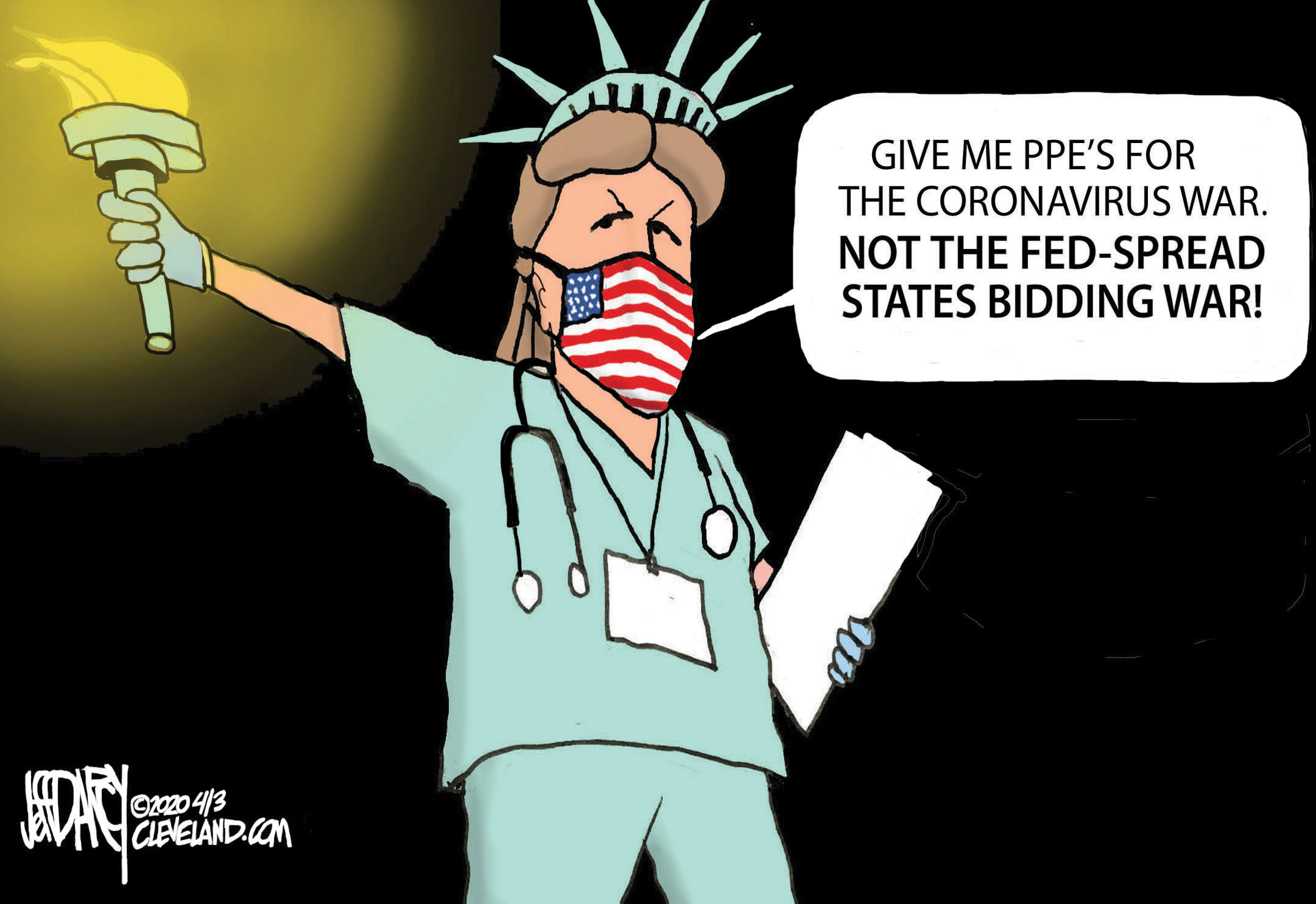
Cartoon – The Coronavirus War

Coronavirus first responders now the frontline in two wars: Darcy ...