The latest piece in the New York Times ’“Profits over Patients” series focuses on the staffing policies of Ascension, one of the nation’s largest nonprofit health systems, drawing a straight line from its cost-cutting practices over the last decade to its current staffing woes. Like previous articles in the series, the piece hones in on Ascension’s profit-seeking motives, pairing pre-pandemic accounts of Ascension executives boasting about savings from slashed labor costs with story after story of its frontline clinicians struggling to provide adequate patient care once COVID hit.
In responses included in the article, an Ascension spokesperson rejected the idea that the system’s workforce policies were responsible for its current staffing crisis, claiming that Ascension has maintained better staff-to-patient ratios than many of its peers.
The Gist: Yet again, the New York Times is shining a harsh light on a health system that has been engaged in management practices common across the industry.
While the piece omits some relevant information, such as the recent spike in labor costs, it’s useful to point out that many hospitals were so thinly staffed prior to COVID that they had virtually no slack in their labor pools, hindering their response to the crisis.
In our experience, the reasons for this have less to do with lining executives’ pockets, and more to do with the realities of dealing with a worsening payer mix and rising input costs. While future hospital workforce strategy is going to have to focus on reducing dependency on nurses—especially in the inpatient setting—any effort to that end must augment nurses with team-based care models and technology solutions, rather than pushing further on already-tight nurse-to-patient ratios.
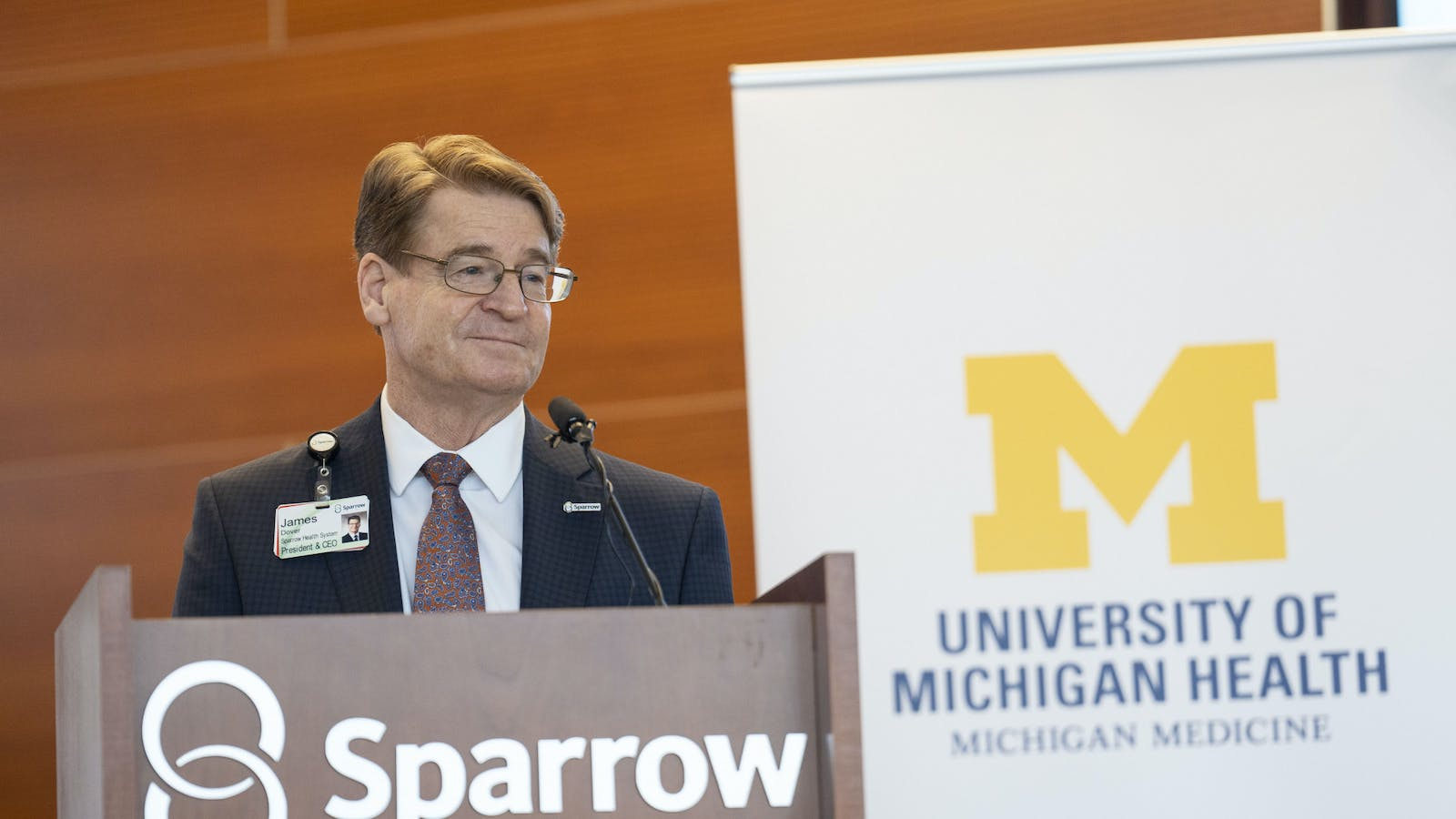
Ann Arbor, MI-based University of Michigan Health (UM Health), part of Michigan Medicine, announced last Thursday that it will acquire Lansing, MI-based Sparrow Health System, forming a $7B health system with over 200 care sites across southeast and mid-Michigan. The acquisition will connect Sparrow’s six hospitals to UM Health’s flagship academic medical center (AMC) and sole hospital, while extending the reach of Sparrow’s 70K-member health plan, in which UM Health had previously invested. Pending regulatory approvals, the deal is expected to be completed in the first half of 2023.
The Gist: Given Sparrow’s recent financial struggles—the system announced hundreds of layoffs in September after posting a $90M loss in the first half of 2022—this was a sensible pickup for UM Health, extending its reachinto lower-cost community healthcare adjacent to its current market. Other AMCs have made similar moves in recent years, as the differentiated services of an AMC and the local patient reach of community hospitals make for a strong pairing—and this deal will go far toward advancing UM as a truly regional system.
But even if UM Health got a good deal on the acquisition, the current status of Sparrow’s infrastructure and workforce will require considerable investment (UM Health has already committed $800M in the deal’s announcement).
Recent reports have raised concerns about the financial stability of hospitals amidst disruptions caused by the COVID-19 pandemic and the looming prospect of an economic recession.
Large amounts of government relief helped prop up hospital margins in 2020 and 2021. However, industry reports suggest that the outlook for hospitals and health systems has deteriorated in 2022 due to the ongoing effects of the pandemic (such as labor shortages), decreases in government relief, and broader economic trends that have led to rising prices and investment losses. According to at least one account, 2022 may be the worst financial year for hospitals in decades. These challenges could force hospitals to take steps to increase efficiency but may also result in price increases or cost-cutting measures that impair patient access or care quality. Against this backdrop,industrystakeholders have asked Congress to provide additional fiscal relief to hospitals and to stop scheduled Medicare payment reductions.
To provide context for these policy discussions, we evaluated the financial performance of the three largest for-profit health systems in the country—HCA Healthcare (“HCA”), Tenet Healthcare Corporation (“Tenet”), and Community Health Systems (CHS)—which collectively accounted for about 8 percent of community hospital beds in the US in 2020.1 These three systems are publicly traded, meaning that we were able to acquire timely financial data about these systems through their reports to the Securities and Exchange Commission (SEC), as well as data on their stock prices (see Methods for additional details).
Operating margins among all three large health systems were positive and exceeded pre-pandemic levels for the majority of the pandemic, including most recently in the third quarter of 2022.
Operating margins reflect the profit margins earned on patient care and other operations of a given health system—such as from gift shops, parking, and cafeterias—and incorporate government COVID-19 relief funds.2 Our definition of operating margins excludes income taxes and nonrecurring revenues and expenses, such as from the sale of facilities. HCA and Tenet had positive operating margins throughout the pandemic, and CHS had positive operating margins in all but two quarters of the pandemic (with one of those quarters being at the very beginning of the pandemic). HCA has had operating margins of at least 10 percent during the majority of the pandemic (9 out of 11 quarters). In other words, HCA’s revenue from patient care and other operations exceeded operating expenses by at least 10 percent for most of the pandemic. Tenet has had operating margins of at least 5 percent for the majority of the pandemic (9 out of 11 quarters), while CHS’s operating margins have been lower (less than 5% for 9 out of 11 quarters). CHS had lower margins than the other systems before the pandemic as well.
For all three systems, operating margins have exceeded pre-pandemic (2019) levels for most of the pandemic (9 out of 11 quarters), including the last quarter of our analysis (the third quarter of 2022), despite recent decreases in operating margins. HCA and Tenet dipped below their 2019 operating margins during two quarters of 2020, and CHS fell below their 2019 operating margins during the first quarter of 2020 and the second quarter of 2022 before increasing again. As of the third quarter of 2022, operating margins were 11.4 percent for HCA, 8.4 percent for Tenet, and 1.2 percent for CHS.
Stock prices increased and then decreased during the pandemic; HCA and Tenet stock prices have increased overall since January 2020 while CHS stock prices have decreased.
Stock prices generally reflect investors’ evaluation of the future earnings potential of a given company. Stock prices increased dramatically during the first 1.5 to 2 years of the pandemic. At their heights, HCA stock prices had increased by 87.9 percent, Tenet stock prices had increased by 153.8 percent, and CHS stock prices had increased by 383.1 percent relative to January 2020.
Stock prices have also decreased substantially in 2022—in line with broader economic trends—and especially so among Tenet and CHS. As of November 8, 2022, HCA and Tenet stock prices have increased overall relative to January 2020 (by 44.6% and 12.6%, respectively).3 CHS stock prices have decreased by 11.5% since January 2020, though CHS has also experienced longstanding financial challenges thatpredate the pandemic. For purposes of comparison, HCA stock prices increased by a much greater amount than the S&P 500 during this period (44.6% versus 16.8%), while the S&P 500 slightly outperformed Tenet stock (16.8% versus 12.6%) and significantly outperformed CHS stock (16.8% versus -11.5%).
As of December 2, 2022, the majority of market analysts followed by MarketWatch were bullish on HCA and Tenet stock (with 18 buy, 3 overweight, and 5 hold recommendations for HCA stock and 14 buy, 2 overweight, and 4 hold recommendations for Tenet stock) and neutral about CHS stock (with 8 hold and 4 buy recommendations); none of the analysts rated these stocks as “sell” or “underweight.”
Discussion
Industry reports have suggested that hospitals had high margins in 2020 and 2021 but have faced significant financial challenges in 2022. Our analysis adds nuance to this discussion. So far this year, operating margins among the three largest for-profit health systems in the country have met or exceeded pre-pandemic levels. HCA and Tenet in particular have had high operating margins. CHS had negative operating margins in the second quarter of 2022, and its stock prices decreased overall from January 2020 to November 2022, but its financial challenges precede the pandemic. While some hospitals are struggling in the current environment—with high inflation and the ongoing burdens posed by COVID-19, flu, and respiratory syncytial virus (RSV)—our results indicate that the largest for-profit systems have had operating margins that exceed pre-pandemic levels.
Charlotte, NC-based Atrium Health and Downers Grove, IL- and Milwaukee, WI-based Advocate Aurora Health have formally combined to become the nation’s fifth-largest nonprofit health system. Taking the name Advocate Health, the $27B system will control 67 hospitals across six states in the Midwest and Southeast. The merger, announced in May of this year, unites the systems on even footing, with equal representation on a new board of directors, and a co-CEO arrangement for the first 18 months. The Atrium, Advocate, and Aurora brands will continue to be used in their respective local markets.
The Gist: Structuring Advocate Health as a joint operating agreement, and creating a new superstructure atop the two legacy systems, should allow the combined entity more flexibility in local decision-making, while still potentially generating cost savings from back-office efficiencies.
While we expect these kinds of mega-mergers between large regional systems to continue, it remains to be seen whether the newly combined systems can successfully create value by building larger “platforms” of care to win consumer loyalty, deploying digital capabilities, attracting talent, and becoming more desirable partners for nontraditional players.
On Tuesday, the Centers for Medicare and Medicaid Services (CMS) announced a proposed rule that aims to streamline the prior authorization process by requiring certain payers to establish a method for electronic transmission, shorten response time for physician requests, and provide a reason for denials. This rule replaces one proposed in December 2020 that was never finalized.
In addition to applying to Medicaid and Affordable Care Act exchange plans, the new rule would also apply to Medicare Advantage plans, which the previous rule did not. If finalized, it will take effect in 2026.
The Gist: Managing prior authorization requests is one of providers’ greatest sources of frustration, with over 80 percent of physicians rating it as “very or extremely burdensome” in a recent Medical Group Management Association survey.
Not only would patients would benefit from faster turnarounds, but even major payers agree that the status quo is suboptimal, and payer advocacy organization AHIP has signaled support for transmitting prior authorization requests electronically.
The challenge for regulators will be to strike a balance that satisfies the competing interests of payers and providers—turnaround time is likely to be a sticking point—but the one good thing about a system that no one likes is that there’s plenty of room for improvement.
Sustained high labor expenses and inflationary pressures will continue to affect the healthcare industry in 2023, keeping the outlook for nonprofit hospital systems negative, Moody’s said in a Dec. 7 report.
In addition to such pressures, persistent COVID-19 surges, supply chain disruptions and the need for continued cybersecurity investments will also increase expenses, the report said. And while operating revenue is expected to modestly improve next year, the ending of federal Coronavirus Aid, Relief and Economic Security Act funding, net Medicare cuts and the end of the public health emergency will negatively affect hospital revenues, Moody’s said.
“This level of operating cash flow production will likely prove insufficient over the long term to enable adequate reinvestment in facilities, maintain investment in programs, or support organizational growth — key considerations that drive our negative outlook,” said Brad Spielman, vice president, senior credit officer for Moody’s.
Some of the less well-funded healthcare systems could even face breaches of covenant amid such a challenging backdrop, Moody’s warned. Such covenants typically refer to issues like days of cash on hand or minimum coverage of debt.
Management in such challenged systems have taken measures to mitigate the danger of such breaches, the report said. These include liquidating investments and drawing on lines of credit as well as refinancing debt, an unfavorable option in the current economic situation.
“The present interest-rate environment, however, currently makes such a move relatively costly,” the report noted.
The Moody’s report follows quickly on the heels of a similar one from Fitch Ratings Dec. 1 that highlighted the “formidable challenge” of high labor expenses and inflationary pressures facing the industry.
The largest nonprofit health systems, Ascension, CommonSpirit Health and Trinity Health, reported net losses in the three months ended Sept. 30 compared to net incomes in the same period a year earlier.
Here’s how the three systems’ finances fared in the third quarter, according to financial documents:
1. St. Louis-based Ascension, a 144-hospital system, reported an operating loss of $118.6 million in the third quarter compared to an operating gain of $24.9 million in the same period last year. Third-quarter operating revenue hit $7.2 billion and operating expenses were $7.3 billion, both increasing from about $6.9 billion in the third quarter of last year. However, for the same period, it posted a $790.4 million loss on investments, down from a gain of $79.7 million in 2021. After factoring in nonoperating items, Ascension posted a net loss of $811 billion for the three months ended Sept. 30. A year earlier, it posted a net income of $80.4 million.
2. CommonSpirit Health, a 140-hospital system based in Chicago, posted $23 million income for the three months ending Sept. 30, down from $34 million over the same period in 2021. However, CommonSpirit received $325 million as part of the California provider fee program under the CMS-approved state plan amendment; after normalizing for the program, it reported a $227 million loss for the quarter. CommonSpirit’s quarterly operating revenue hit $8.53 billion. Salaries and benefits expenses increased 5.1 percent to $4.5 billion for the quarter due to high registry and contract labor as well as overtime, premium pay and inflation.
3. Livonia, Mich.-based Trinity Health, an 89-hospital system, reported $550.9 million net loss for the three months ending Sept. 30, compared to $398.4 million net income in the same period last year. Revenue for the period increased slightly to $5 billion after Trinity acquired the remaining stake in Iowa-based MercyOne from CommonSpirit. The transaction closed on Sept. 1 and added $126.2 million operating revenue to the quarter. Excluding MercyOne, Trinity’s revenue dropped $89.9 million compared to the same period last year. Third-quarter operating expenses rose almost 6 percent year over year to $5.2 billion, including a 5.8 percent increase in salary rates. Contract labor decreased $1 million during the quarter due to the MercyOne acquisition.
Of these 18 million people, 3.8 million people will become completely uninsured, according to the Urban Institute’s report. The estimate is higher than HHS’ August prediction of 15 million people losing coverage after the public health emergency.
If the Covid-19 public health emergency expires in April, about 18 million people could lose Medicaid coverage, a new report concludes.
The Urban Institute, which published the report, found that of these 18 million people, 3.8 million people will become completely uninsured. About 3.2 million children will likely move from Medicaid to separate Children’s Health Insurance Programs. Additionally, about 9.5 million people will receive employer-sponsored insurance. Lastly, more than 1 million people will enroll in a plan through the nongroup market.
The Urban Institute’s estimates, published Monday, is higher than the U.S. Department of Health & Human Services’ (HHS) prediction of 15 million people losing coverage after the public health emergency ends. HHS’ report was published in August and stated that 17.4% of Medicaid and Children’s Health Insurance Program enrollees would leave the program. The Urban Institute’s report did not provide a percentage.
To conduct the study, researchers from the Urban Institute relied on the most recent administrative data on Medicaid enrollment, as well as recent household survey data on health coverage. It used a simulation model to estimate how many Americans will lose Medicaid insurance.
In 2020, Congress passed the Families First Coronavirus Response Act due to the Covid-19 pandemic. It barred states from disenrolling people during the public health emergency, and in return, states received a temporary increase in the federal Medicaid match rates. From February 2020 to June 2022, Medicaid enrollment increased by 18 million people, an unprecedented number, according to the Urban Institute.
Currently, the public health emergency is set to end in January. But since the government has to provide a 60-day notice before the expiration —and did not do so in November — it is expected to be extended to April.
Because many of the affected enrollees who will lose Medicaid coverage will be eligible for coverage through federal or state Marketplaces, the Urban Institute recommends coordination between the Marketplaces and state Medicaid agencies
Researchers called on the government to take action so Americans are prepared for the end of the public health emergency.
“State Medicaid officials and policymakers must continue to ensure that individuals currently enrolled in Medicaid are aware of the approaching end of the public health emergency, and that they have a plan to maintain or find new health coverage through their employer, the federal healthcare Marketplace, or Medicaid,” the Urban Institute said.
Instead of building new facilities, more and more health systems are now expanding their operations outside of traditional care settings by repurposing vacant retail spaces in malls, aiming to provide patients more convenient and accessible care, Lauren Berryman writes for Modern Healthcare.
The rise of ‘medical malls’
In recent years, shopping malls have struggled to stay in business and many big-city health systems have taken over available retail spaces in vacant malls.
These “medical malls” are established inside of converted shopping malls as either full medical centers or a combination of leased spaces offering outpatient health care services alongside leased retail spaces. The facilities offer convenience for patients and providers and cost significantly less than expanding an existing facility.
“Most of these hospitals are in areas where there’s just no room to grow. And if you do, it’s so expensive,” said Andrew McDonald, a former hospital administrator who leads health care consulting at LBMC. “These buildings are old. They’re antiquated. They’re very expensive to maintain.”
According to McDonald, malls are a good fit—especially for large health systems—because they allow providers to move everything short of the ED and ICU and keep them clustered. Typically, physicians’ offices are scattered across a hospital district, but in a mall setting, almost everything is under the same roof.
“It just creates a whole lot more efficient flow for the patient going through the health care system with whatever infirmity they may have,” he added.
How 2 health systems made the ‘mall-to-medicine’ transition
Currently, there are 32 enclosed malls in the United States that house health care services in some part of their footprint, according to a database created by Georgia Tech urban design professor Ellen Dunham-Jones.
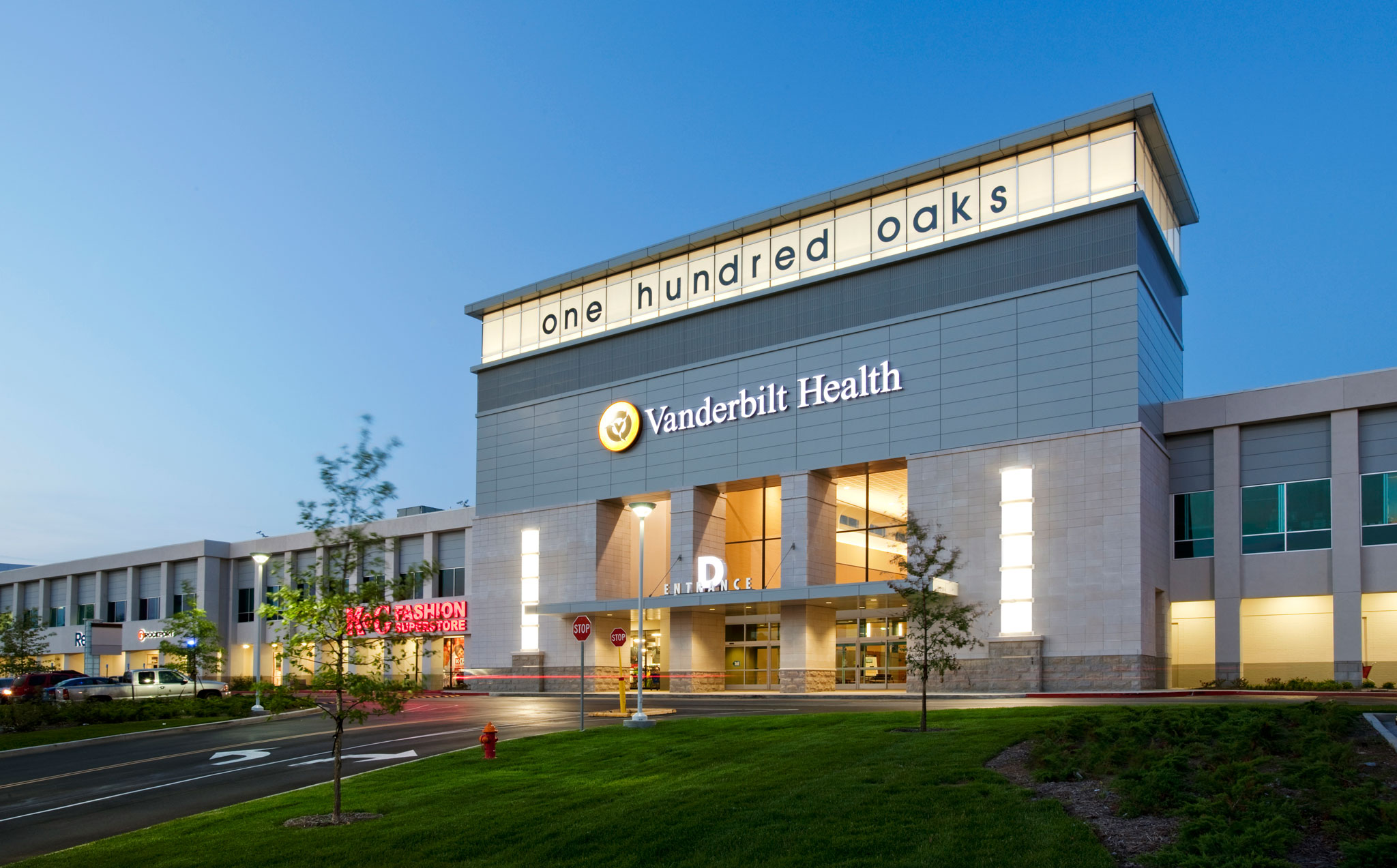
One health system that has taken advantage of available retail space is Vanderbilt University Medical Center (VUMC). Since 2009, VUMC has transformed 450,000 square feet of empty mall space, which formerly housed Reebok and JCPenney stores, into a women’s clinic, dermatology clinic, comprehensive spine clinic, and other specialty sites.
The health system also has several offsite clinics that work with the medical mall and offer telehealth options and free shuttle rides to and from the Monroe Carell Jr. Children’s Hospital and Vanderbilt Medical Center East.
In March, VUMC signed a letter of intent to negotiate a lease for 600,000 square feet in another mall just outside of Nashville and plans to add several new medical facilities there.
“I think that speaks to the success we experienced with our first foray,” said Janice Smith, an RN and VP of adult ambulatory operations at VUMC.
Another health system that has embarked on the “mall-to-medicine” transition is Medical University of South Carolina (MUSC) Health. According to hospital leaders, moving into the mall space makes sense because of its multiple entry points, ample parking, and interstate access.
“There were a lot of big wins for us, and it checked a lot of boxes from a care delivery standpoint,” said Tom Crawford, MUSC Health’s COO.
Originally, MUSC Health planned to break ground on a new piece of land, but then they decided to open new clinics inside of a former mall JCPenney in 2019. “It offered the bones that could be easily flipped into a healthcare facility,” Crawford said.
The facility, which is called the West Ashley Medical Pavilion, now houses an ambulatory surgery center, diagnostic imaging center, and infusion center. MUSC Health has also reached a deal with the mall’s owners to have first right of refusal to adjacent stores if it wants to continue expanding.
This proximity to a shopping mall has proven beneficial for visitors and family members who are waiting for patients. “Because that facility is hooked into the mall, it’s considered the same property,” said Ginger Davis, from Trademark Properties, a real estate company that handles leasing and development planning for Citadel Mall where the West Ashley Medical Pavilion is located. “Instead of having a waiting room full of people, they can go to Target.”
Medical malls have also helped their surrounding communities by generating new foot traffic and business that was not there before. “There’s been this resurgence in that area, and it’s wonderful that any organization can offer that back to the city,” Smith said.
VillageMD, which is majority owned by Walgreens Boots Alliance, plans to shell out nearly $9 billion to pick up medical practice Summit Health, the parent company of urgent care clinic chain CityMD.
The deal, announced Monday morning, is valued at $8.9 billion and includes investments from Walgreens Boots Alliance and Cigna Corp’s healthcare unit Evernorth, which will also become a minority owner in VillageMD. Bloomberg first reported on a potential deal back in late October.
The deal will expand Walgreen’s reach into primary, specialty and urgent care. The transaction creates one of the largest independent provider groups in the U.S., the organizations said. Combined, VillageMD and Summit Health will operate more than 680 provider locations in 26 markets. The two companies will have 20,000 employees.
Walgreens said Monday it will invest $3.5 billion through an even mix of debt and equity to support the acquisition, which is expected to close in the first quarter of 2023. The company will remain the largest and consolidating shareholder of VillageMD with about 53% stake.
Walgreens also raised its fiscal year 2025 sales goal for its U.S. healthcare business to between $14.5 billion and $16 billion from $11 billion to $12 billion previously. That business segment is now expected to achieve positive adjusted EBITDA by the end of fiscal year 2023.
Last year, Walgreens invested $5.2 billion in VillageMD and said it planned to open at least 600 Village Medical at Walgreens primary-care practices across the country by 2025 and 1,000 by 2027.
The deal comes amid a frenzy of M&A activity in the past two years. Major retailers like CVS, Walgreens and Amazon are ramping up their focus on providing medical services to gain bigger footholds in the healthcare market.
Drugstore rival CVS Health won the bidding war for home health and technology services company Signify Health and plans to shell out $8 billion to acquire the company. Amazon also plans to buy primary care provider One Medical for $3.9 billion.
The M&A move signals that Walgreens wants to become a “dominant entity in the overall healthcare services ecosystem,” according to David Larsen, healthcare IT and digital health analyst at financial services firm BTIG.
“Walgreens Boots Alliance is graduating up from being a drug retail store to owning the life-cycle of members’ health,” he wrote in an analyst’s note. “We view this transaction as being a statement by the market that primary care continues to be one of the key drivers of healthcare long-term.”
The deal also will put additional pressure on CVS Health to break into the primary care business “sooner rather than later,” Larsen wrote.
“I think at the most strategic level, I think there continues to be recognition that an integrated, coordinated, connected model of care is one that will ultimately deliver the best results. You see this through Optum’s acquisition of Kelsey-Seybold Clinic and VillageMD’s acquisition of Summit Health,” Tim Barry, CEO and chair of VillageMD, said in an interview with Fierce Healthcare.
“If we’re going to ultimately stem the rising tide of this fee-for-service healthcare system, we need a better solution, and that solution needs to have doctors working with other doctors in a coordinated way and trying to solve the unique problems that these patients have and making sure that the right doctors are accessing the patient at the right time, and doing it all underneath the umbrella of a risk-based contract,” Barry said.
He added, “We think that this is going to continue to be where healthcare goes. And, we have to do it in a way that is integrated and value-oriented. Any organization focused on doing that, and doing that at size and scale, is going to continue, I think, to be the successful winners of our healthcare system.”
In 2019, Summit Medical Group, a physician-owned and governed multispecialty group, merged with CityMD, a leading urgent care company in New York City. The combined organization, Summit Health, has more than 370 locations in New Jersey, New York, Connecticut, Pennsylvania and Oregon.
VillageMD provides value-based primary care for patients at traditional free-standing practices, Village Medical at Walgreens practices, at home and via virtual visits. VillageMD and Village Medical have grown to 22 markets and are responsible for more than 1.6 million patients, according to the company.
Barry said the combination of VillageMD and Summit Health-CityMD will enable the organizations to scale up value-based care and build out integrated primary and specialty care services.
“If you look at the long history of Summit Health, it’s an organization that has done some very innovative things. The way that they deliver multispecialty care, it is truly integrated, it’s truly connected and they are known as the preeminent brand in their marketplace. They also have CityMD, which is one of the more unique and differentiated urgent care models out there in the market. They really are a best-of-breed organization,” he said.
“When I look at what we’ve been able to do at VillageMD, we built this incredible model of value-based primary care delivery. The idea of bringing these two organizations together to bring those best-of-breed capabilities under one umbrella was just so compelling. We will soon be able to offer a more comprehensive, integrated and connected model by also offering other specialty services to our patients, but all still done through a value or risk-based reimbursement structure.”
Barry is bullish on the combined capabilities of the two companies in the primary and specialty care markets.
“We’ll be delivering a consistent value-based model of integrated, multispecialty care in a way that delivers the best clinical results on the planet,” he said.
Jeff Alter, CEO of Summit Health-CityMD, said in a statement that the deal adds Summit Health’s expertise and geographic coverage to VillageMD’s proven value-based primary care approach.
The acquisition also expands Walgreens’ reach into providing medical care directly to patients. “This transaction accelerates growth opportunities through a strong market footprint and wide network of providers and patients across primary, specialty and urgent care,” Roz Brewer, CEO of Walgreens Boots Alliance, said in a statement.
With Cigna’s investment, the combined company will be able to tap into Evernorth’s health services capabilities to potentially lower healthcare costs, Barry said. Evernorth encompasses Cigna’s health services businesses including pharmacy benefit manager Express Scripts
“In order to be a risk-based provider or a value-based provider, you have to have contracts with a payer that allows you to work in this value or risk-based construct. We learned over the years that Cigna has been a really good partner to us on that journey,” Barry said.
“There are companies that [Cigna] has purchased over the years that have different specializations and capabilities that we believe ultimately will allow us to deliver better care to our patients,” he noted. “Evernorth has some capabilities tied to behavioral health, and they have some capabilities tied to the management of specialty pharmaceutical spend, which everyone knows those costs continue to be soaring. We both liked the idea of supporting an organization like ours that’s going to continue to grow and continues to be focused on risk and value.”
With the investment in VillageMD and Summit Health, Cigna gets a leg up in the primary care space as it looks to build out its Evernorth division.
“Our collaboration with VillageMD accelerates our efforts to improve the way care is accessed and delivered,” said Eric Palmer, CEO of Evernorth, in a statement. “Harnessing the breadth of Evernorth’s health services capabilities and connecting them with physicians who provide care in a value-based model like VillageMD, helps more people to get the right care at the right time—driving better health and value.”







 HENRY KOTULA