Growing Understanding Of Airborne Coronavirus Puts Focus On Air Conditioning

https://www.wgbh.org/news/local-news/2020/07/21/growing-understanding-of-airborne-coronavirus-puts-focus-on-air-conditioning

Restaurant Air Conditioning Experts - JDL Refrigeration

Scientists have come to realize the coronavirus isn’t just spread through close contact. The virus can float through the air and be inhaled by someone, even if they’re diligently practicing social distancing.

And as more people head back to work, start shopping in malls and doing other things in public, indoor spaces, the airborne virus is a real concern — especially as it gets hotter and we rely more on air conditioning.

Ed Nardell is an infectious disease expert at the Harvard T.H. Chan School of Public Health. Nardell said that when we exhale, most of the particles that come out are wet.

“Now they’re falling, falling, falling, and some will hit the ground and they won’t evaporate anymore. They’re settled,” Nardell said. “But others, before they hit the ground, start to evaporate. And pretty soon, they are airborne. And those can float on air currents indefinitely unless they’re vented out or inhaled.”

That could lead to infection. But Nardell said it’s unlikely that an HVAC system would suck up a virus particle from one room and deposit it out another vent. Nardell said there’s no evidence of that happening.

But AC is a problem, he said. “Mainly because it makes people go indoors.”

Outside, there’s infinite space to dilute the air you’re breathing.

“And then suddenly you’re inside and you are more likely to be less distant and you’re re-breathing air that other people have exhaled,” Nardell said.

Indoor AC units can spread the virus, Nardell said. The units create air currents that can blow the virus around a room. He said that problem was clear in the case of one restaurant in Wuhan, China, where researchers studied why so many people eating there became sick.

“Where apparently someone infected not only people at their own table, but at the next table and the table after that, which happened to be that in the direction of the airflow from a wall unit air conditioner,” he said.

Since not everyone has the option to stay outside, the American Society of Heating, Refrigerating and Air-Conditioning Engineers is figuring out ways to make indoor spaces safer.

Penn State professor William Bahnfleth chairs the society’s epidemic task force, which has been busy writing up guidance for people in the HVAC industry and building managers.

“It’s almost 400 pages of recommendations on how to protect different types of buildings from risk,” Bahnfleth said.

The key is to lower the concentration of possibly infected particles in the air, he said.

“One of the best ways to do that is simply to bring in a lot more outside air into a building, because that outside air replaces indoor air that may be contaminated, and that lowers the concentration,” Bahnfleth said.

That’s what they’re doing at the restaurant Coppersmith in South Boston, where they’re skipping the air conditioning and getting fresh air by leaving open big garage-style doors.

General Manager Sheila Senat said that customers seem happy with that choice. “I think they feel safer with the AC being off and the doors open,” she said.

But a lot of buildings don’t even have any windows that open. And most HVAC systems in those buildings keep recirculating cool air, because it’s more energy efficient.

Bahnfleth said now’s the time to sacrifice some of that energy efficiency and dial up how much air the system is taking in from outside.

“Another thing you can do is to use filters to remove the particles from the air that may contain viruses,” he said.

Filters are rated on what’s called the MERV scale, and the HVAC recommendations say most buildings should step it up to a level 13 filter to reduce particles carrying coronovirus.

So if you have to go back to work soon, Bahnfleth has some advice.

“You just have to ask, ‘What have you done?’” he said. “I have the same questions for my employer at the university. ‘What are you doing to make our classrooms safe?'”

Tamara Small of the commercial real estate development group NAIOP Massachusetts said she’s hearing building managers are stepping up filtration to the recommended MERV-13.

“It’s a balance to ensure that there is more ventilation, and definitely new air filters in every building are probably the most common responses we’ve seen,” she said.

There is one other technology that Ed Nardell of Harvard said could help reduce risk: Upper room germicidal UV. Basically, that means shining ultraviolet light at the ceiling level to kill any virus floating up there.

“I first encountered it in the eighties when we tried to deal with an outbreak of tuberculosis in a homeless shelter in Boston,” Nardell said.

It worked then, and Nardell said it could work now. The idea’s been around for almost 100 years, he said. But it’s rarely used in the U.S. these days.

Nardell’s working on research now to show how effective it could be at killing off the coronavirus.

In the meantime, the best we can do is to try to get some fresh air.


Pinning hopes on vaccine is not the right coronavirus strategy, expert says

https://www.cnn.com/2020/07/22/health/us-coronavirus-wednesday/index.html

As cases continue to rise, Americans looking to a vaccine as the way out of the coronavirus pandemic should consider a more comprehensive approach, a leading medical expert told CNN on Wednesday.

“Pinning all our hopes on a vaccine that works immediately is not the right strategy,” Dr. William Haseltine, a former professor at Harvard University’s medical and public health schools, told CNN’s Wolf Blitzer.
Haseltine said a broad public health strategy is a better way to contain the spread of the virus along with the help of a vaccine and therapeutic drugs. Mandating masks will help but Haseltine said, “we need a lot more than masks to contain this epidemic that’s running through our country like a freight train.”
Haseltine recommended closing bars and other places where young people congregate at night and ban holding large meetings in the worst-hit regions. Life won’t get better until people make major changes to their behavior and public health services come forward with more resources, he said.
He said a vaccine is still six months away at the earliest and he warned not to underestimate a coronavirus. Haseltine, known for his work on fighting cancer and HIV/AIDS, said it won’t be easy to develop a vaccine.
“These are tricky viruses,” he said. “It’s not as simple as measles or mumps. It’s going to be a lot more complicated”.
Any Covid-19 vaccine that’s sponsored by the US government will be free or affordable for the American public, Health and Human Services Secretary Alex Azar told CNBC on Wednesday.
“For any vaccine that we have bought — so for instance the Pfizer vaccine — those hundred million doses would actually be acquired by the US government, then given for free to Americans,” Azar said.
He said the same would apply with the AstraZeneca and the Novovax vaccines.
“We will ensure that any vaccine that we’re involved in sponsoring is either free to the American people or is affordable,” Azar said.
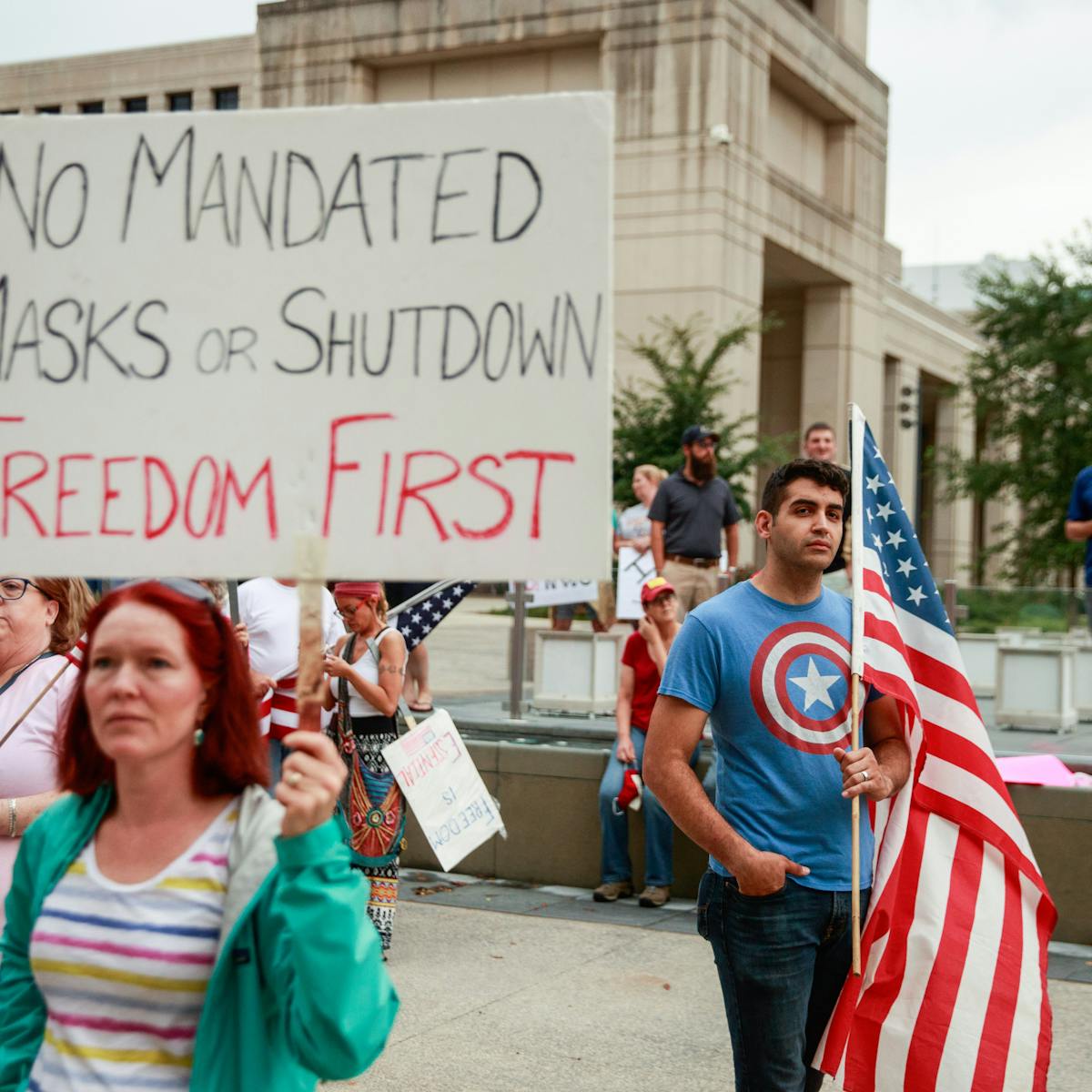
And while some anti-mask protesters refuse to wear a piece of cloth to help save American lives, enormous signs of altruism have emerged.
More than 100,000 people have volunteered to participate in Covid-19 vaccine clinical trials, said Dr. Anthony Fauci, director of the National Institute of Allergy and Infectious Diseases.
“I think we’ll be fine with regards to getting enough people,” Fauci said during a webinar Wednesday with the TB Alliance.

1 million more cases in two weeks

The US is heading in the wrong direction with Covid-19 numbers, and it’s doing so with astonishing speed.
Just after 1,000 people died in a single day, the country is about to reach 4 million Covid-19 cases.
To put that in perspective, the first reported case came on January 21. After 99 days, 1 million Americans became infected.
It took just 43 days after that to reach 2 million cases.
And 28 days later, on July 8, the US reached 3 million cases. The 4 millionth case could come just two weeks after that.
As of Wednesday night, more than 3.96 million people had been infected across the US, and more than 143,000 have died, according to data from Johns Hopkins University.
Some states are reporting record-breaking numbers of new cases. Johns Hopkins reported at least 68,706 new cases and 1,152 deaths in the US on Wednesday.
More governors are requiring masks, and dozens of hospitals are out of intensive care unit beds.
President Donald Trump said the United States has now conducted more than 50 million coronavirus tests. He told reporters at a White House briefing that people should wear masks, pay attention to social distancing and wash their hands. While hot spots like Florida and Texas have popped up, it’s all going to work out, he said.
“We’re all in this together,” he said.

Covid-19 a leading cause of death in L.A. County

California, the most populous state and the first to shut down months ago, appeared to have Covid-19 under control — only to suffer a massive resurgence and surpass New York with the most coronavirus cases in the nation.
This month, state Gov. Gavin Newsom shut down bars and indoor restaurant services again due to an influx of cases after reopening.
Covid-19 is set to become one of the leading causes of death in Los Angeles County, according to Barbara Ferrer, the county’s health director.
“It’s killing more people than Alzheimer’s disease, other kinds of heart disease, stroke and COPD,” Ferrer said, referring to chronic obstructive pulmonary disease, which causes airflow blockage and breathing issues.
Comparing Covid-19 to the flu, Ferrer said data shows Covid-19 killed twice as many people in six months as the flu did in eight months.

Where cases are surging

Some politicians, including the President, have insisted that much of the soaring case numbers are a reflection of increased testing.
But the surge is new cases has greatly outpaced the increase in testing, with troubling rates of transmission and test positivity in many states.
A CNN analysis of testing data from the Covid Tracking Project reveals the positive test rate — or the average number of positive test results out of 1,000 tests performed — has increased significantly in many of the current hotspots, including Florida, Arizona, Texas and Georgia.
Florida saw an average rate of 35 positive results per 1,000 tests during the month of May. But in June, that number nearly tripled to 105. So far in July, the average rate of test positivity has been 187 out of 1,000.
But Florida Gov. Ron DeSantis said the state is on the “right course” in the fight against the virus.
“I think we will continue to see improvements,” the governor said Tuesday. “We just have to, particularly Floridians, have to continue doing the basic things.”
Over the weekend, nearly 50 Florida hospitals said they were out of ICU beds. Statewide, the ICU bed availability had dwindled to 15.98% on Tuesday, down from about 18.1% on Monday.
And new data from the CDC also show infections could be more than 10 times higher than the number of reported cases in some parts of the US.

More mask mandates lead to decreased death projections

Researchers estimate the US will have 219,864 total Covid-19 deaths by November 1, according to the Institute for Health Metrics at the University of Washington.
That’s actually a decrease of about 5,000 deaths from the IHME’s previous forecast of 224,546 by that date.
The reasons for the slightly better forecast include more face masks mandates, more people wearing masks, and more people practicing social distancing, the researchers said.
“So a mandate is very important and helping, and a national mandate, of course, would do much better,” said Ali Mokdad, a professor of health metrics sciences at the IHME.
If Americans wore masks nationwide, the number of total deaths by November 1 would drop to 185,887, the researchers project. But if the mandates ease more, the US could have 231,012 deaths by November 1.
At least 41 states have some kind of mask requirement in place or planned. Starting Saturday, Minnesota will require people to wear masks inside businesses or indoor public settings. People who have conditions that make “it unreasonable for the individual to maintain a face covering are exempt from the order,” Gov. Tim Walz said.
Trump said Wednesday he would make a decision over the next day on whether to mandate masks on federal property.

Major testing delays make tracing almost useless

With the high transmission levels of the virus, traditional contact tracing has now become “impractical and difficult to do,” said California Health Secretary Dr. Mark Ghaly.
The state is working to refine strategies and continue to work with counties to build up their “tracing army,” but Ghaly warns that “even a very robust contact tracing program will have a hard time reaching out to every single case.”
Contact tracing is now harder all over the nation while testing results take days, Fauci said.
Quest Diagnostics, a leading commercial testing lab, said in a news release Monday that for some patients, testing results can take up to two weeks.
“The time frame from when you get a test to the time you get the results back is sometimes measured in a few days,” Fauci said Tuesday.
“If that’s the case, it kind of negates the purpose of the contract tracing because if you don’t know if that person gets the results back at a period of time that’s reasonable, 24 hours, 48 hours at the most … that kind of really mitigates against getting a good tracing and a good isolation.”


Maps Of The USA That Made Us Say “Whoa”

https://www.ranker.com/list/maps-mash-v1/mel-judson?format=slideshow&slide=1

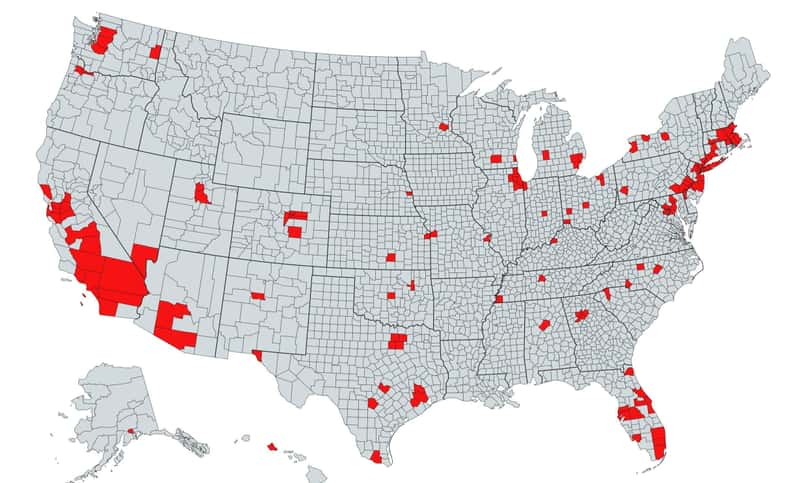
The Red Area Features A Total Population Greater Than The Grey

Coronavirus cases could reach 150,000 a day this fall, widely followed Morgan Stanley analyst says

https://www.cnbc.com/2020/07/23/coronavirus-cases-could-reach-150000-a-day-this-fall-morgan-stanley-analyst-says.html

KEY POINTS
  • Morgan Stanley’s biotechnology analyst, Matthew Harrison, said 150,000 daily new U.S. coronavirus cases are possible in the fall without better control of the virus.
  • The analyst has gained a wide following on Wall Street for his success in predicting the course of the pandemic and government responses.
  • Harrison previously projected a “second wave” in the fall with daily new cases between 40,000 and 50,000 nationwide.
  • However, the recent hot spots — Arizona, Texas, Florida and California — have shown a high rate of infection, which led the analyst to adjust to a more pessimistic view on the pandemic.

The spread of the coronavirus could be elevated this fall with as many as 150,000 daily cases in the U.S., according to Morgan Stanley’s biotechnology analyst, Matthew Harrison.

“We update our scenarios to account for the higher sustained infection rate,” Harrison said in a note Thursday. “Our bull [most optimistic] case reflects similar virus control to Europe while our base [most likely] case assumes a near-term plateau followed by increased spread in the fall. [About] 150,000 daily new cases are possible without better control of the virus.”

Harrison previously projected a “second wave” in the autumn with daily new cases totaling between 40,000 and 50,000 nationwide. However, the recent emergence of hot spots — Arizona, Texas, Florida and California — has reflected a high rate of infection, which led the analyst to adjust to a more pessimistic view on the pandemic.

The analyst has gained a wide following on Wall Street for his success in predicting the course of the pandemic and government responses. For example, in April, Harrison warned that the reopening of the U.S. economy would be a slow and tedious process.

“Our assumption of a growing reproduction number, and consequently increasing daily cases, throughout the rest of the year is based on the fact that traditionally the spread of viruses is elevated in the fall compared to the summer primarily due to more people in enclosed spaces,” Harrison said.

A recent resurgence in new cases has forced a number of states to roll back their reopening plans, which weighed on the stock market that rallied massively in the second quarter on hopes for a fast economic recovery. 

Texas and Florida hit grim records earlier this week for daily coronavirus deaths based on a seven-day moving average.The virus has infected an average of 66,805 people per day in the U.S. over the past seven days, up more than 7% compared with a week ago, according to a CNBC analysis of data compiled by Johns Hopkins University.

On Wednesday, California reported a record spike in daily infections and passed New York as the U.S. state with the most confirmed infections since the pandemic began. 

To be sure, Harrison said his projection doesn’t take into account any pharmacological intervention such as vaccines or strict lockdown measures that could potentially dampen the infection rate.

There has been a slew of positive news on the vaccine front this week. The U.S. agreed to pay drugmaker Pfizer and German partner BioNTech nearly $2 billion for 100 million coronavirus vaccines if their candidate proves both safe and effective.

Meanwhile, another vaccine candidate from Oxford University and AstraZeneca showed a positive immune response in an early trial. Earlier this week, British pharmaceutical company Synairgen claimed that its new respiratory coronavirus treatment has reduced the number of hospitalized Covid-19 patients needing intensive care in a clinical trial.

Goldman Sachs biotech analyst Salveen Richter said the Covid-19 vaccine market will be similar to the flu vaccine market, which requires an annual or periodic vaccination. The analyst also cited data showing the global vaccine market will grow to at least $40 billion in 2023 from $35 billion in 2018.


Fauci on coronavirus: ‘I don’t really see us eradicating it’

https://thehill.com/policy/healthcare/public-global-health/508530-fauci-on-coronavirus-i-dont-really-see-us-eradicating?utm_source=Sailthru&utm_medium=email&utm_campaign=Issue:%202020-07-23%20Healthcare%20Dive%20%5Bissue:28659%5D&utm_term=Healthcare%20Dive

Anthony Fauci, the nation’s top infectious diseases expert, said Wednesday he doesn’t think COVID-19 will ever be fully eradicated but noted it can be controlled.

“I don’t see this disappearing the way SARS 1 did,” Fauci said during a livestreamed event hosted by the TB Alliance, a nonprofit focused on finding better tuberculosis treatments.

The SARS outbreak that started in 2003 lasted several months and mostly affected Asian countries before eventually vanishing. But in the process the disease sickened more than 8,000 people in 29 countries and claimed 774 lives.

Because COVID-19 is more contagious, it has had a far greater impact, with more than 15 million cases worldwide, including 618,000 deaths.

“It is so efficient in its ability to transmit from human to human that I think we ultimately will get control of it. I don’t really see us eradicating it,” Fauci said.

President Trump has repeatedly said the virus will eventually disappear, even though that is rare for most infectious diseases.

Fauci, who is a member of the White House coronavirus task force, recently responded to Trump’s characterization of him as “a little bit of an alarmist” on the pandemic by saying he prefers to think of himself as “a realist.”

During Wednesday’s interview, Fauci described ways that the U.S. can get the coronavirus under control.

“I think with a good combination of good public health measures, a degree of global herd immunity and a good vaccine, which I do hope and feel cautiously optimistic we will get, I think when you put all three of those together we will get very good control of this. Whether it’s this year or next year, I’m not certain,” he added.

“We’ll bring it down to such a low level that we will not be in the position we are right now for an extended period of time.”


Is telehealth as good as in-person care?

https://theconversation.com/is-telehealth-as-good-as-in-person-care-a-telehealth-researcher-explains-how-to-get-the-most-out-of-remote-health-care-142230

Is telehealth as good as in-person care? A telehealth researcher ...

COVID-19 has led to a boom in telehealth, with some health care facilities seeing an increase in its use by as much as 8,000%.

This shift happened quickly and unexpectedly and has left many people asking whether telehealth is really as good as in-person care.

Over the last decade, I’ve studied telehealth as a Ph.D. researcher while using it as a registered nurse and advanced practice nurse. Telehealth is the use of phone, video, internet and technology to perform health care, and when done right, it can be just as effective as in-person health care. But as many patients and health care professionals switch to telehealth for the first time, there will inevitably be a learning curve as people adapt to this new system.

So how does a patient or a provider make sure they are using telehealth in the right way? That is a question of the technology available, the patient’s medical situation and the risks of going – or not going – to a health care office.

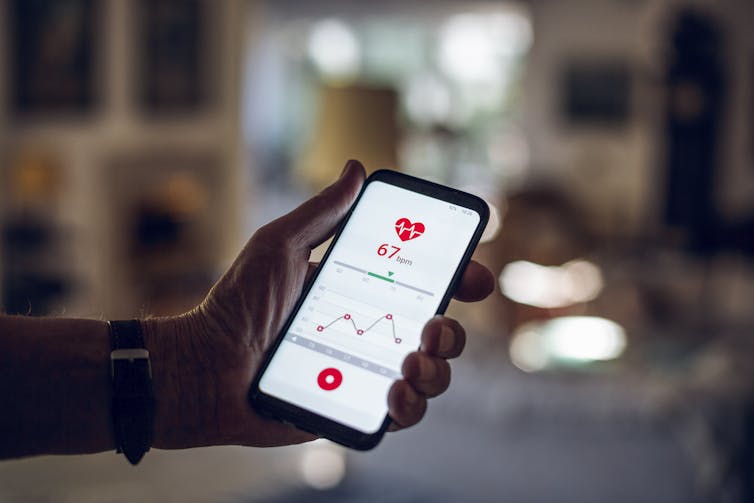
Man holding phone with health data.

Telehealth technologies

There are three main types of telehealth: synchronous, asynchronous and remote monitoring. Knowing when to use each one – and having the right technology on hand – is critical to using telehealth wisely.

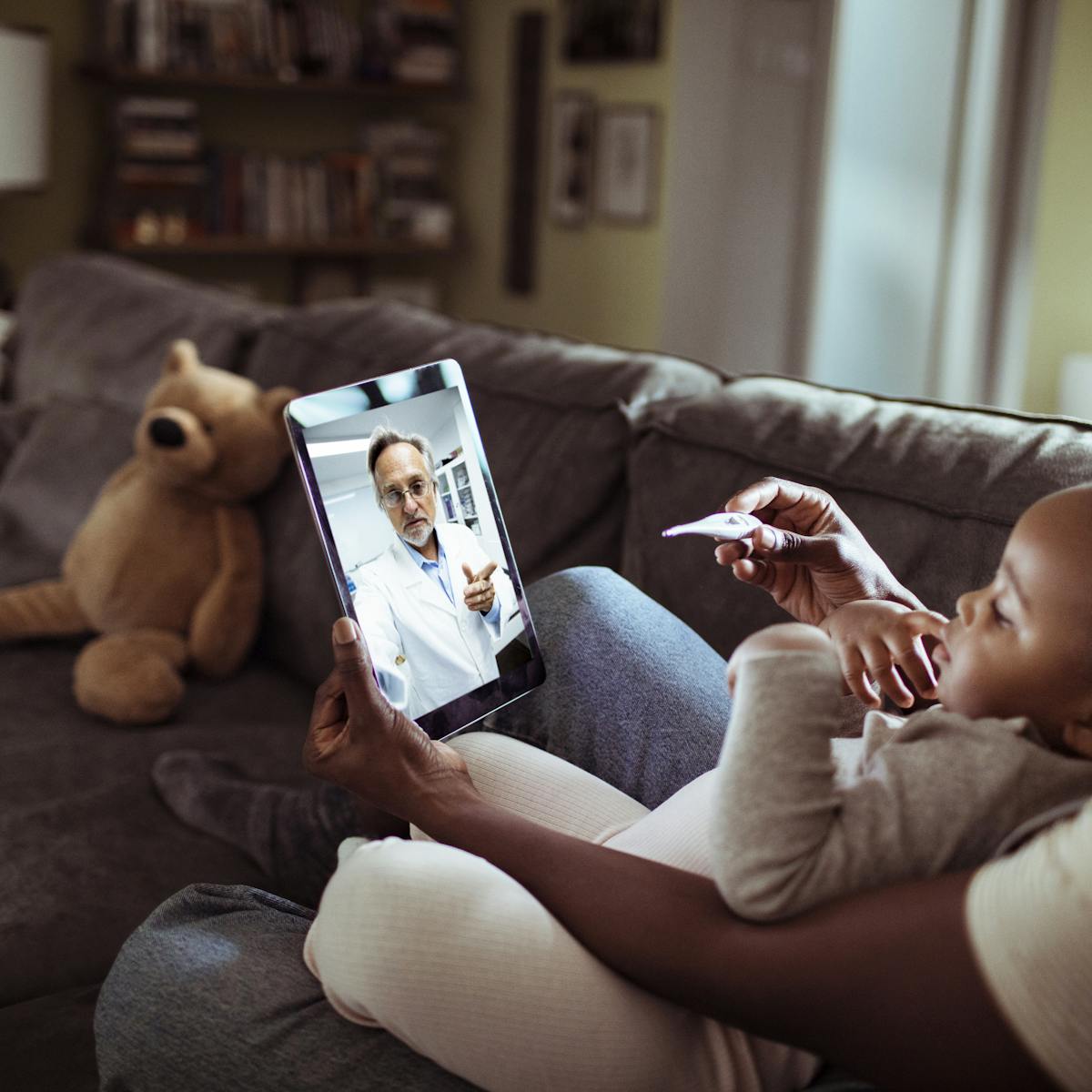
Synchronous telehealth is a live, two-way interaction, usually over video or phone. Health care providers generally prefer video conferencing over phone calls because aside from tasks that require physical touch, nearly anything that can be done in person can be done over video. But some things, like the taking of blood samples, for example, simply cannot be done over video.

Many of the limitations of video conferencing can be overcome with the second telehealth approach, remote patient monitoring. Patients can use devices at home to get objective data that is automatically uploaded to health care providers. Devices exist to measure blood pressure, temperature, heart rhythms and many other aspects of health. These devices are great for getting reliable data that can show trends over time. Researchers have shown that remote monitoring approaches are as effective as – and in some cases better than – in-person care for many chronic conditions.

Some remaining gaps can be filled with the third type, asynchronous telehealth. Patients and providers can use the internet to answer questions, describe symptoms, refill prescription refills, make appointments and for other general communication.

Unfortunately, not every provider or patient has the technology or the experience to use live video conferencing or remote monitoring equipment. But even having all the available telehealth technology does not mean that telehealth can solve every problem.

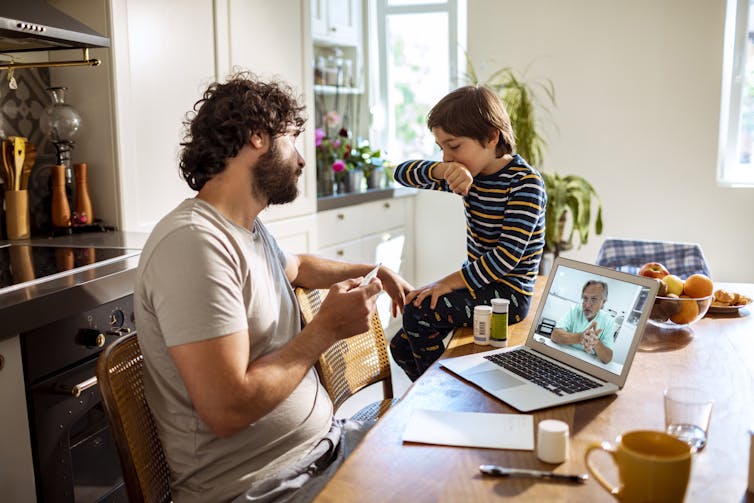
A father and son on a video call with a doctor.

Ongoing care and first evaluations

Generally, telehealth is right for patients who have ongoing conditions or who need an initial evaluation of a sudden illness.

Because telehealth makes it easier to have have frequent check-ins compared to in-person care, managing ongoing care for chronic illnesses like diabetesheart disease and lung disease can be as safe as or better than in-person care.

Research has shown that it can also be used effectively to diagnose and even treat new and short-term health issues as well. The tricky part is knowing which situations can be dealt with remotely.

Imagine you took a fall and want to get medical advice to make sure you didn’t break your arm. If you were to go to a hospital or clinic, almost always, the first health care professional you’d see is a primary care generalist, like me. That person will, if possible, diagnose the problem and give you basic medical advice: “You’ve got a large bruise, but nothing appears to be broken. Just rest, put some ice on it and take a pain reliever.” If I look at your arm and think you need more involved care, I would recommend the next steps you should take: “Your arm looks like it might be fractured. Let’s order you an X-ray.”

This first interaction can easily be done from home using telehealth. If a patient needs further care, they would simply leave home to get it after meeting with me via video. If they don’t need further care, then telehealth just saved a lot of time and hassle for the patient.

Research has shown that using telehealth for things like minor injuries, stomach pains and nausea provides the same level of care as in-person medicine and reduces unnecessary ambulance rides and hospital visits.

Some research has shown that telehealth is not as effective as in-person care at diagnosing the causes of sore throats and respiratory infections. Especially now during the coronavirus pandemic, in-person care might be necessary if you are having respiratory issues.

And finally, for obviously life-threatening situations like severe bleeding, chest pain or shortness of breath, patients should still go to hospitals and emergency rooms.

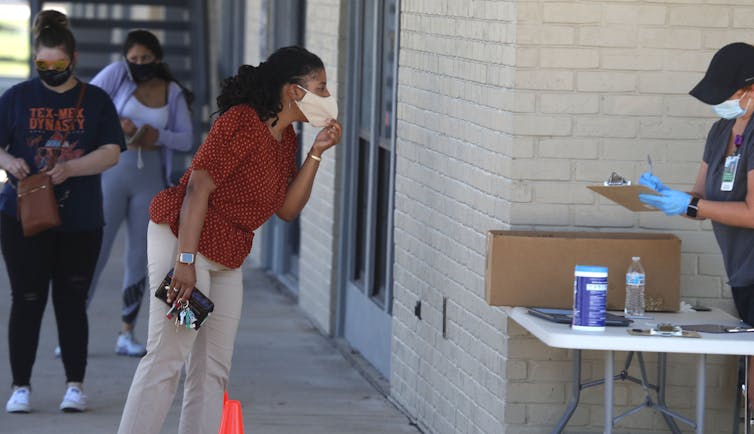
A woman asks a health care worker a question while staying socially distanced.

Balancing risk

With the right technology and in the right situations, telehealth is an incredibly effective tool. But the question of when to use telehealth must also take into account the risk and burden of getting care.

COVID-19 increases the risks of in-person care, so while you should obviously still go to a hospital if you think you may be having a heart attack, right now, it might be better to have a telehealth consultation about acne – even if you might prefer an in-person appointment.

Burden is another thing to consider. Time off work, travel, wait times and the many other inconveniences that go along with an in-person visit aren’t necessary simply to get refills for ongoing medication. But, if a provider needs to draw a patient’s blood to monitor the safety or effectiveness of a prescription medicine, the burden of an in-person visit to the lab is likely worth the increased risk.

Of course, not all health care can be done by telehealth, but a lot can, and research shows that in many cases, it’s just as good as in-person care. As the pandemic continues and other problems need addressing, think about the right telehealth fit for you, and talk to your health care team about the services offered, your risks and your preferences. You might find that that there are far fewer waiting rooms in your future.


New unemployment insurance claims rise for the first time since March

https://www.washingtonpost.com/business/2020/07/23/another-14-million-workers-filed-unemployment-benefits-last-week-pandemic-continues-weigh-labor-market/


Some 1.4 million workers filed for unemployment last week, the first increase in months, as the pandemic continues to weigh on the labor market

The number of new unemployment claims rose for the first time in months last week, to 1.4 million — a troubling sign for the labor market that’s weathering a new round of closures as the pandemic spreads.

For the week ending July 18, about 109,000 more jobless claims were filed compared to the week prior, according to the Department of Labor.

“What you’re seeing is that, as the economy slows, the pace of claims picks back up — which really puts at risk the monthly jobs report over the next few months,” said Joseph Brusuelas, the chief economist at RSM. “The July numbers are going to be tenuous, but it’s August that I’m worried about.”

The number of workers continually claiming unemployment insurance went down, however, a statistic that lags by a week, to 16.1 million workers for the week ending July 11, from 17.4 million for the week ending July 4.

In addition to the 1.4 million seeking unemployment nationwide last week, another 980,000 new Pandemic Unemployment Assistance claims were filed, the benefits offered to self-employed and gig workers.

The numbers come as millions of unemployed workers are about to exhaust stimulus payments from two federal benefits programs whose expiration economists have warned could have dire effects on the economy.

Brusuelas said the numbers are a sign that the burst of economic activity that marked the country’s reopening has waned, and that shrinking consumer demand remained a significant risk for businesses and the workers they employ across the country.

“We are going to see a much slower pace of growth the reset of the year,” he said. “While we still are retaining our call for a swoosh-shaped recovery, one has to acknowledge a w-shaped recovery is possible.”

The extra $600 a week in unemployment benefits that the federal government has offered to supplement more modest state unemployment benefits will end this week, as lawmakers wrangle over legislation that could extend it.

Including the new benefits available to gig workers and the self-employed, more than 53 million applications have been filed for some form of unemployment insurance during the pandemic.


The Constitution doesn’t have a problem with mask mandates

https://theconversation.com/the-constitution-doesnt-have-a-problem-with-mask-mandates-142335?utm_medium=email&utm_campaign=Latest%20from%20The%20Conversation%20for%20July%2022%202020%20-%201684316250&utm_content=Latest%20from%20The%20Conversation%20for%20July%2022%202020%20-%201684316250+Version+A+CID_3a4842bdc1542ab5ad1725fad090f099&utm_source=campaign_monitor_us&utm_term=The%20Constitution%20doesnt%20have%20a%20problem%20with%20mask%20mandates

The Constitution doesn't have a problem with mask mandates

Many public health professionals and politicians are urging or requiring citizens to wear face masks to help slow the spread of the COVID-19 virus.

Some Americans have refused, wrongly claiming mask decrees violate the Constitution. An internet search turns up dozens of examples.

“Costco Karen,” for instance, staged a sit-in in a Costco entrance in Hillsboro, Oregon after she refused to wear a mask, yelling “I am an American … I have rights.”

A group called Health Freedom Idaho organized a protest against a Boise, Idaho, mask mandate. One protester said, “I’m afraid where this country is headed if we just all roll over and abide by control that goes against our constitutional rights.”

As one protester said, “The coronavirus doesn’t override the Constitution.”

Speaking as a constitutional law scholar, these objections are nonsense.

The objections

It is not always clear why anti-maskers think government orders requiring face coverings in public spaces or those put in place by private businesses violate their constitutional rights, much less what they think those rights are. But most of the mistaken objections fall into two categories:

Mandatory masks violate the First Amendment right to speech, assembly, and especially association and mandatory masks violate a person’s constitutional right to liberty and to make decisions about how to their own health and bodily integrity.

They’re not mutually exclusive claims:lawsuit filed by four Florida residents against Palm Beach County, for example, argues that mask mandates “interfere with … personal liberty and constitutional rights,” such as freedom of speech, right to privacy, due process, and the “constitutionally protected right to enjoy and defend life and liberty.” The lawsuit asks the court to issue a permanent injunction against the county’s mask mandate.

Responding to a reporter who asked why President Donald Trump appeared unconcerned about the absence of masks and social distancing at a campaign rally in Tulsa, Vice President Mike Pence said: “I want to remind you again freedom of speech and the right to peaceably assemble is in the Constitution of the U.S. Even in a health crisis, the American people don’t forfeit our constitutional rights.”

What the First Amendment does – and doesn’t – do

The First Amendment protects freedom of speech, press, petition, assembly and religion.

There are two reasons why mask mandates don’t violate the First Amendment.

First, a mask doesn’t keep you from expressing yourself. At most, it limits where and how you can speak. Constitutional law scholars and judges call these “time, place, and manner” restrictions. If they do not discriminate on the basis of the content of the speech, such restrictions do not violate the First Amendment. An example of a valid time, place and manner restriction would be a law that limits political campaigning within a certain distance of a voting booth.

Additionally, the First Amendment, like all liberties ensured by the Constitution, is not absolute.

All constitutional rights are subject to the goverment’s authority to protect the health, safety and welfare of the community. This authority is called the “police power.” The Supreme Court has long held that protecting public health is sufficient reason to institute measures that might otherwise violate the First Amendment or other provisions in the Bill of Rights. In 1944, in the case of Prince v. Massachusetts, for example, the Supreme Court upheld a law that prohibited parents from using their children to distribute religious pamphlets on public streets.

The right to liberty

Some anti-maskers object that masks violate the right to liberty.

The right to liberty, including the right to make choices about one’s health and body, is essentially a constitutional principle of individual autonomy, neatly summarized as “My body, my choice.”

The 1905 case of Jacobsen v. Massachusetts shows why mask mandates don’t violate any constitutional right to privacy or health or bodily integrity. In that case, the Supreme Court upheld a smallpox vaccination requirement in Cambridge, Massachusetts.

The court said that the vaccination requirement did not violate Jacobsen’s right to liberty or “the inherent right of every freeman to care for his own body and health in such way as to him seems best.”

As the court wrote, “There are manifold restraints to which every person is necessarily subject for the common good. On any other basis, organized society could not exist with safety to its members.” In a 1995 New York case, a state court held that an individual with active tuberculosis could be forcibly detained in a hospital for appropriate medical treatment.

Even if you assume that mask mandates infringe upon what the Supreme Court calls “fundamental rights,” or rights that the court has called the “very essence of a scheme of ordered liberty,” it has consistently ruled states can act if the restrictions advance a compelling state interest and do so in the least restrictive manner.

Rights are conditional

As the Jacobsen ruling and the doctrine of time, place and manner make clear, the protection of all constitutional liberties rides upon certain necessary – but rarely examined – assumptions about communal and public life.

One is that is constitutional rights – whether to liberty, speech, assembly, freedom of movement or autonomy – are held on several conditions. The most basic and important of these conditions is that our exercise of rights must not endanger others (and in so doing violate their rights) or the public welfare. This is simply another version of the police power doctrine.

Unfortunately, a global pandemic in which a serious and deadly communicable disease can be transmitted by asymptomatic carriers upsets that background and justifies a wide range of reasonable restrictions on our liberties. Believing otherwise makes the Constitution a suicide pact – and not just metaphorically.


Coronavirus numbers confusing you? Here’s how to make sense of them

https://theconversation.com/coronavirus-numbers-confusing-you-heres-how-to-make-sense-of-them-142624?utm_medium=email&utm_campaign=Latest%20from%20The%20Conversation%20for%20July%2021%202020%20-%201683216237&utm_content=Latest%20from%20The%20Conversation%20for%20July%2021%202020%20-%201683216237+Version+A+CID_b109e0db9fc0132f981f087222693bc8&utm_source=campaign_monitor_us&utm_term=Coronavirus%20numbers%20confusing%20you%20Heres%20how%20to%20make%20sense%20of%20them

Coronavirus numbers confusing you? Here's how to make sense of them

Turn on the TV news, or look at a news website, and you’ll see charts, graphics, and dashboards that supposedly indicate the latest with COVID-19 – statistics revealing the number of tests, cases, hospitalizations and deaths, along with where they happened and whether they are rising or falling.

Different stories are told depending on the dashboard. But one thing is certain: These indicators lag behind the actions we take, or don’t take, on COVID-19. As researchers who focus on public health, we can tell you that a fully accurate, real-time snapshot of the progress of the virus isn’t possible.

Some don’t get tested

There are many reasons for this. Here’s one: diagnostic testing data are incomplete. Someone infected with COVID-19 must first come in contact with the virus either through the air or (less likely) environmental surfaces. Symptoms show between two and 14 days later. But at least 40% of those infected will never manifest symptoms, or show such mild ones they don’t even suspect they have COVID-19. So they may never get tested, which means they won’t show up in the total number of tests, or the total number of cases.

Another example: because of the lack of testing availability – a widespread problem in the U.S. since the start of the pandemic – not everyone who should be tested gets a test.

And another: the tests themselves are not perfect. Up to one-third who get a negative result may actually be infected. This happens because they are tested before they have a viral load sufficient enough for detection. Or maybe the sampling is not adequate. Or perhaps the test itself simply failed.

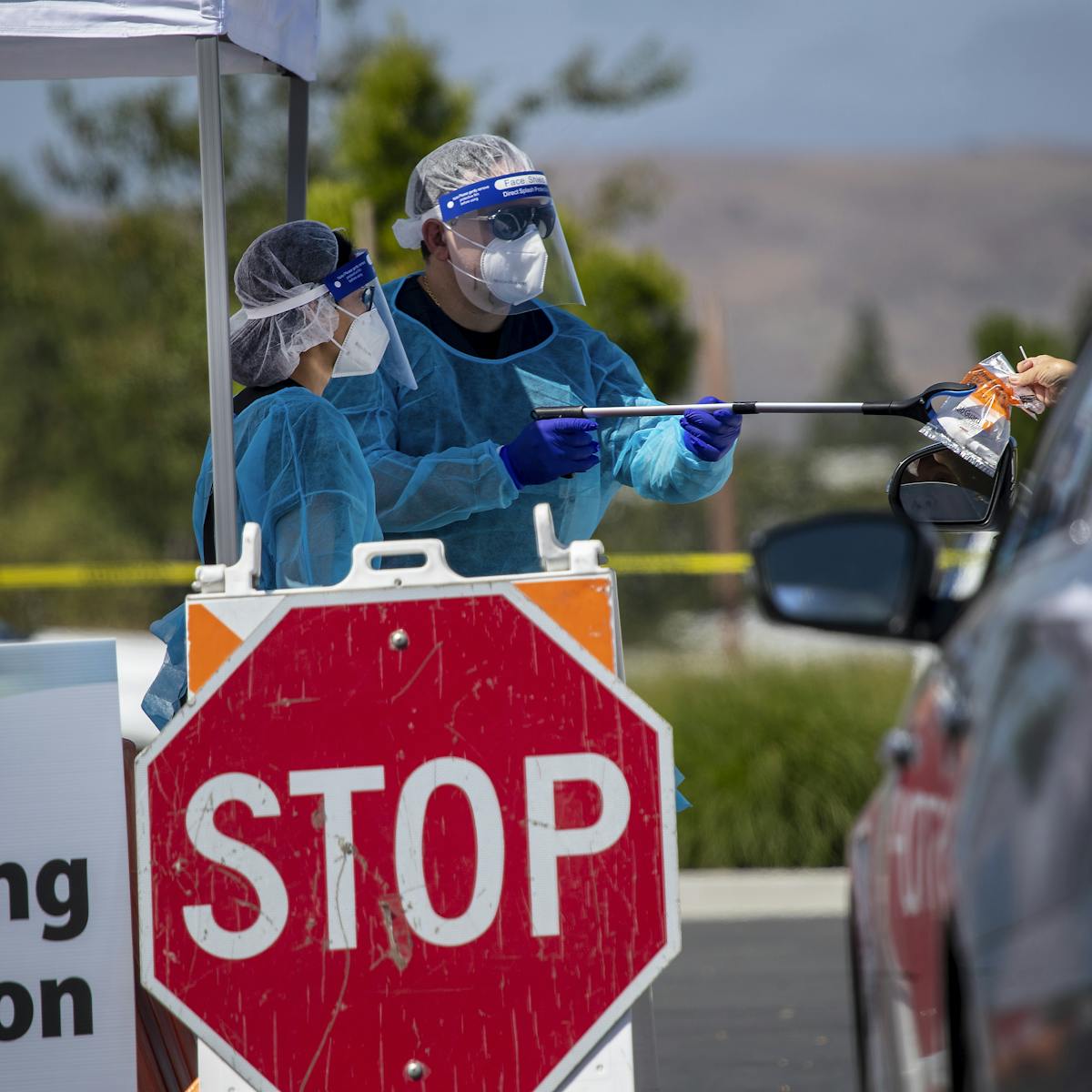
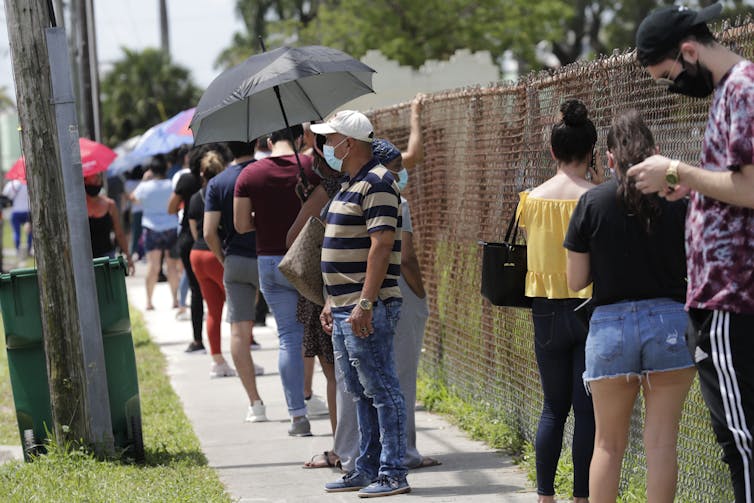
In Florida, people wait outside a COVID-19 testing station.

Case numbers don’t tell the full story

This is why problems arise when we use case numbers to determine disease levels in a community. Case counts actually reflect what was happening in a community weeks earlier. Four weeks, for instance, could elapse between the time a person is exposed to the virus and when they are reported as a case. Even the best testing results often take a week to report to public health authorities, and longer to appear on dashboards. Some testing results, seriously delayed, may take ten days or more.

Other factors impact the metrics. Laboratory results, often released in batches, may introduce artificial variation in case numbers. Someone who tested two days ago, then got a result back immediately, might be added on the same day as someone who was sick two weeks ago, but whose test results were delayed. To smooth out these variations, it helps to look at a rolling seven-day case average.

Hospitalization is a clearer metric for assessing the level of community disease. Those who are seriously ill, in most cases, will be hospitalized whether previously tested or not. Data suggests roughly one in five infected persons are hospitalized. Individuals seem to do okay for the first week, with more life-threatening symptoms showing in the second. That means hospitalizations represent exposures that happened three or four weeks earlier.

Again, a seven-day rolling average evens out artificial variations. There is one caveat for this: Though hospitalization is a useful metric, only about 20% of infected people need it. That means hospitalization numbers alone underestimate the number of people infected and what age groups they represent.

States vary on cause of death

The death numbers are not a reliable indicator either. In some states, to count as a COVID-19 death, the deceased must have had a test reporting positive. In other states, probable cases are reported.

As clinicians learn how to better treat COVID-19, fatality rates are dropping. Deaths, the longest lagging indicator, reflect people who were infected six or eight weeks earlier. When comparing one region to another, deaths are best expressed as rates – a ratio of deaths to population.

Another issue: News reports do not always clearly distinguish between diagnostic testing, which shows if you currently have COVID-19, and antibody testing, which shows if you had it in the past, and now harbor antibodies that can fight it. So far, however, antibody testing has not provided a useful picture of who has been infected and who has not. Once that happens, it could provide researchers and clinicians with some indicators on how widely the virus has spread.

Though the dashboards are ubiquitous on television, none of these frequently used indicators they feature is perfect. Still, taken together, they provide a reasonable approximation of COVID-19 transmission in communities. But as authorities make decisions, they should take into account the numbers are weeks old.

What does this mean to you? Understanding these limitations may help you understand your risk. We are still in the midst of a pandemic that is not under control. Being educated will help all of us from becoming a part of tomorrow’s lagging indicators.


Former Fed Chairs Bernanke and Yellen testified on COVID-19 and response to economic crisis

https://www.brookings.edu/blog/up-front/2020/07/17/former-fed-chairs-bernanke-and-yellen-testified-on-covid-19-and-response-to-economic-crisis/?utm_campaign=Economic%20Studies&utm_source=hs_email&utm_medium=email
Former Fed Chairs Bernanke and Yellen testified on COVID-19 and ...

In many respects this recession is unique. Most recessions result from developments inside the economy, but an external shock—the public health crisis—caused this one. To avoid getting sick, people have curtailed working, shopping, and attending school. Whatever the cause, the coronavirus recession, like all recessions, is imposing heavy costs. Many workers have lost jobs and income, and many business owners’ financial survival is at risk. The economy’s extraordinarily rapid decline earlier this year—as well as the sharp but incomplete rebound following the first steps toward reopening—reflect this recession’s unusual source. In addition, the sectors suffering most differ from past recessions. The heaviest blows have fallen on service industries that involve close personal contact (including retail trade, leisure and hospitality, and transportation) rather than, as is more typical, on the housing, capital investment, and durable goods sectors. Lower-paid workers, as well as women and minorities, are over-represented in the most-affected sectors, and thus have borne a disproportionate share of the job and income losses. And, the virus has affected almost every country, with potentially devastating consequences for trade and international investment.

Because this recession is unprecedented in so many ways, forecasting the recovery is difficult. The course of the pandemic itself is by far the most important factor. As long as people fear catching a potentially deadly illness from other people, they will be cautious about resuming normal activities, even after state and local governments lift lockdowns. Thus, controlling the spread of the virus must be the first priority for restoring more-normal levels of economic activity—but, more importantly, for saving possibly tens of thousands of lives. Members of Congress, local leaders, and other policymakers need to do all they can to support testing and contact tracing, medical research, and sufficient hospital capacity, and they must work to ensure that businesses, schools, and public transportation have what they need to operate safely. Both authors of this testimony are serving on state re-opening commissions, which has provided us insight into the substantial challenges to safe re-opening.

If the pandemic comes under better control, economic recovery should follow. However, the pace of the recovery could be slow and uneven, for several reasons. First, in the face of ongoing uncertainty, households and businesses may remain cautious for a time. They may increase saving and reduce spending, hiring, and capital investment. The longer the recession lasts, the greater the damage it will inflict on household and business balance sheets and the longer it will take to repair the damage. Second, the depth of the recession may leave scars—business closures and the deterioration of unemployed workers’ skills—that will affect growth for several years. Third, depending on the course of the virus, some restructuring of the economy may be needed. For example, people and resources will need to be redeployed out of the sectors most damaged by the pandemic, and business operations will need to be reorganized to protect workers and customers. All of that will take time and money. Fiscal and monetary policies must aim to speed the recovery and minimize the recession’s lasting effects.

ACTIONS BY THE FEDERAL RESERVE

The Federal Reserve has moved swiftly and forcefully in this crisis. It eased monetary policy in March by lowering the federal funds rate, the overnight interest rate on loans between banks, nearly to zero and indicating that it plans to keep rates low for several years. Low interest rates probably had limited economic benefits in the spring. Lockdowns prevented people from spending or working more. However, we expect low rates will spur spending in sectors like housing as the economy reopens. And the Fed may well do more in coming months as re-opening proceeds and as the outlook for inflation, jobs, and growth becomes somewhat clearer. In particular, to maintain downward pressure on longer-term interest rates, the Federal Open Market Committee (FOMC) likely will provide forward guidance about the economic conditions it would need to see before it considers raising its overnight target rate.  And it likely will clarify its plans for further securities purchases (quantitative easing). It is possible, though not certain, that the FOMC will also implement yield-curve control by targeting medium-term interest rates. It could, for example, target two-year rates by announcing its willingness to buy two-year Treasury notes at a fixed yield. The completion of the Fed’s internal review of its tools and framework in coming months will help guide these decisions.

The Fed also has been active beyond monetary policy.

First, the Fed has served as market maker of last resort by acting to stabilize critical financial markets when capital or other regulatory constraints have interfered with normal market-making or arbitrage. The Fed has served this role for repurchase agreements (repos) since September, when intermittent liquidity shortages led to spikes in repo rates. Banks did not provide liquidity to offset these spikes, as they normally would, citing balance sheet limits and other constraints. Because repo markets are critical to the functioning of broader financial and credit markets, as well as for the transmission of monetary policy, the Fed has restored more-normal function in repo markets by conducting large-scale repo operations and by steadily increasing the quantity of reserves in the banking system.

An even larger shock occurred in March, when uncertainty about the pandemic led hedge funds and others to scramble to raise cash by selling longer-term securities. The upsurge in the supply of longer-term securities, including Treasuries, was more than dealers and other market-makers could handle. Key financial markets, including for Treasury securities, experienced substantial volatility. To stabilize these markets, which like the repo market play a critical role in our financial system, the Fed purchased large quantities of Treasuries and mortgage-backed securities, again serving as market maker of last resort. It also set up a new repo facility to allow foreign official institutions to borrow dollars, using their Treasury reserves as collateral, thus avoiding the need to sell those Treasuries. Although risk and liquidity premiums in these key markets have returned closer to normal, at some point the Fed and the Treasury will need to review why the market-making facilities in place before the pandemic hit did not work more efficiently.

Second, the Fed has served as lender of last resort to the financial system, a classic function of central banks. Banks and other financial intermediaries typically borrow short and lend long—that is, they rely heavily on short-term funding to finance long-term loans and investments. If they lose their short-term funding—because their funders lose confidence or for other reasons—they can be forced to sell their assets in fire sales, restrict credit to customers, and, in extreme cases, become insolvent. Central banks can short-circuit that dangerous dynamic by lending to financial institutions against good collateral, replacing the lost liquidity. In the 2007-2009 crisis, which centered on the financial system and included a global financial panic, the Fed as lender of last resort took many actions to provide liquidity to financial institutions, with the goal of stabilizing the system and preserving the flow of credit to the economy.

Fortunately, the financial system is in much better shape today than in was during the financial crisis. Banks in particular are strong, with much higher levels of capital and liquidity. The Fed nevertheless has once again taken steps to ensure that the financial system has sufficient liquidity. Largely replicating our playbook from the crisis era, the Fed has eased terms on the discount window (which provides short-term loans to banks); re-established the Primary Dealer Credit Facility (which lends to broker-dealers); and established a facility that lends indirectly to money market mutual funds, ensuring that the funds can meet depositor withdrawals. In a novel step, the Fed also created a facility that lends to banks, without recourse, against Payroll Protection Program loans, ensuring that banks have sufficient funds to make those loans.

Under the heading of lender of last resort to the financial system, establishing currency swap lines with fourteen foreign central banks was one of the most important actions the Fed took in the 2007-2009 crisis. The Fed has revived this program. Currency swap lines allow foreign central banks (who assume all the credit risk) to lend dollars to banks in their jurisdictions. The broad availability of dollar liquidity is essential because most global banks do substantial borrowing and lending in dollars, including lending within the United States. The swap lines sustain the flow of dollar credit and reduce volatility in dollar-based markets, to the benefit of the U.S. economy.

Third, the Federal Reserve, with the support of the Congress and the Treasury, has also served during the current crisis as a lender of last resort to the non-financial sector, backstopping key credit markets facing the prospect of severe disruption from the pandemic. To take on this role, the Fed invoked its emergency lending powers under Section 13(3) of the Federal Reserve Act. Since those powers require that the Fed’s lending be well secured, it has had to rely on funds appropriated by the Congress and allocated by the Treasury to cover possible losses. Using these authorities, the Fed revived financial crisis-era facilities to stabilize commercial paper and asset-backed securities markets. Going beyond the financial crisis playbook, the Fed has also added new facilities to lend to corporations and state and local governments and to buy outstanding corporate bonds.

These programs have not extended much credit, so far, but that does not mean they have not succeeded. By establishing the programs, the Fed gave private investors the confidence to re-engage by reassuring them that the government would not allow these critical markets to become dysfunctional. Indeed, the corporate and municipal bond markets largely stabilized after the announcements, before any loans were made. Of course, if these markets seize up again, the Fed’s programs can extend credit.

The Fed also established the Main Street Lending Program to lend (through banks) to medium-sized companies. It is too soon, however, to judge its performance. This program is very different from anything the Fed has attempted before and poses difficult technical challenges. Although the Fed took many public comments while setting up the program, and made substantial changes, questions remain about how many banks and borrowers will participate. The Fed and Treasury may have to further ease terms for borrowers and increase incentives for banks for this program to have the desired effect. Or, the Fed and Treasury could add a new facility, along the lines of funding-for-lending programs run by the Bank of England and the European Central Bank, that simply subsidize banks for making additional loans to qualifying borrowers (for example, businesses below a certain size). That approach leaves the underwriting decision completely with the banks, while the size of the subsidy can be adjusted as needed to achieve the desired level of lending.

Finally, the Fed has also taken actions as a bank regulator—for example, encouraging banks to work with borrowers hobbled by the pandemic. It decided recently, based on stress test results, to bar stock buybacks by banks and to limit—but not eliminate—their dividends.  Based on our experience in the global financial crisis, we think the Fed may find it needs to go further. Although banks are currently strong, it is possible the pandemic will so damage the economy that credit losses mount rapidly. For a successful recovery, the banking system must remain strong and able to lend.

Is there more the Fed could do? As we noted, the Fed likely will provide more clarity about its monetary policy plans, and it may need to adjust the terms or borrower eligibility requirements of its various lending facilities. Broadly speaking, though, the Fed’s response has been forceful, forward-looking, and comprehensive. But, as Chair Powell often notes, the Fed’s authorities allow it to lend, not spend. Some households and firms will need subsidies or grants, rather than loans, and spending is, of course, the province of the Congress.

WHAT FISCAL POLICY MIGHT DO

The fiscal response to the pandemic has thus far been quite effective. Enhanced unemployment insurance and the Paycheck Protection Program have helped unemployed workers and their families, together with many businesses, survive the spring shutdowns. The fiscal support for the Fed’s lending programs likely will help preserve credit availability, possibly with only a portion of the allocated funds being spent.

However, some programs authorized by the Congress are ending, and new actions are necessary. Our recommendations for further fiscal action are:

First, Congress should develop a comprehensive plan to support medical research; increase testing, contact tracing and hospital capacity; make available critical supplies; and support state and local efforts to safely open businesses, schools, and public transportation.

Nothing is more important for restoring economic growth than improving public health. Investments in this area are likely to pay off many times over.