

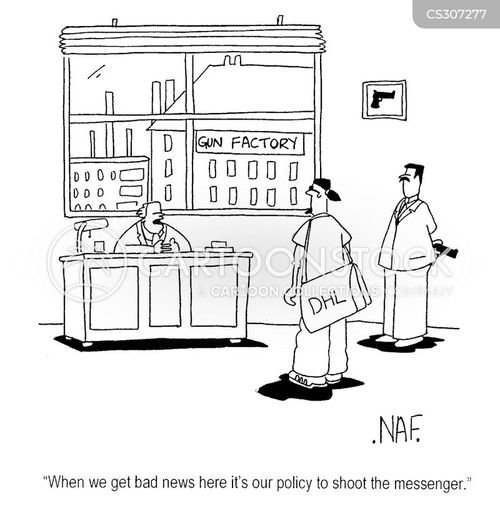
Cartoon – Shoot the Messenger Policy
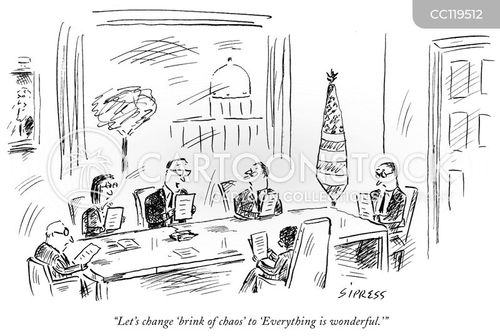

The president announced the nomination of an inspector general for the Department of Health and Human Services, who, if confirmed, would replace an acting official whose report embarrassed Mr. Trump.
President Trump moved on Friday night to replace a top official at the Department of Health and Human Services who angered him with a report last month highlighting supply shortages and testing delays at hospitals during the coronavirus pandemic.
The White House waited until after business hours to announce the nomination of a new inspector general for the department who, if confirmed, would take over for Christi A. Grimm, the principal deputy inspector general who was publicly assailed by the president at a news briefing three weeks ago.
The nomination was the latest effort by Mr. Trump against watchdog offices around his administration that have defied him. In recent weeks, he fired an inspector general involved in the inquiry that led to the president’s impeachment, nominated a White House aide to another key inspector general post overseeing virus relief spending and moved to block still another inspector general from taking over as chairman of a pandemic spending oversight panel.
Mr. Trump has sought to assert more authority over his administration and clear out officials deemed insufficiently loyal in the three months since his Senate impeachment trial on charges of abuse of power and obstruction of Congress ended in acquittal largely along party lines. While inspectors general are appointed by the president, they are meant to be semiautonomous watchdogs ferreting out waste, fraud and corruption in executive agencies.
The purge has continued unabated even during the coronavirus pandemic that has claimed about 65,000 lives in the United States. Ms. Grimm’s case in effect merged the conflict over Mr. Trump’s response to the outbreak with his determination to sweep out those he perceives to be speaking out against him.
Her report, released last month and based on extensive interviews with hospitals around the country, identified critical shortages of supplies, revealing that hundreds of medical centers were struggling to obtain test kits, protective gear for staff members and ventilators. Mr. Trump was embarrassed by the report at a time he was already under fire for playing down the threat of the virus and not acting quickly enough to ramp up testing and provide equipment to doctors and nurses.
“It’s just wrong,” the president said when asked about the report on April 6. “Did I hear the word ‘inspector general’? Really? It’s wrong. And they’ll talk to you about it. It’s wrong.” He then sought to find out who wrote the report. “Where did he come from, the inspector general? What’s his name? No, what’s his name? What’s his name?”
When the reporter did not know, Mr. Trump insisted. “Well, find me his name,” the president said. “Let me know.” He expressed no interest in the report’s findings except to categorically reject them sight unseen.
After learning that Ms. Grimm had worked during President Barack Obama’s administration, Mr. Trump asserted that the report was politically biased. In fact, Ms. Grimm is not a political appointee but a career official who began working in the inspector general office late in President Bill Clinton’s administration and served under President George W. Bush as well as Mr. Obama. She took over the office in an acting capacity when the previous inspector general stepped down.
Mr. Trump was undaunted and attacked her on Twitter. “Why didn’t the I.G., who spent 8 years with the Obama Administration (Did she Report on the failed H1N1 Swine Flu debacle where 17,000 people died?), want to talk to the Admirals, Generals, V.P. & others in charge, before doing her report,” he wrote, mischaracterizing the government’s generally praised response the 2009 epidemic that actually killed about 12,000 in the United States. “Another Fake Dossier!”
To take over as inspector general, Mr. Trump on Friday night named Jason C. Weida, an assistant United States attorney in Boston. The White House said in its announcement that he had “overseen numerous complex investigations in health care and other sectors.” He must be confirmed by the Senate before assuming the position.
Among several other nominations announced on Friday was the president’s choice for a new ambassador to Ukraine, filling a position last occupied by Marie L. Yovanovitch.
Ms. Yovanovitch was ousted a year ago because she was seen as an obstacle by the president’s advisers as they tried to pressure the government in Kyiv to incriminate Mr. Trump’s Democratic rivals. That effort to solicit political benefit from Ukraine, while withholding security aid, led to Mr. Trump’s impeachment largely along party lines in December.
Mr. Trump selected Lt. Gen. Keith W. Dayton, a retired 40-year Army officer now serving as the director of the George C. Marshall European Center for Security Studies in Germany. Mr. Dayton speaks Russian and served as defense attaché in Moscow. More recently, he served as a senior United States defense adviser in Ukraine appointed by Jim Mattis, Mr. Trump’s first defense secretary.


https://www.kevinmd.com/blog/2020/04/truth-dies-in-silence-sadly-so-do-people.html
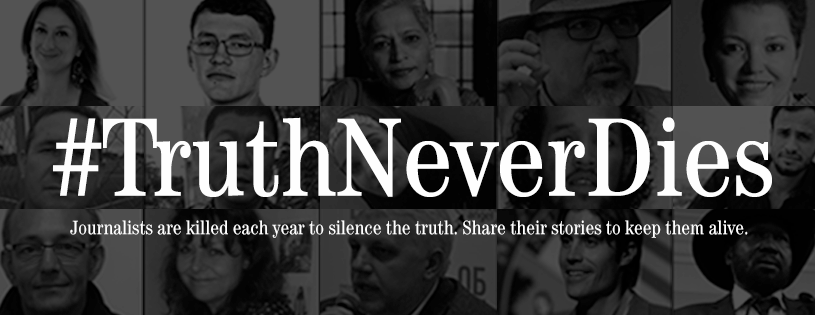
I have been writing columns for physicians for twenty years. And year after year, I have had physicians say this: “I’m glad you said what you did. If I said it, I’d be fired.” There are variations on the theme, but they’re much the same. Twenty years, and far more than 20 years, during which the alleged health care leaders in America have been routinely muzzled because they aren’t supposed to speak the truth. Open discussions shut down because they might embarrass someone or upset an administrator. Because it might, heaven forbid, shine a light on a genuine problem.
Some years ago, as the mental health crisis was gathering steam across the emergency departments of the land, I was contacted by a news show in France. The producers wanted to come to South Carolina and follow me on some shifts in my ED. They wanted to see how mental health was working out here. “We have socialized care, but mental health is also a huge problem in our country,” the producer said.
I dutifully, and appropriately, went to administration. “No, we can’t do that,” I was informed. I was given this explanation when everyone knew the mental health system was at the breaking point: “What if they uncover a problem?” Here was a chance for publicity, for potential grant money or to demonstrate that a political solution was in order. How dare we let in fresh air? How dare we suggest that things were not perfect?
The same thing is happening in the midst of the pandemic. Physicians, nurses, and other assorted health care professionals are being threatened for wearing masks. Administrators say, “They make the patients nervous.” Also likely, administrators have realized they don’t have adequate equipment. Facilities and systems with enormous budgets caught unprepared in a pandemic.
I see the stories of these professionals as I follow online forums. Physicians, nurses, and others, threatened with firing because they dared to speak out on the issue of PPE (personal protective equipment).
Like police officers without ballistic vests, these physicians don’t want to go into the rooms of COVID-19 patients without the masks and respirators, gloves, gowns, and face shields that will keep them safe. The equipment that will allow them to return home to their loved ones and prevent them from infecting their families. This isn’t a good look. A hospital that refuses to acknowledge the concerns and safety of its professionals is a hospital that ultimately doesn’t deserve them.
The same veil of silence pervades dialogue on the treatment of coronavirus. When I follow discussions, I see a lot of shaming. “There just isn’t enough evidence to try hydroxychloroquine, Zithromax, convalescent plasma, an untried vaccine, HIV drugs, etc.” Those who suggest we might try are considered reckless or ignorant. As the battle rages and lives are lost, innovation and risk are viewed with disdain. And our medical establishment is locked into the paradigm of double-blinded, placebo-controlled studies involving tens of thousands of people and lasting years. Here’s a view of the same from the U.K. Unfortunately, to suggest that we may need to react faster is only met with ridicule, and often tied to political views instead of expediency. Worse, it ignores the deep, fundamental need to offer hope, any hope, to hundreds of millions of professionals and citizens who are living in fear.
There is a tragic irony here; a painful coincidence. Physicians silenced. Let’s see. Where did we see that sort of thing resulting in a worldwide pandemic? Does China come to mind? The Chinese Communist Party threatened (and who knows what else) physicians who dared to speak out about coronavirus, even when they knew its danger. Even when they knew how easily and widely it spread.
They continued to soft-peddle numbers about total cases and case fatality. The party continued to allow travel to and from China long after the problem was known. They even suggested that Italians have a “hug a Chinese person” campaign to combat alleged racism; a charge delightfully accepted and repeated by gullible Western journalists in pursuit of a narrative.
Truth dies in silence. Sadly, so do people. And certainly when we tell dedicated health care professionals to keep their mouths shut when they have identified problems, offered solutions and simply asked for help. Whether it’s a private business, a totalitarian government, or anything in between, we should insist that the truth be spoken; freely and without fear of punishment.
Because, for the foreseeable future, lives will depend on it.
President Donald Trump’s administration stalled three key weeks in February that could have been spent enacting mitigatory measures against COVID-19 after Trump was angered by a public health official issuing a dire warning about the virus, The New York Times reported on Saturday.
On Saturday,The Times published a lengthy investigation of all the instances Trump brushed aside warnings of the severity of the coronavirus crisis, failed to act, and was delayed by significant infighting and mixed messages from the White House over what action to take and when.
The Times wrote: “These final days of February, perhaps more than any other moment during his tenure in the White House, illustrated Mr. Trump’s inability or unwillingness to absorb warnings coming at him.”
The Times conducted dozens of interviews with current and former officials and obtained 80 pages of emails from a number of public health experts both within and outside of the federal government who sounded the alarm about the severity of the crisis on an email chain they called “Red Dawn.”
One of the members of the email group, Health & Human Service disaster preparedness official Dr. Robert Kadlec, became particularly concerned about how rapidly the virus could spread when Dr. Eva Lee, a Georgia Tech researcher, shared a study with the group about a 20-year-old woman in China who spread the virus to five of her family members despite showing no symptoms.
“Eva is this true?! If so we have a huge [hole] on our screening and quarantine effort,” he replied on February 23.
At that point, researchers and top officials in the federal government determined that since it was way too late to try to keep the virus out of the United States, the best course of action was to introduce mitigatory, non-pharmaceutical interventions (NPIs) like social distancing and prohibiting large gatherings.
As officials sounded the alarm that they didn’t have any time to waste before enacting aggressive measures to contain the virus, top public health officials including Dr. Robert Kadlec concluded that it was time to present Trump with a plan to curb the virus called “Four Steps to Mitigation.”
The plan, according to The Times, included canceling large gatherings, concerts, and sporting events, closing down schools, and both governments and private businesses alike ordering employees to work from home and stay at home as much as possible, in addition to quarantine and isolating the sick.
But their entire plan was derailed by a series of events that ended up delaying the White House’s response by several weeks, wasting precious time in the process.
Trump was on a state visit to India when Dr. Kadlec and other experts wanted to present him with the plan, so they decided to wait until he came back.
But less than a day later, Dr. Nancy Messonnier, the director of the National Center for Immunization and Respiratory Diseases at the CDC, publicly sounded the alarm about the severity of the coronavirus outbreak in a February 26 press conference, warning that the outbreak would soon become a pandemic.
“It’s not so much a question of if this will happen anymore but rather more a question of exactly when this will happen and how many people in this country will have severe illness,” Messonnier said, bluntly warning that community transmission of the virus would be inevitable.
The Times reported that Trump spent the plane ride stewing in anger both over Messonnier’s comments and the resulting plummet of the stock market they caused, calling Secretary of Health & Human Services Alex Azar “raging that Dr. Messonnier had scared people unnecessarily,” The Times said.
The Times reported that the entire episode effectively killed off any efforts to persuade Trump to take aggressive, decisive action to mitigate the virus’ spread and led to Azar being sidelined, writing, ” With Mr. Pence and his staff in charge, the focus was clear: no more alarmist messages.”
In the end, Dr. Kadlec’s team never made their presentation. Trump did not issue nationwide social distancing and stay-at-home guidelines until March 16, three weeks after Messonnier warned that the US had limited time to mitigate community transmission of the virus, and several weeks after top experts started calling for US officials to implement such measures.
In those nearly three weeks between February 26 and March 16, the number of confirmed COVID-19 cases rose from just 15 to 4,226, The Times said. As of April 12, there are over half a million confirmed cases in the United States with over 21,000 deaths.
https://www.businessinsider.com/trump-retweets-threat-fire-fauci-2020-4
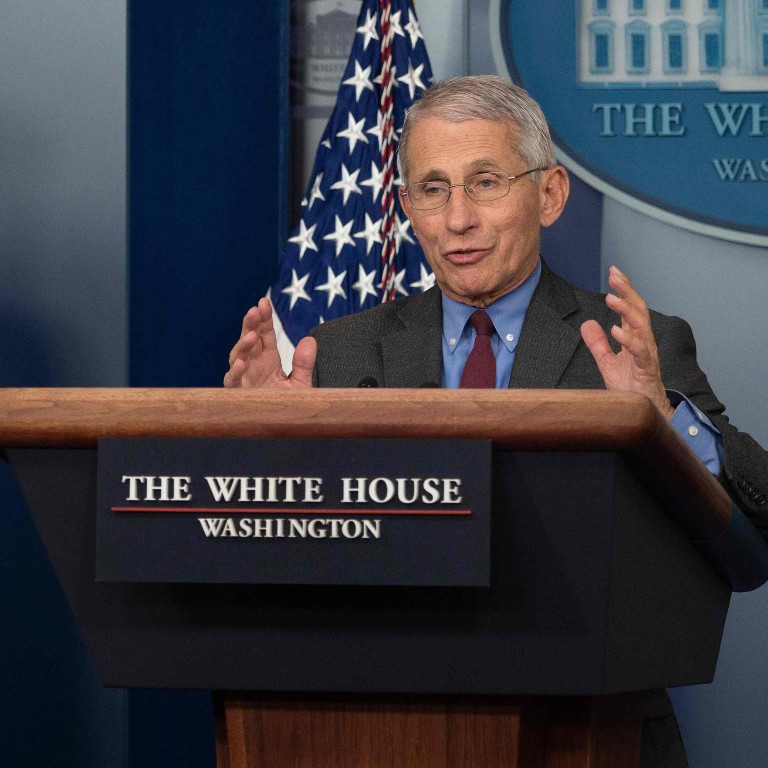
President Donald Trump on Sunday retweeted a call to fire Dr. Anthony Fauci, the US government’s top infectious-disease expert who has so far lasted six presidential administrations, to his 76.8 million followers.
The Trump administration has been in damage-control mode over the slow response to dealing with the coronavirus outbreak. Fauci, who has been the director of the National Institute of Allergy and Infectious Diseases since 1984, helping to tackle AIDS, Zika, and Ebola outbreaks, is one of the top experts on the White House’s coronavirus task force.
The tweet, written by DeAnna Lorraine, a Republican who ran for Congress in California, said: “Fauci is now saying that had Trump listened to the medical experts earlier he could’ve saved more lives. Fauci was telling people on February 29th that there was nothing to worry about and it posed no threat to the US public at large. Time to #FireFauci.”
It’s been about two months since the US’s first coronavirus case was reported. According to data from Johns Hopkins University, as of Sunday night more than 22,000 people had died from the virus in the US and more than 555,300 had been infected.
A week ago, during a White House briefing, Trump stopped Fauci from telling reporters what he thought about using hydroxychloroquine, a antimalaria drug, for people with COVID-19, the illness caused by the virus. Trump has been vocal about his support for the drug — though it is not approved for treating COVID-19 — repeatedly saying, “What do you have to lose?”
It’s unclear whether Trump’s retweet was more than a vague threat, but he has fired several government officials in the past few weeks.
Five days ago, he got rid of Glenn Fine, the acting inspector general at the Department of Defense, who had been tasked with overseeing the implementation of the $2 trillion coronavirus stimulus package. On April 3, he fired Michael Atkinson, the intelligence community inspector general who alerted Congress about the whistleblower complaint that accused Trump of soliciting election interference from Ukraine.
Fauci had spoken to CNN earlier on Sunday, and he was quoted in a New York Times report on Saturday that outlined recommendations he backed on February 21.
The Times reported that — in stark contrast to Lorraine’s tweet — Fauci, along with the Trump administration’s other top public-health experts, said on February 21 that the administration needed to announce aggressive social-distancing policies, even at the cost of disrupting normal life and the US economy.
On Sunday, Fauci said on CNN’s “State of the Union” that “no one is going to deny” that lives could have been saved if the US had implemented containment measures earlier in the novel coronavirus outbreak.
Fauci suggested that fewer people would have died if the Trump administration had announced isolation measures in February instead of in mid-March after warnings from public-health officials.
“As I’ve said many times, we look at it from a pure health standpoint,” he said. “We make a recommendation. Often, the recommendation is taken. Sometimes it’s not. But it is what it is. We are where we are right now.”


 HENRY KOTULA