


Thought of the Day: On Leadership Integrity

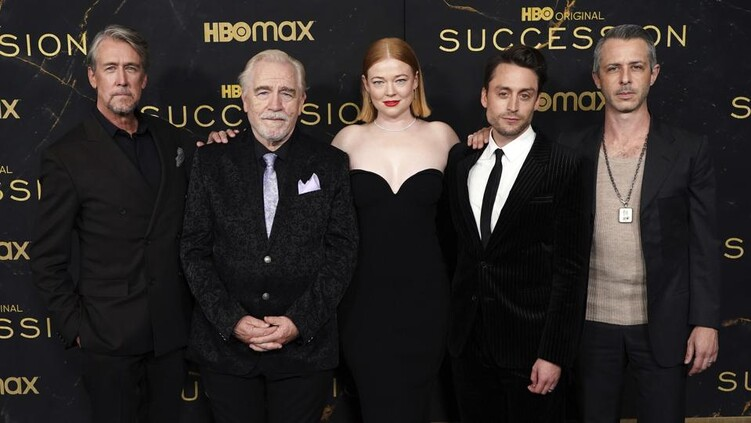
HBO’s critically acclaimed series Succession recently concluded its fourth and final season with a crescendo of family dramatics and falls from grace. If you haven’t seen the finale, bookmark this article for later. It contains spoilers.
Succession, for those unfamiliar, centers on the uber-wealthy Roy family, majority owners of the global media and entertainment subsidiary Waystar Royco. The plot revolves around the bullishly Machiavellian patriarch Logan Roy and his four adult children, each of them seeking (a) control of the family business and (b) their dad’s approval.
During its run, the show’s endless infighting and fascinating archetypes captivated viewers. But the 39-episode series also provided enduring lessons in dysfunctional leadership, which apply directly and saliently to U.S. healthcare.
As with Waystar Royko, the institutions of medicine (hospitals, medical groups, insurers, pharma and med-tech companies) need excellent leadership just to survive. With millions of dollars and hundreds or thousands of jobs resting on the decisions of top administrators, any major flaw can prove fatal—erasing decades of organizational success.
In any industry, poor leadership can undermine performance and threaten livelihoods. In healthcare, poor leadership puts lives at risk. Here are five dangerous types of leadership personalities, each inspired by a character from Succession:
In the show’s second season, Connor, the eldest and oft-forgotten son of Logan Roy, launches his U.S. presidential campaign on a “no-tax” platform. When the eve of election arrives, he’s polling at less than 1%, yet he refuses to step aside, still convinced he is capable of doing the job.
Like Connor, healthcare’s delusional leaders overestimate their abilities. Their ideas are unrealistic and their vision for the future: pure fiction. But no matter how outlandish their outlook, delusional leaders will always find apostles among the disenfranchised who, themselves, feel undervalued and overlooked.
When confronted with the harshness of reality, deluded leaders and their followers double down, insisting that everyone else is myopic. “Just follow and you’ll see,” they demand.
Unless senior executives or board members step in to relieve this leader of power, the organization will be as doomed as Connor Roy’s bid for presidency.
On the surface, Kendall is by far the most capable and experienced candidate to succeed his father. He’s a smart and articulate heir apparent who appears up to the task of CEO.
But underneath the gold plating, his every action is reflexively self-centered. As such, when the time comes to sacrifice something of himself for the good of the company, he freezes and falters, his decisions corrupted by the compulsion to put himself first.
Like Kendall, healthcare’s narcissistic leaders bask in praise and blind loyalty. They reject and punish those who provide honest feedback and fair criticism. Their obsession with status and self-importance blinds them to long-term threats and opportunities, alike.
Unlike delusional leaders, who fail because their vision cuts against the grain of reality, the narcissistic leader’s passion for winning may advance an organization—in the short run. Long-term, however, their flaws will be exposed and weaknesses manipulated by seasoned competitors.
Across four seasons, Kendall can’t fathom that anyone else might be a better choice to run the company. As a result, he underestimates a rival CEO who’s seeking to acquire Waystar, and he overestimates the loyalty of his siblings. In the end, he’s left hopeless and broken.
Roman, the youngest Roy, is brash and witty, but also unpredictable and unrestrained. His penchant for foul language and cutting insults make for good television, but they’re the telltale signs of insecurity and immaturity.
Like all immature leaders, Roman is addicted to novelty and excitement, often acting without regard for the consequences. He’s fast-talking and loud, which makes him likable enough for many to overlook his incompetence. But he’s incapable of filling his father’s shoes.
Immature leaders get promoted before they’re primed and polished. They often lack boundaries and excel at the sport of making others uncomfortable. At times, they seem more interested in causing a scene than creating results. They chase big ideas—if only for the adrenaline rush—but can’t accurately calculate whether the risk of failure is 20% or 80%. This makes them very dangerous as leaders.
In a world of deluded and despotic men, Shiv comes across as the voice of reason. Smart and strategic, relaxed and composed, Shiv carefully cultivates new allies but never establishes an identity of her own. This makes her an excellent political consultant (the job she has) but a poor candidate for CEO (the job she wants).
Political leaders are better at advancing within an organization than advancing the organization itself. Like chameleons, these leaders change with the scenery, shifting alliances and values as organizational power waxes and wanes. While they’re busy focusing on rumors and relationships, they fail to muster real-life business acumen and experience.
Colleagues rarely respect those who play organizational politics. Once political leaders have accrued enough power and advanced their careers to the max, their shallow alliance and inability to drive performance leaves them stranded at the top—with nowhere to go but down.
Not technically a Roy, Tom is Shiv’s husband and an eager aspirant for CEO.
Once appointed head of Waystar’s struggling cruises division, Tom conceals damaging information to protect his father-in-law. He is a willing henchman, ready to sacrifice his ethics for a shot at the corner office. To advance his interest, Tom repeatedly compromises his integrity, first with Logan, then Kendall, and eventually Lukas Matsson, the incoming global CEO who completes the hostile takeover of Waystar.
In what proves to be Tom’s final interview for U.S. CEO, Matsson asks him whether he will be willing to play the role of “pain sponge,” absorbing any negative fallout the company may experience. After he responds positively, Matsson tests him further by mentioning that he’d like to have sex with Shiv. While viewers squirm in their seats, Tom doesn’t object. For him, every compromise is simply a means to an end.
Compromised leaders are skilled at making promises. They seek support by vowing to fulfill wants and palliate pains. Depending on who these leaders aim to please, they’re willing to slash budgets or raise salaries, regardless of the financial impact. Ultimately, they’ll do anything to keep people happy, even if they have to sink the business in the process.
In the final season of Succession, Logan tells his offspring, “I love you, but you are not serious people.” He is both accurate and accountable. Logan was not a serious father and, as a result, his kids were poorly equipped for life and leadership.
The healthcare industry is replete with stories of once-successful institutions falling on hard times under poor leadership. Although there’s no one way to run an organization, all great healthcare leaders share three characteristics:
Leaders have three jobs. They must create a vision, align people around it and motivate them to succeed. To accomplish these tasks, executives may use carrots and sticks, incentives and disincentives, or positive and negative reinforcement. But these tactics will fail unless they reflect a clear mission and purpose.
Years ago, former CMS administrator Don Berwick started a program with an audacious goal of maximizing patient safety and preventing unnecessary deaths. He called it the 100,000 Lives Campaign. And when he spoke of the program, he leaned hard on its righteous mission. Instead of presenting metrics and statistics, he talked about the weddings and graduation ceremonies that parents and grandparents would attend, thanks to the program and the people behind it. Even hard-weathered clinicians in the audience had tears in their eyes.
Financial incentives drive change in healthcare, but rarely achieve the outcomes intended. Everyone engaged in the 100,000 Lives Campaign knew exactly what they needed to accomplish and were motivated to do so.
Bold ideas and glittering promises always capture attention. Words are powerful and relationships can take aspiring leaders far. But when it comes time to turn big plans into action, there is no substitute for a leader who has been there and done it well.
Exceptional performance, not promises, separate great leaders from the rest—and success from failure. In every industry, past performance is the best predictor of future success. Of course, poor leaders can get lucky and even great ones in bad circumstances may fail. But the odds always favor those who have achieved recurring success throughout their careers.
Emerging leaders can work on their weaknesses. Coaching, training and even therapy can help them quell maladaptive behaviors.
But everything changes when an emerging leader becomes the head of an organization and faces a crisis. As risks and pressures intensify, people tend to fall back on approaches and habits they learned in the past, particularly problematic ones. Whenever tested, the Roy children did exactly that.
After Logan’s death early in the final season, the fatal flaws of each Roy child came into clear view. As a result, the Waystar board made the safest choice for successor: none of the above.
Like a true Shakespearean tragedy, the flaws of the characters in Succession exceeded their abilities.
In healthcare, that’s a guaranteed prescription for failure.

https://www.washingtonpost.com/health/2020/11/02/deborah-birx-covid-trump/

“This is not about lockdowns. … It’s about an aggressive balanced approach that is not being implemented,” says internal White House report that challenges many of Trump’s pronouncements.
A top White House coronavirus adviser sounded alarms Monday about a new and deadly phase in the health crisis, pleading with top administration officials for “much more aggressive action,” even as President Trump continues to assure rallygoers that the nation is “rounding the turn” on the pandemic.
“We are entering the most concerning and most deadly phase of this pandemic … leading to increasing mortality,” said the Nov. 2 report from Deborah Birx, coordinator of the White House coronavirus task force. “This is not about lockdowns — it hasn’t been about lockdowns since March or April. It’s about an aggressive balanced approach that is not being implemented.”
Birx’s internal report, shared with top White House and agency officials, contradicts Trump on numerous points: While the president holds large campaign events with hundreds of attendees, most without masks, she explicitly warns against them. While the president blames rising cases on more testing, she says testing is “flat or declining” in many areas where cases are rising. And while Trump says the country is “rounding the turn,” Birx notes that the country is entering its most dangerous period yet and will see more than 100,000 new cases a day this week.
Through a spokesperson, Birx did not respond to a request for comment.
Other health experts, including Anthony S. Fauci, director of the National Institute of Allergy and Infectious Diseases, have warned of record surges in cases and hospitalizations as the United States records more than 9 million cases and 230,000 deaths.
“We’re in for a whole lot of hurt,” Fauci told The Washington Post late Friday, predicting a long and potentially deadly winter unless there’s an “abrupt change” — prompting Trump to suggest that he planned to fire the scientist after the election.
But Birx’s daily missives go further, revealing how much the administration’s internal reports are in direct conflict with Trump’s public pronouncements that downplay the seriousness of the threat and erroneously suggest that few people are dying. They also speak to the increasing desperation of health officials to spotlight the risks of a pandemic that is forecast to take thousands more lives as the weather worsens unless people change their behaviors. Some officials are also concerned about recouping their reputations in a post-Trump era.
The increasingly dire tone of Birx’s reports has gotten little traction, according to an administration official who works with her and spoke on the condition of anonymity to share sensitive information. “She feels like she’s being ignored,” the official said.
Birx’s message “has been urgent for weeks,” said another administration official, “as has the plea for the administration to ask the American people to use masks, avoid gatherings and socially distance, basically since it became apparent that we were heading into a third surge.”
The report hits hard on the worsening situation: “Cases are rapidly rising in nearly 30 percent of all USA counties, the highest number of county hotspots we have seen with this pandemic,” it said. “Half of the United States is in the red or orange zone for cases despite flat or declining testing.”
Sounding a similar theme to past reports, it calls for “much more aggressive action from messaging, to testing, to surging personnel around the country before the crisis point.”
What is “essential at this time point,” the report said, is “consistent messaging about uniform use of masks, physical distancing and hand washing with profound limitation on indoor gatherings especially with family and friends.”
It adds: “This is about empowerment Americans with the knowledge and data for decision-making to prevent community spread and save lives.”
The president appears unpersuaded by such messages, convinced by new medical adviser Scott Atlas, a neuroradiologist with no infectious-disease experience, that allowing healthy people to return to daily activities without restrictions will hasten herd immunity and bolster the economy, say some advisers who spoke on the condition of anonymity because they were not authorized to speak publicly.
Trump plans to hold a large indoor gathering for 300 to 400 guests at the White House on Tuesday to watch the election returns, only a few weeks after a White House event to announce his Supreme Court nominee Amy Coney Barrett became a superspreader event.
White House communications director Alyssa Farah disputed the report’s suggestion that the administration’s response has been inadequate to the crisis. She said the White House has “significantly increased” the U.S. national stockpile to ensure the country has sufficient personal protective equipment; bought 150 million coronavirus tests and distributed them to the most vulnerable populations, including nursing homes, assisted-living facilities and Native American tribal areas; and sent special teams to states and nursing homes with the most cases.
In addition, she said, the administration continues to work to “safely rush therapeutics” to the sick and develop vaccines. “We are working around-the-clock to safely treat the virus and ultimately defeat it,” Farah said.
Birx’s report goes to pains to dispute Trump’s false claims that coronavirus cases are increasing only because of increases in testing. Monday’s report notes that although testing is flat, a rising number of tests are positive, suggesting “community spread is much worse than is evident by current [measurements].”
An earlier, Oct. 17 report sounded the same theme: It cited increasing daily hospital admissions, rising fatalities and emergency room visits, and bluntly stated, “this is not due to increased testing but broad and ever-increasing community spread.”
That report added these words highlighted in bold: “There is an absolute necessity of the Administration to use this moment to ask the American people to wear masks, physical distance and avoid gatherings in both public and private spaces.” On that day, Trump held two large rallies, according to his public schedule, one in Michigan and one in Wisconsin.
Birx’s report goes to pains to dispute Trump’s false claims that coronavirus cases are increasing only because of increases in testing. Monday’s report notes that although testing is flat, a rising number of tests are positive, suggesting “community spread is much worse than is evident by current [measurements].”
An earlier, Oct. 17 report sounded the same theme: It cited increasing daily hospital admissions, rising fatalities and emergency room visits, and bluntly stated, “this is not due to increased testing but broad and ever-increasing community spread.”
That report added these words highlighted in bold: “There is an absolute necessity of the Administration to use this moment to ask the American people to wear masks, physical distance and avoid gatherings in both public and private spaces.” On that day, Trump held two large rallies, according to his public schedule, one in Michigan and one in Wisconsin.
Officials describe Birx as frustrated with Atlas’s growing influence. She has challenged his views in task force meetings, suggesting that reopening society without any restrictions would lead to thousands of deaths.
In recent weeks, Birx has crisscrossed the country, traveling to dozens of virus hot spots, where she has urged state and local officials to mandate masks, close bars and restaurants and encourage distancing.
Birx is said to be close to Vice President Pence, but he’s been on the road campaigning in recent weeks, taking his attention away from the coronavirus, according to a senior administration official who spoke on the condition of anonymity to share internal discussions.
Unlike Fauci, a highly regarded civil servant who Trump has criticized as a “Democrat,” Birx was chosen by the administration to helm the response and has been lavishly praised in the past by Trump.
Fauci said in his interview Friday that he and Birx lost the president’s ear as Trump worried increasingly about a sputtering economy and his reelection prospects.
“They needed to have a medical message that was essentially consistent with what they were saying, and one of the ways to say: ‘The outbreak is over. [Mitigation strategies are] really irrelevant because it doesn’t make any difference. All you need to do is prevent people from dying and protect people in places like the nursing homes,’ ” Fauci said.

The plan, which is co-led by the WHO, the Coalition for Epidemic Preparedness Innovations and Gavi, the vaccine alliance, was of interest to some members of the Trump administration and is backed by traditional U.S. allies, including Japan, Germany and the European Commission, the executive arm of the European Union.
But the United States will not participate, in part because the White House does not want to work with the WHO, which President Trump has criticized over what he characterized as its “China-centric” response to the pandemic.
“The United States will continue to engage our international partners to ensure we defeat this virus, but we will not be constrained by multilateral organizations influenced by the corrupt World Health Organization and China,” said Judd Deere, a spokesman for the White House.
The Covax decision, which has not been previously reported, is effectively a doubling down by the administration on its bet that the United States will win the vaccine race. It eliminates the chance to secure doses from a pool of promising vaccine candidates — a potentially risky strategy.
“America is taking a huge gamble by taking a go-it-alone strategy,” said Lawrence Gostin, a professor of global health law at Georgetown University.
Kendall Hoyt, an assistant professor at Dartmouth’s Geisel School of Medicine, said it was akin to opting out of an insurance policy.
The United States could be pursuing bilateral deals with drug companies and simultaneously participating in Covax, she said, increasing its odds of getting some doses of the first safe vaccine. “Just from a simple risk management perspective, this [Covax decision] is shortsighted, she said.
The U.S. move will also shape what happens elsewhere. The idea behind Covax is to discourage hoarding and focus on vaccinating high-risk people in every country first, a strategy that could lead to better health outcomes and lower costs, experts said.
U.S. nonparticipation makes that harder. “When the U.S. says it is not going to participate in any sort of multilateral effort to secure vaccines, it’s a real blow,” said Suerie Moon, co-director of the Global Health Center at the Graduate Institute of International and Development Studies in Geneva.
“The behavior of countries when it comes to vaccines in this pandemic will have political repercussions beyond public health,” she added. “It’s about, are you a reliable partner, or, at the end of the day, are you going to keep all your toys for yourself?”
Some members of the Trump administration were interested in a more cooperative approach but were ultimately overruled.
Health and Human Services Secretary Alex Azar and Deputy Secretary of State Stephen Biegun had interest in exploring some type of role in Covax, a senior administration official said, speaking on the condition of anonymity because they were not authorized to discuss the decision-making.
But there was resistance in some corners of the government and a belief that the United States has enough coronavirus vaccine candidates in advanced clinical trials that it can go it alone, according to the official and a former senior administration official who learned about it in private discussions.
The question of who wins the race for a safe vaccine will largely influence how the administration’s “America first” approach to the issue plays out.
An unlikely worst-case scenario, experts said, is that none of the U.S. vaccine candidates are viable, leaving the United States with no option since it has shunned the Covax effort.
Another possibility is that a U.S. vaccine does pan out, but the country hoards doses, vaccinating a large number of Americans, including those at low risk, while leaving other countries without.
Experts in health security see at least two problems with this strategy: The first is that a new vaccine is unlikely to offer complete protection to all people, meaning that a portion of the U.S. population will still be vulnerable to imported cases — especially as tourism and trade resume.
The second, related problem is that a U.S. recovery depends on economic recovery elsewhere. If large parts of the world are still in lockdown, the global economy is smarting and supply chains are disrupted, the United States will not be able to bounce back.
“We will continue to suffer the economic consequences — lost U.S. jobs — if the pandemic rages unabated in allies and trading partners,” said Thomas J. Bollyky, a senior fellow at the Council on Foreign Relations and the director of its global health program.
Proponents of a multilateral approach to global public health would like to see all countries coordinate through Covax. Perhaps unsurprisingly, interest is strongest from poor countries, while some larger economies are cutting deals directly with drugmakers.
WHO officials have argued that countries need not choose — they can pursue both strategies by signing bilateral deals and also joining Covax.
“By joining the facility at the same time that you do bilateral deals, you’re actually betting on a larger number of vaccine candidates,” Mariângela Simao, a WHO assistant director for drug and vaccine access, said at an Aug. 17 briefing.
If nothing else, the United States could pledge surplus vaccine doses to Covax to ensure they are distributed in a rational and equitable way, experts said.
Some cautioned against a focus on “winning” the race. Given the complexity of supply chains, vaccine development will necessarily be a global effort, regardless of whether countries want to cooperate.
The decision to steer clear of Covax comes at a time of tremendous change for health diplomacy.
The United States has long been the biggest donor to the WHO and a major funder of vaccine initiatives.
In the early days of the coronavirus pandemic, Trump praised both China and the WHO for their handling of the outbreak. But as the crisis intensified in the United States, he turned on the U.N. health agency.
In April, he announced a freeze on new U.S. funding. Not long after, the State Department started stripping references to the WHO from fact sheets and rerouting funds to other programs.
By July, the administration had sent a letter signaling its intent to withdraw from the WHO.
But untangling the United States from the agency it helped found and shape is not simple — and the terms of the separation are still being assessed.
It is not yet clear, for instance, whether a U.S. withdrawal means the United States will just stop its contributions to the WHO or whether it will stop funding any initiative linked to the agency in any way.
For instance, the White House no longer wants to work with the WHO, but the United States is a major supporter of Gavi, which co-leads the Covax project.
Asked to comment on the Covax decision, a State Department spokeswoman pointed to U.S. funding for Gavi, as well as money for such programs as UNICEF and the Global Fund to Fight AIDS, Tuberculosis and Malaria.
J. Stephen Morrison, director of the Global Health Policy Center at the Center for Strategic and International Studies, said the White House could still reverse course and join Covax, or at least let the Senate fund through Gavi — a political workaround.
“This just shows how awkward, contradictory and self-defeating all of this,” he said. “For the U.S. to terminate its relationship with the WHO in the middle of a pandemic is going to create an endless stream of self-defeating moments.”


 HENRY KOTULA