Bringing bots into the health system

https://mailchi.mp/95e826d2e3bc/the-weekly-gist-august-28-2020?e=d1e747d2d8

Robotic Process Automation – Everything You Need to Know - Part 1 -  ITChronicles

This week we hosted a member webinar on an application of artificial intelligence (AI) that’s generating a lot of buzz these days in healthcare—robotic process automation (RPA).

That bit of tech jargon translates to finding repetitive, often error-prone tasks performed by human staff, and implementing “bots” to perform them instead. The benefit? Fewer mistakes, the ability to redeploy talent to less “mindless” work (often with the unexpected benefit of improving employee engagement), and the potential to capture substantial efficiencies. That last feature makes RPA especially attractive in the current environment, in which systems are looking for any assistance in lowering operating expenses. 

Typical processes where RPA can be used to augment human staff include revenue cycle tasks like managing prior authorization, simplifying claims processing, and coordinating patient scheduling. Indeed, the health insurance industry is far ahead of the provider community in implementing these machine-driven approaches to productivity improvement.

We heard early “lessons learned” from one member system, Fountain Valley, CA-based MemorialCare, who’s been working with Columbus, OH-based Olive.ai, which bills itself as the only “AI as a service” platform built exclusively for healthcare.

Listening to their story, we were particularly struck by the fact that RPA is far more than “just” another IT project with an established start and finish, but rather an ongoing strategic effort. MemorialCare has been particularly thoughtful about involving senior leaders in finance, operations, and HR in identifying and implementing their RPA strategy, making sure that cross-functional leaders are “joined at the hip” to manage what could prove to be a truly revolutionary technology.

Having identified scores of potential applications for RPA, they’re taking a deliberate approach to rollout for the first dozen or so applications. One critical step: ensuring that processes are “optimized” (via lean or other process improvement approaches) before they are “automated”. MemorialCare views RPA implementation as an opportunity to catalyze the organization for change—“It’s not often that one solution can help push the entire system forward,” in the words of one senior system executive.

We’ll be keeping an eye on this burgeoning space for interesting applications, as health systems identify new ways to deploy “the bots” across the enterprise.


How to make sure your vote counts in November

https://theconversation.com/how-to-make-sure-your-vote-counts-in-november-144476?utm_medium=email&utm_campaign=Latest%20from%20The%20Conversation%20for%20August%2019%202020%20-%201707616486&utm_content=Latest%20from%20The%20Conversation%20for%20August%2019%202020%20-%201707616486+Version+A+CID_ee5f6e1a20d69ba14ac919d3b2025202&utm_source=campaign_monitor_us&utm_term=How%20to%20make%20sure%20your%20vote%20counts%20in%20November

Research on voting by mail says it's safe – from fraud and disease ...


The time is now! Voting in the presidential election will begin in many states in just a few weeks – as early as Sept. 4 in North Carolina. Every state’s regulations and procedures are different, so it is vital that you understand the requirements and opportunities to vote where you live.

Here’s how to make sure you’re ready to vote, and that your vote will count.
 

Steven Cotterill on Twitter: "108,000,000 eligible voters chose to ...

Check your registration

Make sure that you are registered to vote at your current address. You may not have voted in a while. You may have moved or changed your name. You may have forgotten when you last registered to vote. Calling or visiting your secretary of state’s office or local Board of Elections may be a good place to start.

You can also visit Vote.orgRock the VoteI am a voter or the U.S. Vote Foundation, all nonprofit, nonpartisan websites providing lots of detailed information about voting rights, registration and the process of voting. It took only a few minutes online for me to verify my own registration and voter ID number.

The federal government offers lots of useful voting information, too.

Not registered? Register now!

If you’re not registered – whether you have never registered or your registration is out of date – there is still time. September 22 is National Voter Registration Day, when millions of individuals register to vote.

Each state has its own process and deadlines, and you may be able to register online through Vote.org, which can take less than two minutes.

If you’d rather register to vote on paper, download and print a simple form from the federal government, which asks you to provide some personal information, like your name and address. The instructions give state-specific details and provide the mailing address you need to send the form to.

While you’re at it, encourage your friends to register too.

Make a plan to vote

Not everyone who is registered to vote actually casts a ballot. You’re more likely to actually vote if you make a plan.

You’ll need to find out when to vote in person and where to do it. Election Day is Tuesday, Nov. 3, 2020 – but different cities and towns have different voting hours. Many communities have several polling places, and you need to go to the right one, depending on where you live. Make sure you know where to go.

In some places you can vote in person for some number of days ahead of Election Day, often at the main municipal government building. Your town office – and its website – will likely have the dates and location information prominently displayed.

If you don’t want to vote in person, either because of your work or personal schedule, or because of the pandemic, think about voting by mail. Some states will mail you a ballot automatically, either because they conduct their elections by mail or because they have made special provisions to do so as a result of the pandemic. In other states you have to request one – and sometimes you need to provide a specific excuse for wanting to avoid in-person voting.

If you’re voting by mail, you may need to pay postage to send your ballot back in. Call your local election office and ask how much you’ll need – and get the right postage. You can order postage online for free delivery – and splitting the cost of a book of stamps is another great opportunity to share voting with a friend.

In 2016, nearly one-quarter of U.S. votes were cast by mail. Research and evidence show that it is safe and reliable – though with large numbers of people expected to vote by mail this year, it’s best to mail your ballot back as early as possible to make sure it has plenty of time to arrive before it needs to be counted. The U.S. Postal Service recommends mailing your ballot at least a week before the deadline.

Large amounts of mail also might mean you don’t get your ballot in the mail until just before the election. If it arrives with less than a week to go, call your local Board of Elections or municipal clerk immediately to find out what your options are. You may be able to drop off the ballot rather than mailing it in, and you should also still have the option to vote in person, either on or before Election Day.

If you’re worried about the safety of voting by mail, there are plenty of administrative and legal protections for mailed-in ballots, and steep penalties for those who tamper with election mail.

Set reminders to vote

Many people set reminders for all sorts of important things: medical appointments, friends’ birthdays, bill payment dates and so on. Add voting to your calendar – including alerts to request a mail-in ballot, to vote early, to mail your ballot and certainly for Election Day itself.

Tell your friends and family

Every vote that is cast is a vital contribution to the nation’s future. Encourage everyone you know to vote. You can even invite people to your calendar events – or share your plans on social media, in an email to family and friends. Send texts to people you know. Pledge to call 10 people and ask them to vote, and ask each of them to call 10 more people.

Do not be intimidated or afraid

If you make your plan and follow the requirements of your state and local government, you can cast your ballot and be certain that your vote will count.

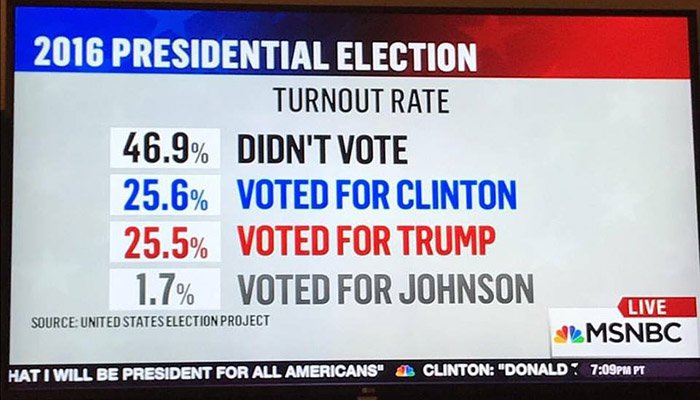
You may encounter people claiming there could be “widespread” voter fraud or that the election is somehow “rigged.” But the biggest problem is that so few people actually vote: In 2016, 40% of eligible American voters didn’t cast a ballot.

It is your right to vote. Exercise that right proudly and make your voice heard.
How to be a smart voter for the 2020 Election – the JTAC

All In: It’s Culture that Drives Results

https://www.leadershipnow.com/leadingblog/2012/04/all_in_its_culture_that_drives.html

IN THE New York TimesStephen I. Sadove, chairman and chief executive of Saks Inc., explains that it is culture that drives results:


It starts with leadership at the top, which drives a culture. Culture drives innovation and whatever else you’re trying to drive within a company — innovation, execution, whatever it’s going to be. And that then drives results.

When I talk to Wall Street, people really want to know your results, what are your strategies, what are the issues, what it is that you’re doing to drive your business. They’re focused on the bottom line. Never do you get people asking about the culture, about leadership, about the people in the organization. Yet, it’s the reverse, because it’s the people, the leadership, the culture and the ideas that are ultimately driving the numbers and the results.


While we know that our most important resource is our people, it’s not so easy to get people “all in”—convincing people to “truly buy into their ideas and the strategy they’ve put forward, to give that extra push that leads to outstanding results.”

All In by Adrian Gostick and Chester Elton explains why some managers are able to get their employees to commit wholeheartedly to their culture and give that extra push that leads to outstanding results and how managers at any level, can build and sustain a profitable, vibrant work-group culture of their own. All In takes the principles found in their previous books—The Orange Revolution and The Carrot Principle—and expands on them and places them in a wider context.


They begin by explaining that it all rests on the “belief factor.” People want to believe, but given the fact that “failure could cost them their future security why shouldn’t they be at least a little dubious about your initiatives?” But belief is key. “As leaders we must first allow people on our teams to feel like valuable individuals, respecting their views and opening up to their ideas and inputs, even while sharing a better way forward. It’s a balancing act that requires some wisdom.”

To have a culture of belief employees must feel not only engaged, but enabled and energized. What’s more, “each element of E+E+E can be held hostage by an imbalance in the other two.”


The authors have created a 7 step guide to develop a culture where people buy-in:

Define your burning platform. “Your ability to identify and define the key “burning” issue you face and separate it from the routine challenges of the day is the first step in galvanizing your employees to believe in you and in your vision and strategy.”

Create a customer focus. “Your organization must evolve into one that not only rewards employees who spot customer trends or problems, but one that finds such challenges invigorating, one that empowers people at all levels to respond with alacrity and creativity.”

Develop agility. “Employees are more insistent than ever that their managers see into the future and do a decent job of addressing the coming challenges and capitalizing on new opportunities.”

Share everything. “When we aren’t sure what’s happening around us, we become distrustful….In a dark work environment, where information is withheld or not communicated properly, employees tend to suspect the worst and rumors take the place of facts. It is openness that drives out the gray and helps employees regain trust in culture.”

Partner with your talent. “Your people have more energy and creativity to give. There are employees now in your organization walking around with brilliant ideas in their pocket. Some will never share them because they don’t have the platform to launch those ideas on their own. Most, however, will never reveal them because they don’t feel like a partner in the organization.”

Root for each other. “Our research shows incontrovertible evidence that employees respond best when they are recognized for things they are good at and for those actions where they had to stretch. It is this reinforcement that makes people want to grow to their full shape and stature.”

Establish clear accountability. “To grow a great culture, you need to cultivate a place where people have to do more than show up and fog a mirror; they have to fulfill promises—not only collectively but individually.” And this has to be a positive idea.

Gostick and Elton explain that the “modern leader provides the why, keeps an ear close to those they serve, is agile and open, treats their people with deference, and creates a place where every step forward is noted and applauded.”

The authors skillfully examine high-performing cultures and present the elements that produce them. A leader at any level can implement these ideas to drive results. A great learning tool.


Admininstration believes Coronavirus is “under control”

https://www.axios.com/newsletters/axios-vitals-65b6b9b9-ee8e-4b89-9688-c43c0146c4d6.html?utm_source=newsletter&utm_medium=email&utm_campaign=newsletter_axiosvitals&stream=top

Daily confirmed COVID-19 cases, rolling 3-day average - Our World ...

President Trump said in an interview with “Axios on HBO” that he thinks the coronavirus is as well-controlled in the U.S. as it can be, despite dramatic surges in new infections over the course of the summer and more than 150,000 American deaths.

  • “They are dying, that’s true. And you have — it is what it is. But that doesn’t mean we aren’t doing everything we can. It’s under control as much as you can control it. This is a horrible plague,” he told Axios’ Jonathan Swan.

Reality check: The U.S. is averaging roughly 65,000 new cases and 1,000 deaths per day, Axios’ Sam Baker writes. The virus has already killed nearly 150,000 Americans, and it spread largely unchecked through almost the entire country throughout June and July.

The big picture: In the interview, which took place last Tuesday, Trump returned to familiar themes and areas where the U.S. really has made significant progress. He cited the dramatic increase in ventilator production, the ramp-up in testing and treatment that has reduced the overall fatality rate from the virus.

  • Yes, but: He painted a far rosier picture of the pandemic than most data would support.

On testing, Trump said, “You know there are those that say you can test too much” — a view that no experts have advocated.

  • The U.S. is experiencing long turnaround times for coronavirus testing, as Trump acknowledged, because of the high demand for testing. But that is largely a function of the country’s high caseload and the number of people at risk of infection.

He also returned to his mantra that “because we’ve done more tests, we have more cases.”

  • The cases the U.S. has, we would have had with or without testing. We know we have them because of testing, but the massive outbreak here would be a massive outbreak whether we chose to know about it (through testing) or ignore it by not testing.


State of the Union: by Paul Field

Image may contain: text that says 'Whoever Paul Field is he hit the nail on the head. Field PM own opinion, but you post Everyone entitled silly "Welcome Socialism... You Socialism. the wealthiest, geographically advantaged, productive people. about This failure our, "Booming economy," modest challenges. tis the market dissonance stores, farmers/producers and crisis about corporations needing emergency bailout longest history ending interest with being unable equipped provide healthcare, time post profits. crisis response depending antiquated systems nobody remembers operate. But all, politicization the for the benefit of education, science, natural lifestyles, lifestyles, charity, compassion, virtually else for brief gain gutted our society.'