Gladwell: COVID-19 should push healthcare to consider its ‘weak links’

https://www.fiercehealthcare.com/payer/malcolm-gladwell-covid-19-should-push-healthcare-to-consider-its-weak-links?mkt_tok=eyJpIjoiWlRJMk9UYzVZVFl4Tm1VMSIsInQiOiJ0aElzSllzTkpISWNIcU13ZXErNVdPSzU3K05cLzRVY2FEWFMycDNHZTZcLzlTYUo3UVNNQXd3ZjlwZXlFbVA3c3NQTHI0NFhqcjhFNk1VUXc4aVlnYW9aSnFVOVIydEFqWG5weWdEc2Viall1elwvK0RIRWtEajhPWGw3TEFTNDlkUCJ9&mrkid=959610

Gladwell: COVID-19 should push healthcare to consider its 'weak ...

The coronavirus pandemic has shown the healthcare industry that it needs to decide whether it’s playing basketball or soccer, journalist and author Malcolm Gladwell said. 

Gladwell, the opening keynote speaker at America’s Health Insurance Plans’ annual Institute & Expo, said the two sports exemplify the differences in thinking when one tackles problems using a “strong link” approach versus a “weak link” approach.

In basketball, he said, the team is as strong as its strongest, most high-profile players. In soccer, by contrast, the team is only as strong as its weakest players.

For healthcare organizations, that means making investments in the “weakest links”—such as harried clinicians who may need more training and low-income communities that cannot afford or access coverage—rather than the stronger links, like building out teaching hospitals and physician specializations.

“In healthcare, this is a chance for us to turn the ship around and say we can benefit far more from making health insurance more plentiful and more affordable,” Gladwell said. 

Gladwell emphasized that healthcare is far from the only industry to largely follow a “strong link” approach to improvement. In higher education, for example, much of the investment and funding goes to Ivy League institutions and other wealthy, top-performing universities.

Meanwhile, the education system could see significant benefits if it invested in the “weak links” like community colleges and bringing down tuition, Gladwell said. 

It’s a similar story in national security—and that “strong link” thinking led to two of the largest security breaches in American history, Gladwell said. Both Edward Snowden and Chelsea Manning were relatively low-ranking people within the security apparatus, but they were able to access critical files and release them.

“I would argue that ‘strong link’ paradigm has dominated every part of American society,” Gladwell said. “We have really put our chips down on the ‘strong link’ paradigm.” 

How could a “weak link” approach have impacted the response to the COVID-19 pandemic? Gladwell argues that, for instance, widespread testing is hampered by a lack of supplies like nasal swabs. Investment in the supply chain could have mitigated that challenge, he said.

The virus also disproportionately impacts people with certain conditions, notably diabetes. A broader focus on preventing and treating obesity could have had a large impact on how the pandemic played out, he said. 

“With this particular pandemic, I think we’re having a wake-up call,” Gladwell said.
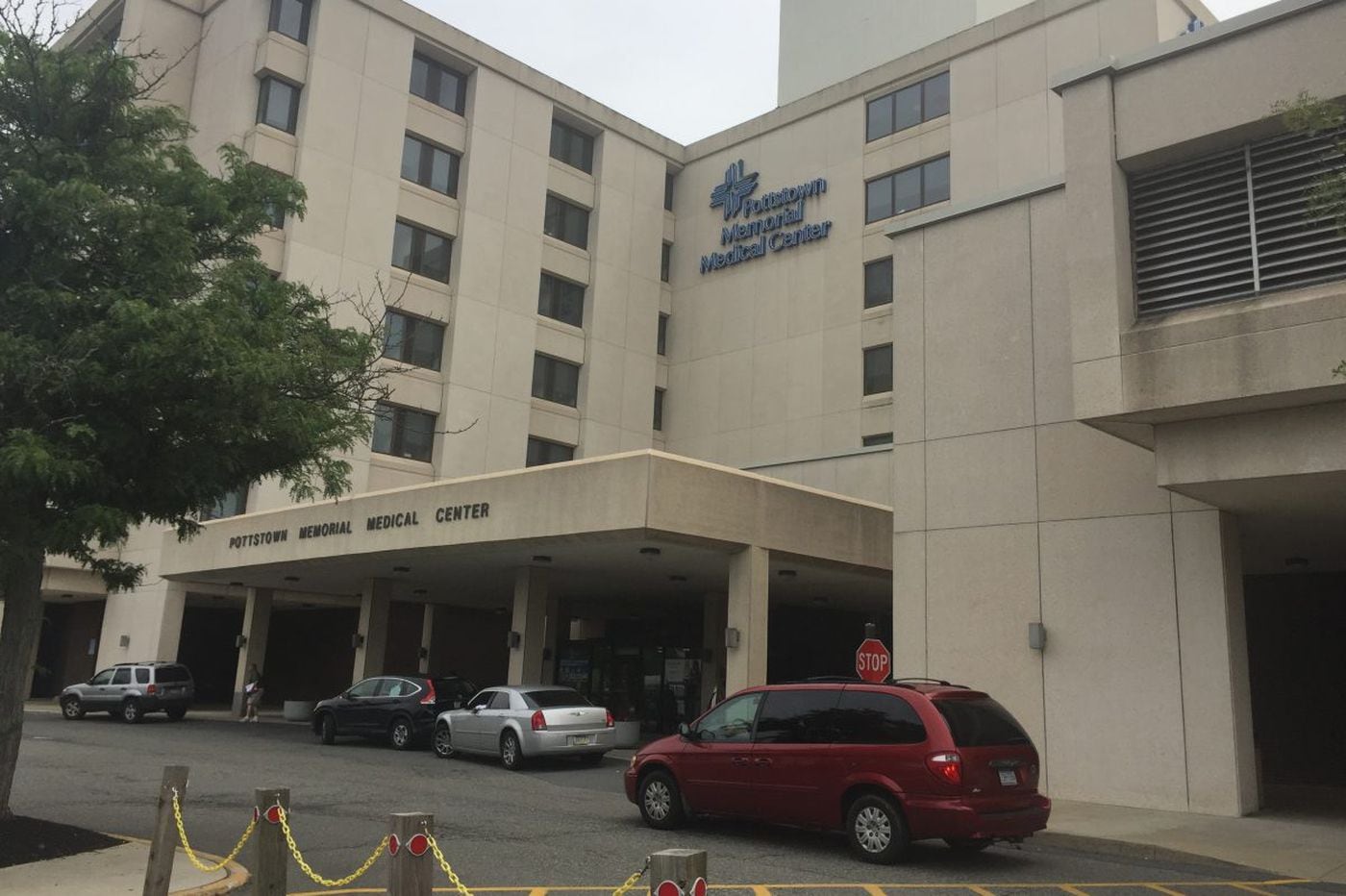


Tower Health cutting 1,000 jobs as COVID-19 losses mount

https://www.inquirer.com/business/health/tower-health-hospital-layoffs-covid-19-20200616.html

Tower Health cutting 1,000 jobs as COVID-19 losses mount

Tower Health on Tuesday announced that it is cutting 1,000 jobs, or about 8 percent of its workforce, citing the loss of $212 million in revenue through May because of the coronavirus restrictions on nonurgent care.

Fast-growing Tower had already furloughed at least 1,000 employees in April. It’s not clear how much overlap there is between the furloughed employees, some of whom have returned to work, and the people who are now losing their jobs permanently. Tower employs 12,355, including part-timers.

“The government-mandated closure of many outpatient facilities and the suspension of elective procedures caused a 40 percent drop in system revenue,” Tower’s president and chief executive, Clint Matthews, wrote in an email to staff. “At the same time, our spending increased for personal protective equipment, staff support, and COVID-related equipment needs.”

Despite the receipt of $66 million in grants through the federal CARES Act, Tower reported an operating loss of $91.6 million in the three months ended March 31, according to its disclosure to bondholders.

Tower, which is anchored by Reading Hospital in Berks County, expanded most recently with the December acquisition of St. Christopher’s Hospital for Children in a partnership with Drexel University. Tower paid $50 million for the hospital’s business, but also signed a long-term lease with a company that paid another $65 million for the real estate.

In 2017, Tower paid $418 million for five community hospitals in Southeastern Pennsylvania — Brandywine in Coatesville, Chestnut Hill in Philadelphia, Jennersville Regional in West Grove, Phoenixville in Phoenixville, and Pottstown Memorial Medical Center, now called Pottstown Hospital, in Pottstown.

Tower’s goal was to remain competitive as bigger systems — the University of Pennsylvania Health System and Jefferson Health from the Southeast, Lehigh Valley Health Network and St. Luke’s University Health Network from the east and northeast, and University of Pittsburgh Medical Center from the west — encroached on its Berk’s county base.

Tower had set itself a difficult task in the best of times, but COVID-19 has made it significantly harder for the nonprofit, which had an operating loss of $175 million on revenue of $1.75 billion in the year ended June 30, 2019.

Because health systems have high fixed costs for buildings and equipment needed no matter how many patients are coming through the door, it’s hard for them to limit the impact of the 30% to 50% collapse in demand caused by the coronavirus pandemic.

“Hospitals and all other health service providers were hit with this disruption with lightning speed, forcing the industry to learn in real time how to handle a situation for which there was no playbook,” Standard & Poor’s analysts David P. Peknay and Suzie R. Desai said in a research report last month.

Tower’s said positions will be eliminated in executive, management, clinical, and support areas.

The cuts include consolidations of clinical operations. Tower plans to close Pottstown Hospital’s maternity unit, which employs 32 nurses and where 359 babies were born in 2018, according to the most recent state data. Tower also has maternity units at Reading Hospital in West Reading and at Phoenixville Hospital.

Tower is aiming to trim expenses by $230 million over the next two years, Matthews told staff.

Like many other health systems, Tower has taken advantage of federal programs to ensure that it has ample cash in the bank to run its businesses. Tower has deferred payroll taxes, temporarily sparing $25 million. It received $166 million in advanced Medicare payments in April.

In the private sphere, Tower obtained a $40 million line of credit in April for St. Chris, which has lost $23.6 million on operations since Tower and Drexel bought it in December. Last month, Tower said it was in the final stages of negotiating a deal to sell and then lease back 24 medical office buildings. That was expected to generate $200 million in cash for Tower.