DEATH BY PAPERWORK: Watch NYT Opinion video on health insurers’ “prior authorization” practices

If a picture is worth a thousand words, a video, if done well, can be worth thousands more. 

Regular readers of HEALTH CARE un-covered know we have published lots of words about the barriers health insurance companies have erected that make it harder and harder for patients to get the care their doctors know they need.

Well, the New York Times has put together one of the best videos I’ve come across to describe one of those barriers–prior authorization. I hope you’ll take a few minute to watch it.

As a former health insurance executive, I’ve seen firsthand how the health insurance industry’s use of prior authorization inflicts harm on patients.

It’s a perfect example of how something that was designed to protect patients from inappropriate and unnecessary care has been weaponized by health insurers to pad their bottom lines.

Prior authorization in today’s world all too often serves as a bureaucratic barrier, requiring patients and their doctors to obtain approval in advance from insurers before certain treatments, medications, or procedures will be covered.

While insurance companies argue that prior authorization helps control costs and ensure appropriate care, the reality is far grimmer.

Both patients and their health care providers suffer the consequences. Patients frequently face delays in receiving necessary treatments or medications, exacerbating their health conditions and causing unnecessary stress and anxiety. Many forgo needed care altogether due to the complexities and frustrations of navigating the prior authorization process. This practice not only undermines patients’ trust in their health care providers but also compromises their health, often leading to worsened conditions and, tragically, sometimes irreversible harm.

The burden of prior authorization falls heavily on clinicians and their office staff who must spend valuable time and resources navigating the bureaucratic red tape imposed by insurers. This administrative burden not only detracts from patient care but also contributes to physician burnout, dissatisfaction and moral crisis, according to many doctors.

Ultimately, the health insurance industry’s prioritization of profit over patient well-being is evident in its insistence on maintaining these barriers to care, perpetuating a system that defaults to financial gain at the expense of human lives.

The New York Times video cuts to the chase. Prior authorization, as practiced today by insurance companies, is “medical injustice disguised as paperwork.”
In ‘American Hospitals’ Pride Comes Before the Fall

The film “American Hospitals: Healing a Broken System” premiered in Washington, D.C., on March 29. This documentary exposes the inconvenient truths embedded within the U.S. healthcare system. Here is a dirty dozen of them:

  1. Over half of hospital care is unnecessary, either wasteful or for preventable acute conditions.
  2. Administrative costs account for 15-25% of total healthcare expenditures.
  3. U.S. per-capita healthcare spending is more than twice the average cost of the world’s 12 wealthiest countries.
  4. Medical debt is a causal factor in two-thirds of all personal bankruptcies.
  5. American adults fear medical bills more than contracting a serious disease. Nearly 40% of Americans — a record — delayed necessary medical care because of cost in 2022.
  6. Low-income urban and rural communities lack access to basic healthcare services.
  7. The financial benefits of tax exemption for hospitals are far greater than the cost of the charitable care they provide.
  8. Medical error is unacceptably high.
  9. Hospitals are largely unaccountable for poor clinical outcomes.
  10. The cost of commercially insured care is multiples higher than the cost of government-insured care for identical procedures.
  11. Customer service at hospitals is dreadful.
  12. Frontline clinicians are overburdened and leaving the profession in droves.

Healthcare still operates the same way it has for the last one hundred years — delivering hierarchical, fragmented, hospital-centric, disease-centric, physician-centric “sick” care. Accordingly, healthcare business models optimize revenue generation and profitability rather than health outcomes. These factors explain, in part, why U.S. life expectancy has declined four of the five years and maternal deaths are higher today than a generation ago.

It’s hard to imagine that the devil itself could create a more inhumane, ineffective, costly and change-resistant system. Hospitals consume more and more societal resources to maintain an inadequate status quo. They’re a major part of America’s healthcare problem, certainly not its solution. Even so, hospitals have largely avoided scrutiny and the public’s wrath. Until now.

“American Hospitals” is now playing in theaters throughout the nation. It chronicles the pervasive and chronic dysfunction plaguing America’s hospitals. It portrays the devastating emotional, financial and physical toll that hospitals impose on both consumers and caregivers.

Despite its critical lens, “American Hospitals” is not a diatribe against hospitals. Its contributors include some of healthcare’s most prominent and respected industry leaders, including Donald Berwick, Elizabeth Rosenthal, Shannon Brownlee and Stephen Klasko. The film explores payment and regulatory reforms that would deliver higher-value care. It profiles Maryland’s all-payer system as an example of how constructive reforms can constrain healthcare spending and direct resources into more effective, community-based care.

The United States already spends more than enough on healthcare. It doesn’t need to spend more. It needs to spend more wisely. The system must downsize its acute and specialty care footprint and invest more in primary care, behavioral health, chronic disease management and health promotion. It’s really that simple.

My only critique of “American Hospitals” is many of its contributors expect too much from hospitals. They want them to simultaneously improve their care delivery and advance the health of their communities. This is wishful thinking. Health and healthcare are fundamentally different businesses. Rather than pivoting to population health, hospitals must focus all their efforts on delivering the right care at the right time, place and price.

If hospitals can deliver appropriate care more affordably, this will free up enormous resources for society to invest in health promotion and aligned social-care services. In this brave new world, right-sized hospitals deliver only necessary care within healthier, happier and more productive communities.

All Americans deserve access to affordable health insurance that covers necessary healthcare services without bankrupting them and/or the country. Let me restate the obvious. This requires less healthcare spending and more investments in health-creating activities. Less healthcare and more health is the type of transformative reform that the country could rally behind.

At issue is whether America’s hospitals will constructively participate in downsizing and reconfiguring the nation’s healthcare system. If they do so, they can reinvent themselves from the inside out and control their destinies.

Historically, hospitals have preferred to use their political and financial leverage to protect their privileged position rather than advance the nation’s well-being. Like Satan in Milton’s “Paradise Lost,” they have preferred to reign in hell rather than serve in heaven.

Pride comes before the fall. Woe to those hospitals that fight the nation’s natural evolution toward value-based care and healthier communities. They will experience a customer-led revolution from outside in and lose market relevance. Only by admitting and addressing their structural flaws can hospitals truly serve the American people.

More hospitals poised to require COVID-19 vaccines

It’s “a trickle that will become a torrent,” Ashish Jha, dean at Brown University’s School of Public Health, tweeted.

More hospitals are likely to require employees receive a COVID-19 vaccine, experts said, to further protect the sick and vulnerable patients who rely on them for care.

A Houston-area hospital captured headlines after taking a firm stance on requiring vaccines that prevent severe illness of the coronavirus, which has killed more than 600,000 in the U.S. and ravaged the economy.

Houston Methodist employees who refused the vaccine were either terminated or resigned. A judge earlier this month sided with the hospital and tossed out an employee lawsuit that was seeking to block the mandated inoculation. The ruling may give other hospitals the green light to require the jab, and as more facilities put a similar policy in place, others are likely to follow, experts said.

It’s “a trickle that will become a torrent,” Ashish Jha, professor and dean at Brown University’s School of Public Health, posted Thursday on Twitter.

3 large health systems in Massachusetts to require all workers to be vaccinated.

Given the critical need to protect vulnerable patients, its critical all hospitals do this.

Leading systems will do it soon.

Laggards will get there eventually.

Joining the growing tide of vaccine mandates are a variety of systems and hospitals, including Mass General Brigham in Boston, BJC Healthcare in St. Louis and Inova Health System in Virginia.

Some of the nation’s largest health systems have yet to mandate the shot, including Kaiser Permanente and CommonSpirit Health.

“Vaccination will only be required for Kaiser Permanente employees if a state or county where we operate mandates the vaccine for health care workers,” the company said in an email.

The American Hospital Association continues to hear that a growing number of its members are requiring the vaccine, with some exemptions. However, many member hospitals are waiting until the FDA grants full approval, a time when more safety and efficacy data will be made available.

“Getting vaccinated is especially critical for health care professionals because they work with patients with underlying health conditions whose immune systems may be compromised,” AHA, which has not taken on stance on the requirement, said in a statement.

The mandates raise ethical questions, some say, pointing to the profession’s promise to “do no harm.”

Arthur Caplan, head of medical ethics at New York University School of Medicine, said the codes of ethics that doctors and nurses says to put patients first, do no harm and protect the vulnerable.

“Of course they should be vaccinated,” he said. “If they don’t want to get vaccinated, I think they’re in the wrong profession.”

The Equal Employment Opportunity Commission said employment law does not prohibit employers from requiring the jab, essentially giving the green light to employers to put incentives and requirements in place for their workers. The EEOC is the federal agency tasked with ensuring that workplaces do not discriminate.

Some states are going against the tide and signing legislation that bars vaccine mandates, including Florida. The city of San Francisco will require hospital employees and workers in high-risk settings to get the vaccine. San Francisco, like other employers and universities, will require all city workers get inoculated.

The differing policy stances across the country creates additional hurdles for corporations with a large footprint.

Los Angeles hospitals brace for care rationing

Rising Covid cases means Americans may face health care rationing. Here's  how they view that.

Several hospitals in Los Angeles County are preparing for the possibility of restrategizing care delivery in the coming weeks amid growing COVID-19 hospitalizations, according to the Los Angeles Times.

Los Angeles County reported 6,018 COVID-19 hospitalizations Dec. 20 — a 2.5 percent increase from the day prior — with 1,198 patients in ICUs, according to the state’s data dashboard. Statewide, 17,750 patients are hospitalized with COVID-19, 3,710 of them in ICUs. 

The LA Times obtained a document recently circulated among physicians at the four county-run hospitals that outlines resource allocation in crisis situations. The guidelines call for physicians to save as many patients as possible versus trying everything to save a patient, meaning those less likely to survive will not receive the level of care they would have otherwise. L.A. County Health Services Director Christina Ghaly, MD, told the LA Times that the guidelines were not in place as of Friday night.

California activated its “mass fatality” program last week, which coordinates mutual aid across several government agencies when more deaths take place in a period of time than can be handled by local coroner or medical emergency personnel, NPR reports. 

Nearly all of the state is under stay-at-home orders, with residents prohibited from gathering with anyone outside their immediate household.

“I have yet to see any clear signals that things are slowing down, and I’m very concerned about the next two months,” Timothy Brewer, MD, an epidemiologist with UCLA Health, told the LA Times. He said UCLA Health is scheduling several infectious disease specialists to be on call at any time, and the biggest issue is that hospitals may quickly run out of providers who can administer ICU-level care.

Oregon suspends license of physician who discouraged mask-wearing

Oregon suspends license of physician who discouraged mask-wearing

An Oregon physician who publicly spoke out against wearing a mask to slow the spread of COVID-19 has had his medical license suspended, according to The Washington Post.

In a written order Dec. 4, the Oregon Medical Board suspended the license of Steven A. LaTulippe, MD, a family medicine physician at South View Medical Arts in Dallas, Ore. The board alleges Dr. LaTulippe engaged in “conduct that is contrary to medical ethics and does or might constitute a danger to the health or safety of the public.” 

It also accuses him of “gross negligence.”

Specific acts cited in the letter include the physician’s alleged advice to a Medicaid patient. According to the board, the patient contacted Dr. LaTulippe’s medical clinic in July for guidance on COVID-19 and was told asymptomatic people should not be tested, that wearing masks does not prevent virus transmission, and the patient was told not to self-isolate because exposure to others would provide COVID-19 immunity.

The board said the patient seeking the guidance from Dr. LaTulippe’s clinic was terminated as a patient after questioning the appropriateness of the guidance.

The board also contends workers in Dr. LaTulippe’s clinic refuse to wear masks at work and urge people who enter the clinic wearing masks to remove them.

Dr. LaTulippe “regularly tells his patients that masks are ineffective in preventing the spread of COVID-19 and should not be worn”; “directs patients to a YouTube video providing false information about mask-wearing” ; and “regularly advises, particularly for his elderly and pediatric patients, that it is ‘very dangerous’ to wear masks because masks exacerbate [chronic obstructive pulmonary disease] and asthma and cause or contribute to multiple serious health conditions,” according to the board.

The Post could not immediately reach Dr. LaTulippe for comment Dec. 5.

In a recent interview, Dr. LaTulippe told NBC News he believes there is “bad science behind” wearing masks.

“I have absolutely zero problems with infectivity, and I have completely successful treatments, so I ask, ‘What is the problem?’ Why would I be demonized if I know what I’m doing?” he told the news network.

The CDC has advocated wearing masks to combat COVID-19. 

Experts Slam The White House’s ‘Herd Immunity’ Plan

Experts warn Trump's misinformation about coronavirus is dangerous

The White House is reportedly embracing a herd-immunity approach focused on “protecting the elderly and the vulnerable” but experts are calling the plan dangerous, “unethical”, and equivalent to “mass murder”.

The news comes following a petition titled The Great Barrington Declaration, which argued against lockdowns and school and business closures and got almost 500,000 signatures – although some of them were fake.

“Current lockdown policies are producing devastating effects on short and long-term public health,” the declaration states, adding, “The most compassionate approach that balances the risks and benefits of reaching herd immunity, is to allow those who are at minimal risk of death to live their lives normally to build up immunity to the virus through natural infection, while better protecting those who are at highest risk. We call this Focused Protection.”

Essentially, herd immunity is when enough people are immune to a disease, like Covid-19, that the disease can’t be transmitted as easily and thus provides indirect protection.

It’s been rumoured that the government has been leaning towards this plan of action for some time now, although this is the first real admission.

In response to today’s news, experts around the world have been voicing their concerns.

And this isn’t the first time we’ve heard experts say herd immunity is not a good idea.

For example, the head of the World Health Organization said Monday that allowing the novel coronavirus to spread in an attempt to reach herd immunity was “simply unethical.”

Similarly, the National Institutes of Health (NIH) director Francis Collins also denounced herd immunity as a viable plan.

“What I worry about with this is it’s being presented as if it’s a major alternative view that’s held by large numbers of experts in the scientific community. That is not true. This is a fringe component of epidemiology. This is not mainstream science. It fits into the political views of certain parts of our confused political establishment,” he said in an interview.

Not to mention studies continue to show that Sweden’s attempts at herd immunity have failed and have resulted in a higher Covid-19 death toll than expected.

As more research comes out, scientists are starting to learn that Covid-19 immunity, even in those who were severely infected, can fade after a few weeks.

This is why we’ve seen cases of reinfection and why many experts are advising against a herd immunity plan.  

Currently less than 10% of the population in the U.S. are immune to Covid-19 but for herd immunity to be achieved most experts estimate between 40% to 80% of the population would need to be infected.

To put that into context, that means around 197 million people would need to be infected in America. And assuming that the Covid-19 fatality rate is somewhere between 0.5% and 1%, based on numbers from the World Health Organization (WHO), more than 1 million people would die – at minimum.

William Haseltine, Chair and President of ACCESS Health International, told CNN “herd immunity is another word for mass murder. We are looking at two to six million Americans dead – not just this year but every year.”  

This is an unmitigated disaster for our country – to have people at the highest levels of our government countermanding our best public health officials. We know this epidemic can be put under control. Other countries have done it. We are doing the opposite.”

Trying to reach herd immunity is ‘unethical’ and unprecedented, WHO head says

The head of the World Health Organization said Monday that allowing the novel coronavirus to spread in an attempt to reach herd immunity was “simply unethical.”

The remark was a sharp rebuke of the approach amid mounting new infections around the world. Recent days have seen the most rapid rise in cases since the pandemic began in March.

“Never in the history of public health has herd immunity been used as a strategy for responding to an outbreak, let alone a pandemic,” WHO Director-General Tedros Adhanom Ghebreyesus said at a Monday media briefing. “It is scientifically and ethically problematic.”

In a public health context, herd immunity typically describes a scenario in which a large enough share of the population is vaccinated against a disease to prevent it from spreading widely, thereby providing default protection to a minority of people who have not been vaccinated.

But as there is still no vaccine for the coronavirus, achieving herd immunity in the current environment would require a large number of people to contract the virus, survive covid-19, and then produce sufficient antibodies to provide long-term protection.

While the scientific community has roundly rejected herd immunity the approach, public interest in it has waxed and waned amid pressure to reopen schools and economies.

Last month, President Trump appeared to praise the idea during a town hall in Pennsylvania.

“You’ll develop herd — like a herd mentality,” he said. “It’s going to be — it’s going to be herd developed — and that’s going to happen.”

British Prime Minister Boris Johnson’s government initially expressed interest in the theory before backtracking amid public outcry over the dangers of letting the virus spread. Johnson himself was hospitalized with a severe case of covid-19, which he said could have killed him.

Tedros, noting that there had been “some discussion” about the concept recently, told reporters Monday that allowing people to be exposed to a deadly virus whose effects are still not fully known was “not an option.”

“Most people who are infected with the virus that causes covid-19 develop an immune response within the first few weeks, but we don’t know how strong or lasting that immune response is, or how it differs for different people,” he said.

Though rare, there are multiple documented instances of people being infected for a second time after recovering from covid-19. An 89-year-old woman in the Netherlands died after being infected with the coronavirus for a second time, Dutch news reported Monday.

Antibody studies suggest that less than 10 percent of people in most countries have contracted covid-19, Tedros said, which is nowhere near the majority that would be needed for herd immunity.

With the “vast majority” of the world’s population susceptible, letting the virus spread “means allowing unnecessary infections, suffering and death,” he said.

Just in the last four days, Tedros said Monday, the global coronavirus count has continued to break its daily record for the number of new confirmed infections.

“Many cities and countries are also reporting an increase in hospitalizations and intensive care bed occupancy,” he added.

Tedros has urged governments to pursue comprehensive plans that include widespread testing, social distancing, and other preventive measures, such as face-mask wearing, alongside a global push to develop a vaccine. The WHO is spearheading an effort to distribute coronavirus vaccines equitably once they are available, which Trump declined to join.

Medical ethics in pandemic times

https://www.axios.com/medical-ethics-clinical-trials-pandemic-eb77f819-76f1-45b0-af8a-cf181bc1607b.html

The Importance of Medical Ethics | Medical Ethics – theMSAG

The COVID-19 pandemic is rife with scientific and medical uncertainty, including debates about the ethics of using experimental treatments.

The big picture: As the global pandemic continues, the tension between providing the best available care for patients and performing trials to determine whether that care is effective risks complicating the medical response.

The big question: Is it unethical to withhold a possible treatment from someone who instead receives a placebo, or to continue to administer that treatment without having collected data on whether it works?

Driving the news: President Trump received an experimental monoclonal antibody cocktail via expanded access or “compassionate use,” which allows someone to access a treatment outside of a clinical trial before it is approved, provided their doctor, the drug company and the FDA agree.

  • Experts say his subsequent claims of the treatment being a cure risks reducing enrollment in clinical trials, flooding companies with requests for access to a limited number of doses and creating false hope for patients.
  • And the president’s treatment raised questions about fairness — would other COVID-19 patients have similar access?
  • “It’s important that we not say the president got access to a beneficial experimental intervention because we don’t know if it is beneficial or if there are adverse events associated with it, says Alex John London, director of the Center for Ethics and Policy at Carnegie Mellon University. 

He and other ethicists say the president’s treatment highlights a broader question about the ethical obligation doctors have to the science needed to determine if those treatments are effective.

Between the lines: Offering patients experimental COVID-19 drugs via emergency use authorizations, expanded access programs and compassionate use can slow needed clinical trials.

  • Researchers have struggled to enroll people in clinical trials in which they may receive a placebo if patients can access a drug directly.
  • One example: “There’s been some hiccups with the expanded access use for convalescent plasma, because it was something that precluded people from enrolling in a randomized control trial, so it took longer, and we still don’t quite know how well convalescent plasma works,” says Amesh Adalja, an infectious disease physician and senior scholar at the Johns Hopkins Center for Health Security.

More than 100,000 COVID-19 patients at almost 2,800 U.S. hospitals received convalescent plasma from people who survived the virus and developed antibodies to it.

  • “It’s easy for people to say you enrolled 100,000 people, there should have been a trial. But a small number of those 2,800 hospitals would have been capable of doing those trials,” says the Mayo Clinic’s Michael Joyner, who leads the program.
  • There are now smaller trials taking place to answer questions about the effectiveness of plasma in treating the disease in different stages.
  • But if this happens again, Joyner says programs at academic medical centers should be peeled off earlier to form clinical trials run in parallel.

The gold standard for determining whether a treatment works is through randomized controlled trials in which people are randomly assigned to receive a treatment or to be in a control group.

  • In the uncertainty and urgency of a pandemic, some physicians argue randomizing people to receive a placebo goes against physicians’ ethics and that it is better to do something to help patients than do nothing.
  • “That’s a false dichotomy because the question is, what should we do?” says London.

From a doctor’s perspectiveit’s important to weigh the collective value of theearly drug data and the individual needs of the patient, Adalja says.

  • “I do think you have to be extra careful when you’re thinking about drugs that you don’t have strong randomized control trial data for, or the data is incomplete or inconclusive,” he adds.
  • “What people have to ask themselves is what constitutes evidence or proof and where do you want to make the bets in a pandemic?” says Joyner.
  • “There is a moral, legal and public health obligation to do those trials before people use those products,” says Alison Bateman-House, a professor of medical ethics at NYU’s Grossman School of Medicine who co-chairs an international working group on pre-approval access to treatments.
  • She says she understands the emotional pull on doctors to help patients whose health is quickly deteriorating, “but it is not evidence-based medicine.”

“There is no ethical obligation to give anyone an unproven substance.”

Alison Bateman-House, NYU Grossman School of Medicine

In a forthcoming paper, London argues that when medical professionals don’t have the knowledge they need to treat patients, it is their responsibility “to band together and run studies to get evidence to discharge [their] very ancient medical obligation.”

  • Medical ethics should be updated to include a responsibility to learn in the face of uncertainty, says London, who was part of a committee that called for research to be incorporated into the response to the Ebola outbreak in West Africa in 2014.
  • The U.K.’s large randomized RECOVERY trial is based in part on the Ebola experience, says London. “Because of it, we know dexamethasone is effective and hydroxychloroquine is not.”

What to watch: How the FDA’s handling of treatments during the pandemic influences other drugs and diseases once the pandemic ends.

The bottom line: “Medicine doesn’t have a good handle on uncertainty, and that is a problem,” says London.

Where the virus is spreading

https://www.axios.com/newsletters/axios-vitals-7038a5b1-74fa-44e3-ba7e-43c87052e1c5.html?utm_source=newsletter&utm_medium=email&utm_campaign=newsletter_axiosvitals&stream=top

Axios

The Trump administration’s reopening guidelines detail that in order to start lifting restrictions and reopening the economy, a state needs to report 14-day trends of fewer cases or fewer positive tests (though local officials do get some leeway in adjusting the metrics).

  • Not a lot of states meet that criteria, Axios editor-in-chief Nick Johnston writes.

Our chart compares each state’s seven-day average of new cases from Monday and the seven-day average from a week prior, April 27.

  • By this metric, Minnesota, Nebraska and Puerto Rico have the most worrisome trends, while Arkansas and Wyoming have the most positive trends. Twelve states are moving in the right direction.
  • But more than a third of the nation still has growing numbers of cases. And that includes states such as Texas and Virginia, where Republican and Democratic governors are beginning to unveil re-opening plans.

Yes, but: These trends only tell us so much.

  • Some states may see their case counts rise not necessarily because their outbreaks are getting dramatically worse, but because their testing is getting better, so they’re catching more cases.
  • That’s why health officials are also pulling in other metrics — including the number of deaths, the number of hospitalizations and the percentage of tested patients who test positive. A higher percentage means you’re probably missing people.
  • Still, public-health guidance calls for a steady decrease in cases before opening up, and few states have achieved that.

The bottom line: The virus isn’t just some other states’ problem. It’s everyone’s problem.


TED Danielle Allen: Here’s how we might save both lives and the economy

Harvard professors take a lively look at love and politics ...

As the coronavirus pandemic sweeps the globe, it’s hard to know where to turn or what to think. TED Connects is a free, live, daily conversation series featuring experts whose ideas can help us reflect and work through this uncertain time with a sense of responsibility, compassion and wisdom.

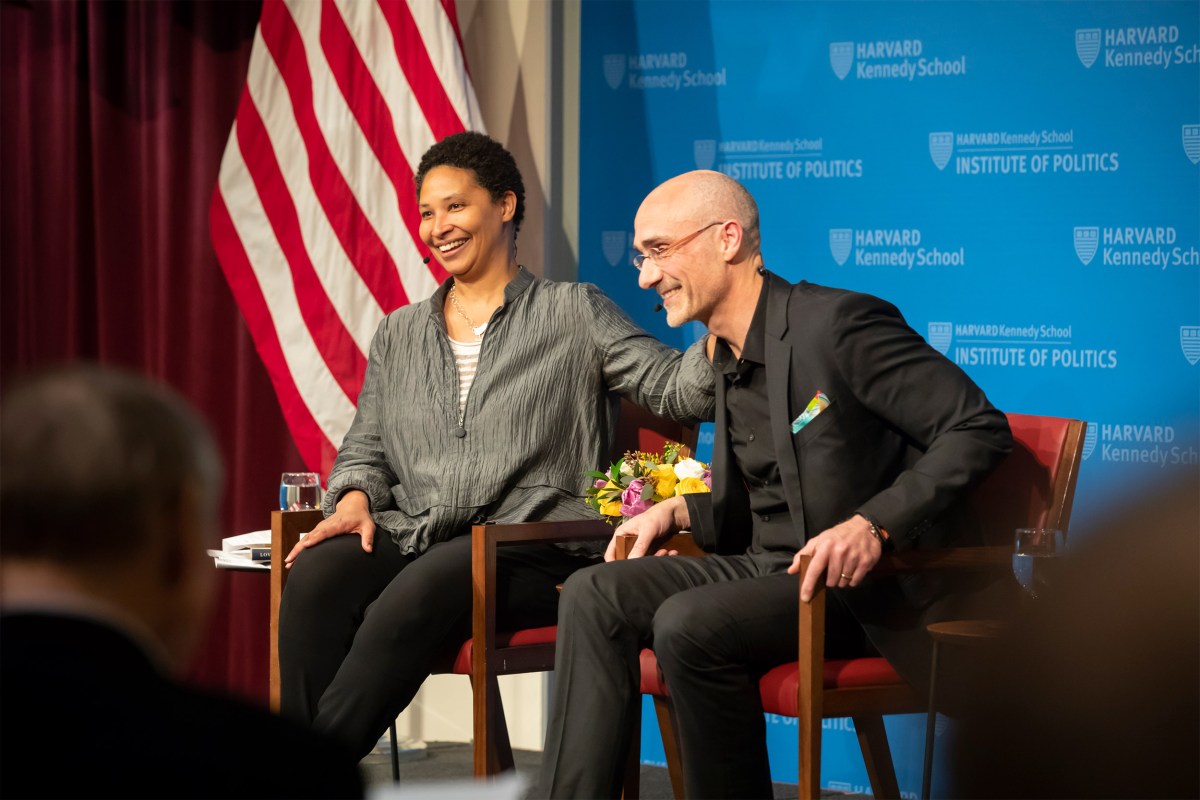
Danielle Allen serves as Director of the Edmond J. Safra Center for Ethics at Harvard University. The Center seeks to advance teaching and research on ethical issues in public life. Widespread ethical lapses of leaders in government, business, and other professions prompt demands for more and better moral education. More fundamentally, the increasing complexity of public life – the scale and range of problems and the variety of knowledge required to deal with them – make ethical issues more difficult, even for men and women of good moral character. Not only are the ethical issues we face more complex, but the people we face them with are more diverse, increasing the frequency and intensity of our ethical disagreements.

Given these changes in the United States and in societies around the globe, the Center seeks to help meet the growing need for teachers, scholars, and leaders who address questions of moral choice across many of the professions and in public life more generally, and promotes a perspective on ethics informed by both theory and practice. We explore the connection between the problems that professionals confront and the social and political structures in which they act. More generally, we address the ethical issues that all citizens face as they make the choices that profoundly affect the present and future of their societies in our increasingly interdependent world.

https://scholar.harvard.edu/danielleallen/edmond-j-safra-center-ethics