Executive Order On Housing Doesn’t Guarantee An Eviction Moratorium

https://www.forbes.com/sites/advisor/2020/08/10/trumps-executive-order-on-housing-doesnt-guarantee-an-eviction-moratorium/?tid=newsletter-dailydozen&utm_source=newsletter&utm_medium=email&utm_campaign=dailydozen&cdlcid=5d2c97df953109375e4d8b68#3a33cbc3359a

After negotiations for another stimulus package hit a dead end in Washington last week, President Donald Trump signed executive orders to extend relief in the meantime. One order, according to the president, would extend the federal eviction moratorium. 

The original moratorium, included in the CARES Act, prohibited landlords or housing authorities from filing eviction actions, charging nonpayment fees or penalties or giving notice to vacate. It expired on July 24 and only applied to federally subsidized or federally backed housing.

But housing advocates are pushing back, saying Trump’s executive order to extend an eviction moratorium actually does nothing at all—and keeps struggling Americans at risk of losing their housing. 


Details on the Order

Trump’s order doesn’t actually extend the federal eviction moratorium. Instead, it calls on the Department of Health and Human Services and the Centers for Disease Control and Prevention to “consider” whether an additional eviction ban is needed.

“The Secretary of Health and Human Services and the Director of CDC shall consider whether any measures temporarily halting residential evictions of any tenants for failure to pay rent are reasonably necessary to prevent the further spread of COVID-19 from one State or possession into any other State or possession,” reads the order.

Additionally, the executive order does not provide any new money to help struggling renters during the pandemic. Instead, it says the secretary of Treasury and the secretary of Housing and Urban Development—Steven Mnuchin and Ben Carson, respectively—can identify “any and all available federal funds” to provide temporary rental assistance to renters and homeowners who are facing financial hardships caused by COVID-19.

During a White House press briefing on Monday, Kayleigh McEnany said the president did “did what he can within his executive capacity…to prevent resident evictions.”At the time of publishing, officials mentioned in Trump’s executive order have not released guidelines on extending the federal eviction moratorium.


Housing Advocates React to Trump’s Eviction Order

Housing advocates have not reacted positively to Trump’s executive order, suggesting officials extend an eviction moratorium.

“The executive order that he signed this weekend is really nothing more than an empty shell that creates chaos and confusion, and it offers nothing more than false hope to renters who are at risk of eviction because that executive order does literally nothing to prevent or stop evictions,” Diane Yentel, president and CEO of the National Low Income Housing Coalition, said on Sunday during an MSNBC interview.

The House of Representatives included a more thorough plan to prevent evictions in its HEROES Act proposal. The proposal included $175 billion in rent and mortgage assistance and would replace the original federal eviction moratorium with a 12-month moratorium from all rental housing, not just federally subsidized ones. There also would be funds available to provide homeowners with assistance to cover mortgage and utility payments, property taxes or other resources to help keep Americans housed.

Sen. Richard Shelby (R-AL) introduced the Coronavirus Response Additional Supplemental Appropriations Act as part of the GOP’s HEALS Act proposal. Shelby’s bill included significantly less money for housing assistance than the HEROES Act—$3.2 billion—and would be used for tenant-based rental assistance. Shelby’s proposal did not include any language about extending the CARES Act eviction moratorium. 

A recent report by a group of housing advocates finds there could be as much as 40 million renters at risk of eviction in the coming months. The U.S. unemployment rate currently sits at 10.2%. 

Individuals who are struggling to pay rent might have assistance options available. Some cities and states have implemented their own eviction moratoriums—you can learn more about them by visiting the Eviction Lab at Princeton University. There are also legal aid options, like Just Shelter, that will help tenants who are facing eviction for low-cost or free.


Dr. Anthony Fauci says chance of coronavirus vaccine being highly effective is ‘not great’

https://www.cnbc.com/amp/2020/08/07/coronavirus-vaccine-dr-fauci-says-chances-of-it-being-highly-effective-is-not-great.html?utm_source=&utm_medium=email&utm_campaign=32192

KEY POINTS
  • White House coronavirus advisor Dr. Anthony Fauci that the chances of scientists creating a highly effective vaccine — one that provides 98% or more guaranteed protection — for the virus are slim.
  • Scientists are hoping for a coronavirus vaccine that is at least 75% effective, but 50% or 60% effective would be acceptable, too, he said.
  • The FDA has said it would authorize a coronavirus vaccine so long as it is safe and at least 50% effective.

White House coronavirus advisor Dr. Anthony Fauci said Friday that the chances of scientists creating a highly effective vaccine — one that provides 98% or more guaranteed protection — for the virus are slim.

Scientists are hoping for a coronavirus vaccine that is at least 75% effective, but 50% or 60% effective would be acceptable, too, Fauci, director of the National Institute of Allergy and Infectious Diseases, said during a Q&A with the Brown University School of Public Health. “The chances of it being 98% effective is not great, which means you must never abandon the public health approach.”

“You’ve got to think of the vaccine as a tool to be able to get the pandemic to no longer be a pandemic, but to be something that’s well controlled,” he said.

The Food and Drug Administration has said it would authorize a coronavirus vaccine so long as it is safe and at least 50% effective. Dr. Stephen Hahn, the FDA’s commissioner, said last month that the vaccine or vaccines that end up getting authorized will prove to be more than 50% effective, but it’s possible the U.S. could end up with a vaccine that, on average, reduces a person’s risk of a Covid-19 infection by just 50%.

“We really felt strongly that that had to be the floor,” Hahn said on July 30, adding that it’s “been batted around among medical groups.”

“But for the most part, I think, infectious disease experts have agreed that that’s a reasonable floor, of course hoping that the actual effectiveness will be higher.”

A 50% effective vaccine would be roughly on par with those for influenza, but below the effectiveness of one dose of a measles vaccination, which is about 93% effective, according to the Centers for Disease Control and Prevention.

Public health officials and scientists expect to know whether at least one of the numerous potential Covid-19 vaccines in development worldwide is safe and effective by the end of December or early next year, though there is never a guarantee. Drug companies Pfizer and Moderna both began late-stage trials for their potential vaccines last week and both expect to enroll about 30,000 participants.

Fauci has previously said he worries about the “durability” of a coronavirus vaccine, saying if Covid-19 acts like other coronaviruses, it may not provide long-term protection.

Health officials say there is no returning to “normal” until there is a vaccine. Fauci’s comment came a day after the World Health Organization cautioned about the development of vaccines, reiterating that there may never be a “silver bullet” for the virus, which continues to rapidly spread worldwide. The phase three trials underway do not necessarily mean that a vaccine is almost ready to be deployed to the public, the agency said.

“Phase three doesn’t mean nearly there,” Mike Ryan, executive director of the WHO’s emergencies health program, said during a virtual panel discussion with “NBC Nightly News” Anchor Lester Holt hosted by the Aspen Security Forum. “Phase three means this is the first time this vaccine has been put into the general population into otherwise healthy individuals to see if the vaccine will protect them against natural infection.”

While there is hope scientists will find a safe and effective vaccine, there is never a guarantee, WHO Director-General Tedros Adhanom Ghebreyesus said.

“We cannot say we have vaccines. We may or may not,” he said.

On Friday, Fauci reiterated that he is “cautiously optimistic” scientists will find a safe and effective vaccine. He also reiterated that the coronavirus may never be eliminated, but world leaders can work together to bring the virus down to “low levels.”

Some of Fauci’s comments have been at odds with President Donald Trump, who has repeatedly said the virus would “disappear.”

Trump, who is seeking reelection, said Thursday that it’s possible the United States could have a safe and effective vaccine for the coronavirus before the upcoming presidential election on Nov. 3.


97,000 children reportedly test positive for coronavirus in two weeks as schools gear up for instruction

https://www.cbsnews.com/news/covid-19-kids-school-children-positive-tests-coronavirus-reopening/?utm_source=nl&utm_brand=wired&utm_mailing=WIR_Science_081020&utm_campaign=aud-dev&utm_medium=email&utm_term=WIR_Science&bxid=5db707423f92a422eaeaf234&cndid=&esrc=bounceX&source=EDT_WIR_NEWSLETTER_0_SCIENCE_ZZ

97,000 children reportedly test positive for coronavirus in two ...

Nearly 100,000 children tested positive for the coronavirus in the last two weeks of July, a new report from the American Academy of Pediatrics finds. Just over 97,000 children tested positive for the coronavirus from July 16 to July 30, according to the association.

Out of almost 5 million reported COVID-19 cases in the U.S., CBS News’ Michael George reports that the group found that more than 338,000 were children.

Vanderbilt University’s Dr. Tina Hartert hopes increased testing of children will help determine what role they play in transmission, as school districts around the country return to some form of school. She is leading a government-funded study that saw DIY testing kits sent to some 2,000 families.

“The kits are shipped to the families, they are taught how to collect these samples, and then the samples are sent back by the families to a central repository,” she said.

In New York City, home to the nation’s largest school district, Mayor Bill de Blasio announced a return to in-person schooling in the fall and pledged officials “have worked incessantly to get this right.”

“They’ve looked at examples from all over the world of what will keep the school community safe, and they’ve made a series of choices of how to do things from the health and safety lens first, while also making sure we can educate our kids,” he said in a Friday press conference.

De Blasio gave parents until Friday night to register students for in-person instruction, remote learning or a hybrid.

More than 25 children died of the coronavirus in July alone. Pressure to get kids back into the classroom has left superintendents in more than 13,000 different school districts across the country to figure out how to keep children safe amid a myriad of public health advisories, and handle learning differences.

Niles, Michigan Superintendent Dan Applegate is hoping Plexiglas could be a solution for children with speech impediments to be able to participate in class.

He demonstrated by speaking behind a transparent slate at a press conference.

“As I’m sitting here and I can articulate,” Applegate said. “The student on the other side will be wearing a mask. Then I can put my mask on, and that student can drop their mask and articulate as well.”

Indiana’s Lawrence Township is cleaning school buses with a hospital-grade disinfectant spray for students still needing rides to school.

“You’re going to see a very clean and disinfected bus,” Transportation Director Matt Miles said. “We actually have fogging machines.”

However, they are not expecting many students to get on the bus — 35% of children in the area are expected to learn remotely, while other school districts in the U.S. will not open at all.


2005 chloroquine study had nothing to do with COVID-19 and the drug wasn’t given to humans

https://www.politifact.com/factchecks/2020/jul/29/facebook-posts/2005-chloroquine-study-had-nothing-do-covid-19-and/?fbclid=IwAR2e4j_lb10FWa5Cyuokzo3pbjlty_ffvwsEfVT_2iQ6ki8a9z-TpzDm9DQ

PolitiFact | 2005 chloroquine study had nothing to do with COVID ...

IF YOUR TIME IS SHORT

  • The 2005 study wasn’t published by the NIH and didn’t prove chloroquine was effective against “COVID-1” because that’s not a real disease.
  • The study found that chloroquine could inhibit the spread of Severe Acute Respiratory Syndrome in animal cell culture, and the authors said more research was needed.
  • There are currently no approved medications or treatments for COVID-19.


Chloroquine is back.

The anti-malarial drug first showed up as a possible COVID-19 treatment around May 2020, when President Donald Trump said he had been taking its chemical cousin, hydroxychloroquine, to prevent getting infected with the virus.

Since then, some studies have found that the drugs could help alleviate symptoms associated with COVID-19, but the research is not conclusive. There are currently no FDA-approved medicines specifically for COVID-19. (Chloroquine is chemically similar to hydroxychloroquine, but it is a different drug that’s primarily used to treat malaria. Both carry a particular risk for people with heart problems, plus other possible side effects.)

Now, hydroxychloroquine and chloroquine have been thrust back into the spotlight as misinformation about the drugs’ effectiveness and safety recently reappeared online.

One such post on Facebook falsely claims that Americans have been deceived because health officials at the National Institutes of Health have known all along that chloroquine is effective against “COVID.”

The post reads:

“N.I.H. 15 years ago published a study on chloroquine. It is effective against COVID-(1). We are being lied to America!”

The post was flagged as part of Facebook’s efforts to combat false news and misinformation on its News Feed. (Read more about our partnership with Facebook.) 


This is flawed. 

First, there’s no such thing as “COVID-1.” COVID-19 was named for the year it was discovered, not because it’s the 19th iteration. 

Second, the 2005 study found that chloroquine was effective on primate cells infected with severe acute respiratory syndrome, known as SARS, which is caused by a coronavirus. But while the two share similarities, SARS-CoV and COVID-19 are different diseases, and primate cells are far from human patients.

Third, the study was indexed by the NIH’s National Library of Medicine, but the NIH was not involved. It was published in the peer-reviewed Virology Journal and conducted by researchers from the Centers for Disease Control and Prevention and the Montreal Clinical Research Institute.


What the study says

The study was published in August 2005 and found that chloroquine has “strong antiviral effects on SARS-CoV infection of primate cells” and that it was effective on cells treated with the drug before and after exposure to the virus.

The drug was not administered to actual SARS patients, and the study’s authors wrote that more research was needed on how the drug interacts with SARS in animal test subjects.

“Cell culture testing of an antiviral drug against the virus is only the first step, of many steps, necessary to develop an antiviral drug,” Kate Fowlie, a spokesperson for the CDC previously told PolitiFact in an email. “It is important to realize that most antivirals that pass this cell culture test hurdle fail at later steps in the development process.”

Dr. Alex Greninger, assistant director of clinical virology at the University of Washington School of Medicine, told us that a problem in virology is trying to determine the difference of how drugs work in cell culture in comparison to humans.

“Data on chloroquine is largely taken from these cell culture studies, but we now have trials in people on hydroxychloroquine that show it’s not as effective,” Greninger said, “and there’s new data out in the last week that suggests that some of the reasons could be because of the cell types that SARS coronaviruses grow in, and this original experiment was done on African green monkey kidney cells, which is not the tissue we are really worried about.”


What officials say about the drugs now

The Food and Drug Administration granted emergency use authorizations for some medicines to be used for certain patients hospitalized with COVID-19, but it revoked the authorization for hydroxychloroquine and chloroquine in mid-June due to concerns over the drugs’ serious side effects. There are currently no FDA-approved medicines for COVID-19.

“It is no longer reasonable to believe that oral formulations of HCQ and CQ may be effective in treating COVID-19, nor is it reasonable to believe that the known and potential benefits of these products outweigh their known and potential risks,” FDA Chief Scientist Denise M. Hinton wrote.

The NIH’s COVID-19 treatment guidelines, which were developed to inform clinicians on how to care for patients with COVID-19, also currently recommend against the use of chloroquine or hydroxychloroquine for COVID-19 treatment, except in a clinical trial.

But even those trials have been halted. The World Health Organization and the NIH announced in mid-June that they would stop hydroxychloroquine patient trials, citing safety concerns that include serious heart rhythm problems, blood and lymph system disorders, kidney injuries, and liver problems and failure.


Our ruling

A Facebook post says that the NIH published a study 15 years ago that showed chloroquine was effective against “COVID-(1)” and that health officials have been lying to the American people.

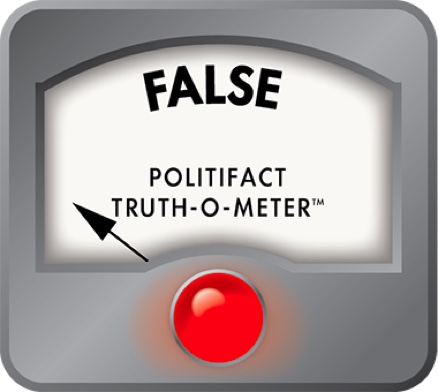
This is wrong. There’s no such thing as “COVID-1” and the study cited was not published by the NIH and had to do with animal cells infected with SARS, not COVID-19. The drug was not given to human patients and the study’s authors said more research was needed.

Health officials caution against the use of chloroquine or hydroxychloroquine to treat COVID-19 patients, citing the possibility of serious side effects. There are currently no approved treatments for the virus.

We rate this False. 


Covid-19 Data in the US Is an ‘Information Catastrophe’

https://www.wired.com/story/covid-19-data-in-the-us-is-an-information-catastrophe/#intcid=recommendations_wired-bottom-recirc-personalized_31e95638-88d6-439c-85a2-db8f6235da26_text2vec1-mab

Covid-19 Data in the US Is an 'Information Catastrophe' | WIRED

The order to reroute CDC hospitalization figures raised accuracy concerns. But that’s just one of the problems with how the country collects health data.

TWO WEEKS AGO, the Department of Health and Human Services stripped the Centers for Disease Control and Prevention of control of national data on Covid-19 infections in hospitalized patients. Instead of sending the data to the CDC’s public National Healthcare Safety Network (NHSN), the department ordered hospitals to send it to a new data system, run for the agency by a little-known firm in Tennessee.

The change took effect immediately. First, the hospitalization data collected up until July 13 vanished from the CDC’s site. One day later, it was republished—but topped by a note that the NHSN Covid-19 dashboard would no longer be updated.

Fury over the move was immediate. All the major organizations that represent US public health professionals objected vociferously. A quickly written protest letter addressed to Vice President Mike Pence, HHS secretary Alex Azar, and Deborah Birx, the coordinator of the White House’s Coronavirus Task Force, garnered signatures from more than 100 health associations and research groups. The reactions made visible the groups’ concerns that data could be lost or duplicated, and underlined their continual worry that the CDC is being undercut and sidelined. But it had no other effect. The new HHS portal, called HHS Protect, is up and running.

Behind the crisis lies a difficult reality: Covid-19 data in the US—in fact, almost all public health data—is chaotic: not one pipe, but a tangle. If the nation had a single, seamless system for collecting, storing, and analyzing health data, HHS and the Coronavirus Task Force would have had a much harder time prying the CDC’s Covid-19 data loose. Not having a comprehensive system made the HHS move possible, and however well or badly the department handles the data it will now receive, the lack of a comprehensive data system is harming the US coronavirus response.

“Every health system, every public health department, every jurisdiction really has their own ways of going about things,” says Caitlin Rivers, a senior scholar at the Johns Hopkins Center for Health Security. “It’s very difficult to get an accurate and timely and geographically resolved picture of what’s happening in the US, because there’s such a jumble of data.”

Data systems are wonky objects, so it may help to step back and explain a little history. First, there’s a reason why hospitalization data is important: Knowing whether the demand for beds is rising or falling can help illuminate how hard-hit any area is, and whether reopening in that region is safe.

Second, what the NHSN does is important too. It’s a 15-year-old database, organized in 2005 out of several streams of information that were already flowing to the CDC, which receives data from hospitals and other health care facilities about anything that affects the occurrence of infections once someone is admitted. That includes rates of pneumonia from use of ventilators, infections after surgery, and urinary tract infections from catheters, for instance—but also statistics about usage of antibiotics, adherence to hand hygiene, complications from dialysis, occurrence of the ravaging intestinal infection C. difficile, and rates of health care workers getting flu shots. Broadly, it assembles a portrait of the safety of hospitals, nursing homes, and chronic care institutions in the US, and it shares that data with researchers and with other statistical dashboards published by other HHS agencies such as the Center for Medicare and Medicaid Services.

Because NHSN only collects institutional data, and Covid-19 infections occur both inside institutions such as nursing homes and hospitals, and in the outside world, HHS officials claimed the database was a bad fit for the coronavirus pandemic. But people who have worked with it argue that since the network had already devised channels for receiving all that data from health care systems, it ought to continue to do so—especially since that data isn’t easy to abstract.

“If you are lucky enough to work in a large health care system that has a sophisticated electronic medical record, then possibly you can push one button and have all the data flow up to NHSN,” says Angela Vassallo, an epidemiologist who formerly worked at HHS and is now chief clinical adviser to the infection-prevention firm Covid Smart. “But that’s a rare experience. Most hospitals have an infection preventionist, usually an entire team, responsible for transferring that data by hand.”

There lies the core problem. Despite big efforts back during the Obama administration to funnel all US health care data into one large-bore pipeline, what exists now resembles what you’d find behind the walls of an old house: pipes going everywhere, patched at improbable angles, some of them leaky, and some of them dead ends. To take some examples from the coronavirus response: Covid-19 hospital admissions were measured by the NHSN (before HHS intervened), but cases coming to emergency departments were reported in a different database, and test results were reported first to local or state health departments, and then sent up to the CDC.

Covid-19 data in particular has been so messy that volunteer efforts have sprung up to fix it. These include the COVID Tracking Project—compiled from multiple sources and currently the most comprehensive set of statistics, used by media organizations and apparently by the White House—and Covid Exit Strategy, which uses data from the COVID Tracking Project and the CDC.

Last week, the American Public Health Association, the Johns Hopkins Center, and Resolve to Save Lives, a nonprofit led by former CDC director Tom Frieden, released a comprehensive report on Covid-19 data collection. Pulling no punches, they called the current situation an “information catastrophe.”

The US, they found, does not have national-, state-, county-, or city-level standards for Covid-19 data. Every state maintains some form of coronavirus dashboard (and some have several), but every dashboard is different; no two states present the same data categories, nor visualize them the same way. The data presented by states is “inconsistent, incomplete, and inaccessible,” the group found: Out of 15 key pieces of data that each state should be presenting—things such as new confirmed and probable cases, new tests performed, and percentage of tests that are positive—only 38 percent of the indicators are reported in some way, with limitations, and 60 percent are not reported at all.

“This is not the fault of the states—there was no federal leadership,” Frieden emphasized in an interview with WIRED. “And this is legitimately difficult. But it’s not impossible. It just requires commitment.”

But the problem of incomplete, messy data is older and deeper than this pandemic. Four scholars from the health-policy think tank the Commonwealth Fund called out the broader problem just last week in an essay in The New England Journal of Medicine, naming health data as one of four interlocking health care crises exposed by Covid-19. (The others were reliance on employer-provided health care, financial losses in rural and primary-care practices, and the effect of the pandemic on racial and ethinic minorities.)

“There is no national public health information system—electronic or otherwise—that enables authorities to identify regional variation in the demand for, and supply of, resources critical to managing Covid-19,” they wrote. The fix they recommended: a national public health information system that would record diagnoses in real time, monitor the materials hospitals need, and link hospitals and outpatient care, state and local health departments, and laboratories and manufacturers to maintain real-time reporting on disease occurrence, preventive measures, and equipment production.

They are not the first to say this is needed. In February, 2019, the Council of State and Territorial Epidemiologists launched a campaign to get Congress to appropriate $1 billion in new federal funding over 10 years specifically to improve data flows. “The nation’s public health data systems are antiquated, rely on obsolete surveillance methods, and are in dire need of security upgrades,” the group wrote in its launch statement. “Sluggish, manual processes—paper records, spreadsheets, faxes, and phone calls—still in widespread use, have consequences, most notably delayed detection and response to public health threats.”

Defenders of the HHS decision to switch data away from the CDC say that improving problems like that is what the department was aiming for. (“The CDC’s old hospital data-gathering operation once worked well monitoring hospital information across the country, but it’s an inadequate system today,” HHS assistant secretary for public affairs Michael Caputo told CNN.) If that’s an accurate claim, during a global pandemic is a challenging time to do it.

“We were opposed to this, because trying to do this in the middle of a disaster is not the time,” says Georges Benjamin, a physician and executive director of the American Public Health Association, which was a signatory to the letter protesting moving data from the NHSN. “It was just clearly done without a lot of foresight. I don’t think they understand the way data moves into and through the system.”

The past week has shown how correct that concern was. Immediately after the switch, according to CNBC, states were blacked out from receiving data on their own hospitals, because the hospitals were not able to manage the changeover from the CDC to the HHS system. On Tuesday, Ryan Panchadsaram, cofounder of Covid Exit Strategy and former deputy chief technology officer for the US, highlighted on Twitter that data on the HHS dashboard, advertised as updating daily, was five days old. And Tuesday night, the COVID Tracking Project staff warned in a long analysis: “Hospitalization data from states that was highly stable a few weeks ago is currently fragmented, and appears to be a significant undercount.”

When the Covid-19 crisis is over, as everyone hopes it will be someday, the US will still have to wrestle with the questions it raised. One of those will be how the richest country on the planet, with some of the best clinical care in the world, was content with a health information system that left it so uninformed about a disease affecting so many of its citizens. The answer could involve tearing the public-health data system down and building it again from scratch.

“This is a deeply entrenched problem, where there is no single person who has not done their job,” Rivers says. “Our systems are old. They were not updated. We haven’t invested in them. If you’re trying to imagine a system where everyone reports the same information in the same way and we can push a button and have all the information we might want, that will take a complete overhaul of what we have.”


Winter is coming: Why America’s window of opportunity to beat back Covid-19 is closing

Winter is coming: Why America’s window of opportunity to beat back Covid-19 is closing

Winter is coming: Why America's window of opportunity to beat back ...

The good news: The United States has a window of opportunity to beat back Covid-19 before things get much, much worse.

The bad news: That window is rapidly closing. And the country seems unwilling or unable to seize the moment.

Winter is coming. Winter means cold and flu season, which is all but sure to complicate the task of figuring out who is sick with Covid-19 and who is suffering from a less threatening respiratory tract infection. It also means that cherished outdoor freedoms that link us to pre-Covid life — pop-up restaurant patios, picnics in parks, trips to the beach — will soon be out of reach, at least in northern parts of the country.

Unless Americans use the dwindling weeks between now and the onset of “indoor weather” to tamp down transmission in the country, this winter could be Dickensianly bleak, public health experts warn.

“I think November, December, January, February are going to be tough months in this country without a vaccine,” said Michael Osterholm, director of the Center for Infectious Diseases Research and Policy at the University of Minnesota.

It is possible, of course, that some vaccines could be approved by then, thanks to historically rapid scientific work. But there is little prospect that vast numbers of Americans will be vaccinated in time to forestall the grim winter Osterholm and others foresee.

Human coronaviruses, the distant cold-causing cousins of the virus that causes Covid-19, circulate year-round. Now is typically the low season for transmission. But in this summer of America’s failed Covid-19 response, the SARS-CoV-2 virus is widespread across the country, and pandemic-weary Americans seem more interested in resuming pre-Covid lifestyles than in suppressing the virus to the point where schools can be reopened, and stay open, and restaurants, movie theaters, and gyms can function with some restrictions.

“We should be aiming for no transmission before we open the schools and we put kids in harm’s way — kids and teachers and their caregivers. And so, if that means no gym, no movie theaters, so be it,” said Caroline Buckee, associate director of the Center for Communicable Disease Dynamics at Harvard’s T.H. Chan School of Public Health.

“We seem to be choosing leisure activities now over children’s safety in a month’s time. And I cannot understand that tradeoff.”

While many countries managed to suppress spread of SARS-CoV-2, the United States has failed miserably. Countries in Europe and Asia are worrying about a second wave. Here, the first wave rages on, engulfing rural as well as urban parts of the country. Though there’s been a slight decline in cases in the past couple of weeks, more than 50,000 Americans a day are being diagnosed with Covid-19. And those are just the confirmed cases.

To put that in perspective, at this rate the U.S. is racking up more cases in a week than Britain has accumulated since the start of the pandemic.

Public health officials had hoped transmission of the virus would abate with the warm temperatures of summer and the tendency — heightened this year — of people to take their recreational activities outdoors. Experts do believe people are less likely to transmit the virus outside, especially if they are wearing face coverings and keeping a safe distance apart.

But in some places, people have been throwing Covid cautions to the wind, flouting public health orders in the process. Kristen Ehresmann, director of infectious disease epidemiology, prevention, and control for the Minnesota Department of Health, points to a large, three-day rodeo that was held recently in her state. Organizers knew they were supposed to limit the number of attendees to 250 but refused; thousands attended. In Sturgis, S.D., an estimated quarter of a million motorcyclists were expected to descend on the city this past weekend for an annual rally that spans 10 days.

Even on smaller scales, public health authorities know some people are letting down their guard. Others have never embraced the need to try to prevent spread of the virus. Ehresmann’s father was recently invited to visit some friends; he went, she said, but wore his mask, elbow bumping instead of shaking proffered hands. “And the people kind of acted like, … ‘Oh, you drank that Kool-Aid,’ rather than, ‘We all need to be doing this.’”

Ehresmann and others in public health are flummoxed by the phenomenon of people refusing to acknowledge the risk the virus poses.

“Just this idea of, ‘I just don’t want to believe it so therefore it’s not going to be true’ — honestly, I have not really dealt with that as it relates to disease before,” she said.

Buckee, the Harvard expert, wonders if the magical thinking that seems to have infected swaths of the country is due to the fact many of the people who have died were elderly. For many Americans, she said, the disease has not yet touched their lives — but the movement restrictions and other response measures have.

“I think if children were dying, this would be … a different situation, quite honestly,” she said.

Epidemiologist Michael Mina despairs that an important chance to wrestle the virus under control is being lost, as Americans ignore the realities of the pandemic in favor of trying to resume pre-Covid life.

“We just continue to squander every bit of opportunity we get with this epidemic to get it under control,’’ said Mina, an assistant professor in Harvard’s T.H. Chan School of Public Health and associate medical director of clinical microbiology at Boston’s Brigham and Women’s Hospital.

“The best time to squash a pandemic is when the environmental characteristics slow transmission. It’s your one opportunity in the year, really, to leverage that extra assistance and get transmission under control,” he said, his frustration audible.

Driving back transmission would require people to continue to make sacrifices, to accept the fact that life post-Covid cannot proceed as normal, not while so many people remain vulnerable to the virus. Instead, people are giddily throwing off the shackles of coronavirus suppression efforts, seemingly convinced that a few weeks of sacrifice during the spring was a one-time solution.

Osterholm has for months warned that people were being misled about how long the restrictions on daily life would need to be in place. He now thinks the time has come for another lockdown. “What we did before and more,” he said.

The country has fallen into a dangerous pattern, Osterholm said, where a spike in cases in a location leads to some temporary restraint from people who eventually become alarmed enough to start to take precautions. But as soon as cases start to plateau or decline a little, victory over the virus is declared and people think it’s safe to resume normal life.

“It’s like an all or nothing phenomenon, right?” said Anthony Fauci, director of the National Institute for Allergy and Infectious Diseases. “You all locked down or you get so discouraged with being lockdown that you decide you’re going to be in crowded bars … you can have indoor parties with no masks. You can do all the things that are going to get you in trouble.”

Osterholm said with the K-12 school year resuming in some parts of the country or set to start — along with universities — in a few weeks, transmission will take off and cases will start to climb again. He predicted the next peaks will “exceed by far the peak we have just experienced. Winter is only going to reinforce that. Indoor air,” he said.

Buckee thinks that if the country doesn’t alter the trajectory it is on, more shutdowns are inevitable. “I can’t see a way that we’re going to have restaurants and bars open in the winter, frankly. We’ll have resurgence. Everything will get shut down again.”

Fauci favors a reset of the reopening measures, with a strong messaging component aimed at explaining to people why driving down transmission now will pay off later. Young people in particular need to understand that even if they are less likely to die from Covid-19, statistically speaking, transmission among 20-somethings will eventually lead to infections among their parents and grandparents, where the risk of severe infections and fatal outcomes is higher. (Young people can also develop long-term health problems as a result of the virus.)

“It’s not them alone in a vacuum,” Fauci said. “They are spreading it to the people who are going to wind up in the hospital.”

Everyone has to work together to get cases down to more manageable levels, if the country hopes to avoid “a disastrous winter,” he said.

“I think we can get it under much better control, between now and the mid-to-late fall when we get influenza or we get whatever it is we get in the fall and the winter. I’m not giving up,” said Fauci.

But without an all-in effort “the cases are not going to come down,” he warned. “They’re not. They’re just not.”


Indoor air is the next coronavirus frontline

https://www.axios.com/airborne-transmission-coronavirus-covid-indoor-c47e2763-a62d-4861-84e7-fc19feace3fc.html

Indoor air is the next coronavirus frontline - Axios

A growing body of research has made it clear that airborne transmission of the coronavirus is possible.

Why it matters: That fact means indoor spaces can become hot spots. Those spaces also happen to be where most business and schooling takes place, so any hope for a return to normality will require better ways of filtering indoor air.

What’s happening: After a concerted campaign by scientists, the WHO last month updated its guidelines on COVID-19 to include the possibility that the coronavirus could be airborne.

  • That marked a shift from initial assumptions that the virus was mostly transmitted via contaminated surfaces and respiratory droplets emitted at close range, like an infected person coughing near someone susceptible.
  • More evidence was added to the airborne hypothesis last week, when researchers at the University of Nebraska Medical Center reported in a paper published in Nature that they had found coronavirus-filled aerosols — small airborne particles of fluid — in the air of COVID-19 patients’ hospital rooms.
  • It’s still not clear just how much or how often the airborne transmission happens, a question Anthony Fauci has said the White House coronavirus task force will examine.

Context: If coronavirus-contaminated aerosols can indeed hang in the air, perhaps for hours, then “mitigating airborne transmission should be at the front of our disease-control strategies for COVID-19,” Joseph Allen of Harvard’s Healthy Building program wrote in the Washington Post.

  • Schools in particular “definitely present a challenge,” says Barry Po, president of connected solutions for mCloud Technologies, a provider of cloud-based remote HVAC management. Many school buildings in the U.S. are old and poorly ventilated, which makes them prime locations for indoor transmission.

The good news is there are existing technologies that can filter out or destroy coronavirus trapped in indoor air.

  • The easiest way is simply opening windows whenever possible, which dilutes the amount of virus in the air. In Japan windows are kept open in subway trains, which has helped prevent outbreaks in the country’s crowded transit system.
  • Portable HEPA filters, which can cost as little as a few hundred dollars, are capable of capturing particles as small as the novel coronavirus and could be used to clean individual classrooms.
  • Commercial HVAC systems can be adjusted to increase the number of times they exchange air per hour, analysts from McKinsey said in a report last month.

The catch: Increasing ventilation decreases energy efficiency, and Po estimates that net energy costs for buildings could increase by at least 10% in the COVID-19 era.

A more high-tech solution involves the use of specialized UV light to deactivate coronavirus in the air or on surfaces.

  • Fred Maxik, the founder of Healthe Lighting, developed Far UVC 222, a short-wave UV light spectrum that the company reports can neutralize 99.9% of coronavirus in a space. The UV light breaks the chemical bonds in the virus, Maxik says, making it incapable of replicating.
  • Unlike the UVB rays in sunlight that can damage DNA and cause skin cancer, Far UVC 222 doesn’t penetrate the human body.
  • The Healthe system has been installed in Seattle’s reopening Space Needle, as well as the practice facilities of the Miami Dolphins. “This is one of the only methodologies where we can continually clean a space in real time,” says Maxik.

The bottom line: Despite the runs early in the pandemic on Clorox wipes, it may be the air we breathe more than the surfaces we touch that need to be kept clean.


The Etiquette of Social Distancing During the COVID-19 Pandemic

https://emilypost.com/advice/the-etiquette-of-social-distancing-around-coronavirus/

STEVE ASHMORE: What is your social distancing etiquette? - Opinion ...

We are two months into life in the age of COVID-19 and it’s getting more complicated. Right as many of us were getting used to staying distanced, staying home, and staying in, some states and areas are relaxing restrictions. It isn’t life as it used to be, and it’s inconsistent across the nation. As we all try to figure out what relaxing measures means and what we are comfortable with, we’ve also embraced full on what life via video chat and living six feet apart can be like. Like normal humans, we all have questions, concerns, pet peeves, opinions and of course mute buttons that malfunction.


Before we dive into Etiquette in the Age of COVID-19 we would like to start by saying:

The threat of the novel coronavirus is still present. Until we have a vaccine or until we’ve gotten a handle on this virus’ impact on us, we are going to see requests, and requirements to physically distance ourselves and use personal protective measures like masks and hand washing regularly. It has changed our social behavior and it will continue to change our social behavior as communities find ways to interact safely. These new social measures can feel incredibly awkward and at times impolite, but you are not alone in feeling that way about them. Everyone is learning and figuring this out as we go.

Safety is the guideline right now and measures that we take to protect ourselves and others are right in line with the Emily Post principles of etiquette: consideration, respect, and honesty.

To find more information about the virus, it’s spread and what precautions and measures to take please visit:

The Center For Disease Control website   — https://www.cdc.gov/coronavirus/2019-nCoV/summary.html  

The World Health Organization website  — https://www.who.int/emergencies/diseases/novel-coronavirus-2019 

As well as your state or local department of health.

Safety First

When we think about what advice to give, we think first about safety and then about how to be kind and considerate and respectful when trying to be safe. Safety comes before etiquette. This doesn’t mean we toss consideration, respect, and honesty out the window. Far from it, we’ve seen how doing so can lead to tragically bad and completely unnecessary things happening. What it means is that how we interact and what is deemed “polite” or “acceptable” behavior will change during this time. Let’s look at some of the basics to consider here and for specific topics see these articles:

Zoom/Video Call Etiquette for Socializing (coming soon)

Zoom/Video Call Etiquette for Work (coming soon)

Weddings in the Age of COVID19

Navigating Hanging Out Together Apart (coming soon)


PHYSICAL DISTANCING

We are all familiar with the term “social distancing” by now. And many are encouraging the use of the phrase “physical distancing” instead which helps people to imagine a less isolated solution. Our goal for physical distancing is that when out and about in public or when socializing with those we don’t live with, we keep ourselves – or our family group – at least 6 feet away from others when possible.

It’s not as easy as it sounds. We’ve all navigated a tight aisle at a store, an elevator or stairwell, or a friend leaning in too closely despite feeling awkward. But what is the right thing to do?


Speak Up

We get asked, more than anything else through our podcast and media interviews, how do you speak up when something is wrong, or bothering you? It’s not an easy thing to do. How you do it makes a huge difference to how well it’s received, but it’s not a magic key. You can never predict someone else’s reaction, especially that of a stranger. So our first piece of advice is and always will be to seek the help of someone in charge if the scenario provides such a person. A manager, usher, flight attendant, host, or whomever is in charge, can have the authority to help you and can also ensure that you aren’t dealing with someone alone. That being said, you don’t do this as a way to punish someone else, it’s to make sure a concern is raised, or that help or safety can be achieved.

If someone at a store hasn’t given you enough space to pass or reach the item you’d like, then a friendly “Mind giving me just a little more space so I can pass [or grab that item] safely?” You want to have an upbeat tone to your delivery, no edge whatsoever (think that person you know who is always upbeat, or sounds cheerful and if no one comes to mind think: how would Glinda the Good Witch, Dr. Martin Luther King, Mother Teresa, the CW’s Superman say it?). If the person scoffs at you, you can either pass anyway keeping as much distance as possible, wait until they move farther away, or go get something else and come back later.


Other phrases that are being heard and used when out and about to manage distancing:

Excuse me Sir, the line starts back there, everyone’s just distanced.

(while stepping back) Sorry I’m trying to keep 6 feet away.

Excuse me, I was next.

I’ll wait and catch the next elevator.

After you, please. (said genuinely)

Do you mind giving us just a little bit more space please, (hopefully followed by a: thank you so much)

A little space please.

Flow of Traffic

While following the guidance of the arrows and directions through stores is always important, it’s not worth getting into an altercation over. Either pass, doing what you can keep your distance, or go back the other way if the aisle isn’t crowded. Don’t make a stand when there are other safe options.

Public Outdoor Spaces

When it comes to public outdoor spaces it’s important to respect any distancing guides that have been put in place whether it’s marked areas to lounge or workout in, or directions for flow of traffic. Remember that even though you’re spaced apart from others, covering your mouth when you cough or sneeze as well as not coughing, sneezing, singing, or yelling in the direction of others is helpful.

When trying to create physical distance on sidewalks, recreational paths and trails, you’re still trying to aim for six feet (about two adult arm lengths) apart. It’s really thoughtful if you’re a group or family out together to consider dropping to single file when passing others to help make room.

If it’s easy for you to be the person to step off the path or into the street (because you aren’t, using a walking or mobility aid, managing a frisky dog, balancing a toddler and a baby carriage or are on foot rather than wheels) to create space by all means make the move and do so early so that the other person doesn’t even have to guess at it.


Greetings

Greetings continue to feel lacking during this strange time. Despite wonderfully bright and cheery waves, mini dances, hops, and skips when we meet, we miss hugs and solid handshakes, high fives, and fist bumps. Greetings that involve touching are still not recommended at this time, so perfect your waves (you know your “professional wave”, your “zoom-meeting wave”, your “I-love-you-Grandma wave”, your “I-haven’t-seen-you-and-I’m-trying-so-hard-not-to-hug-you wave”) and use your tone of voice to match the occasion.


WEARING MASKS

While masks are causing a lot of divisiveness, when combined with physical distancing wearing a mask in public can greatly reduce the risk of spread. Wearing masks may be around for a while so it’s best to try and get used to what it’s like to interact with them on. Since most people are wearing cotton or medical masks and few have clear plastic ones allowing their full face to be seen we are more often than not without many facial cues.

Smiling (anyway), and using your eyes (cue acting skills from every medical show ever for inspiration) and hands to gesture will be the way to connect while wearing masks.

Masks unfortunately also muffle the sound of our voice and so it’s important to get comfortable speaking up, especially when in a noisy store or on a loud street. While you don’t want to shout to the point of sounding unnatural or making the listener uncomfortable, you do need to literally speak up to be heard. If you don’t, often the other person will lean in to hear you, and then you end up stepping back to recreate some space. It’s a odd dance but it happens often.

As we move into figuring out dining indoors and patio dining scenarios be prepared to see people storing their masks in a paper bag or envelope while eating. Some places may place plastic shields between tables or even at tables depending on the restaurant and local requirements.

Wearing masks outdoors is not a bad idea if you’re passing frequently while out on rec paths and trails or in the park or on the sidewalks of your neighborhood. Many choose to “mask when they pass” and let their mask down while on long stretches without others or when there’s more than enough room to pass without any worry. (According to this article in the New York Times, you’re more likely to encounter an issue for yourself if you have prolonged time indoors without masks on than if you pass someone outdoors without a mask on.)

If you’re uncomfortable when you encounter someone without a mask on resist the urge to glare or tsk at them. Do what you can to keep yourself physically distanced and avoid interacting instead. Remember you can only control yourself as best you can. There will be times when it doesn’t go perfectly and even though that can cause stress and anxiety, which often lead to rudeness, arming ourselves with kindness and avoiding judgement of others is good etiquette.

CONTACT TRACING

Contact tracing – tracing the virus’ spread through individuals who have tested positive or been around those who tested positive for COVID-19 – is happening at different rates throughout the country, but early indications show that contact tracing by businesses and through events that we attend may become commonplace. Many places already use your phone number or email address to contact you about tickets or a reservation or even a purchase so it’s not unfamiliar. But to have it be connected to our health when visiting a restaurant can feel very different. While we don’t know yet exactly how contact tracing will impact our personal social gatherings (birthday parties, showers, weddings…) or our public socializing (bars, sports, groups, restaurants…) we are considering the possibility that in the future a host’s to-do list list, or advice for making a restaurant reservation for a work lunch might involve contact info for potential contact tracing follow ups.


BE COMPASSIONATE

We cannot emphasize this enough right now. These are extraordinary times and there are so many ways this virus is impacting all of us. Especially when it comes to how we are mentally handling the longevity of this pandemic. You don’t know what is affecting someone’s life making the current threat even worse (financially, emotionally, physically). It’s important to respect people where they are at, and not blow off their concerns or drive fear where it doesn’t need to be.

Many of us are so fortunate to have so many ways to connect to help get us through this crisis together, but loneliness and anxiety are still huge concerns. Reaching out to one another. Being patient and kind with each other. Listening to one another. Respecting one another. Helping those in need. These are the kinds of attitudes and actions that will carry us through. They often cost us nothing, and yet they can make an impactful difference.


Cartoon – Unemployment Insurance vs. Raising the Minimum Wage

If you make less than $600 week, you’re underpaid. Period.

No photo description available.

‘If We Get It, We Chose to Be Here’: Despite Virus, Thousands Converge on Sturgis for Huge Rally

Thousands of bikers heading to South Dakota rally to be blocked at ...

Tens of thousands of motorcyclists roared into the western South Dakota community on Friday, lining Main Street from end to end, for the start of the annual Sturgis Motorcycle Rally.

Tens of thousands of motorcyclists roared into the western South Dakota community of Sturgis on Friday, lining Main Street from end to end, for the start of an annual rally that kicked off despite objections from residents and with little regard for a public health emergency ravaging the world.

It could have been any other past summer rally in Sturgis, with herds of R.V.s, bikers and classic cars converging for the Sturgis Motorcycle Rally, a 10-day affair that was expected to attract roughly 250,000 enthusiasts this year — about half the number who attended last year but a figure that puts it on track to be among the country’s largest public gatherings since the first coronavirus cases emerged in the spring.

Save for a few hard-to-spot hand-sanitizer stations, it could have been any other major festival in pre-pandemic times.

Hot Leathers Screw Covid Lets Ride Coronavirus Motorcycle T-Shirt

“Screw Covid I went to Sturgis,” read a black T-shirt amid a sea of Harley Davidson and Trump 2020 outfits sported by the throng of people walking along Main Street. Their gear did not include face masks, and social distancing guidelines were completely ignored.

South Dakota is among several states that did not put in place a lockdown, and state officials have not required residents to wear masks, giving attendees who rode in from outside the state fewer restrictions than they may have had back home.

Attendance on Friday was on par with previous years, said Dan Ainslie, City Manager for Sturgis.

“It’s kind of like a typical rally,” Mr. Ainslie said of the number of people coming into town, “and the crowds are still building.”

Indeed, fears that the rally could be a superspreader event did not appear to scare riders from attending. Bikers flocked to tents featuring tattoo artists, apparel, gear and food.

Health experts say the coronavirus is less likely to spread outdoors, especially when people wear masks and socially distance. But large gatherings like the motorcycle rally also increase the number of visitors inside restaurants and stores. A few businesses in Sturgis put up signs limiting the number of customers who could enter, but most did not post such notices.

Over the past week, there has been an average of 84 coronavirus cases per day in South Dakota, a 31 percent increase over the previous two weeks. At least four new virus deaths and 105 new cases were reported on Thursday.

Gov. Kristi Noem, a Republican, encouraged people to attend the rally in an interview on Fox News on Wednesday night, saying the state had successfully hosted other large events — including a Fourth of July celebration at Mount Rushmore that President Trump attended — without seeing a direct increase in virus cases. Plus, she said, the state’s economy benefits when people visit.

The state’s Department of Tourism has estimated that the annual festival generates about $800 million in revenue.

The rally, which has taken place every summer in Sturgis since 1938, commenced amid strong objections from residents. In a city-sponsored survey, more than 60 percent of the nearly 7,000 residents favored postponing the event.

Little could be done to stop the event, said Doreen Allison Creed, the Meade County commissioner who represents Sturgis. Ms. Creed said the county lacked the authority to shut down the rally because much of it takes place on state-licensed campgrounds.

When it became clear that it would go on as planned, the city said in a news release that changes would be made to safeguard residents from the coronavirus, including adding hand-sanitizing stations to the downtown area. The city plans to offer coronavirus testing for its residents once the rally concludes on Aug. 16.

While the most recent Centers for Disease Control and Prevention guidelines do not suggest a specific limit for the number of attendees at gatherings or community events, they encourage organizers to maintain a capacity conducive to reducing the spread of the virus. The agency encourages people to socially distance at six feet apart and wear masks.

“Attendees will be asked to be respectful of the community concerns by practicing social distancing and taking personal responsibility for their health by following C.D.C. guidelines,” the news release said.

But on Friday, throngs of ralliers parked their bikes and walked shoulder to shoulder along the downtown streets, nary a mask in sight. Police officers stationed at the intersections also were not wearing masks.

Bruce Labsa, 66, drove from North Carolina last week to be among the first in town. This was the first year he would be able to attend the rally since retiring, and he did not want to miss it. On Friday, he was not wearing a mask, and he said he had no concerns about catching the coronavirus.

“I don’t know anyone who’s had it,” Mr. Labsa said.

Amy Svoboda, 27, who was working in a women’s apparel shop for bikers called One Sexy Biker Chick, said Friday’s crowd of shoppers had been steady. She said she didn’t know what to expect, but was happy to see people turning out.

“We are allowed to make our own choices,” she said. “If we get it, we chose to be here.”

Still, Nelson Horsley, 26, of Rapid City, S.D., said he expects there will be a rise in coronavirus cases in the area once the rally concludes next weekend. But he said he didn’t feel the need to wear a mask while walking around downtown Friday afternoon. He compared the virus to getting the seasonal flu.

“I haven’t seen anyone out here wear a mask so it kind of feels like it defeats the purpose,” he said, to wear a mask himself.

While most residents opposed the rally, some offered their front yards as camp sites for bikers who were unable to find a hotel room. But many others said they were worried about the impact the rally would eventually have on the small community.

Among those was Patricia Viator, 64, who has lived in Sturgis for 16 years. She said she became resigned to the fact that there was nothing residents could do to keep thousands of bikers from coming to the city. She said she’s worried for her family and the town, and she takes several precautions when leaving her house, including wearing a mask.

“It scares me more than before because we don’t have many cases around here, but now this increases the chances of us locals getting it,” she said.