


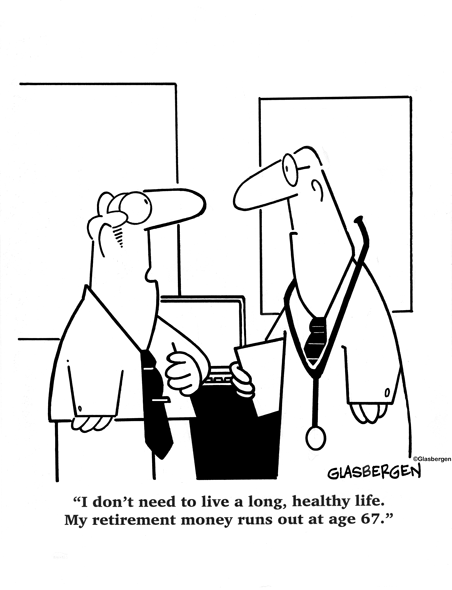
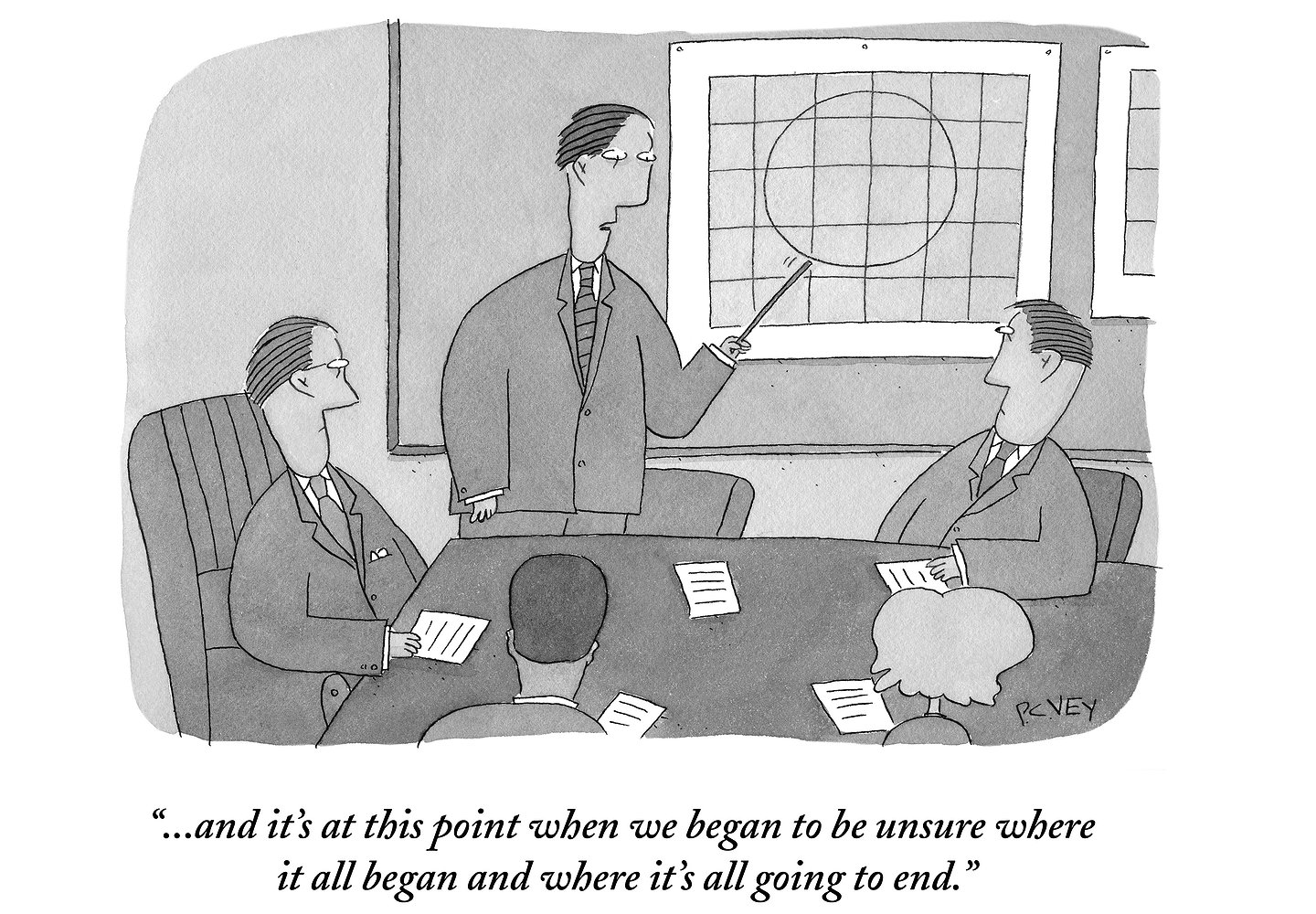
Cartoon – State of the Union on Integrity




https://mailchi.mp/0fa09872586c/the-weekly-gist-july-31-2020?e=d1e747d2d8

After a week that brought the most disastrous economic data in modern history, the death of a former Presidential candidate from COVID, and signs of an alarming surge in virus cases in the Midwest, Congress left Washington for the weekend without reaching a deal on a new recovery bill. That left millions of unemployed Americans without supplemental benefit payments, business owners wondering whether more financial assistance would be forthcoming, and hospitals facing the requirement to begin repaying billions of dollars of advance payments from Medicare.
Also remaining on the table was funding to bolster coronavirus testing, with the top health official in charge of the testing effort testifying on Friday that the system is not currently able to deliver COVID test results to patients in a timely manner. While the surge in cases appears to be shifting to the Midwest, there were early indications of positive news across the Sun Belt, as the daily new case count in Florida, Louisiana, Texas, Arizona and California continued to decline, while daily death counts (a lagging indicator) continued to hit new records.
Nationally, the daily case count appears to have reached a new plateau of around 65,000, with daily deaths rising to a 7-day average above 1,150, matching a level last seen in May.
Meanwhile, new clinical findings continued to refine our understanding of how the virus attacks its victims. Reporting in JAMA Cardiology, researchers used cardiac MRI to examine heart function among 100 coronavirus patients, 67 of whom recovered at home without hospitalization, finding that 78 percent demonstrated cardiac involvement and 60 percent had evidence of active heart muscle inflammation—concerning signs pointing to possible long-term complications, even in patients with relatively mild courses of COVID infection.
And yesterday in JAMA, investigators reported that while young children are typically less affected by COVID-19 than adults, children under 5 may harbor 100 times as much active virus in their nose and throat as infected adults. While the study does not confirm that kids spread the virus to adults, it is sure to raise concerns about reopening schools, which has generally been considered relatively safer for younger children.
US coronavirus update: 4.8M cases; 151K deaths; 52.9M tests conducted.

The Commerce Department opened today’s announcement of second-quarter economic growth with an eyeball-blistering observation: “Real gross domestic product (GDP) decreased at an annual rate of 32.9 percent in the second quarter of 2020.”
That 32.9 percent represents the loss of a third of the economy. Let that sink in. Now let it wriggle back out again — it is not exactly true. Why? The Commerce Department reports quarterly GDP at an annual rate to allow easy comparisons to other time periods. Remove the annualization, and we see the economy contracted a still-abysmal 9.5 percent.
In other words, 32.9 percent is how much the economy would shrink if the business closures and spending cuts of the second quarter increased at a compounding 9.5 percent for an entire year, after adjusting for seasonality.
Think of what an apocalypse that would be. Annualization assumes the businesses closed this quarter would remain closed and that just as many more would close in the third quarter. And we’d expand the closures again in the fourth quarter and again in the first quarter of next year.
In other words, take the devastation you saw in the past three months and multiply it by four. That is essentially what annualizing does, though compounding means the actual math is a bit more complicated.
The Commerce Department’s affection for annualization does not stop at percentage change. It also reports quarterly GDP totals at an annualized rate — when Commerce says GDP was at $17.2 trillion in the past quarter, it means GDP would be at $17.2 trillion if this quarter’s $4.3 trillion in output continued for a full year.
With that in mind, here is U.S. GDP, adjusted for inflation and reported as quarterly totals, as suggested by reader Nick Estes.

That chart does not crash by a third, obviously. A 32.9 percent drop would mean a loss of about $1.6 trillion from last quarter. In fact, the economy shrank $0.45 trillion in the second quarter, on the heels of a $0.06 trillion (1.3 percent) decrease in the first quarter of 2020.
To see a third of the economy truly vanish, look at the Great Depression. From 1929 to 1933, GDP contracted about 36 percent, according to data collected by economists Nathan Balke and Robert Gordon. That is the actual contraction — no annualization in sight.

Commerce Department data, which start in 1947, show the previous worst quarter on record was a 2.6 percent drop in 1958. That contraction just happened to coincide with the “Asian flu” pandemic, which claimed about a million lives worldwide.
With Balke and Gordon’s expanded data, we can also establish that a drop of 9.5 percent makes this quarter the worst since at least 1875. The next worst were in 1893, when a legendary panic and run on the banks resulted in a long, painful depression, and 1937, when the Great Depression took a turn for the worse. Then, we saw drops of 8.4 percent and 7.2 percent, respectively.

 HENRY KOTULA