Health systems facing an uphill battle for MA lives

https://mailchi.mp/66ebbc365116/the-weekly-gist-june-11-2021?e=d1e747d2d8

Fighting an Uphill Battle? - Zeteo 3:16

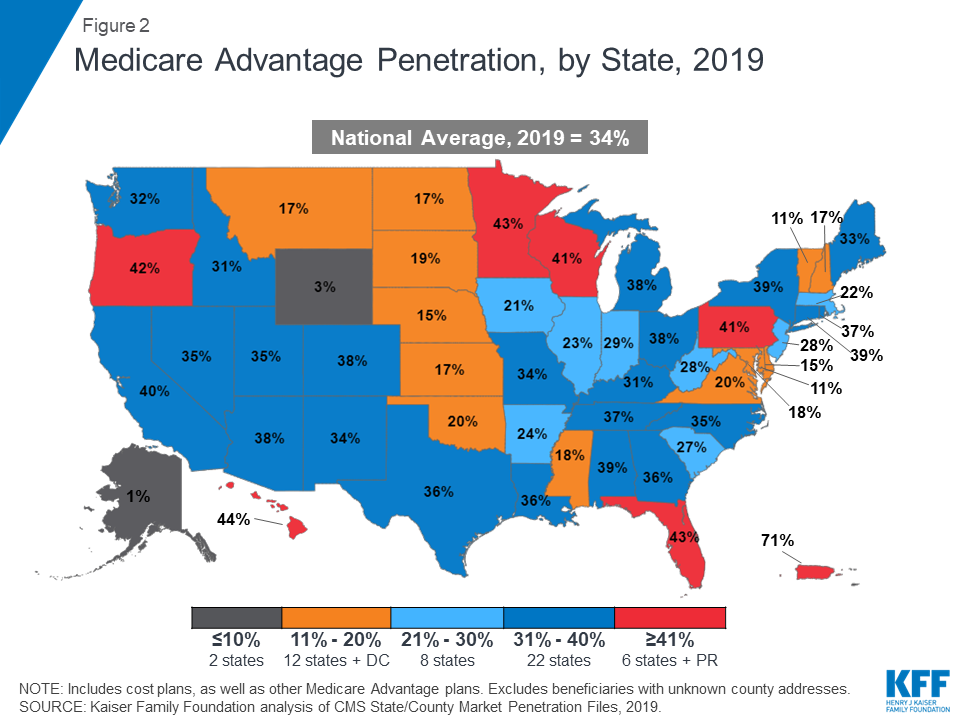
A number of the regional health systems we work with have either launched or are planning to launch their own Medicare Advantage (MA) plans. The good news is the breathless enthusiasm among hospitals for getting into the insurance business that followed the advent of risk-based contracting has been tempered in recent years.

Early strategies, circa 2012-15, involved health systems rushing into the commercial group and individual markets, only to run up against fierce competition from incumbent Blues plans, and an employer sales channel characterized by complicated relationships with insurance brokers. 

Slowly, a lightbulb has gone off among system strategists that MA is where the focus should be, given demographic and enrollment trends, and the fact that MA plans can be profitable with a smaller number of lives than commercial plans. It’s also a space that rewards investments in care management, as MA enrollees tend to be “sticky”, remaining with one plan for several years, which gives population health interventions a chance to reap benefits.

But as systems “skate to where the puck is going” with Medicare risk, they’re confronting a new challenge: slow growth. Selling a Medicare insurance plan is a “kitchen-table sale”, involving individual consumer purchase decisions, rather than a “wholesale sale” to a group market purchaser. That means that consumer marketing matters more—and the large national carriers are able to deploy huge advertising budgets to drive seniors toward their offerings. 

Regional systems are often outmatched in this battle for MA lives, and we’re beginning to hear real frustration with the slow pace of growth among provider systems that have invested here. Patience will pay off, but so will scale, most likely—the bigger the system, the bigger the investment in marketing can be. (Although even large, national health systems are still dwarfed by the likes of UnitedHealthcare, CVS Health, and Humana.)

Look for the pursuit of MA lives to further accelerate the trend toward consolidation among regional health systems.


Pennsylvania cancer hospital to lay off 365 workers

Cancer Treatment Centers of America®, Philadelphia PA | CTCA

Cancer Treatment Centers of America is selling its hospital in Philadelphia and will lay off the facility’s 365 employees, according to a closure notice filed with the state.

Boca Raton, Fla.-based Cancer Treatment Centers of America signed an agreement in March to sell the hospital to Philadelphia-based Temple University Hospital. The deal requires approval from the Pennsylvania Department of Health. 

In the notice filed with the state, Cancer Treatment Centers of America said some displaced Philadelphia workers may be offered jobs at affiliated entities outside of Pennsylvania, according to the Philadelphia Business Journal. The company’s other hospitals are in Chicago, Atlanta, Phoenix and Tulsa, Okla. In March, the company announced it will close its hospital in Tulsa June 1. 

Cancer Treatment Centers of America said it anticipates the layoffs in Philadelphia will begin after May 30, according to the Philadelphia Business Journal

Temple Health CEO Michael Young told the Philadelphia Business Journal that the system wants to hire as many CTCA workers as possible if the deal is finalized. 

The folly of fighting over board seats

https://mailchi.mp/3e9af44fcab8/the-weekly-gist-march-26-2021?e=d1e747d2d8

The Importance Of Board Seats During Fundraising

In our work over the years advising health systems on M&A, we’ve been struck by how often “social issues” cause deals that are otherwise strategically sound to go off the rails.

Of course, it’s an old chestnut that “culture eats strategy for breakfast”, but what’s been notable, especially recently, is how early in the process hot-button governance and leadership issues enter the discussions.

Where is the headquarters going to be? Who’s going to be the CEO of the combined entity? And most vexingly, how many board seats is each organization going to get? That last issue is particularly troublesome, as it’s often where negotiations get bogged down. But as one health system board member recently pointed out to us, getting hung up on whether board seats are split 7-6 or 8-5 is just silly—in her words, “If you’re in a position where board decisions turn on that close of a margin, you’ve got much bigger strategic problems.” 

It’s an excellent point. While boards shouldn’t just rubber stamp decisions made by management, it’s incumbent on the CEO and senior leaders to enfranchise and collaborate with the board in setting strategy, and critical decisions should rarely, if ever, come down to razor-thin vote tallies.

If a merger makes sense on its merits, and the strategic vision for the combined organization is clear, quibbling over how many seats each legacy system “gets” seems foolishNo board should go into a merger anticipating a future in which small majorities determine the outcome of big decisions.

How many “lives” does a health plan need?

https://mailchi.mp/3e9af44fcab8/the-weekly-gist-march-26-2021?e=d1e747d2d8

A Dozen Facts About Medicare Advantage in 2019 | KFF

Doctors and health systems with a significant portion of risk-based contracts weathered the pandemic better than their peers still fully tethered to fee-for-service payment. Lower healthcare utilization translated into record profits, just as it did for insurers.

We’re now seeing an increasing number of health systems asking again whether they should enter the health plan business—levels of interest we haven’t seen since the “rush to risk” in the immediate aftermath of the passage of the Affordable Care Act a decade ago.

The discussions feel appreciably different this time around (which is a good thing, since many systems who launched plans in the prior wave had trouble growing and sustaining them). First, systems are approaching the market this time with a focus on Medicare Advantage, having seen that growing a base of covered lives with their networks is much easier than starting with the commercial market, where large insurers, particularly incumbent Blues plans, dominate the market, and many employers are still reticent to limit choice.

But foremost, there is new appreciation for the scale needed for a health plan to compete. In 2010, many executives set a goal of 100K covered lives as a target for sustainability; today, a plan with three times that number is considered small. Now many leaders posit that regional insurers need a plan to get to half a million lives, or more. (Somehow this doesn’t seem to hold for insurance startups: see the recent public offerings of Clover Health and Alignment Health, who have just 57K and 82K lives, respectively, nationwide.)

We’re watching for a coming wave of health system consolidation to gain the financial footing and geographic footprint needed to compete in the Medicare Advantage market, and would expect traditional payers to respond with regional consolidation of their own.
 

From insurer to diversified services business

https://mailchi.mp/3e9af44fcab8/the-weekly-gist-march-26-2021?e=d1e747d2d8

Large health insurers no longer just provide coverage, but are instead repositioning themselves as vertically integrated healthcare organizations that span the care continuum.

The graphic above shows five-year total revenue growth by segment for the top five health insurance companies.

Some, like Anthem and Humana, are still in the early stages of revenue diversification, leveraging partnerships and investments to fill service gaps—in Humana’s case, these are mainly centered on the Medicare Advantage population.

On the other hand, the insurance revenue of Cigna and CVS Health is already dwarfed by pharmacy benefit management (PBM) revenue (as well as retail clinic revenue for CVS).

UnitedHealth Group (UHG) is clearly leading the pack, with a robust revenue diversification and vertical integration strategy. 

Its Optum subsidiary grew 62 percent over the last five years, nearly double the rate of its UnitedHealthcare insurance business. Already the largest employer of physicians in the country, Optum recently announced plans to acquire Massachusetts-based 715-physician group, Atrius Health. It also announced its intent to acquire Change Healthcare, one of the largest providers of revenue and payment cycle management solutions.

Given the outsized role of the Optum division in driving UHG’s growth and profitability, it may soon face a dilemma that other publicly traded, diversified companies have had to confront: shareholder demands to unlock value by spinning off the business into a separate company.

Central to fending off that kind of activism by shareholders: demonstrable steps to integrate the myriad businesses the company has acquired into a functional whole. Just as Amazon’s hugely profitable Web Services business has become a target of spin-off demands, so too, eventually, may UHG’s Optum.

Are new moms really the key to health system loyalty?

https://mailchi.mp/d88637d819ee/the-weekly-gist-march-19-2021?e=d1e747d2d8

Healthcare Marketing Blog for Hospitals and Health Systems | BPD Advertising

It’s long been accepted as a truism that “moms” make most of a family’s healthcare choices. This has led many health systems to invest in high-end women’s services, especially labor and delivery facilities, with the hope of winning the entire family’s long-term healthcare loyalty.

This conventional wisdom has existed since the middle of the last century, when the postwar Baby Boom coincided with the rise of commercial insurance. But it’s hard to find real evidence that these investments deliver on their intent—and we think the argument deserves to be reexamined.

An expectant mother is likely years away from her family’s major healthcare spending events. Giving her a fantastic virtual care experience, or taking great care of her teenager who blows out a knee playing soccer, is likely to engender greater loyalty to the health system when she’s looking for her first mammogram, than her labor and delivery experience from a decade earlier. That’s not to say that top-notch obstetrics isn’t important—but market-leading labor and delivery facilities are likely more critical for wholesale purchasers, such as an employer considering a narrow network, or for physicians choosing where to build an OB practice.

Direct-to-consumer strategies should be built on more sophisticated consumer research that takes into account the preferences of a new generation of consumers, for whom not all healthcare choices are equal—that same consumer will be in different “segments” and make different choices for different problems over time, not all pre-determined by one memorable birthing experience.

Primary care—Ex uno plures

https://mailchi.mp/d88637d819ee/the-weekly-gist-march-19-2021?e=d1e747d2d8

Ex Uno Plures. Out of One, Many | HR Examiner

We had occasion this week, when asked to weigh in on a health system’s “primary care strategy”, to assert once again that primary care is not a thing.

We were being intentionally provocative to make a point: what we traditionally refer to as “primary care” is actually a collection of different services, or “jobs to be done” for a patient (to borrow a Clayton Christensen term).

These include a range of things: urgent care, chronic disease management, medication management, virtual care, women’s health services, pediatrics, routine maintenance, and on and on. What they have in common is that they’re a patient’s “first call”: the initial point of contact in the healthcare system for most things that most patients need. It’s a distinction with a difference, in our view. 

If you set out to address “primary care strategy”, you’re going to end up in a discussion about physician manpower, practices, and economics at a level of generalization that often misses what patients really need. Rather than the traditional E pluribus unum (out of many, one) approach that many take, we’d advise an Ex uno plures (out of one, many) perspective.

Ask the question “What problems do patients have when they first contact the healthcare system?” and then strategize around and resource each of those problems in the way that best solves them. That doesn’t mean taking a completely fragmented approach—it’s essential to link each of those solutions together in a coherent ecosystem of care that helps with navigation and information flow (and reimbursement).

But continuing to perpetuate an entity called “primary care” increasingly seems like an antiquated endeavor, particularly as technology, payment, and consumer preferences all point to a more distributed and easily accessible model of care delivery.

Consolidation as a force for good—at least during COVID

https://mailchi.mp/b0535f4b12b6/the-weekly-gist-march-12-2021?e=d1e747d2d8

Countering the Negative Consequences of COVID-Induced Healthcare  Consolidation - 4sight Health : 4sight Health
When Jeff Goldsmith and Ian Morrison talk, people listen (apologies to E.F. Hutton…Goldsmith and Morrison are old enough to get that reference, anyway). These two lions of health policy and strategy came together recently to pen an editorial in Health Affairs examining the impact of large integrated health systems on the nation’s response to COVID-19.

Morrison and Goldsmith admit to often finding themselves on opposite sides of consolidation issue,
but looking back over the past year, both agree the scale systems have built over decades has been foundational to their effective and rapid response to the pandemic, which they rate as “better than just about any other element of our society”.

Larger health systems were able to mobilize the resources to secure protective gear as supplies dwindled. They responded at a speed many would have thought impossible, doubling ICU capacity in a matter of days, and shifting care to telemedicine, implementing their five-year digital strategies during the last two weeks of March.

This kind of innovation would have been impossible without the investments in IT and electronic records enabled by scale—but systems also exhibited an impressive degree of “systemness”, making important decisions quickly, and mobilizing across regional footprints. Given the financial stresses experienced by smaller providers, consolidation is sure to increase. And the Biden healthcare team will likely bring more scrutiny to health system mergers.

Morrison and Goldsmith urge regulators to reconsider the role of health systems. The government should continue to pursue truly anticompetitive behavior that raises employer and consumer prices. But lawmakers should focus less on the sheer size of health systems and rather on their behavior, considering the potential societal impact a combined system might deliverand creating policy that takes into account the role health systems have played in bolstering our public health infrastructure.

Back to “a deal for every doc”?

https://mailchi.mp/b0535f4b12b6/the-weekly-gist-march-12-2021?e=d1e747d2d8

Hospital Physician Partners and Lock Haven Hospital Announce New Emergency  Department Partnership

Many physician practices weathered 2020 better than they would have predicted last spring. We had anticipated many doctors would look to health systems or payers for support, but the Paycheck Protection Program (PPP) loans kept practices going until patient volume returned. But as they now see an end to the pandemic, many doctors are experiencing a new round of uncertainty about the future. Post-pandemic fatigue, coupled with a long-anticipated wave of retiring Baby Boomer partners, is leading many more independent practices to consider their options. And layered on top of this, private equity investors are injecting a ton of money into the physician market, extending offers that leave some doctors feeling, according to one doctor we spoke with, that “you’d have to be an idiot to say no to a deal this good”.
 
2021 is already shaping up to be a record year for physician practice deals. But some of our recent conversations made us wonder if we had time-traveled back to the early 2000s, when hospital-physician partnerships were dominated by bespoke financial arrangements aimed at securing call coverage and referrals. Some health system leaders are flustered by specialist practices wanting a quick response to an investor proposal. Hospitals worry the joint ventures or co-management agreements that seemed to work well for years may not be enough, and wonder if they should begin recruiting new doctors or courting competitors, “just in case” current partners might jump ship for a better deal. 

In contrast to other areas of strategy, where a ten-year vision can guide today’s decisions, it has always been hard for health systems to take the long view with physician partnerships.

When most “strategies” are really just responses to the fires of the day, health systems run the risk of relationships devolving to mere economic terms. Health systems may find themselves once again with a messy patchwork of doctors aligned by contractual relationships, rather than a tight network of physician partners who can work together to move care forward.