The Value-based Care Agenda in Trump 2.0 Healthcare

This week, the House Energy and Commerce and Ways and Means Committees begins work on the reconciliation bill they hope to complete by Memorial Day. Healthcare cuts are expected to figure prominently in the committee’s work.

And in San Diego, America’s Physician Groups (APG) will host its spring meeting “Kickstarting Accountable Care: Innovations for an Urgent Future” featuring Presidential historian Dorris Kearns Goodwin and new CMS Innovation Center Director Abe Sutton. Its focus will be the immediate future of value-based programs in Trump Healthcare 2.0, especially accountable care organizations (ACOs) and alternative payment models (APMs).

Central to both efforts is the administration’s mandate to reduce federal spending which it deems achievable, in part, by replacing fee for services with value-based payments to providers from the government’s Medicare and Medicaid programs. 

The CMS Center for Medicare and Medicaid Innovation (CMMI) is the government’s primary vehicle to test and implement alternative payment programs that reduce federal spending and improve the quality and effectiveness of services simultaneously.

Pledges to replace fee-for-service payments with value-based incentives are not new to Medicare.  Twenty-five years ago, they were called “pay for performance” programs and, in 2010, included in the Affordable Care as alternative payment models overseen by CMMI.

But the effectiveness of APMs has been modest at best: of 50+ models attempted, only 6 proved effective in reducing Medicare spending while spending $5.4 billion on the programs. Few were adopted in Medicaid and only a handful by commercial payers and large self-insured employers. Critics argue the APMs were poorly structured, more costly to implement than potential shared savings payments and sometimes more focused on equity and DEI aims than actual savings.

The question is how the Mehmet Oz-Abe Sutten version of CMMI will approach its version of value-based care, given modest APM results historically and the administration’s focus on cost-cutting.

Context is key:

Recent efforts by the Trump Healthcare 2.0 team and its leadership appointments in CMS and CMMI point to a value-agenda will change significantly. Alternative payment models will be fewer and participation by provider groups will be mandated for several. Measures of quality and savings will be fewer, more easily measured and and standardized across more episodes of care. Financial risks and shared savings will be higher and regulatory compliance will be simplified in tandem with restructuring in HHS, CMS and CMMI to improve responsiveness and consistency across federal agencies and programs.

Sutton’s experience as the point for CMMI is significant. Like Adam Boehler, Brad Smith and other top Trump Healthcare 2.0 leaders, he brings prior experience in federal health agencies and operating insight from private equity-backed ventures (Honest Health, Privia, Evergreen Nephrology funded through Nashville-based Rubicon Founders). Sutton’s deals have focused on physician-driven risk-bearing arrangements with Medicare with funding from private investors.

The Trump Healthcare 2.0 team share a view that the healthcare system is unnecessarily expensive and wasteful, overly-regulated and under-performing. They see big hospitals and drug companies as complicit—more concerned about self-protection than consumer engagement and affordability.

They see flawed incentives as a root cause, and believe previous efforts by CMS and CMMI veered inappropriately toward DEI and equity rather than reducing health costs.

And they think physicians organized into risk bearing structures with shared incentives, point of care technologies and dependable data will reduce unnecessary utilization (spending) and improve care for patients (including access and affordability).

There’s will be a more aggressive approach to spending reduction and value-creation with Medicare as the focus: stronger alternative payment models and expansion of Medicare Advantage will book-end their collective efforts as Trump Healthcare 2.0 seeks cost-reduction in Medicare.

What’s ahead?

Trump Healthcare 2.0 value-based care is a take-no prisoners strategy in which private insurers in Medicare Advantage have a seat at their table alongside hospitals that sponsor ACOs and distribute the majority of shared savings to the practicing physicians. But the agenda will be set, and re-set by the administration and link-minded physician organizations like America’s Physician Groups and others that welcome financial risk-sharing with Medicare and beyond.

The results of the Trump Healthcare 2.0 value agenda will be unknown to voters in the November 2026 mid-term but apparent by the Presidential campaign in 2028. In the interim, surrogate measures for performance—like physician participation and projected savings–will be used to show progress and the administration will claim success. It will also spark criticism especially from providers who believe access to needed specialty care will be restricted, public and rural health advocates whose funding is threatened, teaching and clinical research organizations who facing DOGE cuts and regulatory uncertainty, patient’s right advocacy groups fearing lack of attention and private payers lacking scalable experience in Medicare Advantage and risk-based relationships with physicians.

Last week, the American Medical Association named Dr. John Whyte its next President replacing widely-respected 12-year CEO/EVP Jim Madara. When he assumes this office in July, he’ll inherit an association that has historically steered clear of major policy issues but the administration’s value-based care agenda will quickly require his attention.

Physicians including AMA members are restless:

At last fall’s House of Delegates (HOD), members passed a resolution calling for constraints on not-for-profit hospital’ tax exemptions due to misleading community benefits reporting and more consistency in charity care reporting by all hospitals.

The majority of practicing physicians are burned-out due to loss of clinical autonomy and income pressures—especially the 75% who are employees of hospitals and private-equity backed groups. And last week, the American College of Physicians went on record favoring “collective action” to remedy physician grievances. All impact the execution of the administration’s value-based agenda.

Arguably, the most important key to success for the Trump Healthcare 2.0 is its value agenda and physician support—especially the primary care physicians on whom the consumer engagement and appropriate utilization is based. It’s a tall order.

The Trump Healthcare 2.0 value agenda is focused on near-term spending reductions in Medicare. Savings in federal spending for Medicaid will come thru reconciliation efforts in Congress that will likely include work-requirements for enrollees, elimination of subsidies for low-income adults and drug formulary restrictions among others. And, at least for the time being, attention to those with private insurance will be on the back burner, though the administration favors insurance reforms adding flexible options for individuals and small groups.

The Trump Healthcare 2.0 value-agenda is disruptive, aggressive and opportunistic for physician organizations and their partners who embrace performance risk as a permanent replacement for fee for service healthcare. It’s a threat to those that don’t.


The Value-based Care Agenda in Trump 2.0 Healthcare

This week, the House Energy and Commerce and Ways and Means Committees begins work on the reconciliation bill they hope to complete by Memorial Day. Healthcare cuts are expected to figure prominently in the committee’s work.

And in San Diego, America’s Physician Groups (APG) will host its spring meeting “Kickstarting Accountable Care: Innovations for an Urgent Future” featuring Presidential historian Dorris Kearns Goodwin and new CMS Innovation Center Director Abe Sutton. Its focus will be the immediate future of value-based programs in Trump Healthcare 2.0, especially accountable care organizations (ACOs) and alternative payment models (APMs).

Central to both efforts is the administration’s mandate to reduce federal spending which it deems achievable, in part, by replacing fee for services with value-based payments to providers from the government’s Medicare and Medicaid programs. The CMS Center for Medicare and Medicaid Innovation (CMMI) is the government’s primary vehicle to test and implement alternative payment programs that reduce federal spending and improve the quality and effectiveness of services simultaneously.

Pledges to replace fee-for-service payments with value-based incentives are not new to Medicare.  Twenty-five years ago, they were called “pay for performance” programs and, in 2010, included in the Affordable Care as alternative payment models overseen by CMMI. But the effectiveness of APMs has been modest at best: of 50+ models attempted, only 6 proved effective in reducing Medicare spending while spending $5.4 billion on the programs. Few were adopted in Medicaid and only a handful by commercial payers and large self-insured employers. Critics argue the APMs were poorly structured, more costly to implement than potential shared savings payments and sometimes more focused on equity and DEI aims than actual savings.

The question is how the Mehmet Oz-Abe Sutten version of CMMI will approach its version of value-based care, given modest APM results historically and the administration’s focus on cost-cutting.

Context is key:

Recent efforts by the Trump Healthcare 2.0 team and its leadership appointments in CMS and CMMI point to a value-agenda will change significantly. Alternative payment models will be fewer and participation by provider groups will be mandated for several. Measures of quality and savings will be fewer, more easily measured and and standardized across more episodes of care. Financial risks and shared savings will be higher and regulatory compliance will be simplified in tandem with restructuring in HHS, CMS and CMMI to improve responsiveness and consistency across federal agencies and programs.

Sutton’s experience as the point for CMMI is significant. Like Adam Boehler, Brad Smith and other top Trump Healthcare 2.0 leaders, he brings prior experience in federal health agencies and operating insight from private equity-backed ventures (Honest Health, Privia, Evergreen Nephrology funded through Nashville-based Rubicon Founders). Sutton’s deals have focused on physician-driven risk-bearing arrangements with Medicare with funding from private investors.

The Trump Healthcare 2.0 team share a view that the healthcare system is unnecessarily expensive and wasteful, overly-regulated and under-performing. They see big hospitals and drug companies as complicit—more concerned about self-protection than consumer engagement and affordability. They see flawed incentives as a root cause, and believe previous efforts by CMS and CMMI veered inappropriately toward DEI and equity rather than reducing health costs. And they think physicians organized into risk bearing structures with shared incentives, point of care technologies and dependable data will reduce unnecessary utilization (spending) and improve care for patients (including access and affordability).

There’s will be a more aggressive approach to spending reduction and value-creation with Medicare as the focus: stronger alternative payment models and expansion of Medicare Advantage will book-end their collective efforts as Trump Healthcare 2.0 seeks cost-reduction in Medicare.

What’s ahead?

Trump Healthcare 2.0 value-based care is a take-no prisoners strategy in which private insurers in Medicare Advantage have a seat at their table alongside hospitals that sponsor ACOs and distribute the majority of shared savings to the practicing physicians. But the agenda will be set, and re-set by the administration and link-minded physician organizations like America’s Physician Groups and others that welcome financial risk-sharing with Medicare and beyond.

The results of the Trump Healthcare 2.0 value agenda will be unknown to voters in the November 2026 mid-term but apparent by the Presidential campaign in 2028. In the interim, surrogate measures for performance—like physician participation and projected savings–will be used to show progress and the administration will claim success. It will also spark criticism especially from providers who believe access to needed specialty care will be restricted, public and rural health advocates whose funding is threatened, teaching and clinical research organizations who facing DOGE cuts and regulatory uncertainty, patient’s right advocacy groups fearing lack of attention and private payers lacking scalable experience in Medicare Advantage and risk-based relationships with physicians.

Last week, the American Medical Association named Dr. John Whyte its next President replacing widely-respected 12-year CEO/EVP Jim Madara. When he assumes this office in July, he’ll inherit an association that has historically steered clear of major policy issues but the administration’s value-based care agenda will quickly require his attention.

Physicians including AMA members are restless: at last fall’s House of Delegates (HOD), members passed a resolution calling for constraints on not-for-profit hospital’ tax exemptions due to misleading community benefits reporting and more consistency in charity care reporting by all hospitals. The majority of practicing physicians are burned-out due to loss of clinical autonomy and income pressures—especially the 75% who are employees of hospitals and private-equity backed groups. And last week, the American College of Physicians went on record favoring “collective action” to remedy physician grievances. All impact the execution of the administration’s value-based agenda.

Arguably, the most important key to success for the Trump Healthcare 2.0 is its value agenda and physician support—especially the primary care physicians on whom the consumer engagement and appropriate utilization is based. It’s a tall order.

The Trump Healthcare 2.0 value agenda is focused on near-term spending reductions in Medicare. Savings in federal spending for Medicaid will come thru reconciliation efforts in Congress that will likely include work-requirements for enrollees, elimination of subsidies for low-income adults and drug formulary restrictions among others. And, at least for the time being, attention to those with private insurance will be on the back burner, though the administration favors insurance reforms adding flexible options for individuals and small groups.

The Trump Healthcare 2.0 value-agenda is disruptive, aggressive and opportunistic for physician organizations and their partners who embrace performance risk as a permanent replacement for fee for service healthcare. It’s a threat to those that don’t.

Corporate Takeover Has Not Been Good for Healthcare

Four decades ago, Paul Starr noted in his landmark history of U.S. healthcare, “The Social Transformation of American Medicine,” that the industry had taken a decisive turn toward corporate ownership. “Medical care in America now appears to be in the early stages of a major transformation in its institutional structure,” he wrote. “Corporations have begun to integrate a hitherto decentralized hospital system, enter a variety of other health care businesses, and consolidate ownership and control in what may eventually become an industry dominated by huge healthcare conglomerates.”

Forty years later, Starr’s prediction has come true. The vast majority of hospitals (other than critical access facilities) are now part of health systems, and some of those belong to giant for-profit or not-for-profit corporations. Nearly 80% of physicians are now employed by hospitals or private companies, including health insurers like United Healthcare. Most community pharmacies have been displaced by enormous chains like CVS, Walgreens and Walmart. Nursing home chains have taken over two-thirds of skilled nursing facilities. A handful of huge firms dominate health insurance, and a dozen drug manufacturers produce and set the prices of the most common prescription medicines.

Private equity (PE) investors focus like a laser beam on generating profits. There can be an amoral quality to PE investing, seeking returns whether or not they create value for customers in the marketplace.

Steward Healthcare, a large hospital chain initially created with PE investment has become, whether fair or not, a poster child for what can go wrong with private investment in healthcare. Steward went bankrupt after aggressively expanding into new markets beyond Massachusetts with funding generated from sales-leaseback arrangements with Real Estate Investment Trusts (REITs).

But many of the PE firms that now own over 200 acute care hospitals take a similar approach. According to a recent study of PE-owned hospitals, two years after they were purchased, 61% of them had reduced capital assets, compared to 15.5% of control hospitals. Assets decreased by a mean of 15% for acquired hospitals and increased by 9.2% for controls during that period.

Corporate Goals Vs. Value-Based Care
The consolidation of the industry by large corporate entities has received a fair amount of media attention. What has been less noticed is the incompatibility between corporate goals and value-based care. One reason for this is that many big healthcare systems pretend to be interested in population health management. For example, they may operate accountable care organizations (ACOs) that seek to improve the quality of care and reduce costs through better prevention and care coordination. They may also try to reduce readmissions, which helps them avoid Medicare penalties.

Don’t be fooled. There are exceptions — including the few integrated systems like Kaiser and Geisinger that take financial responsibility for care — but most healthcare systems have no intention of turning their business model upside down by using population health management to decrease admissions and empty their beds. When for-profit chains deliver reports to stock analysts, or not-for-profits seek to sell bonds, the metric they most often use to show their financial health is their occupancy rate, not their success in value-based care.

Meanwhile, the healthcare behemoths are continuing to grow larger. While the Department of Justice has ramped up its antitrust activity under the Biden Administration and has discouraged some mergers, this has had relatively little impact on healthcare consolidation. Academic medical centers are acquiring more community hospitals as referral sources, and some large systems like Risant Health, a nonprofit entity created by Kaiser Permanente, are doing interstate deals that help them escape the oversight of state laws.

Physicians have been largely a football in the matches between giant healthcare systems and equally massive insurers. Many independent practices have been forced to sell out to hospitals because Medicare pays hospital outpatient departments more than independent practices for the same services. (That this remains the case nearly 10 years after Congress passed its first “site-neutral” payment law is a testament to the power of regulatory capture.) While there are some sizable independent groups and physician-led ACOs, it is difficult for doctors to determine their own destinies today. And, because of how their corporate overlords affect the practice of medicine, many employed physicians are unhappy with their working conditions and its impact on patients. We’re even starting to see the beginnings of unionization in some systems.

Saving Primary Care
A variety of reforms have been tried to shore up primary care, the cornerstone of value-based care. For example, some primary-care-driven ACOs with value-based contracts generate significant savings that they have shared with their doctors. But the percentage of all payments made in these kinds of arrangements is still fairly small. The risk-taking portion of the healthcare business will not grow substantially as long as hospitals and specialists continue to make good money doing the same old fee-for-service thing.

Insurers have also taken the lead in some efforts to fortify primary care. United, which employs about 10% of the nation’s physicians, has been training them to practice evidence-based medicine and reduce waste. Elevance Health recently struck a deal with PE firm Clayton, Dubilier & Rice to create a new primary care model in Elevance’s Millenium Physician Group and Carelon Health. This “whole-person health” model will emphasize the patient-doctor relationship, along with care coordination, referral management and health coaching within “value-based care” financial arrangements.

This is all to the good. But health insurers don’t make their profits by encouraging primary care doctors to take better care of patients. They use provider networks, prior authorization, high deductibles and other tools to limit access and the cost of services. In Medicare Advantage, carriers like United and Humana have used diagnostic coding to inflate their Medicare payments by an estimated $88 billion just this year. Efforts to infuse value-based care into healthcare delivery have not been a major priority for insurance companies.

Drug Company Profits
Whole books have been written about how the pharmaceutical industry has ripped off the American consumer. Following notorious, out-of-whack price increases over the years for drugs like insulin, Humira and Truvada, in 2022 net prices jumped 6.2% for Darzalex, 6% for Prolia, 7.2% for Xgeva, 6% for Perjeta, and 8.9% for Adcetris, among others. These price hikes, which were unsupported by new clinical evidence of the drugs’ effectiveness, netted from $63 million to $248 million in additional revenue for their manufacturers. Drug companies can get away with it because nothing in U.S. law prevents them from raising prices for patented medications by however much they want to. How they price their drugs can also have a strong impact on health costs as a whole, especially when a lot of people take a particular medication. Current examples include Wegovy, Ozempic and the other high-priced GLP-1 weight-loss drugs, which eventually could cost the health system as much as $1 trillion a year — five times as much as could be saved in lower costs for other conditions — if prescribed to all obese Americans.

The kicker is that we spend nearly three times as much per person on prescription medicines as other leading countries do, because their governments bargain with pharmaceutical companies and ours doesn’t. Yet the drug makers complain that any limitations on their U.S. profits will make it impossible for them to develop more lifesaving medicines.

Overall, it’s clear that the corporatization of our healthcare system is not good for our health. In Portugal, for example, health spending per capita is one-fifth that of the U.S., yet life expectancy there is six years longer, on average, than in our country. The difference is largely rooted in the fact that Portugal has a national health service that guarantees access to healthcare, regardless of ability to pay. In other words, health takes precedence over profits in Portugal.

If we really want good healthcare at an affordable cost — the definition of value-based care — we have to move away from our profit-driven, corporatized healthcare model. As long as corporations are allowed to profit from healthcare, they will maximize those profits, regardless of the impact on consumers. It doesn’t matter how much we talk about value-based care or reforms that merely nip at corporate profits. Until Americans demand the same kind of healthcare that every Portuguese has, and insist that our government rein in the corporate owners of healthcare entities, we will get poorer healthcare and die sooner than citizens of other advanced countries.
Outcomes Matter. Customers Count. Value Rules.

Cone Health to join Kaiser Permanente subsidiary Risant Health

https://www.kaufmanhall.com/insights/blog/gist-weekly-june-28-2024

Last Friday, Greensboro, NC-based Cone Health announced that it signed a definitive agreement to join Risant Health, Kaiser Permanente’s not-for-profit subsidiary.

Launched in April 2023, Risant aims to acquire and support not-for-profit health systems focused on value-based care.

If the deal is approved by regulators, Cone Health, a $2.8B not-for-profit system with five hospitals and an insurance arm, would join Danville, PA-based Geisinger as Risant’s second member.

As part of the deal, Risant will invest an undisclosed sum into Cone, but Cone will continue to operate independently, retaining its branding, leadership, and ability to work with multiple insurers. The two parties expect to close the deal in the next six months.

The Gist: Like Geisinger, Cone has a strong track record of value-based care, including a 15K-member health plan and a high-performing accountable care organization.

Neither Risant nor Kaiser has operations in North Carolina, a state currently seeing strong population growth

Risant has previously said that is looking to acquire four or five more systems in addition to Geisinger, in order to reach a combined revenue target of $30-35B over the next five years.

    Risant Health plans to acquire North Carolina system

    Risant Health, a nonprofit formed under Oakland, Calif.-based Kaiser Permanente, has signed a definitive agreement to acquire Greensboro, N.C.-based Cone Health.

    The news comes less than three months after Risant acquired its first health system, Danville, Pa.-based Geisinger Health. If the transaction closes, Cone Health will operate independently as a regional and community-based health system under Risant, which supports organizations with technology and services to improve outcomes and lower care costs in diverse business models.“Cone Health’s impressive work for decades in moving value-based care forward aligns so well with Risant Health’s vision for the future of healthcare. Their longstanding success and deep commitment to providing high-quality care to North Carolina communities make them an ideal fit to become a part of Risant Health,” CEO, Jaewon Ryu, MD, said in a June 21 news release. “We will work together to share our industry-leading expertise and innovation to expand access to value-based care to more people in the communities we serve.” 

    Cone Health includes four acute-care hospitals, a behavioral health facility, three ambulatory surgery centers, eight urgent care centers and more than 120 physician practices, according to its website. It has more than 13,000 employees and over 700 physicians, along with 1,800 partner physicians. “As part of Risant Health, Cone Health will build upon its long track record of success making evidence-based health care more accessible and affordable for more people. The people across the Triad will be among the first to benefit,” Cone Health President and CEO Mary Jo Cagle, MD, said. 

    Cone Health will maintain its brand, name and mission, and maintain its own board, CEO and leadership team. It will continue to work with health plans, provider organizations and independent physicians. Dr. Cagle said she does not anticipate changes in the types of care Cone Health provides as a result of becoming part of Risant. The proposed transaction is subject to regulatory approvals and closing conditions.

    The Healthcare Economy: Three Key Takeaways that Frame Public and Private Sector Response

    Last week, 2 important economic reports were released that provide a retrospective and prospective assessment of the U.S. health economy:

    The CBO National Health Expenditure Forecast to 2032: 

    “Health care spending growth is expected to outpace that of the gross domestic product (GDP) during the coming decade, resulting in a health share of GDP that reaches 19.7% by 2032 (up from 17.3% in 2022). National health expenditures are projected to have grown 7.5% in 2023, when the COVID-19 public health emergency ended. This reflects broad increases in the use of health care, which is associated with an estimated 93.1% of the population being insured that year… During 2027–32, personal health care price inflation and growth in the use of health care services and goods contribute to projected health spending that grows at a faster rate than the rest of the economy.”

    The Congressional Budget Office forecast that from 2024 to 2032:

    • National Health Expenditures will increase 52.6%: $5.048 trillion (17.6% of GDP) to $7,705 trillion (19.7% of GDP) based on average annual growth of: +5.2% in 2024 increasing to +5.6% in 2032
    • NHE/Capita will increase 45.6%: from $15,054 in 2024 to $21,927 in 2032
    • Physician services spending will increase 51.2%: from $1006.5 trillion (19.9% of NHE) to $1522.1 trillion (19.7% of total NHE)
    • Hospital spending will increase 51.6%: from $1559.6 trillion (30.9% of total NHE) in 2024 to $2366.3 trillion (30.7% of total NHE) in 2032.
    • Prescription drug spending will increase 57.1%: from 463.6 billion (9.2% of total NHE) to 728.5 billion (9.4% of total NHE)
    • The net cost of insurance will increase 62.9%: from 328.2 billion (6.5% of total NHE) to 534.7 billion (6.9% of total NHE).
    • The U.S. Population will increase 4.9%: from 334.9 million in 2024 to 351.4 million in 2032.

    The Bureau of Labor Statistics CPI Report for May 2024 and Last 12 Months (May 2023-May2024): 

    “The Consumer Price Index for All Urban Consumers (CPI-U) was unchanged in May on a seasonally adjusted basis, after rising 0.3% in April… Over the last 12 months, the all-items index increased 3.3% before seasonal adjustment. More than offsetting a decline in gasoline, the index for shelter rose in May, up 0.4% for the fourth consecutive month. The index for food increased 0.1% in May. … The index for all items less food and energy rose 0.2% in May, after rising 0.3 % the preceding month… The all-items index rose 3.3% for the 12 months ending May, a smaller increase than the 3.4% increase for the 12 months ending April. The all items less food and energy index rose 3.4 % over the last 12 months. The energy index increased 3.7%for the 12 months ending May. The food index increased 2.1%over the last year.

    Medical care services, which represents 6.5% of the overall CPI, increased 3.1%–lower than the overall CPI. Key elements included in this category reflect wide variance: hospital and OTC prices exceeded the overall CPI while insurance, prescription drugs and physician services were lower.

    • Physicians’ services CPI (1.8% of total impact): LTM: +1.4%
    • Hospital services CPI (1.0% of total impact): LTM: +7.3%
    • Prescription drugs (.9% of total impact) LTM +2.4%
    • Over the Counter Products (.4% of total impact) LTM 5.9%
    • Health insurance (.6% of total) LTM -7.7%

    Other categories of greater impact on the overall CPI than medical services are Shelter (36.1%), Commodities (18.6%), Food (13.4%), Energy (7.0%) and Transportation (6.5%).

    Three key takeaways from these reports:

    • The health economy is big and getting bigger. But it’s less obvious to consumers in the prices they experience than to employers, state and federal government who fund the majority of its spending. Notably, OTC products are an exception: they’re a direct OOP expense for most consumers. To consumers, especially renters and young adults hoping to purchase homes, the escalating costs of housing have considerably more impact than health prices today but directly impact on their ability to afford coverage and services. Per Redfin, mortgage rates will hover at 6-7% through next year and rents will increase 10% or more.
    • Proportionate to National Health Expenditure growth, spending for hospitals and physician services will remain at current levels while spending for prescription drugs and health insurance will increase. That’s certain to increase attention to price controls and heighten tension between insurers and providers.
    • There’s scant evidence the value agenda aka value-based purchases, alternative payment models et al has lowered spending nor considered significant in forecasts.

    The health economy is expanding above the overall rates of population growth, overall inflation and the U.S. economy. GDP.  Its long-term sustainability is in question unless monetary policies enable other industries to grow proportionately and/or taxpayers agree to pay more for its services. These data confirm its unit costs and prices are problematic.

    As Campaign 2024 heats up with the economy as its key issue, promises to contain health spending, impose price controls, limit consolidation and increase competition will be prominent.

    Public sector actions

    will likely feature state initiatives to lower cost and spend taxpayer money more effectively.

    Private sector actions

    will center on employer and insurer initiatives to increase out of pocket payments for enrollees and reduce their choices of providers.

    Thus, these reports paint a cautionary picture for the health economy going forward. Each sector will feel cost-containment pressure and each will claim it is responding appropriately. Some actually will.

    PS: The issue of tax exemptions for not-for-profit hospitals reared itself again last week.

    The Committee for a Responsible Federal Budget—a conservative leaning think tank—issued a report arguing the exemption needs to be ended or cut.  In response,

    the American Hospital Association issued a testy reply claiming the report’s math misleading and motivation ill-conceived.

    This issue is not going away: it requires objective analysis, fresh thinking and new voices.  For a recap, see the Hospital Section below.

    Preparing for Medicare Advantage’s Make-or-Break Moment

    https://www.kaufmanhall.com/insights/article/preparing-medicare-advantages-make-or-break-moment

    In recent years, the Medicare Advantage (MA) program enjoyed both rapid membership growth and positive attention from healthcare organizations and advocates. As of the beginning of 2024, 33.4 million Americans were enrolled in MA, up 7% from 2023.

    More than half of all Medicare-eligible individuals are now enrolled in MA.

    Interest and growth in MA has been buoyed by a number of factors: a growing eligible population as Baby Boomers continue to age into Medicare eligibility; affordable benefit packages with low or zero monthly premiums; regulatory changes providing for more flexibility in plan and member design; consumer-centric programs and care models tailored to the needs of beneficiaries; increased marketing and sales efforts through direct mailings, telemarketing, and online advertising.

    The program has also delivered meaningful value to members, who are more likely than traditional Medicare beneficiaries to have an annual income less than $40,000. In addition, the average monthly premium for Medicare beneficiaries enrolled in an MA plan has dropped by almost one-third in the last four years, reaching $18 per month in 2023.

    Ideally, success in MA can take the form of a virtuous cycle: an improved margin on MA for a plan enables reinvestment in related products to grow membership and better manage health outcomes, which leads to further reinvestment (Figure 1). Sustained success is contingent on meaningful collaboration between payers and providers.

    FIGURE 1: The Virtuous Cycle of MA Success

    MA Hits Headwinds

    However, after several high-growth years, payers and providers are currently confronting multiple MA-related challenges. Many providers have recently posted losses as their contractual yields decrease and authorizations for care have become more restrictive. The bar for risk adjustment and Star Ratings is also rising. Only 6% of plans received a 5-star rating from the Center for Medicare & Medicaid Services (CMS) for 2024, down from 22% in 2023. CMS also recently confirmed plans for rate cuts in 2025, with critics arguing that benefits for beneficiaries may become more limited. Providers are also reeling from related bureaucratic headaches.

    As a result of these concerns, some providers are going out of network from MA plans, while some have asked CMS to investigate administrative denialsNineteen percent of health system chief financial officers stopped accepting one or more MA plans in 2023—and 61% either plan to do so in 2024 or are considering doing so—according to a recent survey by the Healthcare Financial Management Association and Eliciting Insights.

    Current MA members also have expressed concerns with the program’s trajectory. While roughly two-thirds of MA and traditional Medicare beneficiaries recently surveyed by the Commonwealth Fund said their coverage has met their expectations, MA members were more likely to report delays in care while awaiting prior approval (22% vs. 13%) or difficulty affording care due to copayments or deductibles (12% vs. 7%).

    Some industry experts are warning senior citizens about the costs associated with switching back to traditional Medicare after enrolling in MA plans. Their concerns are creating political and regulatory scrutiny.

    Collaborating for Value

    Despite current challenges, many providers and health plans believe they need to continue to participate in and/or prioritize MA, given the program’s scale and overall benefits to their organizations and the communities they serve.

    For instance, the success of MA risk contracts predicated on collaborating around delivering healthcare value suggests a possible path forward.

    According to a JAMA study of more than 300,000 Medicare Advantage beneficiaries, members in value-based care MA arrangements with risk for both payers and providers had lower rates of inpatient admission, emergency department visits, and readmissions. In addition, CMS’s robust risk scoring model ensures that providers are paid fairly for the true cost of providing care to the populations they serve.

    Percent of premium contracts, where payers delegate a share of the premium to providers to manage, are predictable, align payer and provider interests, easy to understand, and increasingly common.

    In addition, the high cost of caring for Medicare enrollees makes the population health focus on VBC arrangements economical. Medicare members have the highest utilization of any insurance class, so intensive services like care management, disease management, and care coordination are more likely to have a positive return on investment.

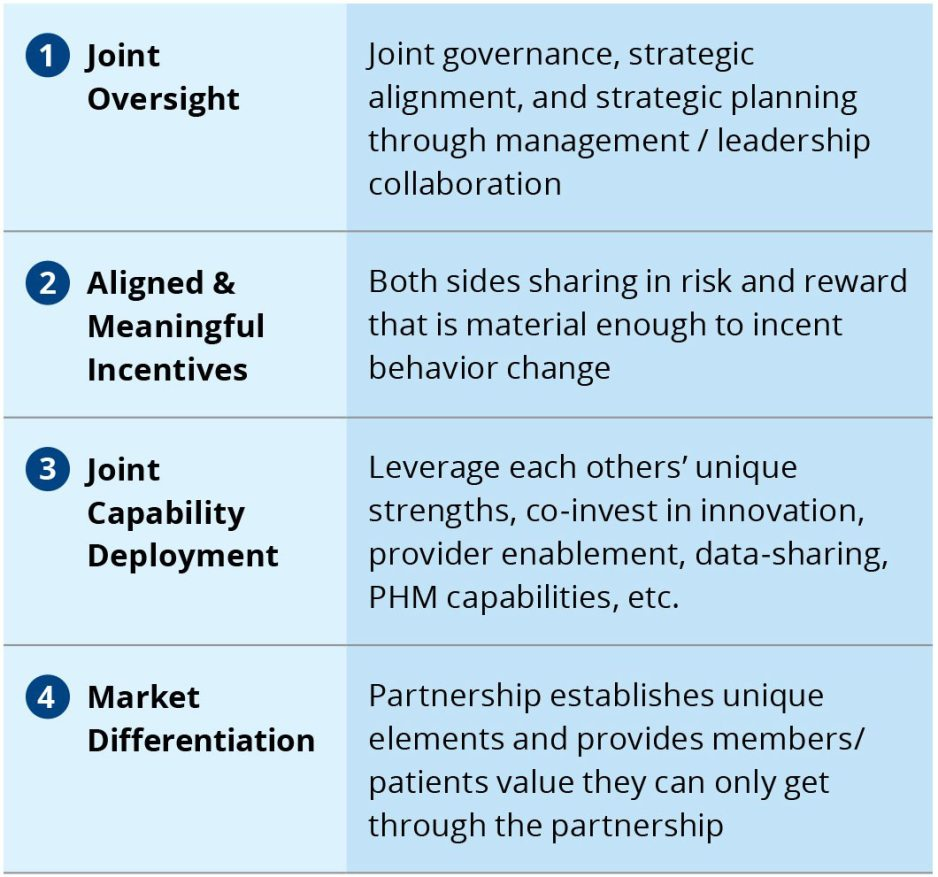
    Successful VBC arrangements share several core tenets, grounded in the need for close collaboration between participating parties (Figure 2).

    FIGURE 2: Core Tenets of Successful Payer-Provider Value-Based Care Models

    However, VBC arrangements are not the only option. Value-centric collaborations can take on a wide range of forms, depending on the amount of risk providers are willing to assume and the partnerships’ risk-related capabilities. The full continuum of value-centric collaborations runs the gamut from shared savings contracts with no downside risk for providers to full vertical integration into a single organization (Figure 3).

    FIGURE 3: Understanding the Continuum of Value-Based Care Arrangements

    Looking Into the Crystal Ball: Three Future State Scenarios

    As the MA market confronts new headwinds after years of growth and favorable attention, we anticipate three possible future state scenarios. These possibilities can be applied to both the outlook nationally, as well as the actions of payers and providers within specific markets.

    Scenario 1: A renewal of growth

    In this scenario, better sense prevails, and plans and providers collaborate to address the core issues facing the program. A pause/adjustment in the market is followed by a period of renewed growth. From a national standpoint, this scenario is contingent on neutral to favorable regulatory treatment.

    Scenario 2: Uneasy stabilization

    In this scenario, contention is partially resolved through some degree of collaboration between payers and providers. This scenario is also dependent on neutral to favorable regulatory treatment.

    Scenario 3: Implosion

    In this scenario, high levels of contention continue, and more providers go out of network. Middle-income Medicare members opt out of MA and go back to traditional Medicare when feasible. This scenario accounts for heightened regulatory pressure on risk adjustment and utilization management practices, which further pressures margins.

    Conclusion

    Despite MA’s recent, publicly documented challenges, the program now accounts for more than half of all Medicare beneficiaries—a patient population that every healthcare organization must engage in some form or fashion.

    As providers and payers decide how to approach the program—and each other—amid uncertainty and contention, the path forward can appear unclear. However, healthcare leaders seeking to emerge from the current environment of MA contention have an opportunity to shape the future of MA and will play a major role determining which of the three scenarios outlined in this article comes to fruition.

    Ultimately, organizations must be able to develop a business model that both delivers quality care and manageable per capita costs—and critically, find ways to work through today’s pressing concerns with other MA stakeholders and partners.

    What’s next for Risant?


    Kaiser Permanente stock
    Permanente grabbed everyone’s attention last year when it said it was creating Risant Health, a new and vague entity that acquired Geisinger and had plans to scoop up at least four more health systems that are focused on “value-based care.”

    Well, nothing has happened since then, at least publicly. Instead, everyone has been playing the parlor game of guessing who those next systems could be. There are some rumblings that the next deal could be announced in the near future. After reading some recent hospital financial reports, it’s clear there are a handful of systems that mirror Geisinger’s shaky trajectory and could find themselves in Kaiser’s crosshairs

    But Kaiser is being very deliberate in its next targets. “The old phrase, ‘Measure twice, cut once’ — Kaiser will measure four or five times before they cut,” said Kevin Holloran, a senior director at Fitch Ratings who leads the company’s nonprofit health care group.

    By picking Geisinger as its first acquisition, Kaiser has established some criteria for future Risant targets. Read my story to learn which health systems could fit the mold.

    8 Reasons Hospitals must Re-think their Future

    Today is the federal income Tax Day. In 43 states, it’s in addition to their own income tax requirements. Last year, the federal government took in $4.6 trillion and spent $6.2 trillion including $1.9 trillion for its health programs. Overall, 2023 federal revenue decreased 15.5% and spending was down 8.4% from 2022 and the deficit increased to $33.2 trillion. Healthcare spending exceeded social security ($1.351 trillion) and defense spending ($828 billion) and is the federal economy’s biggest expense.

    Along with the fragile geopolitical landscape involving relationships with China, Russia and Middle East, federal spending and the economy frame the context for U.S. domestic policies which include its health system. That’s the big picture.

    Today also marks the second day of the American Hospital Association annual meeting in DC. The backdrop for this year’s meeting is unusually harsh for its members:

    Increased government oversight:

    Five committees of Congress and three federal agencies (FTC, DOJ, HHS) are investigating competition and business practices in hospitals, with special attention to the roles of private equity ownership, debt collection policies, price transparency compliance, tax exemptions, workforce diversity, consumer prices and more.

    Medicare payment shortfall: 

    CMS just issued (last week) its IPPS rate adjustment for 2025: a 2.6% bump that falls short of medical inflation and is certain to exacerbate wage pressures in the hospital workforce. Per a Bank of American analysis last week, “it appears healthcare payrolls remain below pre-pandemic trend” with hospitals and nursing homes lagging ambulatory sectors in recovering.”

    Persistent negative media coverage:

    The financial challenges for Mission (Asheville), Steward (Massachusetts) and others have been attributed to mismanagement and greed by their corporate owners and reports from independent watchdogs (Lown, West Health, Arnold Ventures, Patient Rights Advocate) about hospital tax exemptions, patient safety, community benefits, executive compensation and charity care have amplified unflattering media attention to hospitals.

    Physicians discontent: 

    59% of physicians in the U.S. are employed by hospitals; 18% by private equity-backed investors and the rest are “independent”. All are worried about their income. All think hospitals are wasteful and inefficient. Most think hospital employment is the lesser of evils threatening the future of their profession. And those in private equity-backed settings hope regulators leave them alone so they can survive. As America’s Physician Group CEO Susan Dentzer observed: “we knew we’re always going to need hospitals; but they don’t have to look or operate the way they do now. And they don’t have to be predicated on a revenue model based on people getting more elective surgeries than they actually need. We don’t have to run the system that way; we do run the healthcare system that way currently.”

    The Value Agenda in limbo:

    Since the Affordable Care Act (2010), the CMS Center for Innovation has sponsored and ultimately disabled all but 6 of its 54+ alternative payment programs. As it turns out, those that have performed best were driven by physician organizations sans hospital control. Last week’s release of “Creating a Sustainable Future for Value-Based Care: A Playbook of Voluntary Best Practices for VBC Payment Arrangements.” By the American Medical Association, the National Association of ACOs (NAACOs) and AHIP, the trade group representing America’s health insurance payers is illustrative. Noticeably not included: the American Hospital Association because value-pursuers think for hospitals it’s all talk.

    National insurers hostility:  

    Large, corporate insurers have intensified reimbursement pressure on hospitals while successfully strengthening their collective grip on the U.S. health insurance sector. 5 insurers control 50% of the U.S. health insurance market: 4 are investor owned. By contrast, the 5 largest hospital systems control 17% of the hospital market: 1 is investor-owned. And bumpy insurer earnings post-pandemic has prompted robust price increases: in 2022 (the last year for complete data and first year post pandemic), medical inflation was 4.0%, hospital prices went up 2.2% but insurer prices increased 5.9%.

    Costly capital: 

    The U.S. economy is in a tricky place: inflation is stuck above 3%, consumer prices are stable and employment is strong. Thus, the Fed is not likely to drop interest rates making hospital debt more costly for hospitals—especially problematic for public, safety net and rural hospitals. The hospital business is capital intense: it needs $$ for technologies, facilities and clinical innovations that treat medical demand. For those dependent on federal funding (i.e. Medicare), it’s unrealistic to think its funding from taxpayers will be adequate.  Ditto state and local governments. For those that are credit worthy, capital is accessible from private investors and lenders. For at least half, it’s problematic and for all it’s certain to be more expensive.

    Campaign 2024 spotlight:

    In Campaign 2024, healthcare affordability is an issue to likely voters. It is noticeably missing among the priorities in the hospital-backed Coalition to Strengthen America’s Healthcare advocacy platform though 8 states have already created “affordability” boards to enact policies to protect consumers from medical debts, surprise hospital bills and more.

    Understandably, hospitals argue they’re victims. They depend on AHA, its state associations, and its alliances with FAH, CHA, AEH and other like-minded collaborators to fight against policies that erode their finances i.e. 340B program participation, site-neutral payments and others. They rightfully assert that their 7/24/365 availability is uniquely qualifying for the greater good, but it’s not enough. These battles are fought with energy and resolve, but they do not win the war facing hospitals.

    AHA spent more than $30 million last year to influence federal legislation but it’s an uphill battle. 70% of the U.S. population think the health system is flawed and in need of transformative change. Hospitals are its biggest player (30% of total spending), among its most visible and vulnerable to market change.

    Some think hospitals can hunker down and weather the storm of these 8 challenges; others think transformative change is needed and many aren’t sure. And all recognize that the future is not a repeat of the past.

    For hospitals, including those in DC this week, playing victim is not a strategy. A vision about the future of the health system that’s accessible, affordable and effective and a comprehensive plan inclusive of structural changes and funding is needed. Hospitals should play a leading, but not exclusive, role in this urgently needed effort.

    Lacking this, hospitals will be public utilities in a system of health designed and implemented by others.

    The genetic paradox: Yesterday’s solutions are today’s problems. Can U.S. healthcare shift gear faster than our genes?

    https://www.linkedin.com/pulse/genetic-paradox-yesterdays-solutions-todays-problems-can-pearl-m-d–r6mic/?trackingId=C3X2nlWPRe6yBwiHCcuWGg%3D%3D

    In a world where change is the only constant, the swift currents of modern life contrast starkly with the sluggish pace of genetic evolution—and of American healthcare, too.

    Two relatively recent scientific discoveries demonstrate how the very genetic traits that once secured humanity’s survival are failing to keep up with the times, producing dire medical consequences. These important biological events offer insights into American medicine—along with a warning about what can happen when healthcare systems fail to change.

    The Mysteries Of Sickle Cell And Multiple Sclerosis

    For decades, scientists were baffled by what seemed like an evolutionary contradiction.

    Sickle cell disease is a condition resulting from a genetic mutation that produces malformed red blood cells. It afflicts approximately 1 in 365 Black Americans, causing severe pain and organ failure.

    Its horrific impact on people raises a question: How has this genetic mutation persisted for 7,300 years? Nature is a merciless editor of life, and so you would expect that across seven millennia, people with this inherited problem would be less likely to survive and reproduce. This curiosity seems to defy the teachings of Charles Darwin, who theorized that evolution discards what no longer serves the survival of a species.

    Scientists solved this genetic puzzle in 2011, illuminating a significant evolutionary trade-off.

    People living with sickle cell disease have two abnormal genes, one inherited from each parent. While the disease, itself, affects a large population (roughly 100,000 African Americans), it turns out that a far larger population in the United States carries one “abnormal” gene and one normal gene (comprising as many as 3 million Americans).

    This so called “sickle cell trait” presents milder symptoms or none at all when compared to the full disease. And, unlike those with the disease, individuals who with one (but not both) abnormal genes possess a distinct evolutionary advantage: They have a resistance to severe malaria, which every year claims more than 600,000 lives around the globe.

    This genetic adaptation (a resistance to malaria) kept people alive for many millennia in equatorial Africa, protecting them from the continent’s deadliest infectious disease. But in present-day America, malaria is not a major public-health concern due to several factors, including the widespread use of window screens and air conditioning, controlled and limited habitats for the Anopheles mosquitoes (which transmit the disease), and a strong healthcare system capable of managing and containing outbreaks. Therefore, the sickle cell trait is of little value in the United States while sickle cell disease is a life-threatening problem.

    The lesson: Genetic changes beneficial in one environment, such as malaria-prone areas, can become harmful in another. This lesson isn’t limited to sickle cell disease.

    A similar genetic phenomenon was uncovered through research that was published last month in Nature. This time, scientists discovered an ancient genetic mutation that is, today, linked to multiple sclerosis (MS).

    Their research began with data showing that people living in Northern Europe have twice the number of cases of MS per 100,000 individuals as people in the South of Europe. Like sickle cell disease, MS is a terrible affliction—with immune cells attacking neurons in the brain, interfering with both walking and talking.

    Having identified this two-fold variance in the prevalence of MS, scientists compared the genetic make-up of the people in Europe with MS versus those without this devastating problem. And they discovered a correlation between a specific mutated gene and the risk of developing MS. Using archeological material, the researchers then connected the introduction of this gene into Northern Europe with cattle, goat and sheep herders from Russia who migrated west as far back as 5,000 years ago.

    Suddenly, the explanation comes into focus. Thousands of years ago, this genetic abnormality helped protect herders from livestock disease, which at the time was the greatest threat to their survival. However, in the modern era, this same mutation results in an overactive immune response, leading to the development of MS.

    Once again, a trait that was positive in a specific environmental and historical context has become harmful in today’s world.

    Evolving Healthcare: Lessons From Our Genes

    Just as genetic traits can shift from beneficial to detrimental with changing circumstances, healthcare practices that were once lifesaving can become problematic as medical capabilities advance and societal needs evolve.

    Fee-for-service (FFS) payments, the most prevalent reimbursement model in American healthcare, offer an example. Under FFS, insurance providers, the government or patients themselves pay doctors and hospitals for each individual service they provide, such as consultations, tests, and treatments—regardless of the value these services may or may not add.

    In the 1930s, this “mutation” emerged as a solution to the Great Depression. Organizations like Blue Cross began providing health insurance, ensuring healthcare affordability for struggling Americans in need of hospitalization while guaranteeing appropriate compensation for medical providers.

    FFS, which linked payments to the quantity of care delivered, proved beneficial when the problems physicians treated were acute, one-time issues (e.g., appendicitis, trauma, pneumonia) and relatively inexpensive to resolve.

    Today, the widespread prevalence of chronic diseases in 6 out of 10 Americans underlines the limitations of the fee-for-service (FFS) model. In contrast to “pay for value” models, FFS, with its “pay for volume” approach, fails to prioritize preventive services, the avoidance of chronic disease complications, or the elimination of redundant treatments through coordinated, team-based care. This leads to increased healthcare costs without corresponding improvements in quality.

    This situation is reminiscent of the evolutionary narrative surrounding genetic mutations like sickle cell disease and MS. These mutations, which provided protective benefits in the past, have become detrimental in the present. Similarly, healthcare systems must adapt to the evolving medical and societal landscape to better meet current needs.

    Research demonstrates that it takes 17 years on average for a proven innovation in healthcare to become common practice. When it comes to evolution of healthcare delivery and financing, the pace of change is even more glacial.

    In 1934, the Committee on the Cost of Medical Care (CCMC) concluded that better clinical outcomes would be achieved if doctors (a) worked in groups rather than as fragmented solo practices and (b) were paid based on the value they provided, rather than just the volume of work they did.

    Nearly a century later, these improvements remain elusive. Well-led medical groups remain the minority of all practices while fee-for-service is still the dominant healthcare reimbursed method.

    Things progress slowly in the biological sphere because chance is what initiates change. It takes a long time for evolution to catch up to new environments.

    But change in healthcare doesn’t have to be random or painfully slow. Humans have a unique ability to anticipate challenges and proactively implement solutions. Healthcare, unlike biology, can advance rapidly in response to new medical knowledge and societal needs. We have the opportunity to leverage our knowledge, technology, and collaborative skills to address and adapt to change much faster than random genetic mutations. But it isn’t happening.

    Standing in the way is a combination of fear (of the risks involved), culture (the norms doctors learn in training) and lack of leadership (the ability to translate vision into action).

    Genetics teaches us that evolution ultimately triumphs. Mutations that save lives and improve health become dominant in nature over time. And when those adaptations no longer serve a useful purpose, they’re replaced.

    I hope the leaders of American medicine will learn to adapt, embracing the power of collaborative medicine while replacing fee-for-service payments with capitation (a single annual payment to group of clinicians to provide the medical care for a population of patients.) If they wait too long, dinosaurs will provide them with the next set of biological lessons.