On Tuesday, the e-commerce giant unveiled its latest healthcare endeavor, Amazon Clinic, a “virtual health storefront” that can asynchronously connect patients to third-party telemedicine providers. It offers diagnosis and treatment for roughly 20 low-acuity, elective health conditions—including acne, birth control, hair loss, and seasonal allergies—at flat, out-of-pocket rates. (The service does not currently accept insurance.) It also refills prescriptions, which customers can send to any pharmacy, including Amazon’s. At its launch, Amazon Clinic is available in 32 states.
The Gist: This is exactly the kind of venture at which Amazon excels: creating a marketplace that’s convenient for buyers and sellers (patients and telemedicine providers), pricing it competitively to pursue scale over margins, and upselling customers by pairing care with Amazon’s other products or services (like Amazon Pharmacy).
Its existing customer base and logistics expertise could position it to replace telemedicine storefront competitors, including Ro and Hims & Hers, as the leading direct-to-consumer healthcare platform, at least among those that don’t take insurance.
It bears watching to see how Amazon builds on this service, includingwhether it eventually incorporates insurance coverage, partners with health systems (similar to Hims & Hers), or connects Amazon Clinic to Prime in order to attract greater numbers of—generally young, healthy, and relatively wealthy—consumers.
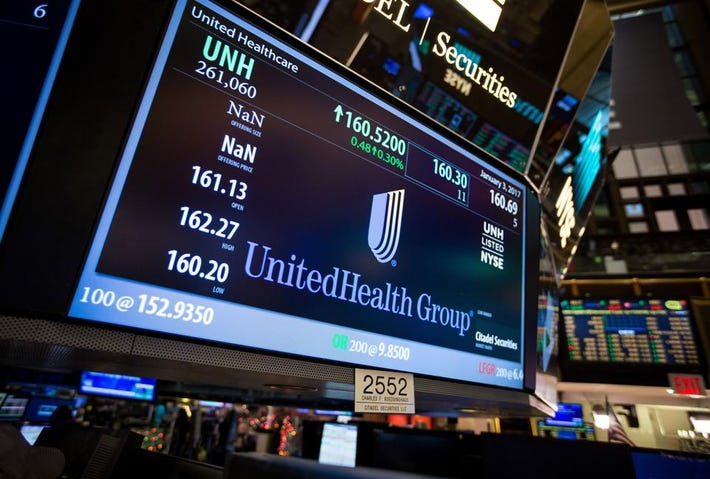
UHG closed its $13B acquisition of data analytics company Change in early October, just weeks after the Justice Department failed in its bid to block the sale on antitrust grounds. In court proceedings, UHG denied it intended to use Change data to give its insurance arm, UnitedHealthcare, a competitive advantage against the rival insurers who use Change as an electronic data interchange clearinghouse.
But a new ProPublica report highlights how communications between UHG and consulting firm McKinsey & Co. point to this potential data advantage as one of the clear upsides from acquiring Change. The McKinsey report was explicitly dismissed by the US District Court judge who, in his ruling in UHG’s favor, was persuaded by testimony from senior executives and evidence of UHG’s history of maintaining internal data firewalls.
The Gist: UHG has a longstanding business interest in maintaining the trust of rival insurers that use its data analytics unit, OptumInsight. Voluntary and internally imposed firewalls between the UHG’s insurance arm and its other businesses are key to maintaining this trust. Although Justice Department lawyers could not provide convincing evidence that UHG has or intends to breach its firewalls, there is still reason to monitor any such activity closely.
The failure of the McKinsey report to sway the court against the deal illustrates how difficult it is for the Justice Department to challenge vertical mergers, even when there is compelling evidence that such deals may impact competition.
The Department of Health and Human Services (HHS) appears set to extend the federal COVID PHE past its current expiration date of January 11, 2023, as HHS had promised to give stakeholders at least 60 days’ notice before ending it, and that deadline came and went on November 11th. Days later the Senate voted to end the PHE, a bill which Biden has promised to veto should it reach his desk. Measures set to expire with the PHE, or on a several month delay after it ends, include Medicare telehealth flexibilities, continuous enrollment guarantees in Medicaid, and boosted payments to hospitals treating COVID patients.
The Gist: Despite growing calls to end the PHE declaration, and even as White House COVID coordinator Dr. Ashish Jha has said another severe COVID surge this winter is unlikely, the White House is likely trying to buy time to resolve the complicated issues tied to the PHE, some of which must be dealt with legislatively.
And with a divided Congress ahead, it remains to be seen how these issues, especially Medicare telehealth flexibilities—a topic of bipartisan agreement—are sorted out. Meanwhile the continuation of the PHE prevents states from beginning Medicaid re-determinations, allowing millions of Americans to avoid being disenrolled.
Many different respiratory viruses are circulating throughout the United States, but the flu is responsible for a “significant proportion” of that circulation, according to CDC, all while many hospitals are dealing with surges of pediatric respiratory syncytial virus (RSV) patients.
Flu cases continue to surge
According to CDC, 15 states reported very high activity of influenza-like illnesses (ILI) for the week ending in Nov. 5, while eight states reported high activity and six states reported moderate activity.
In addition, for the week ending in Nov. 5, 6,465 lab-confirmed flu patients were hospitalized, according to CDC, and the current percentage of outpatient provider visits for an ILI was 5.5%, above the national baseline of 2.5%.
So far this season, CDC estimates there have been at least 2.8 million flu cases, 1.4 million flu medical visits, 23,000 flu hospitalizations, and 1,300 flu deaths.
Three pediatric flu deaths occurred during the week ending in Nov. 5, bringing the total number of pediatric flu deaths for the 2022-23 season up to five.
While flu cases may be surging early, Lynette Brammer, an epidemiologist who leads CDC’s domestic influenza surveillance team, said there’s no evidence yet that the flu virus circulating is causing more severe cases than normal.
“The picture is pretty consistent across our different pieces of surveillance. There’s nothing there that makes me think that this virus is really different and causing more severe disease than we see typically with flu,” she said. “Flu can cause severe outcomes, but it’s not out of proportion this year compared to previous years. It’s not like we’re seeing a lot of hospitalizations without a lot of illness.”
In addition, Samuel Scarpino, director of life sciences at the Institute for Experiential AI at Northeastern University,said this year’s flu vaccine, “is a good match, which isn’t the case every year.” So, if considering whether or when to get a flu shot, “Now is a great time to do that,” he added.
Hospitals deal with surges of RSV patients amid rising flu cases
As the flu surges nationwide, many pediatric hospitals are dealing with surges of RSV patients. According to federal data, more than 75% of pediatric hospital beds and pediatric ICU beds have been in use for the past few weeks, up from an average of roughly two-thirds full over the past two years.
Brian Cummings, medical director of the Department of Pediatrics at Mass General for Children, said they’ve seen around 2,000 RSV cases in October and more than 1,000 in the first week of November.
“It’s been escalating and been quite severe,” he said, adding that, as of Thursday, his hospital’s pediatric ICU is full and seven patients are waiting to be transferred in.
Most RSV infections have been treated in urgent care facilities and the ED and patients are sent home, Cummings said. “But even if just 10% of those need hospitalization, it creates a lot of stress on health care facilities, and so what we are seeing is we’ve had over 250 hospitalizations for RSV alone on top of the other circulating viruses.”
Many doctors’ offices have started asking parents to treat their sick children at home if they’re otherwise healthy.
“The things that would lead to us encouraging a family to come in would be the very young children, particularly under the age of 2, specifically under the age of 6 months with high fevers,” said Rhonda Patt, from Atrium Health. “If the child is lethargic, isn’t able to eat or drink very well, or if they see any signs the child is having a hard time breathing.”
Patt added that families should visit their doctor if a child gets better and then spikes with another fever or starts having other symptoms.
“With the flu, there’s a risk for secondary infection, meaning ear infections or pneumonia or things that would need antibiotics,” she said.
Philadelphia-based Thomas Jefferson University, including Jefferson Health, reported a multimillion-dollar loss in the third quarter ending Sept. 30.
Five things to know:
1. Thomas Jefferson University reported an $83.5 million loss for the quarter, down significantly from a $12.8 million gain in the same period last year.
2. Thomas Jefferson University reported $29.9 million in operating revenue. Clinical operations reported an $87.3 million loss from operations, and the insurance operations reported a $7.1 million gain for the quarter.
3. The organization reported a -3.7 percent operating margin, compared to 0.9 percent for the third quarter last year.
4. Hospital inpatient admissions grew 30.4 percent year over year to 39,463 cases for the quarter. Outpatient observations were also up 21.6 percent to 11,744 cases. Outpatient visits were up 36 percent year over year to 524,200 visits.
5. Days cash on hand for clinical operations dropped by nearly 11 days since the start of the fiscal year to 158.5 days due to nonoperating investment losses and repaying Medicare advance payments.
Cash reserves, an important indicator of financial stability, are dropping for hospitals and health systems across the U.S.
Both large and small health systems are affected by rising labor and supply costs while reimbursement remains low. St. Louis-based Ascension reported days cash on hand dropped from 336 at the end of the 2021 fiscal year to 259 as of June 30, 2022, the end of the fiscal year. The system also reported accounts receivable increased three days from 47.3 in 2021 to 50.3 in 2022 because commercial payers were slow, especially in large dollar claims.
Trinity Health, based in Livonia, Mich., also reported days cash on hand dropped to 211 in fiscal year 2022, ending June 30, compared to 254 days at the end of 2021. Trinity attributed the 43-day decrease in cash on hand to “investment losses and the recoupment of the majority of the Medicare cash advances.”
Chicago-based CommonSpirit Health reported days cash on hand decreased by 69 days in the last year. The 140-hospital health system reported 245 days cash on hand at the 2021 fiscal year’s end June 30, and 176 days for 2022.
Lehigh Valley Health Network in Allentown, Pa., said unfavorable trends in the capital market led to investment losses and a drop in days cash on hand from 216 to 150 days in the 2022 fiscal year ending June 30. The health system also had a scheduled repayment of $191.1 million in advance Medicare dollars as well as $25 million in deferred payroll tax payments.
Philadelphia-based Thomas Jefferson Universityreported cash on hand for clinical operations dropped by 10.9 days in just the last quarter due to nonoperating investment losses and repaying government advances, which equaled about five days cash on hand. The health system reported 158.5 days cash on hand as of Sept. 30.
While the large health systems’ days cash on hand are dropping, they still have deep reserves. Smaller hospitals and health systems are in a more dire situation. Doylestown (Pa.) Hospital reported as of Sept. 30 the system had 81 days cash on hand, and Moody’s downgraded the hospital in June after the days cash on hand dropped below 100.
Kaweah Health in Visalia, Calif., saw reserves plummet since the pandemic began from 130 to 84 days cash on hand. Gary Herbst, CEO of Kaweah Health, blamed lost elective procedures, high labor costs, inflation and more for the system’s financial issues.
“The COVID-19 pandemic, and its aftermath, have brought District hospitals to the brink of financial collapse,” Mr. Herbst wrote in an open letter to Gov. Gavin Newsom published in the Visalia Times Delta. He asked Mr. Newsom to provide additional funding for public district hospitals. “Without your help, it will soon be virtually impossible for Medi-Cal patients to receive anything but emergency medical care in the State of California.”
Members of the California Nurses Association have reached a tentative agreement with Kaiser Permanente, averting a planned two-day strike by more than 21,000 registered nurses and nurse practitioners in Northern California.
Both sides announced the tentative agreement Nov. 17.
Union members at Kaiser Northern California facilities have been in negotiations since June, according to a CNA news release. Registered nurses and nurse practitioners in Northern California were set to strike Nov. 21 and Nov. 22.
The four-year tentative deal boosts wages for Northern California nurses by 22.5 percent over the life of the contract, according to a statement Oakland, Calif.-based Kaiser shared with Becker’s. Kaiser had previously proposed 21.25 percent in wage increases over four years.
“The tentative agreement is driven by the changing economy, including inflation, significant changes in the marketplace and our commitment to providing our employees with excellent pay and benefits to attract and retain the best nurses,” Kaiser’s statement says.
According to both sides, the tentative agreement also includes:
An agreement to add more than 2,000 new registered nurse and nurse practitioner positions.
Increased tuition reimbursement for nurses’ education.
The creation of a new regional equity, diversity and inclusion committee.
Language including agreement that healthcare is a human right.
“We are very pleased with this new contract, which will help us recruit new nurses and retain experienced RNs and nurse practitioners,” CNA President Cathy Kennedy, RN, said in a news release. “We not only won the biggest annual raises in 20 years, but we have also added more than 2,000 positions across our Northern California facilities. This will ensure safe staffing and better patient care.”
Ms. Kennedy also praised Kaiser’s commitment “to a workplace that is free from racism and discrimination” and the health system’s agreement “that we must fight racial and ethnic disparities in healthcare outcomes.”
“The tentative agreement honors our Northern California nurses with a market-based economic package that accounts for inflation, accelerates our investments in staffing, and addresses workplace safety, diversity and equity, remote work, and other key matters in a way that is sustainable and benefits our members and patients as well,” Kaiser’s statement reads.
Union members in Northern California will vote on approving the new four-year contract over the next few weeks. Registered nurses at Kaiser Permanente Los Angeles Medical Center also reached a tentative agreement and will vote on the deal Nov. 22.
A number of health systems experienced downgrades to their financial ratings in recent weeks amid ongoing operating losses and challenging work environments.
Here is a summary of recent ratings since Becker’s last roundup Sept. 21:
The following systems experienced downgrades:
Main Line Health (Radnor Township, Pa.) — downgraded debt rating from “AA” to “AA-” in November (Fitch Ratings)
The downgrade reflects “significant operating losses” in fiscal year 2022, ending June 30, and is in relation to $594 million of bonds the health system holds. While downgrading that specific rating, however, Fitch described the healthcare group’s outlook as stable and said that it will benefit from a good market position in a favorable service area with strong market share.
Fitch described “continued expense challenges” facing the hospital group over the next two years as part of its decision to downgrade the debt rating.
Hannibal (Mo.) Regional Healthcare System — lowered financial outlook in November from stable to negative amid uncertainty around the hospital group’s capital spending plans (Fitch Ratings)
“The Negative Outlook reflects uncertainty around capital spending and the potential issuance of new debt to address infrastructure issues at the system’s main campus and expand inpatient/outpatient capacity,” Fitch said. “A master facilities planning process has begun, but cost estimates and timing are not yet available and the board has not approved any potential projects.”
Fitch also affirmed default ratings for HRHS at “A-.”
ChristianaCare (Newark, Del.) was issued a negative outlook in October (S&P Global Ratings)
Pressures from the pandemic and industry challenges have led to a “volatile operating performance” in the last three years, and ChristianaCare has a small revenue base compared to similarly rated health systems, S&P said,
“The negative outlook reflects [ChristianaCare’s] operating volatility and balance sheet deterioration that, while largely stemming from COVID-19 pandemic and industry pressures, are not characteristic of the ‘AA+’ rating level and could lead to a downgrade during the outlook period,” Chloe Pickett, an S&P credit analyst, said in the firm’s report.
The S&P also affirmed ChristianaCare’s “AA+” long-term rating based on the health system’s leading business position within its service area and healthy balance sheet, according to an Oct. 27 report.
MultiCare Health System (Tacoma, Wash.) had various debt obligations downgraded in October from”AA-” to “A+” (Fitch Ratings)
The downgrades included the healthcare system’s existing bond ratings and $430 million of fixed rate taxable notes as well as the group’s Issuer Default Rating.
“The downgrade of MultiCare’s IDR to ‘A+’ from ‘AA-‘ reflects the considerable operating stress the system is facing in the current fiscal year, in combination with balance sheet metrics that have moderated as a result of equity market volatility and a recent debt issuance,” Fitch said.
Wise Health System (Decatur, Texas) was downgraded to “BB+” from “BBB-” in regard to various debt obligations as it struggles with continued operating challenges (Fitch Ratings)
Wise Health System’s Issuer Default Rating and the ratings on series 2014A, 2021A, 2021B and 2021C hospital revenue bonds issued by Decatur Hospital Authority on behalf of Wise were all downgraded.
“The downgrade reflects the change in Fitch’s assessment of Wise’s operating risk and financial profiles to ‘bb’ from ‘bbb’ due to deterioration in the hospital’s operating performance through six-months (ended June 30) and the expectation of sizable operating and net losses in 2022,” Fitch said.
Private equity groups have invested about $1 trillion into nearly 8,000 healthcare transactions in the past decade, and some experts are pushing for more scrutiny of its increasing influence on the industry amid concern it may be causing higher medical bills and diminished quality of care, a Nov. 14 Kaiser Health News report said.
Because such investment groups typically invest less than $101 million, such transactions do not attract automatic antitrust reviews at the federal level, the report continued. That represents more than 90 percent of private equity investments in the industry.
Nevertheless, companies owned or managed by private equity groups have agreed to pay fines of more than $500 million since 2014 in over 30 lawsuits under the False Claims Act, which deals with false billing submissions, KHN’s investigation found.
The problem may be most acute in certain specialist fields and in certain metropolitan areas. While private equity, for example, plays a role in just 14 percent of gastroenterology practices nationwide, it controls about 75 percent of that market in at least five metropolitan areas across five states, including Texas and North Carolina, according to research from UC Berkeley’s Nicholas C. Petris Center.
And private equity pockets may be getting deeper. In 2021 alone, over $206 billion was invested by such groups in healthcare, and there is plenty of “dry powder” around for more, KHN reported. The Healthcare Private Equity Association, for example, which boasts about 100 investment companies as members, says the firms have $3 trillion in assets awaiting allocation.
Private equity, like everything else, may have some poor performers but it doesn’t help to generalize as groups “vary tremendously” in how they operate their healthcare investments, Robert Homchick, a Seattle attorney, told KHN.
“Private equity has some bad actors, but so does the rest of the [healthcare] industry,” he said. “I think it’s wrong to paint them all with the same brush.”
Concerns remain, however, that, at least in some cases, private equity involvement is simply a vehicle for maximizing returns, often at the expense of patients. In addition to the $500 million fines, there is also evidence of some private equity groups pushing through additional testing and mandated patient numbers to boost returns, often in medically questionable scenarios, the report said, citing the example of National Spine and Pain Centers previously owned by private equity group Sentinel Partners.
In that case, National Spine paid $3.3 million in a whistleblower case related to allegations of unnecessary treatment and testing, KHN said.
The scope of such private equity dominance in some markets worries many industry observers, and much more needs to be done to help reel in such potential abuses, they say.
“We’re still at the stage of understanding the scope of the problem,” said Laura Alexander, former vice president of policy at the nonprofit American Antitrust Institute, which collaborated on the Petris Center research. “One thing is clear: Much more transparency and scrutiny of these deals is needed.”
The Illinois Health Facilities and Services Review Board unanimously approved a plan to change ownership for 10 Advocate Aurora facilities in the state covered by the system’s plan to merge with Charlotte, N.C.-based Atrium Health, the Chicago Tribune reported Nov. 14.
Atrium and Advocate Aurora, dually headquartered in Milwaukee and Downers Grove, Ill., announced plans to merge into a 67-hospital system with upward of $27 billion in revenue in May. The merger would create one of the largest health systems in the country, with more than 1,000 sites of care across Illinois, Wisconsin, North Carolina, South Carolina, Georgia and Alabama, according to the report.
The approval comes after the board voted in September to delay the approval. Board members’ concerns stemmed from the availability of information and their understanding about the deal.
Since that meeting, Advocate Aurora has answered many of the board’s questions, such as the reasons for the combination and the proposed governance structure, according to the report. Some board members said they still wanted more information, but the board is required by law to approve certain types of applications as long as they are complete.
The board’s approval was needed for the merger because the affiliation is considered a change of 50 percent or more of the voting members of a nonprofit corporation’s board of directors that controls a healthcare facility’s operation, license, certification or physical plant and assets. The board of directors of Advocate Health — the combined system’s new name — will be made up of an equal number of members from Advocate Aurora and Atrium Health.
Advocate Aurora shared the following statement with Becker’s on the board’s approval:
“Securing the Illinois Health Facilities and Services Review Board’s approval brings us one step closer to coming together with Atrium Health, which will allow us to improve the lives of our patients, the health of our communities and the opportunities for our team members. We look forward to closing, which we anticipate before the end of the year.”
Atrium shared the following statement with Becker’s:
“We are pleased to see that the process continues to move forward and remain optimistic our combination with Advocate Aurora Health will be finalized before the end of the year.”











 HENRY KOTULA