Reducing COVID-19 Deaths In Nursing Homes: Call To Action

https://www.healthaffairs.org/do/10.1377/hblog20200522.474405/full/?utm_source=Newsletter&utm_medium=email&utm_content=COVID-19%3A+Reducing+Deaths+In+Nursing+Homes%2C+Effective+Multilateralism%3B+Surprise+Out-Of-Network+Bills+For+Ambulance+Transportation+And+Ambulatory+Surgery+Centers&utm_campaign=HAT+5-27-20

Reducing COVID-19 Deaths In Nursing Homes: Call To Action | Health ...

Nursing homes are a hidden and frequently forgotten part of our health care system. They are now under attack by the COVID-19 pandemic: residents are dying, families are disconnected from their loved ones, and staff are sick and overwhelmed by work and the grief of losing so many patients in such a short time. Our state, Massachusetts, is one of the hardest-hit by COVID-19, with over 3,600 deaths and counting in nursing homes, or almost 10 percent of the nursing home population. Over 60 percent of all COVID-19-related deaths in Massachusetts are in nursing homes, one of six states where nursing home residents comprise over 50 percent of COVID-19-related deaths.  The COVID-19 pandemic is exposing years of neglect and chronic underfunding of nursing homes.  

Over 85 percent of the almost 400 nursing homes in Massachusetts currently report two or more cases of COVID-19 among residents or staff.  Emerging data make it abundantly clear that the nursing home environment is highly conducive to the rapid spread of COVID-19, and nursing home residents are among the most susceptible to severe illness and death.  Urgent and decisive action is required to reduce mortality among frail and vulnerable seniors in nursing homes. 

The New England Geriatrics Network (NEGN) is a group of geriatricians, geriatric psychiatrists, nurse practitioners, and others interested in improving care of older adults, that recently convened a Nursing Home Work Group of members interested in improving nursing home care.  We write to share our collective experiences and to reflect on some innovative and promising initiatives adopted in our state.

Success in reducing COVID-19-related morbidity and mortality in the nursing home setting requires urgent action in three areas: 1) enhancing infection control with an individualized plan for each nursing home that incorporates both regulatory guidance and current literature and is feasible to implement; 2) ensuring necessary resources to implement infection control plans, especially adequate staff, training, personal protective equipment (PPE), COVID-19 testing, creation of units for COVID-19 positive patients, and access to onsite ancillary services (labs, imaging, intravenous (IV) management); 3) mirroring the federal Coronavirus Commission for Safety and Quality in Nursing Homes by establishing state-level task forces focused on improving communication and collaboration between nursing homes and families, health care providers (hospitals, health systems, home health agencies, physician organizations), and government agencies.

Although the federal government has offered guidance on infection control in nursing homes, most efforts to manage the pandemic are initiated and managed at the state level.  As a result, there is significant variability in the response. For example, until the federal government recently mandated it, fewer than half of the states reported infection rates and deaths in nursing homes.  Massachusetts implemented several key initiatives that may serve as a model for how to limit COVID-19 epidemic in nursing homes.

Recommendation #1: Operationalizing Effective Infection Control

The only way to reduce COVID-19 deaths is to universally implement effective infection control programs in every nursing home.  The Centers for Disease Control and Prevention (CDC), state agencies like the Massachusetts Department of Public Health, and medical specialty societies have issued checklists and guidance for managing COVID-19 infections in nursing homes. The core challenge is the diversity of the nursing homes, each varying structurally in layout and room design, financially in resources and reserves, and organizationally in staffing and medical leadership. Nationally, 39 percent of nursing homes had deficiencies related to infection control in 2017, including 30 percent of Massachusetts nursing homes.  Each nursing home must create and implement a COVID-19 control plan, review it regularly with public health officials, and allow site visits to validate performance.  A truly collaborative effort will empower and support nursing homes to make required changes, maintain transparency, uphold accountability, and save lives. 

Our colleagues working in Massachusetts nursing homes continue to directly observe ongoing issues with infection control, despite the state’s best efforts to address the pandemic.  In late April, a colleague rounding at a nursing home with known COVID-19 cases found COVID-19-positive, test pending, and COVID-19-free residents sitting together in a communal area. Nurses were wearing varying levels of PPE, some in gowns and masks, and only some with face shields.

Massachusetts recently enhanced its plan to manage COVID-19 in nursing homes by allocating up to $130 million in additional funding to support infection control, staffing, and PPE. Part of the plan is 28-point audit tool to evaluate the strength of each nursing home’s plan, which will be assessed through site visits by state inspectors to every nursing home in the state either every two or four weeks (depending on initial audit results) through the end of June.  Nursing homes can qualify for up to a 50 percent increase over their baseline Medicaid (MassHealth) reimbursement by demonstrating adherence to an effective infection control plan. Facilities failing to implement effective plans can face serious penalties starting with reduced bonus funding and extending to receivership, termination from the state Medicaid program and even forced closure.

In addition to a clear and transparent approach to audits, the state is providing access to infection control expertise to enhance the ability of nursing homes to execute effective infection control plans.  A statewide infection control command center is being led by the nursing home trade organization Massachusetts Senior Care Association (MSCA), along with a senior care and housing organization, Hebrew Senior Life, and others.

Comprehensive infection control plans may require dedicated units for COVID-19-infected patients, important for preventing spread of the infection within nursing homes and for treating COVID-19-positive patients needing inpatient nursing and rehabilitation.  Massachusetts made this a focus of the first phase of its approach to managing COVID-19 in nursing homes.  As of May 1, 2020, six nursing homes have been fully converted to COVID-only facilities, and more than 80 nursing homes have dedicated in-house COVID units.  The state accelerated the creation of these facilities with increased Medicaid payment rates for the care of patients with COVID-19. This has helped offset revenue loss related to decreased post-acute care admissions due to a decrease in elective procedures.

Recommendation #2: Nursing Homes Must Have Adequate Resources For Patient Care Including Staffing, PPE, Testing, And Onsite Ancillary Services

The lack of infection control resources reflects longstanding gaps in the nursing home setting which have been greatly exacerbated by the current pandemic. The state is providing additional Medicaid payments to nursing homes, as mentioned above. These resources are needed to improve care and infection control.

Staffing

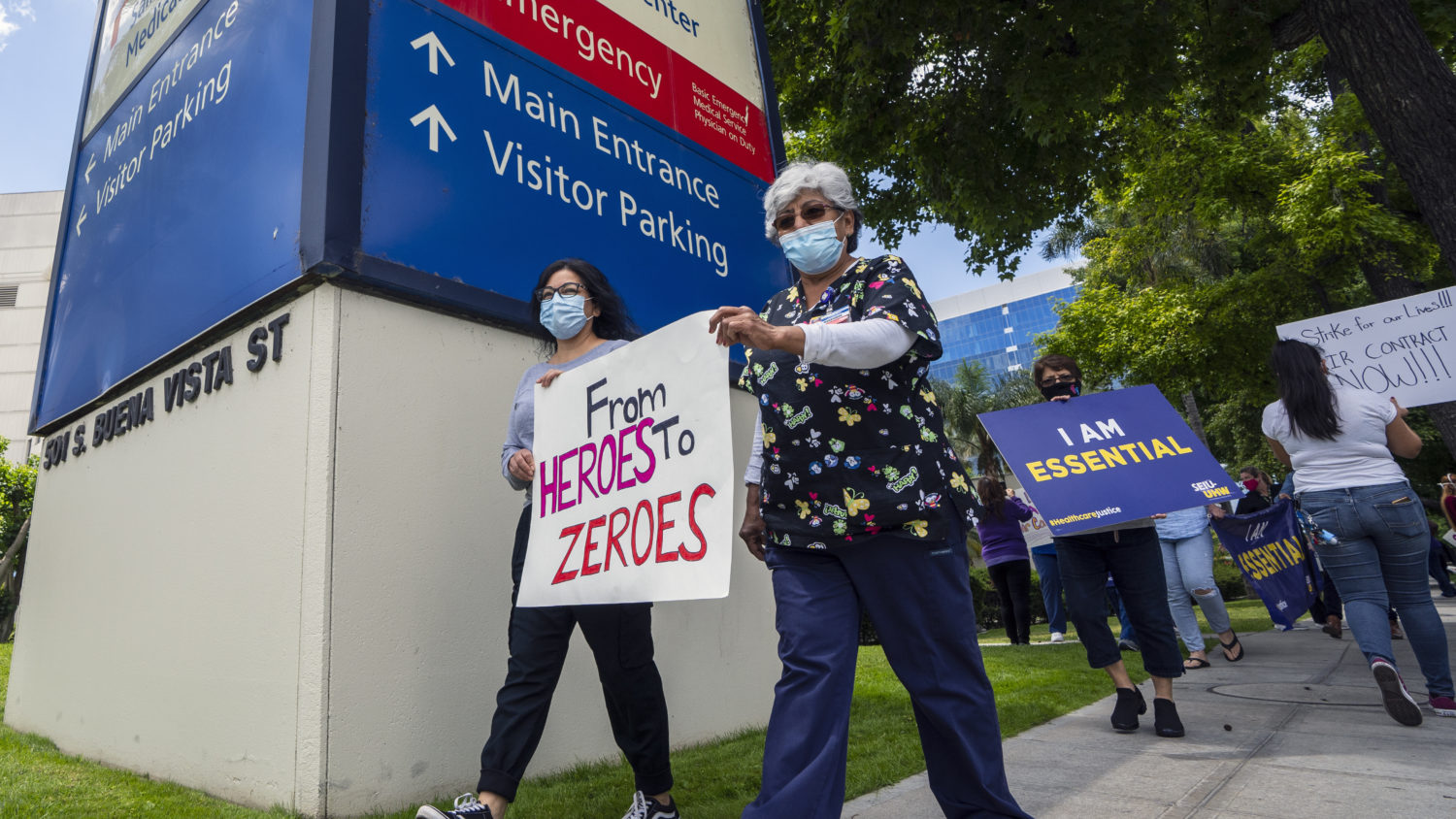
In mid-April, as the surge in COVID-19 cases accelerated in Massachusetts, 40 percent of nursing home positions were vacant in the state  As the pandemic spread, many staff became unavailable due to infection, increased risk related to underlying comorbidities, or family responsibilities.  Many nursing home staff work on a per diem basis, and often lack paid sick leave. Until recently, transportation and paid housing solutions put in place for hospital staff had not been extended to them.

The staffing shortage threatens the health of all residents on short-staffed units and reveals how human contact is fundamental to good nursing home care.  A member of our group recently visited a nursing home where staffing on a 30-resident unit was reduced to one nurse and one nurse’s aide.  Isolation is a cornerstone of fighting COVID-19, but with family and volunteers not permitted in nursing homes, he reported seeing increased dehydration, falls, and poor hygiene as staff struggled to hand-feed residents and provide personal care.  In addition, family members may wait days to hear back about their loved one from overwhelmed nursing home staff.  This lack of communication is a huge barrier to high quality care, especially for patients needing frequent symptom management, such as those in hospice care. 

Massachusetts is taking several actions to alleviate staffing shortages.  The state offered a $1,000 bonus for new nursing home staff, and an online portal was created to match nursing homes with job seekers and volunteers.  The state is making available rapid response teams including nurses, emergency medical technicians (EMTs), and others that can be temporarily deployed for a few days to assist challenged nursing homes. National Guard units are available for non-clinical support, as well as staff from temporary staffing agencies contracted by the state.  Private sector efforts include a collaboration between Massachusetts Senior Care Association, the MIT COVID-19 Policy Alliance, and Monster.com to offer free staffing listings on Monster’s recruiting website.

Personal Protective Equipment

As with all other health care settings, PPE shortages are an ongoing challenge, and states must do more to help.  In Massachusetts, as of May 19, 2020, the state has distributed almost 350,000 N95 masks, over 780,000 masks, and 708,000 pairs of gloves to nursing homes.  However, this is not enough to provide for all of the needs of the nearly 400 nursing homes in the state, which must still rely on their own supply chains, including new purchasing collaboratives, to help facilities gain PPE access. Providing PPE to family members and volunteers could help mitigate some of the impact of extreme staffing shortages.

Testing For COVID-19

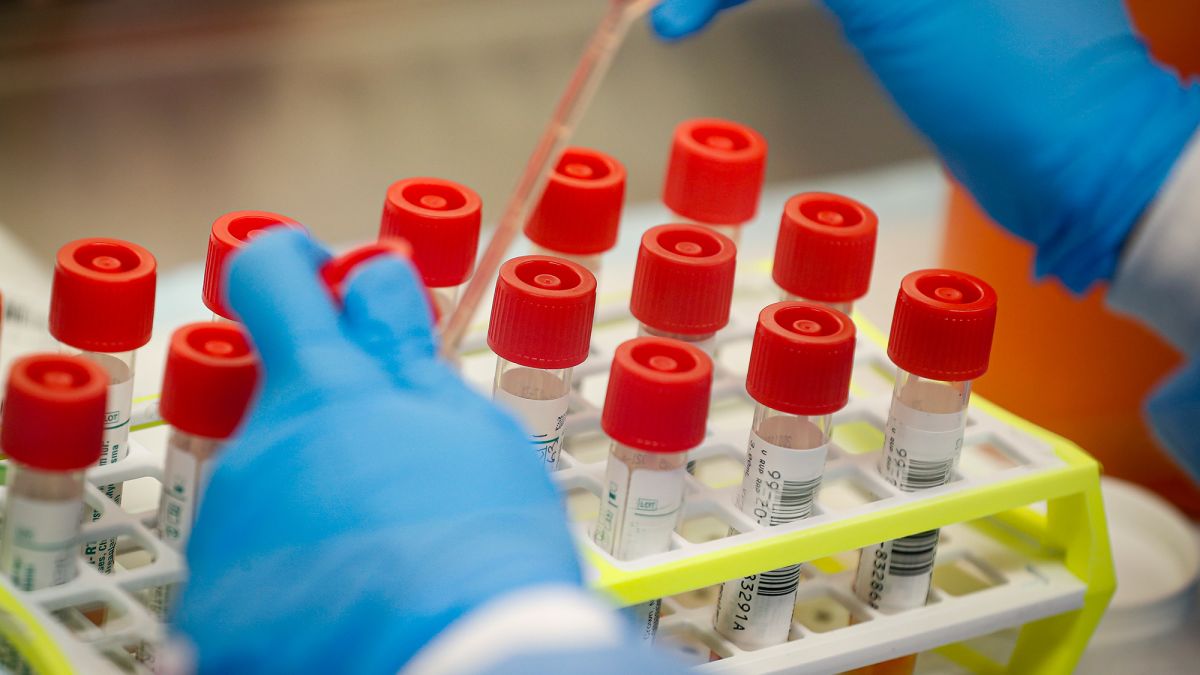
Access to routine testing can improve infection control and identify patients at risk of decline.  Testing should not be limited to only those with symptoms.  In early April, a nursing home in Wilmington, MA underwent facility-wide screening.  Over 50 percent of residents without symptoms tested positive for COVID-19, and within two weeks, 25 residents had died.  Universal testing of residents and staff should be performed as quickly as possible, and routine testing must be available to evaluate symptomatic nursing home residents.  The state of Massachusetts now requires every nursing home to test all residents and staff as a prerequisite to receiving any supplemental COVID-19 funding.  If the nursing home cannot arrange testing, the state will continue to supply National Guard mobile testing teams and dispense testing kits directly to nursing homes.  For nursing homes where testing may not be readily available, or if there are already significant numbers of COVID-19 infections, it should be presumed that all residents and staff are infected, and PPE and other universal infection control measures should be implemented.

Ancillary Services

One overlooked but essential resource is access to ancillary services.  Most nursing homes rely on external companies to provide onsite services, including laboratory tests (e.g. blood tests, urinalysis), to start IVs and provide portable imaging (X-Ray, ultrasound), and to stock medications.  Many of these companies also face challenges with staff and PPE and have decreased services from daily visits to once or twice a week.  As a result, families who want their loved one diagnosed and treated in the nursing home (e.g. chest x-ray, labs for possible pneumonia, followed by IV insertion for antibiotics), or who need urgent assessments, COVID-19 related or not, must decide whether to transfer their family member to the emergency department. One solution is redeploying EMTs, now freed up from transport for elective procedures, to draw labs and start IVs in nursing homes to keep patients where they feel safe and comfortable, and to avoid further stress on over-burdened emergency departments.

Recommendation #3: Establishing COVID-19 Control Task Forces

COVID-19 has forced our society into isolation, but communication and collaboration are essential for successfully fighting pandemics.  We strongly recommend each state create a task force for COVID-19 pandemic control in nursing homes for a minimum of two years, to bring together relevant governmental agencies (Public Health, Elder Affairs or Aging agency, Emergency Management, Medicaid, and others) and other key stakeholders, which include nursing home clinicians, the nursing home industry, ancillary services companies, hospitals, physician groups, and nursing home residents and family members. Local and regional task forces should collaborate to support links between nursing homes and local health care systems and ensure that nursing homes have effective communications with family members and clinicians providing care.  Collaboration with state governments and nursing home leadership in other states is also essential, as many staff, clinicians, and family members travel across state lines.

Task Forces must initially focus on ensuring effective infection control and making resources available to reduce the morbidity and mortality of COVID-19 on nursing home residents and those needing post-acute care. They also should anticipate and plan for the inevitable changes and continued need for nursing home care in the wake of the COVID-19 pandemic.

In Summary

Nursing homes should receive necessary support as an integral and most vulnerable part of the continuum of care. The population is aging, and the need for high quality long-term care, especially for those who lack family or financial resources, is growing rapidly.  Now is the time to ensure the safety and continued viability of this vital health care setting.

Authors’ Note: This call to action was written by the co-authors above on behalf of The New England Geriatrics Network (NEGN) Nursing Home Work Group.


Administration Killed Rule Designed To Protect Health Workers From Pandemic Like COVID-19

https://www.npr.org/2020/05/26/862018484/trump-team-killed-rule-designed-to-protect-health-workers-from-pandemic-like-cov?utm_source=Sailthru&utm_medium=email&utm_campaign=Issue:%202020-05-27%20Healthcare%20Dive%20%5Bissue:27567%5D&utm_term=Healthcare%20Dive

Trump Team Killed Rule Designed To Protect Health Workers From ...

When President Trump took office in 2017, his team stopped work on new federal regulations that would have forced the health care industry to prepare for an airborne infectious disease pandemic such as COVID-19. That decision is documented in federal records reviewed by NPR.

“If that rule had gone into effect, then every hospital, every nursing home would essentially have to have a plan where they made sure they had enough respirators and they were prepared for this sort of pandemic,” said David Michaels, who was head of the Occupational Safety and Health Administration until January 2017.

There are still no specific federal regulations protecting health care workers from deadly airborne pathogens such as influenza, tuberculosis or the coronavirus. This fact hit home during the last respiratory pandemic, the H1N1 outbreak in 2009. Thousands of Americans died and dozens of health care workers got sick. At least four nurses died.

Studies conducted after the H1N1 crisis found voluntary federal safety guidelines designed to limit the spread of airborne pathogens in medical facilities often weren’t being followed. There were also shortages of personal protective equipment.

“H1N1 made it very clear OSHA did not have adequate standards for airborne transmission and contact transmission, and so we began writing a standard to do that,” Michaels said.

HIV/AIDS rule set the standard for protecting workers

OSHA experts were confident new airborne infectious disease regulations would make hospitals and nursing homes safer when future pandemics hit. That’s because similar rules had already been created for bloodborne pathogens such as Ebola and hepatitis.

Those rules, implemented during the HIV/AIDS epidemic, forced the health care industry to adopt safety plans and buy more equipment designed to protect staff and patients.

But making a new infectious disease regulation, affecting much of the American health care system, is time-consuming and contentious. It requires lengthy consultation with scientists, doctors and other state and federal regulatory agencies as well as the nursing home and hospital industries that would be forced to implement the standard.

Federal records reviewed by NPR show OSHA went step by step through that process for six years, and by early 2016 the new infectious disease rule was ready. The Obama White House formally added it to a list of regulations scheduled to be implemented in 2017.

Then came the presidential election.

An emphasis on deregulation

In the spring of 2017, the Trump team formally stripped OSHA’s airborne infectious disease rule from the regulatory agenda. NPR could find no indication the new administration had specific policy concerns about the infectious disease rules.

Instead, the decision appeared to be part of a wider effort to cut regulations and bureaucratic oversight.

“Earlier this year we set a target of adding zero new regulatory costs onto the American economy,” Trump said in December 2017. “As a result, the never-ending growth of red tape in America has come to a sudden, screeching and beautiful halt.”

The impact on the federal effort to protect health care workers from diseases such as COVID-19 was immediate.

“The infectious disease standard was put on the back burner. Work stopped,” said Michaels, now a professor at George Washington University.

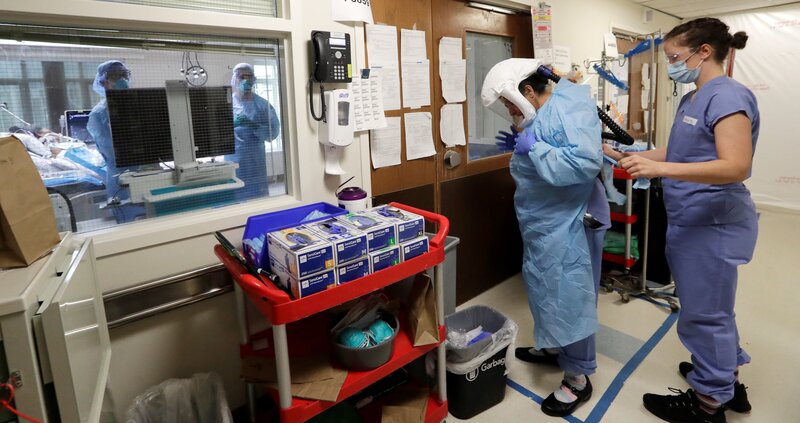
A medical worker is assisted into personal protective equipment on May 8 before stepping into a patient’s room in the COVID-19 intensive care unit at Harborview Medical Center in Seattle.

Elaine Thompson/AP

A deadly escalation of the H1N1 crisis

This spring, hospitals and nursing homes found themselves facing much of the same crisis they experienced during the H1N1 outbreak, with many facilities unprepared and unequipped. Only this time the scale was larger and deadlier.

The federal government reports that at least 43,000 front-line health care workers have gotten sick, many infected, while caring for COVID-19 patients in facilities where personal protective equipment was being rationed.

“Even just a few months ago, I couldn’t have imagined that I would have been on a Zoom call reading out the names of registered nurses who have died on the front lines of a pandemic,” said Bonnie Castillo, who heads the National Nurses United union.

“The memorial was not only about grief. It was also about anger.”

OSHA’s infectious disease rule debated in Washington

Castillo said Congress should immediately implement the infectious disease regulations shelved by the Trump administration as an emergency rule before a second wave of the coronavirus hits.

“Which obviously would mandate that employers have the highest level of PPE, not the lowest,” she said.

Democrats in the House of Representatives passed a bill in mid-May that would do so, but the Republican-controlled Senate has blocked the measure, and the White House still opposes the rules.

The Trump administration hasn’t responded to NPR’s repeated inquiries about the infectious disease rule. But in a briefing call with lawmakers this month, the current head of OSHA, Loren Sweatt, argued enough rules are already in place to protect workers.

“We have mandatory standards related to personal protective equipment and bloodborne pathogens and sanitation standards,” Sweatt said in a recording provided to NPR. “We have existing standards that can address this area.”

The hospital industry also opposes the new safety rules. Nancy Foster with the American Hospital Association said voluntary guidelines for airborne pandemics are adequate.

“You’re right; they’re not regulations, but they are the guidance that we want to follow,” Foster said. “They set forth the expectation for infection control, so in a sense they’re just like regulations.”

But the infectious disease standard would have required the health care industry to do far more. It sets out specific standards for planning and training. It would also have forced facilities to stockpile personal protective equipment to handle “surges” of sick patients such as the ones seen with COVID-19.

NPR also found the lack of fixed regulations allowed the Trump administration to relax worker safety guidelines. Federal agencies did so repeatedly this spring as COVID-19 spread and shortages of personal protective equipment worsened.

As a consequence, hospitals could say they were meeting federal guidelines while requiring doctors and nurses to reuse masks and protective gowns after exposure to sick patients.


Further confusion on the coronavirus testing front

https://mailchi.mp/f2774a4ad1ea/the-weekly-gist-may-22-2020?e=d1e747d2d8

Coronavirus test: confusion over availability and criteria is ...

With all 50 states now in the process of reopening, data reported by public health agencies on coronavirus testing is under increased scrutiny. The issue is not how many tests are being conducted—that number has dramatically increased nationwide (although experts still caution that total testing should be about three times higher than the current 300,000 per day).

Rather, as reported this week, the issue is what kind of tests are being included in public reporting. It emerged this week that several states—including GeorgiaTexasPennsylvaniaVermont, and Virginia—have been combining statistics on polymerase chain reaction (PCR) tests, used to diagnose current infection, with antibody blood tests, used to detect past infection.

More troublingly, The Atlantic reported on Wednesday that the Centers for Disease Control and Prevention (CDC) has been doing the same thing, which artificially inflates the number of tests conducted, and makes the numbers difficult to interpret. Among other experts, Dr. Ashish Jha, director of Harvard’s Global Public Health Institute, was stunned: “You’ve got to be kidding me. How could the CDC make that mistake? This is a mess.”

Accurate testing data is critical to determine the pace and scope of reopening, and to monitor for resurgences of the virus that might necessitate future restrictions. It’s important to know who’s infected now for clinical reasons, and it’s essential to understand who’s already been sick for public health purposes. Combining the two datasets is positively unhelpful, and likely only serves a political purpose.

Testing problems have proven to be this country’s original sin in the way the coronavirus pandemic has evolved, but it’s not too late to make sure that we have ample, accurate, and well-reported testing to guide critical public health decisions.

US coronavirus update: 1.62M cases, 95K+ confirmed deaths, 12.9M tests conducted (of some type).


Cartoon – Are you Socially Distancing or in Denial?

Weekly Humorist

Cartoon – Blinded by Science

A Politician Delivers A Campaign Speech Acrylic Print by Paul Noth

All 50 states have partially reopened; U.S. death toll surpasses 90,000

https://www.washingtonpost.com/nation/2020/05/20/coronavirus-update-us/?utm_campaign=wp_post_most&utm_medium=email&utm_source=newsletter&wpisrc=nl_most

NC coronavirus update May 18: Wake County leaders meet to discuss ...

Ready or not, the United States is reopening. All 50 states have started easing coronavirus-related restrictions — even though many of them do not meet federal benchmarks — leading public health experts to warn that a new surge of infections could be imminent.

As the U.S. death toll surpassed 90,000, White House officials continued to defend the push to reopen and optimistically predicted a swift economic recovery. As part of the focus on states’ efforts to revive their economies, Vice President Pence on Wednesday traveled to Florida while Trump was set to host the governors of Arkansas and Kansas at the White House.

Here are some significant developments:

  • Trump ramped up his rhetoric against China, claiming on Twitter that the nation’s “incompetence” was responsible for “this mass Worldwide killing!” Secretary of State Mike Pompeo also denounced China as a “brutal authoritarian regime” and described its relationship with the director of the World Health Organization as “troubling.”
  • A worker at a mink farm in the Netherlands may have contracted the novel coronavirus from an animal there, the country’s agricultural minister said. If confirmed, this is would be first recorded incident of animal-to-human transmission. 
  • A church in Houston and another in Georgia are closing for a second time after faith leaders and congregants tested positive for the virus shortly after the two churches reopened.
  • The president drew criticism for saying Tuesday it’s “a badge of honor” that America leads the world with more than 1.5 million confirmed cases of the novel coronavirus because “it means our testing is much better.” The United States has more than 30 percent of the world’s known coronavirus infections but accounts for less than 5 percent of the global population.
  • The Centers for Disease Control and Prevention laid out a detailed, delayed road map for reopening schools, child-care facilities, restaurants and mass transit, weeks after governors began opening states on their own terms.
  • The president privately expressed opposition to extending unemployment benefits for workers affected by the pandemic.


OSHA Probing Health Worker Deaths But Urges Inspectors To Spare The Penalties

https://khn.org/news/osha-probing-health-worker-deaths-but-urges-inspectors-to-spare-the-penalties/

OSHA Probing Health Worker Deaths But Urges Inspectors To Spare ...

The Occupational Safety and Health Administration has in recent weeks launched investigations into deaths of workers at 34 health care employers across the U.S., federal records show, but former agency officials warn that the agency has already signaled it will only cite and fine the most flagrant violators.

The investigations come as health care workers have aired complaints on social media and to lawmakers about a lack of personal protective equipment, pressure to work while sick, and retaliation for voicing safety concerns as they have cared for more than 826,000 patients stricken by the coronavirus.

Despite those concerns, the nation’s top worker safety agency is not viewed as an advocate likely to rush to workers’ aid. President Donald Trump tapped a Labor Department leader who has represented corporations railing against the very agency he leads.

“It’s a worker safety crisis of monstrous proportions and OSHA is nowhere to be found,” said David Michaels, an epidemiologist and George Washington University professor who was assistant secretary of Labor and ran OSHA from 2009 to 2017.

Employers are required to report a work-related death to OSHA or face fines for failing to do so. Yet former OSHA leaders say the agency has not openly reminded hospitals and nursing homes to file such reports in recent weeks.

Last week, the Centers for Disease Control and Prevention reported that more than 9,200 health workers had been infected with the coronavirus, a number the agency concedes is a vast undercount. The estimate was based on a set of lab-generated reports in which only 16% included the patient’s profession. The agency said the true number is probably closer to 11% of all known cases.

Federal records show the OSHA fatality investigations ― searchable here — involve hospitals, an emergency medical service agency, a jail health department and nursing homes. Its investigations can be prompted by the complaint of a worker, a former worker or even an OSHA official who sees a news report about a workplace death. They can be conducted by phone and fax or involve an on-site inspection.

One fatality investigation launched April 7 focuses on Marion Regional Nursing home in Hamilton, Alabama, where nurse Rose Harrison, 60, worked before she died of COVID-19, her daughter Amanda Williams said.

Williams said her mother was not given a mask when caring for a patient on March 25 ― 10 days after the county’s first coronavirus case — who later tested positive for the virus. Williams said her mother felt pressured to keep going to work even as she was coughing, fatigued and running a low-grade fever.

“She kept telling me ‘Amanda, I have to work, I have to get my house paid off,’” Williams said, noting her mother said she was urged to work unless her temperature reached 100.4.

Williams said that she drove her mother to the hospital on April 3 and that Harrison was unhappy she’d spent the week working. Harrison went on a ventilator the following day, fully expecting to recover. She died April 6.

“When your mother dies mad, you’re pretty much mad,” Williams, one of Harrison’s three daughters, said. “I think if proper steps were taken from the beginning, this would have been different.”

North Mississippi Health Services, which owns the nursing home, and the home’s administrator did not reply to calls or emails.

An April 13 OSHA memo said the agency would prioritize death investigations involving health care workers and first responders. It said “formal complaints alleging unprotected exposures to COVID-19 … may warrant an on-site inspection.”

Michaels, the former Labor Department official, said a subsequent OSHA memo suggested that officials are unlikely to penalize all but the most careless employers.

The memo about employers’ “good faith” efforts said a citation may be issued “where the employer cannot demonstrate any efforts to comply.”

Michaels said that “any efforts” to comply with work safety rules could amount to making even one phone call to try to buy masks for workers.

Federal OSHA officials did not respond to a request for comment.

Democrats criticized Trump last year when he tapped Eugene Scalia, who spent years of his legal career defending major corporations, to head the Labor Department.

Scalia fought OSHA on behalf of SeaWorld after it was cited over the death of a woman training killer whales, The New York Times reported. Scalia’s team argued the work-safety agency was not meant to regulate the training of killer whales. He also argued that SeaWorld had adequate safety measures in place, but ultimately lost the case.

Sen. Bernie Sanders, alluding to Scalia’s record of defending firms like Chevron and Goldman Sachs, called the appointment “obscene.”

Since March 27, the ongoing fatality investigations have been mostly categorized as “partial” investigations, which initially focus on one area of noncompliance. Four are labeled “complete,” meaning they cover a wide range of hospital operations.

One of the “complete” investigations is listed at Coral Gables Hospital in South Florida, where respiratory therapist Jorge Mateo, 82, worked before he died of coronavirus complications, his daughter said.

The hospital reported the death, according to a statement from Shelly Weiss Friedberg of Tenet Healthcare, which owns the hospital. She said Mateo was with the hospital for four decades and “the loss of Jorge Mateo is felt throughout our entire community.”

A subsequent investigation — also labeled as “complete” ― was opened April 10 at Palmetto General Hospital, in South Florida.

There, 33-year-old Danielle Dicenso worked for a staffing agency as an ICU nurse, treating coronavirus patients. Dicenso died after developing COVID-19 symptoms, including fever and a cough, according to reports in the Miami Herald. The Palm Beach County medical examiner has not yet determined a cause of death, a spokesperson told Kaiser Health News.

Her husband, David Dicenso, told local news station WSVN she had not been given a protective mask and was “very scared of going to work.”

Weiss Friedberg, of Tenet, which also owns Palmetto, said in an email that “nurses are provided appropriate personal protective equipment (PPE) in compliance with Centers for Disease Control (CDC) guidelines.”

The latest guidelines say staff can wear a face mask if no N95 respirator is available when performing routine care with COVID-19 patients. For higher-risk procedures, such as intubation, workers must receive N95 masks.

OSHA opened an inspection at St. Catherine of Siena Medical Center, a Long Island hospital, on April 11. Federal officials had learned from a local news story about a patient care assistant dying of COVID-19, hospital leadership confirmed.

The hospital has no record of that employee having any interaction with COVID patients, said James O’Connor, its executive vice president. The hospital tests employees for COVID-19 only if they have had confirmed exposure to someone who tested positive and if they develop symptoms.

O’Connor said all employees who are in contact with suspected COVID-19 patients get the full suite of PPE; they are told to clean their N95 masks after each shift, he said, and to change masks entirely every three shifts.

That can mean workers wear the same equipment for multiple days.

Early research suggests that N95s can be sanitized and reused up to three times. But that paper has not yet undergone peer review. In an affidavit the New York State Nurses Association filed regarding another state hospital, the union argued that it has “yet to be adequately proven that disposable respirators can be effectively decontaminated” without putting the wearer at risk.

As recently as April 16, the local nurses union told Newsday that St. Catherine workers on Long Island are being told to share PPE.

While OSHA does have a “general duty” clause urging employers to keep workers safe and a standard for respiratory protection, it has no written rule on protecting workers from airborne disease, said Debbie Berkowitz, a former OSHA chief of staff and director of the National Employment Law Project’s worker safety and health program.

As OSHA and the Centers for Disease Control and Prevention downgrade their requirements week by week, workers are left with the choice in some places to wear a bandana in situations that had called for a properly fitted N95 mask, which can filter out particles as small as 0.1 microns.

“OSHA has really completely abandoned their mandate to protect workers,” Berkowitz said, “and every worker is on their own.”


AFL-CIO sues feds over coronavirus workplace safety

https://www.axios.com/afl-cio-sues-feds-over-coronavirus-workplace-safety-6de76122-2c75-4f84-92e5-21048c08b44b.html

AFL-CIO sues feds over coronavirus workplace safety - Axios

With states reopening for business and millions of people heading back to work, the nation’s largest labor organization is demanding the federal government do more to protect workers from contracting the coronavirus on the job.

What’s happening: The AFL-CIO, a collection of 55 unions representing 12.5 million workers, says it is suing the federal agency in charge of workplace safety to compel them to create a set of emergency temporary standards for infectious diseases.

Driving the news: The lawsuit against the U.S. Labor Department’s Occupational Safety and Health Administration (OSHA) is expected to be filed on Monday in the U.S. Court of Appeals in Washington, D.C.

  • Citing an urgent threat to “essential” workers and those being called back to work as government-imposed lockdowns are lifted, the AFL-CIO is asking the court to force OSHA to act within 30 days.
  • It wants a rule that would require each employer to evaluate its workplace for the risk of airborne disease transmission and to develop a comprehensive infection control plan that could include social distancing measures, masks and other personal protective equipment and employee training.

The agency has issued guidance, in collaboration with the Centers for Disease Control and Prevention, to protect workers in multiple industries — including dentist offices, nursing homes, manufacturing, meat processing, airlines and retail.

  • But the unions complain these are only recommendations, not requirements, and that mandatory rules should be imposed.
  • OSHA has been considering an infectious disease standard for more than a decade, they note, and has drafted a proposed standard.

U.S. Labor Secretary Eugene Scalia, in a letter to AFL-CIO President Richard Trumka, said employers are already taking steps to protect workers, and that OSHA’s industry-tailored guidelines provide more flexibility than a formal rule for all employers.

Yes, but: OSHA has received more than 3,800 safety complaints related to COVID-19 as of May 4, but it had already close to about 2,200 of them without issuing a single citation, according to the AFL-CIO.

What they’re saying: “It’s truly a sad day in America when working people must sue the organization tasked with protecting our health and safety,” Trumka said.

  • “But we’ve been left no choice. Millions are infected and nearly 90,000 have died, so it’s beyond urgent that action is taken to protect workers who risk our lives daily to respond to this public health emergency.
  • “If the Trump administration refuses to act, we must compel them to.”
  • OSHA could not immediately be reached for comment on the lawsuit.


Trump faces criticism over lack of national plan on coronavirus

Trump faces criticism over lack of national plan on coronavirus

COVID-19 National Health Plan – Primary Care – Central Patient ...

The Trump administration is facing intense criticism for the lack of a national plan to handle the coronavirus pandemic as some states begin to reopen.

Public health experts, business leaders and current administration officials say the scattershot approach puts states at risk and leaves the U.S. vulnerable to a potentially open-ended wave of infections this fall.

The White House has in recent days sought to cast itself as in control of the pandemic response, with President Trump touring a distribution center to tout the availability of personal protective equipment and press secretary Kayleigh McEnany detailing for the first time that the administration did have its own pandemic preparedness plan.

Still, the White House lacks a national testing strategy that experts say will be key to preventing future outbreaks and has largely left states to their own devices on how to loosen restrictions meant to slow the spread of the virus. Trump this week even suggested widespread testing may be “overrated” as he encouraged states to reopen businesses.

The Centers for Disease Control and Prevention (CDC) on Thursday night issued long-awaited guidance intended to aid restaurants, bars and workplaces as they allow employees and customers to return, but they appeared watered down compared to previously leaked versions.

Some experts said the lack of clear federal guidance on reopening could hamper the economic recovery. 

“A necessary condition for a healthy economy is a healthy population. This kind of piecemeal reopening with everyone using different criteria for opening, we’re taking a big risk,” said Mark Zandi, chief economist at Moody’s Analytics.

The lack of coherent direction from the White House was driven home this week by damaging testimony by a former top U.S. vaccine official who claims he was ousted from his post improperly.

“We don’t have a single point of leadership right now for this response, and we don’t have a master plan for this response. So those two things are absolutely critical,” said Rick Bright, who led the Biomedical Advanced Research and Development Authority until he was demoted in late April.

The U.S. faces the “darkest winter in modern history” if it does not develop a more coordinated national response, Bright said. “Our window of opportunity is closing.”

From the start, the White House has let states chart their own responses to the pandemic.

The administration did not issue a nationwide stay-at-home order, resulting in a hodgepodge of state orders at different times, with varying levels of restrictions.

Facing a widespread shortage, states were left to procure their own personal protective equipment, ventilators and testing supplies. Trump resisted using federal authority to force companies to manufacture and sell equipment to the U.S. government.

Without clear federal guidance, state officials were competing against each other and the federal government, turning the medical supply chain into a free-for-all as they sought scarce and expensive supplies from private vendors on the commercial market.

“The fact that we had questions about our ability to have enough mechanical ventilators, and you had states basically bidding against each other, trying to secure personal protective equipment …  it shouldn’t be happening during a pandemic,” said Amesh Adalja, a senior scholar at the Johns Hopkins University Center for Health Security.

Internally, the administration struggled to mount a unified front as various agencies jockeyed for control. Multiple agencies have been providing contradictory instructions.

At first, Department of Health and Human Services (HHS) Secretary Alex Azar led the White House coronavirus task force.

Roughly a month, later he was replaced by Vice President Pence. The Federal Emergency Management Agency (FEMA) was later tasked with leading the response to get supplies to states, while senior White House adviser Jared Kushner led what has been dubbed a “shadow task force” to engage the private sector. Now, FEMA is reportedly winding down its role, and turning its mission back over to HHS.

The CDC has been largely absent throughout the pandemic. Director Robert Redfield has drawn the ire of President Trump as well as outside experts, and he has been seen infrequently at White House briefings.

“I think seeing the nation’s public health agency hobbled at a time like this and looking over its shoulder at its political bosses is something I hoped I would never see, and I’ve been working with the CDC for over 30 years,” said Lawrence Gostin, a professor of public health at Georgetown University.

“I think that people will die because the public health agency has lost its visibility and its credibility and that it’s being politically interfered with,” he added.

The administration recently has taken some steps to improve on the initial response to the pandemic.

Ventilator production has increased, and the U.S. is no longer seeing a shortage of the devices. 

Testing has improved dramatically as well, though experts think the U.S. needs to be testing thousands of more people per day before the country can reopen.

The administration also unveiled plans to expand the Strategic National Stockpile’s supply of gowns, respirators, testing supplies and other equipment, after running out of supplies early in the pandemic.

Adalja said the administration’s positive steps are coming way too late. 

“It’s May 15, we should have been in this position January 15,” he said.

McEnany on Friday for the first time detailed the White House’s preparedness plan that replaced the Obama-era pandemic playbook, an acknowledgement that Trump’s predecessor did leave a road map, despite claims to the contrary from some of the president’s allies.

She did not give many specifics on the previously unknown plan. Instead, McEnany declared the Trump administration’s handling of the virus had been “one of the best responses we’ve seen in our country’s history.”

Yet as states look to reopen businesses and get people back to work, the White House is taking a back seat as governors set their own guidelines for easing stay-at-home orders and restrictions on social activities.

The White House in April issued a three-step plan for states to reopen their economies, but it has largely been ignored by states and by the president.

Dozens of governors have begun easing restrictions on businesses and social activities without meeting the White House guidelines. Trump has been urging them to move even faster, backing anti-lockdown protesters in Michigan, Virginia, Minnesota and Pennsylvania.

Even scaled-down guidance from federal agencies is critical for providing a road map for state and local leaders, and for businesses considering how best to resume operations, said Neil Bradley, chief policy officer with the U.S. Chamber of Commerce.

“We need guidance because it helps instill confidence about the right types of approaches to take, but when you begin to move away from guidance and into either regulations or very strict approach, then that’s increasingly going to be unworkable in lots of different locations,” Bradley said.


Amid reports of White House clashes with CDC, experts raise alarms about lack of coronavirus screening at airports

https://www.yahoo.com/news/coronavirus-screening-airports-144105500.html

Terminal 1 at John F. Kennedy International Airport in New York City. (Lev Radin/Pacific Press/LightRocket via Getty Images)

As the nation begins to reopen amid the coronavirus pandemic, some people are looking to the skies — and experts don’t necessarily like what they see, arguing there are not enough safeguards in place to protect passengers and crew. 

While air travel has fallen sharply due to the virus, the airports are open and planes are flying both domestically and internationally. The Centers for Disease Control and Prevention has issued travel guidelines encouraging air passengers to wear face coverings, “keep 6 feet of physical distance from others” and only board planes for essential travel. However, these guidelines are merely suggestions. 

There is no requirement for masks, and there have been multiple reports of crowded conditions in airports and on planes, which have left passengers alarmed. The Transportation Security Administration, which screens passengers and luggage at airports, has also experienced over 560 confirmed cases of COVID-19, the disease caused by the coronavirus, and six deaths from the illness.

Despite these concerns, there are currently no coronavirus screening procedures for domestic air travelers, and a congressional investigation has also raised questions about the level of screening being conducted for international passengers. Speaking in the Oval Office on April 28, President Trump told reporters his administration is working on implementing a procedure for temperature checks and COVID-19 tests for air travelers.

“We’re also setting up a system where we do some testing, and we’re working with the airlines on that,” Trump said.

According to a May 6 government document reviewed by Yahoo News, the CDC was “developing a tool for predicting risk of importation of COVID-19 among international travelers” and meeting with the White House National Security Council “to discuss strategies for screening arriving international passengers from countries with substantial COVID-19 transmission.”

However, there have been reports of discord between the CDC and the White House. On May 9, USA Today reported CDC officials were overruled by the White House after they raised concerns about a potential plan to establish temperature checks at the airports. While some COVID-19 patients do have high fevers, many do not and others are entirely asymptomatic. 

USA Today’s report included an email Dr. Martin Cetron, the CDC’s director of global mitigation and quarantine, sent to officials with the Department of Homeland Security criticizing the temperature checks as “a poorly designed control and detention strategy.” 

Cetron, the CDC and DHS did not respond to requests for comment. The White House did not respond to questions about the reported disagreements from the CDC or whether the Trump administration believes temperature checks are an adequate screening measure for airports.

Rep. Raja Krishnamoorthi, the chairman of the House oversight subcommittee on economic and consumer policy, has investigated coronavirus screening procedures at airports. Earlier this week, the Illinois Democrat told Yahoo News he was concerned by the report that the White House is pursuing a temperature screening plan over the objections of CDC officials. 

“The White House has been ignoring and sidelining America’s public health experts at the CDC, instead relying on nonexpert political appointees to make public health decisions,” Krishnamoorthi said. “I am troubled by reports that officials at the Centers for Disease Control and Prevention could raise this public health concern and be essentially overruled by presidential aides. The desire to lure Americans back into traveling by making them feel like they are safe cannot outweigh the need to actually keep this country safe.”

Krishnamoorthi has previously raised concerns about what he described as “lax” screening procedures for international travelers coming into the United States from coronavirus hot spots in March as the pandemic exploded around the globe. Trump has repeatedly pointed to restrictions he imposed on travelers from China — where the virus originated — on Jan. 31 as evidence of his strong efforts to curb its spread in the United States.

However, the restrictions on China contained exemptions that allowed over 400,000 people to subsequently travel from that country to the United States. And on May 7, Krishnamoorthi’s subcommittee released the results of an investigation that focused on two other early coronavirus hot spots — Italy and South Korea. Krishnamoorthi said he believes Trump has focused on “rhetoric and bluster rather than actually effective screenings.”

“Just from what we found with Italy and South Korea, there was no border closing. There was no screening. Unfortunately, the lack of screening probably had some very serious consequences at a time when cases were exponentially rising in the United States.”

Krishnamoorthi’s investigation, which included extensive briefings from officials, found that the White House National Security Council’s Policy Coordination Committees decided in March to rely on South Korean and Italian officials to screen passengers in those countries who were headed to the United States. The probe further found the U.S. had “limited” oversight for those screenings in Italy and that only 69 passengers were prevented from coming to the U.S. from those two countries in March. Once they arrived, the investigation found passengers entering from the two countries did not receive additional health screenings.

“Potentially thousands and thousands of people came across without screenings” from what were two of the leading coronavirus hot spots at the time, Krishnamoorthi told Yahoo News. “It doesn’t take a lot to believe that folks came over and seeded further outbreaks here in this country.”

Jonathan Ullyot, a spokesperson for the White House National Security Council, responded to questions about Krishnamoorthi’s investigation with a statement touting the government’s steps to screen international arrivals earlier this year.

“The reality is that the United States government took early and decisive action to mitigate the risk from global hot spots, including China, Iran, South Korea, and the Schengen area of Europe,” Ullyot wrote. “After restricting travel from China on January 31 … the security directive put forth by the administration required enhanced medical screenings for all passengers before they departed on flights to the United States from Northern Italy and South Korea.”

According to Ullyot, the screenings in Italy and South Korea “included checking the passenger’s temperature, visual observations to detect signs of illness, and questionnaires.” While Ullyot did not dispute Krishnamoorthi’s contention that the U.S. relied on officials in those countries to conduct the screenings and that few passengers were denied boarding, he said “U.S. mission staff visited airports” in both countries to “observe these screening procedures.”

A senior Trump administration official, who requested not to be named, said all international arrivals to the United States are subject to Customs and Border Protection (CBP) screenings that are following CDC guidelines. The official explained that those guidelines require CBP officers to refer travelers “to the CDC, DHS contract medical screeners, or local health authorities for health screening” if they are exhibiting symptoms or have traveled from countries that have experienced major outbreaks.

According to the official, the CBP has “established processes to identify travelers who have traveled to the United States directly or indirectly from areas that are experiencing COVID-19 outbreaks.”

Domestic air passengers, however, are treated differently.

“With regard to domestic travel, there’s not more screening beyond what TSA normally does,” Krishnamoorthi said. 

He said that lack of screening for domestic travelers is particularly worrisome as areas of the country are beginning to lift lockdown restrictions. He suggested this could lead to a situation where business people “go back and start traveling” and then “transport these cases everywhere.”

“We have to look at the science of it more closely, and we have to develop a more precise way of screening,” Krishnamoorthi said.

Randy Babbitt, a former administrator of the Federal Aviation Administration, said the lack of new screening procedures is not as much of a problem right now since “nobody’s flying.” However, he said it will become a pressing issue as the country reopens and airports become more crowded.

“People are going to start flying and as it ramps back up, that becomes a different question,” Babbitt told Yahoo News.

Babbitt further explained that one difficulty with establishing comprehensive procedures for airports is that so many different government agencies are involved in air travel. However, he pointed to proposals generated by Stonebriar Strategy Group Thought Leadership Initiative, a nonprofit consultancy, as a realistic potential road map.

Howard Thrall, the president and senior partner of the group, said the organization is comprised of multiple retired consultants and executives who have worked in the industry. According to Thrall, a  veteran executive who has worked for multiple aviation and aerospace companies, the group came together because they were “totally amazed” a coronavirus airport screening system has not yet been established. 

“This is really a pro bono exercise for a bunch of old graybeards,” Thrall said.

The Stonebriar Strategy Group’s proposal calls for screening perimeters to be established outside airports, where rapid COVID-19 tests, questionnaires and temperature checks could be administered to travelers and workers. Setting up a screening perimeter would mean that even if passengers ended up in close proximity during boarding or on planes, they could have a higher degree of confidence those around them were not contagious.

Along with addressing safety concerns, Thrall said implementing these screenings could help the economy since aviation is a substantial part of the nation’s gross domestic product and boosting consumer confidence is crucial to returning the industry to normal levels. He pointed to the aftermath of the Sept. 11 attacks, when the TSA was formed and security screening procedures were transformed, as evidence that airport procedures can quickly be revamped.

The Stonebriar Strategy Group’s detailed proposal estimated it would cost approximately $6.8 million per airport, per year, to establish coronavirus screening perimeters. With approximately 5,000 public airports in the country, that would mean a total cost of about $34 billion.

However, Thrall argued that cost is realistic relative to the urgent need and the trillions of dollars the government is spending to address the coronavirus. 

“That’s why we wrote it up. It wasn’t happening and it could happen. This is not a big deal,” Thrall said. “I mean, it’s not going to be free by any means, but this is very, very manageable.”