South Asia emerges as a new coronavirus hotspot

https://www.axios.com/india-coronavirus-cases-south-asia-pakistan-5447da22-7418-43f7-a17a-d247b92e4205.html

Featured image

India opened up restaurants, shopping malls and places of worship today even as it recorded a record-high 9,971 new coronavirus cases, the third-most worldwide behind Brazil and the U.S.

Why it matters: Lockdowns are being lifted in South Asia — home to one-quarter of the world’s population — not because countries are winning the battle against COVID-19, but because they simply can’t sustain them any longer.

Flashback: For a time, South Asia was cited as a source of optimism because relatively few cases and deaths were being recorded despite large, dense populations.

  • Lockdowns came relatively early, with varying severity (India’s was considerably stricter than Pakistan’s, for example).
  • Outbreaks have continued to accelerate, however. Pakistan’s daily case count is now on par with the U.K.’s and six times Germany’s, adjusted for population.
Data: The Center for Systems Science and Engineering at Johns Hopkins; Chart: Naema Ahmed/Axios

Limited testing means South Asia’s outbreaks could actually be far more severe. India, for example, is testing at one-twentieth the rate of the U.S.

  • John Clemens, an epidemiologist at ICDDR,B (formerly the International Centre for Diarrheal Disease Research, Bangladesh), estimates that Bangladesh’s capital, Dhaka, may have up to 750,000 cases — 12 times the official tally, per the Economist.
  • The official numbers still show India, Pakistan and Bangladesh with the third-, seventh- and tenth-most new cases in the world over the past three days, respectively.

Bhramar Mukherjee, a professor at the University of Michigan who has been modeling India’s outbreak, tells Axios that while some states have hit initial peaks, she doesn’t expect a national peak until late July or August.

  • While the transmission rate has slowed, “you see this steady rise in cases because the population is so large.” She expects the numbers to fall slowly after the peak, unlike the trajectory in Europe.
  • The numbers can be unreliable, Mukherjee says, with some states fearing that testing symptomatic people will cause them to “look bad” as cases rise.
  • She also worries that India didn’t use the lockdown period to build up testing and hospital capacity.
  • “It’s really chaos unfolding in Mumbai and Delhi, and I think unfortunately India is going to be at the top of the list in terms of cases,” she says.

Zoom in: Mumbai has launched an app to help people locate hospitals with empty beds, but such is the scarcity that they’re often full by the time patients arrive, WSJ reports. Some die without ever receiving treatment.

  • Morgues are overfull t00. There are reports of patients being treated in rooms that also contain dead bodies.
  • Public hospitals in Delhi, home to 26 million people, are also reportedly full and turning people away.

The coronavirus likely arrived in Mumbai with wealthy people returning from abroad, before spreading among poorer people and to slums where social distancing is hardly an option.

  • That pattern has been seen elsewhere in the developing world, including in cities like Rio de Janeiro.
  • There’s an additional complication in India’s case, though. After initially failing to account for migrant workers when implementing the lockdown, the government started to transport them to their home villages on special busses and trains.
  • The virus traveled too. 71% of cases recorded in Bihar, a state in eastern India, have been linked to returning workers, Foreign Policy reports.

The bottom line: South Asian governments attempted to balance health and hunger, knowing they could only shut down their largely informal economies for so long.

  • But with health care systems already stretched and case counts continuing to rise, they’re opening up with more hope than confidence.


The Battle Over State Bailouts

https://www.politico.com/news/magazine/2020/06/01/coronavirus-state-bailout-budget-jobs-economy-impact-287704

Blue State Bailout? Red State Residents Received Largest Stimulus ...

Why Politics Keeps Tanking a Bailout Idea That Works.

Nobody in Congress likes to give other politicians money. But the track record shows that writing checks directly to states could keep the recession from becoming way worse.

The last time the American economy tanked and Washington debated how to revive it, White House economists pushed one option that had never been tried in a big way: Send truckloads of federal dollars to the states.

When President Barack Obama took office in January 2009 during the throes of the Great Recession, tax revenues were collapsing and state budgets were hemorrhaging. The Obama team was terrified that without a massive infusion of cash from Congress, governors would tip the recession into a full-blown depression by laying off employees and cutting needed services. So the president proposed an unprecedented $200 billion in direct aid to states, a desperate effort to stop the bleeding that amounted to one-fourth of his entire stimulus request.

But the politics were dismal. Republican leaders had already decided to oppose any Obama stimulus. And even Washington Democrats who supported their new leader’s stimulus weren’t excited to help Republican governors balance their budgets. Most politicians enjoy spending money more than they enjoy giving money to other politicians to spend. And since state fiscal relief was a relatively new concept, the Obama team’s belief that it would provide powerful economic stimulus was more hunch-based than evidence-based.

Ultimately, the Democratic Congress approved $140 billion in state aid—only two-thirds of Obama’s original ask, but far more than any previous stimulus.

And it worked. At least a dozen post-recession studies found state fiscal aid gave a significant boost to the economy—and that more state aid would have produced a stronger recovery. The Obama team’s hunch that helping states would help the nation turned out to be correct.

But evidence isn’t everything in Washington. Now that Congress is once again debating stimulus for a crushed economy—and governors are once again confronted with gigantic budget shortfalls—a partisan war is breaking out over state aid. Memories of 2009 have faded, and the politics have scrambled under a Republican presidential administration.

Democratic leaders have made state aid a top priority now that Donald Trump is in the White House, securing $150 billion for state, local and tribal governments in the CARES Act that Congress passed in March, and proposing an astonishing $915 billion in the HEROES Act that the House passed in May. Republican leaders accepted the fiscal relief in the March bill, but they kept it out of the last round of stimulus that Congress enacted in April, and they have declared the HEROES Act dead on arrival. Though they’re no longer denouncing stimulus as socialism, as they did in the Obama era, they’ve begun attacking state aid as a “blue-state bailout.”

Polls show that most voters want Washington to help states avoid layoffs of teachers, police officers and public health workers, but Senate Majority Leader Mitch McConnell, Fox News personalities, and other influential Republicans are trying to reframe state aid as Big Government Democratic welfare spending. Trump doesn’t want to run for reelection during a depression, and he initially suggested he supported state aid, but in recent weeks he has complained that it would just reward Democratic mismanagement.

“There wasn’t a lot of evidence that state aid would be good stimulus in 2009, but now there’s a lot of data, and it all adds up to juice for the economy,” Moody’s chief economist Mark Zandi says. “It’s baffling that this is getting caught up in politics. If states don’t get the support they need soon, they’ll eliminate millions of jobs and cut spending at the worst possible time.”

The coronavirus is ravaging state budgets even faster than the Great Recession did, drying up revenue from sales taxes and income taxes while ratcheting up demand for health and unemployment benefits. But as Utah Republican Senator Mitt Romney pointed out earlier this month: “Blue states aren’t the only ones who are getting screwed.” Yes, California faces a $54 billion budget shortfall, and virus-ravaged blue states like New York and New Jersey are also confronting tides of red ink. But the Republican governors of Texas, Georgia and Ohio have also directed state agencies to prepare draconian spending cuts to close massive budget gaps.

Fiscal experts say the new Republican talking point that irresponsible states brought these problems on themselves with unbalanced budgets and out-of-control spending has little basis in reality. Unlike the federal government, which was running a trillion-dollar deficit even before the pandemic, every state except Vermont is required by law to balance its budget every year. State finances were unusually healthy before the crisis hit; overall, they had reserved 7.6 percent of their budgets in rainy day funds, up from 5 percent before the Great Recession.

But now, governors of both parties are now pivoting to austerity, which means more public employees applying for unemployment benefits, fewer state and local services in a time of need, and fewer dollars circulating in the economy as it begins to reopen.

Federal Reserve Chairman Jerome Powell, who has approved a plan to buy up to $500 billion worth of state and local government bonds to help ease their money problems, recently suggested that direct federal aid to states also “deserves a careful look,” which in Fed-speak qualifies as a desperate plea for congressional action.

Nevertheless, some Republicans who traditionally pushed to devolve power from the federal government to the states are now dismissing state aid as a bloated reward for liberal profligacy. Some fiscal conservatives have merely suggested that the nearly trillion-dollar pass-through to states, cities and tribes in the House HEROES bill is too generous given the uncertainties about the downturn’s trajectory. McConnell actually proposed that states in need should just declare bankruptcy, which is not even a legal option. Former Wisconsin Governor Scott Walker wrote a New York Times op-ed titled “Don’t Bail Out the States.” Sean Hannity told his Fox viewers that more fiscal relief would be a tax on “responsible residents of red states,” while Florida Senator (and former Governor) Rick Scott said it would “bail out liberal politicians in states like New York for their unwillingness to make tough and responsible choices.”

It was not so long ago that governors like Walker and Scott were burnishing their own reputations for fiscal responsibility with federal stimulus dollars. Obama’s American Recovery and Reinvestment Act was a bold experiment in using federal dollars to backstop states in an economic emergency, and its legacy hangs over the debate over today’s emergency.

By the time Obama won the 2008 election, the U.S. economy had already begun to collapse, and his aides had already given him a stimulus memo proposing a $25 billion “state growth fund.” The goal was anti-anti-stimulus: They wanted to prevent state spending cuts and tax hikes that would undo all the stimulus benefits of federal spending increases and tax cuts. The memo warned that states faced at least $100 billion in budget shortfalls, and that “state spending cuts will add to fiscal drag.” Cash-strapped states would also cut funding to local governments, accelerating the doom loop of public-sector layoffs and service reductions, pulling money out of the economy when government ought to be pouring money in.

The memo also warned that the fund might be caricatured as a bailout for irresponsible states and might run counter to the self-interest of politicians who enjoy dispensing largesse: “Congress may resist spending money that governors get credit for spending.” House Speaker Nancy Pelosi of California wasn’t keen on creating a slush fund for her state’s Republican governor, Arnold Schwarzenegger, and House Majority Whip James Clyburn of South Carolina was even more suspicious of his GOP governor, Mark Sanford, an outspoken opponent of all stimulus and most aid to the poor.

After President-elect Obama addressed a National Governors Association event in Philadelphia, Sanford and other conservative Republicans publicly declared that they didn’t want his handouts—and many congressional Democrats were inclined to grant their wish. Even Obama’s chief of staff, Rahm Emanuel, was worried about the politics of writing checks to governors who might run against Obama in 2012 on fiscal responsibility platforms.

There were plenty of studies suggesting that unemployment benefits and other aid to recession victims was good economic stimulus, because families in need tend to spend money once they get it, but there wasn’t much available research about aid to states. Congress had approved $20 billion in additional Medicaid payments to states in a 2003 stimulus package, but that aid had arrived much too late to make a measurable difference in the much milder 2001 recession.

Still, Obama’s economists speculated that state aid would have “reasonably large macroeconomic bang for the buck.” And the holes in state budgets were expanding at a scary pace, doubling in the first week after Obama’s election, increasing more than fivefold by Inauguration Day; Robert Greenstein of the Center on Budget and Policy Priorities remembers giving the Obama team frequent updates on state budget outlooks that seemed to deteriorate by the hour.

Obama ended up requesting $200 billion in state fiscal relief in the Recovery Act, eight times his team’s suggestion from November, 10 times more than Congress had authorized in 2003. Emanuel insisted on structuring the aid through increases in existing federal support for schools and Medicaid, rather than just sending states money, so it could be framed as saving the jobs of teachers and nurses. (One otherwise prescient memo by Obama economic aide Jason Furman suggested the unwieldy title of “Tax Increase and Teacher & Cop Layoff Prevention Fund.”) Republicans overwhelmingly opposed the entire stimulus, so Democrats dictated the contents, and they grudgingly agreed to most of their new president’s request for state bailouts.

“State aid was the part of the stimulus where Obama met the most resistance from Democrats,” Greenstein says. “It had such a huge price tag, and nobody loved it. But we can see how desperately it was needed.”

The Obama White House initially estimated that each dollar sent to states would generate $1.10 in economic activity, compared with $1.50 for aid to vulnerable families or infrastructure projects that had been considered the gold standard for emergency stimulus. But later work by Berkeley economist Gabriel Chodorow-Reich and others concluded the actual multiplier effect of the Medicaid assistance in the Recovery Act was as high as $2.00. In addition to preventing cuts in medical care for the poor, it saved or created about one job for every $25,000 of federal spending—and the help arrived much faster than even the most “shovel-ready” infrastructure projects, landing in state capitals just a week after the stimulus passed.

“There were at least a dozen papers written on the state aid, and the evidence is crystal clear that it helped,” says Furman, who is now an economics professor at Harvard. “Unfortunately, it was incredibly hard to get Congress to do more of it, and that hurt.”

After all the bluster about turning down Obama’s money, the only Republican governor who even tried to reject a large chunk of the federal stimulus was Sanford, who was overruled by his fellow Republicans in the South Carolina Legislature. Sarah Palin of Alaska did turn down some energy dollars, while Walker and Scott sent back aid for high-speed rail projects approved by their Democratic predecessors, but otherwise the governors all used the cash to help close their budget gaps. Bobby Jindal of Louisiana appeared at the ribbon-cutting for one Recovery Act project wielding a giant check with his own name on it. Rick Perry of Texas used stimulus dollars to renovate his governor’s mansion—which, in fairness, had been firebombed.

Nevertheless, the Recovery Act covered only about 25 percent of the state budget shortfalls, and Republican senators blocked or shrank Obama’s repeated efforts to send more money to states, forcing governors of both parties to impose austerity programs that slashed about 750,000 state and local government jobs. In 2010, 24 states laid off public employees, 35 cut funding for K-12 education, 37 cut prison spending, and 37 cut money for higher education, one reason for the sharp increases in student loan debt since then. In a recent academic review of fiscal stimulus during the Great Recession, Furman estimated that if state and local governments had merely followed their pattern in previous recessions, spending more to counteract the slowdown in the private sector, GDP growth would have been 0.5 percent higher every year from 2009 through 2013.

The Recovery Act helped turn GDP from negative to positive within four months of its passage, launching the longest period of uninterrupted job growth in U.S. history. But there’s a broad consensus among economists that austerity in the form of layoffs and reduced services at the state and local level worked against the stimulus spending at the federal level, weakening the recovery and making life harder for millions of families.

“The states would’ve made much bigger cuts without the Recovery Act, but they did make big cuts,” says Brian Sigritz, director of fiscal studies at the National Association of State Budget Officers. “We’re seeing similar reactions now, except the situation is even worse.”

It took a decade for state budgets to recover completely from the financial crisis. 2019 was the first year since the Great Recession that they grew faster than their historic average, and the first year in recent memory that no state had to make midyear cuts to get into balance. Rainy-day funds reached an all-time high.

And then the pandemic arrived.

The government sector shed nearly a million jobs in April alone, which is more jobs than it lost during the entire Great Recession. The fiscal carnage has not been limited to states like New York and New Jersey at the epicenter of the pandemic; oil-dependent states like Texas and tourism-dependent states like Florida have also seen revenues plummet. The bipartisan National Governors Association has asked Congress for $500 billion in state stabilization funds, warning that otherwise governors will be forced to make “drastic cuts to the programs we depend on to provide economic security, educational opportunities and public safety.”

So far, Congress has passed four coronavirus bills providing about $3.6 trillion in relief, including $200 billion in direct aid to state, local and tribal governments for Medicaid and other pandemic-related costs. Republican Governor Charlie Baker of Massachusetts says the aid has come in handy in fighting the virus—not only for providing health care and buying masks but for helping communities install plexiglass in consumer-facing offices and pay overtime to essential workers. Massachusetts had more than 10 percent of its expected tax revenues in its rainy-day fund before the crisis, but its revenues have dried up, putting tremendous pressure on the state as well as its 351 local governments.

“You don’t want states and locals to constrict when the rest of the economy is trying to take off,” Baker said. “So far, we’ve gotten close to what we need, but the question is what happens now, because no one knows what the world is going to look like in a few months.”

In the initial coronavirus bills, Democrats pushed for state aid, and Republicans relented. But in the most recent stimulus that Congress enacted, the $733 billion April package focused on small-business lending, Democrats pushed for state aid and Republicans refused. McConnell has said he’s open to another stimulus package, but he has ridiculed the $3 trillion Democratic HEROES Act as wildly excessive, and rejected its huge proposal for state relief as a bailout for irresponsible blue states with troubled pension funds. Sean Hannity expanded the critique, warning Fox viewers that they were being set up to help Democratic states pay off their “unfunded pensions, sanctuary state policies, massive entitlements, reckless spending on Green New Deal nonsense, and hundreds of millions of dollars of waste.”

In fact, the state with the most underfunded pension plan is McConnell’s Kentucky, which has just a third of the assets it needs to cover its obligations, even though it had unified Republican rule until a Democrat rode the pension crisis to the governor’s office last fall. In general, red states tend to be more dependent on federal largesse than blue states, which tend to pay more taxes to the federal government; an analysis by WalletHub found that 13 of the 15 most dependent states voted for Trump in 2016, with Kentucky ranking third.

Trump initially suggested state aid was “certainly the next thing we’re going to be discussing,” before embracing McConnell’s message that state bailouts would unfairly reward incompetent Democrats in states like California. But California’s finances were also in solid shape before the pandemic, with a $5 billion surplus announced earlier this year in addition to a record $17 billion socked away in its rainy-day fund. Some of the partisan arguments against state aid have been flagrantly hostile to economic evidence; Walker’s op-ed actually blamed the state budget shortfalls after the Great Recession on “the disappearance of federal stimulus funds,” rather than the recession itself, as if the stimulus funds somehow created the holes by failing to continue to plug them.

But plenty of Republican politicians support state aid, especially in states that need it the most. The GOP chairmen of Georgia’s appropriations committees recently asked their congressional delegation to support relief “to close the unprecedented gap in dollars required to maintain a conservative and lean government framework of services.” Some Republicans believe McConnell’s opposition to state fiscal relief is just a negotiating ploy, so he can claim he’s making a concession when it gets included in the next stimulus bill.

“Some aid to states is inevitable and necessary,” says Republican lobbyist Ed Rogers. “I suspect McConnell just wants to set a marker, and make sure aid to states doesn’t become aid to pension funds and public employee union coffers.”

That said, it’s not just Republican partisans who are skeptical of the Democratic push for nearly a trillion dollars in state and local aid. The current projections of state budget gaps range as high as $650 billion over the next two years, but some deficit hawks question whether it’s necessary to fill all of them before it’s clear how long the economic pain will last, and before the Fed has even begun its government bond-buying program. Maya MacGuineas, president of the Center for a Responsible Federal Budget, was already disgusted by the trillion-dollar deficits that Washington ran up before the pandemic, and while she says it makes sense to add to those deficits to prevent states from making the crisis worse with radical budget cuts, she doesn’t think federal taxpayers need to cater to every state-level request.

“We have a little time to catch our breath now, so we should make sure that we’re only getting states what they need,” MacGuineas says. “It’s not a moment to be padding the asks.”

Tom Lee, a Republican state senator and former Senate president, says it’s impossible to know how much help states will need without knowing how quickly the economy will reopen, whether there will be a second wave of infections, when Americans will return to their old travel habits, and at what point there will be treatment or a vaccine for the virus. More than three-quarters of Florida’s general revenue comes from sales taxes, so a lot depends on when Floridians start buying things again, and how much they’re willing to buy. Lee says it’s reasonable to expect Washington to help in an emergency, since the national government can print money and Florida can’t, but that the federal money store can’t be open indefinitely, since Florida’s finances were in much better shape than Washington’s before the emergency.

“No question, we need help, but we can’t expect the feds to make us whole,” Lee says. “We’re going to have to tighten our belts, too.”

That’s exactly what Keynesian economic stimulus is supposed to avoid: the contraction of public-sector spending at a time when private-sector spending has already shriveled. A recent poll by the liberal group Data for Progress found that 78 percent of Americans supported $1 trillion in federal aid to states so they can “avoid making deep cuts to government programs and services.”

But Obama White House veterans say they learned two related lessons from their experience with state fiscal relief: It’s better to get too much than not enough, and it’s unwise to assume you can get more later. Stimulus fatigue was real in 2009, and it seems to be returning to Washington. Republicans who spent much of the Obama era screaming about the federal deficit have embraced a free-spending culture of red ink under Trump, but lately they’re starting to talk more about slowing down—not only with state aid, but especially with state aid.

“We’ve already seen how state contraction can undo federal expansion,” Furman says. “This is the one part of the economy where we know exactly what needs to be done, and we don’t need to invent a brand new creative idea. But I worry that we’re not going to do it.”


Coronavirus still has a foothold in the South

https://www.axios.com/coronavirus-cases-south-a271a295-eb5a-4ad0-a961-252d2279e039.html?mkt_tok=eyJpIjoiTVRRd00yUmpZbUV3TVRVeiIsInQiOiJTZ0piR2wyRnBZOU5jR3N2TTNzd3Vrb040dHA5K0hVT0lQRm82YnFkVlNVVko4QlVRU0Z0SVVTQWxZUXJmWTZFTVBqaVh0N1JRWHFJTmg2dkNDb0hQTjBYYmxyUnphMEVGSmhwN0NJWUE3V0FFa2FIenJRZTJjWmliSWZKRVwvcU8ifQ%3D%3D

Change in new COVID-19 cases in the past week

Percent change of the 7-day average of new cases on May 19 and May 26, 2020


Coronavirus still has a foothold in the South - Axios


Overall, new coronavirus infections in the U.S. are on the decline. But a small handful of states, mainly clustered in the South, aren’t seeing any improvement.

The big picture: Our progress, nationwide, is of course good news. But it’s fragile progress, and it’s not universal. Stubborn pockets of infection put lives at risk, and they can spread, especially as state lockdowns continue to ease.

Where it stands: Each week, Axios is tracking the change in confirmed coronavirus infections in every state.

  • We’re using a seven-day average, to minimize the distortions of reporting delays or similar technical issues.

Ten states have not seen a single week of significant improvement — their caseloads have either gotten worse or have held steady all month.

  • Most of them are in the South: Alabama, Mississippi, North Carolina, South Carolina and Virginia.
  • But a handful of other, more populous states —California, Minnesota and Wisconsin — also stand out for their consistently lagging progress. Maine and Utah also have not reported a single week of significant improvement.
  • Neither has Puerto Rico.

Between the lines: The number of total cases is a flawed but important metric.

  • The number of confirmed cases will go up as testing improves, so spikes in some areas may simply reflect a more accurate handle on the situation, and not a situation that’s getting worse.
  • Even so, to get this pandemic under control and safely continue getting back out into the world, we still need the total number of new cases to decline.

The other side: The areas making the most progress — those reporting the biggest, steadiest declines in new cases — are, for the most part, the places that had it worse to begin with.

  • New York, New Jersey and Massachusetts— all one-time hotspots — have reported fewer cases every week.
  • A handful of other states, including Colorado and Pennsylvania, have either gotten better or held steady each week.

What we’re watching: This analysis is a snapshot. Any number of states have seen their case numbers yo-yo — up one week and down the next, or vice versa.

  • Every reduction in new cases is a good sign, and there are a lot of those good signs, but we’re still not quite to the point of a sustained, across-the-board improvement.


2M more Americans file new jobless claims, pushing coronavirus toll past 40M

https://finance.yahoo.com/news/coronavirus-covid-weekly-initial-jobless-claims-may-23-164848387.html

(Yahoo Finance/David Foster)

COVID-19’s impact on the U.S. labor market was in focus after the U.S. Labor Department released weekly initial jobless claims data Thursday morning.

Another 2.123 million Americans filed for unemployment benefits in the week ending May 23, exceeding economists’ expectations for 2.1 million initial jobless claims. The prior week’s figure was revised higher to 2.446 million from 2.438 million jobless claims. Over the past 10 weeks, more than 40 million Americans have filed for unemployment insurance.

Continuing claims, which lags initial jobless claims data by one week, totaled 21.05 million in the week ending May 16, down from the prior week’s record 24.91 million. Consensus estimates were for 25.68 million continuing claims for the week.

“This marked the first weekly decline in the [continuing claims] data since the end of February. Continuing claims are still up substantially relative to the pre-virus norms but it will be important to see if this recent weekly decline marks a turning point in the data,” J.P.Morgan wrote in a note Thursday. “Moves down in continuing claims generally suggest that the number of unemployed people is moving lower, but we also want to keep in mind that unemployed people might not be receiving unemployment insurance through the regular state programs.”

After hitting a record in the week ending March 28, the weekly initial jobless claims figure has been on a steady decline.

“Although initial claims are declining, the pace may only be plateauing. If UI claims remain in the millions for the next few weeks, it may signal that relaxed state-mandated restrictions alone aren’t enough to staunch the flow of unemployed Americans,” Glassdoor Senior Economist Daniel Zhao said in an email Thursday.

In the week ending May 23, California reported the highest number of jobless claims at an estimated 212,000 on an unadjusted basis, down from 244,000 in the previous week. New York had 192,000, down from 224,000. Florida reported 174,000 and Georgia had roughly 164,000 jobless claims.

Economists have been paying close attention to the Pandemic Unemployment Assistance (PUA) program figures, which include those who were previously ineligible for unemployment insurance such as self-employed and contracted workers.

In the week ending May 23, the Labor Department reported 1.19 million initial PUA claims, following 1.2 million in the week prior.

“The 2.2 million in new claims reported for last week was a reporting error: the actual number was closer to 1.2 million. More than a dozen states have not reported their initial PUA claims and could be a source of increase in coming weeks,” UBS economist Seth Carpenter explained in a note May 22.

The Bureau of Labor Statistics will release the May jobs report June 5, and the unemployment rate is expected to have skyrocketed to 19.5% from 14.7% in April.

“Since the May employment report reference period started, roughly 15.8mn initial jobless claims have been filed, 10.9mn through regular state programs and 4.9mn in PUA,” Nomura economist Lewis Alexander wrote in a note May 22.

The employment crisis in the U.S. will likely weigh on the economy for some time, according to Goldman Sachs.

“The U.S. unemployment crisis will not stand in the way of a near-term economic recovery but is also unlikely to go away quickly. Although the uncertainty is unusually large, we still see the U.S. unemployment rate around 8% in late 2021, well above the levels in most other advanced economies,” the firm wrote in a note Tuesday.

As of Thursday morning, there were 5.72 million coronavirus cases and 356,000 deaths worldwide, according to Johns Hopkins University data. In the U.S., there were 1.7 million cases and 100,400 deaths.


Boeing laying off 6,770 employees, with more to come

https://www.politico.com/news/2020/05/27/boeing-layoffs-coronavirus-284453

Boeing (BA) Layoffs Start With 6,770 Jobs in U.S. This Week ...

The numbers publicized Wednesday “represent the largest segment of layoffs” that are expected, a Boeing spokesperson said.

Boeing said Wednesday that nearly 7,000 of its U.S. employees will be involuntarily laid off, a bloodletting that is part of a plan for the aerospace giant to shrink its overall workforce by 10 percent amid the new aviation landscape created by Covid-19.

In addition, about 5,500 U.S. workers are being laid off voluntarily.

In a message to employees sent Wednesday, Boeing CEO Dave Calhoun said the pandemic’s impact “means a deep cut in the number of commercial jets and services our customers will need over the next few years, which in turn means fewer jobs on our lines and in our offices.”

“We have done our very best to project the needs of our commercial airline customers over the next several years as they begin their path to recovery,” Calhoun said. “I wish there were some other way.”

The numbers publicized Wednesday “represent the largest segment of layoffs” that are expected, a Boeing spokesperson said. “The several thousand remaining layoffs will come in additional tranches over the next few months.”

The coronavirus pandemic has crushed demand for passenger airline travel, and the Boeing spokesperson said its biggest workforce cuts are to “areas that are most exposed to the condition of our commercial customers,” but that “our defense, space and related services businesses will help us limit overall impact.”

In his message to workers, Calhoun pointed to some initial indications of recovery for the industry, saying some airlines are “reporting that reservations are outpacing cancellations on their flights for the first time since the pandemic started,” and a number of “countries and U.S. states are starting cautiously to open their economies again.”

Still, it will take years for the industry to “return to what it was just two months ago,” Calhoun said.

He said Boeing will need to work with airlines to “assure the traveling public that it can fly safe from infection.”

“We also will have to adjust our business plans constantly until the global pandemic stops whipsawing our markets in ways that are still hard to predict,” he said.

Later Wednesday, Boeing said it had restarted production of its beleaguered 737 MAX in Renton, Wash., after a monthslong suspension. The MAX has been grounded around the world since March 2019, following two fatal crashes.


Goldman Sachs Forecasts Unemployment To Peak At 25%, Remain High For Next Two Years

https://www.forbes.com/sites/sergeiklebnikov/2020/05/27/goldman-sachs-forecasts-unemployment-to-peak-at-25-remain-high-for-next-two-years/?utm_source=newsletter&utm_medium=email&utm_campaign=news&utm_campaign=news&cdlcid=#7fd6f24de01c

Goldman Sachs Forecasts Unemployment To Peak At 25%, Remain High ...

With the coronavirus pandemic wreaking havoc on the U.S. economy, the unemployment rate has skyrocketed, and it could remain high for the next two years as many job losses won’t recover quickly, Goldman Sachs says in a recent note.

KEY FACTS

Goldman expects the U.S. unemployment rate to peak at 25% amid the coronavirus pandemic, according to a recent note from its chief economist Jan Hatzius.

The national jobless rate is likely to remain high for longer than expected: While many workers are on “temporary layoff,” not all of them will be rehired quickly, the firm points out.

High unemployment will linger because of policies that discourage workers from returning to their jobs, Goldman says: “Compared with a European-style system that is more focused on job preservation [via wage subsidies], many more will thus have to find truly new jobs.”

Countries like the United States that rely on enhanced unemployment benefits have thus “created significant incentives against maintaining existing employment relationships,” which will weaken over time. 

A majority of American workers now get higher incomes from unemployment than they do from being employed, especially in low-wage sectors, Hatzius notes.

That will result in a situation where the U.S. jobless rate will stay around 12% by the end of 2020 and still be at 8% through 2021—“well above the levels in most other advanced economies,” Goldman’s top economist predicts.

CRUCIAL QUOTE

“We conclude that the U.S. unemployment crisis will not stand in the way of a near-term economic recovery but is also unlikely to go away quickly,” Hatzius summarized.

SURPRISING FACT

Unemployment rose to record highs in nearly every state last month: 43 of them surged to historic levels of joblessness in April, according to a recent breakdown from the Bureau of Labor Statistics.

BIG NUMBER: OVER 38 MILLION.

That’s how many Americans have filed for unemployment benefits over the past nine weeks, according to the Labor Department’s weekly jobless claims reports.

KEY BACKGROUND

The coronavirus has caused the highest rate of U.S. unemployment seen since the 1929 Great Depression. The national jobless rate hit a post-World War II era high, soaring to 14.7% last month—up from 4.4% in March. Before the outbreak hit the U.S. in late February, the unemployment rate had been at a 50-year low of 3.5%.


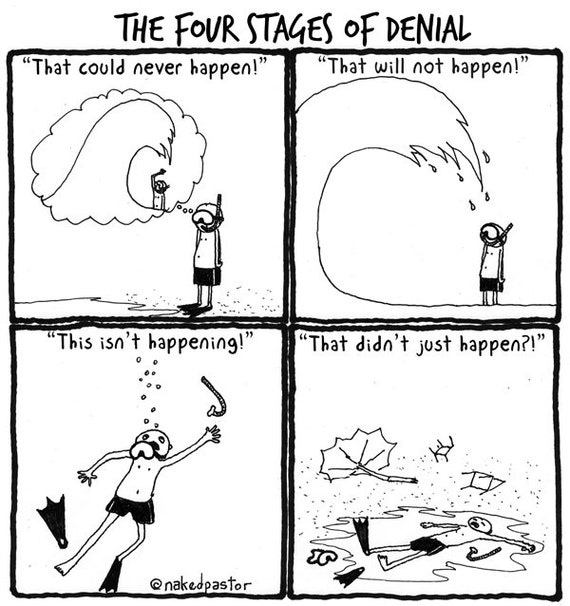
Cartoon – The Four Stages of Denial

The Four Stages of Denial CARTOON | Etsy

100,000 Lives Lost to COVID-19. What Did They Teach Us?

https://www.propublica.org/article/100000-lives-lost-to-covid-19-what-did-they-teach-us?utm_source=pardot&utm_medium=email&utm_campaign=dailynewsletter&utm_content=feature

May 27 data: Four new Utah COVID-19 deaths as US count tops ...

Each person who has died of COVID-19 was somebody’s everything. Even as we mourn for those we knew, cry for those we loved and consider those who have died uncounted, the full tragedy of the pandemic hinges on one question: How do we stop the next 100,000?

The United States has now recorded 100,000 deaths due to the coronavirus.

It’s a moment to collectively grieve and reflect.

Even as we mourn for those we knew, cry for those we loved and consider also those who have died uncounted, I hope that we can also resolve to learn more, test better, hold our leaders accountable and better protect our citizens so we do not have to reach another grim milestone.

Through public records requests and other reporting, ProPublica has found example after example of delays, mistakes and missed opportunities. The CDC took weeks to fix its faulty test. In Seattle, 33,000 fans attended a soccer match, even after the top local health official said he wanted to end mass gatherings. Houston went ahead with a livestock show and rodeo that typically draws 2.5 million people, until evidence of community spread shut it down after eight days. Nebraska kept a meatpacking plant open that health officials wanted to shut down, and cases from the plant subsequently skyrocketed. And in New York, the epicenter of the pandemic, political infighting between Gov. Andrew Cuomo and Mayor Bill de Blasio hampered communication and slowed decision making at a time when speed was critical to stop the virus’ exponential spread.

COVID-19 has also laid bare many long-standing inequities and failings in America’s health care system. It is devastating, but not surprising, to learn that many of those who have been most harmed by the virus are also Americans who have long suffered from historical social injustices that left them particularly susceptible to the disease.

This massive loss of life wasn’t inevitable. It wasn’t simply unfortunate and regrettable. Even without a vaccine or cure, better mitigation measures could have prevented infections from happening in the first place; more testing capacity could have allowed patients to be identified and treated earlier.

The COVID-19 pandemic is not over, far from it.

At this moment, the questions we need to ask are: How do we prevent the next 100,000 deaths from happening? How do we better protect our most vulnerable in the coming months? Even while we mourn, how can we take action, so we do not repeat this horror all over again?

Here’s what we’ve learned so far.

Though we’ve long known about infection control problems in nursing homes, COVID-19 got in and ran roughshod.

From the first weeks of the coronavirus outbreak in the United States, when the virus tore through the Life Care Center in Kirkland, Washington, nursing homes and long-term care facilities have emerged as one of the deadliest settings. As of May 21, there have been around 35,000 deaths of staff and residents in nursing homes and long-term care facilities, according to the nonprofit Kaiser Family Foundation.

Yet the facilities have continued to struggle with basic infection control. Federal inspectors have found homes with insufficient staff and a lack of personal protective equipment. Others have failed to maintain social distancing among residents, according to inspection reports ProPublica reviewed. Desperate family members have had to become detectives and activists, one even going as far as staging a midnight rescue of her loved one as the virus spread through a Queens, New York, assisted living facility.

What now? The risk to the elderly will not decrease as time goes by — more than any other population, they will need the highest levels of protection until the pandemic is over. The CEO of the industry’s trade group told my colleague Charles Ornstein: “Just like hospitals, we have called for help. In our case, nobody has listened.” More can be done to protect our nursing home and long term care population. This means regular testing of both staff and residents, adequate protective gear and a realistic way to isolate residents who test positive.

Racial disparities in health care are pervasive in medicine, as they have been in COVID-19 deaths.

African Americans have contracted and died of the coronavirus at higher rates across the country. This is due to myriad factors, including more limited access to medical care as well as environmental, economic and political factors that put them at higher risk of chronic conditions. When ProPublica examined the first 100 recorded victims of the coronavirus in Chicago, we found that 70 were black. African Americans make up 30% of the city’s population.

What now? States should make sure that safety-net hospitals, which serve a large portion of low-income and uninsured patients regardless of their ability to pay, and hospitals in neighborhoods that serve predominantly black communities, are well-supplied and sufficiently staffed during the crisis. More can also be done to encourage African American patients to not delay seeking care, even when they have “innocent symptoms” like a cough or low-grade fever, especially when they suffer other health conditions like diabetes.

Racial disparities go beyond medicine, to other aspects of the pandemic. Data shows that black people are already being disproportionately arrested for social distancing violations, a measure that can undercut public health efforts and further raise the risk of infection, especially when enforcement includes time in a crowded jail.

Essential workers had little choice but to work during COVID-19, but adequate safeguards weren’t put in place to protect them.

We’ve known from the beginning there are some measures that help protect us from the virus, such as physical distancing. Yet millions of Americans haven’t been able to heed that advice, and have had no choice but to risk their health daily as they’ve gone to work shoulder-to-shoulder in meat-packing plants, rung up groceries while being forbidden to wear gloves, or delivered the mail. Those who are undocumented live with the additional fear of being caught by immigration authorities if they go to a hospital for testing or treatment.

What now? Research has shown that there’s a much higher risk of transmission in enclosed spaces than outdoors, so providing good ventilation, adequate physical distancing, and protective gear as appropriate for workers in indoor spaces is critical for safety. We also now know that patients are likely most infectious right before or at the time when symptoms start appearing, so if workplaces are generous about their sick leave policies, workers can err on the side of caution if they do feel unwell, and not have to choose between their livelihoods and their health. It’s also important to have adequate testing capacity, so infections can be caught before they turn into a large outbreak.

Frontline health care workers were not given adequate PPE and were sometimes fired for speaking up about it.

While health workers have not, thankfully, been dying at conspicuously higher rates, they continue to be susceptible to the virus due to their work. The national scramble for ventilators and personal protective equipment has exposed the just-in-time nature of hospitals’ inventories: Nurses across the country have had to work with expired N95 masks, or no masks at all. Health workers have been suspended, or put on unpaid leave, because they didn’t see eye to eye with their administrators on the amount of protective gear they needed to keep themselves safe while caring for patients.

First responders — EMTs, firefighters and paramedics — are often forgotten when it comes to funding, even though they are the first point of contact with sick patients. The lack of a coherent system nationwide meant that some first responders felt prepared, while others were begging for masks at local hospitals.

What now? As states reopen, it will be important to closely track hospital capacity, and if cases rise and threaten their medical systems’ ability to care for patients, governments will need to be ready to pause or even dial back reopening measures. It should go without saying that adequate protective gear is a must. I also hope that hospital administrators are thinking about mental health care for their staffs. Doctors and nurses have told us of the immense strain of caring for patients whom they don’t know how to save, while also worrying about getting sick themselves, or carrying the virus home to their loved ones. Even “heroes” need supplies and support.

What we still have to learn:

There continue to be questions on which data is lacking, such as the effects of the coronavirus on pregnant women. Without evidence-based research, pregnant women have been left to make decisions on their own, sometimes trying to limit their exposure against their employer’s wishes.

Similarly, there’s a paucity of data on children’s risk level and their role in transmission. While we can confidently say that it’s rare for children to get very ill if they do get infected, there’s not as much information on whether children are as infectious as adults. Answering that question would not just help parents make decisions (Can I let my kid go to day care when we live with Grandma?) but also help officials make evidence-based decisions on how and when to reopen schools.

There’s some research I don’t want to rush. Experts say the bar for evidence should be extremely high when it comes to a vaccine’s safety and benefit. It makes sense that we might be willing to use a therapeutic with less evidence on critically ill patients, knowing that without any intervention, they would soon die. A vaccine, however, is intended to be given to vast numbers of healthy people. So yes, we have to move urgently, but we must still take the time to gather robust data.

Our nation’s leaders have many choices to make in the coming weeks and months. I hope they will heed the advice of scientists, doctors and public health officials, and prioritize the protection of everyone from essential workers to people in prisons and homeless shelters who does not have the privilege of staying home for the duration of the pandemic.

The coronavirus is a wily adversary. We may ultimately defeat it with a vaccine or effective therapeutics. But what we’ve learned from the first 100,000 deaths is that we can save lives with the oldest mitigation tactics in the public health arsenal — and that being slow to act comes with a terrible cost.

I refuse to succumb to fatalism, to just accepting the ever higher death toll as inevitable. I want us to make it harder for this virus to take each precious life from us. And I believe we can.


How the CFO enables the board’s success—during COVID-19 and beyond

https://www.mckinsey.com/business-functions/strategy-and-corporate-finance/our-insights/how-the-cfo-enables-the-boards-success-during-covid-19-and-beyond?cid=other-eml-alt-mip-mck&hlkid=85d408119efe4175b478a0599b8302da&hctky=9502524&hdpid=ed9aa1f2-3c88-4b89-9cd2-61a12e2d602c

How the CFO can guide the board through crises and transformations ...

Two board experts explain how in times of crisis or transformation, the CFO can serve as a rock in the boardroom, a critical arbiter of difficult decisions, and a scout for the future.

Critical business decisions cannot be made unless management teams and boards of directors are on the same page. Transparency, fair and balanced dialogue, and well-structured processes for gaining agreement on strategic plans—these dynamics must be present in every boardroom, in good times and, especially, in bad.

The CFO plays an important role in ensuring that they are.

In crises, such as the global spread of the novel coronavirus, the CFO is best-positioned to provide the most relevant and up-to-date facts and figures, which can help boards find clarity amid chaos. In corporate transformations, the pragmatic, data-focused finance leader is the only one who can prompt the board to actively consider all the short- and long-term consequences of proposed strategy decisions.

Barbara Kux and Rick Haythornthwaite, longtime board directors for multiple global organizations, shared these and other board-related insights with McKinsey senior partner Vivian Hunt in a conversation that spanned two occasions: a gathering of CFOs in London some months ago and, more recently, follow-up phone conversations about the COVID-19 pandemic.

These interviews, which have been condensed and edited here, explained the importance of finance leaders in serving both as scouts for the future and as trusted translators of critical market information.

Shaping the COVID-19 crisis response and recovery

Rick Haythornthwaite: The board’s most important functions in the wake of COVID-19 are threefold: one is making sure that employees are being treated decently and that the company is taking all the precautions it can. Second is obtaining an objective, insightful understanding of the business and trends. And third is anticipating and preparing for recovery. The key in all three areas is having high-quality data to inform the board’s decisions and to share with employees. Of course, getting data from a market in freefall is never easy. This is where you need CFOs to be absolutely on top of their game.

The board needs to know what is really happening to the top line, what short-term measures can be taken to preserve and boost cash, and all the actions you have to take during the early stage of such events to buy time. But the board must also have a handle on long-term issues.1 And now that we’re months into this crisis, people are starting to draw lessons from previous ones and bringing some historical data into board discussions. The CFO can use these data to construct hard-edge scenarios that prompt good conversations in the boardroom.

Barbara Kux: An important difference in the role of CFOs today, as compared with their role during the financial crisis in 2008, is that they need to simultaneously manage both short-term responsiveness and future recovery. The CFO must keep the ship floating through rough waters—safeguarding employees’ health, securing liquidity, monitoring cash flow and payment terms, ensuring the functioning of the supply chain, assessing effects on P&L and the balance sheet, reviewing customers’ and suppliers’ situations, and initiating cost-reduction programs. That is all very challenging indeed. But then the CFO must also serve as the ship’s scout—watching for key trends that are emerging or that have accelerated as a result of COVID-19, such as digitization and changes in consumer behavior.

The balance between opportunity and risk is being altered substantially for most companies. The CEO could be tempted to profit from immediate demands—“let’s make ventilators, let’s make disinfectants.” The CFO’s job, by contrast, is to point out the differences between quick-to-market options and long-term post-COVID-19 options. These post-COVID-19 options can be an important factor in motivating and engaging employees during these challenging times.

It is also important for the CFO to present the board with reports and pre-reads that paint the entire picture in an objective way, including potential scenarios for the future. That is the only way boards and senior management can take thoughtful and well-founded decisions—first for the recovery and then for a sustainable future for all stakeholders. The word “crisis” has two meanings, one being “danger” and the other being “chance.” Today’s CFO must consider both.

The word ‘crisis’ has two meanings, one being ‘danger’ and the other being ‘chance.’ Today’s CFO must consider both.

Shaping the general transformation agenda

Barbara Kux: Outside of crisis periods, studies by INSEAD and McKinsey show, boards spend more than two-thirds of their time on “housekeeping”—financial reporting, compliance, environment, health and safety issues, regulatory issues, and the like. Only about 20 percent is spent on strategy. It is very important for boards to get out of this “compliance cage,” as I call it, and really focus on sustainable value creation. I’m thinking of the board of a leading oil and gas company that did just that. It recognized the importance of sustainable business development early on. The company gained first-mover advantages by diversifying toward a green business, including investing in solar and battery technologies.

At the end of the day, the board is ultimately responsible for the strategy, and the CFO is best-positioned to support strategy discussions. The finance leader can serve as a neutral party among the members of the C-suite, synthesizing their transformation ideas, supplementing them with comprehensive quantitative and qualitative data, and then working with the CEO to bring it all back to the board. This is even more important today to respond to COVID-19–related challenges early on.

Rick Haythornthwaite: The biggest challenge for any CEO, CFO, or other senior leader is to institutionalize new ideas without sucking the life out of them. Each C-suite leader plays a different but important role in this regard. The CFO needs to give transformation initiatives structure and rigor, while the CEO is probably better suited to take on the motivational aspects—for instance, the context for change and definitions of success. The whole team creates the strategy map—the markets and products affected, changes in pricing, the execution plan. But the CFO needs to ensure that the financial and operational underpinnings are there. Even if they are not visible to every single part of the organization, the board can see them through the CFO.

‘Scouting for the future’

Barbara Kux: To serve as an effective scout, the CFO should establish nonfinancial KPIs, like net promoter and employee-engagement scores, that are critical for the future health and performance of the organization. CFOs should review the strategy process to see that risks and opportunities are being well-assessed. And they can raise the political antennae of the board—accessing global think tanks, for instance, to understand what’s going on in Washington, China, and other important regions or in the medical community. The CEO often is not the most long-term–focused person in the organization; we know this because our financial markets are still very much short-term oriented. The board has to be long-term oriented. The CFO, therefore, must maintain a good balance of both. That might mean introducing a lean-transformation program with a focus on short-term results while, at the same time, contributing to the definition and implementation of a sustainable strategy for the company to emerge strong from the COVID-19 pandemic.

Rick Haythornthwaite: Boards need CEOs who can handle multiple truths, who can be expansive in thinking, and who can live comfortably in the future and bring the company along for the ride. The CFO also needs to be a protagonist in the boardroom, but from a different base: you can’t move to the future until you are anchored in the present. The CFO provides that anchor. Having a balance between future and present, between CEO and CFO, is important. The board wants to feel that there is strategic momentum—but also that the company is not just heading off on a journey of delusion.

Daring to dissent

Barbara Kux: It is important for the CEO and CFO to get on well, but their relationship should not be too close. It is better for the CFO to be objective, even if that sometimes leads to constructive conflicts. At times the CEO defaults to presenting only the positive in the boardroom, which makes it harder for the CFO to play back a more objective story. But that is very much the role of CFOs. They need to raise those early warnings. As a board director, I feel better if the CFO sometimes states, “by the way, we are losing market share here.” It takes a great deal of self-assurance for the CFO to come into the boardroom and say something like that. An independent-minded CFO will always be transparent with the board. A good CEO will always strive to establish an open relationship with the CFO. It is important for the board to motivate this constructive behavior from both executives so it can truly understand what is going well or not so well.

An independent-minded CFO will always be transparent with the board. A good CEO will always strive to establish an open relationship with the CFO.

Leading constructive dialogues

Rick Haythornthwaite: The senior-management team should not be delivering full solutions to the board at the outset; there should be a period of questions and discussion. The boardroom should be the place for CFOs and boards to engage in the cut and thrust of examination and exploration, with thoughtful planning and framing of dialogues to ensure that decision making is of the highest possible quality.

I’ll give you an example. CFOs used to be able to put traditional capital cases in front of the board about things like investments in plant and equipment, and there was typically a well-grooved dialogue. The kinds of actions they are talking about have changed, though. Think about companies’ investments in platform technologies, which can involve large sums being paid for targets with very low EBITDA—the idea being that value will ultimately come from the combination of entities rather than from a singular target.

Boards may be unfamiliar with such investment cases, so rather than jumping into quick, instinctive type-one decisions forced by the imposition of inappropriate and probably unnecessary time constraints, they will need an education. The board must take time to understand what, in practice, the acquisition of a platform would look like—how it might be scaled under new ownership, how that scaling would affect the bottom line, any risks involved, and so on. This is fundamentally a type-two decision, requiring time and deliberation. The CFO has an important role to play in making sure that this process happens, that it plays out over several board sessions rather than being squeezed into one meeting, and that conversations are grounded in hard numbers.

In the wake of COVID-19, of course, these dialogues may need to happen virtually; the quality of the conversation will still be good, as people are becoming accustomed to virtual meetings.2 They are fine for certain pro-forma tasks, where the issues are well-understood and processes are well-established. But when you’re trying to bring in new voices and new ideas, that’s when you need to be together in the same room.

Growing into the role of change agent

Barbara Kux: The role of the CFO is so much more expansive than it was even five years ago, including additional responsibility for cyber and digital transformations and for IT initiatives. To get your arms around the role and grow in it, take a step back and look at the company objectively. “What other roles could I play in the company, and how does that overlap with what I am doing now?” “Which initiatives would make the most impact in the company, and how could I realize quick wins in those areas?” Maybe it’s a focus on digital or compliance or export control or political intelligence. The CFO’s professional response to COVID-19 crisis management could be a springboard for future development. Whatever it is, I would identify it and just start. Take any kind of training you can get; read as many business publications as you can. Train yourself in how to deal with activist investors. Step by step, your hat will become bigger.

Rick Haythornthwaite: Whether you are talking about COVID-19 or digital disruption or any other impact on the business, please remember that the board still wants to sleep at night, and when the details are lost, the board will be much less forgiving of CFOs than of CEOs. Don’t forget that part of it. Particularly in this challenging economic environment, it is very important. Chairs and boards? We like to sleep soundly at night.


Congress Should Redirect The Medicare Shared Savings Program To Address The COVID-19 Emergency

https://www.healthaffairs.org/do/10.1377/hblog20200518.386084/full/?utm_source=Newsletter&utm_medium=email&utm_content=COVID-19%3A+Redirecting+The+Medicare+Shared+Savings+Program%2C+The+Hidden+Homeless%2C+Senior+Housing+Communities+Need+Support%3B+Reimagining+Involuntary+Commitment%3B+Book+Reviews&utm_campaign=HAT+5-22-20

Congress Should Redirect The Medicare Shared Savings Program To ...

The COVID-19 virus has unleashed a rolling series of crises among fee-for-service providers. First, and most directly affected, providers in areas with major outbreaks have suffered extreme personal hardship and risked infection themselves with inadequate equipment and protective gear when treating patients. Second, everywhere in the country, physician practices and hospitals have seen revenue drops from 20 percent to 60 percent due to the need to follow social distancing practices to minimize infection. This revenue collapse has perversely resulted in staffing reductions that are likely to accelerate unless Congress provides further assistance to the industry. Third, and only partially observed so far, there is a pending “second wave” of health crises discernible in the “missing heart attacks” and reports from nephrologists and oncologists of patients making difficult decisions about whether to continue necessary care. In some cases, emergency care has shifted out of the hospital, and some triage is conducted on the street to avoid risk of COVID-19 infection.

The COVID-19 public health emergency has generated a massive set of emergency changes in Medicare payment policy, loosening regulation of acute hospital care, dramatically expanding use cases for telehealth and other types of virtual care, and, through the Coronavirus Aid, Relief, and Economic Security (CARES) Act and subsequent relief legislation, releasing a $175 billion pool of money that attempts to prop up Medicare providers dependent on in-person, fee-for-service revenue. Now, with that first batch of changes handled, a debate has started among proponents of value-based purchasing as to the appropriate direction for the Medicare Shared Savings Program (MSSP) and other value-based initiatives during the emergency.

In this context, a number of stakeholders have begun to call on the Centers for Medicare and Medicaid Services (CMS) to modify existing MSSP parameters to maintain the program through the emergency. CMS has responded by eliminating downside risk for accountable care organizations (ACOs) for the duration of the public health emergency and taking COVID-19 costs out of ACO financial calculations. These are welcome changes but don’t completely address the serious problems ACO participants face. We urge a different focus—the federal government should charge these existing networks with addressing the “second wave” of health care needs going largely unaddressed, as patients with serious, non-COVID-19-related chronic conditions see procedures and visits postponed indefinitely. Commensurately, Congress should suspend all financial impacts from the MSSP for the duration of the public health emergency—and consider excluding any data from 2020 for performance years 2021 and beyond. We describe key elements of these changes in this post.

A Growing Call For MSSP Modifications

The Medicare Payment Advisory Commission (MedPAC) issued a comment letter urging CMS to allow ACO providers to focus on COVID-19, rather than shared savings. MedPAC, acknowledging the dramatic shifts in care delivery necessitated by the COVID-19 crisis, made several recommendations about treatment of savings and losses in the MSSP for 2020. MedPAC asked CMS not to use 2020 data for purposes of ACO quality, bonuses, and penalties. MedPAC would also have CMS disregard 2020 claims when assigning beneficiaries to ACOs, since a shift to telehealth, with physicians and patients potentially located far apart, could distort the ACO assignment with unintended effects. Finally, MedPAC recommended extending all ACO agreement periods, keeping everyone in the current risk arrangement for one year, a recommendation CMS adopted.

William Bleser and colleagues recently suggested immediate and short-term actions that could help preserve ACOs through this crisis. Their blog post identifies the decision point, coming on June 30, 2020, for ACOs to stay in the program and be accountable for losses in 2020. The impact of the emergency on ACOs will still be unclear at that time, and the authors recommend that CMS allow ACOs to completely opt out of downside risk for 2020 while accepting a capped amount of potential shared savings. Eliminating the downside and offering a limited upside might just convince ACOs not to leave the program entirely. CMS has taken these concerns seriously and removed all COVID-19–related costs from ACO financial calculations and eliminated shared losses during the public health emergency.  

Another recent blog post by Travis Broome and Farzad Mostashari makes the case that the population health focus and financial incentives for ACOs position them uniquely, not just to survive, but to lead the way for primary care during the COVID-19 crisis. ACO participation may protect these practices because of the program’s unique financial metrics. Unlike Medicare managed care, MSSP ACOs are measured against a benchmark that trends forward at actual regional and national spending growth rates. During an unusual spending year, as 2020 is sure to be, those factors are included in the trend, and the ACO is not heavily penalized for the spending pattern. Broome and Mostashari recommend that CMS focus on shielding primary care practices from certain quality reporting and information collection requirements to pave the way for high-quality care and solid financial performance.

A More Focused Re-Envisioning Of The MSSP

Foundational to the MSSP is an agreement between groups of providers and the federal government to align their financial relationship with patient and taxpayer goals: to improve the quality of care for their patients and reduce the growth of health care spending. Both of those elements must take a back seat during a massive public health emergency.

Reducing overall health care costs is not an appropriate consideration for providers today. Even though national and regional growth factors will track actual changes in expenditures and may allow for identification of more efficient providers, this objective is second order to directly responding to the threat of the emergency. Given the overwhelming need to respond to the COVID-19 crisis in their communities, the ability of any health system or ACO to influence costs this year is likely to be dwarfed by factors outside its control. This type of highly infectious, novel pandemic is a risk that can only be properly assumed by the federal government. Neither physician practices, nor hospitals, nor any other ACO participants can realistically budget and prepare for such an event on their own. Congress and CMS should adopt MedPAC’s suggestion to suspend charging penalties or paying bonuses for all of 2020, no matter how long the public health emergency is in effect.

Similarly, while the prevention and care management metrics embedded in the MSSP remain appropriate indicators directionally, difficulties in seeing patients for well visits and new standards for documentation during telehealth visits will make any precise differentiation of quality in primary care practices near impossible. MedPAC is correct that using 2020 data for performance evaluation would undercut the legitimacy of the program, and the commissioners are right to support the call to suspend the use of such data in establishing bonuses, penalties, and benchmarks in 2020 and beyond.

However, many practices have made significant investments in population health technology, staff, and training that remain as valuable as ever during this emergency. And the public has an interest in maintaining those staff and those skills, as the basis for a better health system in the future. All told, like much of the rest of the economy, putting the MSSP and other ACO arrangements “on ice” to allow providers to focus on near-term priorities would best serve the public interest. That includes delaying or freezing requirements to step up to higher-risk tracks in the Pathways to Success program, as well as delaying or canceling quality submission requirements. These delays, however, should be paired with public funding to reflect the work that ACOs have already undertaken, as well as work that they can do to help manage through the crisis, discussed further below.

Taking steps to preserve ACOs through 2020 is a good start, but we believe Congress and CMS should think bigger and empower ACOs to focus directly on the current crisis for the next two years.

Adapting ACOs To Serve The Current Emergency

ACOs are a valuable asset for the Medicare program, reflecting nearly 10 years of work across hundreds of thousands of providers serving tens of millions of beneficiaries. Disbanding them by indifference would be a mistake. The current collapse in fee-for-service volume is a problem of fee-for-service medicine primarily, and ACOs represent an infrastructure for a further step away from volume-focused medicine once the danger from this emergency passes.

Suspending financial considerations and consequences for the duration of the emergency is insufficient. Without the responsibility for managing risk and sharing in any savings, the ACO contract with CMS loses its organizing force, and the program becomes “a solution in search of a problem.”

We see two opportunities for ACOs to redirect their energies productively this year and next. First, ACOs should be directed to follow best practices in testing and public health data collection, in collaboration with local and state officials. Managing the spread of the virus in their communities is already a daily task for these providers; additional surveillance and data collection could be adopted and updated continuously as recommendations evolve. By providing resources to ACOs to support this work directly, CMS would help ensure providers can keep up.

Second, and perhaps more important in most of the country to date, ACOs should be charged with meeting explicit virtual care management requirements to identify, contact, and serve patients in their panel with multiple high-risk chronic diseases. These patients are underserved today, and efforts to address their needs are piecemeal. In place of the current financial incentives, we propose that CMS require ACOs to perform a variety of care management and COVID-19 surveillance functions in exchange for a care management fee. Congress could enable and CMS could specify that ACOs place 10 percent to 15 percent of their patients under virtual care management programs, for example, and require that ACOs maintain regular contact with these patients as well as others at higher risk. The 10 percent to 10 percent figure is a fairly low bar, considering that more than 60 percent of Medicare patients have multiple chronic conditions, according to CMS. Additionally, COVID-19 patients could be offered principal care management, a new service for Medicare beneficiaries with one serious health condition, for a month or more after their diagnosis. New flexibilities for remote patient monitoring and virtual care make this far easier to implement than it had been before the pandemic.

CMS could quickly adapt existing financial models to support this work, drawing from analysis and design of the Primary Care FirstComprehensive Primary Care Plus, and other care management programs. ACOs are by design collaborative and can rapidly learn and share best practices for establishing virtual care management services. Behavioral health services and outreach, as well as other valuable preventive care, could also be directly funded through this structure. As an alternative to the fee for care management and surveillance, Congress could allow ACOs to receive their 2019 shared savings amounts again for 2020, for ACOs continuously operating in each year.

Looking Ahead

The steps we have outlined here will accomplish several worthwhile ends in this crisis:

  • directly funding primary care capacity at a time when volumes are nosediving;
  • keeping the nearly 500,000 physician and other clinicians already in ACOs working together, maintaining the infrastructure that has already been built; and
  • providing upfront resources to manage patients whose conditions could deteriorate in the coming months, potentially catching them before they do.

These modifications should be executed first by Congress, not CMS, to ensure that such changes to the program do not become commonplace. This would invigorate the ACO programs by focusing them on the unique set of problems of this crisis, unencumbered by requirements better suited to peacetime than wartime. And when the war is over, these organizations can resume their longer-term mission to manage total costs and quality with all of the new tools and capabilities they have acquired during the crisis.