700+ Chicago nurses reach labor deal after 2-week strike

https://www.beckershospitalreview.com/hr/700-chicago-nurses-reach-labor-deal-after-2-week-strike.html?utm_medium=email

How Have Health Workers Won Improvements to Patient Care? Strikes.

More than 700 nurses who walked off the job for two weeks approved a new contract July 20 with Amita Health Saint Joseph Medical Center Joliet (Ill.), hospital and union officials confirmed to Becker’s.

The nurses are represented by the Illinois Nurses Association, and both sides had been negotiating a new contract since early spring. Nurses had worked without a contract since May 9 and went on strike July 4.

Pay and benefits have been key sticking points at the bargaining table. Additionally, the Illinois Nurses Association had claimed the hospital was not adequately addressing staffing issues.

The new contract includes agreements by the hospital to improve the staffing guidelines on certain units before Dec. 31 and to meet and confer with the union by that date to improve staffing throughout the facility, the union said in a news release. Health insurance premium contributions were also capped at 25 percent for full-time nurses and 35 percent for part-time nurses, the union said.

“While a majority of nurses voted for this contract, there are still many nurses who want to see more progress on safe staffing,” said Pat Meade, RN, one of the lead union negotiators. “We will continue the fight for safe staffing through enforcement of our contract and in Springfield.”

In an emailed statement to Becker’s, hospital spokesperson Tim Nelson said Amita Health is pleased with the agreement and called it “fair and just for all involved.”

The hospital hired temporary nurses from an outside agency to fill in during the strike.

Mr. Nelson said the hospital’s nurses will return to work July 22 for their regularly scheduled shifts.


U.S. Coronavirus Pandemic Status: It’s about to get a lot worse

https://www.axios.com/coronavirus-pain-getting-worse-cd329f4c-9962-4f40-b401-7a7ac1a393cf.html

The pain of the coronavirus is about to get a lot worse - Axios

For months now, American workers, families and small businesses have been saying they can’t keep up their socially distanced lives for much longer. We’ve now arrived at “much longer” — and the pandemic isn’t going away anytime soon.

The big picture: The relief policies and stopgap measures that we cobbled together to get us through the toughest weeks worked for a while, but they’re starting to crumble just as cases are spiking in the majority of states.

Next week, the extra $600 per week in expanded unemployment benefits will expire. And there’s no indication that Congress has reached a consensus on extending this assistance or providing anything in its place.

  • But nearly half of the U.S. population is still jobless, and millions will remain jobless for the foreseeable future. There are 14 million more unemployed people than there are jobs, per the Economic Policy Institute.
  • Nearly a third of Americans missed a housing payment in July — and that was with the additional $600. Plus, most Americans have already spent the stimulus checks they received at the beginning of the pandemic.
  • “We should be very concerned about what’s going to happen in August and beyond” — starting with a spike in evictions, Mathieu Despard, who leads the Social Policy Institute at the Washington University in St. Louis, tells Axios.

Expect more furloughs and layoffs as more small businesses are pushed off the pandemic cliff.

  • By economists’ estimates, more than 100,000 small businesses have permanently closed since the pandemic began.
  • For those that are hanging on, loans from the Paycheck Protection Program (PPP) have not been enough, and the back and forth between re-opening and then closing again as states deal with new case waves has been devastating. In fact, rates of closure have started increasing, the New York Times reports, citing Yelp data.
  • The big firms aren’t immune either. Just last week, behemoths like United Airlines, Wells Fargo, Walgreens and Levi’s either cut jobs or told workers their jobs were at risk, Axios’ Dion Rabouin writes.

And the question of whether schools will reopen looms.

  • Since schools sent kids home in March, and most summer camps didn’t open their doors for the summer, working parents have been dealing with a child care crisis — attempting to do their jobs, care for their kids and homeschool all at once — and hoping that the stress will be temporary.
  • The situation is more dire for low-income families with kids who rely on school lunches or for single parents who are juggling work and parenting without any help.
  • Now the public heath crisis hasn’t abated, and school districts are running out of time to figure out what the fall will look like. Some, starting with Los Angeles, have already decided to go online.

The bottom line: “It’s the uncertainty that is anxiety-inducing,” says Despard. “If you give people a time horizon and say, ‘Look you have to get through these next 8 weeks of extreme shutdown,’ they’ll do it. Now it’s like, ‘How much longer?'”


Pandemic spurs national union activity among hospital workers

https://www.healthcaredive.com/news/coronavirus-spurs-healthcare-union-activity/581397/

Pandemic spurs national union activity among hospital workers ...

When COVID-19 cases swelled in New York and other northern states this spring, Erik Andrews, a rapid response nurse at Riverside Community Hospital in southern California, thought his hospital should have enough time to prepare for the worst.

Instead, he said his hospital faced staffing cuts and a lack of adequate personal protective equipment that led around 600 of its nurses to strike for 10 days starting in late June, just before negotiating a new contract with the hospital and its owner, Nashville-based HCA Healthcare.

“To feel like you were just put out there on the front lines with as minimal support necessary was incredibly disheartening,” Andrews said. Two employees at RCH have died from COVID-19, according to SEIU Local 121RN, the union representing them.

A spokesperson for HCA told Healthcare Dive the “strike has very little to do with the best interest of their members and everything to do with contract negotiations.”

Across the country, the pandemic is exacerbating labor tensions with nurses and other healthcare workers, leading to a string of disputes around what health systems are doing to keep front-line staff safe. The workers’ main concerns are adequate staffing and PPE. Ongoing or upcoming contract negotiations could boost their leverage.

But many of the systems that employ these workers are themselves stressed in a number of ways, above all financially, after months of delayed elective procedures and depleted volumes. Many have instituted furloughs and layoffs or other workforce reduction measures.

Striking a balance between doing union action at hospitals and continuing care for patients could be an ongoing challenge, Patricia Campos-Medina, co-director of New York State AFL-CIO/Cornell Union Leadership Institute.

“The nurses association has been very active since the beginning of the crisis, demanding PPE and doing internal activities in their hospitals demanding proper procedures,” Campos-Medina said. “They are front-line workers, so they have to be thoughtful in how they continue to provide care but also protect themselves and their patients.”

At Prime Healthcare’s Encino Hospital Medical Center, just outside Los Angeles, medical staff voted to unionize July 5, a week after the hospital laid off about half of its staff, including its entire clinical lab team, according to SEIU Local 121RN, which now represents those workers.

One of the first things the newly formed union will fight is “the unjust layoffs of their colleagues,” it said in a statement.

A Prime Healthcare spokesperson told Healthcare Dive 25 positions were cut. “These Encino positions were not part of front-line care and involved departments such as HR, food services, and lab services,” the system said.

Hospital service workers elsewhere who already have bargaining rights are also bringing attention to what they deem as staffing and safety issues.

In Chicago, workers at Loretto Hospital voted to authorize a strike Thursday. Those workers include patient care technicians, emergency room technicians, mental health staff and dietary and housekeeping staff, according to SEIU Healthcare Illinois, the union that represents them. They’ve been bargaining with hospital management for a new contract since December and plan to go on strike July 20.

Loretto Hospital is a safety-net facility, catering primarily to “Black and Brown West Side communities plagued with disproportionate numbers of COVID illnesses and deaths in recent months,” the union said.

The “Strike For Black Lives” is in response to “management’s failure to bargain in good faith on critical issues impacting the safety and well-being of both workers and patients — including poverty level wages and short staffing,” according to the union.

A Loretto spokesperson told Healthcare Dive the system is hopeful that continuing negotiations will bring an agreement, though it’s “planning as if a strike is eminent and considering the best options to continue to provide healthcare services to our community.”

Meanwhile in Joliet, Illinois, more than 700 nurses at Amita St. Joseph Medical Center went on strike July 4.

The Illinois Nurses Association which represents Amita nurses, cited ongoing concerns about staff and patient safety during the pandemic, namely adequate PPE, nurse-to-patient ratios and sick pay, they want addressed in the next contract. They are currently bargaining for a new one, and said negotiations stalled. The duration of the strike is still unclear.

However, a hospital spokesperson told Healthcare Dive, “Negotiations have been ongoing with proposals and counter proposals exchanged.”

The hospital’s most recent proposal “was not accepted, but negotiations will continue,” the system said.

INA is also upset with Amita’s recruitment of out-of-state nurses to replace striking ones during the COVID-19 pandemic.

It sent a letter to the Illinois Department of Financial and Professional Regulation, asserting the hospital used “emergency permits that are intended only for responding to the pandemic for purposes of aiding the hospital in a labor dispute.”


In the Pandemic Era, Is It Safe to Go to Work?

In the Pandemic Era, Is It Safe to Go to Work?

Waiter serves meal to customers wearing PPE

A waiter wearing a face shield and mask to protect himself and others from the coronavirus serves diners at a restaurant in Santa Monica, California, on June 21, 2020. Photo: David Livingston / Getty Images

Stories that caught our attention.

It’s a scary thing to go back and know you have low immunity.

—Patti Hanks, Virginia furniture store worker

Twelve million adults who are not working live with those higher risks in households with at least one full-time worker, thereby exposing them indirectly to the infection risks of housemates doing customer-facing or other service jobs during a pandemic.

The ability to earn income from home is a privilege, and the “impossible choice between lives and livelihoods falls mainly to lower-wage workers in service industries,” KFF President and CEO Drew Altman wrote in Axios. Here’s what it’s like to work in four jobs that require face-to-face interaction during the worsening COVID-19 crisis.

Patti Hanks, Virginia

Soon after finishing chemotherapy for ovarian cancer, Patti Hanks had to go back to her job processing transactions at a furniture and appliance store in Virginia. She was nervous about returning to work during the pandemic, but she couldn’t afford to lose employer-sponsored health insurance.

“It’s a scary thing to go back and know you have low immunity,” Hanks, 62, told Sarah Kliff in the New York Times. “But when it all boils down to it, I don’t think COVID-19 is going away any time soon. I don’t think you can hide from it.”

Nearly 60% of Americans under 65 have employer health coverage, according to the Peterson-KFF Health System Tracker. For people like Hanks, that makes work and health interdependent. Even without her furniture store job, she likely makes too much income from other sources (rental properties and raising cattle) to qualify for Medicaid.

So Hanks continues reporting to work. She wears a mask in the store, maintains distance from customers, and sanitizes shared objects like chairs and pens frequently. Still, there’s only so much she can control. The store has been busy since Virginia began lifting stay-at-home restrictions in May, and Hanks has assisted at least one customer who appeared to be unwell.

“You can’t crawl into a hole,” she told Kliff. “I think we’ve done everything we can to protect ourselves. . . . So I’ll just keep going.”

David Smith, Michigan

In normal times, David Smith, co-owner of the European-style eatery Café Muse in the Detroit suburb of Royal Oak, has one of his younger employees seat customers for dine-in service. But times are certainly not normal — nor are interactions with customers.

“I’ve been trying to do most of the seating, because it’s just really difficult when you have like an 18- or 19-year-old [employee] at the front having to enforce mask wearing,” he told Brenna Houck for her article in Eater Detroit.

The restaurant has been open for dine-in service for a only few weeks, and Smith has already had to call the police on an irate customer who refused to wear a mask when picking up a to-go order. Smith’s business partner, Greg Reyner, stepped in to ask the customer to wait for his food outside, and when the man refused, Reyner asked him to leave. The customer later called the restaurant and allegedly threatened the staff, leading Smith and Reyner to call the police.

The state of Michigan allowed restaurants and bars to reopen for indoor and outdoor dine-in service on June 8. Governor Gretchen Whitmer mandated that each customer must “wear a face covering over his or her nose and mouth . . . when in any enclosed public space, unless the individual is unable medically to tolerate a face covering.” Additionally, businesses are permitted to deny entry or access to anyone who refuses to comply with the mask rule.

That doesn’t mean it’s easy or pleasant to enforce the rule for the safety of staff and customers. “It is very upsetting,” Smith told Houck. “You’re shaking after having these conversations with people, because you just don’t know. What if someone got killed because they told [a customer] to wear a mask? You worry about it all the time.”

Amanda, Missouri

Nursing homes and assisted living facilities are hot spots for COVID-19 cases. Amanda (who asked that her last name be withheld) is a receptionist at a nursing home in St. Louis, and the last few months have been extremely stressful as she and her colleagues work to keep the facility free of COVID-19.

“I can’t sleep nowadays because I dream about being the cause of people dying,” she told Vox’s Luke Winkie. “That’s a horrifying thought for me. I’ve written up my resignation several times. But I don’t have the heart to do it because they need me there.”

So far, the nursing home has not had any cases, and Amanda attributes this to the facility’s early adoption of safety precautions. In February, the administrators advised staff to use personal protective equipment at work, regularly disinfect surfaces, and shelter in place at home when they weren’t working. The facility stopped admitting visitors, and when families dropped off presents for Mother’s Day, staff put the presents on hold for 24 to 72 hours before giving them to the residents.

[My family and I] never even hugged one another when I went to the emergency department because I don’t want to infect them.

—Marcial Reyes, emergency room nurse

Amanda and her colleagues take precautions not only at work, but also at home. “I won’t let my kids see their friends,” she told Winkie. “A lot of people are letting their kids see other kids, but I nipped that in the bud right away. My colleagues have done the same.”

As states reopen, Amanda is increasingly worried about the health of senior citizens like the ones she cares for. “I believe that our government hasn’t done anything,” she said. “Why don’t we have rapid testing in our facility right now? They should be in every hospital, every nursing home, and they should continue to produce them until they’re in schools and courthouses.”

Marcial Reyes, California

Fourteen years ago, Marcial Reyes emigrated from the Philippines to the US on a work visa to become a nurse. He’s been a US citizen for eight years. He was working as an emergency room nurse in Fontana, California, when the COVID-19 crisis struck, Josie Huang reported in LAist.

Reyes knew he was at high risk of contracting the coronavirus. When he started experiencing shortness of breath, he quarantined himself on the first floor of his house, away from his wife Rowena, who is also a nurse, and their five-year-old son. But the symptoms kept getting worse, and eventually he drove himself to the hospital — to the same emergency room where he usually cares for patients.

His health deteriorated so rapidly over the next few days that his doctors put him in a medically induced coma and hooked him up to a ventilator for 10 days. “[My family and I] never even hugged one another when I went to the emergency department because I don’t want to infect them,” he told Huang.

In California, nearly one in five registered nurses is of Filipino descent, according to a 2016 survey (PDF) by the California Board of Registered Nursing. California hospitals have recruited heavily from the Philippines for more than a century. Filipino nurses have stepped up to work in underserved areas and work on the front lines of health crises like the AIDS epidemic and COVID-19.

“It’s not uncommon for many Filipino families to produce multiple health care workers,” Huang wrote. The Reyes family is just one such example. Rowena Reyes and their son both also tested positive for COVID-19, though they recovered without hospitalization.

Marcial Reyes’ recovery will be much slower and more complicated. He needs to regain strength in his legs, and he still struggles with writing, Huang reported. Still, he is looking forward to the day when he can return to the emergency room as a nurse.


America’s workers still aren’t protected from the coronavirus

https://www.axios.com/americas-workers-vulnerable-coronavirus-944e3451-4458-4f1d-83d2-c86a1beb1117.html

America's workers still aren't protected from the coronavirus - Axios

Essential workers have borne the brunt of the coronavirus pandemic for months, but the U.S. is still doing relatively little to protect them.

Why it matters: With no end to the pandemic in sight, America’s frontline workers still must choose between risking their health and losing their source of income.

Driving the news: The Trump administration said this week that health insurers aren’t required to cover coronavirus diagnostic tests performed as part of workplace safety or public health surveillance efforts.

  • It didn’t say who is supposed to pay for these tests. If employers are stuck footing the bill, that makes the testing less likely to happen.

The big picture: There’s been no national effort or initiative to protect essential workers, and America is still failing to implement basic public health measures as new cases skyrocket.

  • Masks have become a political flashpoint and aren’t required in many of the states that are emerging coronavirus hotspots.
  • That means essential workers go to work each day without any guarantee that the people they’re interacting with will take one of the most basic and effective steps to prevent transmission of the virus.
  • No one is even talking about mass distribution of personal protective equipment beyond health care workers. And even some health care workers — particularly those who work in nursing homes — don’t have the protective gear that they need.

More broadly, the financial incentives for frontline workers, particularly those who are low-income, to keep working make it nearly impossible for them to avoid health risks.

  • At least 69 million American workers are potentially ineligible for the emergency paid sick leave benefits that Congress passed earlier this year, per the Kaiser Family Foundation.
  • An estimated 25-30 million people — particularly lower-wage workers in service industries — are unable to work from home but also face a high risk of severe infection, KFF’s Drew Altman wrote earlier this week.

What we’re watching: The line between essential workers and those who are required to return to the office by their employer has become blurry, and millions more Americans are facing dilemmas similar to those faced by grocers and bus drivers.

  • The sickest — and thus most vulnerable — Americans may feel the most pressure to return to work, as that’s often where they get their health insurance, the NYT points out.
  • Nearly a quarter of adult workers are vulnerable to severe coronavirus infections, per KFF.

The bottom line: Essential workers and their families will continue to feel the impact of America’s coronavirus failures most acutely.

Go deeper: “Disposable workers” doing essential jobs


Judge refuses to approve pension plan deal requiring Dignity to pay up to $747M

https://www.beckershospitalreview.com/legal-regulatory-issues/judge-refuses-to-approve-pension-plan-deal-requiring-dignity-to-pay-up-to-747m.html?utm_medium=email

Dignity Health Poised to Settle ERISA Lawsuit for $100 Million

A California federal judge again refused to approve a deal requiring Dignity Health to pay as much as $747 million to settle a class-action lawsuit accusing the San Francisco-based health system of underfunding its pension plan, according to Law360.

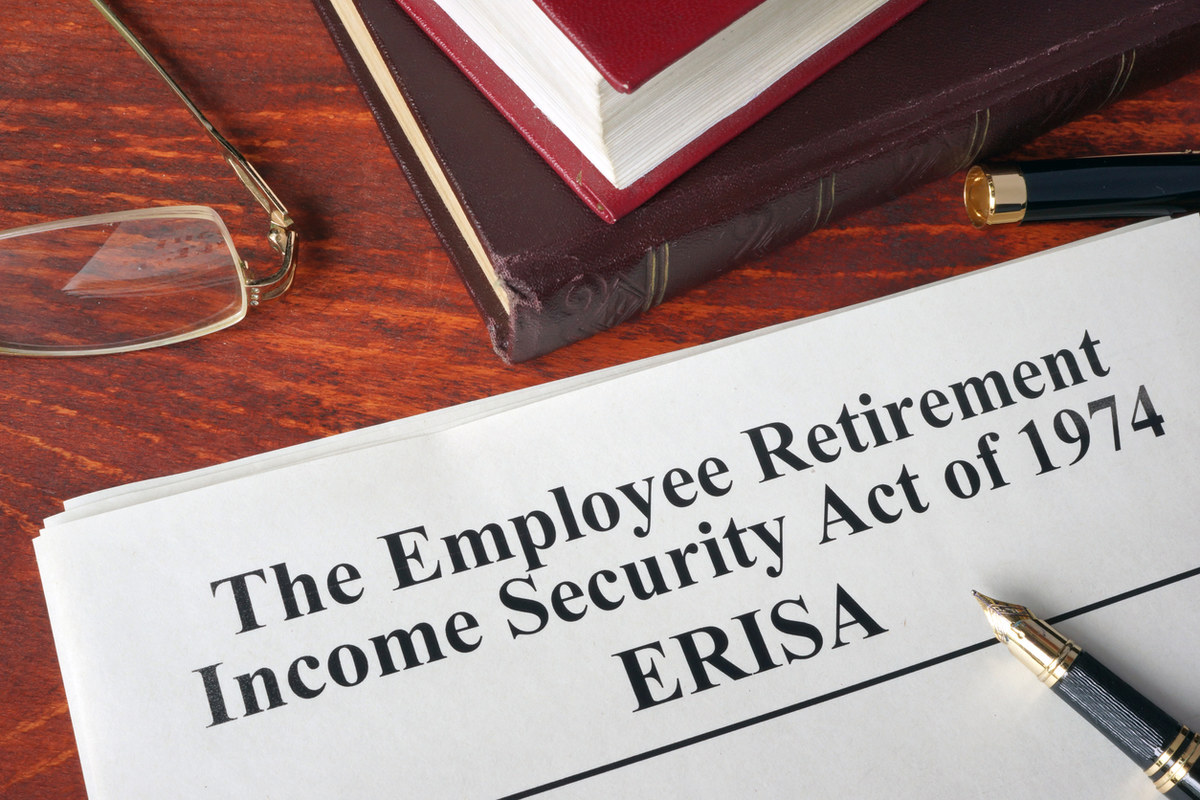
The lawsuit, filed by former Dignity Health workers, alleges the health system used a religious Employee Income Retirement Security Act exemption to underfund its pension plan by $1.8 billion. In October, a federal judge in the Northern District of California refused to sign off on a proposed settlement because it contained a “kicker” clause. The clause would allow Dignity to keep the difference between the amount of attorneys’ fees awarded by the court and the more than $6 million in fees authorized by the settlement.

“Although the fact is not explicitly stated in the settlement, if the court awards less than $6.15 million in fees, defendants keep the amount of the difference and those funds are not distributed to the class,” Judge Jon S. Tigar said, according to Bloomberg Law. “The Court concludes that this arrangement, which potentially denies the class money that defendants were willing to pay in settlement — with no apparent countervailing benefit to the class — renders the settlement unreasonable.”

Both sides agreed to eliminate the kicker clause and resolved other issues the court outlined when it denied preliminary approval and class certification in October. In November, the workers filed a renewed unopposed motion, which the court denied June 12.

To certify a class for the purpose of settlement, the court must find that the plaintiffs named in the lawsuit and their lawyer were negotiating on behalf of the entire class. In Dignity’s case, there’s a “fundamental conflict of interest between the vesting subgroup and the rest of the class that must be addressed by subclass certification,” Mr. Tigar wrote in the order denying the motion. “Because the court cannot certify the class, it cannot grant preliminary approval of the settlement.”

Mr. Tigar wrote that he made the finding reluctantly because of the extensive litigation that has already occurred and the age of the case. However, he said Rule 23 of the Federal Rules of Civil Procedure requires it. 


Dow plunges more than 1,800 points as rising COVID-19 cases roil Wall Street

Dow plunges more than 1,800 points as rising COVID-19 cases roil Wall Street

Dow plunges 1,800 as investors turn jittery over new wave of ...

Stocks plummeted Thursday as the emergence of new coronavirus hotspots and a caution from the Federal Reserve chairman shook Wall Street after months of steady gains.

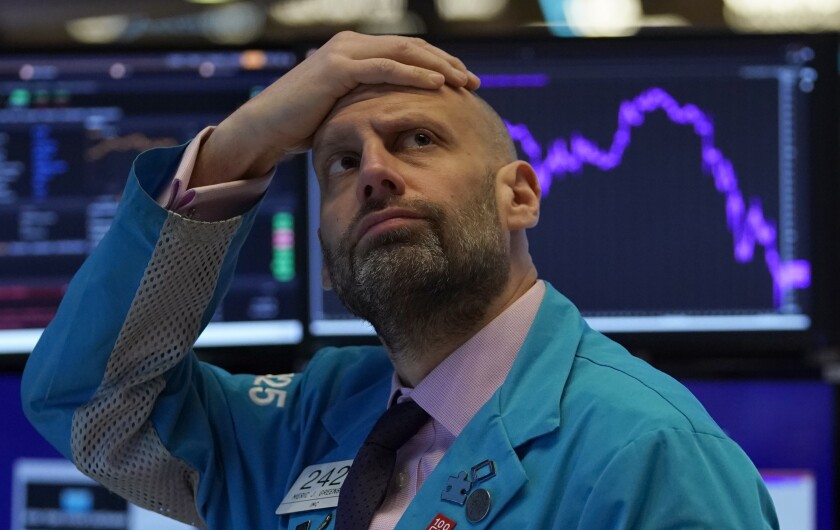
The Dow Jones Industrial Average closed with a loss of 1,861 points, plunging 6.9 percent for its worst day of losses since March. The S&P 500 index closed with a loss of 5.9 percent, and the Nasdaq composite sunk 5.3 percent on the day.

All three major U.S. stock indexes closed with their steepest single-day losses since crashing in March amid the beginning of lockdowns imposed to slow the spread of COVID-19. Thursday’s losses come after more than two months of steady recovery toward the record highs seen before the pandemic derailed the economy.

Despite the loss of more than 21 million jobs and the deaths of more than 110,000 Americans due to the coronavirus, investors had gradually upped their bets on a quick economic recovery through April and May as states began loosening business closures and travel restrictions.

The surprise addition of 2.5 million jobs in May, according to the Labor Department, also fueled hopes for a quicker than expected rebound from a recession of unprecedented scale and speed.

But Thursday’s abrupt reversal comes as states across the U.S. see spiking COVID-19 cases and diminishing hospital capacity to handle a new wave of infections.

Week-over-week case counts are rising in half of all U.S. states, and only 16 states plus the District of Columbia have seen their total case counts decline for two consecutive weeks.

North Carolina, California, Mississippi and Arkansas are all facing record levels of hospitalizations, and the virus appears to be quickly spreading in Houston, Phoenix, South Carolina and Missouri.

Some market experts also attribute Thursday’s losses to Fed Chairman Jerome Powell’s Wednesday prediction of a “long road” to recovery.

During a Wednesday press conference, Powell said that while the U.S. may see significant job growth in coming months as people return to their jobs,” the country is “still going to face, probably, an extended period where it will be difficult for many people to find work.”

“What we’re trying to do is create an environment in which they have the best chance either to go back to their old job or to get a new job,” he continued.

President Trump, who frequently lashes out at the Fed when markets turn south, blasted the Fed for underestimating how quickly the U.S. economy could recover and how soon a COVID-19 vaccine would be available.

“The Federal Reserve is wrong so often. I see the numbers also, and do MUCH better than they do. We will have a very good Third Quarter, a great Fourth Quarter, and one of our best ever years in 2021. We will also soon have a Vaccine & Therapeutics/Cure. That’s my opinion. WATCH!” Trump tweeted.

Trump’s top economic advisor Larry Kudlow also criticized Powell, urging the Fed chief to ease up on the dour forecasts

“I do think Mr. Powell could lighten up a little when he has these press offerings. You know, a smile now and then, a little bit of optimism,” Kudlow said on Fox Business Network.

“I’ll talk with him and we’ll have some media training at some point.


White House goes quiet on coronavirus as outbreak spikes again across the U.S.

https://www.politico.com/news/2020/06/10/white-house-stops-talking-about-coronavirus-309993?utm_source=ActiveCampaign&utm_medium=email&utm_content=Mnuchin%3A+More+Stimulus++Definitely++Needed&utm_campaign=TFT+Newsletter+06102020

White House goes quiet on coronavirus as outbreak spikes again ...

The coronavirus is still killing as many as 1,000 Americans per day — but the Trump administration isn’t saying much about it.

It’s been more than a month since the White House halted its daily coronavirus task force briefings. Top officials like infectious disease expert Anthony Fauci have largely disappeared from national television — with Fauci making just four cable TV appearances in May after being a near fixture on Sunday shows across March and April — and are frequently restricted from testifying before Congress. Meanwhile, President Donald Trump is preparing to resume his campaign rallies after a three-month hiatus, an attempted signal to voters that normalcy is returning ahead of November’s election, and that he’s all but put the pandemic behind him.

“We’ve made every decision correctly,” Trump claimed in remarks in the Rose Garden Friday morning. “We may have some embers or some ashes or we may have some flames coming, but we’ll put them out. We’ll stomp them out.”

Inside the White House, top advisers like Jared Kushner privately assured colleagues last month that the outbreak was well in hand — citing data on declines in community spread — and that the long-feared “second wave” may have even been averted, according to three current and former officials.

However, new data from states like Florida and mass protests across the country are renewing concerns about the virus’s spread. Texas, for instance, has reported two straight days of record-breaking coronavirus hospitalizations — highs that come shortly after the state kicked off the third stage of its reopening plan.

Those officials also acknowledge that the Covid-19 task force has scaled back its once-daily internal meetings — the task force now meets twice per week — but insist that the pandemic response remains a priority. One official with direct knowledge of the administration’s strategy cited efforts to scale up testing, accelerate the development of treatments and vaccines and perform other behind-the-scenes work to get ready for a potential fall surge.

“We’re delivering the supplies and resources that states asked for,” said the official. “This doesn’t need to be the public ‘coronavirus show’ every day anymore.”

“You can’t win,” said a senior administration official. “Some people complained for weeks that ‘we don’t want so much White House involvement,’ and that ‘the President should stop doing daily briefings,’ and then they turn around and complain that there aren’t enough or as many briefings.”

But the White House’s apparent eagerness to change the subject comes as new coronavirus clusters — centered around meatpacking plants, prisons and other facilities — drive spikes in disparate states like Utah and Arkansas. Meanwhile, states and major cities are lifting lockdowns and reopening their economies, prompting public health experts to fret that additional outbreaks are imminent. And several Democratic governors also have defied their own states’ social distancing restrictions to join mass protests over police brutality, where hundreds of thousands of Americans have spilled into the streets, further raising public health risks.

The fear is that all the mixed signals will only confuse people, stoke public skepticism over the health threat and promote the belief the worst is over just as the outbreak enters a dangerous new phase.

“Cases are rising, including from cases in congregate settings,” said Luciana Borio, who led pandemic preparedness for the National Security Council between 2017 and 2019. “We still have a pandemic.”

Nine current and former administration officials, as well as outside experts, further detailed how the White House is steadily ramping down the urgency to fight a threat that continues to sicken more than 100,000 Americans per week and is spiking in more than 20 states.

For instance, the administration in recent days told state health officials that it planned to reorganize its pandemic response, with HHS and its agencies taking over the bulk of the day-to-day responsibilities from the Federal Emergency Management Agency.

“The acuity of the response is not what it was, so they’re trying to go back to a little more of a normal ongoing presence,” said Marcus Plescia, the chief medical officer of the Association of State and Territorial Health Officials.

The coronavirus task force, which used to send daily updates to state officials, has done so with less regularity over the last several weeks, Plescia said. And the CDC has restructured its daily conference calls with states, moving away from the practice of giving top-down briefings to encouraging state officials to offer updates on what they’re seeing in their parts of the country.

One current and one former FEMA official also said they’re keen to have HHS resume its leadership role in containing the coronavirus so FEMA can make contingencies for a summer of hurricanes, floods and other natural disasters.

“Given the likelihood that we will soon see both hurricanes and coronavirus, HHS should manage the ongoing pandemic response so FEMA can prepare for coming ‘coronacanes,’” Daniel Kaniewski, who served as the top deputy at FEMA through January, wrote last week. “But they need to act soon. Coronacanes are in the forecast.”

Meanwhile, officials in at least 19 states have recorded two-week trends of increasing coronavirus cases, including spikes of more than 200 percent in Arizona and more than 180 percent in Kentucky. Two months after the White House issued so-called gating criteria that it recommended states hit before resuming business and social activities, only a handful of states — like Connecticut, New Jersey, New York and South Dakota — currently meet all of those benchmarks, according to CovidExitStrategy.org.

Officials within Trump’s health department are strategizing over how to convey the current level of risk, given data that Americans have put off emergency care and other potential medical needs, fearful of contracting Covid-19. “Our message now is that people should start returning to their health care providers to get the screenings, vaccines, care, or emergency services that they need,” Laura Trueman, the HHS official in charge of external affairs, wrote in an office-wide email to colleagues and shared with external groups on June 3, which was obtained by POLITICO.

Dan Abel, a longtime Coast Guard vice admiral, also has been installed at HHS with a small team, where he’s coordinating daily Covid-19 calls with HHS Secretary Alex Azar and the department’s division leaders, according to four officials with knowledge of the calls — an arrangement that’s raised some questions.

“Why is a Coast Guard admiral leading meetings between the HHS secretary and his senior staff?” asked one senior official, suggesting it created an unnecessary layer of management.

Meanwhile, the department is steadily turning back to its many pre-Covid-19 priorities. At the Food and Drug Administration, officials are returning to hot-button issues like tobacco and CBD regulations. Some staff in the health department’s emergency response arm are pivoting away from Covid-19 and back toward natural disasters as hurricane season begins.

At the same time, the Centers for Disease Control — traditionally the beating heart of the nation’s infectious disease response — remains largely demoralized and often sidelined in fighting what CDC director Robert Redfield last week acknowledged as the nation’s biggest health challenge in more than a century, and one he said is “moving through our social consciousness, our outward expression, and our grief.” That grim message has conflicted with Trump’s frequent vows of victory over the coronavirus.

“We were able to close our country, save millions of lives, open,” Trump said in Friday’s Rose Garden remarks. “And now the trajectory is great.”

“I fully recognize the anguish our Nation is experiencing & am deeply saddened by the many lives lost to COVID19,” Redfield tweeted just minutes later. “I call upon the American people to remain vigilant in protecting the vulnerable – protect your community, grandparents and loved ones from COVID-19.”

Redfield and other top officials also have spent the past week reckoning with the implications of widespread protests over police brutality, from meeting with staff to discuss longstanding concerns about systemic racism in health care to acknowledging the probability that those protests will spark new outbreaks.

HHS also on Monday sent members of Congress a fact sheet on its response to racial disparities in Covid-19 care — a much scrutinized issue in public health, with African Americans contracting and dying from the virus at much higher rates.

But on Capitol Hill, watchdogs say that fact sheets don’t cut it, and they’re frustrated by the lack of access to experts and insight into how the administration is handling a historic pandemic.

“Some are acting like the battle has been won when in reality it’s just beginning,” said a senior Democratic staffer. “The White House still won’t let task force members testify at hearings in June even though they have disappeared from TV and it’s not clear how often they are meeting.”

Fauci, meanwhile, has continued to issue a string of dire warnings in his lower-profile media appearances and at an industry conference on Tuesday.

We have something that turned out to be my worst nightmare,” Fauci said in virtual remarks aired at a conference of the biotech industry’s Washington trade group, recounting how quickly the virus spread around the globe, outpacing Ebola and HIV. “And it isn’t over yet.”

The White House has maintained that chief of staff Mark Meadows has needed to clear officials like Fauci to testify, so they can stay focused on other priorities, and a spokesperson insisted that Trump has still prioritized the coronavirus fight even as the White House shifts toward focusing on revitalizing the economy.

Several officials have suggested that the task force’s lower profile has been helpful for the response, especially because the daily Covid-19 press briefings were often hijacked by Trump’s meandering remarks or the day’s other political news.

“In some ways, it actually has been easier to get Covid-related work done,” said one HHS staffer who’s helped support the Covid-19 response. “The task force briefings and the prep sessions for them took up a lot of principals’ time, and staff would sometimes have to crash on putting together materials for them.”

But the white-hot spotlight on the coronavirus also brought urgency and intensity, and the increasingly scattered nature of the current response could present new challenges if there’s an uptick in cases.

“This is when a one-government approach is needed more now than ever,” said Howard Koh, who served as President Barack Obama’s HHS assistant secretary for health. “Get all those people together in one room every day at the highest level and track outcomes and address all the questions and try to maximize coordination as much as possible.”


Dow Falls 250 Points After Federal Reserve’s Grim Economic Outlook

https://www.forbes.com/sites/sergeiklebnikov/2020/06/10/dow-falls-250-points-after-federal-reserves-grim-economic-outlook/?utm_source=newsletter&utm_medium=email&utm_campaign=news&utm_campaign=news&cdlcid=#50eb6c4f56be

Dow Falls 250 Points After Federal Reserve's Grim Economic Outlook

TOPLINE

The market finished slightly lower on Wednesday after the Federal Reserve indicated that it would leave interest rates unchanged until 2022, while also warning of a long economic recovery from the coronavirus recession.

KEY FACTS

The Dow Jones Industrial Average fell 0.9%, over 250 points, on Wednesday, while the S&P 500 was down 0.5% and the tech-heavy Nasdaq Composite gained 0.7%.

The Federal Reserve concluded its two-day meeting on Wednesday by leaving interest rates unchanged near zero and indicating that they will stay there until 2022.

It also gave a grim update on the economy: The Central Bank forecasts a long recovery, with unemployment likely to remain high for many years.

The Fed, which has injected nearly $3 trillion into financial markets since late February, pledged to continue its unprecedented stimulus plan until the economy has weathered the coronavirus recession.

The Nasdaq climbed to a new record high on Wednesday, however, closing above 10,000 for the first time ever thanks to continued strength in tech stocks. Investors continued to rotate back into names like Amazon and Apple, which both hit new record highs again.

“A large shift is occurring as investors cycle out of value/cyclical stocks for a second day and pour money into growth,” according to Vital Knowledge founder Adam Crisafulli.

Stocks that would benefit from a reopening—including airlines, retailers and cruise operators—have all been moving lower recently, after having led the market rally in the past few weeks.

Bank stocks were especially hard-hit on Wednesday, plunging on the news that the Fed will keep interest rates low for a long time.

CRUCIAL QUOTE

“We are not even thinking about thinking about raising rates,” Federal Reserve chairman Jerome Powell confirmed at his press conference. He added that while “there is great uncertainty about the future,” the central bank is strongly committed to doing “whatever we can, for as long as it takes” to help support the economy. 

BIG NUMBER: 10,000.

With tech stocks making a comeback in recent days, the Nasdaq hit a new record high on Wednesday, closing above 10,000 for the first time ever. Shares of Amazon, Apple, Netflix, Microsoft and Google-parent Alphabet have all been soaring recently, boosting the index higher.

KEY BACKGROUND

Stocks have continued to rally on optimism about reopening the economy and a faster than expected recovery from the coronavirus pandemic. The market has so far had a strong start to June, building on back-to-back monthly gains. The S&P 500 on Monday turned positive for 2020, fully recouping its losses from the coronavirus sell-off earlier this year. The index is now up more than 45% from its low point on March 23.


HCA seeks nurse backup ahead of potential strike

https://www.healthcaredive.com/news/hca-seeks-nurse-backup-ahead-of-potential-strike/579502/

Dive Brief:

  • HCA is looking for qualified nurses in the event of a job action against its facilities in Los Angeles, such as a strike, according to a job posting from May 29. The giant hospital chain did not respond to multiple requests for comment.
  • The country’s largest nurses union, National Nurses United, has recently disputed with the system over other pandemic-related labor issues. Nurses at 15 HCA hospitals protested in late May over contractually bargained wage increases the hospital says it can’t deliver due to financial strains, asking nurses to give up the increases or face layoffs.
  • Another dispute involves a last-minute change mandating in-person voting for nurses deciding whether to form a union at HCA’s Mission Hospital in Asheville, North Carolina, according to an NNU release.

Dive Insight:

Nashville-based HCA Healthcare, the largest among for-profit hospital operators, has received the most among for-profits in Coronavirus Aid, Relief and Economic Security Act funding so far, about $1 billion. The amount is about 2% of HCA’s total 2019 revenue.

The 184-hospital system said it has not had to furlough any employees like other systems have, though some employees have been redeployed or seen their hours and pay decrease. HCA implemented a program providing seven weeks paid time off at 70% of base pay that was scheduled to expire May 16, but extended through June 27.

An NNU spokesperson told Healthcare Dive the program isn’t technically a furlough because some HCA nurses participating said they must remain on call or work rotating shifts.

The union spokesperson also confirmed that an email was sent to HCA nurses referring them to the strike-nurse job posting, which would offer more pay than their current roles.

“This really is a threat to nurses, and particularly insulting when you already have layoffs or cuts, if you don’t accept further concessions,” a union spokesperson told Healthcare Dive.

Nurses in California joined those in five other states at the end of May to protest HCA’s proposal to cut wage increases or impose layoffs.

At HCA’s Regional Medical Center in San Jose, California, NNU filed a suit to block the closure of the maternal-child care center, which it said is in violation of laws to protect the health and safety of the community. The closure proceeded anyway on May 30, followed by an announcement from Santa Clara County that the move may be jeopardizing the facility’s Level II Trauma designation agreement.

Across the country, frontline caregivers continue noting a lack of adequate personal protective equipment. The union’s executive director, Bonnie Castillo, will testify before Congress on Wednesday on protecting nurses during the pandemic and the dire need for optimal PPE.