Jobless claims spike to another weekly record amid coronavirus crisis

https://www.axios.com/jobless-claims-unemployment-coronavirus-e54561c2-ed25-4f1e-8e32-7fbec81a9a24.html?stream=top&utm_source=alert&utm_medium=email&utm_campaign=alerts_all

Jobless claims spike to 6.6 million, another weekly record amid ...

6.6 million people filed for unemployment last week, a staggering number that eclipses the record set just days ago amid the coronavirus pandemic, according to government data released Thursday.

Why it matters: Efforts to contain the outbreak are continuing to create a jobs crisis, causing the sharpest spikes in unemployment filings in American history.

  • The colossal number of unemployment filings is worse than most Wall Street banks were expecting.

The big picture: Nearly 10 million Americans have filed for unemployment claims in recent weeks, as businesses around the country shut down in response to the pandemic.

  • But the data lags by a week, so it’s almost certain labor departments around the country are still processing claims and people are still applying.


Trump rejects Obamacare special enrollment period amid pandemic

https://www.politico.com/news/2020/03/31/trump-obamacare-coronavirus-157788?fbclid=IwAR1nbCE7Uwvo2CNi6d6W5NG9zEIQulyh-noy1RXdk_0RJstMM0C5VYJ8mO4

Trump rejects opening ObamaCare special enrollment period amid ...

Before the coronavirus outbreak, nearly 30 million Americans were uninsured and as many as 44 million were under-insured, paying for bare-bones plans with soaring deductibles and copays. Today, millions more Americans will begin losing their employer-based health insurance because they’ve lost their jobs during this pandemic.

Meanwhile, the Trump administration is still actively trying to repeal the entirety of the Affordable Care Act in court, which would cause an additional 20 million people to lose insurance *in the middle of a pandemic*.

And today, Trump refused to reopen ACA enrollment to those millions of uninsured Americans for a special enrollment window, leaving them without any affordable options to get covered. People are going to die because they can’t afford to seek treatment or end up saddled with thousands of dollars of medical debt if they do. Remember this the next time someone tries to tell you Medicare for All is too radical.

What do you think?

The Trump administration has decided against reopening Obamacare enrollment to uninsured Americans during the coronavirus pandemic, defying calls from health insurers and Democrats to create a special sign-up window amid the health crisis.

President Donald Trump and administration officials recently said they were considering relaunching HealthCare.gov, the federal enrollment site, and insurers said they privately received assurances from health officials overseeing the law’s marketplace. However, a White House official on Tuesday evening told POLITICO the administration will not reopen the site for a special enrollment period, and that the administration is “exploring other options.”

The annual enrollment period for HealthCare.gov closed months ago, and a special enrollment period for the coronavirus could have extended the opportunity for millions of uninsured Americans to newly seek out coverage. Still, the law already allows a special enrollment for people who have lost their workplace health plans, so the health care law may still serve as a safety net after a record surge in unemployment stemming from the pandemic.

Numerous Democratic-leaning states that run their own insurance markets have already reopened enrollment in recent weeks as the coronavirus threat grew. The Trump administration oversees enrollment for about two-thirds of states.

Insurers said they had expected Trump to announce a special enrollment period last Friday based on conversations they had with officials at the Centers for Medicare and Medicaid Services, which runs HealthCare.gov enrollment. It wasn’t immediately clear why the Trump administration decided against the special enrollment period. CMS deferred comment to the White House.

Trump confirmed last week he was seriously considering a special enrollment period, but he also doubled down on his support of a lawsuit by Republican states that could destroy the entire Affordable Care Act, along with coverage for the 20 million people insured through the law.

People losing their workplace coverage have some insurance options outside of the law’s marketplaces. They can extend their employer plan for up to 18 months through COBRA, but that’s an especially pricey option. Medicaid is also an option for low-income adults in about two-thirds of states that have adopted Obamacare’s expansion of the program.

Short-term health insurance alternatives promoted by Trump, which allow enrollment year-round, is also an option for many who entered the crisis without coverage. Those plans offer skimpier coverage and typically exclude insurance protections for preexisting conditions, and some blue states like California and have banned them or severely restricted them. The quality of the plans vary significantly and, depending on the contract, insurers can change coverage terms on the fly and leave patients with exorbitant medical bills.

Major insurers selling Obamacare plans were initially reluctant to reopen the law’s marketplaces, fearing they would be crushed by a wave of costs from Covid-19, the disease caused by the novel coronavirus. But the main insurance lobby, America’s Health Insurance Plans, endorsed the special enrollment period roughly two weeks ago while also urging lawmakers to expand premium subsidies to make coverage more affordable for middle-income people.

Congress in last week’s $2 trillion stimulus passed on that request, as well as insurers’ petition for an open-ended government fund to help stem financial losses from an unexpected wave in coronavirus hospitalizations.

Democrats pushing for the special enrollment period are also grappling with the high costs facing many people with insurance despite new pledges from plans to waive cost-sharing. Obamacare plans and a growing number of those offered by employers impose hefty cost-sharing and high deductibles that could still burden infected Americans with thousands of dollar in medical bills.

House Energy and Commerce Chairman Frank Pallone (D-N.J.) on a press call Monday contended that “we also need to have free treatment” after Congress eliminated out-of-pocket costs for coronavirus tests.

“We did the testing, which is now free, and everybody, regardless of their insurance, gets it,” Pallone said. “But that has to be for the treatment as well.”


Coronavirus exposing holes in employer insurance

https://www.axios.com/newsletters/axios-vitals-b2d1f1a0-5216-42bc-97d9-2eace5b84c05.html?utm_source=newsletter&utm_medium=email&utm_campaign=newsletter_axiosvitals&stream=top

The coronavirus is exposing the holes in employer health insurance ...

A record 3.3 million people filed for unemployment in one week, in the wake of the coronavirus outbreak, but people didn’t just lose their jobs. Many also lost the health insurance that came with the job, Axios’ Bob Herman reports.

Why it matters: U.S. workers, even those who feel relatively secure in their health benefits, are a pandemic away from falling into the ranks of the uninsured.

Many of the people losing their jobs right now may not have had coverage to begin with — which would make the coronavirus-related disruption smaller, but still highlights the very large holes in this system.

  • The concern: People who get the virus but don’t have insurance are susceptible to high medical bills, or even death if they avoid or are denied treatment.

The big picture: People who lose their jobs have some options.

  • COBRA: This option allows people to keep their employer coverage for up to 18 months. However, people have to pay the full insurance premium — an average of $1,700 a month for a family plan.
  • Medicaid: State Medicaid agencies determine eligibility on current income, so this may be the easiest, lowest-cost way for people to get health coverage.
  • Affordable Care Act plans: The health care law created marketplaces for coverage, and people who lose their jobs can sign up outside the standard enrollment window.
  • Short-term plans: These stopgap plans, promoted by the Trump administration, provide some coverage but often don’t cover major hospitalizations.


Cartoon – Modern Prayer

12535


What health care is getting out of the stimulus package

https://www.axios.com/health-care-hospitals-coronavirus-stimulus-package-c49bd0cc-05a0-479a-a83d-d4455bd0e7bd.html?utm_source=newsletter&utm_medium=email&utm_campaign=newsletter_axiosvitals&stream=top

Senate passes $2 Trillion coronavirus economic stimulus plan, it ...

Congress’ big stimulus package will provide more than $100 billion and several favorable payment policies to hospitals, doctors and others in the health care system as they grapple with the coronavirus outbreak.

The big picture: Hospitals, including those that treat a lot of rural and low-income patients, are getting the bailout they asked for — and then some.

The cornerstone provision is a no-strings-attached $100 billion fund for hospitals and other providers so they “continue to receive the support they need for COVID-19 related expenses and lost revenue,” according to a summary of the legislation.

  • It’s unclear how that money would be divvied up. One lobbyist speculated the funds would go to the “hardest-hit areas first and those areas that are next expected to get hit,” but that has not been clarified.

The bill provides many other incentives for the industry.

  • Hospitals that treat Medicare patients for COVID-19 will get a 20% payment increase for all services provided. That means Medicare’s payment for these types of hospital stays could go from $10,000 to $12,000, depending on the severity of the illness.
  • Employers and health insurers will be required to pay hospitals and labs whatever their charges are for COVID-19 tests if a contract is not in place. By comparison, Medicare pays $51.33 for a commercial coronavirus test.
  • Medicare’s “sequestration,” which cuts payments to providers by 2%, will be lifted until the end of this year.
  • Labs won’t face any scheduled Medicare cuts in 2021, and won delays in future payment cuts as well.

What’s missing: Patients who are hospitalized with COVID-19 could still be saddled with large, surprise bills for out-of-network care.

  • There also are no subsidies for COBRA coverage, which employers wanted for people who lost their jobs. However, people who are laid off are able to sign up for a health plan on the Affordable Care Act’s marketplaces or could qualify for Medicaid.


KHN’s ‘What The Health?’: The Affordable Care Act Turns 10

https://khn.org/news/khn-podcast-what-the-health-the-affordable-care-act-turns-10/

Image result for KHN’s ‘What The Health?’: The Affordable Care Act Turns 10

Can’t see the audio player? Click here to listen on SoundCloud.

The past decade for the health law has been filled with controversy and several near-death experiences. But the law also brought health coverage to millions of Americans and laid the groundwork for a shift to a health system that pays for quality rather than quantity.

Yet the future of the law remains in doubt. Many progressive Democrats would like to scrap it in favor of a “Medicare for All” system that would be fully financed by the federal government. Republicans would still like to repeal or substantially alter it. And the Supreme Court recently accepted another case that could invalidate the law in its entirety.

In this special episode of KHN’s “What the Health?” host Julie Rovner interviews Kathleen Sebelius, who was secretary of Health and Human Services during the development, passage and implementation of the health law.

Then Rovner, Joanne Kenen of Politico and Mary Agnes Carey of Kaiser Health News, who have all covered the law from the start, discuss the ACA’s past, present and future.

Among the takeaways from this week’s podcast:

  • Although the creation of the ACA is often attributed to the Obama administration and the Democratic Congress at the time, work on a health care plan actually began well before then with small-group meetings among stakeholders, congressional hearings across the country and efforts by Sen. Ted Kennedy to galvanize interest. Much of those interactions were bipartisan and included industry leaders too.
  • Despite the vehement Republican opposition to the ACA and its many critical junctures (the death of Kennedy and his replacement by Republican Scott Brown; two tight Supreme Court decisions; and the calamitous debut of the marketplace website, among other issues), the law has proved popular. When Republicans gained control of the White House and Congress, their efforts to repeal the law helped focus consumers’ interest on the law and safeguard it.
  • How will the November election affect the law? If President Donald Trump is reelected, he is unlikely to renew the effort to repeal the law, but that doesn’t mean the assault on the law is over. Efforts to change the ACA could continue through the courts and through administrative rulemaking.
  • If a Democrat is elected, modifications to the law are generally expected to be incremental and perhaps deal with changes such as expanding the number of people getting subsidies and fix some glitches in the law.


Cartoon – New Miracle Drug

Image may contain: text

Op-Ed: As a doctor, I use telemedicine. With the coronavirus threat, it could revolutionize healthcare

https://www.latimes.com/opinion/story/2020-03-17/op-ed-as-a-doctor-i-use-telemedicine-with-the-coronavirus-threat-it-could-revolutionize-healthcare?fbclid=IwAR1D6sHWYhvei0Hda4dRuqRaydyxO7AVRjWQj-2UTFqwf3gdKaWuVfxa2Hs

Image result for Op-Ed: As a doctor, I use telemedicine. With the coronavirus threat, it could revolutionize healthcare

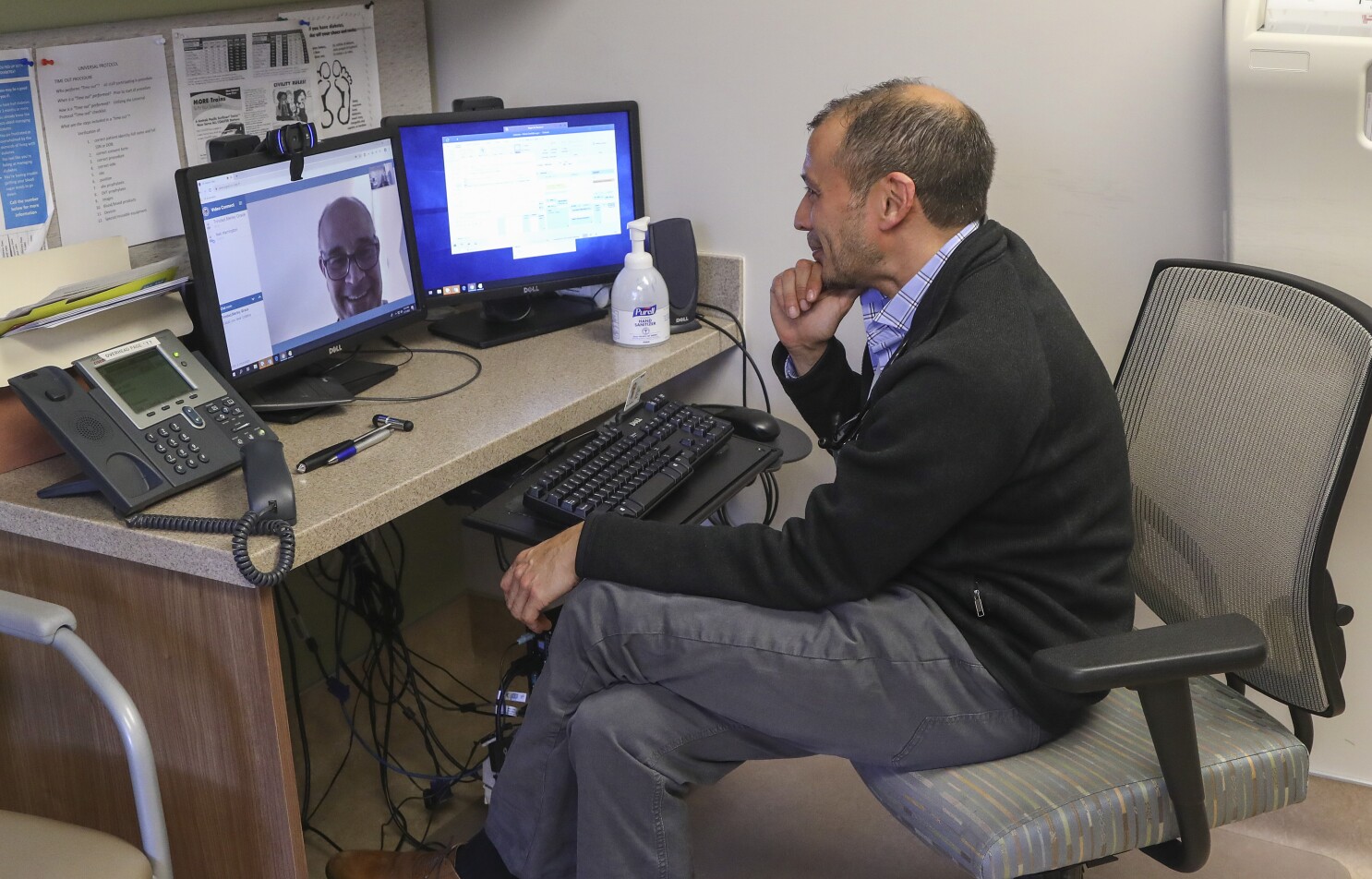
As a physician, waiting for the worst of coronavirus to hit, I see a lot to fear. It seems increasingly likely that this will be one of the most significant pandemics in modern human history, and that it will change our approach to healthcare going forward. But not all of its legacy will be negative. Here’s one thing I hope will come out of the crisis: an increased reliance on telemedicine, something that should have happened long ago.

A few months ago, when I was between jobs, I took a part-time job in a rural hospital serving a county of more than 150,000 people. On the verge of bankruptcy, the hospital was unable to attract many specialists to join its ranks, and in desperation, had turned to telemedicine to cover many services. So, for example, if a patient was rushed to the emergency room after a stroke, there was unlikely to be a neurologist in the room. Instead, a neurologist would assess the patient on a mobile screen from far away, with local nursing staff and doctors aiding him or her.

I had been skeptical of telemedicine going in. Physical exams are the bedrock of how doctors and nurses assess patients. We look patients and their loved ones in the eye, palpate sore spots with our fingers and offer comfort with a hand on a shoulder. Physical contact, I’d always thought, was at the heart of how doctors and patients communicate.

It was with this skepticism that I found myself next to a young man who been brought to the emergency room after attempting to take his own life. Again. This time, instead of seeing a psychiatrist in person, he saw one on a screen with wheels. The psychiatrist was in some distant location, but she had been in touch with the local doctors and had access to his medical records. Despite her physical remoteness, she connected with him, and he opened up. She knew of all the local resources to refer him to, and at the end of her conversation, she had developed a real rapport with him. After the visit ended and the nurse wheeled the monitor out of the room, I asked the young man what he thought, and to my surprise, he told me he was more comfortable with this than an in-person visit. He wasn’t the only one — many patients say they prefer a virtual doc to one sitting across from them.

Over the past few decades, medical care has been transformed by technology. Whenever a new drug becomes available, or a medical procedure is approved by the FDA, the medical community is quick to deploy it. Yet, when it comes to how we see patients, our current practices haven’t changed much since the time of Hippocrates. If a patient is sick they either have to come see us in clinic, urgent care, the emergency room or the hospital. Despite the internet transforming every aspect of our lives, from how we find love to how we order groceries, the way we deliver medical care has stagnated.

In the United States, not only are doctors often inaccessible for those living in rural areas, hospitals everywhere have huge economic challenges. One healthcare executive jokingly told me his hospital made more money from its parking lots than its clinics.

The response to COVID-19 might help change that.

One of the main reasons China has been able to slow coronavirus transmission has been because of a dramatic increase in virtual visits. In fact, China has moved half of all medical care online, allowing patients to consult with their doctors and get prescriptions from the comfort of their homes. Hospitals have been notorious petri dishes for deadly bugs since long before COVID-19, and this pandemic has brought that risk into crystal-clear focus. On Tuesday, Medicare announced that it will greatly expand coverage for telemedicine visits, previously sharply restricted. And at a White House briefing, the government announced it was urging states to similarly expand Medicaid coverage to include telemedicine visits by Skype, Facetime or other platforms. Some insurers have also said they will cover telehealth visits at parity with in-person visits.

These measures are commendable, but policies need to be put in place to ensure that the expansion of telemedicine is not temporary. Of course, in-person visits will still be necessary in many cases. But supporting telemedicine on a par with such visits has the potential to protect patients and healthcare personnel and allow for much more efficiency in the system. That said, physicians and nurses will need high-quality training to provide compassionate and thorough care to a patient from across a computer screen. Technology that allows patients to be “examined” remotely needs to be better studied and made more accessible. And since the backbone of telemedicine is reliable high-speed internet, Congress should consider Elizabeth Warren’s plan to bring broadband internet to the remotest parts of this country, to ensure broad access to these services.

This week my team converted most of our clinic visits from face to face to virtual visits. Some were over the phone, others were over video, often with a family member present as well. While there were some patients that still needed to be seen in person, we were able to minimize the risk of viral transmission not only for patients, but also for valuable members of our clinical team. Even before this crisis, as part of my job at the Veterans Affairs Health System in Boston, I often consulted with patients I had never seen as part of an “E Consult” system. While I was initially nervous when I first started doing this, it allowed me to expand my footprint far beyond what I could manage if I were seeing every patient in person.

At some point, I fervently hope the coronavirus will be a thing of the past. But I hope it leaves behind a legacy. I hope it changes how well we wash our hands, how well we fund public health and how well we protect the healthcare workers caring for our sickest patients. And, most of all, I hope it pushes us to embrace telemedicine.


Ten Years After: The ACA’s Success in Five Charts

Ten Years After: The ACA’s Success in Five Charts


This Is One Anxiety We Should Eliminate for the Coronavirus Outbreak

Image result for This Is One Anxiety We Should Eliminate for the Coronavirus Outbreak

A patient can do everything right and still face substantial surprise medical bills.

In his recent Oval Office speech, President Trump pledged that Americans won’t receive surprise bills for their coronavirus testing.

The goal is good; we need people who are lightly symptomatic to be tested without fear of high personal costs. But it was an empty promise. Unless swift action is taken, surprise bills are coming. And they could exacerbate a public health crisis that is already threatening to spiral out of control.

As demand for coronavirus testing surges and beds start to fill with the sick, hospitals and clinics will roll out contingency plans that call on any available resources in their communities. Test samples will be sent to whichever private laboratories have capacity, patients will be transferred from overloaded hospitals to less-crowded locations and physicians and nurses will make greater use of telemedicine.

Emergency rooms will be slammed with visits from the worried well and the dangerously sick alike. College students are already being sent home and will seek treatment far from the universities that offer them health insurance.

All of this will be chaotic.

To their credit, health insurers recognize the need to eliminate out-of-pocket spending that might discourage people from seeking care. At a meeting earlier this week with Vice President Mike Pence, they publicly committed to eliminating deductibles and co-pays for coronavirus testing. The federal government is also taking some needed steps to eliminate or ease cost-sharing.

But insurance companies aren’t the ones sending surprise bills. They’re coming from private labs and emergency-room doctors and other providers of health care services — and they weren’t at Vice President Pence’s meeting.

A patient with insurance through work or the health-insurance exchanges can be surprise-billed when she seeks medical care at a hospital or clinic that’s in her insurance “network” — but then receives medical care from a person or an institution that’s outside the network.

That out-of-network provider will first send a bill to the patient’s insurer. But if the insurer doesn’t pay the full amount, the provider may bill the patient directly for the remaining balance. Because the provider is basically free to name its own price, these surprise bills can be wildly inflated.

In a coronavirus pandemic, a patient can do everything right and still face substantial surprise bills. Take someone who fears that she may have contracted Covid-19. After self-quarantining for a week, she develops severe shortness of breath. Her partner rushes her to the nearest in-network emergency room. But she’s actually seen by an out-of-network doctor — who may soon send her a hefty bill for the visit.

Matters get worse if the in-network hospital is approaching capacity and the patient is healthy enough to be sent to a hospital across town with spare beds. If the second hospital is outside her insurance network, she could potentially receive a second surprise bill. A third could come from the ambulance that transfers her — it too might not be in-network, and no one will think to check during a crisis. She could get a fourth surprise bill if her coronavirus tests are sent to an out-of-network lab. And so on.

Even in normal times, patients with private insurance receive roughly one surprise bill for every 10 inpatient hospital admissions.

These are not normal times.

Federal law currently provides little protection. The Affordable Care Act does cap an individual’s out-of-pocket spending — but the cap only applies to in-network care. For surprise bills, the sky is the limit.

Reputable providers will appreciate that now is not the time for price gouging. But many won’t and will seek to exploit people’s medical needs for financial gain, much as they did before the coronavirus began to spread. They may calculate that can collect enough money charging exorbitant fees for out-of-network services — and still make it to an airport ahead of a mob carrying pitchforks and torches.

We need more than gauzy commitments from the president. We need a law to ban bills incurred from out-of-network providers for medical care associated with the coronavirus outbreak. Unless that commitment is ironclad, people may not believe it. And if they don’t believe it, they won’t get tested.

To date, Congress — cowed by a furious public relations campaign led by private equity and specialty physicians — has been unable to pass a law banning routine surprise billing. Though Congress has moved closer to a watered-down deal in recent months, neither the House nor the Senate has actually passed a bill.

The coronavirus should refocus Congress’s attention. At a minimum, the legislature should quickly pass a temporary measure to limit out-of-network charges for coronavirus testing and treatment.

In the meantime, states can take action. About half have already passed surprise-billing laws, including California and New York, two of the hardest-hit states. But the laws in many states are patchy: Some cover only emergency room care, others don’t contain a legal mechanism for cutting back on excessive bills, and none are tailored for the current outbreak.

Already, reports of people who have received eye-popping bills for coronavirus testing or emergency room visits are circulating. As these stories proliferate, people will become even more reluctant to get tested or treated when they should. That will obscure the spread of the virus, complicate efforts to adopt measures for social distancing, and lead to unnecessary deaths.

It’s a national disgrace that the United States didn’t ban surprise bills in a time of relative prosperity and security. It could become a public health calamity if we do not end them in a world with coronavirus.