Consolidation increasing stakes for payer-provider contract disputes, study finds

https://www.beckershospitalreview.com/payer-issues/consolidation-increasing-stakes-for-payer-provider-contract-disputes-study-finds.html?utm_medium=email

Image result for market consolidation

As more providers and insurers consolidate, the chances that both sides will run into disagreements over their in-network contracts have heightened, according to a report from the Center on Health Insurance Reforms from the Georgetown University Health Policy Institute in Washington, D.C. 

For the report, researchers reviewed insurance laws across six states, based on geographic diversity and recent high-profile payer-provider conflicts that took place there: California, Georgia, Massachusetts, North Carolina, Pennsylvania and Texas. Some high-profile conflicts in the states include UnitedHealthcare and Houston Methodist; Pittsburgh-based Highmark Health and UPMCCigna and San Francisco-based Dignity HealthCigna and Asheville, N.C.-based Mission Hospital; and Cigna and Irving, Texas-based Christus Health.

In interviews with regulators and insurers, researchers found both agreed that the more providers and payers consolidate, the higher the stakes for contract disputes. This will expose more consumers to care disruptions and higher out-of-pocket costs, they said. Several regulators warned that a greater number of high-profile contract disputes will take place in the future. 

State officials and insurers offered several recommendations for improving the patient experience through contract disputes, including providing members with advanced notice of possible contract termination and requiring insurers to hold their enrollees harmless if they can’t access necessary care elsewhere.


Massive benefits consulting merger in the works

https://www.axios.com/newsletters/axios-vitals-f4216088-ea87-4fb4-ae0b-ab76f9368c8d.html?utm_source=newsletter&utm_medium=email&utm_campaign=newsletter_axiosvitals&stream=top

Image result for Massive benefits consulting merger in the works aon willis towers watson

Aon is proposing to buy Willis Towers Watson in an all-stock transaction that would combine the second- and third-largest insurance brokerages, Bob writes.

Why it matters: Employers hire Aon and Willis Towers Watson to help them choose health plans and pharmacy benefit managers for their workers, but the major consultants don’t always steer companies toward the best deals.

  • Combining into the largest consulting house on Earth will give Aon that much more power over employers.

What’s next: The two companies don’t expect to close the deal until the first half of 2021, indicating they know antitrust regulators will be closely scrutinizing this.


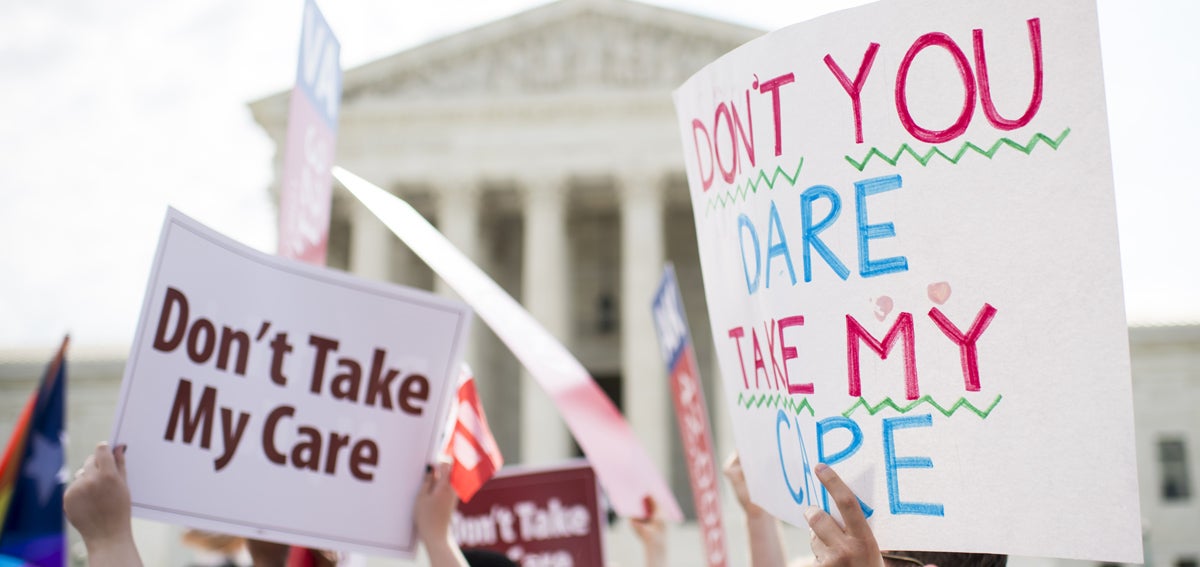
US Supreme Court Agrees to Review Affordable Care Act — for the Third Time

US Supreme Court Agrees to Review Affordable Care Act — for the Third Time

Image result for US Supreme Court Agrees to Review Affordable Care Act — for the Third Time

The fate of the Affordable Care Act (ACA) is once again in the hands of the US Supreme Court. On March 2, the court announced that it would hear a case challenging the health law, a wide-ranging measure that “touches the lives of most Americans, from nursing mothers to people eating at chain restaurants,” wrote Reed Abelson, Abby Goodnough, and Robert Pear in the New York Times. This will be the third time the court will rule on the ACA since President Barack Obama signed it on March 23, 2010.Essential Coverage

“The justices will review a federal appeals court decision that found part of the law . . . unconstitutional and raised questions about whether the law in its entirety must fall,” reported Robert Barnes in the Washington Post. He noted that it is one of the first cases accepted for the Supreme Court term beginning October 5, which means a decision is not likely until spring or summer of 2021.

Should the court overturn the ACA, many Americans would lose the benefits afforded under the law. As Dylan Scott wrote in Vox, “everything would go: protections for preexisting conditions, subsidies that help people purchase insurance, the Medicaid expansion.”

Let’s break down each of those categories.

Protections for Preexisting Conditions

Before the ACA, people with preexisting conditions, which included common medical conditions like asthma, diabetes, and cancer, were denied health insurance or charged higher insurance premiums. Important benefits like maternity care and mental health services frequently were carved out of the benefit packages in health plans sold in the individual market — that is, outside of employer-sponsored coverage. An issue brief (PDF) by the Department of Health and Human Services estimated that up to 133 million nonelderly Americans have a preexisting condition.

As Andy Slavitt, the former administrator of the Centers for Medicare & Medicaid Services under President Obama, wrote on Twitter, examples of being charged more included “$4,270 more for asthma, $17,060 for pregnancy, and $160,510 for metastatic cancer.”

Under the ACA, insurers are no longer allowed to deny coverage or charge higher prices to people with preexisting conditions. But if the Supreme Court rules against the ACA, these protections would vanish.

Medicaid Expansion

A key provision of the ACA is expanded eligibility for enrollment in Medicaid, a federally funded state option adopted so far by 36 states and the District of Columbia. More than 12 million adults with low incomes have gained Medicaid coverage through this provision, and research comparing expansion and nonexpansion states has linked expanded Medicaid access to better health outcomes.

According to the Urban Institute, if the ACA is repealed, “the uninsurance rate across all expansion states would increase from 9% of the nonelderly under current law to 17% under repeal. In nonexpansion states, the uninsurance rate would increase from 15% of the nonelderly to 21%.” Many of the newly uninsured would be the result of losing the Medicaid coverage the ACA provided.

“The uninsured rate for Black Americans would increase from 11% to 20% without Obamacare,” Scott reported. “There would also be a dramatic spike in uninsurance among Hispanics.”

Subsidies to Help People Purchase Insurance

To expand access to affordable health insurance for those who can’t get it through their jobs, the ACA offers federal subsidies to people with low and moderate incomes who buy insurance through the ACA insurance exchanges. The subsidies take the form of premium tax credits and cost-sharing subsidies.

Approximately 9.2 million Americans receive federal subsidies, reported Abelson, Goodnough, and Pear. “On average, the subsidies covered $525 of a $612 monthly premium for customers in the 39 states that use the federal marketplace,” they wrote.

If the ACA is overturned and the subsidies are eliminated, the cost of health insurance would become unaffordable for many of those 9.2 million people, and the uninsured population would soar.

Polls Show Public Support for the ACA

According to the February 2020 KFF Health Tracking Poll, 55% of Americans say they now favor the ACA, a new high compared to approval ratings below 40% as recently as 2016. Today 85% of Democrats express favorable views of the law, compared to 53% of independents and 18% of Republicans.

Though overall support for the health law remains partisan, many of its provisions have broad bipartisan support, KFF staff wrote in Health Affairs. For instance, large majorities of Democrats (94%), independents (88%), and Republicans (77%) have a favorable view of the ACA’s health insurance exchanges, and most Democrats (80%), independents (71%), and Republicans (54%) view the Medicaid expansion favorably.

Rising Health Costs Worsen California’s Coronavirus Threat

The global spread of the novel coronavirus disease known as COVID-19 puts threats to the ACA into perspective. Despite the coverage gains made under the ACA, nearly 28 million Americans remain uninsured, and that number would rise if the law were overturned. As Chris Sloan, associate principal at the consulting firm Avalere Health, told Caitlin Owens in Axios, we “could see uninsured or underinsured patients . . . skipping necessary treatment because they believe they can’t afford it.”

“Some lawmakers are concerned that the tens of millions who are underinsured — Americans with high deductibles or limited insurance — may also be at risk of unexpected expenses as more and more people are exposed to the virus,” Reed Abelson and Sarah Kliff reported in the New York Times.

Kristof Stremikis, director of CHCF’s market analysis and insight team, wrote in a recent blog post, “In an era when the average deductible facing a working family in California now exceeds $2,700, it’s not hard to imagine how many people missed detection and treatment opportunities because they could not afford to pay for them.”

To address some of these concerns, the California Department of Insurance (PDF) and the Department of Managed Health Care (PDF) directed all commercial health plans and Medi-Cal plans to “immediately reduce cost-sharing (including, but not limited to, co-pays, deductibles, or co-insurance) to zero for all medically necessary screening and testing for COVID-19, including hospital, emergency department, urgent care, and provider office visits where the purpose of the visit is to be screened and/or tested for COVID-19.”

Similar policies have been announced by state regulators in Washington and New York, the San Francisco Chronicle reported.


Caught in the crossfire of payer-provider strategies

https://mailchi.mp/9e118141a707/the-weekly-gist-march-6-2020?e=d1e747d2d8

Image result for payer-provider strategies

The aggressive push among insurers to purchase physician practices—one that mirrors the vertical integration strategies pursued by hospital systems over the past few years—has some asking what the end game looks like for health plans.

A recent investigative piece from Kaiser Health News shows where this payer-physician integration might lead. Focused on the activities of UnitedHealth Group in the New Jersey Medicaid market, the article describes a move by the company’s insurance subsidiary, UnitedHealthcare, to shift the Medicaid beneficiaries it covers in its Medicaid managed care plan into physician practices owned by its sister subsidiary, Optum.

That effort is the target of a lawsuit brought by some physician practices in the state, who allege they are losing patients as a result of an attempt by UnitedHealthcare to “narrow” its physician networks by terminating their contracts. It’s an obvious, and clever, strategy on the part of the insurer, which likely hopes to capture savings and generate greater revenue by integrating insurance and provision of care.

But as the piece describes, it’s proving significantly disruptive to the care of many patients, who are losing access to physicians with whom they’ve built relationships with over time. Insurers have pursued these strategies less aggressively in their commercial and Medicare businesses, turning instead to referral management tactics like specialist steerage, mandatory pre-authorizations, and discounted rates instead of shifting primary care patients care.

But, as in many other aspects of care, it may be easier to implement such aggressive “management” techniques in the low-income population, because patients have so few alternatives to care. As vertical integration strategies play out on both the hospital and insurer sides of the industry, it’s worth paying attention to how “grand strategy” of the sort depicted in our map above plays out on the ground, in the lives of individual patients.


Health plans ramp up physician practice acquisitions

https://mailchi.mp/9e118141a707/the-weekly-gist-march-6-2020?e=d1e747d2d8


Health systems and private equity firms aren’t the only ones aggregating physician practices—many large insurers are rapidly acquiring or affiliating with physician groups, especially to support their Medicare Advantage (MA) strategies.

As the map below shows, most insurers are focusing this vertical integration in states like Florida, Texas, and California—places where they also have large populations of MA beneficiaries. Astonishingly, UnitedHealth Group—through its Optum division—is likely the largest employer of physicians in the US, employing or affiliating with 50,000 physicians—roughly 5,000 more than HCA Healthcare and nearly double the number of Kaiser Permanente. The number of Optum-controlled physicians has increased rapidly in recent years, the result of many large-scale deals, including the $4.3B acquisition of DaVita Medical Group.

When it comes to leveraging this growing physician network, United is setting its sights well beyond Medicare Advantage, as demonstrated by its recent introduction of Harmony, a commercial narrow network health plan in Southern California based almost exclusively on a network of Optum physicians.

Meanwhile, Humana’s physician strategy has focused more on affiliations with non-traditional groups serving MA patients, including Iora Health and Oak Street Health—though Humana also has two large primary care groups, Conviva and Partners in Primary Care, the latter of which just secured a $600M private equity investment to expand.

Notably absent from this map is Aetna, which has been pursuing a different strategy, focused around steering its MA population to its advanced practice provider-run HealthHUBs in CVS pharmacies.

This trend of insurer acquisition of physicians is obviously worrisome for health systems, as the health plans they negotiate with for payment are now directly competing with them at the front end of the delivery system.  


Why State Efforts to Mandate Coronavirus Testing Will Fall Short

Why State Efforts to Mandate Coronavirus Testing Will Fall Short

Image result for ERISA

To cope with incipient coronavirus outbreaks, Washington and New York have announced emergency directives requiring insurers to cover COVID-19 testing without cost-sharing. The states recognize that high deductibles and other out-of-pocket payments discourage people from getting tested, which in turn threatens public health.

Both states have acted pursuant to laws governing the regulation of insurance. In Washington, for example, the state insurance commissioner is empowered to issue orders addressing “medical coverage to ensure access to care” when the governor declares an emergency. Similarly, New York’s Superintendent of Financial Services says that it will issue an “emergency regulation” to require insurers to cover testing without cost-sharing (though the precise authority to issue that regulation is a little vague).

But the directives are more limited in scope than they appear, and will provide no help at all to the approximately 100 million people nationwide who receive coverage through self-insured employers. As with so many problems that arise in health law, the reason is the Employee Retirement Income Security Act of 1974 (ERISA).

When Congress adopted ERISA, it wasn’t thinking very hard about health insurance. It was thinking about pension plans, which many employers had chronically underfunded, leaving retired employees high and dry. So Congress adopted ERISA to offer some basic protections for employees. In exchange, Congress preempted any state laws that “relate to” employee benefit plans.

Congress carved out an exception to ERISA’s broad preemptive scope for laws regulating insurance. That’s a domain that’s traditionally been left to the states. Washington and New York can thus tell private insurers—including those that offer employer-sponsored coverage—to abide by their emergency rules.

But lots of firms don’t actually buy insurance for their employees. Instead, larger firms usually “self-insure,” meaning that they pay for their employees’ health expenses themselves. (Odds are that, if you’re employed, you work at a self-insured firm—61% of people with employer-sponsored coverage do.) And ERISA clarifies that employers, when they self-insure, aren’t to be treated as insurers.

The upshot of this convoluted scheme is that the states can’t regulate self-funded employer plans. They’re regulated, instead, by the U.S. Department of Labor under ERISA. But because Congress didn’t think of ERISA as a regulation of health insurance, it didn’t authorize the kind of emergency health regulations that Washington and New York are now drawing on.

That’s one reason the federal government has looked so feckless when it’s tried to say that it will guarantee access to testing. Vice President Pence, for example, said yesterday that testing is an “‘essential health benefit,’ which means the test will be covered by health insurance plans, Medicare and Medicaid.”

But the EHB rules don’t apply at all to large employers or to Medicare. Even if they did, insurers can (and do!) impose cost-sharing for EHBs, and could do so for a COVID-19 test. It’s a completely meaningless statement.

Nor can the federal government slide coronavirus testing into the part of the Affordable Care Act that requires coverage without cost-sharing for high-quality preventive services designated by the U.S. Preventive Services Task Force. Not only is that task force ill-equipped to move quickly, but the ACA says that its recommendations can only take effect after a “minimum interval” that “shall not be less than 1 year.” That’s much too late.

Unless I’m missing something, the federal government simply does not have the legal power to require employers to cover coronavirus testing without cost-sharing. The Association of Health Insurance Plans has said that its members may voluntarily waive cost-sharing, but they may not, and in any event AHIP doesn’t represent employers, who get to make the final call on what they do and don’t cover.

Congress will have to act—and it should act immediately to assure swift, reliable, and no-cost access to testing services. The broader lesson, though, is that Congress’s blunderbuss approach to preemption under ERISA has led to a situation in which neither the states nor the federal government is equipped to regulate the coverage practices of large, self-insured employers. That gap in legal authority could have pernicious consequences in the coming months.


Senators demand Cigna, Optum turn over documents on insulin prices

https://www.fiercehealthcare.com/payer/senators-demand-cigna-optum-turn-over-documents-insulin-prices-deliver-subpoena-threat?utm_medium=nl&utm_source=internal&mrkid=959610&mkt_tok=eyJpIjoiWm1Rd1kyVTNaVFl6WWpoayIsInQiOiJcL0ZDakZBUCtJWXhjNXBxUzVPRytqNUZBOU04ODlOU1I2ZFZyQ3ROcUo4eWoxckNMS2JsMVFBV1F6MEtHVkJZSVhZdWJQV2hoMVVTalwveTFnNUJYeFR6N3ZxaVZTUTNWVzI1UkMyQzh5MUxISUJaYm9KSEdYNlgyZVYyd0Q4Q0lvIn0%3D

Chuck Grassley

Sen. Chuck Grassley, R-Iowa, and Ron Wyden, D-Ore., are demanding Optum and Express Scripts turn over documents on how they determine insulin prices.

Leaders of the Senate Finance Committee demanded Cigna and Optum produce critical documents over the pricing of insulin, with a subpoena threat looming.

Cigna failed to produce any documents related to the committee’s request back in April 2019 and Optum didn’t produce essential documents, according to letters to both companies sent earlier this week by committee leaders. The documents would relate to the actions of pharmacy benefit managers such as Cigna’s Express Scripts on the rising costs of insulin.

“Cigna’s unwillingness to provide the documents we requested fits an industry-wide pattern of fighting efforts to shed light on PBMs’ practices,” the letter (PDF) to the insurer read.

Sens. Chuck Grassley, R-Iowa, and Ron Wyden, D-Ore., the committee’s chairman and ranking member respectively, wrote that Cigna’s failure to comply has “reached an endpoint.” The insurer has until March 10 to provide more information or face a subpoena.

UnitedHealth Group’s Optum did produce thousands of pages for the committee, but a majority of them were irrelevant, already publicly available or duplicative.

“For example, Optum has produced more than 4,000 pages of publicly available formulary information guides and internal formulary drug lists that contain virtually no information related to the insulin therapeutic class,” the senators’ letter (PDF) to Optum said.

The original request for documentation had called for internal communications that would help the committee understand how Optum made decisions on “the out-of-pocket price patients pay for their insulin,” the letter said.

Grassley and Wyden launched the investigation last February into the price of insulin, which has increased up to 500%. The senators sent letters to leading insulin manufacturers Eli Lilly, Novo Nordisk and Sanofi regarding the spike.

The senators also wanted to learn the process used for negotiations and agreements between PBMs and large plans on patient cost-sharing.

Cigna-Express Scripts said that it takes the committee’s inquiry “very seriously and have been engaged with them on this request. We are committed to being cooperative.”

Optum said that it share’s the committee’s concens regarding the high prices for insulin set by manufacturers.

“We have provided thousands of pages of documents in response to the committee’s request, and will continue to work with them on this important issue,” the company said.


Five Healthcare Industry Changes to Watch in 2020

https://www.managedhealthcareexecutive.com/news/five-healthcare-industry-changes-watch-2020

Innovation

Industry experts expect significant changes to shake up the healthcare landscape in the next few years, which will affect both health insurers and providers. Many are the result of a shift toward value-based care, a move toward decreased care in hospital settings, technological advances, and other forces.

Here’s a look at what can payers and providers can expect to occur, why each change is occurring, and how payers and providers can prepare for each change:

1. A shift in healthcare delivery from hospital to ambulatory settings

Healthcare delivery will continue to move from inpatient to outpatient facilities. “More surgeries and diagnostic procedures that historically have required an inpatient hospital stay can now be performed more safely and efficiently in an outpatient setting,” says Stephen A. Timoni, JD, an attorney and partner at the law firm Lindabury, McCormick, Estabrook & Cooper, in Westfield, New Jersey, who represents healthcare providers in areas of reimbursement and managed care contracting. A growing volume of outpatient care will be provided in ambulatory surgery centers, primary care clinics, retail clinics, urgent care centers, nurse managed health centers, imaging facilities, emergency departments, retail clinics, and patients’ homes.

This change is occurring as the result of clinical innovations, patient preferences, financial incentives, electronic health records, telemedicine, and an increased focus on improving quality of care and clinical outcomes. “The upward trend in value-based payment models is also influencing this shift, with the goal of reducing the cost of care and improving the overall patient experience,” Timoni says.

Payers and providers can prepare for this shift by analyzing and forecasting the cost and reimbursement implications of providing care in outpatient settings compared to inpatient settings. They should continue to analyze changing patient demographics, consumer preferences, and satisfaction trends, Timoni says. Collecting and analyzing data regarding quality and clinical outcomes as the result of changes in delivery of care from inpatient to outpatient is also key. Healthcare providers should develop effective strategies to grow capacity and infrastructure for outpatient services and invest in innovative mobile technologies, diagnostic tools, and telemedicine systems.

2. Consolidation will continue industry wide

More healthcare entities will continue to merge together. “Even though the number of available partners for transactions is shrinking, new deals pop up all the time because smaller entities are being targeted or entities that had been holding out are now changing their position,” says Matthew Fisher, JD, partner and chair of the Health Law Group at Mirick O’Connell, a law firm in Westborough, Massachusetts. Increased consolidation will result in higher healthcare prices as larger sized institutions use their size to their advantage. Another impact will be narrowing the field of contracting options, which will result in greater dominance by fewer entities in a market.

This change is occurring because industry stakeholder believes that consolidation is the way to survive in a healthcare landscape still being shaped by the ACA. “The belief is that value-based care models require single unified entities as opposed to more contractual-based ventures to succeed,” Fisher says. Another factor is that momentum for consolidations across the industry has continued to build and no player wants to be left behind.

Along these lines, Timoni says that consolidation has been motivated by the evolving and challenging commercial and government reimbursement models which include lower fee-for-service payment rates, value-based payment components, and incentives to move care from inpatient to outpatient settings. “Basic economic theory suggests that consolidation of hospitals and physicians enables these combined providers to charge higher prices to private payers as the result of a lack of competition,” Timoni says. “Likewise, combined insurers are able to charge higher premiums to their subscribers.”

Payers and providers can prepare for this change by evaluating their operations and determining whether consolidation with another entity is advantageous. “This requires assessing an entity’s operations and the risks of consolidation,” Fisher says.

Timoni advises payers and providers to monitor the consolidation landscape and develop effective merger and acquisition strategies. These strategies should focus on optimizing economies of scale to reduce costs and finding the best partners to achieve improved quality of care and effectively manage population health.

3. Protecting data privacy

Ongoing attention will be given to protecting the privacy of healthcare data. New laws, at both the federal and state levels, will be considered that could introduce new regulatory requirements, Fisher says.

While a federal law in an election year may be doubtful, individual states are proceeding. The California Consumer Protection Act (CCPA), intended to enhance privacy rights and consumer protection, will become effective in 2020, for example. Even though the CCPA doesn’t cover all healthcare data, healthcare organizations will still collect additional information that could be subject to CCPA, which means more compliance obligations, Fisher says. Other states are considering how to jump on the privacy legislation bandwagon, which means that regulatory requirements will increase. “Even in the absence of legislation, payers and providers can expect individuals to assert concerns and use public pressure to drive increased attention to privacy issues,” Fisher says.

Meanwhile, debates around what is meant by privacy continue to evolve, Fisher continues. A backlash against the non-transparent sharing of healthcare data and arguable profiteering is creating anger among patients and other groups. Simultaneously, data breaches continue to be reported on a daily basis. Add in that healthcare is a prime target, and all of the factors point to healthcare needing to do more to protect data.

Payers and providers can embrace increased data privacy by focusing on existing compliance efforts, which will require taking time to better understanding HIPAA. “Ignoring or only making superficial efforts to respect data privacy is insufficient,” Fisher says. “Merely doing what is legally permissible may not be good enough.”

4. Consumerization of healthcare

As patients assume more financial responsibility for their healthcare costs due to higher premiums, co-pays, co-insurance, and deductibles, they have become more concerned with the value of the care they receive as well as cost. Patients will likely demand improved access to clearer benefits, billing, and network information to improve transparency, says Brooks Dexter, MBA, Los Angeles-based managing director and head of the healthcare M&A advisory practice at Duff & Phelps, a global consultancy firm.

“Healthcare providers must follow suit to meet value expectations and deliver more consumer-friendly services or may risk losing market share to innovative new healthcare arrangements, such as direct primary care, which offer convenient and quality care with simplified medical billing,” Dexter says. Some ways to do this are to offer better patient portals, expanded hours, improved access, and clear procedure pricing. Despite the trend, payers and providers will most likely continue to resist CMS’ efforts to force greater cost transparency by requiring hospitals to post payer-specific negotiated charges for common services that can be shopped.

Furthermore, Peter Manoogian, principal at ZS, a consulting firm focused on healthcare in Boston, says that the voices of older adults will become comparatively louder as this rapidly growing segment becomes more tech-savvy. The Trump Administration supports increased use of Medicare Advantage and expanding consumer choices. Plan options will reach a record high this year and create an unprecedented amount of choices for this population. The average number of plans a beneficiary has access to this year will be 28, up by a whopping 50% from 2017. What’s more, new entrants that boast a customer-driven approach such as Oscar Health are entering the fray in major markets such as New York and Houston.

Health plans need to be laser focused on improving their understanding and engagement of their customers—who are evolving themselves. “To stay ahead of the change, health plans need access to the right data coupled with leading-edge analytics and technology to continuously mine insights on what members are seeking in their healthcare experience, how patients and providers interact throughout their healthcare journey, and how to meet the needs of future healthcare customers,” Manoogian says.

Health plans will need to take more of a retail focus than what they’re accustomed to, Manoogian says. The bar for providing a great experience and retaining members will also increase.

5. More technological innovations will emerge

Technological innovation will continue to dramatically and rapidly change the manner in which healthcare is delivered, resulting in more personalized care, improved clinical outcomes and patient experience, and overall quality of life. “Information systems, mobile technology, high-tech digital devices, and electronic medical records will allow payers and providers to accurately measure clinical outcomes and effectively manage the continuum of medical care and their population’s overall health,” Timoni says.

One specific way that care will change is that providers will start seeing telehealth play a more critical role in care delivery as the brick-and-mortar, in-person care model becomes less common. “Telehealth will grow past a nice-to-have tool into a standard of care, particularly for low-risk and predictable appointments,” says Cindy Gaines, MSN, RN, clinical leader, Population Health Management, Philips, a company focused on transforming care through collaborative health management in Alpharetta, Georgia. This transformation will enable providers to better tailor their care to patients’ unique needs, while increasing patient autonomy and engagement.

Technological innovations are occurring due to booming private sector interest and investment in medical technology innovation. “Patients are demanding real-time health information, personalized medicine, higher quality of care, and convenient treatment options,” Timoni says. “Payers are demanding more detailed and expansive outcomes data to scientifically manage the reimbursement system to lower costs and improve their subscribers’ health. The medical and information technology fields are attracting more high-skilled workers, who will continue to drive innovation to new levels as long as investor interest is sustained.”

Regarding the increased use of telehealth, Gaines says that many appointments that occur in a hospital today can take place outside of the hospital. And, as the healthcare industry increasingly moves toward value-based care, providers need to extend their line-of-sight outside of a hospital’s four walls. For example, a low-risk follow-up appointment after an operation is usually mostly dialogue and has a predictable outcome—it could be conducted electronically. “By filling up hospitals with visits that could occur virtually, it makes it harder for patients who need face-to-face healthcare access to get it,” she says.

A lack of insurance coverage is a major impediment to telehealth adoption for most health systems. Therefore, providers should pair guaranteed reimbursement opportunities with change management workflows to advance these efforts, Gaines says. They would also be smart to leverage their patients’ everyday devices to manage their care, whether it’s on their smart phone, a fitness watch, or voice assistant.

To embrace technological innovation, payers and providers must continue to be educated and aware of the expanding medical technology landscape and develop technology investment and deployment strategies. “Consider investing and participating in technology venture capital funds and partnering with private sector technology manufacturers and research institutions,” Timoni says.


Aetna draws criticism for automatic down-codes for office visits

https://www.beckershospitalreview.com/finance/aetna-draws-criticism-for-automatic-down-codes-for-office-visits.html?utm_medium=email

Image result for health insurance downcoding

Providers are concerned a new national policy from Aetna involving evaluation and management services will result in inappropriate down-codes.

Under the policy, Aetna will automatically down-code claims submitted for office visits or certain modifiers when the the insurer finds an “apparent overcode rate of 50 percent or higher.” The policy concerns office visits with the 99000 series of evaluation and management codes and the 92000 series of ophthalmologic examination codes, as well as modifiers 25 and 59, the American Optometric Association said in an advocacy post.

AOA said Aetna didn’t explain how an overcoding determination is made under the insurer’s algorithm, whether with or without medical record reviews.

“The AOA believes it is inappropriate to downcode such claims without first reviewing actual medical records and questions whether it complies with HIPAA; a variety of state laws related to fair, accurate and timely processing of claims; and Aetna’s contracts with patients and physicians alike,” the association said on its advocacy page.

Physicians can appeal down-coded claims through Aetna’s internal process.

In a statement to Becker’s Hospital Review, Aetna explained why it implemented the policy:

“We periodically review our claims data for correct coding and to implement programs that support nationally recognized and accepted coding policies and practices. Through a recent review, we identified healthcare providers across several specialties who are significant outliers with respect to coding practices. While we recognize that healthcare providers undoubtedly may have complex medical cases that are unique to their practice, this result is much higher than the average for physicians across most specialties.

“For this small, targeted group of healthcare providers, we will review their claims against [American Medical Association] and CMS coding guidelines. Based on that review, we may potentially adjust their payments if the information on the claim is not supported by the level of service documented in the medical record.”


Financial updates from UnitedHealth, Anthem + 5 other for-profit payers

https://www.beckershospitalreview.com/payer-issues/financial-updates-from-unitedhealth-anthem-5-other-for-profit-payers.html?utm_medium=email

The following seven health insurers recently released their financial statements for the fourth quarter of fiscal year 2019:

1. Anthem saw its revenues and profits grow in the fourth quarter, but the insurer missed analysts’ earnings expectations.

2. Cigna continued to realize higher revenues and profits in the fourth quarter, thanks to its subsidiary Express Scripts.

3. Molina Healthcare ended the fourth quarter with lower net income than a year prior as premium revenues declined.

4. Humana saw total revenue and net income grow in the fourth quarter, thanks in part to growth in its Medicare Advantage business and health services segment.

5. Centene Corp. saw its revenues grow in the fourth quarter, but experienced higher-than-expected flu costs.

6. UnitedHealth Group saw its revenues just miss analysts’ expectations in the fourth quarter, but the health insurance giant’s Optum unit boosted profits.

7. Aetna‘s parent company, CVS Health, exceeded Wall Street’s expectations with its fourth-quarter results, boosted largely by its pharmacy benefit management business.