Health insurance is as big as Big Tech

https://www.axios.com/health-insurers-pbms-revenue-big-tech-9bc7b8fd-5577-4ebe-a818-42f4f7fd2d36.html?utm_source=newsletter&utm_medium=email&utm_campaign=newsletter_axiosvitals&stream=top

Image result for Health insurance is as big as Big Tech

The 5 largest conglomerates combining health insurance and pharmacy benefits are on track this year to be bigger than the 5 preeminent tech companies.

The big picture: Anthem, Cigna, CVS Health, Humana and UnitedHealth Group cumulatively expect to collect almost $787 billion in 2019, compared with $783 billion of projected revenue for Facebook, Amazon, Apple, Netflix and Google.

Yes, but: The tech companies cumulatively were 5 times more profitable than the health care companies in 2018 and are projected to be 3.5 times more profitable this year.

  • There’s more money to be made selling smartphones and online ads than acting as a health care middleman.
  • Health insurers and pharmacy benefit managers pay out a vast majority of their revenues to hospitals, doctors and drug companies.
  • But insurers and PBMs are still turning large overall profits. And a delay in an Affordable Care Act tax is expected to create a big windfall for the insurance industry this year. Companies are working behind the scenes to get that tax delayed again for 2020 or permanently repealed.

It’s also worth remembering that health insurance giants today do a lot more than just pay out claims for medical care and prescriptions.

  • UnitedHealth owns surgery centers, doctors’ offices, consulting shops and data-analyzing services.
  • CVS, which just bought Aetna, brings in a lot of money through its retail pharmacies and in-store clinics.


Centene quietly lobbying Congress to let states partially expand Medicaid

https://www.healthcaredive.com/news/centene-quietly-lobbying-congress-to-let-states-partially-expand-medicaid/568742/

Centene, the nation’s largest Medicaid managed care provider, wants Congress to change the eligibility requirements around Medicaid, the government-sponsored safety net program that covers one in five low-income Americans.

Its proposal would ultimately push more people onto the Affordable Care Act exchanges by allowing states to adopt a partial Medicaid expansion, an idea typically embraced by red states.

CEO Michael Neidorff told Healthcare Dive the company has been quietly talking to lawmakers on both sides of the aisle on Capitol Hill about the plan, though he emphasized nothing of substance will happen until after the 2020 election.  

Centene says its proposal is an attempt to strengthen the ACA markets by increasing the pool of people while enticing holdout states to partially expand their Medicaid programs.

“I think there’s a way to get it done,” Neidorff told Healthcare Dive. “We have a very powerful Washington office and they’ve been working with leadership and their staff.”

Centene filed lobbying forms totaling about $2 million in spending in the congressional lobbying database for 2019, as of Dec. 11. ​In 2018, the payer reported spending roughly $2.5 million. 

However, policy experts caution that it would result in increased spending for the federal government and fewer protections for those enrolled in Medicaid who are then pushed into the exchanges.

It’s unclear how receptive Congress will be, but experts were skeptical of any consensus on the polarizing health law.

“It would be a very major change. I certainly don’t see that happening. It’s opening up the ACA and as we know from past history, it’s a battle royale when you go into the ACA,” Joan Alker, executive director and co-founder of the Center for Children and Families at Georgetown University, told Healthcare Dive.

Centene’s proposal

Under the ACA, states can expand their Medicaid programs to cover all adults whose annual incomes does not exceed 138% of the federal poverty level, or $17,236 for an individual.

Centene’s proposal calls for lowering that income ceiling from 138% to 100%, or $12,490 for an individual.

That would shrink the pool of who is eligible for Medicaid and push those people into the exchanges. Neidorff said the move would grow the exchange pool and ultimately drive down prices. High costs have attracted criticism as they play a role in forcing those who are not subsidized to leave the market.

Credit: Samantha Liss/Healthcare Dive

For Centene, it would be a notable shift because its core business has long been in Medicaid. The insurance exchanges only became a viable business beginning in 2013 with the advent of the ACA. It’s a nod to how important the exchange business has become for the payer.

Centene arguably stands to benefit the most as the nation’s largest insurer on the exchanges in terms of enrollment, plus the exchanges generate higher profit margins than its Medicaid book of business.

“You move those lives into exchange and your profitability is higher,” David Windley, an analyst with Jefferies, told Healthcare Dive.​

In the states that have not expanded Medicaid, there are about 2 million people with incomes between 100% and 138% of the federal poverty level, according to the Kaiser Family Foundation.

Hospitals and providers are likely to favor the proposal because Medicaid plans tend to pay less than commercial ones. The idea could garner support from states with tight budgets as some, even Massachusetts, have already expressed a desire to adopt a partial expansion. (Both the Trump and Obama’s administrations have denied providing the enhanced match rate for states seeking partial expansions).

Who benefits the most?

Still, there are potential drawbacks, according to analysts and policy experts. For example, the plan could potentially cost taxpayers more if there is a greater shift to the exchanges away from Medicaid coverage.

“Medicaid is broadly accepted as the cheapest coverage vehicle in the country,” Windley said, noting that the exchanges are typically a more expensive insurance product than Medicaid coverage.

Plus, because of the way the ACA was written, the federal government would be forced to pick up the entire tab of the subsidies for those between 100% and 138% of FPL. 

“As a result, the states save money for every beneficiary whom they can move from Medicaid into their exchanges,” according to a previous paper in the New England Journal of Medicine.

However, policy experts warn the proposal may not be in the best interest of Medicaid members who would migrate to the exchanges.

These members are better off with Medicaid, Alker said.

“From a beneficiary perspective it’s problematic because there are no premiums in Medicaid for that group, 100-138 [FPL]. The cost sharing is very limited,” she said.

Plus, there are benefits in Medicaid members would no longer have access to if they move to the exchanges, Adrianna McIntyre, a health policy researcher at Harvard University, told Healthcare Dive, including non-emergency transportation and retroactive eligibility.

Centene argues many states have avoided expanding Medicaid because of cost concerns, which then leaves some residents without access to affordable care, particularly those in the coverage gap, or those with incomes below 100% of FPL.

If a partial option convinces some holdout states to expand “that’s a tradeoff some may be willing to make,” McIntyre said.

Some states that did expand are looking for ways to curb costs and have decided to implement work requirements, Neidorff noted. He believes the proposal is the answer to both these problems for states.

Centene’s plan comes as a slate of Democratic presidential contenders are calling for “Medicare for All,” a single-payer or public-option healthcare system.

Not surprisingly as such a plan would at a minimum sideline private plans and at the extreme eliminate private payers, Neidorff dismissed the idea.

He estimates his plan would cost $6 billion a year, which he characterized as “very affordable” when compared to a Medicare for All plan, which some studies estimate could cost as much as $32 trillion over 10 years.

Still, some policy experts say the change being proposed by Centene is a tall order.

Though the changes may seem small, the consequences of adopting a partial expansion are large, researchers wrote in a NEJM report: “The damage to Medicaid beneficiaries, the exchange population, and the federal budget could be serious.”


Health insurers stable, M&A seen diminishing in 2020: Fitch

https://www.healthcaredive.com/news/health-insurers-stable-ma-seen-diminishing-in-2020-fitch/568859/

Dive Brief:

  • The outlook for the health insurance sector remains stable heading into 2020, Fitch Ratings reports.
  • The ratings agency maintains a stable outlook on the “vast majority” of the companies it rates within the U.S. health insurance industry, which includes UnitedHealth Group and Aetna.
  • The insurance sector continues to benefit from “low unemployment, manageable medical cost trend and solid growth in government-funded business,” Brad Ellis, senior director for Fitch, said in the report.

Dive Insight:

Even anticipating an increase in the growth of U.S. health expenditures, Fitch expects insurers to deliver solid operating results, including improved medical loss ratios, for 2020.

There is even a chance for insurers to garner positive ratings outlooks as many look to continue to execute on merger integration and deleveraging, according to Fitch.

Thanks in part to the return of the health insurance fee, Fitch expects medical loss ratios to drop to 82.5% in 2020. A decrease from the expected 83.9% for the full year of 2019 for the nation’s eight largest publicly traded insurers, which cover about 165 million people, according to Fitch.

MLR is an important measure, showing the amount an insurer spends on medical claims as a percentage of premiums. Lower MLRs leave more room for covering administration costs and garnering profit.

Even an upcoming election year and a slate of Democratic presidential hopefuls touting support to expand Medicare, the agency does not expect seismic changes to the system.

“Healthcare will certainly continue to be one of the most prevalent discussion topics among candidates for the U.S. presidency in 2020, but Fitch does not anticipate significant change in the structure of the U.S. healthcare system over the next couple of years,” the report said.

The agency also said it expects major mergers to slow significantly in 2020. The insurance sector has experienced significant M&A activity over the last few years, including CVS Health’s buy of Aetna and Cigna’s acquisition of Express ScriptsCentene is near closing on its purchase of rival WellCare.

Fitch expects consolidation activity next year to focus more on “modest build-out of care delivery opportunities in various regions or care management and technology initiatives.”


Benefit design, higher deductibles will increase bad debt for hospitals

https://www.healthcarefinancenews.com/node/139468

Legislative proposals could reduce bad debt, but would likely introduce additional complexity to billing processes.

Changes in insurance benefit design that shift greater financial responsibility to the patient, rising healthcare costs and confusing medical bills will continue to drive growth in bad debt — often faster than net patient revenue, according to a new report from Moody’s.

Legislative proposals to simplify billing have the potential to reduce bad debt, but the downside for hospitals is that they’ll likely introduce additional complexity to billing processes and complicate relationships with contracted physician groups. A recent accounting change will reduce transparency around reporting bad debt.

Higher cost sharing and rising deductibles are the main contributors to the trend of patients assuming greater financial responsibility, a trend that’s been occurring for more than a decade, and that will further increase the amount of uncollected payments. Hospitals and providers are responsible for collecting copays and deductibles from patients, which may not always be possible at the time of service; the longer the delay between providing service and collecting payment, the less likely a hospital is to collect payment.

On top of that, the higher an individual’s deductible is, the greater the share of reimbursement that a hospital has to collect. The prevalence of general deductibles increased to 85% of covered workers in 2018, up from 55% in 2006, and the amount of the annual deductible almost tripled in that time to an average of $1,573.

Multiple factors are driving the trend toward higher cost sharing, including a desire among employees and employers for stable premium growth despite steadily rising healthcare costs and the growing popularity of high deductible health plans.

WHAT’S THE IMPACT

Hospitals face an uphill battle when it comes to reducing bad debt. Strategies include point-of-service collections, enhanced technology to better estimate a patient’s responsibility for a medical bill, and offering low-cost financing or payment plans.

A common feature of these approaches is educating patients about what portion of a medical bill is their responsibility, after taking into account the specifics of their insurance plan. But hospitals often find it hard to provide reliable cost estimates for a given service, which can thwart efforts to provide patients with an accurate estimate of their financial responsibility.

One difficulty is that medical bills partly depend on the complexity of service and amount of resources consumed — which may not be known ahead of time. There’s also the need to incorporate specific benefits of the patient’s own insurance plan. A certain amount of bad debt is likely to arise from patients accessing emergency care given the insufficient time to determine insurance coverage.

Another difficulty in billing is surprise medical bills, received by insured patients who inadvertently receive care from providers outside their insurance networks, usually in emergency situations. While the term “surprise medical bills” refers to a specific, narrow slice of healthcare costs, they have become part of the broader debate about the affordability and accessibility of U.S. healthcare.

THE LARGER TREND

To minimize surprise bills, Congress is considering proposals to essentially “bundle” all of the services a patient receives in an emergency room into a single bill. Under a bundled billing approach, the hospital would negotiate a set charges for a single or “bundled” episode of care in the emergency room. The hospital would then allocate payments to the providers involved.

This approach, which major hospital and physician trade groups oppose, has the potential to significantly affect hospitals and disrupt the business models of physician staffing companies, according to Moody’s. Many hospitals outsource the operations and billing of their emergency rooms or other departments to staffing companies. Bundling services would require a change in the contractual relationship between hospitals and staffing companies.

Another recent proposal in Congress would require in-network hospitals to guarantee that all providers operating at their facilities are also in network. This approach adds significant complexity because many physicians and ancillary service providers are not employed or controlled by the hospitals where they work. Some hospitals would likely seek to employ more physicians, leading to increases in salaries, benefits and wages expense.


A stunning indictment of the U.S. health-care system, in one chart

https://www.washingtonpost.com/business/2019/12/10/stunning-indictment-us-health-care-system-one-chart/?fbclid=IwAR35UzHd8LQexhBxPukkwmBAmGGyxhagBfTR6CINomsJcSM-IkjiC26x10c

Image result for A stunning indictment of the U.S. health-care system, in one chart

One quarter of American adults say they or a family member has put off treatment for a serious medical condition because of cost, according to data released this week by Gallup. That number is the highest it’s been in nearly three decades of Gallup polling.

An additional 8 percent have made the same choice for less serious ailments, the survey showed. That means a collective 33 percent of those polled have prioritized financial considerations over their health, tying the high set in 2014.

The report also shows a growing income gap in cost-related delays. In 2016, for instance, one-fourth of U.S. households earning less than $40,000 a year reported cost-related delays, vs. 13 percent for households making more than $100,000. In 2019, the rate of cost-related delays among poorer households shot up to 36 percent, while the rate for the richer group remained at 13 percent.

Gallup cautions that the Trump presidency may be influencing these numbers on a partisan level: From 2018 to 2019, the share of Democrats reporting cost-related delays for serious conditions jumped from 22 percent to 34 percent. Among Republicans, the year-over-year increase was more subdued, from 12 percent to 15 percent.

Gallup data also show Democrats (31 percent) self-report higher rates of preexisting conditions than Republicans (22 percent).

“Whether these gaps are indicative of real differences in the severity of medical and financial problems faced by Democrats compared with Republicans or Democrats’ greater propensity to perceive problems in these areas isn’t entirely clear,” according to Gallup’s Lydia Saad. “But it’s notable that the partisan gap on putting off care for serious medical treatment is currently the widest it’s been in two decades.”

Data from the Kaiser Family Foundation’s Employer Health Survey underscores the severity of the health-care spending problem. In 2019, 82 percent of covered workers must meet a deductible before health-care coverage kicks in, up from 63 percent a decade ago. “The average single deductible now stands at $1,655 for workers who have one,” according to KFF, “similar to last year’s $1,573 average but up sharply from the $826 average of a decade ago.”

Deductibles have surged 162 percent since 2009, data show — more than six times the 26 percent climb in earnings over the same period.

There are many factors driving up the cost of care for most American families. Administrative costs are a big part of the issue: Health insurance is largely a for-profit industry, meaning insurance companies and their shareholders are reaping a percentage of your deductibles and co-pays as profit.

Many hospitals, too, are raking in profits. In recent years, surprise billing practices and outrageous markups for simple drugs and services have drawn the ire of lawmakers looking for ways to reduce health-care spending.

Physician pay is another significant expense. The Commonwealth Fund, a health-care research group, estimates American doctors earn “nearly double the average salary” of doctors in other wealthy nations. The American Medical Association, a trade group representing doctors, has a long history of opposing efforts to implement European-style single-payer health-care systems in the United States.

The American health-care system, in other words, works pretty well for the powerful players in the health-care industry. Hospitals and insurance companies are reaping significant profits. Doctors are earning high salaries. But what are the rest of us getting in return for our ever-growing co-pays and deductibles?

The national Centers for Disease Control and Prevention has an answer, and it’s an indictment of our health-care system: The United States is in the midst of the longest sustained drop in life expectancy in at least 100 years. Relative to other wealthy countries, lives in America are short and getting shorter.

The disparities domestically are perhaps even more shocking: In the nation’s wealthiest places, where the high cost of modern health care remains within relatively easy reach, life expectancies are literally decades longer than in America’s poorest places.

As health care becomes more expensive and economywide inequalities more pronounced, these disparities in life span are likely to get worse — and the share of Americans skipping out on much-needed medical care only likely to grow.


Elevator Pitch for Fixing U.S. Healthcare

Fixing U.S. Healthcare – Annual Review & Summary

2019.12.10 Clipboard_flat_3D


Fixing U.S. Healthcare blog’s two-year anniversary is a good time to take stock of what has changed in our approach to fixing U.S. healthcare.  And a good time to review highlights of the last year.

Elevator Pitch for Fixing U.S. Healthcare

Let’s start with an “elevator pitch” summary:

The U.S. healthcare system has outgrown itself, now comprising almost 20% of the gross domestic product and still rising. It delivers ever more treatments that have diminishing “marginal benefit.” It does so at a cost far beyond the treatments’ true value to either individuals or to society, in all too many cases. And at prices double those in other developed countries. Now these costs are biting into the average family’s wallets. In 1994, the Oregon Health Plan took control of healthcare and managed its costs for 8 years by combining cost-benefit analysis with well-cultivated public engagement.  This would be a good starting place for fixing U.S. healthcare. But 25 years later, this approach alone would not be sufficient.  Powerful interests have now rigged the healthcare system for profits, not health. I conclude that only a grassroots movement to harness the full political, social, legal, economic and ethical weight of the federal government can encircle these entrenched interests and rein them in. There are several models for U.S. healthcare reform that could fall squarely within American tradition and pragmatism.


Changes in this Blog’s Approach

Let’s look at how this blog’s messages have evolved this year.

  • Original message: Relentless increases in U.S. healthcare spending puts a drag on economic growth and household spending.

Updated message:  Relentless increases in U.S. spending on healthcare do indeed reduce individual households’ disposable income, especially as households pay ever more of the share of healthcare costs. Healthcare costs also do eat into corporate profits, and blunt international competitiveness. However, healthcare spending is not necessarily a drag on the economy. Rather, it is now a major component of our national economy, accounting for 18.3% of total gross domestic product. This is because the U.S. has evolved into a post-industrial services-oriented economy. There is nothing inherently problematic about healthcare services in this kind of economy. The problem, however, is that excessive healthcare spending is diverting human and financial resources away from other priorities, such as education, research, infrastructure, housing. Furthermore, the marginal benefit of more healthcare spending is dwindling, while the unrealized value of deferred investment in these other priorities is growing – mounting opportunity costs.


  • Original message: Relentless increases in U.S. healthcare spending will seriously weaken the nation over time.

Updated message:  Economist Larry Summers dismisses the idea of an impending fiscal calamity. He explains that the “real” interest rate (nominal minus inflation) has been at historic low levels for the last two decades, resulting in no increase on the actual proportionate amount paid to service the debt.  Nevertheless, he cautions federal budgeters not to deepen the debt any further, but rather pay as we go for any new programs. Thus, the reasons to fix U.S. healthcare are not to avoid national disaster, but rather to improve worker productivity, rebalance fiscal priorities, and promote societal cohesion and business climate.


  • Original message: Excessive healthcare spending is principally driven by low-marginal-benefit services and inefficient, overly complex administration.

Updated message:  Excessive healthcare spending is indeed driven by administrative complexity (estimated at $265.6 billion annually) and to a lesser degree by low-marginal-benefit treatments (estimated at $75.7 billion to $101.2 billion) (2012-2019 data). Other elements of non-costworthy, wasted spending are:

  • Failures of Care Delivery: $102.4 billion to $165.7 billion
  • Failures of Care Coordination: $27.2 billion to $78.2 billion
  • Fraud and abuse: $58.5 billion to $83.9 billion

But the other big driver of over-spending is pricing failure in imperfect markets, amounting to $230.7 billion to $240.5 billion.


  • Original message: Excessive healthcare spending was caused by health professionals who, in good faith, overvalued healthcare services and lost their perspective on their value relative to other societal priorities.

Updated message:  Given the prominence of market and pricing failures, this blog concludes that healthcare business interests, and their professional and political allies, have knowingly and willfully coopted healthcare for the purpose of profits. These interests have superseded the health of the public, often undermine patient-centered care, and, at times, result in actual harm.


  • Original message: Healthcare can be fixed by a common-sense, practical approach informed by cost-benefit analysis.

Updated message:  Since the system is rigged by powerful, well-financed interests, it can be fixed only by the full faith and clout of the federal government responding to an informed grassroots movement. The most likely format for healthcare reform would be gradual but deliberate transition to a single-payer system. This would then be followed by systematic remedies to the 6 categories of unjustified “wasteful” spending, including technology assessment using cost-benefit analysis.


Memphis hospital CEOs discuss policies on debt collection after patient lawsuits draw scrutiny

https://www.commercialappeal.com/story/news/2019/12/05/medical-debt-memphis-hospital-patients-sued/2611018001/
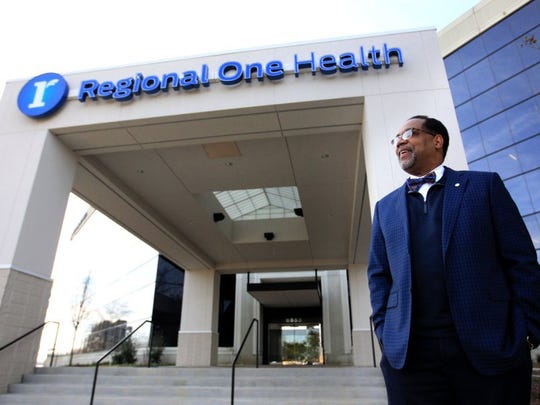
Dr. Reginald Coopwood, CEO of Regional One Health, on Feb. 5, 2016.

Representing more than half of the hospitals in Shelby County, the CEOs of four local health care organizations convened at the University of Memphis Tuesday for a panel on “successfully leading change” in the industry.

The gathering took place amid a growing conversation on medical debt — the cause of more than 58 percent of bankruptcies in the United States, according to the American Journal of Public Health. 

Communities across the countries have recently seen individuals and faith-based organizations launch fundraising initiatives to erase millions in medical expenses as part of a burgeoning movement to buy medical debt for the sole purpose of erasing it.

Memphis has also been at the fore of the conversation in recent months, with a pair of investigations by MLK50 and ProPublica revealing an aggressive system of suing patients involving wage garnishments, interest charges and court fees.

That reporting has since prompted a wave of debt reduction and forgiveness for thousands who were being sued by Methodist Le Bonheur Healthcare and Southeastern Emergency Physicians, a private equity-owned firm that staffs Baptist Memorial Health Care’s four local emergency rooms.

‘We have to be a profitable business’

At the Tuesday panel, organized by the professional association Mid-South Health Care Executives, the discussion touched on workplace harassment, the impending automation of health care jobs, and diversity.

The CEOs of Methodist Le Bonheur and Baptist Memorial also addressed medical debt as did their fellow panelists.

Dr. Reginald Coopwood, CEO of Regional One Health, the county hospital, said his organization was compelled to reassess its policies as a result of the recent scrutiny surrounding debt collection, though he defended the practice of suing patients in general.

“We send people through processes of collection,” Coopwood said of the public hospital.

“We have a great passion to deliver great care to whoever walks into our door. The flip side of that is … if everybody cannot pay their bills, we can’t buy $100 million record systems and we can’t buy technology that the community as a whole wants,” Coopwood said. “So we have policies to collect whatever is collectible from individuals.”

“That’s what a business needs to do,” he said.

According to General Sessions Court data, analyzed by MLK50 and ProPublica and shared with The Commercial Appeal, those hospitals and a physicians staffing firm, sued more than 2,500 patients in the first six months of the year, between January 1 and June 30:

  • Baptist Memorial Hospital, 486 lawsuits
  • Methodist Le Bonheur, 622 lawsuits
  • Regional One Health, 161 lawsuits
  • Southeastern Emergency Physicians, 1,292 lawsuits

“At the end of the day, we’re businesses, and in order to stay in business, we have to be able — in order to take care of those that are uninsured — we have to be a profitable business,” Coopwood said.

Sally Deitch, CEO of St. Francis Hospitals in Memphis, said the amount of charity care hospitals give back to communities is rarely seen, and, meanwhile, “most of these hospitals are living under their margins of actually being able to say ‘We are financially solid and stable and ready to make investments in new technology.'”

In a Memphis Business Journal review of nonprofit tax filings, Coopwood, Methodist Le Bonheur CEO Michael Ugwueke and Baptist Memorial Health Care CEO Jason Little are listed among the five highest paid nonprofit executives in the metro area, earning between $874,493 and $1,300,954 in 2018. Deitch was appointed to her position in October, after the Memphis Business Journal’s compensation review.

‘No one is perfect’

In the Methodist Le Bonheur system, MLK50 and ProPublica’s investigation found the nonprofit hospital’s practice of taking patients to court, through its in-house collection agency, had entrapped some of its own workers in a cycle of wage garnishments, interest and debt — while they were being paid less than a living wage.

Ugwueke, president of Methodist Le Bonheur’s hospitals in Shelby County, said his organization has gone “above and beyond the issues that were raised.”

The hospital, which is affiliated with the United Methodist Church, announced in July it would cease suing its employees and would raise the hospital network’s minimum wage to $15 an hour.

Methodist Le Bonheur also said it would institute a revamped financial assistance policy to ensure no one making less than 250 percent of federal poverty guidelines would be sued for debt collection in the future. For the approximately 6,500 patients who were in the process of being sued, the hospital also committed to forgiving or reducing their debts.

“As part of our process, we have made additional changes and accommodations,” Ugwueke said. “No one is perfect. I don’t think it’s anyone’s intention to do anything to harm patients.”

He added that he thinks other institutions have a role to play in serving the needs of low-income and poor communities.

“Memphis is a very challenging community. Health care organizations are not going to be the only ones solving the problems,” he said.

Deitch said no one seeking emergency care would ever be turned away from any hospital. Beyond that, she said she considered hospitals to be participants in helping their communities but not a deciding factor.

“When you start to think through the cost to the system and the burden to the system — at a certain point, it can’t all be the responsibility of a hospital,” she said.

Charity care

Little said he  thinks hospitals should address problems with affordability.

“We still need change in health care because it’s expensive. … Seventy-five percent of Americans are living paycheck to paycheck,” Little said, “and nobody sets money aside and plans to need a transplant. So that’s a challenge for all Americans and all Memphians.”

“And it’s a challenge that I’m really bullish on my colleagues up here continuing to address,” Little said, “because I think we’ve gotten really good at caring for our communities, particularly those in the greatest of need.”

For every dollar spent on expenses, Little said, Baptist Memorial spends 21 cents of it on charity care.

But that financial assistance hasn’t always been accessible to emergency-room patients, MLK50 and ProPublica reported in an investigation into Southeastern Emergency Physicians. The staffing firm contracts with doctors to treat emergency room patients in four of Baptist’s five hospitals in the region.

Southeastern filed nearly 1,300 lawsuits in the first half of 2019, according to MLK50 and ProPublica’s analysis of General Sessions Court data — more lawsuits than Regional One, Baptist Memorial and Methodist Le Bonheur combined.

But by the end of the year, in response to the MLK50 and ProPublica investigation, the firm’s parent company, TeamHealth, said it promote financial assistance program participation and would no longer pursue its active lawsuits — or sue any patients again.


Health care spending grows — again — in 2018

https://www.axios.com/newsletters/axios-vitals-7acf29e4-cb5c-437f-975e-7dd04f588cab.html?utm_source=newsletter&utm_medium=email&utm_campaign=newsletter_axiosvitals&stream=top

Image result for annual health care spending in us

Americans spent $3.65 trillion on health care in 2018 — 4.6% more than the year before. That growth also was higher than the 4.2% rate from 2017, according to revised figures from independent federal actuaries, Axios’ Bob Herman reports.

Between the lines: U.S. health care spending climbed again not because people went to the doctor or hospital more frequently, but because the industry charged higher prices. And private health insurers didn’t do a particularly good job negotiating lower rates.

The intrigue: The number of people with private health plans — which mostly consists of the coverage people get through their jobs — dipped in 2018, yet the amount spent per person soared 6.7%.

  • That is the highest per-enrollee spending growth rate among people with private health insurance since 2004, actuaries wrote.
  • Part of that increase was due to higher premiums that insurance companies passed on from the Affordable Care Act’s health insurance tax.
  • More importantly: Hospitals, doctors and drugmakers continued to wring out much higher rates from private insurers thanks to provider mergers and perverse negotiating incentives.

Medicare and Medicaid had much lower per-enrollee spending growth rates in 2018 than private insurance, but those figures were the highest they’ve been since 2015 — again due to higher costs for the private insurers that are increasingly running those government programs.


What Makes A Non-Profit Hospital?

What Makes A Non-Profit Hospital?

Image result for What Makes A Non-Profit Hospital?

What are non-profit hospitals and what is the community benefit standard?

Recently, several news outlets including ProPublicaKaiser Health News, and Wall Street Journal have published stories on non-profit hospitals’ medical debt collection practices and the effects on low income patients. These news stories prompted me to take a closer look at non-profit hospitals, their tax-exempt status, the community benefits they must fulfill to qualify for it, and the impact on care.

This is the first piece of two posts that consider the requirements that non-profit hospitals need to fulfill to qualify for their tax-exempt status and the impact of these standards on non-profit hospitals and the communities they seek to serve.

Has the definition of a non-profit hospital evolved over time?

Short answer: yes.

To date, non-profit hospitals have significantly benefited from their tax-exempt status, saving $24.6 billion in taxes in 2011. Originally, hospitals were granted tax-exempt status because of affiliations with religious institutions and for serving a charitable purpose. It wasn’t necessarily related to medical care. However, in 1956, the Internal Revenue Service (IRS) implemented the charity care standard requiring hospitals to offer uncompensated care to patients unable to pay in order to qualify as a charitable organization under Internal Revenue Code 501c3.

Many believed charity care would no longer be necessary after the implementation of Medicare and Medicaid in 1965. Policymakers assumed the two programs would ensure insurance coverage for most people, obviating the need for a charity care standard. This wasn’t the case, and over the next decade, two events led to the elimination of the charity care standard and the introduction of its successor, the community benefit standard, in 1969.

First, the House of Representatives released a report citing concerns about the execution of the charity care standard and its effectiveness. Second, a hospital that did not provide free or discounted health care mounted a legal challenge. The hospital asserted that, because it had an emergency room open to all community members, it was already providing a charitable service and should qualify for non-profit, or 501c3, status. The courts agreed with the hospital, stating that the provision of an open-access emergency room promoted the health of the community. This fulfilled a charitable purpose according to its legal definition. Ultimately, the IRS agreed with the court’s decision and deemed it necessary to change the charity care standard to accommodate this decision.

Consequently, the IRS issued Ruling 69-545, introducing the community benefit standard. From its implementation and onwards instead of being judged solely on the provision of free or discounted care, a hospital’s 501c3 status would be based on whether it “promoted the health of a broad class of individuals in the community,” including but not limited to just providing free or discounted care.

In 2010, additional requirements were included in the community benefit standard. Non-profit hospitals are now required to perform a community health needs assessment every three years and have both an accessible Financial Assistance Policy and Emergency Medical Care Policy (a charge limit for people who qualify for financial assistance and a billings) and a collections system that determines if individuals are eligible for financial assistance prior to engaging in extraordinary collection actions (applies to all emergency and medically necessary care).

What does non-profit status mean for hospitals?

Short answer: tax-exempt with charity donations required.

Most hospitals in the United States are recognized as charitable organizations, with 78 percent qualifying for 501c3 status. This means they are exempt from most taxes and benefit from tax-deductible charity donations and tax-exempt bond financing but they must meet general Internal Revenue Code requirements, including the community benefit standard aimed at improving the health of the surrounding community.

A variety of activities qualify as community benefits. Some examples are charity care, unreimbursed costs through means-tested programs (Medicaid, Medicare, CHIP, etc.), unreimbursed health professions education, unfunded research, and cash and in-kind contributions for community benefits. Hospitals must submit IRS Form 990 Schedule H annually to demonstrate their community benefit expenditures and maintain their 501c3 designations.

Are non-profit hospitals behaving like their for-profit counterparts?

Short answer: often times, yes.

Seven of the ten most profitable hospitals in the country are non-profits. Many of these exhibit for-profit characteristics such as being part of a larger hospital system, being located in urban areas, and not having a teaching program.

But these aren’t the only features of non-profit hospitals that resemble for-profits.study conducted by the Kellogg School of Management found that non-profits regularly behaved like for-profits after financial shocks. In response to financial crises, non-profits cut back on unprofitable services to offset losses instead of increasing prices. This is not what we expect; the study authors argue that we should expect them to do the latter — forgoing financial gain by starting with lower prices with room to increase in times of financial stress. That they don’t suggests that non-profits are already maximizing profits, similar to for-profit hospitals.

While it is unusual for non-profit hospitals to experience large financial profits, it does happen. The question is whether these gains are then reinvested into the hospital’s charity care and community health and wellbeing initiatives.

How much of a non-profit hospital’s revenue goes back into care and its community?

Short answer: some.

Herring, et al. found that, on average, 7.6 percent of non-profit hospitals’ 2012 total expenses were community benefit expenditures, 3 percent were unreimbursed Medicaid costs, and about 2 percent were charity care. (These findings are consistent with past studies.)

In some cases, non-profit hospitals receive tax benefits that far outweigh their community benefit investments. For example, in fiscal year 2011-2012, the University of Pennsylvania Medical Center made approximately $1 billion in profits, spent less than $20 million on charity care, and received $200 million in tax benefits. Cases like these have increased public scrutiny on hospitals’ non-profit status and whether current 501c3 requirements go far enough to ensure that hospitals provide sufficient charity care and community benefits.

Non-profit hospitals maintain their tax exempt status through the fulfillment of the community benefits standard. In the next piece we will look at the impact of these standards on the hospitals and the communities they serve.


Measles deaths ‘staggering and tragic’

https://www.bbc.com/news/health-50659893?fbclid=IwAR3gBbcdBh9DpvLZetL7k8uvV5VXxk5TBy1bNtDYeRKEcpGy2Xx58ydn39s

Measles

More than 140,000 people died from measles last year as the number of cases around the world surged once again, official estimates suggest.

Most of the lives cut short were children aged under five.

The situation has been described by health experts as staggering, an outrage, a tragedy and easily preventable with vaccines.

Huge progress has been made since the year 2000, but there is concern that incidence of measles is now edging up.

In 2018, the UK – along with Albania, the Czech Republic and Greece, lost their measles elimination status.

And 2019 could be even worse.

The US is reporting its highest number of cases for 25 years, while there are large outbreaks in the Democratic Republic of Congo, Madagascar and Ukraine.

The Pacific nation of Samoa has declared a state of emergency and unvaccinated families are hanging red flags outside their homes to help medical teams find them.

What is measles?

  • Measles is a highly infectious virus spread in droplets from coughs, sneezes or direct contact
  • It can hang in the air or remain on surfaces for hours
  • Measles often starts with fever, feeling unwell, sore eyes and a cough followed by a rising fever and rash
  • At its mildest, measles makes children feel very miserable, with recovery in seven-to-10 days – but complications, including ear infections, seizures, diarrhoea, pneumonia and brain inflammation, are common
  • The disease is more severe in the very young, in adults and in people with immunity problems

What are the numbers?

The global estimates are calculated by the World Health Organization (WHO) and the US Centers for Diseases Control and Prevention.

They show:

  • In 2000 – there were 28.2 million cases of measles and 535,600 deaths
  • In 2017 – there were 7.6 million cases of measles and 124,000 deaths
  • In 2018 – there were 9.8 million cases of measles and 142,000 deaths

Measles cases do not go down every year – there was an increase between 2012 and 2013, for example.

However, there is greater concern now that progress is being undone as the number of children vaccinated stalls around the world.

“The fact that any child dies from a vaccine-preventable disease like measles is frankly an outrage and a collective failure to protect the world’s most vulnerable children,” said Dr Tedros Ghebreysus, director-general of the WHO.

How are the numbers calculated?

Every single case of measles cannot be counted. In 2018, only 353,236 cases were officially recorded (out of the 7.8 million estimated).

So scientists perform complex maths for each country.

They take reported cases, the population size, deaths rates, the proportion of children vaccinated and more to eventually produce a global estimate.

Dr Minal Patel, who performed the number-crunching, told the BBC: “We’ve had a general trajectory downwards for deaths, which is great. Everyone involved in vaccination programmes should be very proud.

“But we’ve been stagnating in numbers of deaths for about the past seven years, and what’s really concerning is from last year we’ve gone up, and it looks like we’ve gone backwards.”

What is going on?

In short, not enough children are being vaccinated.

In order to stop measles spreading, 95% of children need to get the two doses of the vaccine.

But the figures have been stubbornly stuck for years at around 86% for the first jab, and 69% for the second.

Why enough children are not being vaccinated is more complicated – and the reasons are not the same in every country.

The biggest problem is access to vaccines, particular in poor countries.

The five worst-affected countries in 2018 were Democratic Republic of Congo, Liberia, Madagascar, Somalia and Ukraine.

The Ebola outbreak in Liberia (2014-16) and plague in Madagascar (2017) have taken a toll on their healthcare systems.

“Democratic Republic of Congo, Somalia and Ukraine, the other countries hardest-hit by measles, each face conflicts, with DRC additionally battling a serious Ebola outbreak and rampant distrust,” Prof Heidi Larson, from the London School of Hygiene & Tropical Medicine, explained.

The other issue is people who do have access to vaccines choosing not to immunise their children.

Will things be worse next year?

It looks likely.

The number of reported cases by mid-November this year was 413,000 compared with 353,000 for the whole of last year.

What do the experts say?

Henrietta Fore, Unicef’s executive director, said: “The unacceptable number of children killed last year by a wholly preventable disease is proof that measles anywhere is a threat to children everywhere.”

Dr Seth Berkley, chief executive of Gavi, the Vaccine Alliance, said: “It is a tragedy that the world is seeing a rapid increase in cases and deaths from a disease that is easily preventable with a vaccine.

“While hesitancy and complacency are challenges to overcome, the largest measles outbreaks have hit countries with weak routine immunisation and health systems.”

Prof Larson said: “These numbers are staggering. Measles, the most contagious of all vaccine-preventable diseases, is the tip of the iceberg of other vaccine-preventable disease threats and should be a wake-up call.”