The U.S. is way behind on coronavirus contact tracing. Here’s how we can catch up.

The U.S. is way behind on coronavirus contact tracing. Here’s how we can catch up.

The US is amassing an army of contact tracers to contain the covid ...

Get this: Vietnam, a country of 97 million people, has reported zero deaths from only 372 cases of coronavirus.

Theories abound about how they pulled it off. But public health experts chalk it up to swift action by the Vietnamese government, including contact tracing, mass testing, lockdowns, and compulsory wearing of masks.

Here, masks have become a political landmine. And despite President Trump claiming, “We have the greatest testing program anywhere in the world,” some states with surging infections have testing shortages—like Arizona.

But what about contact tracing, the process of calling potentially exposed people and persuading them to quarantine?

“I don’t think we’re doing very well,” said Dr. Anthony Fauci, director of the National Institute of Allergy and Infectious Diseases, when asked in June about contact tracing nationwide. Most states haven’t even made public how fast or well they’re implementing the process, if at all.

Florida, the nation’s current No. 1 hotspot for the virus, is often failing to trace positive cases. This, despite the state spending over $27 million on a contract with Maximus, a company notorious for underbidding, understaffing, and performing poorly on government services contracts in multiple states.

Yet, there are bright spots elsewhere. California allocated 5 percent of staff across 90 state government departments to contact trace. North Carolina’s Wake County trained 110 librarians. In Massachusetts, counties have used state pandemic funds to hire more nurses.

There are three reasons why state and local governments should reassign public employees or hire new staff outright as the country—finally—ramps up contact tracing.

One, outsourcing what should be a public job to for-profit companies like Maximus reduces transparencylimits democratic decision-makinglowers service quality, and increases inequality, all while rarely saving public dollars. Public control is particularly important when it comes to contact tracing, which involves personal health data.

Two, this is a chance to begin to reverse decades of cuts to public health budgets, which have made the worst public health crisis in a century even worse. Almost a quarter of the local public health workforce has been let go since 2008. Federal spending on nondefense discretionary programs like public health is now at a historic low.

The Trump administration, as expected, is headed in the wrong direction. On Tuesday, it stripped the Centers for Disease Control and Prevention (CDC) of control over coronavirus data. State and local governments must do all they can to right the ship.

And three, contact tracing is an opportunity to chip away at systemic racism. Since World War II, public sector employment has helped equalize American society by offering workers of color stable, well-paid employment. The median wage earned by Black employees is significantly higher in the public sector than in private industries.

Privatizing public work like contact tracing contributes to racial and gender income disparities. Workers at federal call centers operated by Maximus, for example, are predominately women and people of color paid poverty wages as low as $10.80 an hour with unaffordable health care.

If #BlackLivesMatter—as many governors and mayors across the country have proclaimed in recent weeks—then contact tracing should be treated as what it is: a public good.

To catch up to other countries like Vietnam, the U.S. needs to get contact tracing right—and that means doing it with public workers.


Over 224,000 COVID-19 deaths forecast in U.S. by November 1, says University of Washington’s IHME

https://www.reuters.com/article/us-health-coronavirus-usa-forecast/over-224000-covid-19-deaths-forecast-in-u-s-by-november-1-says-university-of-washingtons-ihme-idUSKCN24G1S9?fbclid=IwAR19qY7KM_P4bPIMnlP7ax1fB2xXu8Pf4GOxZoar-p2aey6elaVI_SXW4-Y

Over 224,000 COVID-19 deaths forecast in US by November 1, says ...

A newly revised University of Washington model projects the U.S. death toll from COVID-19 will climb to just above 224,000 by Nov. 1, up 16,000 from a prior forecast, due to rising infections and hospitalizations in many states.

But the latest forecast from the university’s Institute for Health Metrics and Evaluation (IHME), released late on Tuesday, also predicts the death toll could be reduced by 40,000 if nearly all Americans wore masks in public.

“Use of masks is up, but not as high as it should be. If 95% of Americans wore masks each time they left their homes, infection rates would drop, hospitalizations would drop, and forecast deaths would drop,” the IHME said in a statement.

The IHME’s new forecast came after Alabama, Florida and North Carolina on Tuesday reported record daily increases in deaths from COVID-19, marking grim new milestones of a second wave of infections surging across much of the U.S.

The new IHME forecast – 224,089 U.S. lives lost by Nov. 1 – was revised upward from the 208,254 deaths projected on July 7.

At least 136,052 Americans have died from COVID-19, the illness caused by the novel coronavirus, while reported U.S. infections have surpassed 3.4 million, according to a tally by Reuters.

The IHME’s projections have been cited in the past by the White House and are watched closely by public health officials.


The burden on teachers

https://www.axios.com/teachers-worry-school-reopening-coronavirus-4f173e1b-f48f-49ad-a319-0b053ddd7295.html

The burden on teachers in reopening the schools - Axios

The debate over whether and how much to re-open schools in the fall has put teachers in the precarious position of choosing between their own safety and the pressures from some parents and local officials.

Why it matters: Teachers are the core of K-12 education. The people we depend on to educate our society’s children may end up bearing the brunt of both the risk and the workload.

What’s happening: With coronavirus cases spiking in many parts of the U.S., districts are weighing the feasibility of keeping classes all virtual, as Los Angeles and San Diego are doing, or conducting a rotation of in-person and remote lessons.

While all back-to-school options have pros and cons, there are specific worries for teachers.

1. Exposure: Despite a child’s overall low health risk if they contract COVID-19, scientists still do not conclusively know if schools could become hotspots for more vulnerable populations.

  • Schools are on a time and money crunch for better ventilation, more disinfectant and masks and proper social distancing techniques. If a cluster of cases do occur, teachers and parents are short on answers about how to isolate students and contact trace.
  • Districts were already facing staffing shortages before the pandemic. And nearly 1.5 million teachers have a condition that puts them at increased risk of serious illness from coronavirus, per a Kaiser Family Foundation study. A separate KFF study out today found that 3.3 million adults age 65 or older live in a household with school-age children.
  • A study in Germany found that infections in schools had not led to outbreaks in the community. But an analysis of a surge of cases in Israel found that nearly half the reported cases in June were traced back to illness in schools.

“We as teachers prepare for active shooters, tornadoes, fires and I’m fully prepared to take a bullet or shield a child from falling debris during a tornado. But if I somehow get it and I’m asymptomatic and I get a student sick and something happens to them or one of their family members, that’s a guilt I would carry with me forever.”

— Michelle Albright, a second grade teacher from northwest Indiana

2. Difficulty of a hybrid approach: Many school districts like New York City are opting to split school between in-person and online to minimize exposure. That’s an effective but more burdensome approach for teachers, top teachers union chief Randi Weingarten told Axios’ Dan Primack Monday.

  • In-person contact with a teacher can make a big difference for students struggling with a concept or who need one-on-one time.
  • But many teachers will have to prepare virtual and in-person lessons and ensure the same learning outcomes for students in both settings — a tall order.

3. Child care availability: Teachers with children of their own are concerned about how to care for them when they are teaching.

  • States could choose to provide child care services for educators as essential employees, but it’s unclear what non-school child care options will be available in areas with high infection rates or where day care centers have struggled to stay in business.

4. Concerns of other school staff: Bus drivers, custodians, classroom aides, administrative staff, cafeteria workers, school nurses and substitute teachers may come in contact with more children throughout the day because they are less likely than teachers to be confined to a single classroom.

What to watch: School districts ought to be finding other roles for teachers who are not comfortable returning to the classroom, such as reassigning them to virtual-only roles or providing one-on-one online tutoring sessions with students, said John Bailey, visiting fellow at the American Enterprise Institute and former domestic policy adviser during the George W. Bush administration.

  • But there’s not much time to sort that out on top of getting teachers the professional development they need for effective remote learning.
  • “What I worry about is that we squandered the few months we had to make sure we can think through these challenges,” Bailey said. “This was one of the most obvious challenges facing schools with reopening and we should have been thinking about that for the last several months. Instead it’s creeping up on districts.”

The bottom line: Due to the unprecedented nature of this pandemic, teachers are worried about the uncertainties and, in some cases, lack of clear planning should conditions worsen. That may drive some to quit teaching altogether.

  • “You’ve got 25% of teachers who may be in either a high-risk situation because of pre-existing conditions or because of age, and a lot of them, if they can, they may just check out and say ‘nobody’s taking care of me. I can’t go back,'” Weingarten said.


1.3 million Americans filed first-time unemployment claims last week

https://www.cnn.com/2020/07/16/economy/unemployment-benefits-coronavirus/index.html

1.3 million people filed for first-time unemployment last week

It’s still not easy to remain employed in the US, nearly four months after the coronavirus pandemic began upending the economy.

Another 1.3 million people filed first-time jobless claims on a seasonally adjusted basis for the week ending July 11, according to the Department of Labor. That’s down 10,000 from the prior week’s revised level.
On an unadjusted basis, more than 1.5 million people filed first-time claims, up almost 109,000 from the week before. The seasonal adjustments are traditionally used to smooth out the data, but that has tended to have the opposite effect during the pandemic.
Weekly first-time unemployment applications have been on the decline for more than three months since their peak in the last week of March. But last week’s drop was less than expected.
“Overall, filings remain high and are declining at a stubbornly slow pace,” said Rubeela Farooqi, chief US economist for High Frequency Economics, noting that the risk of mounting permanent job losses is high. “The pace could slow even further or reverse in coming weeks in response to a surge in virus cases and related closures of businesses.”
Continued claims, which count workers who have filed claims for at least two weeks in a row, stood at more than 17.3 million for the week ending July 4, down 422,000 from the prior week. These claims peaked in May at nearly 25 million.
In addition, about 928,500 million people in 47 states filed for first-time pandemic unemployment assistance last week, down almost 118,000 from the week before. And almost 14.3 million people claimed continued pandemic benefits across 48 states for the week ending June 27. That’s up nearly 406,000 from the prior week.
The pandemic program was created by Congress in March to respond to the coronavirus outbreak. It provides temporary benefits to workers who typically aren’t eligible for payments, including freelancers, independent contractors, the self-employed and certain people affected by the coronavirus. It expires at the end of the year.
Looking at all workers participating in an array of unemployment programs, just over 32 million Americans claimed jobless benefits the week ending June 27, down about 433,000 from the prior week.
That total includes those in the traditional and pandemic unemployment programs, as well as the pandemic emergency unemployment compensation program, which has nearly 936,500 filers. Lawmakers created it in March to provide those who have exhausted their benefits with an additional 13 weeks of payments. It also expires at the end of 2020.


Cartoon – We’re way beyond Rational Thinking

Management Cartoon # 7684: We're way beyond rational thinking. You ...

Cartoon – Crisis Leadership Today

Cartoon – Before Rational Thinking Sets In | HENRY KOTULA

Cartoon – Coronavirus Leadership

Prof. Diego Kuonen on Twitter: "Ignore what the data say ...

MASK UP! It’s Everybody’s Job

Image may contain: one or more people and people sitting, text that says 'MAN UPI MASK UP! IT'S EVERYBODY'S JOB Together we can slow and stop the spread. USE A MASK & PHYSICAL DISTANCE. Americans DO THEIR PART! prCieiandBarca'

Public’s disconnect from COVID-19 reality worries experts

Public’s disconnect from COVID-19 reality worries experts

Public's disconnect from COVID-19 reality worries experts | TheHill

The United States is being ravaged by a deadly pandemic that is growing exponentially, overwhelming health care systems and costing thousands of lives, to say nothing of an economic recession that threatens to plague the nation for years to come.

But the American public seems to be over the pandemic, eager to get kids back in schools, ready to hit the bar scene and hungry for Major League Baseball to play its abbreviated season.


The startling divergence between the brutal reality of the SARS-CoV-2 virus and the fantasy land of a forthcoming return to normalcy has public health experts depressed and anxious about what is to come. The worst is not behind us, they say, by any stretch of the imagination.


“It’s an absolute disconnect between our perceived reality and our actual reality,” said Craig Spencer, a New York City emergency room doctor who directs global health in emergency medicine at New York Presbyterian/Columbia University Medical Center. “To look at the COVID case count and the surge in cases and to think that we can have these discussions as we have uncontrolled spread, to think we can have some national strategy for reopening schools when we don’t even have one for reopening the country, it’s just crazy.”

The number of dead from the virus in the United States alone, almost 136,000, is roughly equal to the populations of Charleston, S.C., or Gainesville, Fla. If everyone in America who had been infected lived in the same city, that city would be the third-largest in the country, behind only New York and Los Angeles. More people in the United States have tested positive for the coronavirus than live in the state of Utah. By the weekend, there are likely to be more confirmed coronavirus cases than there are residents of Connecticut.

There are signs that the outbreak is getting worse, not better. The 10 days with the highest number of new coronavirus infections in the United States have come in the past 11 days.

Case counts, hospitalizations and even deaths are on the rise across the nation, not only in Southern states that were slow to embrace lockdowns in March and April.

California, the first state to completely lock down, has reported more than 54,000 new cases over both of the last two weeks. Nevada, about one-thirteenth the size of California, reported 5,200 new cases last week. States where early lockdowns helped limit the initial peak like Pennsylvania, Illinois and Ohio are all seeing case counts grow and hospital beds fill up.

Only two states — Maine and New Jersey — have seen their case counts decline for two consecutive weeks.


“We are nearing the point where pretty much most of the gains we had achieved have been lost,” said Christine Petersen, an epidemiologist at the University of Iowa. “All of us are hoping we magically get our acts together and we can look like Europe in two months. But all the data shows we are not doing that right now.”

It is in that dismal context that schools are preparing some sort of return to learning, whether in person or remote. President Trump and Education Secretary Betsy DeVos have threatened schools that do not fully reopen.

But even though the coronavirus appears to have less severe consequences among children, sending them back to schools en masse does not carry zero risk. Children have died from the virus, and the more who are exposed mean more opportunities for the virus to kill again, even before considering the millions of teachers who may be vulnerable or the parents and grandparents asymptomatic children might be exposed to.

Already, school districts in Los Angeles and San Diego have delayed reopening plans as case counts rise.

“We do know that kids can get sick and they can even die. It’s definitely a much lower number,” Petersen said. “Even if they aren’t as infectious, if there are millions of them gathering in schools not having great hygiene, it’s a multiplier effect.”


The painful lockdowns that were supposed to reduce viral transmissions bought time to bolster testing and hospital capacity, to speed production of the equipment needed to test patients and protect front-line health care workers.

But that hasn’t happened; laboratories in the United States have tested as many as 823,000 people in a day, a record number but far shy of the millions a day necessary to wrestle the virus under control. Arizona and Los Angeles have canceled testing appointments for lack of supplies. Hospitals are reporting new shortages of protective gear and N95 masks.

The Trump administration used the Defense Production Act to order meat processing plants to stay open; it has only awarded contracts sufficient to produce 300 million N95 masks by the end of the year, far short of what health experts believe will be necessary to protect health care workers.


“A failure of national leadership has led us to a place where we are back where we were before, no national testing strategy, no national strategy for supply,” said Kelli Drenner, who teaches public health at the University of Houston. “States are still on their own to scramble for reagents and swabs and PPE and all of that, still competing against each other and against nations for those resources.”

There are troubling signs that the promise of a vaccine may not be the cure-all for which many had hoped. Early studies suggest that the immune system only retains coronavirus antibodies for a few months, or perhaps a year, raising the prospect that people could become reinfected even after they recover. A growing, if still fringe, movement of anti-vaccination activists may refuse a vaccine altogether, putting others at risk.

“A vaccine is not going to solve this. People die of vaccine-preventable diseases every day. All the failures with testing and diagnostics and all the inequities and access to care with those are going to be the same things that are going to be magnified with a vaccine,” said Nita Bharti, a biologist at Penn State’s Center for Infectious Disease Dynamics.


More than a dozen states hit hardest by the latest wave of disease have paused or reversed their reopening processes. But only 24 states and the District of Columbia have ordered residents to wear masks in public, and compliance varies widely by both geography and political affiliation.

“This is the critical time. If we are going to try to reverse this, we have to get back to the mental space and the resolute action we had in March. I’m not sure we have the energy and the wherewithal to do it,” Petersen said.


Without a dramatic recommitment to conquering the virus, health officials warn, the new normal in which the country exists will be one of serious and widespread illness, and a steady drumbeat of death.

“None of this was inevitable. None of this should be acceptable. There are ways we can do better,” Spencer said. “This will continue to be our reality for as long as we don’t take it seriously.”

But after months of repeating the same warnings — wear a mask, stay socially distant, stay home if possible, avoid places where people congregate in tight quarters — some health experts worry their message has been lost amid a sea of doubt, skepticism and mixed signals.

“It’s like a learned helplessness when we’re not helpless,” Drenner said. “There are some pretty effective strategies, but we don’t seem to have the political will to do it.”


More than 400 million people in India re-enter lockdown conditions

https://www.cnn.com/world/live-news/coronavirus-pandemic-07-15-20-intl/index.html

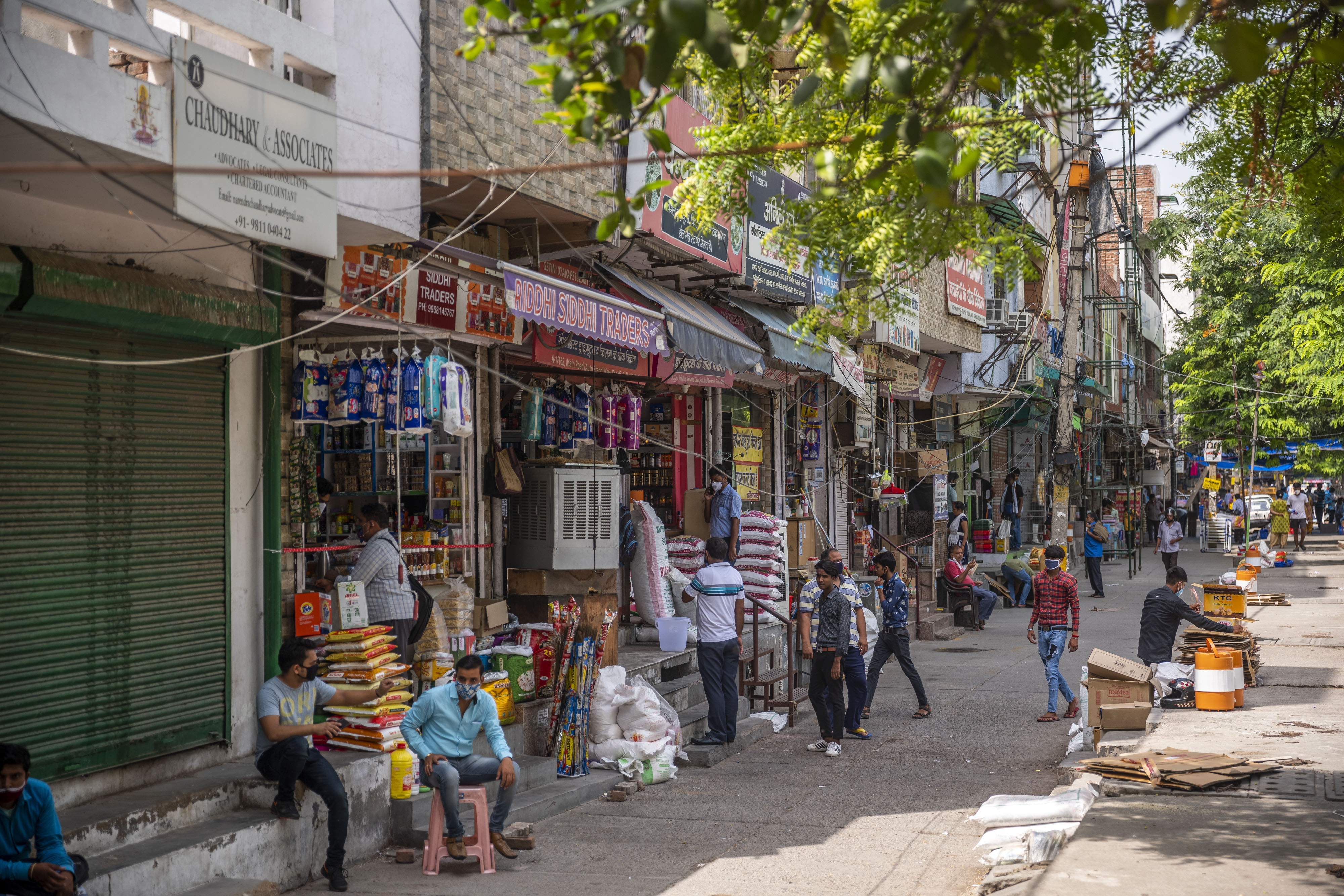
People visit stores on July 14 at the Kondli Wholesale Market in the city of Noida in Uttar Pradesh, India.

More than 400 million people across three Indian states will re-enter lockdown, weeks after a nationwide lockdown was lifted on May 30.

This comes after India recorded 100,000 new coronavirus cases in the past five days as the country struggles to gain control of the worsening pandemic.

On Wednesday, it saw 29,429 new cases, bringing the total to 936,181 confirmed cases and 24,309 deaths.

State and city-wide measures: As cases and deaths continue to soar in India, two of its most populous states — Bihar and Uttar Pradesh — announced various lockdown restrictions.

Bihar’s government announced a 16-day long state-wide lockdown on Tuesday, which would come into effect from July 16, while Uttar Pradesh’s government said Sunday that a lockdown will take place every weekend until the end of July.

Both states had previously lifted their lockdowns on May 30 except for districts with a high number of cases.

The city of Bengaluru, in Karnataka state, which had also initially lifted restrictions, went into a week-long lockdown on Tuesday until July 22. This comes after the state of Maharashtra reinstated a lockdown on June 29 until July 31.

India began easing lockdown restrictions on May 30, but certain states such as West Bengal and Jharkhand continued to have lockdown measures and restrictions on movement, with the exception of certain essential services.

More than 100 million people in these states have remained under lockdown restrictions since late March.

In the capital, New Delhi, where there are no overarching lockdown measures, restrictions continue in its “containment zones,” which include more than 600 localities as of Monday, according to the territory’s Revenue Department.