12 hospitals, health systems cutting jobs

Several hospitals and health systems are trimming their workforces or jobs due to financial and operational challenges. 

Below are workforce reduction efforts or job eliminations that were announced within the past two months and/or take effect over the next month. 

1. West Reading, Pa.-based Tower Health on Nov. 16 laid off 52 corporate employees as the health system shrinks from six hospitals to four. The layoffs, which are expected to save $15 million a year, account for 13 percent of Tower Health’s corporate management staff.

2. New York City-based Memorial Sloan Kettering Cancer Center will lay off 3 percent of its workforce by mid-January 2023. 

3. Fayetteville, N.C.-based Cape Fear Valley Health is eliminating 200 positions. The decision affects 42 employees in non-direct patient care positions. The other 158 positions were unfilled positions. Employees were informed of the changes Oct. 27. 

4. Sioux Falls, S.D.-based Sanford Health announced layoffs affecting an undisclosed number of staff on Oct. 19, a decision its CEO said was made “to streamline leadership structure and simplify operations” in certain areas. The layoffs primarily affect nonclinical areas.

5. University Hospitals announced efforts to reduce system expenses by $100 million Oct. 12, including the elimination of 326 vacant jobs and layoffs affecting 117 administrative employees. None of the employees affected by job cuts or layoffs provide direct patient care. The workforce reduction comes as the 21-hospital system faces a net operating loss of $184.6 million from the first eight months of 2022. 

6. Ascension is closing Ascension St. Vincent Dunn, a critical access hospital in Bedford, Ind., and nine medical practices in December, a move that will affect 133 employees. Affected employees who do not secure another position within the health system will be offered severance and outplacement services.

7. Quincy, Ill.-based Blessing Health System closed its hospital in Keokuk, Iowa, Sept. 30. The closure affected 151 workers. The layoffs take effect Nov. 4. The employees will do on-site work or be placed on administrative leave until the layoff date, Blessing Health said.

8. St. Vincent Charity Medical Center in Cleveland will lay off 978 workers when it ends many services in November. The hospital, part of Sisters of Charity Health System, is ending inpatient care and most other services in November. After the transition, the facility will offer outpatient behavioral health, urgent care and primary care.

9. Commonwealth Health, part of Franklin, Tenn.-based Community Health Systems, will lay off 245 employees when it closes facilities at the end of October. The health system is closing First Hospital, a psychiatric hospital in Kingston, Pa., and its various outpatient centers on Oct. 30. Affected workers are encouraged to apply for open positions they’re qualified for at other Commonwealth Health facilities, a system spokesperson told Becker’s.

10. Yale New Haven (Conn.) Health eliminated 155 management positions from its nearly 30,000-person workforce. The health system laid off 72 employees and eliminated 83 vacant positions, a spokesperson told Becker’s Hospital Review in September. The cuts were attributed to financial pressures.

11. Citing financial pressures, BHSH System — now named Corewell Health — cut about 400 positions from its 64,000-member workforce in September. The 22-hospital organization was formed by the February merger of Grand Rapids, Mich.-based Spectrum Health with Southfield, Mich.-based Beaumont Health.

12. Bakersfield (Calif.) Heart Hospital is laying off 114 employees. Affected employees were told in September that they no longer had to report to work, but they will continue to receive full pay and benefits through Nov. 5. The layoffs are an effort to optimize operations and to free up resources for patient care and specialized surgery, the hospital said. 
Thomas Jefferson University reports $83.5M Q3 loss, health system patient volumes up

Philadelphia-based Thomas Jefferson University, including Jefferson Health, reported a multimillion-dollar loss in the third quarter ending Sept. 30.

Five things to know:

1. Thomas Jefferson University reported an $83.5 million loss for the quarter, down significantly from a $12.8 million gain in the same period last year.

2. Thomas Jefferson University reported $29.9 million in operating revenue. Clinical operations reported an $87.3 million loss from operations, and the insurance operations reported a $7.1 million gain for the quarter.

3. The organization reported a -3.7 percent operating margin, compared to 0.9 percent for the third quarter last year.

4. Hospital inpatient admissions grew 30.4 percent year over year to 39,463 cases for the quarter. Outpatient observations were also up 21.6 percent to 11,744 cases. Outpatient visits were up 36 percent year over year to 524,200 visits.

5. Days cash on hand for clinical operations dropped by nearly 11 days since the start of the fiscal year to 158.5 days due to nonoperating investment losses and repaying Medicare advance payments.

10 health systems with strong finances

Here are 10 health systems with strong operational metrics and solid financial positions, according to reports from Fitch Ratings and Moody’s Investors Service.

1. Advocate Aurora Health has an “AA” rating and a stable outlook with Fitch. The health system, dually headquartered in Milwaukee and Downers Grove, Ill., has a strong financial profile and a leading market position over a broad service area in Illinois and Wisconsin, Fitch said. The health system’s fundamental operating platform is strong, the credit rating agency said. 

2. Allina Health System has an “AA-” rating and a stable outlook with Fitch. The Minneapolis-based system is the inpatient market share leader in a highly competitive market and has a strong relation with payers in the market, Fitch said. Alliana’s financial profile is strong, the ratings agency said. 

3. Banner Health has an “AA-” rating and stable outlook with Fitch. The Phoenix-based health system’s core hospital delivery system and growth of its insurance division combine to make it a successful, highly integrated delivery system, Fitch said. The credit rating agency said it expects Banner to maintain operating EBITDA margins of about 8 percent on an annual basis, reflecting the growing revenues from the system’s insurance division and large employed physician base.

4. Bon Secours Mercy Health has an “AA-” rating and stable outlook with Fitch. The Cincinnati-based health system has a broad geographic footprint as one of the five largest Catholic health systems in the U.S., a good payer mix and a leading or near-leading market share in eight of its eleven markets in the U.S., Fitch said.

5. Bryan Health has an “AA-” rating and stable outlook with Fitch. The Lincoln, Neb.-based health system has a leading and growing market position, very strong cash flow and a strong financial position, Fitch said. The credit rating agency said Bryan Health has been resilient through the COVID-19 pandemic and is well-positioned to accommodate additional strategic investments. 

6. Deaconess Health System has an “AA” rating and stable outlook with Fitch. The Evansville, Ind.-based system has a leading market position in its primary service area and a favorable payer mix, Fitch said. The ratings agency said it expects Deaconess’ operating EBITDA margins to improve and stabilize around 10 percent by 2023, reflecting strong volumes and focus on operating efficiencies.

7. Gundersen Health System has an “AA-” rating and stable outlook with Fitch. The La Crosse, Wis.-based health system has strong balance sheet metrics, a leading market position and an expanding operating platform in its service area, Fitch said. The credit rating agency expects the health system to return to strong operating performance as it emerges from disruption related to the COVID-19 pandemic. 

8. Hackensack Meridian Health has an “AA-” rating and stable outlook with Fitch. The Edison, N.J.-based health system has shown consistent year-over-year increases in market share and has a solid liquidity position, Fitch said. 

9. Intermountain Healthcare has an “Aa1” rating and stable outlook with Moody’s. The Salt Lake City-based health system has exceptional credit quality, which will continue to benefit from its leading market position in Utah, Moody’s said. The credit rating agency said the health system’s merger with Broomfield, Colo.-based SCL Health will also give Intermountain greater geographic reach.

10. Yale New Haven (Conn.) Health has an “AA-” rating and stable outlook with Fitch. The health system’s turnaround efforts, brand recognition and market presence will help it return to strong operating results, Fitch said. 

The cost of hospital contract labor in 22 numbers

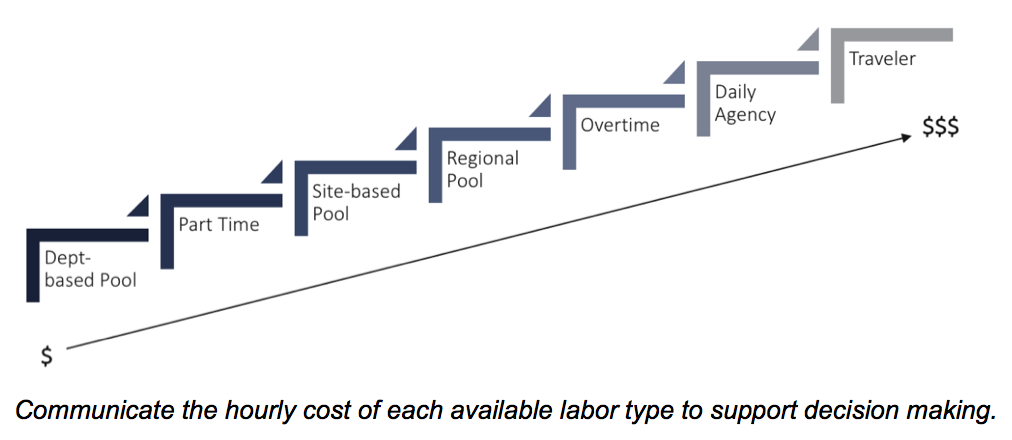
Many hospitals and health systems aim to recruit and retain permanent staff to replace contract labor positions, which have seen wages skyrocket because of staff shortages during the COVID-19 pandemic. 

Hospitals across the country have relied on contract labor and temporary staffing agencies to support their clinical teams when many burned-out providers are exiting healthcare. An October survey conducted by Bain & Company found that 25 percent of physicians, advanced practice providers and nurses are considering changing careers. Eight-nine percent of the providers thinking about leaving the profession cited burnout as the driving force. 

Staffing shortages are driving labor costs to an unsustainable level for hospitals operating on razor-thin margins and reducing temporary staffing costs is top of the agenda for many financial executives looking to reduce expenses in the coming quarters.

Here are 22 numbers that demonstrate the cost of contact labor for hospitals, according to reports from Kaufman Hall, Definitive Healthcare, Vaya Workforce and big hospital operators:

1. The demand for contract labor increased 500 percent in fall 2021 compared with 2019, according to healthcare staffing services company Vaya Workforce. While demand has since decreased, it is still nearly triple pre-pandemic levels and is projected to remain as high as 20 percent above the 2019 baseline.

2. In 2020, the average amount hospitals spent on contract labor was $4.6 million, more than double the average expense of $2.2 million in 2011, according to a report from Definitive Healthcare, a data and analytics company.

3. Rochester, Minn.-based Mayo Clinic Hospital, Saint Mary’s Campus spent $286.8 million on contract labor in 2020, the most of any hospital in the country that year, according to Definitive Healthcare’s analysis of about 3,100 U.S. hospitals

4. From 2019 to 2022, the hourly wage rate for contract nurses increased 106 percent, according to Kaufman Hall. Contract nurses are earning an average of $132 an hour in 2022 versus $64 an hour in 2019. At the height of the pandemic, some travel nurses earned up to $300 an hour, with rates as high as these placing immense pressure on hospital balance sheets.

5. The rise in contract labor from 2019 through March of 2022 led to a 37 percent increase in labor expenses per patient, equating to between $4,009 and $5,494 per adjusted discharge.

6. Hospitals with 25 beds or fewer spent about $460,000 on contract labor in 2020 compared to hospitals with more than 250 beds that spent almost $11 million on average, according to Definitive Healthcare.

7. Hospitals in the western U.S. have the highest contract labor expenses, with an average of $9.6 million reported in 2020. Large cities, high cost of living and high salary rates in the region contribute to this high average.

8. Labor costs were one of the core reasons Franklin, Tenn.-based Community Health Systems reported a net loss of $42 million in the third quarter, but CFO Kevin Hammons said he expects to see a 40 percent to 50 percent reduction in contract labor costs next year compared with 2022.

9. Nashville, Tenn.-based HCA Healthcare reported a 19 percent decrease in contract labor costs in the third quarter compared to the second quarter, allowing the system to absorb much of the market-based wage adjustment costs for its employee workforce, CFO Bill Rutherford said during an Oct. 21 earnings call.  

10. According to Kaufman Hall’s “2022 State of Healthcare Performance Improvement” report, published Oct. 18, 46 percent of hospital and health system leaders identify labor costs as the greatest opportunity for cost reductions. This was significantly up from the 17 percent of respondents who noted labor costs as their greatest opportunity to cut costs last year.

11. There are some hopeful signs that the use of contract labor has stabilized and is steadily falling, according to Kaufman Hall: 44 percent of hospitals in its survey reported that their utilization of contract labor is declining while 29 percent said that it is holding steady.

Kaiser Permanente reports $1.5B Q3 net loss

Oakland, Calif.-based Kaiser Foundation Health Plan, Kaiser Foundation Hospitals and their subsidiaries reported a net loss of $1.5 billion for the quarter ending Sept. 30, according to a Nov. 4 financial report.

The company posted total operating revenues of $24.3 billion and total operating expenses of $24.3 billion for the quarter. Total operating revenues of $23.2 billion and total operating expenses of $23.1 billion for the same period in 2021. 

Additionally, there was an operating loss of $75 million in the third quarter compared to an operating income of $38 million in the third quarter of 2021, according to a Nov. 4 news release. 

“I am proud of our ability to navigate the challenges of the past few years, including a global economic crisis, the high cost of goods and services, supply chain issues, labor shortages, and the pandemic while serving our 12.6 million members,” said Greg Adams, chair and CEO of Kaiser Permanente. 

The net loss of $1.5 billion in the third quarter of 2022 compares to a $1.6 billion net income in the third quarter of 2021. Capital spending totaled $2.5 billion year-to-date.

“We are grateful to our extraordinary people whose commitment and compassion allow us to continue to fulfill our mission of providing high-quality and affordable care and improving the health of our communities,” said Tom Meier, corporate treasurer of Kaiser Permanente.

For hospitals, ‘difficult decisions’ loom after 9 months of negative margins

The third quarter brought little relief to hospitals in what is shaping up to be one of their worst financial years. 

Kaufman Hall’s October National Hospital Flash Report — based on data from more than 900 hospitals — found slightly lower hospital expenses in September did not outweigh lower revenue across the board, with decreases in discharges, inpatient minutes and operating minutes.

The median year-to-date operating margin index for hospitals was -0.1 percent in September, marking a ninth straight month of negative operating margins and a dimmer outlook for their climb back into the black by year’s end. 

Kaufman Hall noted that expense pressures and volume and revenue declines could force hospitals to make “difficult decisions” about service reductions and cuts. 

“Health systems are starting to get a clear picture of what service lines have a positive effect on their margins and which ones are weighing them down,” said Matthew Bates, managing director and Physician Enterprise service line lead with Kaufman Hall. “Without a positive margin there is no mission. Health systems must think carefully and strategically about what areas of care they invest in for the future.”

Massachusetts’ 19K vacant hospital jobs: ‘Our healthcare system has never been more fragile’

There are an estimated 19,000 full-time job vacancies across Massachusetts acute care hospitals, according to a survey published Oct. 31 by the Massachusetts Health & Hospital Association.

Hospitals are working to address backlogs and transfer patients to post-acute care settings while skyrocketing labor costs — including a projected $1 billion in travel labor costs this year — are compounding healthcare facilities’ financial woes, according to the report. These challenges are hampering hospital operations as well as leading to care delays and reduced access to care.

Fewer workers mean that fewer beds are available for patients, while the demand for care increases due to deferred care throughout the COVID-19 pandemic, the behavioral health crisis and reduced access to community-based services continue to challenge hospitals throughout the state. At any given time, more than 1,500 patients are in acute hospital beds awaiting placement to a specialized behavioral health bed or post-acute care, according to the MHA.

“Our healthcare system has never been more fragile, and its leaders have never been more concerned about what’s to come in months ahead,” Steve Walsh, president and CEO of the MHA, said in an Oct. 31 news release shared with Becker’s Hospital Review. “They are exhausting every option within their control to confront these challenges, but this is an unsustainable reality and providers are in dire need of support.”

In response to the survey, 37 hospitals — representing 70 percent of the state’s total hospital employment — reported 6,650 vacancies among 47 positions critical to hospital operations and clinical care. The positions range from direct care nurses to lab personnel and clinical support staff. Eighteen of the 47 positions have a vacancy rate greater than 20 percent

At a 56 percent vacancy rate, licensed practical nurses is the most in-demand position, while home health aides (34 percent), mental health workers (32 percent), infection control nurses (26 percent) and CRNAs (24 percent) are also highly sought after.

Survey respondents identified 6,650 vacancies. The 47 positions included in the survey, which was conducted this summer, account for less than half of all hospital roles. The MHA said it extrapolated that across all positions and hospitals to arrive at an estimated 19,000 vacancies across the state.

Staffing shortages are driving labor costs to an unsustainable level for many hospitals already grappling with margins close to zero or in the red. Hospitals have relied on high-cost temporary staffing to fill critical positions during the pandemic, resulting in average hourly wage rates for travel nurses increasing 90 percent since 2019, according to the report. Massachusetts hospitals reported spending $445 million on temporary registered nurse staffing halfway through the fiscal year, with temporary RN staffing costs increasing 234 percent from fiscal year 2019 to March 2022.

If urgent steps are not taken to address healthcare’s staffing shortage, hospitals will continue to face capacity challenges and overpay for labor, which will lead to fiscal instability, according to Mr. Walsh. 

The MHA urged providers, payers, public officials and government agencies to address the workforce crisis by investing in training and education, expanding the workforce pipeline, providing financial support to hospitals and advancing new models of care such as telehealth and at-home care. 

10 hospitals, health systems cutting jobs

Several hospitals and health systems are trimming their workforces or jobs due to financial and operational challenges. 

Below are workforce reduction efforts or job eliminations that were announced within the past month and/or take effect over the next month. 

1. Fayetteville, N.C.-based Cape Fear Valley Health is eliminating 200 positions. The decision affects 42 employees in non-direct patient care positions. The other 158 positions were unfilled positions. Employees were informed of the changes Oct. 27. 

2. Sioux Falls, S.D.-based Sanford Health announced layoffs affecting an undisclosed number of staff on Oct. 19, a decision its CEO said was made “to streamline leadership structure and simplify operations” in certain areas. The layoffs primarily affect nonclinical areas.

3. University Hospitals announced efforts to reduce system expenses by $100 million Oct. 12, including the elimination of 326 vacant jobs and layoffs affecting 117 administrative employees. None of the employees affected by job cuts or layoffs provide direct patient care. The workforce reduction comes as the 21-hospital system faces a net operating loss of $184.6 million from the first eight months of 2022. 

4. Ascension is closing Ascension St. Vincent Dunn, a critical access hospital in Bedford, Ind., and nine medical practices in December, a move that will affect 133 employees. Affected employees who do not secure another position within the health system will be offered severance and outplacement services.

5. Quincy, Ill.-based Blessing Health System closed its hospital in Keokuk, Iowa, Sept. 30. The closure affected 151 workers. The layoffs take effect Nov. 4. The employees will do on-site work or be placed on administrative leave until the layoff date, Blessing Health said.

6. St. Vincent Charity Medical Center in Cleveland will lay off 978 workers when it ends many services in November. The hospital, part of Sisters of Charity Health System, is ending inpatient care and most other services in November. After the transition, the facility will offer outpatient behavioral health, urgent care and primary care.

7. Commonwealth Health, part of Franklin, Tenn.-based Community Health Systems, will lay off 245 employees when it closes facilities at the end of October. The health system is closing First Hospital, a psychiatric hospital in Kingston, Pa., and its various outpatient centers on Oct. 30. Affected workers are encouraged to apply for open positions they’re qualified for at other Commonwealth Health facilities, a system spokesperson told Becker’s.

8. Yale New Haven (Conn.) Health eliminated 155 management positions from its nearly 30,000-person workforce. The health system laid off 72 employees and eliminated 83 vacant positions, a spokesperson told Becker’s Hospital Review in September. The cuts were attributed to financial pressures.

9. Citing financial pressures, BHSH System — now named Corewell Health — cut about 400 positions from its 64,000-member workforce in September. The 22-hospital organization was formed by the February merger of Grand Rapids, Mich.-based Spectrum Health with Southfield, Mich.-based Beaumont Health.

10. Bakersfield (Calif.) Heart Hospital is laying off 114 employees. Affected employees were told in September that they no longer had to report to work, but they will continue to receive full pay and benefits through Nov. 5. The layoffs are an effort to optimize operations and to free up resources for patient care and specialized surgery, the hospital said. 

CFOs experienced in cutting costs, restructuring in high demand

Fall is typically a period of increased CFO turnover as hospitals and health systems begin searches for new executives for the beginning of the following year, but the pressures associated with high inflation, a projected recession and the continued effects of the pandemic have led to more churn than usual for top financial positions, The Wall Street Journal reported Oct. 23

Many economists and financial experts are expecting a recession to hit the U.S. in early- to mid-2023. This is pushing some executives to switch roles now before the labor market changes. Many healthcare organizations are also preparing for a potential economic downturn by searching for CFOs who are experienced in cutting costs or restructuring operations, according to the report.

Recession planning in healthcare is challenging because it can have both negative (payer mix, patient volume) and positive effects (decrease in labor and supply inflation) on financial performance, according to Daniel Morash, senior vice president of finance and CFO for Boston-based Brigham and Women’s Hospital.

The best advice I would give is that hospitals need to consider recession scenarios when making long-term commitments on wage increases, capital expenditures and planning for capacity for patient access,” Mr. Morash told Becker’s Hospital Review. “Most of our focus needs to be on the acute challenges we are facing. Still, it’s important to be careful not to overreact or overcommit financially when a recession could change a number of trends we’re seeing now.”

The Coming Insurance Storm

Employers face a brutal increase in health-insurance premiums for 2023, Axios’ Arielle Dreher writes from a Kaiser Family Foundation report out this morning.

  • Why it matters: Premiums stayed relatively flat this year, even as wages and inflation surged. That reprieve was because many 2022 premiums were finalized last fall, before inflation took off.

“Employers are already concerned about what they pay for health premiums,” KFF president and CEO Drew Altman said.

  • “[B]ut this could be the calm before the storm … Given the tight labor market and rising wages, it will be tough for employers to shift costs onto workers when costs spike.”

🧠 What’s happening: Nearly 159 million Americans get health coverage through work — and coverage costs and benefits have become a critical factor in a tight labor market.

🔎 Between the lines: In the tight labor market, some employers absorbed rising costs of coverage instead of passing them on to workers.

  • An October survey of 1,200 small businesses found that nearly half had raised prices to offset rising costs of health care.

🧮 By the numbers: It cost an average of $22,463 to cover a family through employer-sponsored health insurance in 2022, KFF found.

  • Workers contributed an average of $6,106.

Read the report