Talk Is Cheap: Now Trump Must Deliver On His Healthcare Promises

https://www.forbes.com/sites/robertpearl/2025/06/09/talk-is-cheap-now-trump-must-deliver-on-his-healthcare-promises/

President Donald Trump has made big promises about fixing American healthcare. Now comes the moment that separates talk from action.

With the 2026 midterms fast approaching and congressional attention soon shifting to electoral strategy, the window for legislative results is closing quickly. This summer will determine whether the administration turns promises into policy or lets the opportunity slip away.

Trump and his handpicked healthcare leaders — HHS Secretary Robert F. Kennedy Jr. and FDA Commissioner Dr. Marty Makary — have identified three major priorities: lowering drug prices, reversing chronic disease and unleashing generative AI. Each one, if achieved, would save tens of thousands of lives and reduce costs.

But promises are easy. Real change requires political will and congressional action. Here are three tests that Americans can use to gauge whether the Trump administration succeeds or fails in delivering on its healthcare agenda.

Test No. 1: Have Drug Prices Come Down?

Americans pay two to four times more for prescription drugs than citizens in other wealthy nations. This price gap has persisted for more than 20 years and continues to widen as pharmaceutical companies launch new medications with average list prices exceeding $370,000 per year.

One key reason for the disparity is a 2003 law that prohibits Medicare from negotiating prices directly with drug manufacturers. Although the Inflation Reduction Act of 2022 granted limited negotiation rights, the initial round of price reductions did little to close the gap with other high-income nations.

President Trump has repeatedly promised to change that. In his first term, and again in May 2025, he condemned foreign “free riders,” promising, “The United States will no longer subsidize the healthcare of foreign countries and will no longer tolerate profiteering and price gouging.”

To support these commitments, the president signed an executive order titled “Delivering Most-Favored-Nation (MFN) Prescription Drug Pricing to American Patients.” The order directs HHS to develop and communicate MFN price targets to pharmaceutical manufacturers, with the hope that they will voluntarily align U.S. drug prices with those in other developed nations. Should manufacturers fail to make significant progress toward these targets, the administration said it plans to pursue additional measures, such as facilitating drug importation and imposing tariffs. However, implementing these measures will most likely require congressional legislation and will encounter substantial legal and political challenges.

The pharmaceutical industry knows that without congressional action, there is no way for the president to force them to lower prices. And they are likely to continue to appeal to Americans by arguing that lower prices will restrict innovation and lifesaving drug development.

But the truth about drug “innovation” is in the numbers: According to a study by America’s Health Insurance Plans, seven out of 10 of the largest pharmaceutical companies spend more on sales and marketing than on research and development. And if drugmakers want to invest more in R&D, they can start by requiring peer nations to pay their fair share — rather than depending so heavily on U.S. patients to foot the bill.

If Congress fails to act, the president has other tools at his disposal. One effective step would be for the FDA to redefine “drug shortages” to include medications priced beyond the reach of most Americans. That change would enable compounding pharmacies to produce lower-cost alternatives just as they did recently with GLP-1 weight-loss injections.

If no action is taken, however, and Americans continue paying more than twice as much as citizens in other wealthy nations, the administration will fail this crucial test.

Test No. 2: Did Food Health, Quality Improve?

Obesity has become a leading health threat in the United States, surpassing smoking and opioid addiction as a cause of death.

Since 1980, adult obesity rates have surged from 15% to over 40%, contributing significantly to chronic diseases, including type 2 diabetes, heart disease and multiple types of cancers.

A major driver of this epidemic is the widespread consumption of ultra-processed foods: products high in added sugar, unhealthy fats and artificial additives. These foods are engineered to be hyper-palatable and calorie-dense, promoting overconsumption and, in some cases, addictive eating behaviors.

RFK Jr. has publicly condemned artificial additives as “poison” and spotlighted their impact on children’s health. In May 2025, he led the release of the White House’s Make America Healthy Again (MAHA) report, which identifies ultra-processed foods, chemical exposures, lack of exercise and excessive prescription drug use as primary contributors to America’s chronic disease epidemic.

But while the report raises valid concerns, it has yet to produce concrete reforms.

To move from rhetoric to results, the administration will need to implement tangible policies.

Here are three approaches (from least difficult to most) that, if enacted, would signify meaningful progress:

  • Front-of-package labeling. Implement clear and aggressive labeling to inform consumers about the nutritional content of food products, using symbols to indicate healthy versus unhealthy options.
  • Taxation and subsidization. Impose taxes on unhealthy food items and use the revenue to subsidize healthier food options, especially for socio-economically disadvantaged populations.
  • Regulation of food composition. Restrict the use of harmful additives and limit the total amount of fat and sugar included, particularly for foods aimed at kids.

These measures will doubtlessly face fierce opposition from the food and agriculture industries. But if the Trump administration and Congress manage to enact even one of these options — or an equivalent reform — they can claim success.

If, instead, they preserve the status quo, leaving Americans to decipher nutritional fine print on the back of the box, obesity will continue to rise, and the administration will have failed.

Test No. 3: Are Patients Using Generative AI To Improve Health?

The Trump administration has signaled a strong commitment to using generative AI across various industries, including healthcare. At the AI Action Summit in Paris, Vice President JD Vance made the administration’s agenda clear: “I’m not here this morning to talk about AI safety … I’m here to talk about AI opportunity.”

FDA Commissioner Dr. Marty Makary has echoed that message with internal action. After an AI-assisted scientific review pilot program, he announced plans to integrate generative AI across all FDA centers by June 30.

But internal efficiency alone won’t improve the nation’s health. The real test is whether the administration will help develop and approve GenAI tools that expand clinical access, improve outcomes and reduce costs.

To these ends, generative AI holds enormous promise:

  • Managing chronic disease: By analyzing real-time data from wearables, GenAI can empower patients to better control their blood pressure, blood sugar and heart failure. Instead of waiting months between doctor visits for a checkup, patients could receive personalized analyzes of their data, recommendations for medication adjustments and warnings about potential risk in real time.
  • Improving diagnoses: AI can identify clinical patterns missed by humans, reducing the 400,000 deaths each year caused by misdiagnoses.
  • Personalizing treatment: Using patient history and genetics, GenAI can help physicians tailor care to individual needs, improving outcomes and reducing side effects.

These breakthroughs aren’t theoretical. They’re achievable. But they won’t happen unless federal leaders facilitate broad adoption.

That will require investing in innovation. The NIH must provide funding for next-generation GenAI tools designed for patient empowerment, and the FDA will need to facilitate approval for broad implementation. That will require modernizing current regulations. The FDA’s approval process wasn’t built for probabilistic AI models that rely on continuous application training and include patient-provided prompts. Americans need a new, fit-for-purpose framework that protects patients without paralyzing progress.

Most important, federal leaders must abandon the illusion of zero risk. If American healthcare were delivering superior clinical outcomes, managing chronic disease effectively and keeping patients safe, that would be one thing. But medical care in the United States is far from that reality. Hundreds of thousands of Americans die annually from poorly controlled chronic diseases, medical errors and misdiagnoses.

If generative AI technology remains confined to billing support and back-office automation, the opportunity to transform American healthcare will be lost. And the administration will have failed to deliver on this promise.

When I teach strategy at Stanford’s Graduate School of Business, I tell students that the best leaders focus on a few high-priority goals with clear definitions of success — and a refusal to accept failure. Based on the administration’s own words, grading the administration on these three healthcare tests will fulfill those criteria.

However, with Labor Day just months away, the window for action will soon close. The time for presidential action is now.
How Drug Prices Got So Bloated

It’s no secret the brand name prescription drug costs are high. The rising costs have been blamed by health care analysts on kickbacks within the drug supply chain demanded by the federal government, drug distributors (wholesalers), health insurance companies and pharmacy benefit managers (PBMs).

This month we got a look at just how bloated brand-name drug prices have become in the United States thanks to an analysis from the Drug Channels Institute (DCI).

How about $356 billion worth of pure glut in the prescription drug supply chain, according to the analysis by DCI. Simply put, the market price established for these drugs by manufacturers has $356 billion worth of markups that mainly accommodate the financial demands (i.e. kickbacks or rebates) of groups that profit off the prescription drug system in the United States, health insurers and their PBMs in particular.

 And that’s an all-time record.

Why?

Get ready to choke on your popcorn.

In the 1990s the federal government mandated in the Medicaid program that drug manufacturers offer a minimum rebate of 23% off the purchase price of brand name drugs. The feds also mandated that if drug manufacturers offer a better rebate on those drugs to someone else, the government also gets that same rebate.

The thought was no one gets a better deal than the federal government.

Medicaid then began to expand in the 2000s and the rebates and the demands increased.

Rebates expanded again as PBMs continued to gain more control over the drug supply chain. The PBMs now force drug manufacturers to offer significant concessions in order to get on the list of approved medications – known as a formulary – available to patients with health insurance.  

To account for these demands, drug manufacturers set the list price for their brand name drugs with these price concessions baked into the number.

DCI’s analysis found that baking is $356 billion of goodies for health care companies paid for by the government and you.

It’s the same kind of concept as a U.S. popular clothing retailer that displays inflated retail costs on the tags of goods and then right below displaying a lower “sale” price to make the consumer think they got a deal.

Here’s another way of thinking of it: Just like Congress has a lot of “pork” in its spending bills, there’s also a lot of pork in prescription drug costs that have very little to do with anything, other than increase profits for the health care industry.

Though the federal government intended to create a better system for taxpayers back in the 1990s when it demanded rebates in the Medicaid system, it instead created a feeding frenzy for companies in the drug supply chain.

In the year 2000 just a handful of companies in the drug supply chain dotted the Fortune 100 list of most financially successful companies. Today there are four such companies in the top 10.

The Minnesota-based health care conglomerate UnitedHealth leads that pack. The company’s profits have soared in the last two decades largely due to increasing medical costs and prescription drug costs paid by Americans. It has leaped over companies like Exxon Mobile and Apple to become the third largest company in America. Only Walmart and Amazon take in more revenue.

The company employs more than 400,000, including doctors and clinicians and has its own pharmacy benefits manager called Optum Rx.

We reported last month that Americans spent $464 billion last year on prescription drugs. That was also an all-time record, which will likely be set again and again and again until reforms are enacted.

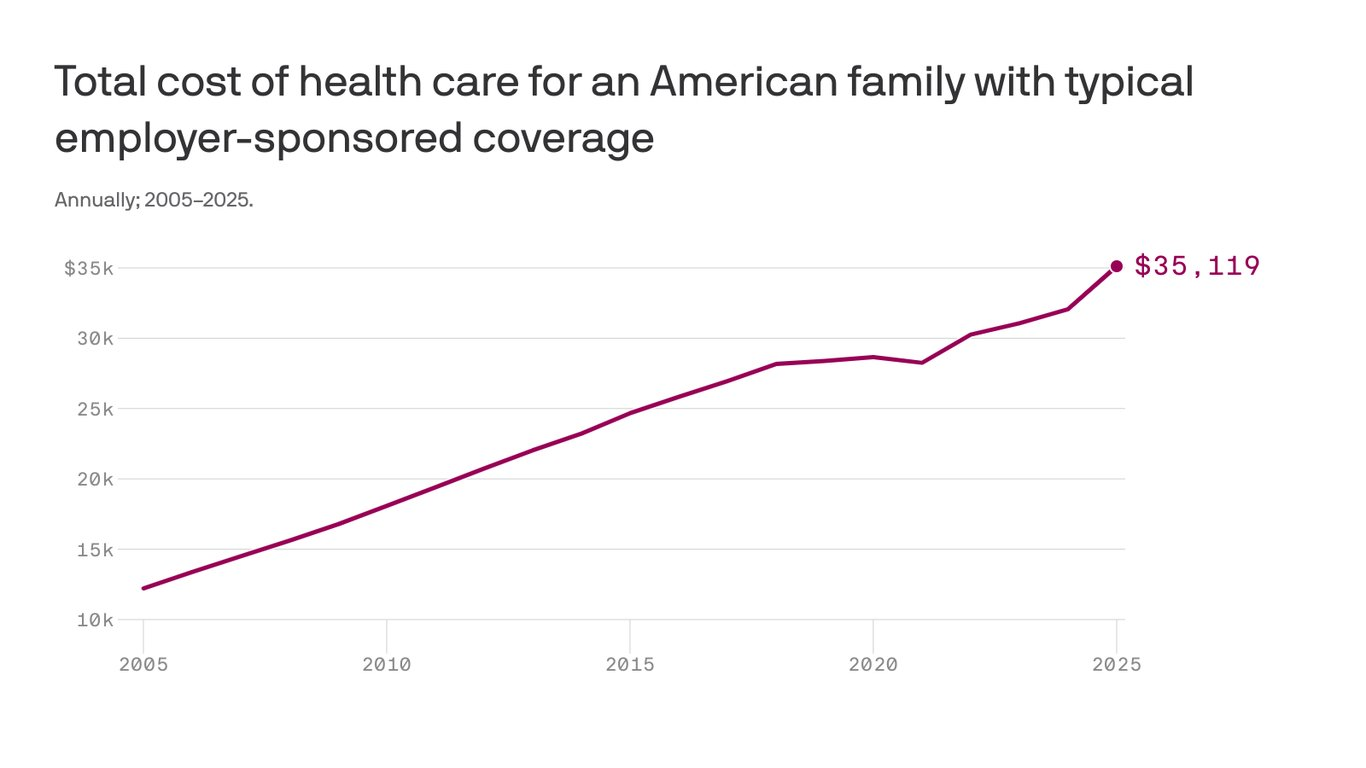
Cost to insure a family tops $35,000

The cost to cover a family of four through workplace insurance now exceeds $35,000, nearly triple what it cost 20 years ago as annual growth in health costs have far outpaced wages.

The big picture: 

Growing pharmacy and outpatient facility costs drove most of the increase, which includes employee and employer shares, according to the 2025 Milliman Medical Index.

  • Employers have been wary of passing health cost hikes to workers in a tight labor market, but the rising demand for costly care may force a reckoning.

State of play: 

The $35,119 annual cost to cover a hypothetical family of four this year factors in drug costs, inpatient and outpatient care, and professional services, along with an “other” category that includes home health, ambulance transport, medical equipment and prosthetics.

  • A year of health care cost a family of four $12,214 in 2005, the year Milliman launched the index. The 20-year cumulative gain of 188% outpaced the 84% growth in wages over the same time.
  • Health costs have increased about 6% per year on average over the past two decades, according to Milliman, compared with an average inflation rate of 2.5% over that time.

Between the lines: 

Employers in 2025 still shoulder 58% of employee health care costs, but their share has shrunk since 2005, when it was more than 60%.

Reality check: 

Health care costs vary significantly by age, geography and pharmacy rebate arrangements.

  • Milliman calculates family cost based on a family with a 47-year-old male, 37-year-old female, and children ages 4 and under 1.
  • This was a “mathematically average” family in 2005, and Milliman continues to use that formula to keep data comparable year-to-year.
  • The firm has an online tool that allows readers to input other family configurations to see their estimated 2025 health care costs.

The analysis is based on Milliman’s proprietary research tools and analyzes commercial claims data. The family cost figure reflects nationwide average negotiated provider fees and average PPO benefit levels.

BIG INSURANCE 2022: Revenues reached $1.25 trillion thanks to sucking billions out of the pharmacy supply chain – and taxpayers’ pockets

HIGHLIGHTS

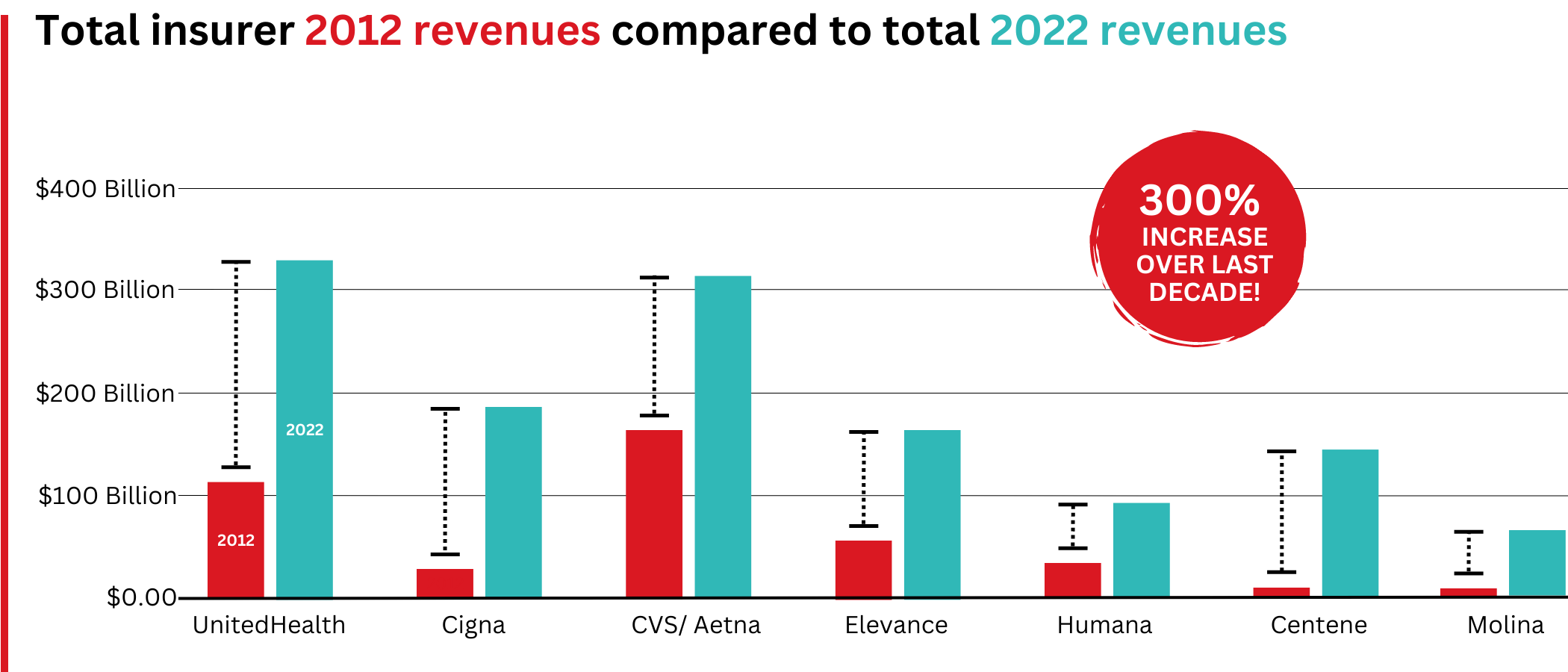
  • Big Insurance revenues and profits have increased by 300% and 287% respectively since 2012 due to explosive growth in the companies’ pharmacy benefit management (PBM) businesses and the Medicare replacement plans they call Medicare Advantage.
  • The for-profits now control more than 80% of the national PBM market and more than 70% of the Medicare Advantage market

In 2022, Big Insurance revenues reached $1.25 trillion and profits soared to $69.3 billion.

That’s a 300% increase in revenue and a 287% increase in profits from 2012, when revenue was $412.9 billion and profits were $24 billion.

Big insurers’ revenues have grown dramatically over the past decade, the result of consolidation in the PBM business and taxpayer-supported Medicare and Medicaid programs. 

Sucking billions out of the pharmacy supply chain – and taxpayers’ pockets

What has changed dramatically over the decade is that the big insurers are now getting far more of their revenues from the pharmaceutical supply chain and from taxpayers as they have moved aggressively into government programs. This is especially true of Humana, Centene, and Molina, which now get, respectively, 85%, 88%, and 94% of their health-plan revenues from government programs. 

The two biggest drivers are their fast-growing pharmacy benefit managers (PBMs), the relatively new and little-known middleman between patients and pharmaceutical drug manufacturers, and the privately owned and operated Medicare replacement plans they market as Medicare Advantage.

With the exception of Humana, Centene, and Molina, most of the companies that constitute Big Insurance continue to make substantial amounts of money selling policies and services in what they refer to as their commercial businesses – to individuals, families, and employers – but the seven companies’ commercial revenue grew just 260%, or $176 billion, over 10 years (from $110.4 billion to $287.1 billion). While that’s significant, profitable growth in the commercial sector has become a major challenge for big insurers – so much so that Humana just last week announced it is exiting the employer-sponsored health-insurance marketplace entirely. 

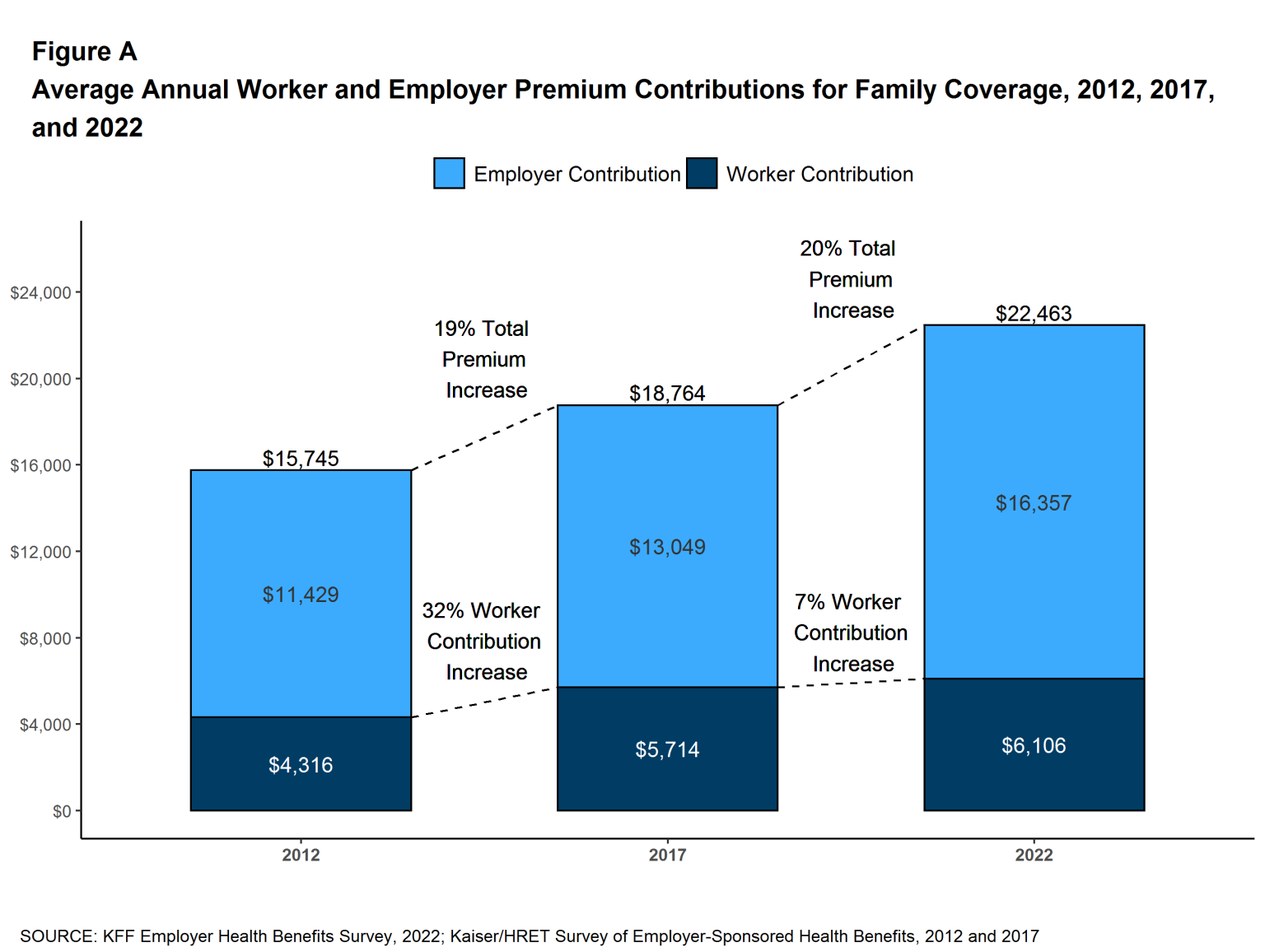
The insurers’ commercial businesses have stagnated because small businesses – which employ nearly half of the nation’s workers – are increasingly being priced out of the health insurance market. Most small businesses can no longer afford the premiums. The average premium for an employer-sponsored family plan – not including out-of-pocket requirements – was $22,463 in 2022, up 43% since 2012, which has contributed to the decades-long decline in the percentage of U.S. employers offering coverage to their workers.

The percentage of U.S. employers providing some level of health benefits to their workers dropped from 69% to 51% between 1999 and 2022 – including a dramatic 8% decrease last year alone. Growth in this category is largely the result of insurers “stealing market share” from each other or from smaller competitors.

As a consequence of this segment’s relative stagnation, PBMs and government programs have become the new cash cows for Big Insurance.

Spectacular PBM Growth

PBM HIGHLIGHTS

  • Cigna now gets far more revenue from its PBM than from its health plans. CVS gets more revenue from its PBM than from either Aetna’s health plans or its nearly 10,000 retail stores. 
  • UnitedHealth has the biggest share of both the PBM and Medicare markets and, through numerous acquisitions of physician practices, is now the largest U.S. employer of doctors.

PBMs are middlemen companies that manage prescription drug benefits for health insurers, Medicare Part D drug plans, employers, and, in some cases, unions. As the Commonwealth Fund has noted

PBMs have a significant behind-the-scenes impact in determining total drug costs for insurers, shaping patients’ access to medications, and determining how much pharmacies are paid. 

The Commonwealth Fund went on to say that PBMs have faced growing scrutiny about their role in rising prescription drug costs and spending. A big reason for the scrutiny – by Congress, state lawmakers and now also by the FTC – is that the biggest PBMs are now owned by Big Insurance.

Through mergers and acquisitions in recent years, three of the seven for-profit insurers – Cigna, CVS/Aetna, and UnitedHealth – now control 80% of the U.S. pharmacy benefits market.

They determine which drugs will be listed in each of their formularies (lists of drugs they will “cover” based on secret deals they negotiate with pharmaceutical companies) and how much patients will have to pay out of their own pockets at the pharmacy counter – in many cases hundreds or thousands of dollars – before their coverage kicks in. The PBMs also “steer” health-plan enrollees to their preferred or owned pharmacies (and, increasingly, away from independent pharmacists), thereby capturing even more of what we spend on our prescription medications.

Cigna, CVS/Aetna, and UnitedHealth now control 80% of the U.S. PBM market. Correction: this graph was initially published with inaccurate numbers. The source for this information can be found here.

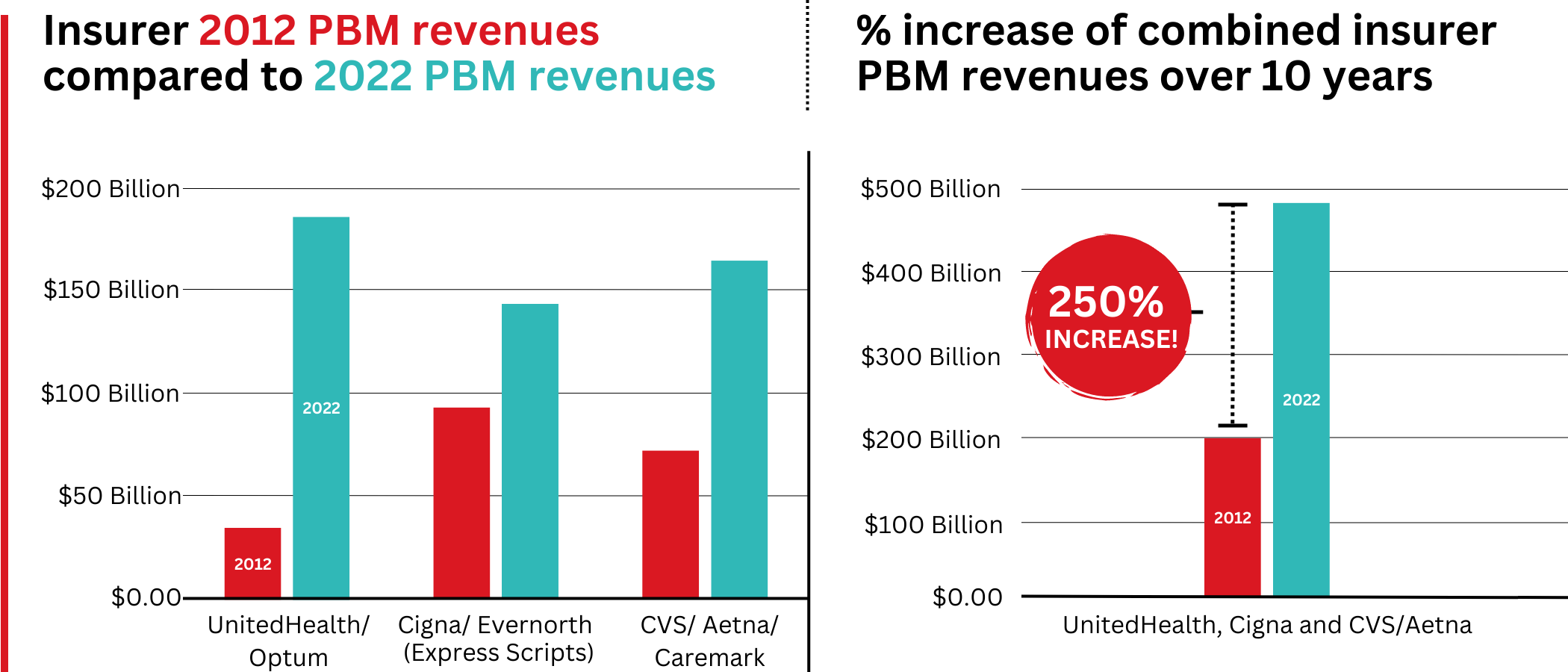
Ten years ago, PBMs contributed relatively little to the three companies’ revenues and profits. But since then, the rapid growth of PBMs has transformed all of the companies. The combined revenues from their PBM business units increased 250% between 2012 and 2022, from $196.7 billion to $492.4 billion.

Changes in PBM revenues between 2012 and 2022 for UnitedHealth Group, Cigna, and CVS/Aetna (Editor’s note: Cigna acquired PBM Express Scripts in 2018. To reflect revenue growth, Express Scripts’ pre-acquisition 2012 revenues are included in the Cigna total for that year.)

PBM Profit Generation

The PBM profit growth at the three companies over the past decade was even more dramatic than revenue growth. Collectively, their PBM profits increased 438%, from $6.3 billion in 2012 to $27.6 billion in 2022.

As a result of this fast growth, more than half (52%) of three companies’ profits in 2022 came from their PBM business units: Cigna’s Evernorth, CVS/Aetna’s Caremark, and UnitedHealth’s Optum. Cigna now gets far more revenue and profits from its PBM than from its health plans. And CVS gets more revenue from its PBM than from either Aetna’s health plans or its nearly 10,000 retail stores. (The companies’ business units that include their PBMs have also moved aggressively in recent years into health-care delivery through acquisitions of physician practices, clinics, dialysis centers, and other facilities. Notably, UnitedHealth Group is now the largest U.S. employer of physicians.)

Huge strides in privatizing both Medicare and Medicaid

GOVERNMENT PROGRAMS HIGHLIGHTS

  • More than 90% of health-plan revenues at three of the companies come from government programs as they continue to privatize both Medicare and Medicaid, through Medicare Advantage in particular.
  • Enrollment in government-funded programs increased by 261% in 10 years; by contrast commercial enrollment increased by just 10% over the past decade.
  • Commercial enrollment actually declined at both UnitedHealth and Humana.
  • 85% of Humana’s health-plan members are in government-funded programs; at Centene, it is 88%, and at Molina, it is 94%. 

The big insurers now manage most states’ Medicaid programs – and make billions of dollars for shareholders doing so – but most of the insurers have found that selling their privately operated Medicare replacement plans is even more financially rewarding for their shareholders.

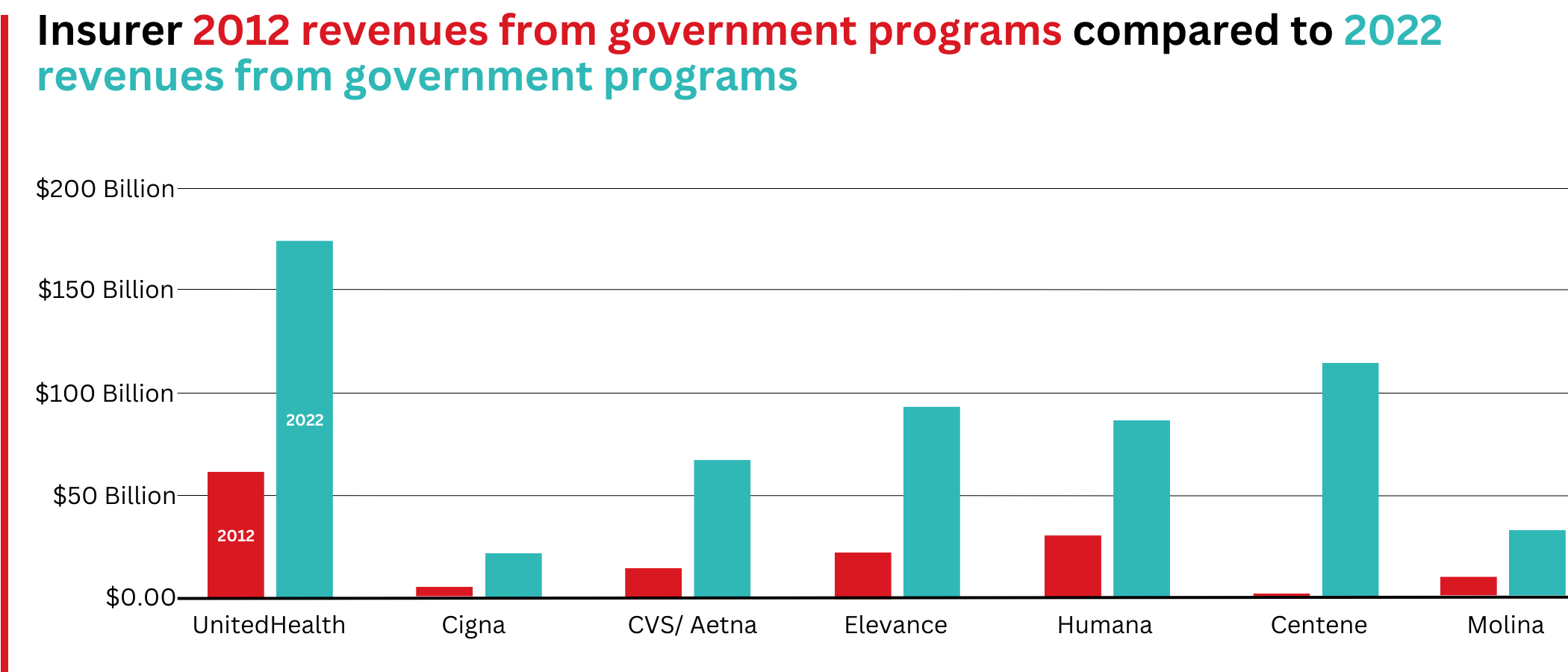
Revenue growth from government programs has been dramatic over the past 10 years. (Note the numbers do not include revenue from the Medicare Part D program, federal subsidy payments for many ACA marketplace plan enrollees, or Medicare supplement policies.)

This is especially apparent when you see that the Big Seven’s combined revenues from taxpayer-supported programs grew 500%, from $116.3 billion in 2012 to $577 billion in 2022.

These numbers should be of interest to the Biden administration and members of Congress, many of whom are calling for much greater scrutiny of the Medicare Advantage program. Numerous media and government reports have shown that the federal government is overpaying private insurers billions of dollars a year, largely because of loopholes in laws and regulations that enable them to get more taxpayer dollars by claiming their enrollees are sicker than they really are. The companies also make aggressive use of prior authorization, largely unknown in traditional Medicare, to avoid paying for doctor-ordered care and medications.

In addition to their focus on Medicare and Medicaid, the companies also profit from the generous subsidies the government pays insurers to reduce the premiums they charge individuals and families who do not qualify for either Medicare or Medicaid or who work for an employer that does not offer subsidized coverage. But many people enrolled in those types of plans – primarily through the health insurance “marketplaces” established by the Affordable Care Act – cannot afford the deductibles and other out-of-pocket requirements they must pay before their insurers will begin paying their medical claims. 

Dramatic Enrollment Shifts

Changes in health-plan enrollment over the past decade show how dramatic this shift has been. Between 2012 and 2022, enrollment in the companies’ private commercial plans increased by 10%, from 85.1 million in 2012 to 93.8 million in 2022. 

By comparison, growth in enrollment in taxpayer-supported government programs increased 261%, from 27 million in 2012 to 70.4 million in 2022. 

For-profit insurers dominate the Medicare Advantage market. Note that Anthem mentioned above is now known as Elevance. It owns 14 of the country’s Blue Cross Blue Shield plans. 

Within that category, Medicare Advantage enrollment among the Big Seven increased 252%, from 7.8 million in 2012 to 19.7 million in 2022. 

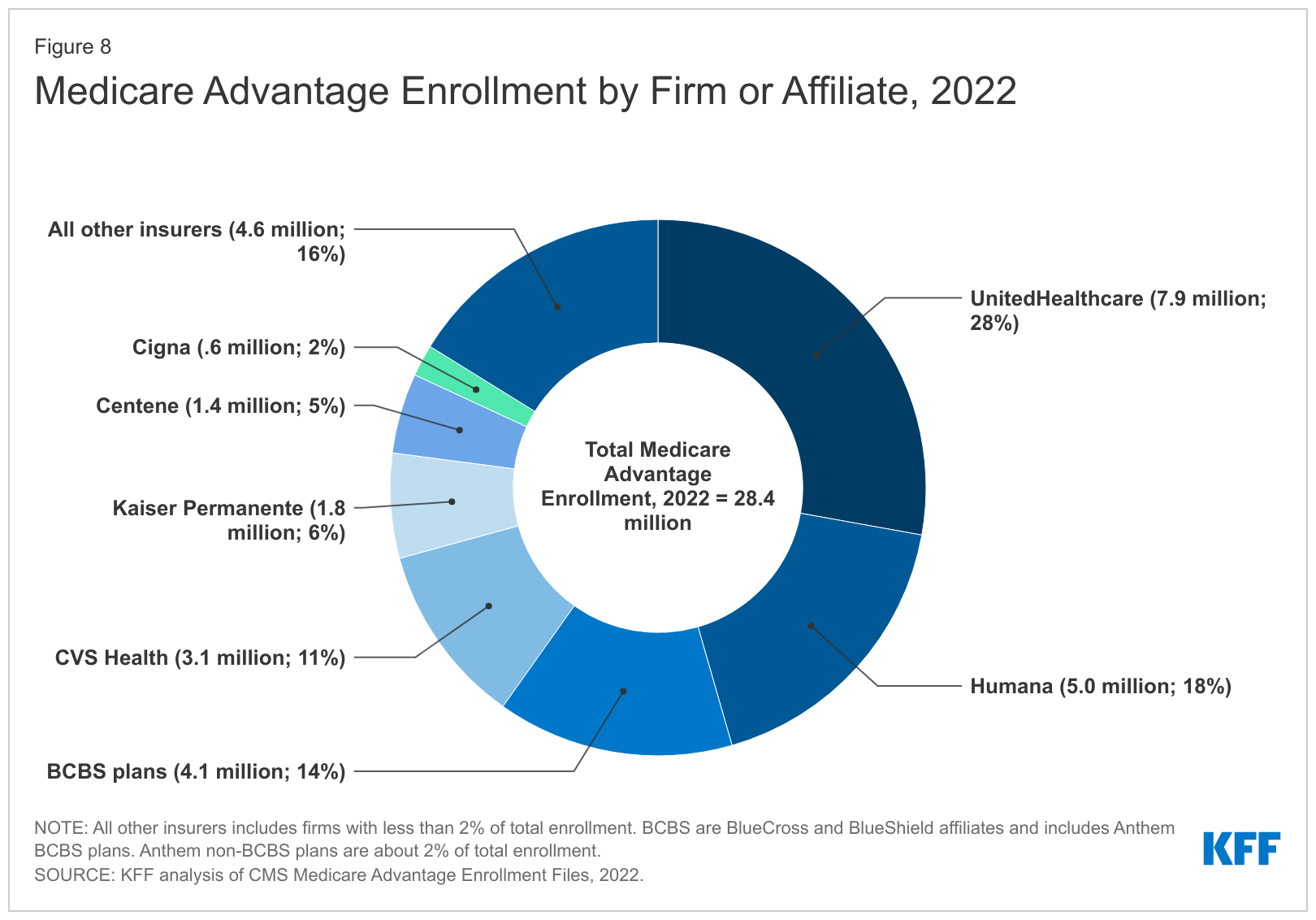
Nationwide, enrollment in Medicare Advantage plans increased to 28.4 million in 2022 (and to 30 million this year). That means that the Big Seven for-profit companies control more than 70% of the Medicare Advantage market. 

UnitedHealth, Humana, Elevance, and CVS/Aetna have captured most of the Medicare Advantage market since the Affordable Care Act was passed in 2010. 

The remaining growth in the government segment occurred in the Medicaid programs that a subset of the Big Seven (UnitedHealth, Elevance, Centene, and Molina in particular) manages for several states.

A few other facts and figures to keep in mind as Big Insurance thrives:

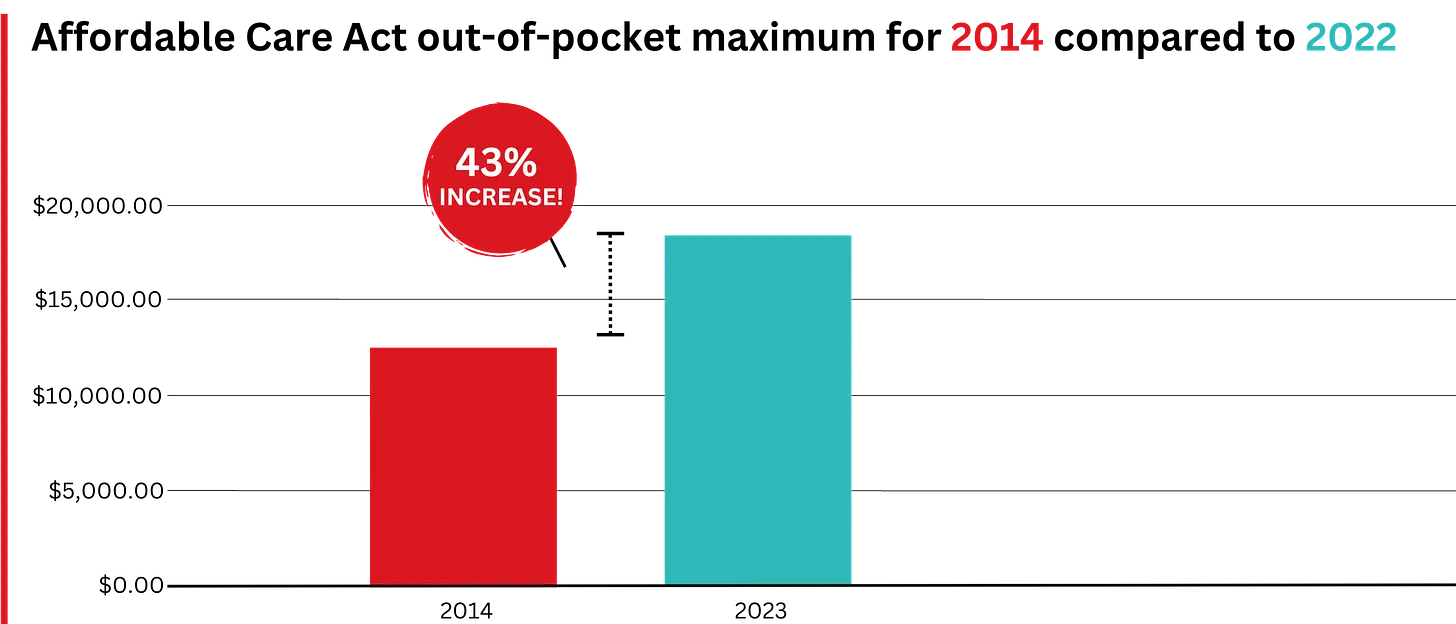
  • In 2023, U.S. families can be on the hook for up to $18,200 in out-of-pocket requirements before their coverage kicks in, up 43% since 2014 when it was $12,700.The Affordable Care Act allows the out-of-pocket maximum to increase annually – 43% since the maximum limit went into effect in 2014.
  • 44% of people in the United States who purchased coverage through the individual market and (ACA) marketplaces were underinsured or functionally uninsured.
  • 46% of those surveyed said they had skipped or delayed care because of the cost.
  • 42% said they had problems paying medical bills or were paying off medical debt.
  • Half (49%) said they would be unable to pay an unexpected medical bill within 30 days, including 68% of adults with low income, 69% of Black adults, and 63% of Latino/Hispanic adults. 
  • In 2021, about $650 million, or about one-third of all funds raised by GoFundMe, went to medical campaigns. That’s not surprising when you realize that in the United States, even people with insurance all too often feel they have no choice but to beg for money from strangers to get the care they or a loved one needs. 
  • 62% of bankruptcies are related to medical costs
  • Even as we spend about $4.5 trillion on health care a year, Americans are now dying younger than people in other wealthy countries. Life expectancy in the United States actually decreased by 2.8 years between 2014 and 2021, erasing all gains since 1996, according to the Centers for Disease Control and Prevention

BOTTOM LINE: 

The companies that comprise Big Insurance are vastly different from what they were just 10 years ago, but policymakers, regulators, employers, and the media have so far shown scant interest in putting their business practices under the microscope.

Changes in federal law, including the Medicare Modernization Act of 2003, which created the lucrative Medicare Advantage market, and the Affordable Care Act of 2010, which gave insurers the green light to increase out-of-pocket requirements annually and restrict access to care in other ways, opened the Treasury and Medicare Trust Fund to Big Insurance. In addition, regulators have allowed almost all of their proposed acquisitions to go forward, which has created the behemoths they are today.

CVS/Health is now the 4th largest company on the Fortune 500 list of American companies. UnitedHealth Group is now No. 5 – and all the others are climbing toward the top 10. 

Trump picks HHS and CMS nominees

https://www.kaufmanhall.com/insights/blog/gist-weekly-november-22-2024

Last week, President-elect Donald Trump announced that Robert F. Kennedy, Jr. would be his nominee for Secretary of Health and Human Services (HHS). He followed this up on Tuesday with his selection of Dr. Mehmet Oz as his nominee for the Centers for Medicare and Medicaid Services (CMS) Administrator. If confirmed, the two men would replace Xavier Becerra and Chiquita Brooks-LaSure, respectively.

Kennedy, who ended his independent presidential campaign and endorsed Trump in August, has become known for his heterodox views on public health, including vaccine skepticism and opposition to water fluoridization.

Dr. Oz, first famous as a TV personality and more recently a Republican candidate for Pennsylvania Senator, is a strong proponent of Medicare Advantage, having co-authored an op-ed advocating for “Medicare Advantage for All” in 2020.

The Gist: 

These nominees, especially Kennedy, hold a number of personal beliefs at odds with the public health consensus. 

They are both likely to be confirmed, however, as the last cabinet nominee to be rejected by the Senate was John Tower in 1989. (This does not include nominees who have chosen to withdraw themselves from consideration, as former Representative Matt Gaetz has just done.)

Should they be confirmed, they will be responsible for implementing not their own but President Trump’s agenda, the specific priorities of which also remain relatively undefined. 

However, possible consensus points between Trump and his nominees include public health cuts and deregulationgreater scrutiny of pharmaceutical companies, and a favoring of Medicare Advantage over traditional Medicare.

    The Presidential Debate will Frustrate Healthcare Voters

    Tomorrow night, the Presidential candidates square off in Philadelphia. Per polling from last week by the New York Times-Siena, NBC News-Wall Street Journal, Ipsos-ABC News and CBS News, the two head into the debate neck and neck in what is being called the “chaos election.”

    Polls also show the economy, abortion and immigration are the issues of most concern to voters. And large majorities express dissatisfaction with the direction the country is heading and concern about their household finances.

    The healthcare system per se is not a major concern to voters this year, but its affordability is. Out-of-pocket costs for prescription drugs, insurance premiums and co-pays and deductibles for hospitals and physician services are considered unreasonable and inexplicably high. They contribute to public anxiety about their financial security alongside housing and food costs. And majorities think the government should do more by imposing price controls and limiting corporate consolidation.

    That’s where we are heading into this debate. And here’s what we know for sure about the 90-minute production as it relates to health issues and policies:

    • Each candidate will rail against healthcare prices, costs, and consolidation taking special aim at price gouging by drug companies and corporate monopolies that limit competition for consumers.
    • Each will promise protections for abortion services: Trump will defer to states to arbitrate those rights while Harris will assert federal protection is necessary.
    • Each will opine to the Affordable Care Act’s future: Trump will promise its repeal replacing it “with something better” and Harris will promise its protection and expansion.
    • Each will promise increased access to behavioral health services as memories of last week’s 26-minute shooting tirade at Apalachee High School fade and the circumstances of Colt Gray’s mental collapse are studied.
    • And each will promise adequate funding for their health priorities based on the effectiveness of their proposed economic plans for which specifics are unavailable.

    That’s it in all likelihood. They’re unlikely to wade into root causes of declining life expectancy in the U.S. or the complicated supply-chain and workforce dynamics of the industry. And the moderators are unlikely to ask probative questions like these to discover the candidate’s forethought on matters of significant long-term gravity…

    • What are the most important features of health systems in the world that deliver better results at lower costs to their citizens that could be effectively implemented in the U.S. system?
    • How should the U.S. allocate its spending to improve the overall health and well-being of the entire population?
    • How should the system be funded?

    My take:

    I will be watching along with an audience likely to exceed 60 million. Invariably, I will be frustrated by well-rehearsed “gotcha” lines used by each candidate to spark reaction from the other. And I will hope for more attention to healthcare and likely be disappointed.

    Misinformation, disinformation and AI derived social media messaging are standard fare in winner-take-all politics.

    When used in addressing health issues and policies, they’re effective because the public’s basic level of understanding of the health system is embarrassingly low: studies show 4 in 5 American’s confess to confusion citing the system’s complexity and, regrettably, the inadequacy of efforts to mitigate their ignorance is widely acknowledged.

    Thus, terms like affordability, value, quality, not-for-profit healthcare and many others can be used liberally by politicians, trade groups and journalists without fear of challenge since they’re defined differently by every user.

    Given the significance of healthcare to the economy (17.6% of the GDP),

    the total workforce (18.6 million of the 164 million) and individual consumers and households (41% have outstanding medical debt and all fear financial ruin from surprise medical bills or an expensive health issue), it’s incumbent that health policy for the long-term sustainability of the health system be developed before the system collapses. The impetus for that effort must come from trade groups and policymakers willing to invest in meaningful deliberation.

    The dust from this election cycle will settle for healthcare later this year and in early 2025. States are certain to play a bigger role in policymaking: the likely partisan impasse in Congress coupled with uncertainty about federal agency authority due to SCOTUS; Chevron ruling will disable major policy changes and leave much in limbo for the near-term.

    Long-term, the system will proceed incrementally. Bigger players will fare OK and others will fail. I remain hopeful thoughtful leaders will address the near and long-term future with equal energy and attention.

    Regrettably, the tyranny of the urgent owns the U.S. health system’s attention these days: its long-term destination is out-of-sight, out-of-mind to most. And the complexity of its short-term issues lend to magnification of misinformation, disinformation and public ignorance.

    That’s why this debate will frustrate healthcare voters.

    PS: Congress returns this week to tackle the October 1 deadline for passing 12 FY2025 appropriations bills thus avoiding a shutdown. It’s election season, so a continuing resolution to fund the government into 2025 will pass at the last minute so politicians can play partisan brinksmanship and enjoy media coverage through September. In the same period, the Fed will announce its much anticipated interest rate cut decision on the heals of growing fear of an economic slowdown. It’s a serious time for healthcare!

    CMS: Negotiated drug prices would have saved Medicare $6B last year

    The Centers for Medicare & Medicaid Services offered the first look at the potential savings generated by the first crop of Medicare drug price negotiations.

    On Thursday morning, the agency released data that show if the negotiated prices for the first 10 drugs in the program had been available last year, it would have generated an estimated $6 billion in savings for Medicare. That’s savings of about 22% on those 10 products.

    CMS will offer additional details on negotiations down the line, officials said on a call with reporters on Thursday, but they said the program led to price reductions of between 38% and 79% on the initial list of drugs.

    On the highest end, negotiations led to a price decrease for Merck’s Januvia, a diabetes drug, from $527 for a 30-day supply to $113, down 79%. CMS said 843,000 Medicare beneficiaries took Januvia in 2023, with the drug accounting for nearly $4.1 billion in spending.

    “Americans pay too much for their prescription drugs. That makes today’s announcement historic. For the first time ever, Medicare negotiated directly with drug companies and the American people are better off for it,” said U.S. Department of Health and Human Services (HHS) Secretary Xavier Becerra.

    Here’s a look at savings for other drugs included in the program:

    • Fiasp and NovoLog insulins (Novo Nordisk): Reduced the cost of a 30-day supply from $495 to $119, a decrease of 76%.
    • Farxiga (AstraZeneca): List price for a 30-day supply decreased from $556 to $178.50, or 68%.
    • Enbrel (Immunex Corporation): Cut the list price for a 30-day supply by 67% from $7,106 to $2,355.
    • Jardiance (Boehringer Ingelheim): Reduced the cost of a 30-day supply by 66%, or from $573 to $197.
    • Stelara (Janssen): The list price for a 30-day supply dropped from $13,836 to $4,695 or by 66%.
    • Xarelto (Janssen): Lowered the cost for a 30-day supply by 62%, or from $517 to $197.
    • Eliquis (Bristol Myers Squibb): The cost for a 30-day supply decreased from $521 to $231, or by 56%.
    • Entresto (Novartis): Reduced the list price for a 30-day supply by 53%, or from $628 to $295.
    • Imbruvica (Pharmacyclics): Decreased the cost for a 30-day supply from $14,934 to $9,319, or by 28%.

    CMS sent the initial offers for the 10 drugs to the manufacturers on Feb. 1, and the companies had until March 2 to respond with a counteroffer. Then throughout the summer, the agency held meetings with the drugmakers to continue negotiations, before sending final offers on July 15.

    The negotiation period ended on Aug. 1 with a deal in place for all 10 drugs, CMS said.

    The new prices will go into effect on Jan. 1, 2026. CMS estimates that Medicare beneficiaries will see aggregate savings of $1.5 billion in their personal out-of-pocket costs in 2026.

    Final cost savings can vary based on the enrollee’s specific plan, the agency said.

    CMS said it will select up to 15 additional drugs for negotiation in 2027, and the list will be announced by Feb. 1, 2025.

    Reaction rolls in

    Multiple lawmakers praised CMS and the efforts to reduce drug prices in statements Thursday.

    Sen. Ron Wyden, D-Ore., who chairs the Finance Committee, said that Medicare used “the bargaining power of tens of millions of American seniors to fight Big Pharma for lower drug prices.”

    “These new, lower prices for prescription drugs in Medicare means seniors save money at the pharmacy counter and marks the first step in a seismic shift in the relationship between Big Pharma, taxpayers, and seniors who need affordable prescription drugs,” Wyden said.

    Rep. Frank Pallone, D-N.J., who is the ranking Democrat on the House Energy & Commerce Committee, said that the negotiations will lead to $101 million in savings for seniors living in the Garden State.

    Pallone also helped to co-write the Inflation Reduction Act, which gave Medicare the power to negotiate with drug companies.

    “This is a historic day for New Jersey and the nation. After more than two decades of fighting, we have finally empowered Medicare to negotiate lower prescription drug prices for our seniors,” said Pallone. “This milestone is especially meaningful for New Jersey, where many seniors rely on Medicare for their life-saving medications.”

    Reactions, however, were not universally positive. Pharmaceutical Research and Manufacturers of America (PhRMA) CEO Steve Ubl said in a statement Wednesday that regulators won’t be able to achieve their ultimate goal as the negotiation program does not take aim at pharmacy benefit managers.

    Ubl also said that the IRA “fundamentally alters” the incentives drugmakers have in researching and developing new products and therapies. He said companies are already making changes to their R&D programs in response.

    “The administration is using the IRA’s price-setting scheme to drive political headlines, but patients will be disappointed when they find out what it means for them,” Ubl said. “There are no assurances patients will see lower out-of-pocket costs because the law did nothing to rein in abuses by insurance companies and PBMs who ultimately decide what medicines are covered and what patients pay at the pharmacy.”

    “As a result of the IRA, there are fewer Part D plans to choose from and premiums are going up,” he continued.” Meanwhile, insurers and PBMs are covering fewer medicines and say they intend to impose further coverage restrictions as the price-setting scheme is implemented.”

    The Pharmaceutical Care Management Association, which represents PBMs, meanwhile, said that its analyses show that PBM negotiations have driven more significant discounts on six of the 10 drugs included in the program.

    “While we share the Administration’s goal to reduce prescription drug costs for America’s seniors and to push back against the high prices set by drug manufacturers, the Administration has missed the mark by choosing several prescription drugs for which PBMs are already actively negotiating steep discounts that significantly lower costs for beneficiaries and taxpayers,” PCMA said.

    “The key to reducing drug costs is to increase competition among manufacturers,” the organization said. “We encourage the Administration to focus on those drugs where a lack of competition is driving higher prices and higher costs, and to allow PBM negotiations to continue to deliver value and savings for Medicare.”

    While the negotiation program takes more direct aim at drugmakers, PBMs are also under the microscope on the Hill. Lawmakers are mulling a slew of potential reforms to the industry, which critics argue is too concentrated, too opaque and too profit-driven at the expense of patients.

    Analysts shrug

    Unless you were under a rock, you saw yesterday’s news that Medicare negotiated a better deal than the private market for some of the program’s top-selling drugs.

    Why it matters: 

    So what? How meaningful is that difference, and what will the longer-term effects be?

    • Some seniors will likely pay less out of pocket for drugs (that’s a whole topic that we’re not going to get into right now), and that obviously matters to patients. But how pharma interprets the negotiated prices and reacts to them will have a huge impact on future drug development.

    Our thought bubble: 

    Democrats are thrilled, Republicans are appalled. The drug industry is complaining publicly but telling investors everything is fine.

    • For all of the uproar this law caused when it was passed, the financial world’s reaction to today’s rollout made everything seem pretty good — for now (more on that below).

    Between the lines: 

    The announced prices — an overall 22% reduction in net spending but no details on individual drugs’ net price reductions — are less drastic than some feared.

    • “There are strong price reductions, but it also shows there is plenty of room for the industry to continue to make some profits on these drugs,” Vanderbilt’s Stacie Dusetzina said.

    Analysts are reacting much more neutrally than the politicians.

    • In a note titled “CMS Spins, Pharma Wins (Relatively),” Raymond James analyst Chris Meekins wrote that “the impact is far less than politicians proclaimed and the industry as a whole seems to be managing this fine so far.”
    • And in a note titled “Sigh of Relief,” Leerink analysts concluded that “22% is not as bad as anticipated earlier this year,” though recent earnings calls had assuaged fears somewhat.

    Where it stands: 

    No one knows for sure the net prices of Part D drugs, much less what they would have otherwise been in 2026. But there are some estimates, and Medicare’s negotiated rate is generally lower than those estimates.

    The big picture: 

    If there’s anything everyone agrees on, it’s that America’s high drug prices make up a grossly disproportionate bulk of pharma’s revenue compared with the rest of the world’s.

    • Critics — which include many politicians from both parties! — say all that means is that America is getting ripped off.
    • Pharmaceutical companies and some experts say that this subsidization allows drug companies to keep searching for and investing in new therapies despite too-low prices in other countries.

    Regardless, that tasked the administration with figuring out how much of a revenue haircut — or a subsidy reduction — drug companies could take without sacrificing the new drugs we want them to continue bringing to market.

    • So far, that haircut seems to be pretty manageable.
    • “We’ve shown that it can be done successfully and the sky doesn’t fall,” said Harvard’s Aaron Kesselheim. “It’s not surprising to me that the markets haven’t come crashing down, because I think this process was not set up to bankrupt the pharmaceutical industry.”

    There are several reasons why the outcome of negotiations over this particular group of drugs may not say much about future outcomes.

    • Many of them were already about to get generic competition, which may not be the case for drugs selected down the road. Most of them are already highly rebated.
    • And the number of drugs any given company is receiving a negotiated price for will likely go up over time, as more drugs enter the program each year.
    • “The financial impact will be a lot worse when companies have many drugs negotiated rather than just one or two in ’26 that are going off patent anyway,” said Leerink’s David Risinger.

    Plus, positive earnings calls may not reflect the full picture.

    • “Over time, will they adjust and make money? Big pharma — of course. It’s small pharma … that’s getting severely impacted,” said Joe Grogan, the former director of the United States Domestic Policy Council in the Trump administration.
    • “They’re figuring out how to continue to make money, but it doesn’t alter the fact that it upset their R&D expenditures and their R&D plans, and it’s going to leave fewer therapies and fewer treatments down the road,” he added.
    • “Medicine development is a long and complex process, and the negative implications of these changes will not be fully realized for decades to come,” said PhRMA CEO Steve Ubl in a statement before the rates were released.

    And perhaps the biggest wild card of all: Different administrations could take different approaches — and nothing requires any given administration to be consistent.

    • “They have flexibility to negotiate harder in coming years, and maybe they didn’t want to poke pharma in the eye too hard in the first year,” Risinger said.
    • “The problem is it’s unpredictable so it’s hard to forecast,” former FDA commissioner Scott Gottlieb told me. “These will ultimately be political decisions, and as much as CMS says there’s a process and a formula, there isn’t.”

    The bottom line: 

    For now, it looks like the Biden administration found a way to save the government some money — it helped me to consider how I’d think about a 22% sale in my personal life — without really upsetting the drug market.

    • That balance may not be reproduced going forward.

    Healthcare’s Three Big Tents have Much in Common

    Arguably, three trade groups have emerged at the center of healthcare system transformation efforts in the U.S.: the American Hospital Association (AHA), America’s Health Insurance Plans (AHIP) and the Pharmaceutical Research and Manufacturers of America (PhRMA). Others weigh in—the American Medical Association, AdvaMed, the American Public Health Association and others—but this trio is widely regarded as the Big Tents under which policy changes are pursued.

    Each plays a unique advocacy role in the system, protecting their members’ turf from unwelcome regulation while fighting against restrictions that might limit their growth opportunities. Their focus is their members:

     AHAAHIPPhRMA
    Members5000 hospitals & 43,000 individual members125 Health Insurers31 Manufacturers
    Board Composition26 (10 female)33 (5 female)25 (3 female) 
    Revenues (’22)$138.8 Mil$78.6 Mil$568.3 Mil
    Revenue chg. ’22 v. ‘21+7.7%-7.1%-6.7
    Margin (’22) $6.6 Mil$4.7 Mil$-0.1%
    Exec Comp % of ’22 Rev8.4%9.6%3.9%
    CEO (Tenure)Richard J. Pollack (since 2015, with AHA 37 yrs.).Mike Tuffin (since Jan 2024)Prior: SVP UHG, APCOStephen J. Ubl (since 2015)Prior: CEO AdvaMed, FAH
    Direct Lobbying ‘23$30.2 MilNA$27.6 Mil
    Total Industry Lobbying 2023 (includes all sources)$133.3 Mil$129.3 Mil$383.7 Mil

    Sources:*Nonprofit Explorer – ProPublicaIndustries IRS Form 990 for 2022, the latest year available • OpenSecrets based on year-end 2023.

    Ironically, these Big Tents have much in common:

    • All three serve diverse memberships and are highly protective of their Big Tents. But each faces growing intramural pressure from member cohorts that seek special attention–especially their large and highly profitable members vs. the rest.
    • All three struggle with the notions of affordability, price transparency, profit, executive compensation and value. These terms appear frequently in their white papers and comment letters but each tent defines them differently.
    • All three depend on physicians to fund member revenues: they’re gatekeepers to member patients, referrals and prescriptions. Each Big Tent is focused on advocacy that enables physician interactions upon which member revenues can be sustainable and service disruption minimal.  Thus, physician well-being is a concern to the Big Tents.
    • All blame factors outside their control for health costs escalation. The health habits of population, over-regulation and U.S. monetary policy are frequent targets. Projections by the CBO of annual health spending of 5.6% through 2032 are justified by the Big Tents as the net result of increased demand and flaws in the system’s incentives, legals protections and funding mechanisms. Each Big Tent is on the defensive about how they address costs and waste, and how their prices enable increased affordability.
    • All three spend heavily to influence lawmakers to avoid unwelcome regulation. Their spending for direct lobbying is multiplied by formal coalitions with friendly trade groups, political action committees, high net worth contributors and corporations. Coalition building is a major function in each Big Tent used against swings in public opinion of concern or against pending legislation that threaten member interests.
    • All three serve memberships that operate primarily with business-to-business (B2B) business models primarily. Each subordinates ‘consumerism’ to ‘patients, enrollees, and communities’ served by their members. Maximizing consumer (voter) good will and counter-messaging against hostile media coverage are core functions in each Big Tent.
    • All three favor incremental changes to the status quo over transformational reform of the system top to bottom. Wholesale change is unwelcome though the majority of U.S. adults say it’s fundamentally flawed and needs a fresh start.

    In each campaign cycle, the Big Tents create playbooks based on possible election outcomes and potential issues they’ll confront. Each identifies possible political appointees to key government posts, committee appointments and legislative staff that with whom they’ll deal. Each reaches out to friendly think-tanks, ex-pats from previous government roles and research organizations to create favorable thought leadership for the talking heads they trust. And each lines up outside lobbyists to augment their staff.

    The Boards of the Big Tent trio weigh in, but senior staff in each of the Big Tents drive the organization’s strategy. They’re experienced in advocacy, well-paid and often heavy-handed in dealing with critics.  

    Operationally, the 3 Big Tents have much in common. Strategically, they’re far apart and the gap appears to be widening. Each blames the other for medical inflation and unnecessary cost. Each alleges the others use unfair business practices to gain market advantages. And each thinks their vision for the future of the U.S. health system is accurate, complete and in the best interest of the public good.

    And none of the three has put-forth a vision for the long-term future of the U.S. health system.  Protecting the immediate interests of their members against unwelcome regulatory changes is their focus.

    P.S. It can be argued that the American Medical Association is the Fourth Big Tent. However, fewer than a fourth of the million active practitioners are AMA members contrasted to the other Big Tents. Like the trio, AMA’s primary advocacy focus is its members: protecting against encroachment by non-physicians, maintenance of clinical autonomy, restrictions on the use of artificial intelligence in patient care and Medicare reimbursement rate changes are major concerns. And, akin to the others, the wider set of issues facing the system i.e. structure, funding, ownership, price transparency, workforce modernization et al. has gotten less attention.

    Corporate Takeover Has Not Been Good for Healthcare

    Four decades ago, Paul Starr noted in his landmark history of U.S. healthcare, “The Social Transformation of American Medicine,” that the industry had taken a decisive turn toward corporate ownership. “Medical care in America now appears to be in the early stages of a major transformation in its institutional structure,” he wrote. “Corporations have begun to integrate a hitherto decentralized hospital system, enter a variety of other health care businesses, and consolidate ownership and control in what may eventually become an industry dominated by huge healthcare conglomerates.”

    Forty years later, Starr’s prediction has come true. The vast majority of hospitals (other than critical access facilities) are now part of health systems, and some of those belong to giant for-profit or not-for-profit corporations. Nearly 80% of physicians are now employed by hospitals or private companies, including health insurers like United Healthcare. Most community pharmacies have been displaced by enormous chains like CVS, Walgreens and Walmart. Nursing home chains have taken over two-thirds of skilled nursing facilities. A handful of huge firms dominate health insurance, and a dozen drug manufacturers produce and set the prices of the most common prescription medicines.

    Private equity (PE) investors focus like a laser beam on generating profits. There can be an amoral quality to PE investing, seeking returns whether or not they create value for customers in the marketplace.

    Steward Healthcare, a large hospital chain initially created with PE investment has become, whether fair or not, a poster child for what can go wrong with private investment in healthcare. Steward went bankrupt after aggressively expanding into new markets beyond Massachusetts with funding generated from sales-leaseback arrangements with Real Estate Investment Trusts (REITs).

    But many of the PE firms that now own over 200 acute care hospitals take a similar approach. According to a recent study of PE-owned hospitals, two years after they were purchased, 61% of them had reduced capital assets, compared to 15.5% of control hospitals. Assets decreased by a mean of 15% for acquired hospitals and increased by 9.2% for controls during that period.

    Corporate Goals Vs. Value-Based Care
    The consolidation of the industry by large corporate entities has received a fair amount of media attention. What has been less noticed is the incompatibility between corporate goals and value-based care. One reason for this is that many big healthcare systems pretend to be interested in population health management. For example, they may operate accountable care organizations (ACOs) that seek to improve the quality of care and reduce costs through better prevention and care coordination. They may also try to reduce readmissions, which helps them avoid Medicare penalties.

    Don’t be fooled. There are exceptions — including the few integrated systems like Kaiser and Geisinger that take financial responsibility for care — but most healthcare systems have no intention of turning their business model upside down by using population health management to decrease admissions and empty their beds. When for-profit chains deliver reports to stock analysts, or not-for-profits seek to sell bonds, the metric they most often use to show their financial health is their occupancy rate, not their success in value-based care.

    Meanwhile, the healthcare behemoths are continuing to grow larger. While the Department of Justice has ramped up its antitrust activity under the Biden Administration and has discouraged some mergers, this has had relatively little impact on healthcare consolidation. Academic medical centers are acquiring more community hospitals as referral sources, and some large systems like Risant Health, a nonprofit entity created by Kaiser Permanente, are doing interstate deals that help them escape the oversight of state laws.

    Physicians have been largely a football in the matches between giant healthcare systems and equally massive insurers. Many independent practices have been forced to sell out to hospitals because Medicare pays hospital outpatient departments more than independent practices for the same services. (That this remains the case nearly 10 years after Congress passed its first “site-neutral” payment law is a testament to the power of regulatory capture.) While there are some sizable independent groups and physician-led ACOs, it is difficult for doctors to determine their own destinies today. And, because of how their corporate overlords affect the practice of medicine, many employed physicians are unhappy with their working conditions and its impact on patients. We’re even starting to see the beginnings of unionization in some systems.

    Saving Primary Care
    A variety of reforms have been tried to shore up primary care, the cornerstone of value-based care. For example, some primary-care-driven ACOs with value-based contracts generate significant savings that they have shared with their doctors. But the percentage of all payments made in these kinds of arrangements is still fairly small. The risk-taking portion of the healthcare business will not grow substantially as long as hospitals and specialists continue to make good money doing the same old fee-for-service thing.

    Insurers have also taken the lead in some efforts to fortify primary care. United, which employs about 10% of the nation’s physicians, has been training them to practice evidence-based medicine and reduce waste. Elevance Health recently struck a deal with PE firm Clayton, Dubilier & Rice to create a new primary care model in Elevance’s Millenium Physician Group and Carelon Health. This “whole-person health” model will emphasize the patient-doctor relationship, along with care coordination, referral management and health coaching within “value-based care” financial arrangements.

    This is all to the good. But health insurers don’t make their profits by encouraging primary care doctors to take better care of patients. They use provider networks, prior authorization, high deductibles and other tools to limit access and the cost of services. In Medicare Advantage, carriers like United and Humana have used diagnostic coding to inflate their Medicare payments by an estimated $88 billion just this year. Efforts to infuse value-based care into healthcare delivery have not been a major priority for insurance companies.

    Drug Company Profits
    Whole books have been written about how the pharmaceutical industry has ripped off the American consumer. Following notorious, out-of-whack price increases over the years for drugs like insulin, Humira and Truvada, in 2022 net prices jumped 6.2% for Darzalex, 6% for Prolia, 7.2% for Xgeva, 6% for Perjeta, and 8.9% for Adcetris, among others. These price hikes, which were unsupported by new clinical evidence of the drugs’ effectiveness, netted from $63 million to $248 million in additional revenue for their manufacturers. Drug companies can get away with it because nothing in U.S. law prevents them from raising prices for patented medications by however much they want to. How they price their drugs can also have a strong impact on health costs as a whole, especially when a lot of people take a particular medication. Current examples include Wegovy, Ozempic and the other high-priced GLP-1 weight-loss drugs, which eventually could cost the health system as much as $1 trillion a year — five times as much as could be saved in lower costs for other conditions — if prescribed to all obese Americans.

    The kicker is that we spend nearly three times as much per person on prescription medicines as other leading countries do, because their governments bargain with pharmaceutical companies and ours doesn’t. Yet the drug makers complain that any limitations on their U.S. profits will make it impossible for them to develop more lifesaving medicines.

    Overall, it’s clear that the corporatization of our healthcare system is not good for our health. In Portugal, for example, health spending per capita is one-fifth that of the U.S., yet life expectancy there is six years longer, on average, than in our country. The difference is largely rooted in the fact that Portugal has a national health service that guarantees access to healthcare, regardless of ability to pay. In other words, health takes precedence over profits in Portugal.

    If we really want good healthcare at an affordable cost — the definition of value-based care — we have to move away from our profit-driven, corporatized healthcare model. As long as corporations are allowed to profit from healthcare, they will maximize those profits, regardless of the impact on consumers. It doesn’t matter how much we talk about value-based care or reforms that merely nip at corporate profits. Until Americans demand the same kind of healthcare that every Portuguese has, and insist that our government rein in the corporate owners of healthcare entities, we will get poorer healthcare and die sooner than citizens of other advanced countries.
    Outcomes Matter. Customers Count. Value Rules.