Half of insured adults are skipping primary care visits. Cost a major reason why

https://www.beckershospitalreview.com/finance/half-of-insured-adults-are-skipping-primary-care-visits-cost-a-major-reason-why.html?utm_medium=email

Image result for Half of insured adults are skipping primary care visits. Cost a major reason why.

In a given year by 2016, almost 50 percent of adults with commercial insurance hadn’t visited a primary care physician, according to a study published in the Annals of Internal Medicine.

For the study, researchers from Harvard Medical School in Boston, the Icahn School of Medicine at Mount Sinai in New York City and the University of Pittsburgh School of Medicine wanted to better characterize primary care declines among adults. To do so, the study authors analyzed deidentified claims data from a national private insurer that covers roughly 20 million members each year, according to NPR.

They found from 2008-16, adult visits to primary care physicians fell by nearly 25 percent. The decline was largest among younger adults. The proportion of adults with no visits to primary care physicians in a given year climbed from 38.1 percent to 46.4 percent within the same period.

While the number of preventive checkups rose — likely because the ACA made the appointments cost-free — problem-based visits, such as going to a primary care physician for sickness or injury, declined more than 30 percent, according to NPR.

Problem-based visits saw out-of-pocket costs increase 31.5 percent during the study period, which could have affected the decline, according to researchers. Additionally, visits to alternative sites like urgent care clinics grew by 46.9 percent in the study period.

“Our results suggest that this decline may be explained by decreased real or perceived visit needs, financial deterrents, and use of alternative sources of care,” the study authors concluded. 


Seattle Children’s sues to block release of health records; top official resigns

https://www.beckershospitalreview.com/infection-control/seattle-children-s-sues-to-block-release-of-health-records-top-official-resigns.html?utm_medium=email

Image result for seattle children's hospital

Seattle Children’s Hospital has filed a lawsuit to block the release of health department records regarding mold at its facility, according to court documents cited by King 5. 

The hospital’s legal team filed an amended complaint in an attempt to block the release of state and county health records.

Documents previously released to the media through a public records request revealed a nearly 20-year history of Aspergillus mold in the air handling system of the hospital’s operating rooms.

Most recently, an infant at Seattle Children’s Hospital died Feb. 12 after she developed a mold-related infection acquired at the facility, the seventh mold-related death since 2001.

The health records sought by the media are “confidential and sensitive,” Adrian Urquhart Winder, attorney for Seattle Children’s, said, according to King 5. The attorney cited a state law that says records produced for quality improvement purposes cannot be publicly disclosed.

On Jan. 10, Mark Del Beccaro, MD, former CMO and senior vice president of Seattle Children’s Hospital, resigned, according to a hospital spokesperson. King 5 could not reach Dr. Del Beccaro for comment.


Despite provider claims, hospital M&A not associated with improved care, NEJM finds

https://www.healthcaredive.com/news/despite-provider-claims-hospital-ma-not-associated-with-improved-care-ne/569671/

Dive Brief:

  • Hospital consolidation is associated with poorer patient experiences and doesn’t improve care, according to a study published Thursday in the New England Journal of Medicine, refuting a common provider justification for rampant mergers and acquisitions.
  • The study funded by HHS’ health quality research division, the Agency for Healthcare Research and Quality, found that acquired hospitals saw moderately worse patient experience, along with no change in 30-day mortality or readmission rates. ​Acquired hospitals did improve slightly in clinical process, though that can’t be directly chalked up to the results of an acquisition, researchers found.
  • It’s further evidence that bigger isn’t always better when it comes to hospitals, and adds onto a heap of previous studies showing provider mergers lead to higher prices for commercially insured patients.

Dive Insight:

Hospitals continue to turn to M&A to navigate tricky industry headwinds, including lowering reimbursement and flatlining admissions as patients increasingly turn to alternate, cheaper sites of care. Provider trade associations maintain consolidation lowers costs and improves operations, which trickles down to better care for patients.

Though volume of deals has ebbed and flowed, hospital M&A overall has steadily increased over the past decade. The hospital sector in 2018 saw 90 deals, according to consultancy Kaufman Hall, up 80% from just 50 such transactions in 2009.

Thursday’s study analyzed CMS data on hospital quality and Medicare claims from 2007 through 2016 and data on hospital M&A from 2009 to 2013 to look at hospital performance before and after acquisition, compared with a control group that didn’t see a change in ownership.

American Hospital Association General Counsel Melinda Hatton took aim at the study’s methods to refute its findings, especially its reliance on a common measure of patient experience called HCAHPS.

“Using data collected from patients to make claims about quality fails to recognize that it is often incomplete, as patients are not required to and do not always respond comprehensively,” Hatton told Healthcare Dive in a statement. “The survey does not capture information on the critical aspects of care as it is delivered today.”

The results contradict a widely decried AHA-funded study last year conducted by Charles River Associates that found consolidation improves quality and lowers revenue per admission in the first year prior to integration. The research came quickly under fire by academics and patient advocates over potential cherrypicked results.

A spate of previous studies found hospital tie-ups raise the price tag of care on payers and patients. Congressional advisory group MedPAC found both vertical and horizontal provider consolidation are correlated with higher healthcare costs, the brunt of which is often borne by consumers in the form of higher premiums and out-of-pocket costs.

A 2018 study published in the Quarterly Journal of Economics found prices rose 6% after hospitals were acquired, partially due to limiting market competition. Groups like the left-leaning Center for American Progress have called for increased scrutiny from antitrust regulators as a result, but — despite snowballing M&A — there’s been little change in antitrust regulation since the 1980s. The Federal Trade Commission won several challenges to hospital consolidation in the 2010s, but the agency only contests 2% to 3% of mergers annually, according to MedPAC analysts.

Providers, like most actors across the healthcare ecosystem, are increasingly under fire for high prices and predatory billing practices. President Donald Trump’s administration finalized a rule late last year that would force hospitals to reveal secret negotiated rates with insurers, relying on the assumption that transparency would shame both actors into lowering prices.

A cadre of provider groups led by the AHA sued HHS over the regulation, arguing it violates the First Amendment and would place undue burden on hospitals, while potentially stifling competition. The lawsuit is currently being reviewed by the U.S. District Court for the District of Columbia.


Hospital M&A spurs rising healthcare costs, MedPAC finds

https://www.healthcaredive.com/news/hospital-ma-spurs-rising-healthcare-costs-medpac-finds/566858/

Dive Brief:

  • Both vertical and horizontal hospital consolidation is correlated with higher healthcare costs, according to a congressional advisory committee on Medicare, in yet another study finding rampant mergers and acquisitions drive up prices for consumers.
  • The Medicare Payment Advisory Commission found providers with greater market share see higher commercial profit margins, leading to higher costs per discharge, though the direct relationship between market share and cost per discharge was not statistically meaningful itself.
  • MedPAC also found vertical integration between health systems and physician practices increases prices and spending for consumers. The top-down consolidation leads to higher prices for commercial payers and Medicare alike, as hospitals have more bargaining heft and benefit from Medicare’s payment hikes for hospital outpatient departments.

Dive Insight:

Hospital consolidation has become a major point of concern for policymakers, antitrust regulators and patient advocacy groups.slew of prior studies have found unchecked provider M&A contributes to higher healthcare costs, with the brunt often borne by consumers in the form of higher premiums and out-of-pocket costs.

Since 2003, the number of “super-concentrated” markets has increased from 47% to 57%, according to the MedPAC analysis of CMS and American Hospital Association data. Those markets, with a high amount of consolidation, rarely see new providers enter, which stifles competition, and are rarely reviewed by the government.

There’s been little change in antitrust regulation since the 1980s and, though the Federal Trade Commission has won several challenges to hospital consolidation in the 2010s, the agency only challenges 2% to 3% of mergers annually.

MedPAC also found super-concentrated insurance markets actually led to lower costs per discharge compared to lower levels of payer concentration, deflating somewhat hospital lobbies’ arguments that payer consolidation is driving prices higher.

Committee members called for more analysis of how macro trends like an aging population and federal policy could be driving consolidation and impacting prices, leading some to call for a revamp of the hospital payment framework itself.

“We have to change the way hospitals are paid. I don’t see another solution,” said Brian DeBusk, CEO of Tennesse-based DeRoyal Industries, a medical manufacturer. “Are you going to undo a thousand hospital mergers? Are you going to enact rate setting? I don’t see another way.”

MedPAC also looked at vertical integration, where hospitals snap up physicians practices downstream. According to the Physician Advocacy Institute, only 26% of physician practices were owned by hospitals in 2012, but by last year that number had spiked to 44%.

Since 2012, billing has shifted from physician offices to hospital outpatient departments, especially in specialty practices. In chemotherapy administration, for example, physician offices saw almost 17% less volume between 2012 and 2018, while outpatient centers saw a 53% increase in volume, according to MedPAC.

Physicians in hospital-owned practices also refer more patients to the hospital’s facilities and, despite a common stumping point that integration improves quality through care coordination, its effect on quality is “ambiguous,” MedPAC analyst Dan Zabinski said Thursday at the committee’s November meeting.

Despite the mountain of evidence, the AHA published a widely-decried study in September claiming acquired hospitals see a reduction in operating expenses and a statistically significant drop in readmission and mortality rates. The study was criticized for not using actual claims data in its analysis among other methodological and conflict of interest concerns.

Republican leaders in the House Energy and Commerce Committee asked MedPAC to study provider consolidation in August, and the body’s full findings will be included in its March report to Congress.​


In a Boston acute care matchup, home beats the hospital

https://mailchi.mp/f3434dd2ba5d/the-weekly-gist-december-20-2019?e=d1e747d2d8

Related image

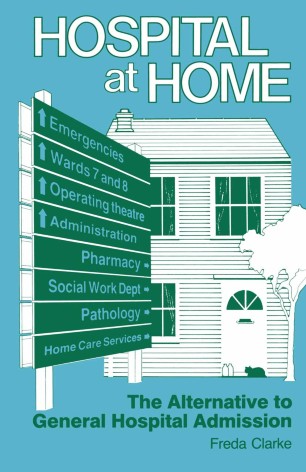
Despite all of the recent hype, the idea of “hospital-at-home” is hardly a new concept. The first randomized, controlled study on the topic, published over 20 years ago, showed that the model was safe, finding that patients with five common conditions who would normally have been admitted to the hospital experienced similar outcomes when treated at home.

This week a new randomized, controlled trial from researchers at Boston-based Brigham and Women’s showed that hospital-at-home had better clinical outcomes and was a whopping 38 percent cheaper than equivalent management in an acute care hospital. Yes, the study was small (91 patients) and probably had some selection bias (just 37 percent of eligible patients chose home care).

Drilling into the data, length of stay for home-based patients was a little longer, but at-home patients received dramatically fewer lab tests, imaging studies and specialist consults—raising the question of whether all those daily chest x-rays, CBCs and curbside consults in traditional hospitals really provide value.

And 30-day readmissions and ED visit rates for home-based patients were less than half of the control group. Selection for clinical appropriateness and family support is critical, but experts estimate that up to a third of medical admissions could be managed in the home setting.

As growing evidence shows hospital-at-home to be safe, effective and lower cost, the lack of a reimbursement model to support investments in home-based acute care is now the greatest obstacle to widespread adoption.


Britain’s Bold Move Toward Healthcare

https://www.kornferry.com/institute/britain-election-healthcare-leadership?utm_campaign=12-19-19-twil&utm_source=marketo&utm_medium=email&mkt_tok=eyJpIjoiTnpBek5UVmpOR0UyTkRVeSIsInQiOiJVV2tpTzNyRjlpXC9xS2gweDJSckUxRThIK0F6b2VxeDBNNzRDcDFhTVVEVUpqY2hXdG1ucGc0ZHVFYmFkY1V0WlwvbDhuWFdsNFpqZWVnXC9rdE93SldkY3lqTERSdzZGMW41ZWNOTHJJc0VIQUNycStRa0pkM2ZvaUhJd08wUU5sbyJ9

Just days after a landslide election victory for the Conservative Party, Britain’s Prime Minister Boris Johnson just made a massive and bold announcement: He’ll get laws passed to guarantee plenty of cash for the state-run healthcare system.

The official announcement will likely come Thursday when the Queen, who is the official head of state, will reopen Parliament and outline the coming legislative agenda. Tucked within her speech will be a call for £34 billion ($45 billion) in annual taxpayer money for the National Health Service (NHS).

While other countries embrace their private health systems, the British love their publicly funded NHS, an employer of 1.5 million people, which services the population of 66 million. In general, the people are concerned about the quality of care provided by the NHS and look to the government for solutions, says Mary Macleod, a senior client partner for Korn Ferry’s Board and CEO Services practice and a former Conservative Party MP. “The NHS does become a bit of a political football,” she says. “And to a large extent, everyone in the UK feels that they are stakeholders in it.”

The pledge to secure NHS money will likely bolster Johnson’s political leadership versus the opposition Labour Party. And the move also neutralizes critics that have barraged the Conservative Party with allegations that it would sell parts of the NHS to foreign investors. In other words, pushing a new funding law through Parliament could partially neutralize political opponents.

But the politics of the matter is only part of the announcement’s strength, Macleod says. Promising the NHS years of generous financing will allow the organization to develop a strategy for how it will care for the country’s population for years into the future. In short, Macleod says, it sends a message to the NHS leadership: You can get busy now. “If you now know you are getting the funding, you can plan ahead,” she says.

Johnson’s lack of specifics about how the NHS should spend the money could be a strength. In a sense, he has empowered the organization’s leadership to make the decisions that they deem suitable. “What the prime minister is not doing is defining the solutions,” Macleod says. But she also notes that he will want results in the form of improved service from the organization. “He will hold them accountable,” she says.

While there are benefits when leaders take bold steps, there are also risks, says Christina Harrington, Korn Ferry’s head of advisory services in Stockholm, Sweden. She says it is good for leaders to act quickly and with conviction, as the public expects that of its leaders. But that alone isn’t enough. She says the problem comes when there’s too much ego involved. “You need an egoless conviction to drive a decision making the greater good,” she says.

Ideally, the driver of proposed changes needs to have a long-term vision of something better than the current situation. If that vision is lacking, then the leader may lack the required stamina to get the job done. Indeed, if headline-grabbing is all that the boss wants, then he or she might wind up doing a U-turn. “If there isn’t a long-term vision, then another fast decision may come in the other direction,” Harrington says. “And that’s what we see a lot of.”


GEISINGER OFFERS DEBT-FREE PRIMARY CARE MEDICAL SCHOOL

https://www.healthleadersmedia.com/clinical-care/geisinger-offers-debt-free-primary-care-medical-school?spMailingID=16548061&spUserID=MTg2ODM1MDE3NTU1S0&spJobID=1760517984&spReportId=MTc2MDUxNzk4NAS2

Program offered for medical students who’ll commit to primary care at the Pennsylvania-based health system after graduating.


KEY TAKEAWAYS

The program will pick 40 first- and second-year students in each medical class through a competitive application process.

Selection criteria include  financial need, academic merit, diversity, and predictors of whether the applicant will stay in Geisinger’s service area.

The program will provide full coverage of tuition and fees plus a monthly $2,000 stipend through four years of medical school. 

Geisinger and Geisinger Commonwealth School of Medicine have created the Geisinger Primary Care Scholars Program that will offer debt-free medical school and living assistance to medical students who agree to work within primary care at the health system after they graduate.

Medical students often carry $200,000 or more in debt, which pushes them into higher-paying specialties. Geisinger President and CEO Jaewon Ryu, MD, says that removing the financial strain in exchange for a four-year commitment to practice at Geisinger will make it easier for more med students to pursue primary care.

“At Geisinger, we’ve been able to prove that by focusing on primary care we can improve outcomes, lower costs and improve satisfaction among patients and providers,” Ryu said.

“We’ve built some innovative programs that expand upon the notion of what is primary care and where it is delivered. With all of these different offerings, we are thrilled to welcome anyone who shares this passion around new and exciting ways to deliver this core care,” Ryu said.

“So, it’s only natural that we extend that commitment to training the next generation of physicians. These scholars have the opportunity to learn and later work in Geisinger’s innovative primary care environment without the worry of how they will pay for their education,” he said.

The program will pick 40 first- and second-year students in each incoming medical class through a competitive application process. Selection criteria include demonstrated financial need, academic merit, diversity, passion for serving their communities, and predictors of whether the applicant is likely to stay in Geisinger’s service area.

The program will provide full coverage of tuition and fees plus a monthly $2,000 stipend through the four years of medical school.

“I can’t think of a better opportunity for these scholars to pursue their commitment to primary care than by providing debt-free medical schooling,” said Steven J. Scheinman, MD, executive vice president and chief academic officer at Geisinger and Dean of the Geisinger Commonwealth School of Medicine.

Last year Geisinger started the Abigail Geisinger Scholars Program. Which gives 10 students in each class up to four years of tuition in the form of a loan, which is forgiven upon completion of a service commitment as a Geisinger physician in any specialty.

“I CAN’T THINK OF A BETTER OPPORTUNITY FOR THESE SCHOLARS TO PURSUE THEIR COMMITMENT TO PRIMARY CARE THAN BY PROVIDING DEBT-FREE MEDICAL SCHOOLING. ”


Study: Copper ICU Beds Mostly Untarnished by Bacteria

https://www.medpagetoday.com/criticalcare/infectioncontrol/83224?xid=nl_mpt_DHE_2019-11-09&eun=g885344d0r&utm_source=Sailthru&utm_medium=email&utm_campaign=Daily%20Headlines%20Top%20Cat%20HeC%20%202019-11-09&utm_term=NL_Daily_DHE_dual-gmail-definition

Image result for Copper ICU Beds Mostly Untarnished by Bacteria

Converting from plastic surfaces could cut risk of HAIs, researchers argue.

Hospital beds with copper surfaces in an intensive care unit had significantly fewer bacteria than hospital beds with plastic surfaces, even after daily cleaning and disinfection, researchers found.

Active colony forming units per 100 cm2 on beds with copper rails, foot boards, and bed controls were less than 10% of those seen on conventional beds (median 42 vs 594), reported Michael Schmidt, PhD, of Medical University in South Carolina in Charleston, writing in Applied and Environmental Microbiology.

“The findings indicate that antimicrobial copper beds can assist infection control practitioners in their quest to keep healthcare surfaces hygienic between regular cleanings, thereby reducing the potential risk of transmitting bacteria associated with healthcare associated infections,” Schmidt said in a statement.

The authors explained that “metallic copper surfaces kill bacteria through a multi-modal mechanism through its ability to disrupt bacterial respiration, generate superoxide, and destroy genomic and plasmid DNA in situ.”

Studies have found that not only does environmental contamination play a role in transmitting pathogens responsible for healthcare-acquired infections, the investigators added, but copper-containing surfaces had reduced bacterial burdens.

Nevertheless, Schmidt noted, acute-care hospital beds on which all high-risk surfaces are copper have only recently become available.

“Based on the positive results of previous trials, we worked to get a fully encapsulated copper bed produced. We needed to convince manufacturers that the risk to undertake this effort was worthwhile,” he said.

This was a pragmatic cross-over study performed in a medical intensive care unit at a single medical center, which monitored the bacterial burden of control beds from April 2017 to July 2018, and interventional beds from April 2018 to March 2019 — noting a mixture of intervention and control beds from April to July 2018, as copper beds were introduced when a patient was discharged from a control bed.

Beds were thoroughly cleaned after patient discharge, and high-touch surfaces were routinely disinfected, as part of daily cleaning protocols, the authors said. Not surprisingly, they found that control beds accumulated higher concentrations of bacteria across all sampled areas, with the tops of the bed rails the most heavily soiled.

To put this into context, the authors noted that 89% of the samples collected from the control beds exceed the benchmark terminal cleaning and disinfection risk threshold compared to 9% from the copper beds, and 42% of copper beds were free of detectable bacteria.

In fact, the area with the heaviest bacterial burden on the copper bed was the internal, patient-facing surface of the foot board — though it was significantly lower than the comparative location on the control foot board, the authors noted.

One barrier to implementing this solution could be the cost of copper beds, but Schmidt and colleagues argued it would ultimately cost less than other adjunct cleaning options. Encapsulating a bed with antimicrobial copper would cost approximately $2,200 per bed, amortized over 5 years for a total of $1.20 per bed per day. The authors said that additional daily cleaning ($12-$13/room), ultraviolet radiation ($10/room), or hydrogen peroxide vapor phase deposition ($100/room) would be much more expensive.

“The copper intervention … is the only adjunct to act continuously, actively killing bacteria … and only adding a modest increase to the environmental services/infection control budget,” they wrote. “The value delivered by this intervention to the infection control bundle warrants further studies to assess its impact on HAI rates ultimately leading to consideration for its adoption.”


Another round of debate over hospital consolidation

Image result for Another round of debate over hospital consolidation
 
Are hospital mergers a good thing or a bad thing?

Much of the answer to that question depends on what happens after the merger—does the combined organization provide better, more efficient care, or does it use its increased leverage to raise prices? Yet another round of back and forth on this issue took place this week, as the American Hospital Association (AHA) released the results of a study it commissioned from economic analysis firm Charles River Associates (CRA), while a group of academic antitrust specialists countered with their own briefing in response.

The AHA study, based on interviews with select health system leaders and econometric analysis by CRA, shows (surprise, surprise) that consolidation decreases hospital expenses by 2.3 percent, reduces mortality and readmissions, and reduces revenue per admission by 3.5 percent—indicating that the “savings” from consolidation are being passed along to purchasers. The economists, including Martin Gaynor at Carnegie Mellon, Zack Cooper at Yale, and Leemore Dafny at Harvard, countered in their briefing (surprise, surprise) that CRA’s research was biased in favor of hospitals, and cited numerous academic studies that indicate that hospital consolidation drives overall healthcare costs higher.

Beyond the predictable debate, our view is that consolidation can and should lead to better quality and lower prices—but that it largely hasn’t delivered on that promise. The prospect of “integrated care” that’s often touted by consolidation advocates hasn’t materialized in most places, both because hospital executives haven’t pushed hard enough on strategies to produce it, and because the market lacks sufficient incentives to encourage it.

AHA says hospital mergers are good — economists say otherwise

https://www.beckershospitalreview.com/hospital-transactions-and-valuation/aha-says-hospital-mergers-are-good-economists-say-otherwise.html

Image result for hospital market power

The American Hospital Association released a report stating that hospital acquisitions allow providers to provide better care at a lower cost to patients.

The report, which revisited an analysis concluding similar results three years ago, found acquisitions decrease cost due to the increased size of a combined system as well as clinical standardization.

Specifically, the AHA said hospital acquisitions lead to a 2.3 percent reduction in annual operating expenses at acquired hospitals. The study also said readmission and mortality rates decline at merging hospitals, and acquired hospitals see revenues per admission decline 3.5 percent, suggesting “savings that accrue to merging hospitals are passed on to patients and their health plans.”

However, the AHA’s findings — which were largely based on interviews with leaders of 10 health systems who weren’t randomly surveyed — contradict a wealth of economic data published that argues the opposite.

Last year, researchers found hospitals in monopoly markets, compared to hospitals in markets with four or more competitors, have prices that are 12 percent higher. In markets with four or more competitors, hospitals have lower prices and take on more financial risk, researchers said. Another independent analysis found hospital prices rise after hospitals combine. Researchers have also questioned whether consolidation really leads to better quality.