The outmigration of orthopedic surgeries 

https://mailchi.mp/11f2d4aad100/the-weekly-gist-august-12-2022?e=d1e747d2d8

One of COVID’s many effects on the health system business model has been the accelerated migration of care to outpatient settings, with orthopedic surgeries, such as knee and hip replacements, leading the way. For this week’s graphic, we partnered with Stratasan, a Syntellis-owned healthcare data analytics firm that provides market intelligence for strategic planning, to track how quickly joint replacements have shifted to hospital outpatient and ambulatory surgery centers (ASCs) over the last five years.

Using data from Stratasan’s proprietary All-Payer Claims Database, we found that by the end of 2021, only one in four knee replacements and one in three hip replacements were performed in inpatient facilities, down from over 95 percent in 2018. A major catalyst for the shift was the removal of the procedures from Medicare’s Inpatient Only list, first knee replacements in 2018, then hip replacements in 2020.

This change triggered an outpatient shift across all payers; COVID’s dampening effect on inpatient demand only exacerbated the trends. Patients who undergo these surgeries in an inpatient hospital tend to be sicker, older, and more likely to be on Medicare. This translates to an altered payer mix for these procedures, with hospitals seeing a drop in lucrative commercial payment and an uptick in lower Medicare reimbursements.

Amid rising expenses and slow-to-return volumes across the board, this outpatient migration presents another significant challenge to health systems’ financial bottom lines, and they must either find ways to recapture revenues in ambulatory settings, or watch a once reliable source of revenue walk—gingerly—out their doors. 

Hospitals need ‘transformational changes’ to stem margin erosion

https://www.healthcaredive.com/news/Fitch-ratings-nonprofit-hospital-changes/627662/

Dive Brief:

  • Nonprofit hospitals are reporting thinner margins this year, stretched by rising labor, supply and capital costs, and will be pressed to make big changes to their business models or risk negative rating actions, Fitch Ratings said in a report out Tuesday.
  • Warning that it could take years for provider margins to recover to pre-pandemic levels, Fitch outlined a series of steps necessary to manage the inflationary pressures. Those moves include steeper rate increases in the short term and “relentless, ongoing cost-cutting and productivity improvements” over the medium term, the ratings agency said.
  • Further out on the horizon, “improvement in operating margins from reduced levels will require hospitals to make transformational changes to the business model,” Fitch cautioned.

Dive Insight:

It has been a rough year so far for U.S. hospitals, which are navigating labor shortages, rising operating costs and a rebound in healthcare utilization that has followed the suppressed demand of the early pandemic. 

The strain on operations has resulted in five straight months of negative margins for health systems, according to Kaufman Hall’s latest hospital performance report.

Fitch said the majority of the hospitals it follows have strong balance sheets that will provide a cushion for a period of time. But with cost inflation at levels not seen since the late 1970s and early 1980s, and the potential for additional coronavirus surges this fall and winter, more substantial changes to hospitals’ business models could be necessary to avoid negative rating actions, the agency said.

Providers will look to secure much higher rate increases from commercial payers. However, insurers are under similar pressures as hospitals and will push back, using leverage gained through the sector’s consolidation, the report said.

As a result, commercial insurers’ rate increases are likely to exceed those of recent years, but remain below the rate of inflation in the short term, Fitch said. Further, federal budget deficits make Medicare or Medicaid rate adjustments to offset inflation unlikely.

An early look at state regulatory filings this summer suggests insurers who offer plans on the Affordable Care Act exchanges will seek substantial premium hikes in 2023, according to an analysis from the Kaiser Family Foundation. The median rate increase requested by 72 ACA insurers was 10% in the KFF study.

Inflation is pushing more providers to consider mergers and acquisitions to create economies of scale, Fitch said. But regulators are scrutinizing deals more strenuously due to concerns that consolidation will push prices even higher. With increased capital costs, rising interest rates and ongoing supply chain disruptions, hospitals’ plans for expansion or renovations will cost more or may be postponed, the report said.

Acknowledging the losses that come with a new strategy

https://mailchi.mp/30feb0b31ba0/the-weekly-gist-july-15-2022?e=d1e747d2d8

Embarking on a new strategy requires myriad organizational changes—which will inevitably come with losses. Some parts of the business, people, roles, processes, and traditions will inevitably be deemphasized, or even eliminated from the organization. A recent article in the Harvard Business Review identifies how leaders launching new strategies typically spend a significant amount of time trying to plan for the unpredictable future, while overlooking one of the most predictable parts of any change in strategy: what will be lost when something else is gained.

The Gist: It is critical to identify, acknowledge, and plan for these losses in adopting any new strategy, as the unexpressed fear of loss is a key driver of organizational inertia and resistance to change.

With health systems deep in strategy development for the post-COVID marketleaders must take into account the wide range of challenges their organizations will face when it comes to reconfiguring investment, growth, competencies, and people, in addition to focusing on new areas of opportunity revealed by the pandemic. 

Failing to confront these tradeoffs head-on may sacrifice any strategic gains resulting from new initiatives.

Setting the post-COVID agenda for health systems

https://mailchi.mp/9e0c56723d09/the-weekly-gist-july-8-2022?e=d1e747d2d8

As the economic situation has worsened over the past few months, we’ve been working with several health systems to recalibrate strategy. For many, the anticipated “post-COVID recovery” period has turned into a struggle to reverse declining (often negative) margins, while still scrambling to address mounting workforce shortages. All this amid continued pressure from disruptive competitors and ever-rising consumer expectations.

In the graphic above, we’ve pulled together some of the most important changes we believe health systems need to make. These range from improvements to the operating model (shifting to a team-based approach to staffing, greater use of automation where appropriate, and moving to asset-light capital strategies) to transformations of the clinical model (moving care into lower-cost outpatient and community settings, integrating virtual care into clinical delivery, and creating tighter alignment with key physicians).

In general, the goal is to deliver lower-cost care in less expensive settings, using less expensive staff. 

But those cost-saving strategies will need to be coupled with a new go-to-market approach, including new payment models that reward systems for shifting away from high-cost (and highly reimbursed) care models. 

Employers and consumers will expect more solution-based offerings, which integrate care across the continuum into coherent bundles of service. This will require a more deliberate focus on service line strategies, moving away from a fragmented, inpatient-centric model.

Contracting approaches must align payment with this shift, changing incentives to reward coordinated, cost-effective, outcomes-driven care. 

A key insight from our discussions with health system leaders: short-term cost-cutting initiatives to “stop the bleed” won’t suffice—instead, more permanent solutions will be required that address not only the core operating model, but also the approach to revenue generation. 

The post-COVID environment is turning out to be a lot tougher than many had expected, to say the least.

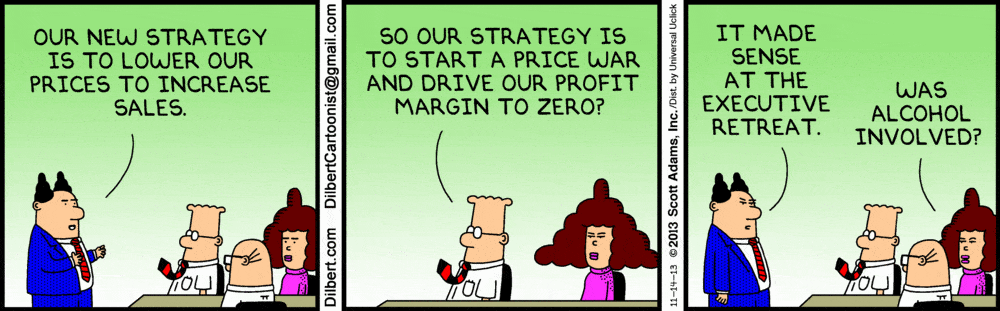
Cartoon – We have a Strategy

Cartoon – Status Quo Strategy

How other industry players are expanding their healthcare platforms  

https://mailchi.mp/31b9e4f5100d/the-weekly-gist-june-03-2022?e=d1e747d2d8


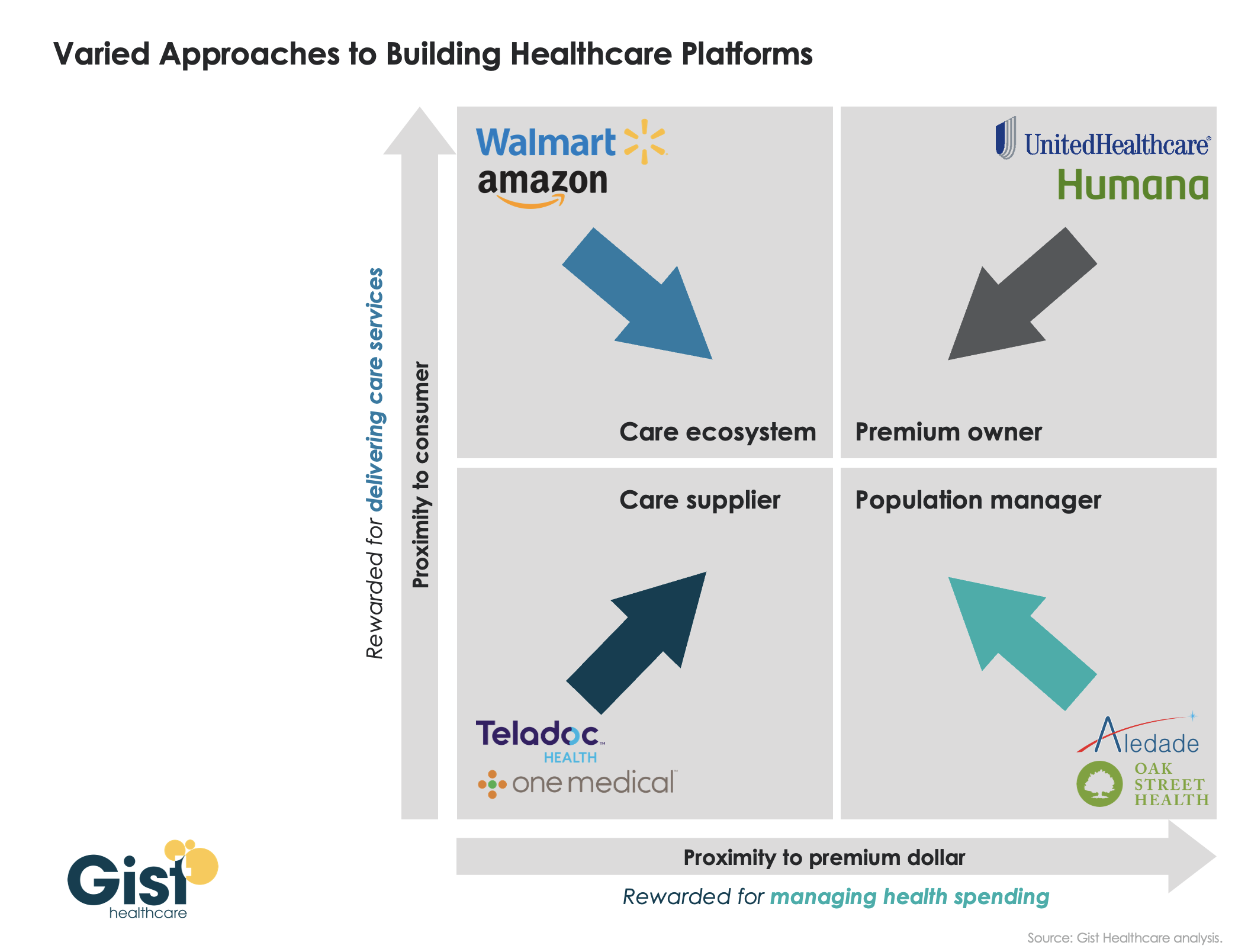
Last week, we introduced our framework for value delivery as a “healthcare platform”, in which an organization’s proximity to both the consumer and to the premium dollar determines how it competes as a “care supplier,” a “care ecosystem,” a “premium owner,” or a “population manager.” Traditionally, different healthcare companies have operated primarily in one of these four domains. However, as shown in the graphic below, we’ve recently seen many shift their business into one or more additional quadrants, as they seek to expand their value propositions. UnitedHealth Group is an obvious example: it has moved well beyond the traditional insurance business, via numerous provider and care delivery acquisitions across the continuum.

Other players have shifted from their own “pure play” positions toward more comprehensive “platform” strategies as well: One Medical adding Iora Health to enhance population health capabilities; Walmart moving beyond retail and pharmacy services, partnering with Oak Street Health to expand its ability to manage Medicare patients; Amazon getting into the employer health business. 

There’s a clear pattern emerging—value propositions are converging on a “strategic high ground” that encompasses all four dimensions of platform value, creating a comprehensive set of solutions to deliver accessible care, promote health, and grow consumer loyalty, with an aligned financial model centered on managing the total cost of care. Health systems looking to build platform strategies will find many of these competitors also vying for pride of place as the “platform of choice” for healthcare consumers and purchasers.

Becoming a healthcare platform

https://mailchi.mp/d73a73774303/the-weekly-gist-may-27-2022?e=d1e747d2d8

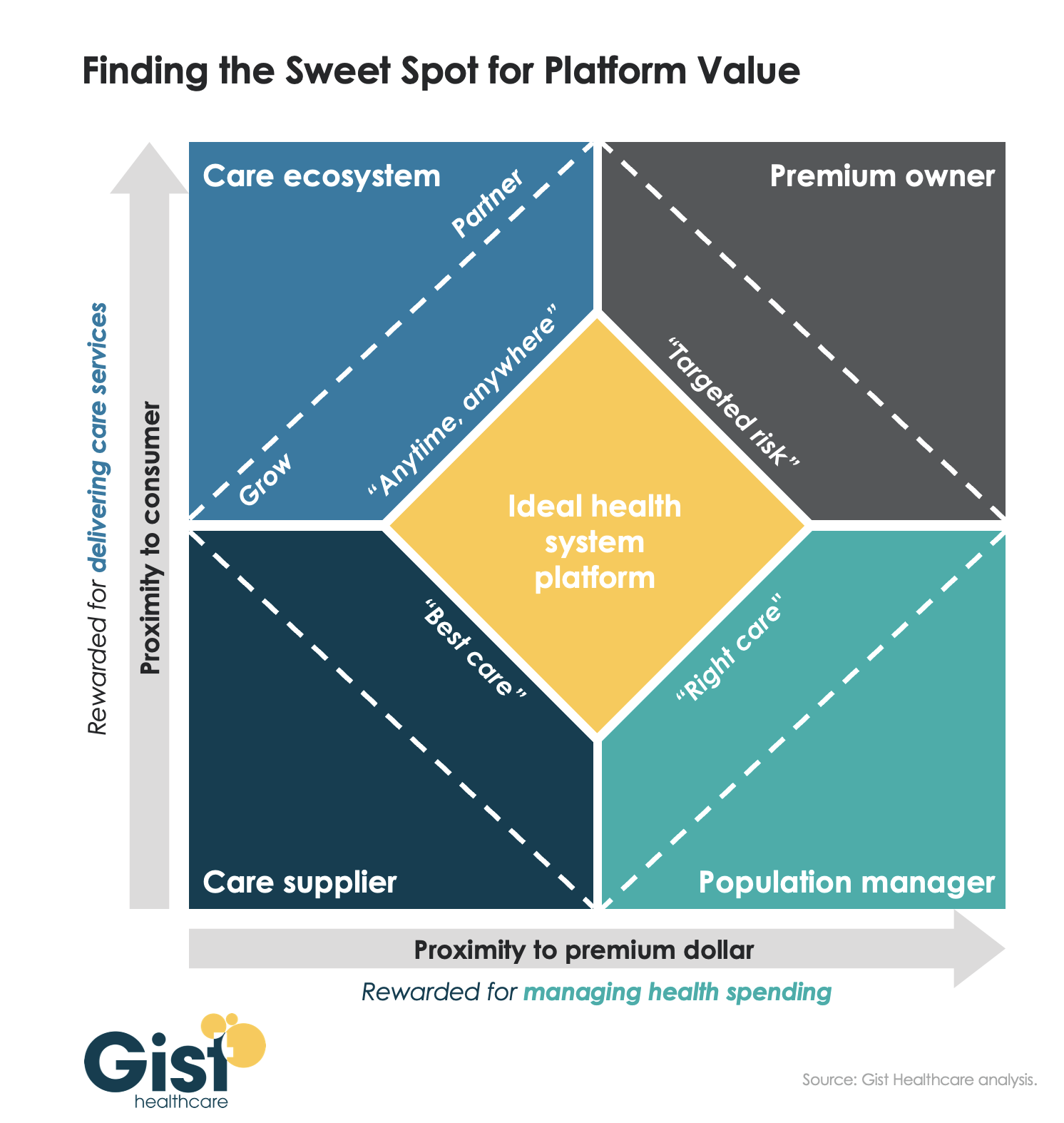
As we’ve been discussing over the past few years, several environmental forces—shifting consumer behavior, evolving demographics, new technology, and a flood of new market entrants—are pushing health systems to adopt a more consumer-centric business model. Systems must develop the capabilities needed to create an omnichannel consumer loyalty and population management platform. This platform will be the foundation for connecting consumers, curating providers, and coordinating care.
 
To achieve this vision, health systems must deliver value across two dimensions: increasing their proximity to the consumer (our y-axis) and their proximity to the premium dollar (our x-axis), as shown in the graphic above. Traditionally, health systems have operated primarily in the lower-left quadrant, as “care suppliers.” Some have spent considerable time and resources across the last decade, pushing closer to the premium dollar, to become “population managers.” But, importantly, managing population health is neither patient-facing, nor something consumers demand and seek.

To build deeper consumer loyalty, health systems must also move up the y-axis, creating a “care ecosystem” that provides “anywhere, anytime” care through multiple channels, including virtual and home-based solutions. And for certain populations, like Medicare Advantage, it will make sense for many systems to also explore becoming the “premium owner”, owning the full care budget and ensuring the incentives to design a consumer-centric offering. 

The ideal health system platform should combine all four of these identities, tailored to the local market situation.