Where do patients go when hospitals shut down capacity?

https://mailchi.mp/f1c5ab8c3811/the-weekly-gist-october-28-2022?e=d1e747d2d8

Last week we met the CEO of the flagship hospital of a large academic health system. Like nearly every hospital, they are challenged in finding the staff they need to keep the hospital running at full capacity. Keeping all the hospital’s units open has been critical: “Over the past three months, we have been busting at the seams…more patients, and they’re sicker. And we’re not even really into flu season yet.” We asked what had changed, given that summer usually is lighter than other seasons for hospital admissions. 

His diagnosis: local community hospitals, also strapped for staff, had begun to regularly shut down units to keep premium labor spend in check. “If they’re not running at full capacity, the patients still have to go somewhere. Given that we’re both the quaternary care provider and the community’s safety net, they’re coming downtown to us. We don’t have the luxury to shut down.” The system had to ramp up agency nursing to accommodate the demand, leading to a sharp rise in labor costs.

This CEO wasn’t backing away from the system’s mission, and vowed to expand capacity as much as they could, but felt that policymakers and payers needed to understand the dynamics in the market: “We’re getting criticized for not being able to control our costs, despite the fact that we’re absorbing what other hospitals can’t handle.” As we head into winter, flu will surely spike, and another COVID surge is possible—the hospitals at the top of the “care chain” will become even more strained in their mission to accommodate their communities’ needs. 

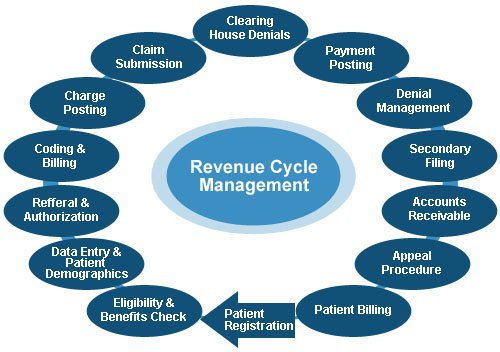
Increasing denials, unfavorable payer mix among top RCM concerns: report

Revenue cycle challenges “seem to have intensified over the past year,” according to Kaufman Hall’s “2022 State of Healthcare Performance Improvement” report, released Oct. 18. 

The consulting firm said that in 2021, 25 percent of survey respondents said they had not seen any pandemic-related effects on their respective revenue cycles. This year, only 7 percent said they saw no effects. 

The findings in Kaufman Hall’s report are based on survey responses from 86 hospital and health system leaders across the U.S.

Here are the top five ways leaders said the pandemic affected the revenue cycle in 2022:

1. Increased rate claim denials — 67 percent

2. Change in payer mix: Lower percentage of commercially insured patients — 51 percent

3. Increase in bad debt/uncompensated care — 41 percent

4. Change in payer mix: Higher percentage of Medicaid patients — 35 percent

5. Change in payer mix: Higher percentage of self-pay or uninsured patients — 31 percent

CFOs experienced in cutting costs, restructuring in high demand

Fall is typically a period of increased CFO turnover as hospitals and health systems begin searches for new executives for the beginning of the following year, but the pressures associated with high inflation, a projected recession and the continued effects of the pandemic have led to more churn than usual for top financial positions, The Wall Street Journal reported Oct. 23

Many economists and financial experts are expecting a recession to hit the U.S. in early- to mid-2023. This is pushing some executives to switch roles now before the labor market changes. Many healthcare organizations are also preparing for a potential economic downturn by searching for CFOs who are experienced in cutting costs or restructuring operations, according to the report.

Recession planning in healthcare is challenging because it can have both negative (payer mix, patient volume) and positive effects (decrease in labor and supply inflation) on financial performance, according to Daniel Morash, senior vice president of finance and CFO for Boston-based Brigham and Women’s Hospital.

The best advice I would give is that hospitals need to consider recession scenarios when making long-term commitments on wage increases, capital expenditures and planning for capacity for patient access,” Mr. Morash told Becker’s Hospital Review. “Most of our focus needs to be on the acute challenges we are facing. Still, it’s important to be careful not to overreact or overcommit financially when a recession could change a number of trends we’re seeing now.”

The Coming Insurance Storm

Employers face a brutal increase in health-insurance premiums for 2023, Axios’ Arielle Dreher writes from a Kaiser Family Foundation report out this morning.

  • Why it matters: Premiums stayed relatively flat this year, even as wages and inflation surged. That reprieve was because many 2022 premiums were finalized last fall, before inflation took off.

“Employers are already concerned about what they pay for health premiums,” KFF president and CEO Drew Altman said.

  • “[B]ut this could be the calm before the storm … Given the tight labor market and rising wages, it will be tough for employers to shift costs onto workers when costs spike.”

🧠 What’s happening: Nearly 159 million Americans get health coverage through work — and coverage costs and benefits have become a critical factor in a tight labor market.

🔎 Between the lines: In the tight labor market, some employers absorbed rising costs of coverage instead of passing them on to workers.

  • An October survey of 1,200 small businesses found that nearly half had raised prices to offset rising costs of health care.

🧮 By the numbers: It cost an average of $22,463 to cover a family through employer-sponsored health insurance in 2022, KFF found.

  • Workers contributed an average of $6,106.

Read the report

U.S. economy returned to growth in Q3

The U.S. economy expanded at a 2.6% annual rate in the third quarter, ending the streak of back-to-back contractions that raised fears the country had entered a recession.

Why it matters: Gross domestic product got a boost from trade dynamics, but the underlying details — including weaker housing and decelerating consumer spending — point to an economy that’s slowing.

  • The first estimate of GDP, released by the Commerce Department on Thursday, will be revised in the coming months as the government gets more complete data.
  • The report comes on the heels of negative GDP growth during the first half of the year. In the January through March period, the economy contracted at a 1.6% annual rate. In the second quarter, the economy shrank at a 0.6% annualized pace.

Between the lines: The latest GDP report is among the final major economic data releases before the midterm elections, where voters have ranked the economy as a critical issue.

  • The labor market is solid, with the unemployment rate at the lowest level in over 50 years. But soaring inflation has eaten away at Americans’ wage gains.

The backdrop: The Federal Reserve is trying to engineer an economic slowdown in a bid to crush high inflation. It has swiftly raised borrowing costs five times this year, with another big increase likely ahead at its upcoming policy meeting next week.

What they’re saying: “For months, doomsayers have been arguing that the US economy is in a recession and Congressional Republicans have been rooting for a downturn,” President Biden said in a statement. “But today we got further evidence that our economic recovery is continuing to power forward.”