


A Defining Moment


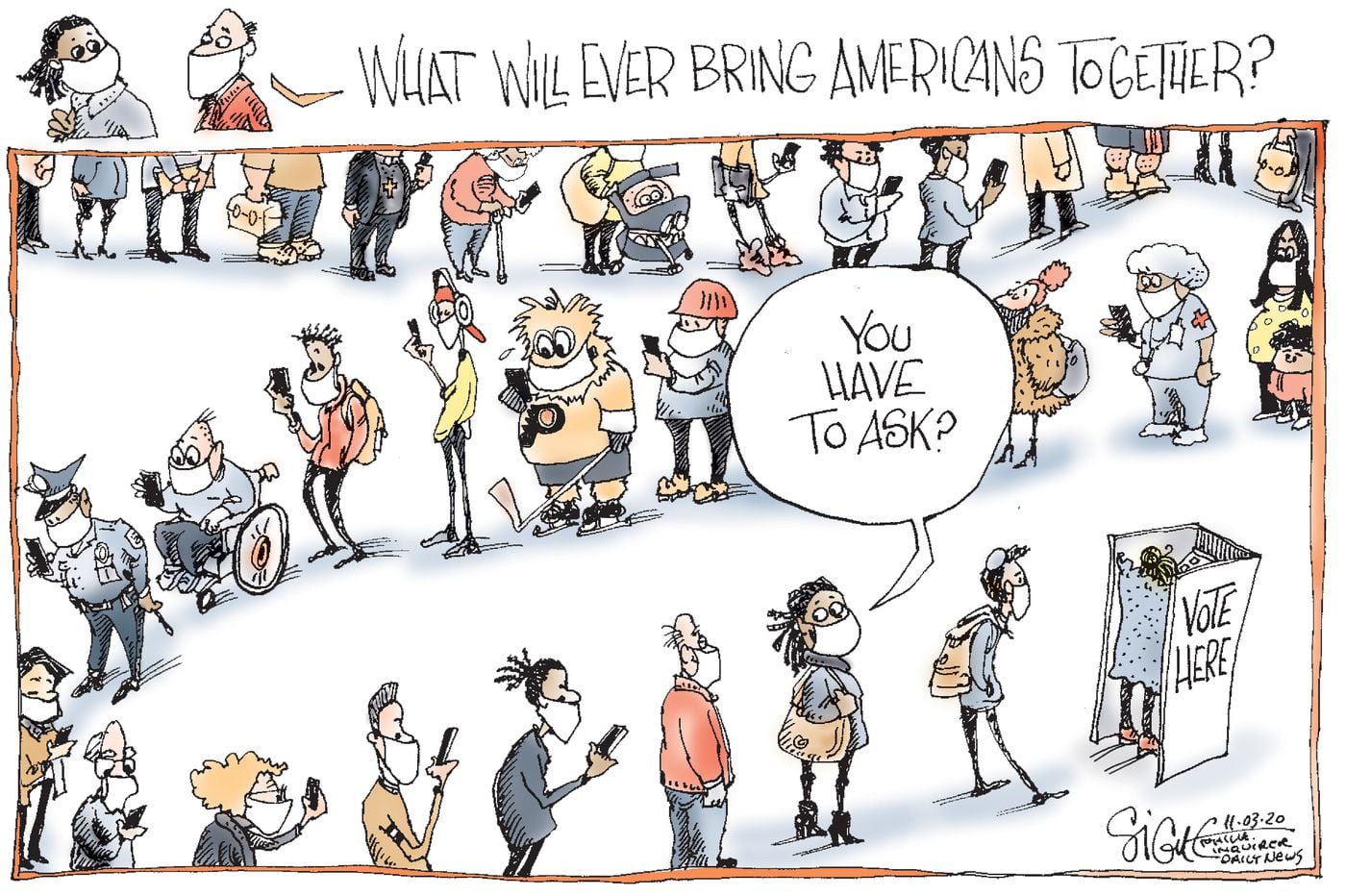
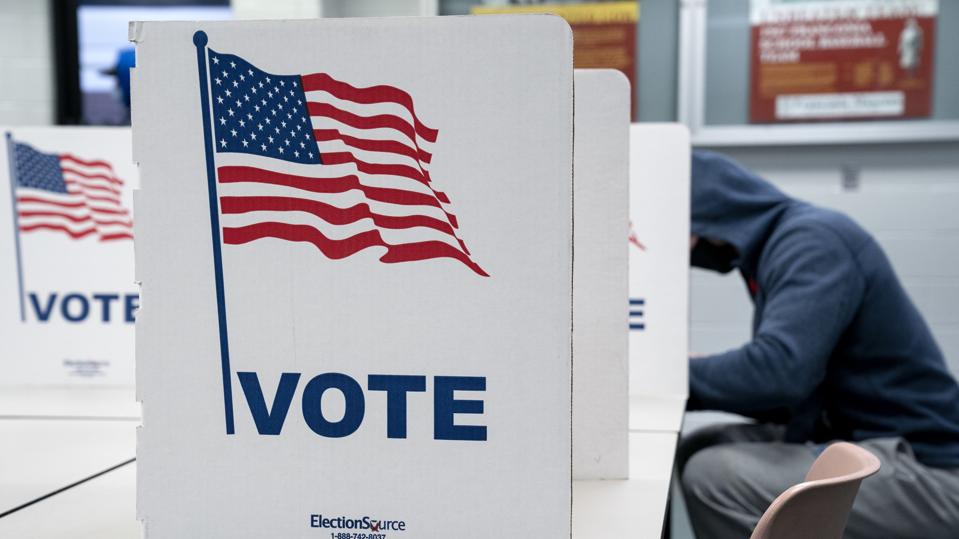
By the end of early voting on Monday night, elections officials in the United States had received 100,200,000 ballots, a record-setting amount representing more than 70% of the total number of votes cast in the entire 2016 presidential election, leading many experts to predict that an energized electorate will set an all-time record for total ballots cast in 2020.
According to CNN, six states (Texas, Hawaii, Nevada, Washington, Arizona and Montana) surpassed their total 2016 voter turnout prior to Tuesday.
At least seven additional states (North Carolina, Oregon, Colorado, New Mexico, Georgia, Florida and Tennessee) have surpassed 90% of their 2016 turnout.
The total number of votes cast is projected to range from 142 million to 150 million (62%–65% of eligible voters), according to data scientist Andrew Therriault.
Nate Silver of FiveThirtyEight.com forecasted last week that the total election turnout would be around 154 million, with an 80th-percentile range between 144 million and 165 million.
In 2016, approximately 138 million Americans voted (the highest total to date), with 58.8 million of those votes cast before Election Day.
This year, many states have expanded in-person early voting and mail-in ballots due to safety concerns associated with the coronavirus pandemic, which has claimed the lives of more than 231,000 Americans. The early voting returns in many areas, including several swing states, overwhelmingly favor Democratic candidates.
As of Tuesday morning, among those states that provide party registration data, registered Democrats had returned nearly 22 million ballots, while Republicans had returned fewer than 15 million. Another 11.6 million returned ballots list no party affiliation. According to the U.S. Elections Project, 35.7 million people voted early in person, and 64 million cast early ballots by mail.
“I’m going to vote like my life depends on it,” said Marilyn Crowder, a 60-year-old Philadelphia resident.
82.6%. That was the record-setting eligible voter turnout rate in the 1876 presidential election when Rutherford Hayes defeated Samuel Tilden. When Abraham Lincoln won in 1860, 81.8% of eligible citizens cast a vote.
With voting underway across the U.S., officials are bracing for a day of mischief and mayhem—polling hiccups, malfunctions, voter intimidation and civil unrest—here’s what’s happened so far.
Election officials across the country are warning of an unidentified robocall advising Americans to “stay safe and stay home” on Election Day, which has reportedly reached out to 10 million voters in the past several weeks.
The FBI is investigating those robocalls, according to CNN, which reported on air that calls have been received by voters in New York, Iowa, Michigan, Nebraska and North Carolina.
In Pittsburgh, a poll worker was ordered to be removed after fellow elections staff complained that the worker was looking at ballots prior to their scanning and taking video of the polling place, according to a Pittsburgh Post-Gazette reporter.
Also in Pittsburgh, one polling place wasn’t able to open on time since an election official’s car was stolen that contained a suitcase with a polling book, keys and other materials, according to the Post-Gazette reporter, but the site was later able to open with authorities arresting five suspects.
In Philadelphia, the district attorney’s office rebuked allegations circulating online about a pro-Democrat campaign poster on the outside of a polling station, calling misinformation about what would be an illegal violation “deliberately deceptive.”
Voters in Michigan and Iowa have been receiving threatening live calls telling them to stay home or face arrest at the polls, according to the office of Michigan’s attorney general, while Flint residents have also been targeted with robocalls advising them to vote on Wednesday because of long lines (those votes would not count).
In Kansas City, Missouri, a World War I memorial being used as a poll location was vandalized with the words “Don’t vote” and “Fight revolution” overnight; this comes after gravestones in a Jewish cemetery in Michigan were spray-painted with the words “TRUMP” and “MAGA” and residents of Roseville, Calif. reported “creepy” blue dots on the front homes with Biden-Harris campaign signs.
A federal court ordered the U.S. Postal Service to “sweep” postal facilities to locate any lingering ballots in battleground states, which have seen delays in the days leading up to the election, to be sent out immediately.
Republicans in Pennsylvania asked a federal court to block Democratic-leaning Montgomery County from contacting voters to correct issues with their mail-in ballots and requested the county throw away any defective ballots or those that have been cured in a Tuesday lawsuit.
In a move that’s expected to delay statewide reporting of election results, North Carolina’s State Board of Election voted to keep four polling places open longer because of early morning delays.
In Harris County, Texas, the state’s most populous county which includes Houston, all but one of 10 drive-thru voting locations were shut by county clerk Chris Hollins, who didn’t want the votes—at the center of a so-far failed legal challenge—to be jeopardized.
Pennsylvania’s Lancaster County has said it will delay counting mail-in ballots arriving after 8 p.m. on Election Day in case the U.S. Supreme Court rules to overturn a three-day extension to count ballots previously green-lit by both the Pennsylvania Supreme Court and the U.S. Supreme Court (the Supreme Court could agree to hear these arguments, but only after Election Day).
The coronavirus pandemic has had a significant impact on the voting process, resulting in new procedures that may complicate Election Day. According to the Associated Press, around 300 lawsuits have already been filed about the election, including many concerning coronavirus-induced changes like drop boxes, signatures and secrecy envelopes. Local officials and police are also preparing for disruption and violence throughout the day, including the potential emergence of thousands of partisan poll watchers called for by President Trump. The Armed Conflict Location and Event Data Project (ACLED) has warned of heightened militia activity in key battleground states, including Michigan, Pennsylvania and Wisconsin. In anticipation of unrest, businesses in many U.S. cities have boarded up their storefronts, while a “non-scalable” fence has been constructed around the White House.

In swing states from Georgia to Arizona, the Affordable Care Act — and concerns over protecting preexisting conditions — loom over key races for Congress and the presidency.
“I can’t even believe it’s in jeopardy,” says Noshin Rafieei, a 36-year-old from Phoenix. “The people that are trying to eliminate the protection for individuals such as myself with preexisting conditions, they must not understand what it’s like.”
In 2016, Rafieei was diagnosed with colon cancer. A year later, her doctor discovered it had spread to her liver.
“I was taking oral chemo, morning and night — just imagine that’s your breakfast, essentially, and your dinner,” Rafieei says.
In February, she underwent a liver transplant.
Rafieei does have health insurance now through her employer, but she fears whether her medical history could disqualify her from getting care in the future.
“I had to pray that my insurance would approve of my transplant just in the nick of time,” she says. “I had that Stage 4 label attached to my name and that has dollar signs. Who wants to invest in someone with Stage 4?”
“That is no way to feel,” she adds.
After doing her research, Rafieei says she intends to vote for Joe Biden, who helped get the ACA passed in this first place.
“Health care for me is just the driving factor,” she says.
Even 10 years after the Affordable Care Act locked in a health care protection that Americans now overwhelmingly support — guarantees that insurers cannot deny coverage or charge more based on preexisting medical conditions — voters once again face contradicting campaign promises over which candidate will preserve the law’s legacy.
A majority of Democrats, independents and Republicans say they want their new president to preserve the ACA’s provision that protects as many as 135 million people from potentially being unable to get health care because of their medical history.
President Trump has pledged to keep this in place, even as his administration heads to the U.S Supreme Court the week after Election Day to argue the entire law should be struck down.
“We’ll always protect people with preexisting,” Trump said in the most recent debate. “I’d like to terminate Obamacare, come up with a brand new, beautiful health care.”
And yet the Trump administration has not unveiled a health care plan or identified any specific components it might include. In 2017, the administration joined with congressional Republicans to dismantle the Affordable Care Act, but none of the GOP-backed replacement plans could summon enough votes. The Republicans’ final attempt, a limited “skinny repeal” of parts of the ACA, failed in the Senate because of resistance within their own party.
In an attempt to reassure wary voters, Trump recently signed an executive order that asserts protections for preexisting conditions will stay in place, but legal experts say this has no teeth.
“It’s basically a pinky promise, but it doesn’t have teeth,” says Swapna Reddy, a clinical assistant professor at Arizona State University’s College of Health Solutions. “What is the enforceability? The order really doesn’t have any effect because it can’t regulate the insurance industry.”
Since the 2017 repeal and replace efforts, the health care law has continued to gain popularity.
Public approval is now at an all-time high, but polling shows many Republicans still don’t view the ACA as synonymous with its most popular provision — protections for preexisting conditions.
Democrats hope to change that.
“If you have a preexisting condition — heart disease, diabetes, breast cancer — they are coming for you,” said Biden’s running mate, California Sen. Kamala Harris, during her recent debate with Vice President Pence.
Voters support maintaining ACA’s legal protections
In key swing states, many voters say protecting preexisting conditions is their top health concern.
Rafieei, the Phoenix woman with colon cancer, still often has problems getting her treatments covered. Her insurance has denied medications that help quell the painful side effects of chemotherapy or complications related to her transplant.
“During those chemo days, I’d think, wow, I’m really sick, and I just got off the phone with my pharmacy and they’re denying me something that could possibly help me,” she says.
Because of her transplant, she will be on medication for the rest of her life, and sometimes she even has nightmares about being away and running out of it.
“I will have these panic attacks like, ‘Where’s my medicine? Oh my god, I have to get back to get my medicine?'”
Election season and talk of eliminating the ACA has not given Rafieei much reassurance, though.
“I cannot stomach politics. I am beyond terrified,” she says.
And yet she plans to head to the polls — in person — despite having a compromised immune system.
“It might be a long day. But you know what? I want to fix whatever I can,” she says.
A few days after she votes, she’ll get a coronavirus test and go in for another round of surgery.
A key health issue in political swing states
Rafieei’s home state of Arizona is emblematic of the political contradictions around the health care law.
The Republican-led state reaped the benefits of the ACA. Arizona’s uninsured rate dropped considerably since 2010, in part because it expanded Medicaid.
But the state’s governor also embraced the Republican effort to repeal and replace the law in 2017, and now Arizona’s attorney general is part of the lawsuit that will be heard by the Supreme Court on Nov. 10 that could topple the entire law.
Depending on how the Supreme Court rules, ASU’s Reddy says any meaningful replacement for preexisting conditions would involve Congress and the next president.
“At the moment, we have absolutely no national replacement plan,” she says.
Meanwhile, some states have passed their own laws to maintain protections for preexisting conditions, in the event the ACA is struck down. But Reddy says those vary considerably from state to state.
For example, Arizona’s law, passed just earlier this year, only prevents insurers from outright denying coverage — consumers with preexisting conditions can be charged more.
“We are in this season of chaos around the Affordable Care Act,” says Reddy. “From a consumer perspective, it’s really hard to decipher all these details.”
As in the congressional midterm election of 2018, Democrats are hammering away at Republican’s track record on preexisting conditions and the ACA.
In Arizona, Mark Kelly, the Democratic candidate running for Senate, has run ads and used every opportunity to remind voters of Republican Sen. Martha McSally’s votes to repeal the law.
In Georgia, Democratic challenger Jon Ossoff has taken a similar approach.
“Can you look down the camera and tell the people of this state why you voted four times to allow insurance companies to deny us health care coverage because we may suffer from diabetes or heart disease or have cancer in remission?” Ossoff said during a debate with his opponent, Republican Sen. David Purdue.
Republicans have often tried to skirt health care as a major issue this election cycle because there isn’t the same political advantage to pushing the repeal and replace argument, says Mark Peterson, a professor of public policy, political science and law at UCLA.
“It’s political suicide, there doesn’t seem to be any real political advantage anymore,” says Peterson.
But the timing of the Supreme Court case — exactly a week after election day — has somewhat obscured the issue for voters.
Republicans have chipped away at the health care law by reducing the individual mandate — the provision requiring consumers to purchase insurance — to zero dollars.
The premise of the Supreme Court case is that the ACA no longer qualifies as a tax because of this change in the penalty.
“It is an extraordinary stretch, even among many conservative legal scholars, to say that the entire law is predicated on the existence of an enforced individual mandate,” says Peterson.
The court could rule in a very limited way that does not disrupt the entire law or protections for preexisting conditions, he says.
Like many issues this election, Peterson says there is a big disconnect between what voters in the two parties believe is at stake with the ACA.
“Not everybody, particularly Republicans, associates the ACA with protecting preexisting conditions,” he says. “But it is pretty striking that overwhelmingly Democrats and Independents do — and a number of Republicans — that’s enough to give a significant national supermajority.”

