The FTC is investigating US Anesthesia Providers (USAP), a private equity (PE)-backed group with 4.5K physicians working in nine states, over concerns of monopoly power in certain markets. The inquiry is focused on USAP’s acquisition history, which has followed the PE “playbook” of rolling up small anesthesiology groups into a single entity large enough to exert leverage in contract negotiations. USAP’s presence in Texas and Colorado is likely to be of particular interest, as it controls at least 30 percent of the anesthesiology market in both states.
The Gist:Like many other PE-backed physician groups, USAP achieved market power mostly through myriad acquisitions too small to warrant regulatory attention on their own. The probe is in line with recent government scrutiny of private equity influence in the healthcare sector, and will no doubt be closely watched by investors and PE-backed groups.
If USAP is forced to divest from certain markets, the precedent could prove especially damaging to other rapidly growing investor-backed physician groups, particularly those staffing hospital functions, who are already being rocked by ramifications of the No Surprises Act.
Late last week, both chambers agreed to an interim funding bill to keep the government open through mid-December. In what is likely the last major piece of legislation before the midterm elections, the bill included an extension of two key Medicare payment programs for rural hospitals, but excluded any new funding for vaccines, testing, or treatment for either COVID-19 or monkeypox.
It has been more than 560 days since the Department of Health and Human Services last received federal COVID funding, and its free COVID vaccination program only has enough money to last through the end of 2022.
The Gist: Ever since President Biden declared the pandemic “over”, prospects for the White House’s requested $22B to support the continued pandemic response have diminished. While most hospitals had already given up hope of any additional direct COVID aid coming their way, this bill was the last good chance for the lagging bivalent booster campaign to receive a needed shot in the arm.
A recent Commonwealth Fund study found that if Americans got the new bivalent COVID booster at a rate similar to seasonal flu shots this fall, we could prevent 75K deaths and $44B in medical spending by March 2023—but unfortunately most Americans know little about the boosters, with less than four percent of eligible Americans receiving them so far.
The court ruling comes after the Supreme Court struck down a nearly 30 percent cut to 340B hospital payments from 2018.
October 04, 2022 – A federal judge has ordered HHS to immediately end the almost 30 percent cut in Medicare drug reimbursement to 340B hospitals.
The decision published last week by judge Rudolph Contreras with the US District Court for the District of Columbia rejected HHS’ plan to restore full payment to hospitals participating in the 340B Drug Pricing Program in 2023.
“HHS should not be allowed to continue its unlawful 340B reimbursements for the remainder of the year just because it promises to fix the problem later,” wrote Contreras.
Hospitals participating in the 340B Drug Pricing Program receive outpatient prescription drugs at a discounted price of up to 50 percent since they treat a disproportionate amount of low-income and vulnerable patients. The 340B Program is designed to enable the safety-net providers to stretch their financial resources. Medicare must also reimburse hospitals for administering covered outpatient drugs.
HHS reduced the Medicare drug reimbursement rates for 340B hospitals though in 2018, cutting payments by 28.5 percent in an effort to generate about $1.6 billion in savings. Federal officials reasoned that reimbursing 340B hospitals at the same rate as other hospitals creates an incentive for the hospitals to overprescribe the drugs or prescribe more expensive drugs since they receive covered outpatient drugs at a discounted price.
HHS also argued that 340B hospital reimbursement cuts would lower co-payments for Medicare beneficiaries since the amounts are tied to hospital reimbursement rates.
Hospitals and hospital groups, including the American Hospital Association (AHA) Association of American Medical Colleges (AAMC), and American’s Essential Hospitals, sued the federal government over the reduced reimbursement rates.
The case made it all the way to the Supreme Court where, in a major win for hospitals, judges unanimously ruled that HHS should not have reduced payments to certain hospitals in 2018 and 2019 without surveying hospitals to determine average acquisition costs for drugs. HHS had relied on the average price of the drugs to set lower rates.
However, the Supreme Court did not make judgments on 340B hospital reimbursement cuts for 2020 and later years. Following the Supreme Court’s ruling, HHS announced it would reimburse hospitals for administering 340B-covered drugs the same as non-340B drugs starting Jan. 1, 2023.
Hospital groups again challenged HHS policy, asking the courts to immediately halt the unlawful cuts in 2022.
“The AHA appreciates Judge Contreras’ ruling that the Department of Health and Human Services must immediately stop unlawful reimbursement cuts for 2022 for hospitals participating in the 340B drug pricing program. Halting these cuts will help 340B hospitals provide comprehensive health services to their patients and communities,” said Melinda Hatton, AHA’s general counsel and secretary, regarding the most recent court ruling.
“We continue to urge the Administration to promptly reimburse all the hospitals that were affected by these unlawful cuts in previous years and to ensure the remainder of the hospital field is not penalized for their prior unlawful policy, especially as hospitals and health systems continue to deal with rising costs for supplies, equipment, drugs and labor,” Hatton continued in the public statement.
340B Health’s president and CEO Maureen Testoni also called the court ruling “an important victory for 340B hospitals that have been fighting these unlawful cuts for nearly six years.” 340B health advocates safety-net hospitals participating in the drug pricing program.
“The Centers for Medicare & Medicaid Services (CMS) has the clear responsibility to restore the appropriate payments for 340B drugs immediately, and now a federal court has ordered it to do so without delay,” Testoni said.
HHS has not announced a repayment plan for 340B hospitals. Notably, the court ruling also did not cover the AHA’s motion to include reimbursement cuts from 2020 through 2022 in the case, nor AHA’s motion to repay hospitals for the cuts since 2018 without penalizing other hospitals.
Amazon and several other major companies have made numerous attempts to “disrupt” health care over the years without much success. But new acquisitions in primary care, home health care, and more may allow them to more successfully expand into the industry, David Wainer writes for the Wall Street Journal.
Competition heats up in the health care industry
According to Wainer, the United States spends a greater proportion of its economy on medical services than any other developed nation, making health care “too big of an opportunity to ignore” for many companies, including those in technology, retail, and more.
For example, Amazon has launched several forays into health care in recent years, although not all of them have been successful. Some of these health care efforts include its now defunct partnership with Berkshire Hathaway and JPMorgan Chase, as well as Amazon Care, the company’s primary care service that will shut down at the end of the year.
Amazon has also acquired several smaller health care companies in an effort to expand its reach. In 2018, Amazon purchased PillPack for $1 billion as a way to expand its online pharmacy business. Similarly, Amazon in July reached an agreement to acquireOne Medical, a primary care company, for roughly $3.9 billion.
Several other companies, including retailers like Walmart and Walgreens and large insurers like UnitedHealth Group* (UHG) and CVS Health‘s Aetna, are also looking to expand their health care offerings. In fact, CVS announced last week that it had purchased home health care company Signify Health for roughly $8 billion—beating out several other competitors.
So far, “[s]hifting social attitudes and market conditions have helped fuel the wave” of health care acquisitions from major companies, Wainer writes, and more are likely to occur going forward.
What companies are targeting in health care
In contrast to the more traditional fee-for-service model, many health care startups are moving toward value-based care, which encourages providers to help prevent illnesses, rather than just treat them.
According to Wainer, UHG, which includes a pharmacy benefit manager, an insurance business, and 60,000 physicians, has made the most progress transitioning to value-based care so far. For example, many of the multi-specialty physician practices UHG has purchased through its medical provider arm Optum Care focus on proactively providing patients home, virtual, and on-site care to help them stay out of the hospital.
In addition, UHG and Walmart last week announced a partnership to provide services and “improve the patient experience” for certain Medicare Advantage enrollees. Through the partnership, UHG will use analytics to help Walmart clinics deliver value-based care to patients.
Aside from value-based care, many companies, including Amazon and CVS, are looking to expand their businesses into primary care. Currently, there is a nationwide shortage of primary care doctors, which has led to worse health outcomes for many Americans.
By providing primary care services directly to consumers, Amazon and other companies are hoping to use the relationship between patients and their providers to sell even more services, such as prescription drug deliveries and more.
Overall, “staying healthy probably will never be the sort of frictionless, one-click experience that Amazon pioneered,” Wainer writes, but the company’s current involvement in the health care industry “is a testament to the fact that there’s a lot of money to be made by fixing America’s broken system.” (Wainer, Wall Street Journal, 9/9)
*Advisory Board is a subsidiary of Optum, a division of UnitedHealth Group. All Advisory Board research, expert perspectives, and recommendations remain independent.
Amazon announced it will shut down Amazon Care—its primary care service sold to employer health plans—by the end of the year. There’s one thing that Amazon’s decision will surely mean: It will continue to be fashionable to mock Amazon.
People may look at this, compare it to Amazon’s Haven misadventure, and say that everyone (including Advisory Board) who speculated that Amazon could succeed in health care is either naïve or delusional.
But there’s more to it.
In looking at what Amazon reportedly said about the challenges facing Amazon Care, we believe that the acquisition of One Medical is the clearest signal yet that Amazon intends to succeed at health care.
The problems with Amazon Care
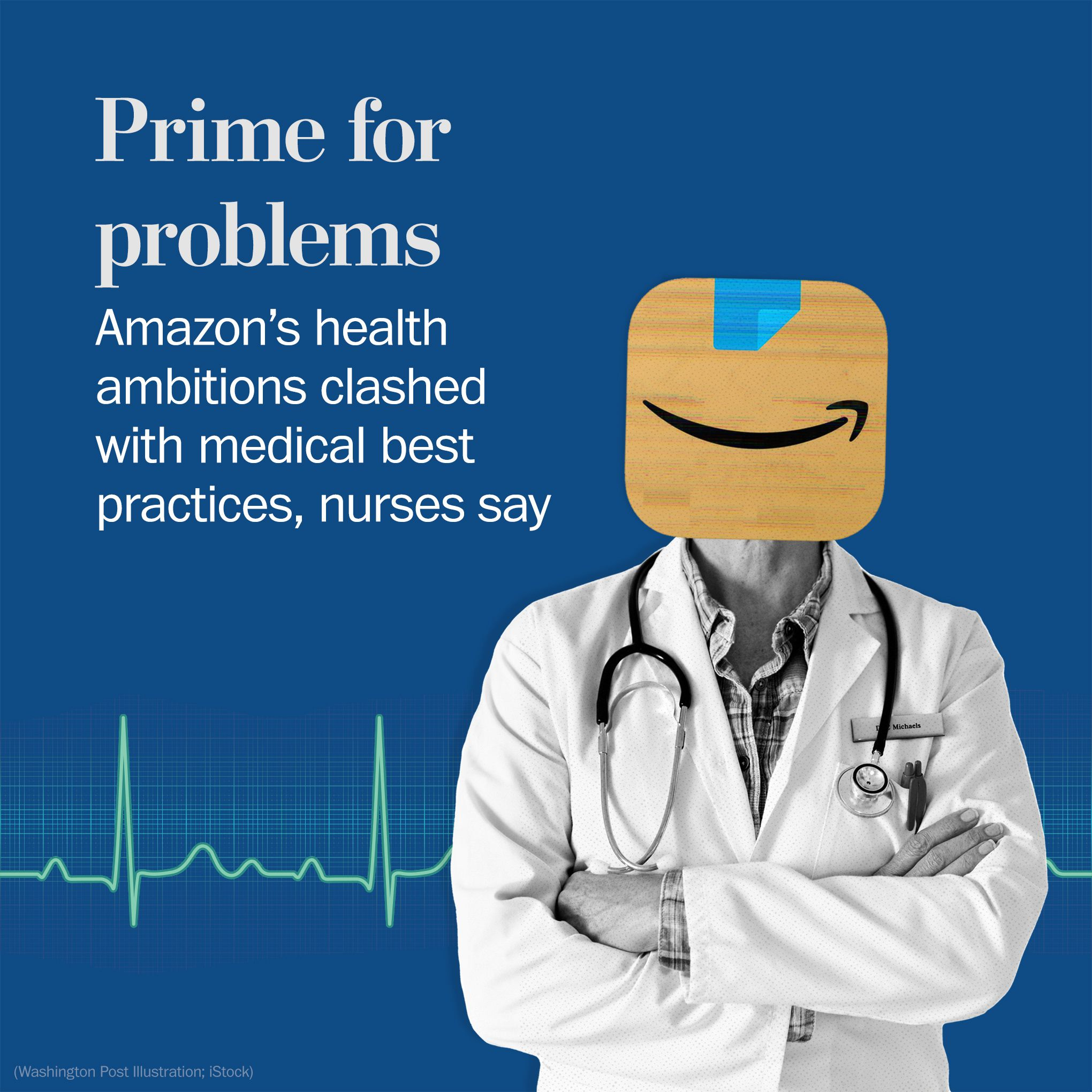
Amazon Care appears to have struggled to understand the nuances and demands of care delivery, as detailed recently in the Washington Post. Clearly, the tension between expectations for growth and quality were real. This raised questions for us: Was Amazon going to truly “iterate” on its health care capabilities? When it came to care delivery, would Amazon get better, or would it do enough to get by?
Amazon concedes that its product was not comprehensive enough for its employer partners. It’s unclear whether that means it simply wasn’t saving them money, even if employees were using it. At the same time, we wonder how hard it was to persuade employees to embrace Amazon-branded health care or to attract employees to a product centered on virtual and home-based care—or some combination of the two.
Remember: Everyone had to try out telehealth in 2020 because, in many cases, they had no choice. There isn’t any similarly powerful and pervasive force pushing anyone to virtual-first care today. People tend to like virtual visits, but that doesn’t mean that they want to receive all adequately satisfy users or keep care from fragmenting with its mosaic of services, channels, and providers.
What shutting down Amazon Care suggests about Amazon’s health care ambition
Amazon’s willingness to jettison its homegrown but underperforming health care business suggests three things.
One Medical is the centerpiece of Amazon’s health care strategy, not simply one component among many. When viewed this way, the details of the acquisition make more sense than they did four weeks ago. Knowing that a virtual and home-based model wasn’t attractive for employers, we can understand more clearly why Amazon wanted a partner with both in-person and digital health capabilities. Knowing that its own product was struggling, we can see why it was willing to pay a huge premium for One Medical.
Amazon is iterating on its health care capabilities, but it is iterating at an enormous scale. “Fail fast” is axiomatic in technology. It’s usually applied to minimum viable products—applications and services that are quickly built, delivered, and assessed for their ability to meet customer demands and gain traction in the market. Products that don’t meet those demands are replaced as quickly as possible. Obviously, Amazon Care was not a minimum viable product. It was rolled out three years ago, and it offered telehealth services in all 50 states and in-home services in seven markets. But when you look at the pivot Amazon seems to be making from virtual and home-based care with Amazon Care to in-person and virtual with One Medical, it’s hard not to reach for the “fail fast” comparison.
Amazon is a different kind of competitor in health care. We can’t think of another organization that would spend years building out a care delivery enterprise, roll it out in 50 states, and then simply shut it down. We also can’t think of another organization whose alternative care delivery plan is to spend nearly $4 billion on another company. It’s not just the scale and the money—it’s the willingness to throw around those assets that makes Amazon a potentially potent competitor.
There are still enormous execution challenges for Amazon and One Medical. Massive disruption of the industry is not a given, no matter how much money is spent or how many companies are bought and/or fail.
It seems likely that the impact of Amazon on the market will be centered, at least for the immediate future, on the same direct-to-consumer approach that One Medical has taken and at which Amazon is expert in its other lines of business.
That does not mean Amazon can be dismissed as a dilettante or a dabbler in health care. Its mere presence in the market already seems to have sparked a bidding war for Signify Health. Amazon’s continued iteration of its approach to health care demands ongoing attention.
Houston Methodist is reporting an early increase in flu cases, with numbers hitting levels not usually seen until the end of the year.
The hospital recorded 100 cases of influenza A and B in the week ending Sept. 21. A week prior, this figure hit 226.
“We experienced an early uptick in mid-September, which relaxed some last week, but still these are the sorts of numbers we usually see in December, not now,” Wesley Long, MD, PhD, a pathologist and medical director of diagnostic microbiology at Houston Methodist, tweeted Sept. 26.
Texas is the only state in the U.S. — outside of Washington, D.C. — that already has a moderately high rate of flu cases, according to the CDC’s latest weekly flu report published Sept. 23.
The early rise in cases comes amid warnings that this season’s flu season may be severe.
U.S. Senator Patty Murray of Washington is seeking answers from Renton, Wash.-based Providence’s CEO following a Sept. 24 New York Timesreport detailing the system’s alleged debt collection practices.
“According to recent reports, over the past several years, Providence has increasingly extracted payments from low-income patients, even when patients qualified for free or discounted care,” Ms. Murray said in a Sept. 28 letter to CEO Rod Hochman. “The reports allege several disturbing practices, including high-pressure billing conversations at hospital beds when patients are vulnerable, the use of extraordinary collection actions by debt collectors, and patients eligible for free or discounted care being billed for outstanding balances. As a result, patients have gone without food or heat, have seen their credit scores plummet, and have been afraid to seek out further medical care due to the cost—all as a result of practices that potentially violate both state and federal laws.”
Ms. Murray said in the letter she is seeking answers on how many patients Providence has served in recent years who qualified for free or discounted care and how many it referred to debt collection services. She is also seeking information about the system’s billing and debt collection policies, and how much it paid consulting firm McKinsey & Co. for a program designed to increase its revenue. She is seeking answers by Oct. 12.
Washington state’s attorney general filed a lawsuit against Providence in February, alleging that 14 of its hospitals engaged in aggressive tactics to collect payment, failed to ensure discounts for eligible low-income patients, and steered poor patients to debt collectors.
A Providence spokesperson expressed discontent and disagreement with the attorney general’s charges in a statement shared with Becker’s.
“The Providence family of organizations is extremely disappointed that the Office of the Washington State Attorney General has chosen to file inaccurate and unfair charges against us regarding our charity care and financial assistance practices,” the spokesperson said. “Serving every person who comes to us, regardless of ability to pay, is a central tenet of our mission as a not-for-profit organization. We take this responsibility seriously.”