Cartoon – Backbone Deterioration


https://www.cnn.com/2021/12/09/us/hospital-covid-19-deaths-michigan/index.html

Nurse Katie Sefton never thought Covid-19 could get this bad — and certainly not this late in the pandemic. “I was really hoping that we’d (all) get vaccinated and things would be back to normal,” said Sefton, an assistant manager at Sparrow Hospital in Lansing, Michigan. But this week Michigan had more patients hospitalized for Covid-19 than ever before. Covid-19 hospitalizations jumped 88% in the past month, according to the Michigan Health & Hospital Association.
“We have more patients than we’ve ever had at any point, and we’re seeing more people die at a rate we’ve never seen die before,” said Jim Dover, president and CEO of Sparrow Health System.
“Since January, we’ve had about 289 deaths; 75% are unvaccinated people,” Dover said. “And the very few (vaccinated people) who passed away all were more than 6 months out from their shot. So we’ve not had a single person who has had a booster shot die from Covid.”
Among the new Covid-19 victims, Sefton said she’s noticed a disturbing trend.
“We’re seeing a lot of younger people. And I think that is a bit challenging,” said Sefton, a 20-year nursing veteran.She recalls helping the family of a young adult say goodbye to their loved one. “It was an awful night,” she said. “That was one of the days I went home and just cried.”
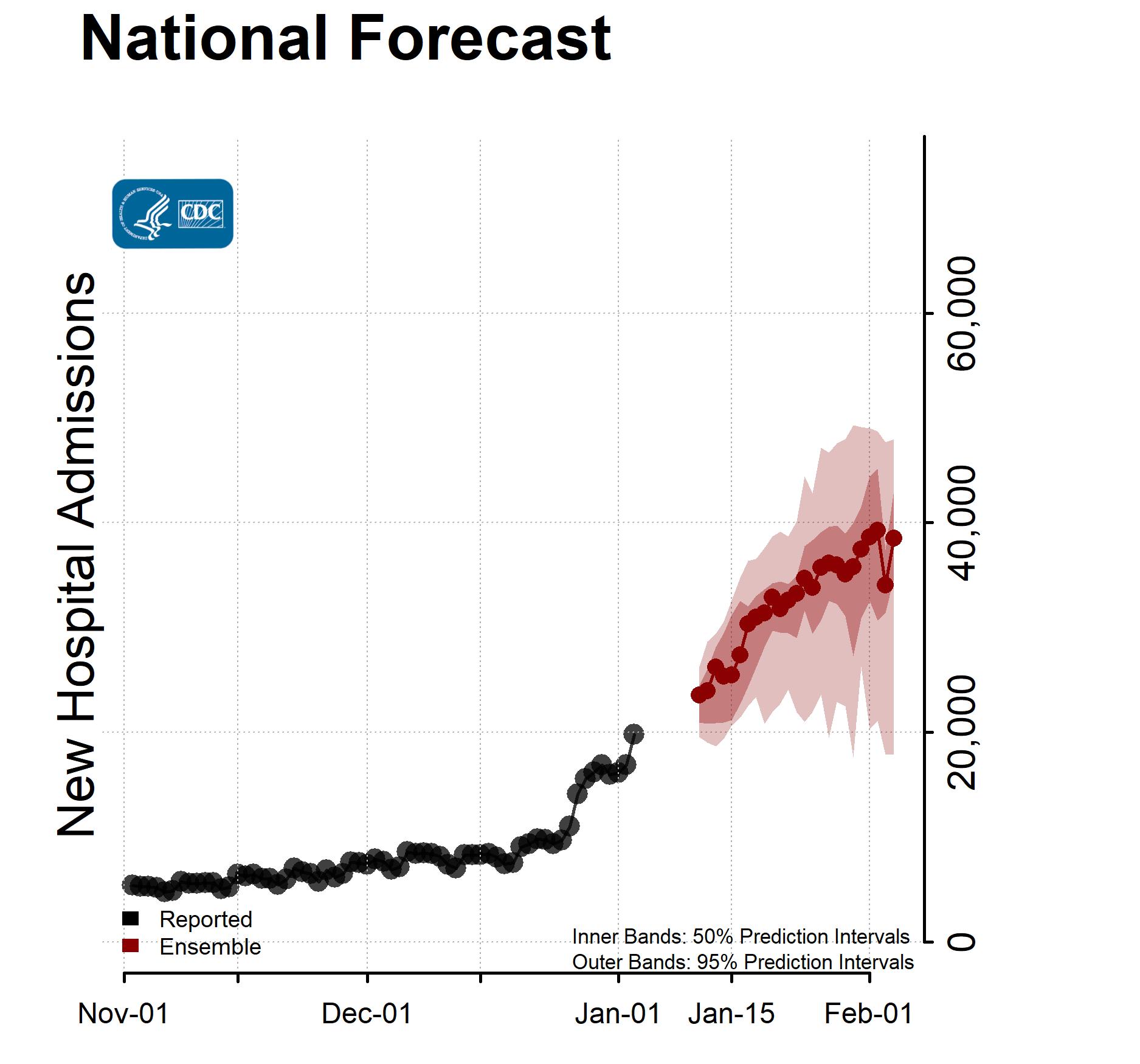
It’s not just Michigan that’s facing an arduous winter with Covid-19. Nationwide, Covid-19 hospitalizations have increased 40% compared to a month ago, according to data from the US Department of Health and Human Services. This is the first holiday season with the relentless spread of the Delta variant — a strain far more contagious than those Americans faced last winter.
“We keep talking about how we haven’t peaked yet,” Sefton said.Health experts say the best protection against Delta is to get vaccinated and boosted. But as of Thursday, only about 64.3% of eligible Americans had been fully vaccinated, and less than a third of those eligible for boosters have gotten one.
Sparrow Hospital nurse Danielle Williams said the vast majority of her Covid-19 patients are not vaccinated — and had no idea they could get pummeled so hard by Covid-19.“Before they walked in the door, they had a normal life. They were healthy people. They were out celebrating Thanksgiving,” Williams said. “And now they’re here, with a mask on their face, teary eyed, staring at me, asking me if they’re going to live or not.”
Dover said he’s saddened but not surprised that his state is getting walloped with Covid-19.“Michigan is not one of the highest vaccination states in the nation. So it continues to have variant after variant grow and expand across the state,” he said.
“The next few weeks look hard. We’re over 100% capacity right now,” Dover said.”Most hospitals and health systems in the state of Michigan have gone to code-red triage, which means they won’t accept transfers. And as we go into the holidays, if the current growth rate that we’re at today, we would expect to see 200 in-patient Covid patients by the end of the month — on a daily basis.”And that would mean “absolutely stretching us to the breaking point,” Dover said.”We’ve already discontinued in-patient elective surgeries,” he said. “In order to create capacity, we took our post-anesthesia recovery care unit and converted it into another critical care unit.”
Nurse Leah Rasch is exhausted. She’s worked with Covid-19 patients since the beginning of the pandemic and was stunned to see so many people still unvaccinated enter the Covid unit.
“I did not think we’d be here. I truly thought that people would be vaccinated,” the Sparrow Hospital nurse said.”I don’t remember the last time we did not have a full Covid floor.”The relentless onslaught of Covid-19 patients has impacted Rasch’s own health. “There’s a lot of frustration,” she said. “The other day, I had my first panic attack … I drove to work and I couldn’t get out of the car.”
Dover said many people have asked how they can support health care workers.”If you really want to support your staff, and you really want to support health care heroes, get vaccinated,” he said. “It’s not political. We need everybody to get vaccinated.”
He’s also urging those who previously had Covid-19 to get vaccinated, as some people can get reinfected.”My daughter’s a good example. She had Covid twice before she was eligible for a vaccine,” Dover said. “She still got a vaccine because we know that if you don’t get the vaccine, just merely having contracted Covid is not enough to protect you from getting it again. And I know that from personal experience. “And those who are unvaccinated shouldn’t underestimate the pandemic right now, Dover said.
“The problem is, it’s not over yet. I don’t know if people realize just how critical it still is,” he said.”But they do realize it when they come into the ER, and they have to wait three days for a bed. And at that point, they realize it.”
Americans seem to be greeting the Omicron variant with a collective “eh,” according to new polling data from Axios/Ipsos.
Compared to other COVID-19 strains, Omicron seems to be extra transmissible and possibly more likely to cause breakthrough infections, at least based on preliminary data. As of Dec. 8, 22 U.S. states had reported at least one case related to the variant. But despite the early panic about the variant, most people surveyed by Axios/Ipsos in early December said they weren’t going to make big changes to their behavior. Specifically, the poll found that just:
It’s hard to blame people. At this point in the pandemic, it’s safe to say everyone is tired and ready to be done with COVID-19. Plus, 60% of the U.S. population is now fully vaccinated, and thus, based on what we’ve seen so far, largely protected from the worst the virus can do. People who have received a booster dose are in an even better position, given early reports that boosters hold up well against Omicron.
Americans are also, to some degree, doing what public figures told them to do. President Joe Biden called Omicron “a cause for concern—but not a cause for panic.” And many health officials have jumped to assure the public that we are not going back to square one, thanks to the protection offered by vaccines.
The caveat, however, is that we’re still learning about Omicron. Early indications suggest the variant does not cause more severe disease than other variants, but it’s too soon to say that definitively. If it does turn out to be highly contagious, good at outsmarting vaccines and capable of causing serious disease, we may have to return to some precautions, for the sake of individuals and our overburdened health care system. The variant is already taking root in Europe, which may be a harbinger of what’s to come here.
The good news? The Axios/Ipsos poll did find that most Americans are still willing to step up and take protective measures when necessary. More than 60% said they were likely to go back to (or continue) always masking in public, and almost 70% said they’d support businesses requiring customers to wear masks.
https://mailchi.mp/161df0ae5149/the-weekly-gist-december-10-2021?e=d1e747d2d8

Attending a recent executive retreat with one of our member health systems, we heard the CEO make a statement that really resonated with us. Referring to the current workforce crisis—pervasive shortages, pressure to increase compensation, outsized reliance on contract labor to fill critical gaps—the CEO made the assertion that this situation isn’t temporary. Rather, it’s the “new normal”, at least for the next several years.
The Great Resignation that’s swept across the American economy in the wake of COVID has not spared healthcare; every system we talk to is facing alarmingly high vacancy rates as nurses, technicians, and other staff head for the exits. The CEO made a compelling case that the labor cost structure of the system has reset at a level between 20 and 30 percent more expensive than before the pandemic, and executives should begin to turn attention away from stop-gap measures (retention bonuses and the like) to more permanent solutions (rethinking care models, adjusting staffing ratios upward, implementing process automation).
That seemed like an important insight to us. It’s increasingly clear as we approach a third year of the pandemic: there is no “post-COVID world” in which things will go back to normal. Rather, we’ll have to learn to live in the “new normal,” revisiting basic assumptions about how, where, and by whom care is delivered.
If hospital labor costs have indeed permanently reset at a higher level, that implies the need for a radical restructuring of the fundamental economic model of the health system—razor-thin margins won’t allow for business to continue as usual. Long overdue, perhaps, and a painful evolution for sure—but one that could bring the industry closer to the vision of “right care, right place, right time” promised by population health advocates for over a decade.
https://mailchi.mp/161df0ae5149/the-weekly-gist-december-10-2021?e=d1e747d2d8

In 2020, a record-breaking 19 rural hospitals closed their doors due to a combination of worsening economic conditions, changing payer mix, and declining patient volumes. But many more are looking to affiliate with larger health systems to remain open and maintain access to care in their communities. The graphic above illustrates how rural hospital affiliations (including acquisitions and other contractual partnerships) have increased over time, and the resulting effects of partnerships.
Affiliation rose nearly 20 percent from 2007 to 2016; today nearly half of rural hospitals are affiliated with a larger health system.
Economic stability is a primary benefit: the average rural hospital becomes profitable post-affiliation, boosting its operating margin roughly three percent in five years. But despite improved margins, many affiliated rural hospitals cut some services, often low-volume obstetrics programs, in the years following affiliation.
Overall, the relationship likely improves quality: a recent JAMA study found that rural hospital mergers are linked to better patient mortality outcomes for certain conditions, like acute myocardial infarction. Still, the ongoing tide of rural hospital closures is concerning, leaving many rural consumers without adequate access to care. Late last month, the Department of Health and Human Services announced it would distribute another $7.5B in American Rescue Plan Act funds to rural providers.
While this cash infusion may forestall some closures, longer-term economic pressures, combined with changing consumer demands, will likely push a growing number of rural hospitals to seek closer ties with larger health systems.


Several hospitals across the U.S. are laying off workers over the next three months.
Below are nine hospitals and health systems that laid off employees or announced plans to implement layoffs since Oct. 1.
1. Community Hospital Long Beach (Calif.) plans to lay off 328 employees early next year, according to a notice filed with state regulators. The hospital said the layoffs are set to begin after Jan. 31, 2022, and may come in stages. The layoffs are a result of Community Hospital Long Beach ending acute care and closing its emergency department.
2. Watsonville (Calif.) Community Hospital is preparing to lay off 677 workers, according to a notice filed with the state Nov. 29. The hospital entered Chapter 11 bankruptcy Dec. 5 and announced a tentative sale agreement with the Pajaro Valley Healthcare District Project. If the sale to the nonprofit group or another buyer is finalized by Jan. 28, all 677 employees will be terminated by Watsonville Community Hospital. CEO Steven Salyer said all potential buyers are being asked to offer employment to the hospital’s workers. If the sale isn’t finalized, the hospital will close after the bankruptcy court authorizes those steps, and all employees would be terminated Jan. 28, according to the notice to the state. Funds made available through the bankruptcy process may allow the hospital to delay the layoffs.
3. Pensacola, Fla.-based Baptist Health Care said in a notice filed with state regulators that it is eliminating 233 jobs in February when it outsources various services to Wayne, Pa.-based Compass One Healthcare. Affected employees were offered positions with Compass One at the same or higher wages, according to the Nov. 22 layoff notice.
4. West Reading, Pa.-based Tower Health filed a notice in early November with state regulators indicating it would lay off 293 employees by Dec. 31. The health system said the layoffs would affect workers at Jennersville Hospital in West Grove, Pa., which Tower Health was planning to close by the end of the year. In late November, the health system announced it entered into a definitive agreement to sell Jennersville Hospital and another facility to Canyon Atlantic Partners, a hospital management firm based in Austin, Texas. The health system subsequently called off that deal. It plans to close Jennersville Hospital on Dec. 31 and Brandywine Hospital in Coatesville, Pa., on Jan. 31. The closures will result in the loss of more than 800 jobs, according to the Philadelphia Business Journal.
5. Columbia University Irving Medical Center in New York City is laying off 56 workers in February, but affected employees will be offered employment with NewYork-Presbyterian Hospital, according to a notice filed with the state Nov. 8. The layoffs are due to the integration of electronic medical records systems at Columbia University Irving Medical Center and NewYork-Presbyterian Hospital, according to the notice.
6. Ascension Technologies, the IT subsidiary of St. Louis-based Ascension, outsourced about 330 tech jobs in November, according to a notice filed with the state. Affected employees could apply for other positions within Ascension Technologies or with the new vendor that took over the tech support for application and platforms, collaboration and end-user engineering, network and telecom and field services areas.
7. Middletown, N.Y.-based Garnet Health laid off 66 workers Oct. 29 when it closed its skilled nursing unit, according to a notice filed with the state.
8. Kindred Hospital Northwest Indiana, a 70-bed long-term acute care hospital in Hammond, is closing, resulting in 110 layoffs, according to a notice filed with the state in August. The layoffs started Oct. 10. Kindred said the closure is a result of Mishawaka, Ind.-based Franciscan Health’s decision to downsize its Hammond hospital, a move that will eliminate Kindred’s space on the campus.
9. Garland (Texas) Behavioral Hospital, part of King of Prussia, Pa.-based Universal Health Services, is closing and laying off its 119 employees, according to the Dallas Morning News. The layoffs started Oct. 7, according to a notice filed with the state.