

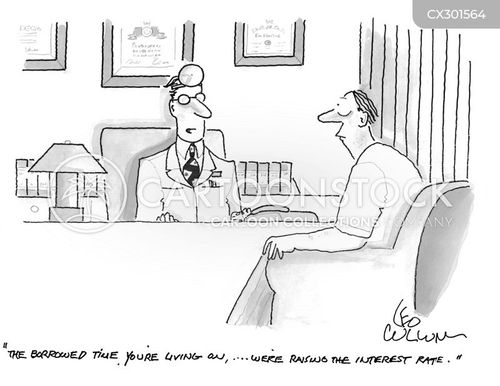
Cartoon – Living on Borrowed Time

https://mailchi.mp/d953ea288786/newsletter031821-4639518?e=ad91541e82

Medical debt can be a crushing burden for families, and it is a major problem in the United States. The nonprofit RIP Medical Debt says it’s wiped out debt for 2.7 million patients since 2014, totalling more than $4.5 billion. One of the most famous health policy studies ever conducted — the Oregon Health Insurance Experiment — found that having Medicaid coverage reduced a person’s likelihood of having an unpaid medical bill sent to collection by 25%. Now a study published last month in JAMA offers new evidence on the relationship between Medicaid and medical debt, and the scale of the country’s medical debt problem.
Using a subset of credit reports from one major U.S. credit agency for every year between 2009 and 2020, researchers Raymond Kluender, Neale Mahoney, Francis Wong and Wesley Yin looked at the total amount of medical debt and new medical debt each year. They found that while both measures of medical debt have decreased almost every year since 2014, nearly 1 in 5 Americans were under collections for medical debt as of early 2020. They also found that since 2014, medical debt has been the largest source of debt for Americans, surpassing all other types of debt — credit cards, personal loans, utilities and phone bills — combined. And the medical debt was not evenly distributed around the country. Approximately, 1 in 4 individuals in the South were under collection for medical debt in 2020, but only 1 in 10 in the Northeast.
To assess the impact of Medicaid coverage on medical debt, Kluender and colleagues compared the total amount of new debt accrued by people living in states that expanded Medicaid and those that have not between 2009 and 2020, allowing them to confirm that any trends they identified didn’t pre-date Medicaid expansion in 2014. They found that between 2013 and 2020 the average amount of new medical debt decreased 34 percentage points more in states that expanded in 2014 compared to non-expansion states, and the drops were most prominent in the lowest income zip codes. The analysis can’t prove a causal relationship between medical debt and Medicaid expansion, but interestingly, the authors found no statistically significant difference in nonmedical debt between expansion and non-expansion states. This lack of an effect on nonmedical debt supports the association between Medicaid and reductions in medical debt.
The article does have limitations: It doesn’t include debts paid on a credit card or through payment plans; it doesn’t reflect the impact of COVID-19; and it can’t account for unobservable changes in policy or circumstance that might have coincided with Medicaid expansion and impacted medical debt. But it does add evidence to support the value of Medicaid coverage — a particularly timely finding, with more than 11 million people joining Medicaid since the start of the pandemic and Democrats in Congress looking to cover the more than 2 million people in the so-called coverage gap in the 12 non-expansion states.
:no_upscale()/cdn.vox-cdn.com/uploads/chorus_image/image/69062792/icm_fullxfull.336535675_95ew78665csgwwwo8wo4.0.jpg)
About 8,000 Marshfield (Wis.) Clinic Health System employees have requested black ID badge reels to indicate they are fully vaccinated, the health system told Becker’s Aug. 11.
The nine-hospital health system, which has more than 12,000 employees, started offering the black reels in July. Many Marshfield employees are already required to wear white reels. However, the new black reels are voluntary. Employees who have them may meet in person, but must be masked, if all meeting attendees are vaccinated, the health system said.
“We all look forward to having the opportunity to interact with co-workers outside of the virtual world,” said health system spokesperson Jeff Starck. “The badge reels are a way for more personal interaction and create a sense of normalcy for many employees during what has been a challenging, mostly virtual work environment. The reaction has been overwhelmingly positive.”
Mr. Starck said that some employees may not have not asked for the new reels because they use clips or other devices to display their name badges. Employees who work off-site and don’t attend in-person meetings may not have requested them since they haven’t needed them, and some employees who are vaccinated simply may not want to identify themselves, he speculated.
Marshfield Clinic announced Aug. 4 that it would require employees to become fully vaccinated for COVID-19 by Nov. 15.
As of Aug. 11, about 72 percent of employees are vaccinated, although the health system said that number will rise as it receives proof of vaccination from employees who were inoculated outside the health system.

CommonSpirit Health is requiring full COVID-19 vaccination for its 150,000 employees, the Chicago-based health system said Aug. 12.
The requirement applies to employees at CommonSpirit’s 140 hospitals and more than 1,000 care sites and facilities in 21 states. It includes physicians, advanced practice providers, volunteers and others caring for patients at health system facilities.
“As healthcare providers, we have a responsibility to help end this pandemic and protect our patients, our colleagues and those in our communities — including the most vulnerable among us,” Lloyd H. Dean, CEO of CommonSpirit, said in a news release. “An abundance of evidence shows that the vaccines are safe and highly effective. Throughout the pandemic we have made data-driven decisions that will help us best fulfill our healing mission, and requiring vaccination is critical to maintaining a safe care environment.”
The compliance deadline for the vaccination requirement is Nov. 1, although the implementation date will vary by region in accordance with local and state regulations. Employees who are not in compliance and do not obtain a medical or religious exemption risk losing their jobs.
How the delta variant took over the US

The delta variant has overtaken the U.S. in a matter of weeks as it spreads around the world in what President Biden’s chief medical adviser Anthony Fauci called a “global outbreak” of the strain.
The highly contagious variant of COVID-19 is considered at least two times more contagious than the previously dominant alpha strain, and experts say the increased transmissibility has likely fueled the surge in COVID-19 cases, hospitalizations and deaths nationwide.
But much is still unknown about delta as scientists scramble to better understand the strain.
Here’s what we know about the delta strain and how it blunted earlier momentum in the fight against the coronavirus.
Delta is more transmissible than previous COVID-19 strains
Delta’s contagiousness is considered key to its domination, having spread to at least 117 countries after first being detected in India. Like other viruses, COVID-19 is evolving, particularly through unplanned mutations.
A study from the United Kingdom in May suggested the delta strain could be 60 percent more transmissible than the alpha variant, which was already more contagious than the original strain.
But experts are split on that figure, with some saying delta could be more transmissible and others saying it could be less.
“You don’t necessarily want to attribute that all to the virus. You know, a lot of it may reflect the people as well,” said David Dowdy, an associate professor of epidemiology at the Johns Hopkins Bloomberg School of Public Health.
Researchers aren’t certain about what makes the delta variant more transmissible, but there are some clues.
Michael Farzan, head of the Department of Immunology and Microbiology at Scripps Research, said one of the variant’s advantages is that it can more strongly attach to a certain receptor when spreading in the body.
“This is one of the reasons why the virus … in a person gets made at a higher level, meaning that there’s a lot more being spit out or coughed out, meaning that it’s more likely to hit the next person,” he said.
The Centers for Disease Control and Prevention (CDC) has its own figures illustrating how the strain became so prevalent this summer. The agency’s latest projection is that 97.4 percent of all coronavirus cases come from all the different lineages of the delta variant, as of the week ending last weekend.
That marks an astronomical increase from the 1.6 percent estimated at the beginning of May and the 14.1 percent from the beginning of June.
Most people infected with COVID-19 at this point won’t know for sure whether they contracted the delta strain since available testing doesn’t make the distinction between strains — it only shows whether the virus itself is present.
It has a higher magnitude of viral loads
Health experts are examining the delta variant’s viral load, the measure of how much virus a person carries and can potentially transmit, compared to previous COVID-19 strains.
A study from China suggested that the strain’s viral load could be more than 1,000 times higher than the original strain, which Fauci on Thursday said “is a mechanistic reason why you have such a tremendous increase in transmissibility.”
Basically a higher viral load can make it more likely that an infected person can “shed” the virus, allowing someone nearby to contract it.
“If a little droplet that you sent out, it has more particles and that means it’s more likely to infect the next person over and it’s more likely to infect the next person over more times,” Farzan said.
Dowdy of Johns Hopkins cautioned that other variables, including people’s behavior, may be influencing how scientists understand delta’s viral load. With more people relaxing their COVID-19 precautions and interacting with others indoors, those same people could contract more of the virus than they might otherwise.
A study of a Massachusetts outbreak indicated that delta led to fully vaccinated people having a similar viral load compared to the unvaccinated, sparking the CDC to update its mask guidance late last month.
The outbreak on Cape Cod, where nearly three-quarters of confirmed cases were among fully vaccinated people, suggested that vaccinated people could potentially transmit and spread the delta variant. But researchers said at the time that microbiological studies would be needed to confirm whether vaccinated individuals can transmit the strain.
Vaccines are still effective against delta
Studies have found that at least five vaccines, including all three used in the U.S., are effective against the delta variant in lab and real-world settings, Fauci said on Thursday.
It was previously unclear whether the Johnson & Johnson vaccine, which requires only one dose instead of two, was equally effective. But a study released last week found the immune response lasted at least eight months, resulting in the first real-world data for the vaccine, Fauci said.
Recent studies have indicated that vaccines may see a very slight dip in effectiveness against symptomatic versions of the coronavirus caused by the delta variant. The COVID-19 vaccines, like any other, are also not perfect at preventing all delta infection and illness.
But scientists agree that studies have demonstrated that the vaccinated population is less likely to get infected and much less likely to be hospitalized or die from the delta variant than the unvaccinated.
“The only reason our case numbers are lower now than they were back in December is because half of our population has been fully vaccinated,” Dowdy said.
Still more to learn
Experts acknowledge there is much more to learn about the delta variant.
“A big thing is we still don’t know how much of what we’re seeing is due to the virus versus due to behavior,” Dowdy said. “That makes a big difference because things that are due to the virus, we can’t really change as a society.”
Although there’s a growing number of studies, not all scientists are certain that the variant itself necessarily causes more serious illness among the unvaccinated, leading to more hospitalizations and deaths. It’s also unclear whether the strain is sparking more severe illness among children as pediatric hospital admissions have picked up.
Additionally, scientists have more analysis to do on under-researched mutations that may give the virus more of an advantage, Farzan said.

Just a month ago, even as signs of a fourth wave of COVID-19 infections in the U.S. were blossoming in the lower Midwest, the memory of a long, miserable winter kept us warm. Even places with burgeoning case rates were far below their catastrophic peaks over the holidays, when a combination of cold weather and defiant travelers contributed to a third wave in infections and deaths that drowned out the previous two spikes in April and July of 2020.
This is regrettably no longer the case. In four states—Hawaii, Louisiana, Mississippi and Florida—the current number of daily new COVID-19 infections, averaged across seven days, has surpassed that winter peak, even with a substantial percentage of the population having received a complete dosage of the COVID-19 vaccine (though not nearly as many as public officials would prefer).
Hawaii is something of an anomaly, as its winter peak was not nearly as high as in colder, more accessible regions. But several other states threaten to join this quartet in the near future. Oregon’s daily rate of new infections is at 36.5 per 100,000 residents, or 99% of the peak value on Dec. 3, 2020. Nationwide, the rate is 37.7, just under 50% of the winter peak of 76.5.
While plenty of states remain far below the winter peaks, as the Delta variant tears across the country, we can expect more and more states to experience a fourth wave that crests higher than the third, even as new outbreaks are inspiring more vaccine holdouts to hold out their biceps and breakthrough infections, while frightening and non-trivial, remain reasonably rare.
What is perhaps most sobering about this surge is that COVID-19-related deaths, which typically lag behind case surges by about two weeks, are starting to rise again. No state has yet surpassed the winter peak in deaths, but at 65%, Louisiana very well may. That figure is still 15% nationwide, well below the Jan. 13, 2021 peak of 1.04 fatalities per 100,000 people. It is currently at 0.16.
When it comes to the pandemic, no one wants to sound like Chicken Little. The sky might not be falling. But neither is the national case rate, or the number of people dying.


Dr. Jesse O’Shea, an infectious disease physician, posted this x-ray showing the difference between two of his patients; one with and one without the vaccination. Very telling and compelling visual, and we wanted to share.
To follow his page, please visit: https://www.instagram.com/jesseosheamd“A Story of Two Chest X-Rays. One patient with a vaccine and one patient without. Version 2—for the crowd that wants specifics without violating patient privacy (these are published cases).
The top picture is a 47-year-old man who received Pfizer vaccine (1) and developed COVID19 2 weeks after. He was overweight (BMI = 29), but without any known comorbidities. He had runny nose, mild body aches, mild cough. His chest X ray is relatively normal.
The bottom picture is a 50-year-old active female patient without obesity and not on medications. Her chest X-ray shows diffuse opacities, consolidations in both lungs with lung damage (all the fluffy white) and a pattern that looks like the worst feared complication of COVID19—acute respiratory distress syndrome (ARDS). She needed intubation, mechanical ventilation, and ECMO (extra-corporal membrane oxygenation) – the most life support we can offer.
The mRNA vaccines are effective at preventing severe disease and death— even with the Delta variant.
Our ICUs are starting to fill up with unvaccinated COVID19 patients again.
“To my fellow healthcare workers, keep your head up!”


