White House goes quiet on coronavirus as outbreak spikes again across the U.S.

https://www.politico.com/news/2020/06/10/white-house-stops-talking-about-coronavirus-309993?utm_source=ActiveCampaign&utm_medium=email&utm_content=Mnuchin%3A+More+Stimulus++Definitely++Needed&utm_campaign=TFT+Newsletter+06102020

White House goes quiet on coronavirus as outbreak spikes again ...

The coronavirus is still killing as many as 1,000 Americans per day — but the Trump administration isn’t saying much about it.

It’s been more than a month since the White House halted its daily coronavirus task force briefings. Top officials like infectious disease expert Anthony Fauci have largely disappeared from national television — with Fauci making just four cable TV appearances in May after being a near fixture on Sunday shows across March and April — and are frequently restricted from testifying before Congress. Meanwhile, President Donald Trump is preparing to resume his campaign rallies after a three-month hiatus, an attempted signal to voters that normalcy is returning ahead of November’s election, and that he’s all but put the pandemic behind him.

“We’ve made every decision correctly,” Trump claimed in remarks in the Rose Garden Friday morning. “We may have some embers or some ashes or we may have some flames coming, but we’ll put them out. We’ll stomp them out.”

Inside the White House, top advisers like Jared Kushner privately assured colleagues last month that the outbreak was well in hand — citing data on declines in community spread — and that the long-feared “second wave” may have even been averted, according to three current and former officials.

However, new data from states like Florida and mass protests across the country are renewing concerns about the virus’s spread. Texas, for instance, has reported two straight days of record-breaking coronavirus hospitalizations — highs that come shortly after the state kicked off the third stage of its reopening plan.

Those officials also acknowledge that the Covid-19 task force has scaled back its once-daily internal meetings — the task force now meets twice per week — but insist that the pandemic response remains a priority. One official with direct knowledge of the administration’s strategy cited efforts to scale up testing, accelerate the development of treatments and vaccines and perform other behind-the-scenes work to get ready for a potential fall surge.

“We’re delivering the supplies and resources that states asked for,” said the official. “This doesn’t need to be the public ‘coronavirus show’ every day anymore.”

“You can’t win,” said a senior administration official. “Some people complained for weeks that ‘we don’t want so much White House involvement,’ and that ‘the President should stop doing daily briefings,’ and then they turn around and complain that there aren’t enough or as many briefings.”

But the White House’s apparent eagerness to change the subject comes as new coronavirus clusters — centered around meatpacking plants, prisons and other facilities — drive spikes in disparate states like Utah and Arkansas. Meanwhile, states and major cities are lifting lockdowns and reopening their economies, prompting public health experts to fret that additional outbreaks are imminent. And several Democratic governors also have defied their own states’ social distancing restrictions to join mass protests over police brutality, where hundreds of thousands of Americans have spilled into the streets, further raising public health risks.

The fear is that all the mixed signals will only confuse people, stoke public skepticism over the health threat and promote the belief the worst is over just as the outbreak enters a dangerous new phase.

“Cases are rising, including from cases in congregate settings,” said Luciana Borio, who led pandemic preparedness for the National Security Council between 2017 and 2019. “We still have a pandemic.”

Nine current and former administration officials, as well as outside experts, further detailed how the White House is steadily ramping down the urgency to fight a threat that continues to sicken more than 100,000 Americans per week and is spiking in more than 20 states.

For instance, the administration in recent days told state health officials that it planned to reorganize its pandemic response, with HHS and its agencies taking over the bulk of the day-to-day responsibilities from the Federal Emergency Management Agency.

“The acuity of the response is not what it was, so they’re trying to go back to a little more of a normal ongoing presence,” said Marcus Plescia, the chief medical officer of the Association of State and Territorial Health Officials.

The coronavirus task force, which used to send daily updates to state officials, has done so with less regularity over the last several weeks, Plescia said. And the CDC has restructured its daily conference calls with states, moving away from the practice of giving top-down briefings to encouraging state officials to offer updates on what they’re seeing in their parts of the country.

One current and one former FEMA official also said they’re keen to have HHS resume its leadership role in containing the coronavirus so FEMA can make contingencies for a summer of hurricanes, floods and other natural disasters.

“Given the likelihood that we will soon see both hurricanes and coronavirus, HHS should manage the ongoing pandemic response so FEMA can prepare for coming ‘coronacanes,’” Daniel Kaniewski, who served as the top deputy at FEMA through January, wrote last week. “But they need to act soon. Coronacanes are in the forecast.”

Meanwhile, officials in at least 19 states have recorded two-week trends of increasing coronavirus cases, including spikes of more than 200 percent in Arizona and more than 180 percent in Kentucky. Two months after the White House issued so-called gating criteria that it recommended states hit before resuming business and social activities, only a handful of states — like Connecticut, New Jersey, New York and South Dakota — currently meet all of those benchmarks, according to CovidExitStrategy.org.

Officials within Trump’s health department are strategizing over how to convey the current level of risk, given data that Americans have put off emergency care and other potential medical needs, fearful of contracting Covid-19. “Our message now is that people should start returning to their health care providers to get the screenings, vaccines, care, or emergency services that they need,” Laura Trueman, the HHS official in charge of external affairs, wrote in an office-wide email to colleagues and shared with external groups on June 3, which was obtained by POLITICO.

Dan Abel, a longtime Coast Guard vice admiral, also has been installed at HHS with a small team, where he’s coordinating daily Covid-19 calls with HHS Secretary Alex Azar and the department’s division leaders, according to four officials with knowledge of the calls — an arrangement that’s raised some questions.

“Why is a Coast Guard admiral leading meetings between the HHS secretary and his senior staff?” asked one senior official, suggesting it created an unnecessary layer of management.

Meanwhile, the department is steadily turning back to its many pre-Covid-19 priorities. At the Food and Drug Administration, officials are returning to hot-button issues like tobacco and CBD regulations. Some staff in the health department’s emergency response arm are pivoting away from Covid-19 and back toward natural disasters as hurricane season begins.

At the same time, the Centers for Disease Control — traditionally the beating heart of the nation’s infectious disease response — remains largely demoralized and often sidelined in fighting what CDC director Robert Redfield last week acknowledged as the nation’s biggest health challenge in more than a century, and one he said is “moving through our social consciousness, our outward expression, and our grief.” That grim message has conflicted with Trump’s frequent vows of victory over the coronavirus.

“We were able to close our country, save millions of lives, open,” Trump said in Friday’s Rose Garden remarks. “And now the trajectory is great.”

“I fully recognize the anguish our Nation is experiencing & am deeply saddened by the many lives lost to COVID19,” Redfield tweeted just minutes later. “I call upon the American people to remain vigilant in protecting the vulnerable – protect your community, grandparents and loved ones from COVID-19.”

Redfield and other top officials also have spent the past week reckoning with the implications of widespread protests over police brutality, from meeting with staff to discuss longstanding concerns about systemic racism in health care to acknowledging the probability that those protests will spark new outbreaks.

HHS also on Monday sent members of Congress a fact sheet on its response to racial disparities in Covid-19 care — a much scrutinized issue in public health, with African Americans contracting and dying from the virus at much higher rates.

But on Capitol Hill, watchdogs say that fact sheets don’t cut it, and they’re frustrated by the lack of access to experts and insight into how the administration is handling a historic pandemic.

“Some are acting like the battle has been won when in reality it’s just beginning,” said a senior Democratic staffer. “The White House still won’t let task force members testify at hearings in June even though they have disappeared from TV and it’s not clear how often they are meeting.”

Fauci, meanwhile, has continued to issue a string of dire warnings in his lower-profile media appearances and at an industry conference on Tuesday.

We have something that turned out to be my worst nightmare,” Fauci said in virtual remarks aired at a conference of the biotech industry’s Washington trade group, recounting how quickly the virus spread around the globe, outpacing Ebola and HIV. “And it isn’t over yet.”

The White House has maintained that chief of staff Mark Meadows has needed to clear officials like Fauci to testify, so they can stay focused on other priorities, and a spokesperson insisted that Trump has still prioritized the coronavirus fight even as the White House shifts toward focusing on revitalizing the economy.

Several officials have suggested that the task force’s lower profile has been helpful for the response, especially because the daily Covid-19 press briefings were often hijacked by Trump’s meandering remarks or the day’s other political news.

“In some ways, it actually has been easier to get Covid-related work done,” said one HHS staffer who’s helped support the Covid-19 response. “The task force briefings and the prep sessions for them took up a lot of principals’ time, and staff would sometimes have to crash on putting together materials for them.”

But the white-hot spotlight on the coronavirus also brought urgency and intensity, and the increasingly scattered nature of the current response could present new challenges if there’s an uptick in cases.

“This is when a one-government approach is needed more now than ever,” said Howard Koh, who served as President Barack Obama’s HHS assistant secretary for health. “Get all those people together in one room every day at the highest level and track outcomes and address all the questions and try to maximize coordination as much as possible.”


How Many More Will Die From Fear of the Coronavirus?

Fear of contracting the coronavirus has resulted in many people missing necessary screenings for serious illnesses, like cancer and heart disease.

Seriously ill people avoided hospitals and doctors’ offices. Patients need to return. It’s safe now.

More than 100,000 Americans have died from Covid-19. Beyond those deaths are other casualties of the pandemic — Americans seriously ill with other ailments who avoided care because they feared contracting the coronavirus at hospitals and clinics.

The toll from their deaths may be close to the toll from Covid-19. The trends are clear and concerning. Government orders to shelter in place and health care leaders’ decisions to defer nonessential care successfully prevented the spread of the virus. But these policies — complicated by the loss of employer-provided health insurance as people lost their jobs — have had the unintended effect of delaying care for some of our sickest patients.

To prevent further harm, people with serious, complex and acute illnesses must now return to the doctor for care.

Across the country, we have seen sizable decreases in new cancer diagnoses (45 percent) and reports of heart attacks (38 percent) and strokes (30 percent). Visits to hospital emergency departments are down by as much as 40 percent, but measures of how sick emergency department patients are have risen by 20 percent, according to a Mayo Clinic study, suggesting how harmful the delay can be. Meanwhile, non-Covid-19 out-of-hospital deaths have increased, while in-hospital mortality has declined.

These statistics demonstrate that people with cancer are missing necessary screenings, and those with heart attack or stroke symptoms are staying home during the precious window of time when the damage is reversible. In fact, a recent poll by the American College of Emergency Physicians and Morning Consult found that 80 percent of Americans say they are concerned about contracting the coronavirus from visiting the emergency room.

Unfortunately, we’ve witnessed grievous outcomes as a result of these delays. Recently, a middle-aged patient with abdominal pain waited five days to come to a Mayo Clinic emergency department for help, before dying of a bowel obstruction. Similarly, a young woman delayed care for weeks out of a fear of Covid-19 before she was transferred to a Cleveland Clinic intensive care unit with undiagnosed leukemia. She died within weeks of her symptoms appearing. Both deaths were preventable.

The true cost of this epidemic will not be measured in dollars; it will be measured in human lives and human suffering. In the case of cancer alone, our calculations show we can expect a quarter of a million additional preventable deaths annually if normal care does not resume. Outcomes will be similar for those who forgo treatment for heart attacks and strokes.

Over the past 12 weeks, hospitals deferred nonessential care to prevent viral spread, conserve much-needed personal protective equipment and create capacity for an expected surge of Covid-19 patients. During that time, we also have adopted methods to care for all patients safely, including standard daily screenings for the staff and masking protocols for patients and the staff in the hospital and clinic. At this point, we are gradually returning to normal activities while also mitigating risk for both patients and staff members.

The Covid-19 crisis has changed the practice of medicine in fundamental ways in just a matter of months. Telemedicine, for instance, allowed us to pivot quickly from in-person care to virtual care. We have continued to provide necessary care to our patients while promoting social distancing, reducing the risk of viral spread and recognizing patients’ fears.

Both Cleveland Clinic and Mayo Clinic have gone from providing thousands of virtual visits per month before the pandemic to hundreds of thousands now across a broad range of demographics and conditions. At Cleveland Clinic, 94 percent of diabetes patients were cared for virtually in April.

While virtual visits are here to stay, there are obvious limitations. There is no substitute for in-person care for those who are severely ill or require early interventions for life-threatening conditions. Those are the ones who — even in the midst of this pandemic — must seek the care they need.

Patients who need care at a clinic or hospital or doctor’s office should know they have reduced the risk of Covid-19 through proven infection-control precautions under guidelines from the Centers for Disease Control and Prevention. We’re taking unprecedented actions, such as restricting visiting hours, screening patient and caregiver temperatures at entrances, encouraging employees to work from home whenever possible, providing spaces that allow for social distancing, and requiring proper hand hygiene, cough etiquette and masking.

All of these strategies are intended to significantly reduce risk while allowing for vital, high-quality care for our patients.

The novel coronavirus will not go away soon, but its systemic side effects of fear and deferred care must.

We will continue to give vigilant attention to Covid-19 while urgently addressing the other deadly diseases that haven’t taken a pause during the pandemic. For patients with medical conditions that require in-person care, please allow us to safely care for you — do not delay. Lives depend on it.


Shutdowns prevented 60 million coronavirus infections in the U.S., study finds

https://www.washingtonpost.com/health/2020/06/08/shutdowns-prevented-60-million-coronavirus-infections-us-study-finds/?fbclid=IwAR3J402h_abt63p-JDNEEBrNwrZ_nRjQza8OKxtV9xmtt4n5Oky-droY_-c&utm_campaign=wp_main&utm_medium=social&utm_source=facebook

Shutdowns prevented 60 million coronavirus infections in the U.S. ...

Shutdown orders prevented about 60 million novel coronavirus infections in the United States and 285 million in China, according to a research study published Monday that examined how stay-at-home orders and other restrictions limited the spread of the contagion.

A separate study from epidemiologists at Imperial College London estimated the shutdowns saved about 3.1 million lives in 11 European countries, including 500,000 in the United Kingdom, and dropped infection rates by an average of 82 percent, sufficient to drive the contagion well below epidemic levels.

The two reports, published simultaneously Monday in the journal Nature, used completely different methods to reach similar conclusions. They suggest that the aggressive and unprecedented shutdowns, which caused massive economic disruptions and job losses, were effective at halting the exponential spread of the novel coronavirus.

“Without these policies employed, we would have lived through a very different April and May,” said Solomon Hsiang, director of the Global Policy Laboratory at the University of California at Berkeley, and the leader of the research team that surveyed how six countries — China, the United States, France, Italy, Iran and South Korea — responded to the pandemic.

He called the global response to covid-19, the disease caused by the virus, “an extraordinary moment in human history when the world had to come together,” and said the shutdowns and other mitigation measures resulted in “saving more lives in a shorter period of time than ever before.”

The two reports on the effectiveness of the shutdowns come with a clear warning that the pandemic, even if in retreat in some of the places hardest hit, is far from over. The overwhelming majority of people remain susceptible to the virus. Only about 3 percent to 4 percent of people in the countries being studied have been infected to date, said Samir Bhatt, senior author of the Imperial College London study.

“This is just the beginning of the epidemic: we’re very far from herd immunity,” Bhatt said Monday in an email. “The risk of a second wave happening if all interventions and precautions are abandoned is very real.”

In a teleconference with reporters later, Bhatt said economic activity could return to some degree so long as some interventions to limit viral spread remain in place: “We’re not saying the country needs to stay locked down forever.”

The Berkeley study used an “econometric” model to estimate how 1,717 interventions, such as stay-at-home orders, business closings and travel bans, altered the spread of the virus. The researchers looked at infection rates before and after the interventions were imposed. Some of these interventions were local, and some regional or national. The researchers concluded that the six countries collectively managed to avert 62 million test-confirmed infections.

Because most people who are infected never get tested, the actual number of infections that were averted is much higher — about 530 million in the six countries, the Berkeley researchers estimated.

Timing is crucial, the Berkeley study found. Small delays in implementing shutdowns can lead to “dramatically different health outcomes.” The report, while reviewing what worked and what made little difference, is clearly aimed at the many countries still early in their battle against the coronavirus.

“Societies around the world are weighing whether the health benefits of anti-contagion policies are worth their social and economic costs,” the Berkeley team wrote. The economic costs of shutdowns are highly visible — closed stores, huge job losses, empty streets, food lines. The health benefits of the shutdowns, however, are invisible, because they involve “infections that never occurred and deaths that did not happen,” Hsiang said.

That spurred the researchers to come up with their estimates of infections prevented. The Berkeley team did not produce an estimate of lives saved.

One striking finding: School closures did not show a significant effect, although the authors cautioned that their research on this was not conclusive and the effectiveness of school closures requires further study. Banning large gatherings had more of an effect in Iran and Italy than in the other countries.

In discussing their findings Monday with reporters in the teleconference, leaders of the two research teams said challenges exist in crafting their models and thus there are uncertainties in the final estimates.

Bhatt, for example, said the model used by his team is highly sensitive to assumptions about the infection fatality rate, estimates for which have varied among researchers and from one country to another. He said his team was heartened to see that its estimates for the number of people infected so far is generally consistent with antibody surveys that attempt to calculate the attack rate of the virus.

Ian Bolliger, one of the Berkeley researchers, acknowledged the difficulty in obtaining reliable numbers for coronavirus infections given the haphazard pattern of testing for the virus. Both research teams said the peer review process had made their findings more robust.


How the CDC “missed its moment”

https://mailchi.mp/9f24c0f1da9a/the-weekly-gist-june-5-2020?e=d1e747d2d8

CDC releases new guidance for colleges on reducing coronavirus spread

If, like us, you’ve been wondering exactly why the CDC always seems to be a step behind in responding to the pandemic, a new, in-depth New York Times piece helps elucidate the myriad challenges—structural, cultural and political—that led to the agency’s flawed response.

Given the CDC’s history, it should have been the world’s “undisputed leader” in the pandemic response. But its early reticence to absorb lessons from other countries, combined with flawed testing, slowed down responses across the nation. While much has been made of political machinations within the Trump administration, a deep-rooted bureaucratic and exacting culture left the CDC ill-suited to respond to a crisis of this scale, requiring improvisation and rapid adaptation.

Career scientists and epidemiologists clashed with CDC leader Dr. Robert Redfield, who was eclipsed by Drs. Tony Fauci and Deborah Birx in public communication. But even if it were firing on all cylinders, the CDC is only one of the many parts of government at the table for what should have been a coordinated, all-government response.

Whether led by the CDC or another entity, the pandemic response has highlighted the need for a massive overhaul of the nation’s public health system, so that future challenges—both COVID-related and beyond—are met with a rapid and coordinated response.


CDC director: US needs up to 100,000 contact tracers by September to fight coronavirus

https://thehill.com/policy/healthcare/501157-cdc-director-us-needs-30-to-100-thousand-contact-tracers-by-september-to?utm_source=ActiveCampaign&utm_medium=email&utm_content=Does+the+US+Spend+Too+Much+on+Police%3F&utm_campaign=TFT+Newsletter+06042020

CDC director: US needs up to 100,000 contact tracers by September to fight coronavirus

Centers for Disease Control and Prevention (CDC) Director Robert Redfield told Congress on Thursday that the country needs between 30,000 and 100,000 people working on contact tracing in order to help contain the next wave of the coronavirus.

The estimate shows the daunting challenge of hiring an army of people to interview those infected with coronavirus to identify who they have been in contact with so that those people can quarantine and help prevent the spread of the virus.

“I’ve estimated between 30 and 100,000” contact tracers are needed,” Redfield told the House Appropriations Committee during a hearing Thursday. He acknowledged the figure is “sizable,” though it is actually less than the 300,000 people former CDC director Tom Frieden has estimated the U.S. will need.

He said it is crucial to get the contact tracing system in place by September to try to keep the virus in check ahead of an expected surge in the fall and winter. That could help prevent the type of blunt stay-at-home orders that the U.S. had to implement this spring after missing the window to contain the virus earlier this year.

“We really have to get this built and we have to get it built between now and September,” Redfield said.

Redfield said his agency has met with all 50 states to discuss hiring contact tracers and is pleased that some states have already started to do so. New York City, for example, has hired 1,700 contact tracers. 

He said the CDC Foundation is working to hire personnel to augment state efforts and the CDC has distributed funding to states provided by Congress for the purpose. He added he hopes AmeriCorps is a source of additional staff.

“It is fundamental that we have a fully operational contact tracing workforce that every single case, every single cluster, can do comprehensive contact tracing within 24 to 36 hours, 48 hours at the latest, get it completed, get it isolated, so that we can stay in containment mode as we get into the fall and winter of 2020,” he said.


Nearly 30,000 nursing home residents died during coronavirus pandemic, government report shows

https://www.washingtonpost.com/business/2020/06/01/coronavirus-nursing-home-deaths/?pwapi_token=eyJ0eXAiOiJKV1QiLCJhbGciOiJIUzI1NiJ9.eyJjb29raWVuYW1lIjoid3BfY3J0aWQiLCJpc3MiOiJDYXJ0YSIsImNvb2tpZXZhbHVlIjoiNWI2M2EzNDJhZGU0ZTI3Nzk1NTBjYTFiIiwidGFnIjoid3BfbmV3c19hbGVydF9yZXZlcmUiLCJ1cmwiOiJodHRwczovL3d3dy53YXNoaW5ndG9ucG9zdC5jb20vYnVzaW5lc3MvMjAyMC8wNi8wMS9jb3JvbmF2aXJ1cy1udXJzaW5nLWhvbWUtZGVhdGhzLz93cG1rPTEmd3Bpc3JjPWFsX25ld3NfX2FsZXJ0LWhzZS0tYWxlcnQtbmF0aW9uYWwmdXRtX3NvdXJjZT1hbGVydCZ1dG1fbWVkaXVtPWVtYWlsJnV0bV9jYW1wYWlnbj13cF9uZXdzX2FsZXJ0X3JldmVyZSJ9.y8RVJLZebL0pp382hoWXZKNybZzPCGaPXQJE5N60CqU&utm_campaign=wp_news_alert_revere&utm_medium=email&utm_source=alert&wpisrc=al_news__alert-hse–alert-national&wpmk=1

Coronavirus Claims at Least 6,900 Nursing Home Deaths in U.S. ...

About one in five homes reported a death but about 20 percent of nursing homes have not yet reported case counts.

At least 26,000 residents died and more than 60,000 were sickened as the novel coronavirus continued its unrelenting assault on America’s nursing homes, sweeping through facilities in every corner of the country.

The numbers, released late Monday, represent the first official national accounting of fatalities in the 15,000 nursing homes certified by the Centers for Medicare and Medicaid Services.

The tally, however, is incomplete. About 20 percent of the nation’s nursing homes did not report data to the federal government. The Centers for Medicare and Medicaid Services on Monday said early analysis shows homes with a history of infection-control and other health deficiencies were more likely to have covid-19 outbreaks.

Early analysis shows that facilities with a one-star quality rating were more likely to have large numbers of COVID-19 cases than facilities with a five-star quality rating. CMS will take enforcement action against the nursing homes that have not reported data into the CDC as required under CMS participation requirements.


Just 3 states meet these basic criteria to reopen and stay safe

https://www.vox.com/2020/5/28/21270515/coronavirus-covid-reopen-economy-social-distancing-states-map-data

Coronavirus: Just 3 states meet basic criteria to reopen and stay ...

Most states still need to reduce coronavirus cases and build up their testing capacity.

All 50 states are moving to reopen their economies, at least partially, after shutting down businesses and gatherings in response to the coronavirus pandemic.

But a Vox analysis suggests that most states haven’t made the preparations needed to contain future waves of the pandemic — putting themselves at risk for a rise in Covid-19 cases and deaths should they continue to reopen.

Experts told me states need three things to be ready to reopen. State leaders, from the governor to the legislature to health departments, need to ensure the SARS-CoV-2 virus is no longer spreading unabated. They need the testing capacity to track and isolate the sick and their contacts. And they need the hospital capacity to handle a potential surge in Covid-19 cases.

More specifically, states should meet at least five basic criteria. They should see a two-week drop in coronavirus cases, indicating that the virus is actually abating. They should have fewer than four daily new cases per 100,000 people per day — to show that cases aren’t just dropping, but also below dangerous levels. They need at least 150 new tests per 100,000 people per day, letting them quickly track and contain outbreaks. They need an overall positive rate for tests below 5 percent — another critical indicator for testing capacity. And states should have more than 40 percent of their ICU beds free to actually treat an influx of people stricken with Covid-19 should it be necessary.

These metrics line up with experts’ recommendations, as well as the various policy plans put out by both independent groups and government officials to deal with the coronavirus.

Meeting these metrics doesn’t mean that a state is ready to reopen its economy — a process that describes a wide range of local and state actions. And failing them doesn’t mean a state is in immediate danger of a coronavirus outbreak if it starts to reopen; with Covid-19, there’s always an element of luck and other factors.

But with these metrics, states can gauge if they have repressed the coronavirus while building the capacity to contain future outbreaks should they come. In other words, the benchmarks show how ready states are for the next phase of the fight.

So far, most states are not there. As of May 27, just three states — Alaska, Kentucky, and New York — met four or five of the goals, which demonstrates strong progress. Thirty states hit two or three of the benchmarks. The other 17, along with Washington, DC, achieved zero or one.

A map showing the vast majority of states don’t meet criteria to reopen and stay safe from Covid-19.

Even the states that have made the most progress aren’t necessarily ready to safely reopen. There’s a big difference between Alaska — which has not suffered from a high number of coronavirus cases — and New York, and no expert would say that all of New York is ready to get back to normal.

Nor do the metrics cover everything that states should do before they can reopen. They don’t show, for example, if states have the capacity to do contact tracing, in which people who came into contact with someone who’s sick with Covid-19 are tracked down by “disease detectives” and quarantined. Contact tracing is key to containing an epidemic, but states don’t track how many contact tracers they’ve hired in a standardized, readily available way.

They also don’t have ready data for health care workers’ access to personal protective equipment, such as masks and gloves — a critical measure of the health care system’s readiness that is difficult to track.

But the map gives an idea of how much progress states have made toward containing the coronavirus and keeping it contained.

States will have to follow these kinds of metrics as they reopen. If the numbers — especially coronavirus cases — go in the wrong direction again, experts said governments should be ready to bring back restrictions. If states move too quickly to reopen or respond too slowly to a turn for the worse, they could see a renewed surge in Covid-19 cases.

“Planning for reclosing is part of planning for reopening,” Mark McClellan, a health policy expert at Duke, told me. “There will be outbreaks, and there will be needs for pauses and going back — hopefully not too much if we do this carefully.”

So this will be a work in progress, at least until we get a Covid-19 vaccine or the pandemic otherwise ends, whether by natural or human means. But the metrics can at least help give states an idea of how far along they are in finally starting to open back up.

Goal 1: A sustained two-week drop in coronavirus cases

A map showing most places haven’t seen a sustained decrease in coronavirus cases over two weeks.

What’s the goal? A 10 percent drop in daily new coronavirus cases compared to two weeks ago and a 5 percent drop in cases compared to one week ago, based on data from the New York Times.

Which states meet the goal? Colorado, Connecticut, Delaware, Hawaii, Indiana, Kansas, Kentucky, Massachusetts, Michigan, Missouri, Nebraska, New Jersey, New York, Oregon, Pennsylvania, Rhode Island, and Texas — 17 states in all. Washington, DC, did as well.

Why is this important? Guidance from the White House and several independent groups emphasize that states need to see coronavirus cases drop consistently over two weeks before they can say they’re ready to begin reopening. After all, nothing shows you’re out of an outbreak like a sustained reduction in infections.

“The first and foremost [metric] is you want to have a continued decrease in cases,” Saskia Popescu, an infectious disease epidemiologist, told me. “It’s a huge piece.”

A simple reduction in cases compared to two weeks prior isn’t enough; it has to be a significant drop, and it has to be sustained over the two weeks. So for Vox’s map, states need at least a 10 percent drop in daily new cases compared to two weeks prior and at least a 5 percent drop compared to one week prior.

Reported cases can be a reflection of testing capacity: More testing will pick up more cases, and less testing will pick up fewer. So it’s important that the decrease occur while testing is either growing or already sufficient. And since states have recently boosted their testing abilities, increases in Covid-19 cases can also reflect improvements in testing.

Even after meeting this benchmark, continued caution is warranted. If a state meets the goal of a reduction in cases compared to one and two weeks ago but cases seemed to go up in recent days, then perhaps it’s not time to reopen just yet. “You have to use common sense,” Cyrus Shahpar, a director at the public health policy group Resolve to Save Lives, told me.

For states with small outbreaks, this goal is infeasible. Montana has seen around one to two new Covid-19 cases a day for several weeks. Getting that down to zero would be nice, but the current level of daily new cases isn’t a big threat to the whole state. That’s one reason Vox’s map lets states meet four or five of the five goals — in case they miss one goal that doesn’t make sense for them but hit others.

Still, the two-week reduction in cases is the most cited by experts and proposals to ease social distancing.

Goal 2: A low number of daily new Covid-19 cases

A map showing most states still have too many coronavirus cases.

What’s the goal? Fewer than four daily new coronavirus cases per 100,000 people per day, based on data from the New York Times and Census Bureau.

Which states meet the goal? Alaska, Florida, Hawaii, Idaho, Kentucky, Maine, Michigan, Missouri, Montana, Oklahoma, Oregon, South Carolina, Texas, Vermont, Washington, West Virginia, and Wyoming — 17 states.

Why is this important? One of the best ways to know you’re getting away from a disease outbreak is to no longer see a high number of daily new infections. While there’s no universally accepted number, experts said that four daily new coronavirus cases per 100,000 people is a decent ceiling.

“If I go from one to two to three [coronavirus cases a day], it’s different than going from 1,000 to 2,000 to 3,000, even though the percent difference is the same,” Shahpar said. “That’s why you have to take into account the overall level, too.”

This number can balance out the shortcomings in other metrics on this list. For example, New York — which has suffered the worst coronavirus outbreak in the country — has seen its reported daily new coronavirus cases drop for weeks, meeting the goal of a sustained drop in cases. But since that’s coming down from a huge high, even a month of sustained decreases may not be enough. New York has to make sure it falls below a threshold of new cases, too.

At the same time, if your state is now below four daily new cases per 100,000 but it’s seen a recent uptick in cases, that’s a reason for caution. New York, after all, saw just a handful of confirmed coronavirus cases before an exponential explosion of the disease took the state to thousands of new cases a day.

But if your state is below the threshold, it’s in a pretty solid place relative to most other states.

Goal 3: High coronavirus testing capacity

A map showing most states still don’t have enough coronavirus testing capacity.

What’s the goal? At least 150 tests per 100,000 people per day, based on data from the Covid Tracking Project and Census Bureau.

Which states meet the goal? Alaska, Connecticut, Delaware, Georgia, Illinois, Louisiana, Nevada, New Jersey, New Mexico, New York, North Dakota, and Rhode Island — for a total of 12 states.

Why is this important? Since the beginning of the coronavirus pandemic, experts have argued that the US needs the capacity for about 500,000 Covid-19 tests a day. Controlling for population, that adds up to about 150 new tests per 100,000 people per day.

Testing is crucial to getting the coronavirus outbreak under control. When paired with contact tracing, testing lets officials track the scale of the outbreak, isolate the sick, quarantine those the sick came into contact with, and deploy community-wide efforts as necessary. Testing and tracing are how other countries, like South Korea and Germany, have managed to control their outbreaks and started to reopen their economies.

The idea, experts said, is to have enough surveillance to detect embers before they turn into full wildfires.

“States should be shoring up their testing capacity not just for what it looks like right now while everyone’s in their homes, but as people start to move more,” Jen Kates, the director of global health and HIV policy at the Kaiser Family Foundation, told me. “As people start doing more movement, you’ll have to test more, because people are going to come into contact with each other more.”

The 500,000-a-day goal is the minimum. Some experts have recommended as many as millions of tests nationwide each day. But 500,000 is the most often-cited goal, and it’s, at the very least, a good start.

This goal is supposed to be for diagnostic tests, not antibody tests. Diagnostic tests gauge whether a person has the virus in their system and is, therefore, sick right at the moment of the test. Antibody tests check if someone ever developed antibodies to the virus to see if they had ever been sick in the past. Since diagnostic tests give a more recent gauge of the level of infection, they’re seen as much more reliable for evaluating the current state of the Covid-19 outbreak in a state.

But some states have included antibody tests in their overall counts. Experts said states shouldn’t do this. But since the data they report and the Covid Tracking Project collects is the best testing data we have, it’s hard to tease out how much antibody tests are skewing the total.

In particular, Georgia’s data suggested it met the goal of 150 daily tests per 100,000 people, but the state only started separating antibody tests from its total after the data was collected. Without the antibody tests, Georgia very likely wouldn’t meet the goal.

Some states’ numbers, like Missouri’s, also may appear significantly worse than they should due to recent efforts to decouple diagnostic testing data from antibody testing data, which can temporarily warp the overall test count.

“The virus isn’t going to care whether they were manipulating the numbers or not in order to look more favorable; it’s going to continue to spread,” Crystal Watson, a senior scholar at the Johns Hopkins Center for Health Security, told me. “It’s better to really understand what’s going on and report that accurately.”

For states honestly reporting these numbers, though, they’re a critical measure of their ability to detect, control, and contain coronavirus outbreaks.

Goal 4: A low test-positive rate

A map showing most states have positive rates that are too high.

What’s the goal? Below 5 percent of coronavirus tests coming back positive over the past week, based on data from the Covid Tracking Project.

Which states meet the goal? Alaska, California, Florida, Georgia, Hawaii, Kentucky, Louisiana, Maine, Michigan, Montana, Nevada, New Hampshire, New Mexico, New York, North Dakota, Oklahoma, Oregon, South Carolina, Tennessee, Vermont, Washington, West Virginia, and Wyoming — for a total of 23 states.

Why is this important? The positive or positivity rate, which tracks how many tests come back positive for Covid-19, is another way to measure testing capacity.

Generally, a higher positive rate suggests there’s not enough testing happening. An area with adequate testing should be testing lots and lots of people, many of whom don’t have the disease or don’t show severe symptoms. The positive testing rate in South Korea, for example, is below 2 percent. High positive rates indicate only people with obvious symptoms are getting tested, so there’s not quite enough testing to match the scope of an outbreak.

Previously, the World Health Organization (WHO) recommended a maximum positive rate of 10 percent. But the WHO more recently recommended 5 percent, which is in line with the rate for countries that have better managed to better control their outbreaks, like Germany, New Zealand, and South Korea. “Even lower is better,” Shahpar said.

The positive rate data is subject to the same limitations as the overall testing data from the Covid Tracking Project. So if a state includes antibody tests in its test count, it could skew the positive rate to look better than it is. States only risk hurting themselves if they do this.

Goal 5: Availability of ICU beds

A map showing most states’ hospitals aren’t overwhelmed by coronavirus cases.

What’s the goal? Below 60 percent occupancy of ICU beds in hospitals, based on data from the Centers for Disease Control and Prevention.

Which states meet the goal? Alaska, Arizona, Arkansas, California, Connecticut, Delaware, Idaho, Illinois, Indiana, Iowa, Kansas, Kentucky, Minnesota, Missouri, Montana, New Hampshire, New Jersey, New Mexico, New York, North Dakota, Ohio, Oklahoma, Pennsylvania, South Dakota, Utah, Vermont, Virginia, Washington, Wisconsin, and Wyoming — for a total of 30 states.

Why is this important? If a pandemic hits, the health care system needs to be ready to treat the most severe cases and potentially save lives. That’s the key goal of “flattening the curve” and “raising the line,” in which social distancing helps reduce the spread of the disease so the health care system can maintain and grow its capacity to treat an influx of Covid-19 patients.

“There’s this idea that in six weeks we can open more things,” Amesh Adalja, a senior scholar at the Johns Hopkins Center for Health Security, told me. “But the virus is still there. It’s all about making sure that the case count isn’t too immense for our hospital system to deal with.”

The aim is to avoid the nightmare scenario that Italy went through when it had more Covid-19 cases than its health care system could handle, leading to hospitals turning away even dangerously ill patients.

To gauge this, experts recommended looking at ICU capacity, with states aiming to have less than 60 percent occupancy in their ICUs.

A big limitation in the metric: It’s based on data collected by the Centers for Disease Control and Prevention of only some hospitals in each state. So it might not be fully representative of hospital capacity throughout an entire state. But it’s the best current data available, and it suggests that the majority of states meet that standard.

That’s extremely good news. It shows that America really has flattened the curve, at least for now. But it’s done that so far through extreme social distancing. If the next step is to keep the curve flattened while easing restrictions, that will require meeting the other metrics on this list.

Hitting the benchmarks is the beginning, not the end

Vox’s map is just one way of tracking success against the coronavirus. Other groups have come up with their own measures, including Covid Act NowCovid Exit Strategy, and Test and Trace. Vox’s model uses more up-to-date data than some of these other examples, while focusing not just on the state of the pandemic but states’ readiness to contain Covid-19 outbreaks in the future.

Very few states hit all the marks recommended by experts. But even those that do shouldn’t consider the pandemic over. They should continue to improve — for example, getting the positive rate below even 1 percent, as in New Zealand — and look at even more granular metrics, such as at the city or county level.

Meeting the benchmarks, however, indicates a state is better equipped to contain future coronavirus outbreaks as it eases previous restrictions.

Experts emphasized that states have to keep hitting all these goals week after week and day after day — Covid-19 cases must remain low, testing ability needs to stay high, and hospital capacity should be good enough for an influx of patients — until the pandemic is truly over, whether thanks to a vaccine or other means. Otherwise, a future wave of coronavirus cases, as seen in past pandemics, could kill many more people.

“You need to have all the metrics met,” Popescu said. “This needs to be a very incremental, slow process to ensure success.”

And if the numbers do start trending in the wrong direction, states should be ready to shut down at least some parts of the economy again. Maybe not as much as before, as we learn which places are truly at risk of increasing spread. But experts caution that future shutdowns will likely be necessary to some extent.

“I do worry we’re going to see surges of cases and hot spots,” Watson said. “We do need to keep pushing on building those capacities. … Otherwise, we’re just rolling the dice on the spread of the virus. It’s better if we have more control of the spread.”

That’s another reason these metrics, along with broader coronavirus surveillance, are so important: They not only help show how far along states are in dealing with their current Covid-19 outbreaks, but will help track progress to stop and prevent future crises as well.


Some Coronavirus Patients Test Positive For Weeks. Interpret Those Results With Caution

https://www.forbes.com/sites/coronavirusfrontlines/2020/05/29/some-coronavirus-patients-test-positive-for-weeks-interpret-those-results-with-caution/#2d8a96bb343e

Some Coronavirus Patients Test Positive For Weeks. Interpret Those ...

PCR tests are precise, but they can also detect the presence of the virus well after it’s no longer contagious.

Dr. Matthew Binnicker, an expert in the diagnosis of infectious disease, explains why someone might still test positive for Covid-19 weeks after they’ve recovered.

To date, the majority of patients with Covid-19 have been diagnosed using a laboratory test called PCR, which detects the virus’ genetic material (i.e., RNA) in clinical samples (e.g., nasal swabs). PCR is a very sensitive laboratory method – meaning it can detect minute amounts of viral RNA – and has been used for nearly 2 decades to diagnose a variety of infectious diseases, including influenza and strep throat. Despite being a rapid and inherently sensitive test, PCR has certain limitations that need to be carefully considered when interpreting the results.

One of those key limitations of PCR is its inability to determine whether a patient is infectious, or not. This is because the test is designed to detect the virus’ RNA, which is generally present when a virus is causing an active infection. However, RNA can also be present, and therefore, detected by PCR after a virus has broken down (i.e., become non-infectious) and released its genome into host cells or body fluids. From prior experience with other infectious diseases, we know that PCR tests can be positive for days or weeks after a patient has recovered from the illness and is no longer infectious.

As more testing is being performed for Covid-19, we are learning that some patients can test positive for weeks following their initial diagnosis. A recent study showed that 16% of patients with Covid-19 continued to test positive for SARS-CoV-2 RNA up to 24 days after resolution of symptoms and discharge from the hospital. In addition, some Covid-19 patients who recover from their illness and test negative by PCR may again test positive (i.e., go from PCR positive to negative to positive). So does this mean they never fully recovered? Are they still infectious? Or did they become reinfected with a new strain of the virus?

Here are some things to understand.

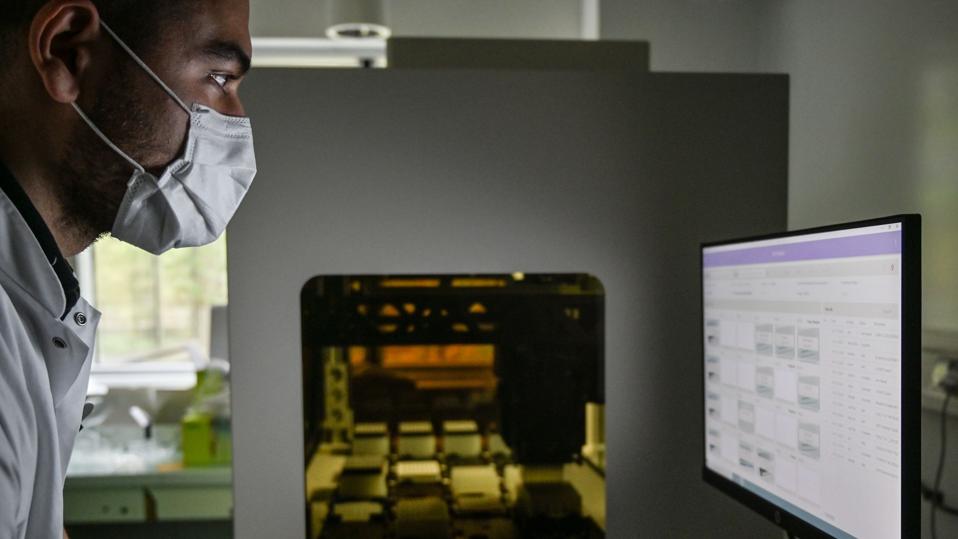
FRANCE-HEALTH-VIRUS-SCIENCE-BIOLOGY-TEST

RNA from SARS-CoV-2 might be found in your body long after you’ve recovered from the disease.

Even though they inform isolation and return-to-work decisions, PCR tests don’t measure if someone is contagious

When an individual tests positive for Covid-19, it is a common policy to require that they remain in isolation for a period of 10-14 days. In fact, the Centers for Disease Control and Prevention (CDC) recommends that those who test positive for Covid-19 remain in isolation until they have received two negative PCR results on samples collected at least 24 hours apart.

This is a conservative approach, but has been justified during the early stages of the Covid-19 pandemic due to the lack of data on the period of infectiousness of SARS-CoV-2, as well as the significant repercussions of allowing an infected individual to return-to-work or interact with others before there is confidence they are no longer infectious. However, PCR is not typically used as a ‘test of cure’ for other infectious diseases, since it can remain positive after a patient has cleared an infection.

What does it mean when a patient tests positive after recovering from Covid-19?

While studies are being performed to definitively answer this question, new data are emerging that suggest the period of SARS-CoV-2 infectiousness may not correlate with PCR positivity. In other words, an individual may not be able to infect others for as long as they test positive by PCR. To determine this, researchers have investigated two important questions. First, can the virus be cultured, or grown, from samples that are collected weeks after resolution of a patient’s symptoms but test positive by PCR? And second, do close contacts (e.g., family members, coworkers) of patients with persistently positive PCR tests become sick with Covid-19?

Last week, the South Korean CDC published important data aimed at addressing these questions. The study followed approximately 800 contacts of Covid-19 patients after they had recovered from their illness, tested negative, but once again tested positive by PCR. The researchers found no evidence that the contacts became ill with Covid-19. In addition, the South Korean scientists were unable to grow the virus from samples that were PCR positive at the latest time point.

Although these results suggest that Covid-19 patients may not be infectious for weeks or months following resolution of their symptoms, the exact timeframe over which an individual can transmit the virus to others remains unclear. Additional studies are needed to better define the period of viral infectivity, so that we can prevent the spread of Covid-19 but allow recovered patients the opportunity to emerge from isolation as soon as it is safe to do so.


How South Korea prevented a coronavirus disaster—and why the battle isn’t over

https://www.nationalgeographic.com/science/2020/05/how-south-korea-prevented-coronavirus-disaster-why-battle-is-not-over/

How South Korea prevented a coronavirus disaster—and why the ...

The nation beat back COVID-19 with more than its large number of tests. Can it maintain this success?

The COVID-19 testing center at H Plus Yangji Hospital in southern Seoul doesn’t look like much from the outside. Resembling a mobile home, the temporary building sits in a parking lot near a loading ramp, propped up on one end by a wooden plank. Its walls are wrapped in red and white, and billboard-like signage proclaims that the hospital was named one of the 100 best in the Republic of Korea.

But inside is a gleaming bank of four booths with transparent plastic walls; rubber gloves embedded through them in a manner similar to a high-grade biosafety lab. When a person walks into a booth, they consult over an intercom with a doctor who remains outside. The doctor can swab their nose and throat using the gloves without ever coming into contact with the patient. The booths maintain negative air pressure, which sucks in any virus-carrying airborne droplets. After the test, a staff member in protective gear disinfects the booth, scrubbing the walls with a squeegee.

Hundreds of similar “walk-in” testing booths located all over the country have been one of the pillars of South Korea’s highly successful strategy to contain COVID-19, helping officials roll out rapid and extensive diagnostic testing.

The nation of 51 million people has also taken a big data approach to contact tracing, using credit card history and location data from cell phone carriers to retrace the movements of infected people. Surveys show most Korean citizens are OK with sacrificing digital privacy to stop an outbreak. At the same time, authorities have pushed an intense—but mostly voluntary—social distancing campaign, leaving most bars, restaurants, and movie theaters free to operate.

The viral scourge is far from over in South Korea—a recent outbreak connected to several nightclubs was reported with 102 cases as of May 12. Despite this, the country’s response could serve as a model for the rest of the world, but achieving this level of speedy success in the face of a pandemic was not easy.

Lessons from the past

A major factor shaping South Korea’s response was its ability to apply lessons learned during previous outbreaks, especially the country’s MERS coronavirus outbreak in 2015, which resulted in 186 cases and 38 deaths.

In the immediate aftermath, South Korea’s legislature created the legal foundation for a comprehensive strategy for contact tracing—whereby anyone who has interacted with an infected person is traced and placed in quarantine. Amendments explicitly authorized health authorities to request patients’ transaction history from credit card companies and location data from cell phone carriers—and to release the reconstructed movements in the form of anonymous “travel logs” so people could learn the times and places where they might have been exposed.

A huge push with contact tracing and testing managed to corral an early rise in cases that threatened to spiral out of control—hundreds were reported each day, peaking at 909 cases on February 29 with most associated with a religious sect in the city of Daegu. The strategy also managed to snuff out several subsequent coronavirus clusters at churches, computer gaming cafes, and a call center. By April 15, South Korea safely held a national election, in which 29 million people participated. Voters wore masks and gloves; polling centers took everyone’s temperature and separated anyone with a fever. No cases have been traced to the election.

While people in other countries may consider Korea’s data collection a violation of patient privacy, the measures have broad support from the South Korean public. In a March 4 poll led by the Seoul National University Graduate School of Public Health, 78 percent of 1,000 respondents agreed that human rights protections should be eased to strengthen virus containment efforts. Experience with past outbreaks also meant people were quick to stay at home and wear masks in public even before the government began issuing formal guidelines.

Crucially, South Korea had built up its diagnostic testing capabilities after the 2015 MERS outbreak. Unlike the U.S., which relied on testing kits developed by its Centers for Disease Control and Prevention (CDC) in Atlanta, South Korea enlisted the private sector. At a meeting in late January, officials urged local biotech companies to develop testing kits. Within a month, the nation was running more than 10,000 tests daily.

A recent boom in South Korea’s biotech scene, long predating the pandemic, helped with the ramp-up, says Thomas Shin, the CEO of TCM Biosciences, a company in Pangyo, south of Seoul. “During the last five years, there were many new bioscience companies,” says Shin. TCM was one of the companies that heeded the government’s call to develop kits, and it received approval from the country’s Ministry of Food and Drug Safety in April.

Shin says the decision wasn’t necessarily an easy one from a business perspective—new diseases are difficult to forecast, and if they’re snuffed out quickly, it can be hard to recoup the costs of initial development. But with South Korea’s close connections to the outbreak’s epicenter in China, Shin says TCM could see a similar situation developing rapidly on the home front—and projected a business opportunity in the global market. So far, the company has shipped kits worth roughly $2.6 million.

On April 30, the nation reported just four cases, all of them travelers arriving from abroad, marking the first day with zero local infections in two and a half months. As case numbers have continued to fall, the government has cautiously relaxed its guidelines, while signaling a shift to “everyday quarantine” measures, such as wearing masks and temperature checks at schools.

People’s attitudes have also relaxed, leading some officials to worry about complacency and a second wave of infections. The nightclub outbreak may heighten those fears, but the government has already responded aggressively, tracing and testing thousands of people in a matter of days.

Last mile is the toughest

Though testing companies were quick to respond to the demand, rolling out the kits presented difficulties. Through February, demand for tests was still outpacing supply, and there were only enough kits to distribute to a select number of hospitals.

Furthermore, hospitals struggled to administer the tests to potentially contagious patients safely and quickly—testing areas needed to be sanitized after each patient, long queues meant the virus could spread while people waited in line, and health workers were running low on protective gear. At Yangji Hospital, this also led to exhausted staff, says hospital director Sang Il Kim.

“Even when we did have kits, the waiting times were just too long for everybody to get tested, so they would have to go to other hospitals,” adds Yoona Chung, a doctor in the hospital’s surgery department.

According to Yangji’s data, the hospital was conducting roughly 10 tests a day by late February—but many more were being turned away due to the wait. Other hospitals in Korea started experimenting with drive-through testing centers, where patients could get tested without leaving their cars. But Yangji Hospital is near a subway station in a crowded neighborhood in southern Seoul; for many of its patients, cars aren’t an option.

So, Kim devised the walk-in booths, which went into pilot operation on March 10. Within days, the number of tests administered in a day had tripled. By the end of the month, the hospital could handle more than 90 patients a day. Hospitals elsewhere in Korea and around the world quickly adopted their own variations on the concept. A hospital in Busan had a similar idea independently but others have had help from Kim.

At Massachusetts General Hospital in Boston, hospital leadership saw news reports on Yangji’s booths and asked an in-house team to create a version, hoping to better protect their health workers and conserve precious protective gear. A bit of Googling and two phone calls later, hospital staff connected her with Kim via email.

“I remember it was 10 p.m., we’re all frustrated, up all night, trying to figure out how to make this work,” says Nour Al-Sultan, a business strategy analyst at the MGH Springboard Studio, the team of researchers and designers tasked with reverse engineering the booths. “I go to bed, and I wake up the next morning, and Dr. Kim is the one who answers all of my questions.”

MGH has now installed about eight booths at three hospitals in the Boston region. According to preliminary data, they’ve reduced the need for protective gowns, which are in short supply, by 96 percent, saving more than 500 gowns a week. The MGH team is now working with colleagues in Uganda to help them develop their own versions of the booths.

“The fact that he took the time to provide me with such generous insights is just a testament to this spirit of global collaboration against the pandemic,” Al-Sultan says.


100,000 Lives Lost to COVID-19. What Did They Teach Us?

https://www.propublica.org/article/100000-lives-lost-to-covid-19-what-did-they-teach-us?utm_source=pardot&utm_medium=email&utm_campaign=dailynewsletter&utm_content=feature

May 27 data: Four new Utah COVID-19 deaths as US count tops ...

Each person who has died of COVID-19 was somebody’s everything. Even as we mourn for those we knew, cry for those we loved and consider those who have died uncounted, the full tragedy of the pandemic hinges on one question: How do we stop the next 100,000?

The United States has now recorded 100,000 deaths due to the coronavirus.

It’s a moment to collectively grieve and reflect.

Even as we mourn for those we knew, cry for those we loved and consider also those who have died uncounted, I hope that we can also resolve to learn more, test better, hold our leaders accountable and better protect our citizens so we do not have to reach another grim milestone.

Through public records requests and other reporting, ProPublica has found example after example of delays, mistakes and missed opportunities. The CDC took weeks to fix its faulty test. In Seattle, 33,000 fans attended a soccer match, even after the top local health official said he wanted to end mass gatherings. Houston went ahead with a livestock show and rodeo that typically draws 2.5 million people, until evidence of community spread shut it down after eight days. Nebraska kept a meatpacking plant open that health officials wanted to shut down, and cases from the plant subsequently skyrocketed. And in New York, the epicenter of the pandemic, political infighting between Gov. Andrew Cuomo and Mayor Bill de Blasio hampered communication and slowed decision making at a time when speed was critical to stop the virus’ exponential spread.

COVID-19 has also laid bare many long-standing inequities and failings in America’s health care system. It is devastating, but not surprising, to learn that many of those who have been most harmed by the virus are also Americans who have long suffered from historical social injustices that left them particularly susceptible to the disease.

This massive loss of life wasn’t inevitable. It wasn’t simply unfortunate and regrettable. Even without a vaccine or cure, better mitigation measures could have prevented infections from happening in the first place; more testing capacity could have allowed patients to be identified and treated earlier.

The COVID-19 pandemic is not over, far from it.

At this moment, the questions we need to ask are: How do we prevent the next 100,000 deaths from happening? How do we better protect our most vulnerable in the coming months? Even while we mourn, how can we take action, so we do not repeat this horror all over again?

Here’s what we’ve learned so far.

Though we’ve long known about infection control problems in nursing homes, COVID-19 got in and ran roughshod.

From the first weeks of the coronavirus outbreak in the United States, when the virus tore through the Life Care Center in Kirkland, Washington, nursing homes and long-term care facilities have emerged as one of the deadliest settings. As of May 21, there have been around 35,000 deaths of staff and residents in nursing homes and long-term care facilities, according to the nonprofit Kaiser Family Foundation.

Yet the facilities have continued to struggle with basic infection control. Federal inspectors have found homes with insufficient staff and a lack of personal protective equipment. Others have failed to maintain social distancing among residents, according to inspection reports ProPublica reviewed. Desperate family members have had to become detectives and activists, one even going as far as staging a midnight rescue of her loved one as the virus spread through a Queens, New York, assisted living facility.

What now? The risk to the elderly will not decrease as time goes by — more than any other population, they will need the highest levels of protection until the pandemic is over. The CEO of the industry’s trade group told my colleague Charles Ornstein: “Just like hospitals, we have called for help. In our case, nobody has listened.” More can be done to protect our nursing home and long term care population. This means regular testing of both staff and residents, adequate protective gear and a realistic way to isolate residents who test positive.

Racial disparities in health care are pervasive in medicine, as they have been in COVID-19 deaths.

African Americans have contracted and died of the coronavirus at higher rates across the country. This is due to myriad factors, including more limited access to medical care as well as environmental, economic and political factors that put them at higher risk of chronic conditions. When ProPublica examined the first 100 recorded victims of the coronavirus in Chicago, we found that 70 were black. African Americans make up 30% of the city’s population.

What now? States should make sure that safety-net hospitals, which serve a large portion of low-income and uninsured patients regardless of their ability to pay, and hospitals in neighborhoods that serve predominantly black communities, are well-supplied and sufficiently staffed during the crisis. More can also be done to encourage African American patients to not delay seeking care, even when they have “innocent symptoms” like a cough or low-grade fever, especially when they suffer other health conditions like diabetes.

Racial disparities go beyond medicine, to other aspects of the pandemic. Data shows that black people are already being disproportionately arrested for social distancing violations, a measure that can undercut public health efforts and further raise the risk of infection, especially when enforcement includes time in a crowded jail.

Essential workers had little choice but to work during COVID-19, but adequate safeguards weren’t put in place to protect them.

We’ve known from the beginning there are some measures that help protect us from the virus, such as physical distancing. Yet millions of Americans haven’t been able to heed that advice, and have had no choice but to risk their health daily as they’ve gone to work shoulder-to-shoulder in meat-packing plants, rung up groceries while being forbidden to wear gloves, or delivered the mail. Those who are undocumented live with the additional fear of being caught by immigration authorities if they go to a hospital for testing or treatment.

What now? Research has shown that there’s a much higher risk of transmission in enclosed spaces than outdoors, so providing good ventilation, adequate physical distancing, and protective gear as appropriate for workers in indoor spaces is critical for safety. We also now know that patients are likely most infectious right before or at the time when symptoms start appearing, so if workplaces are generous about their sick leave policies, workers can err on the side of caution if they do feel unwell, and not have to choose between their livelihoods and their health. It’s also important to have adequate testing capacity, so infections can be caught before they turn into a large outbreak.

Frontline health care workers were not given adequate PPE and were sometimes fired for speaking up about it.

While health workers have not, thankfully, been dying at conspicuously higher rates, they continue to be susceptible to the virus due to their work. The national scramble for ventilators and personal protective equipment has exposed the just-in-time nature of hospitals’ inventories: Nurses across the country have had to work with expired N95 masks, or no masks at all. Health workers have been suspended, or put on unpaid leave, because they didn’t see eye to eye with their administrators on the amount of protective gear they needed to keep themselves safe while caring for patients.

First responders — EMTs, firefighters and paramedics — are often forgotten when it comes to funding, even though they are the first point of contact with sick patients. The lack of a coherent system nationwide meant that some first responders felt prepared, while others were begging for masks at local hospitals.

What now? As states reopen, it will be important to closely track hospital capacity, and if cases rise and threaten their medical systems’ ability to care for patients, governments will need to be ready to pause or even dial back reopening measures. It should go without saying that adequate protective gear is a must. I also hope that hospital administrators are thinking about mental health care for their staffs. Doctors and nurses have told us of the immense strain of caring for patients whom they don’t know how to save, while also worrying about getting sick themselves, or carrying the virus home to their loved ones. Even “heroes” need supplies and support.

What we still have to learn:

There continue to be questions on which data is lacking, such as the effects of the coronavirus on pregnant women. Without evidence-based research, pregnant women have been left to make decisions on their own, sometimes trying to limit their exposure against their employer’s wishes.

Similarly, there’s a paucity of data on children’s risk level and their role in transmission. While we can confidently say that it’s rare for children to get very ill if they do get infected, there’s not as much information on whether children are as infectious as adults. Answering that question would not just help parents make decisions (Can I let my kid go to day care when we live with Grandma?) but also help officials make evidence-based decisions on how and when to reopen schools.

There’s some research I don’t want to rush. Experts say the bar for evidence should be extremely high when it comes to a vaccine’s safety and benefit. It makes sense that we might be willing to use a therapeutic with less evidence on critically ill patients, knowing that without any intervention, they would soon die. A vaccine, however, is intended to be given to vast numbers of healthy people. So yes, we have to move urgently, but we must still take the time to gather robust data.

Our nation’s leaders have many choices to make in the coming weeks and months. I hope they will heed the advice of scientists, doctors and public health officials, and prioritize the protection of everyone from essential workers to people in prisons and homeless shelters who does not have the privilege of staying home for the duration of the pandemic.

The coronavirus is a wily adversary. We may ultimately defeat it with a vaccine or effective therapeutics. But what we’ve learned from the first 100,000 deaths is that we can save lives with the oldest mitigation tactics in the public health arsenal — and that being slow to act comes with a terrible cost.

I refuse to succumb to fatalism, to just accepting the ever higher death toll as inevitable. I want us to make it harder for this virus to take each precious life from us. And I believe we can.