Rick Bright, ousted director of vaccine agency, warns that administration lacks ‘centralized, coordinated plan’

https://www.cnn.com/2020/05/14/politics/coronavirus-whistleblower-testimony/index.html?fbclid=IwAR0KfVp-njw8vqKFdaLbBC4r4NAx3KeS4rFg2vmFbSneW7PcqOwVYult9rc

Virus whistleblower tells lawmakers US lacks vaccine plan | Where ...

Rick Bright, the ousted director of a crucial federal office charged with developing countermeasures to infectious diseases, testified before Congress on Thursday that the US will face an even worse crisis without additional preparations to curb the coronavirus pandemic.

“Our window of opportunity is closing,” Bright said. “Without better planning, 2020 could be the darkest winter in modern history.”
Bright criticized the Trump administration for failing to implement a “standard, centralized, coordinated plan” to combat the virus and questioned its timeline for a vaccine. His testimony came a week after filing a whistleblower complaint alleging he was fired from his job leading the Biomedical Advanced Research and Development Authority for opposing the use of a drug frequently touted by President Donald Trump as a potential coronavirus treatment.
About an hour before Bright’s hearing, Trump tweeted that he had “never met” or “even heard of” Bright, but considers the NIH senior adviser a “disgruntled employee, not liked or respected by people I spoke to and who, with his attitude, should no longer be working for our government!”
Before the House Committee on Energy and Commerce’s health subcommittee, Bright urged the Trump administration to consider a number of actions, including increasing production of essential equipment and establishing both a national test strategy and a national standard of procurement of supplies. He calls on top officials to “lead” through example and wear face coverings and social distance.
Bright claimed that the administration missed “early warning signals” to prevent the spread of the virus. He said that he would “never forget” an email from Mike Bowen, the hearing’s other witness and the vice president of the medical supply company Prestige Ameritech, indicating that the US supply of N95, the respirator masks used by health care professionals, was at a perilous level.
“He said, ‘We’re in deep shit,'” testified Bright. “‘The world is.'”
Bright said he “pushed” that warning “to the highest levels” he could at Health and Human Services but received “no response.”
“From that moment, I knew that we were going to have a crisis for health care workers because we were not taking action,” said Bright. “We were already behind the ball.”
In his written statement, Bright blamed the leadership of HHS for being “dismissive” of his “dire predictions.” Bright wrote that he knew the US had a “critical shortage of necessary supplies” and personal protective equipment during the first three months of the year and prodded HHS to boost production of masks, respirators, syringes and swabs to no avail. He alleged that he faced “hostility and marginalization” from HHS officials after he briefed White House trade adviser Peter Navarro and members of Congress “who better understood the urgency to act.”
And he charged that he was removed from his post at BARDA and transferred to “a more limited and less impactful position” at NIH after he “resisted efforts to promote” the “unproven” drug chloroquine.
A Department of Health and Human Services spokesperson responded that it was “a personnel matter that is currently under review” but said it “strongly disagrees with the allegations and characterizations.”
Bright is seeking to be reinstated to his position as the head of BARDA. The Office of Special Counsel, which is reviewing Bright’s complaint, has determined that was a “substantial likelihood of wrongdoing” in removing him from his post, according to Bright’s attorneys.
Rep. Anna Eshoo, a California Democrat and the panel’s chairwoman, said Bright “was the right person, with the right judgment, at the right time.”
“We can’t have a system where the government fires those who get it right and reward those who get it completely wrong,” added Eshoo.
In his testimony, Bright also cast doubt on the Trump administration’s goal of manufacturing a vaccine in 12 to 18 months as overly optimistic, calling it “an aggressive schedule” and noting that it usually takes up to 10 years to make a vaccine.
“My concern is if we rush too quickly, and consider cutting out critical steps, we may not have a full assessment of the safety of that vaccine,” Bright said. “So, it’s still going to take some time.”
Some Republicans on the subcommittee said that the hearing shouldn’t have been held at all.
Rep. Michael Burgess of Texas, the top Republican on the panel, said “every whistleblower needs to be heard,” but added the hearing was “premature” and a “disservice” to the Special Counsel’s investigation since Bright’s complaint was filed only a week ago.
And Republican Rep. Richard Hudson of North Carolina claimed that the hearing was not about the whistleblower complaint but “undermining the Administration during a national and global crisis.”
Thursday’s subcommittee meeting comes two days after a blockbuster hearing in the Senate that featured Dr. Anthony Fauci, who leads the National Institute of Allergy and Infectious Diseases. Fauci said that access to a vaccine in time for the fall school year would be “a bit of a bridge too far” and warning against some schools opening too soon, which Trump later called “not an acceptable answer.”
Fauci testified from his modified quarantine at home since he had made contact with a White House staffer who tested positive. But Bright appeared masked and in-person for his hearing on Capitol Hill, as did the lawmakers who questioned him. Many members of the House have steered clear of Capitol Hill since the onset of the outbreak, although they are expected to return on Friday to vote on a multi-trillion dollar Democratic bill responding to the crisis.


The pandemic broke America

https://www.axios.com/coronavirus-america-broken-2baa69e4-60e6-49a5-932a-5d118441ae20.html

The coronavirus pandemic broke America - Axios

Eight weeks into this nation’s greatest crisis since World War II, we seem no closer to a national strategy to reopen the nation, rebuild the economy and defeat the coronavirus.

Why it matters: America’s ongoing cultural wars over everything have weakened our ability to respond to this pandemic. We may be our worst enemy.

  • The response is being hobbled by the same trends that have impacted so much of our lives: growing income inequality, the rise of misinformation, lack of trust in institutions, the rural/urban divide and hyper-partisanship.
  • We’re not even seeing the same threat from the virus. Democrats are far more likely than Republicans to be worried about getting seriously ill, while Republicans — including the president — are more likely to think the death counts are too high.

Without even a basic agreement on the danger of the pandemic and its toll, here’s how we see the national response unfold:

  • The Centers for Disease Control and Prevention, the crown jewel of the globe’s public health infrastructure, has been sidelined, its recommendations dismissed by the White House.
  • President Trump declares the U.S. has “prevailed on testing” at a time when health experts say we still need far more daily tests before the country can reopen safely.
  • Distribution of the promising coronavirus drug remdesivir was initially botched because of miscommunication between government agencies.
  • More than two thirds of Americans say it’s unlikely they would use a cell phone-based contact tracing program established by the federal government, a key component of a testing regime to control the virus.
  • The second phase of a program to aid small businesses isn’t fully allocated because firms are either concerned about its changing rules, confused about how to access it, or find the structure won’t help them stay in business.
  • With the unemployment rate at a post-Depression record last month, and expected to go higher, there is no meaningful discussion between the parties in Congress on aid to the out-of-work.
  • States and local governments are facing billions in losses without a strategy for assistance.
  • The virus is literally inside the White House. Aides have tested positive for coronavirus, leading to quarantines for some of the nation’s top public health officials and a new daily testing regime for White House staff and reporters who enter the West Wing.
  • The No. 1 book on Amazon for a time was a book by an anti-vaxxer whose conspiracy-minded video about the pandemic spread widely across social media, leading to takedowns by platforms like YouTube and Facebook.

The other side: There’s better news at the state level. “Governors collectively have been winning widespread praise from the public for their handling of the coronavirus outbreak,” the Washington Post reports.

Between the lines: Nationwide, 71% of Americans approve of the job their governor is doing, according to the Post. For Trump, the figure is 43%.

  • And former presidents we often expect to help rally the nation in trying times are scarce.
  • George W. Bush released a video, in which his face barely appeared, calling for unity in the fight against the virus. Barack Obama was recorded in leaked remarks to former staffers calling Trump’s coronavirus response “an absolute chaotic disaster.” Trump attacked both of them on Twitter.

The bottom line: An existential threat — like war or natural disaster — usually brings people together to set a course of action in response. Somehow, we’ve let this one drive us apart.


Window of Opportunity is Closing for Coronavirus Response

https://www.axios.com/rick-bright-testimony-opening-statement-6817ae7a-5196-4357-b83c-d3ff96990efd.html?stream=health-care&utm_source=alert&utm_medium=email&utm_campaign=alerts_healthcare

Window of opportunity – definition and meaning – Market Business News

A top vaccine doctor who was ousted from his position in April is expected to testify Thursday that the Trump administration was unprepared for the coronavirus, and that the U.S. could face the “darkest winter in modern history” if it doesn’t develop a national coordinated response, according to prepared testimony first obtained by CNN.

The big picture: Rick Bright, the former head of the Biomedical Advanced Research and Development Authority (BARDA), will tell Congress that leadership at the Department of Health and Human Services ignored his warnings in January, February and March about a potential shortage of medical supplies.

  • He will testify that HHS “missed early warning signals” and “forgot important pages from our pandemic playbook” early on — but that “for now, we need to focus on getting things right going forward.”
  • Bright’s testimony also reiterates claims from a whistleblower report he filed last week that alleges he was ousted over his attempts to limit the use of hydroxychloroquine — an unproven drug touted by President Trump — to treat the coronavirus.

What he’s saying: Bright will testify he urged HHS to ramp up production of
masks, respirators and medical supplies as far back as January. Those warnings were dismissed, Bright says, and he was “cut out of key high-level meetings to combat COVID-19.”

  • “I continue to believe that we must act urgently to effectively combat this deadly disease. Our window of opportunity is closing. If we fail to develop a national coordinated response, based in science, I fear the pandemic will get far worse and be prolonged, causing unprecedented illness and fatalities.”

Bright will call for a national strategy to combat the virus, including “tests that are accurate, rapid, easy to use, low cost, and available to everyone who needs them.”

  • “Without clear planning and implementation of the steps that I and other experts have outlined, 2020 will be darkest winter in modern history.”

Read Bright’s prepared statement.


States build contact tracing armies to crush coronavirus

States build contact tracing armies to crush coronavirus

Coronavirus: Why are there doubts over contact-tracing apps? - BBC ...

State governments are building armies of contact tracers in a new phase of the battle against the coronavirus pandemic, returning to a fundamental practice in public health that can at once wrestle the virus under control and put hundreds of thousands of newly jobless people back to work.

California is already conducting contact tracing in 22 counties, and it eventually plans to field a force of 10,000 state employees, who will be given basic training by University of California health experts.

Massachusetts and Ohio have partnered with Partners in Health, a global health nonprofit originally established to support programs in Haiti, to field teams of contact tracers. Maryland will partner with the University of Chicago and NORC, formerly the National Opinion Research Center, to quadruple its contact tracing capacity.

Washington, West Virginia, Iowa, North Dakota and Rhode Island are using their National Guards to trace contacts of those who have been infected with the coronavirus. In Kansas, 400 people have volunteered to trace contacts; in Utah, 1,200 state employees have raised their hands.

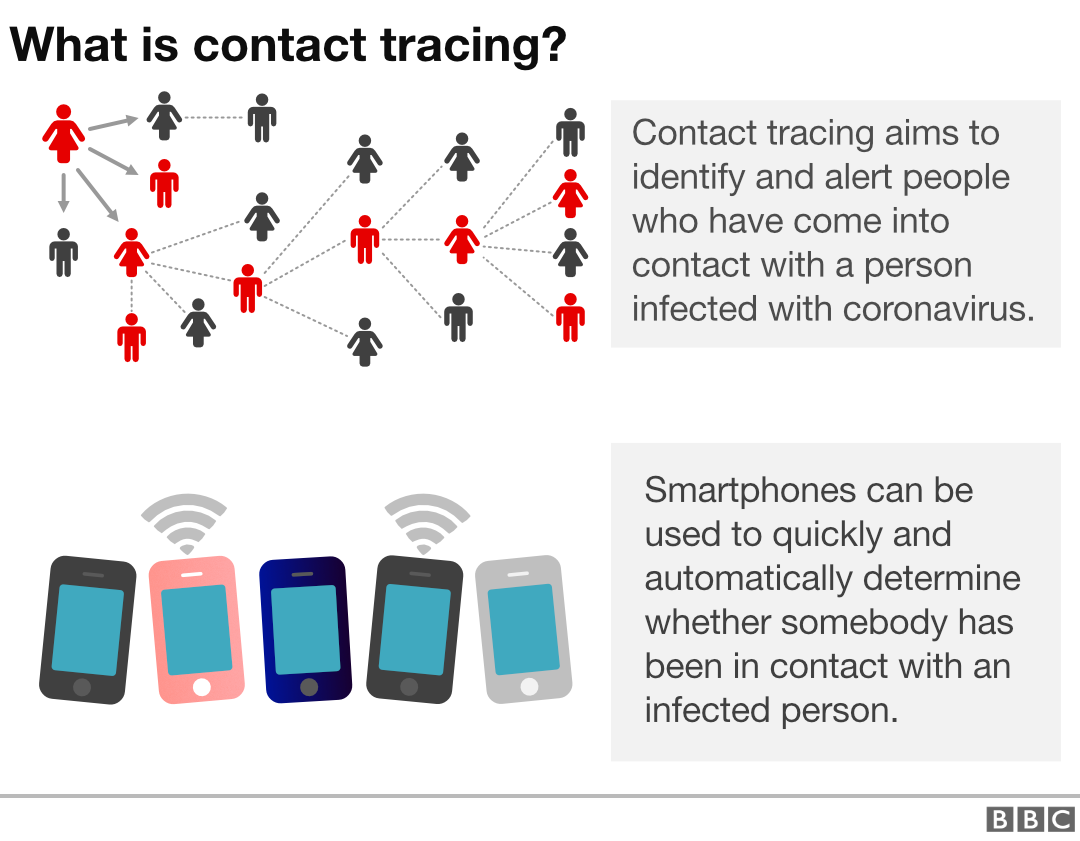
Contact tracing is a pillar of basic public health, a critical element in battling infectious disease around the globe. The goal is to identify those who have been infected with a virus and those with whom the infected person has come into contact. 

If those contacts then come down with the virus, they can be quickly isolated so they do not spread it further. They can also be treated, making it less likely they develop the most severe symptoms.

The practice works even in areas where health systems are thin at best and nonexistent at worst.

Tracking down those who had the Ebola virus in Guinea, Liberia and Sierra Leone, three of the poorest nations on Earth, was critical to ending the world’s largest outbreak of the deadly hemorrhagic fever in 2015. World Health Organization trackers and health officials in Congo have tracked as many as 25,000 people at a time during an Ebola outbreak that is still simmering in an eastern province, even as they face the threat of what is an almost active war zone.

“Our ability to suppress transmission relates to our ability to detect the virus,” Maria Van Kerkhove, the American who leads the World Health Organization’s technical team studying the coronavirus, told reporters last week.

The focus on contact tracing comes as public health experts warn that the coronavirus will not end as a threat to humankind until so many people have become infected that the virus has nowhere else to turn — a terrifying prospect that conjures images of overwhelmed health systems and death on a mass scale — or until scientists develop and distribute an effective vaccine to billions of people across the globe.

There are more than 100 vaccines in some stage of testing, though determining their effectiveness is still months away, and production at a mass scale is months beyond that. Anthony Fauci, director of the National Institute of Allergy and Infectious Diseases and the country’s most well-known infectious disease expert, has estimated that a vaccine could be as close as 18 months away, though he has acknowledged that would blow the old record for speedy development out of the water.

“We have to fundamentally do everything possible to get a safe and effective vaccine as quickly as possible. At the same time, we have to assume that it’s not around the corner,” said Tom Frieden, former director of the Centers for Disease Control and Prevention who now runs Resolve to Save Lives, a global health nonprofit.

In the meantime, the federal government has largely left it up to the states to build their contact tracing capacity. 

Sen. Elizabeth Warren (D-Mass.) and Rep. Andy Levin (D-Mich.) have proposed adding a massive nationwide federal contact tracing program to the next round of coronavirus-related relief funding. In a nod to the New Deal-style scale such a program would require, they call the program the Coronavirus Containment Corps.

“Establishing a nationwide contact tracing program is the only way we can truly know the progress we’ve made in containing the virus, and how far we have left to go before we can transition back to normal life,” Levin said in a statement.

But contact tracing can work only if the number of new cases the United States confirms every day begins to bend down to a manageable number. The number of cases confirmed in the United States has grown by at least 25,000 on all but two of the first eight days of May.

And tracing will become an effective tool only when those who are conducting the tracing have the ability to test people broadly and to get the results of those tests back quickly. The Food and Drug Administration said Friday it had approved both the first diagnostic test that could be conducted using home-collected saliva samples and the first antigen test, a type of test that delivers results much faster than others on the market.

The lack of available tests at the earliest stages of the coronavirus outbreak has hidden the true extent of the virus’s spread around the United States. While some countries have the capacity to test huge percentages of their population on a given day, the United States is still testing only about 250,000 people per day, a level far short of the capacity necessary to conduct widespread contact tracing.

“Right from the start there has been a tremendous undercounting of cases, and that had to do with our now infamous slow testing rollout,” said Paul Sax, clinical director of the division of infectious diseases at Brigham and Women’s Hospital in Boston. 

President Trump has touted the raw number of tests performed — he rightly claims that the United States conducts more tests on a given day than any other country. But on a per capita basis, the United States is testing fewer of its residents than countries such as the United Kingdom, Italy and Estonia.

Until that changes, public health experts worry the United States will be stuck at a dangerous plateau.

“We’re doing deeply inadequate testing and functionally no tracing,” said Jeremy Konyndyk, a former head of the Office of Foreign Disaster Assistance at the U.S. Agency for International Development and now a senior fellow at the Center for Global Development. “We’re not going to half-ass our way out of a pandemic, and that’s where we are, and that’s why we’re stuck.”


Iowa tells workers to return to their jobs or lose unemployment benefits, despite warnings that reopening could lead to a 2nd wave of infections

https://www.businessinsider.com/iowa-tells-workers-return-to-work-or-lose-unemployment-benefits-2020-4?fbclid=IwAR3OghoKRKsPt9JVz4TIsn_Qv5im_ZPaCmzPenmsEFgJR80YXbFJ2QWrxpE

Iowa tells workers to return to work or lose unemployment benefits ...

  • Iowa is preparing to partially reopen 77 counties on Friday.
  • The state said furloughed employees who refuse to return to work that they would lose their unemployment benefits — and Gov. Kim Reynolds said it could disqualify them from future unemployment benefits.
  • However, a group of experts advised the governor last week not to loosen restrictions and said the state has not reached its peak of infections and deaths.

As Iowa prepares to partially reopen on Friday, the state has told furloughed workers that they will lose their unemployment benefits if they refuse to return to work.

The Des Moines Register reported that businesses like restaurants, bars, retail stores, and fitness centers would be allowed to reopen at half capacity starting on May 1. Gov. Kim Reynolds said the 77 reopening counties either have no cases or are on a downward trend.

Iowa Workforce Development, a state agency that provides employment services for individual workers, said an employee’s refusal return to work out of fear would be considered a “voluntary quit” — which would mean they could no longer receive unemployment benefits. The announcement applies to workers across the state.

Ryan West, the deputy director of Iowa Workforce Development, told Radio Iowa that there were some exceptions, such as workers diagnosed with COVID-19.

The Iowa Workforce Development website prompts employers to fill out what it calls a Job Offer Decline Form for employees who refuse to return to work. The governor has said that opting not to go back to work could disqualify employees from future unemployment benefits.

Business Insider’s Andy Kiersz reported that 232,913 Iowans filed for unemployment between March 15 and April 18, which is 13.5% of the state’s labor force.

Last week, seven epidemiology and biostatistics professors from the University of Iowa advised the governor not to loosen social-distancing restrictions, KWWL reported. They wrote a research paper for the governor after they were commissioned by the Iowa Department of Public Health.

“We observe a huge range of possible outcomes, from relatively low fatalities to catastrophic loss of life,” the paper said.

The scientists said there was still “considerable uncertainty” over how many deaths the state may eventually have; the projections range from 150 to over 10,000 deaths.

“We have found evidence of a slowdown in infection and mortality rates due to social distancing policies, but not that a peak has been reached,” the paper said. The professors said that did not mean measures should be eased: “Therefore, prevention measures should remain in place. Without such measures being continued, a second wave of infections is likely.”


We Work on the Front Lines of COVID-19. Here’s What Hospitals Should Do

https://www.medpagetoday.com/infectiousdisease/covid19/86185?xid=fb_o&trw=no&fbclid=IwAR3iM5LMZj3BxWisk3puZ2T3bOCeBaDS_xCRoTrnVaZYfj4-DZPmUfr01cw

We Work on the Front Lines of COVID-19. Here's What Hospitals ...

A game plan from ground zero.

It’s only a matter of time before all of us are directly affected by COVID-19. Proper preparation is the only way to ensure high-quality patient care and staff well-being in this challenging time. Having collectively spent time caring for patients at two different tertiary care facilities in New York on the medical floors and intensive care units, common themes are emerging that represent opportunities for hospitals in other parts of the country to start taking action before COVID-19 patients start filling up beds en masse.

Staffing

It takes a LOT of people to care for a COVID-19 onslaught; mapping out different staffing scenarios in the event you have 40 or 400 COVID patients is imperative. Staffing needs for COVID patients are higher than normal because of the patients’ complex medical needs — many require ICU level nursing and respiratory therapists — and because both clinical and non-clinical staff will inevitably become sick and need to be taken out of work. Staff should be screened for symptoms and high-risk contacts; those who are symptomatic should be proactively encouraged to stay home instead of showing up to work not feeling well and putting other care team members and patients at risk. This requires back-up staffing plans to fill in when your people become sick. Shutting down non-urgent and elective departments provides staffing redundancy to pull from when needed. All employees should be given advance notice about staffing plans so that potential role changes are clear.

Testing

Robust testing processes for both patients and your healthcare workforce are critical for success. Hospitals should be taking this time to obtain in-house rapid testing kits to avoid unnecessary patient isolation and conserve personal protective equipment (PPE) while waiting for test results.

Healthcare workers are understandably scared about contracting COVID-19 themselves and giving it to their family members. We recommend all staff members be tested for active infection so that those who are infected can be proactively quarantined.

Forward-thinking institutions should be prioritizing antibody testing for healthcare workers. While this testing is still in its infancy, it is quite likely that those with strong antibodies to COVID-19 possess some degree of immunity. Therefore, if you can identify which doctors, nurses, respiratory therapists, physical therapists, and janitorial staff have already developed an immune response to COVID-19, these staff members can take priority staffing infected units with the goal of reducing the number of new infections in healthcare workers and limiting exposure to those who have yet to contract the virus.

Communication

Each institution’s COVID-19 protocols and policies change rapidly as we learn more about the virus. How you communicate these ever-changing procedures with staff is critical. Most hospitals rely on daily email updates that are text-heavy; however, overwhelmed inboxes and less time with devices while wearing PPE limits the success of email as a sole communication channel.

Communication through graphics takes on new importance — signage noting changes in hospital geography, large pictures of donning and doffing instructions, phone numbers to call with equipment shortages, and clear instructions to staff about testing protocols, isolation, and removing patients from isolation need to be conveniently placed where staff can access information in real time without consulting their electronic devices. High-yield locations for just-in-time visual communication include outside patient rooms, nursing stations, break rooms, and elevators, so that the target information reaches its busy, hard-working audience successfully and repeatedly, minimizing confusion and augmenting clarity.

Limiting the Need to Enter the Room

Given ongoing PPE shortages, particularly around single-use gowns and N95 masks, minimizing the number of instances that staff, particularly nurses, need to enter the room is critical. This requires an adjustment from normal patient care. We recommend extension tubing to bring IV poles and medications outside the room. Tablets such as iPads can permit video calls with patients to check on non-urgent items. Centralized monitoring of oxygen saturations for all admitted patients can minimize the frequency of supplemental oxygen adjustment.

Similarly, given the increased risk of COVID-19 in diabetic patients, continuous blood glucose monitoring can minimize the need for frequent manual fingerstick measurements for patients receiving supplemental insulin.

Discharge Planning

Discharging patients to home or rehabilitation facilities presents novel challenges. A home discharge requires education, equipment, and follow-up. Education on home monitoring of vitals signs like oxygen saturation and blood pressure with instructions on critical values that should prompt patients to return to the hospital can expedite discharge and open hospital beds for other sick patients. Both patients and family members must also be educated on quarantine procedures to limit household transmission.

Many patients will have temporary oxygen requirements and we have seen home oxygen shortages in our areas. Coordinating a strategy with your outpatient clinicians, home oxygen suppliers, and insurance companies can facilitate getting patients home sooner on home oxygen and freeing up beds for sicker patients. Further, many patients are eager to go home earlier since hospital visitation limitations mean they’re sitting in bed alone away from family and the more a hospital can do to safely discharge patients home with appropriate supplies and follow-up will be beneficial to both patients and the hospital.

Hospitals must also be prepared to integrate these patients into their existing telehealth infrastructure, which has become the mainstay of ambulatory medicine in lieu of traditional office visits. For many patients, this will be a new way of accessing care. Prior to discharge, hospital staff should ensure patients have downloaded the necessary apps with login information and feel comfortable they will be able to follow up with their physician using technology following discharge.

There is a huge opportunity for hospitals that have not been caring for large numbers of COVID-19 patients to prepare ahead of time in a manner that optimizes patient care and minimizes risks to staff. Those of us on the early front lines have learned many of these lessons the hard way. An ounce of prevention is worth a pound of cure — we encourage all healthcare systems to take action before the storm comes.


US surpasses 1 million COVID-19 cases

https://thehill.com/policy/healthcare/494792-us-surpasses-1-million-covid-19-cases

Did the Trump Administration Overpromise 1 Million COVID-19 ...

More than a million people in the United States have tested positive for the coronavirus, a sobering milestone that experts say represents only the beginning of a months-long battle to end the pandemic.

The United States has now registered about a third of all confirmed cases of COVID-19 around the globe, according to data compiled by the Center for Systems Science and Engineering at Johns Hopkins University. More than 57,000 people have died in the United States, about a quarter of the known COVID-19 deaths around the globe.

The United States has now registered more confirmed cases than the next five countries suffering the largest outbreaks — Spain, Italy, France, Germany and the United Kingdom — combined.

Those numbers are partly a reflection of population, but there are troubling signs for the United States.

While those countries have reduced the pace of transmission and the growth in the number of new cases they are seeing on a daily basis, the United States has not similarly bent the curve.

Instead, it is stuck at a deadly plateau: In the last week, the U.S. has reported between 24,000 and 41,000 new cases a day, and between 1,200 and 2,600 deaths per day, according to The Covid Tracking Project, a group of researchers who keep tallies of case counts around the country.

Even as some states begin to relax orders that closed retail and service stores, experts warned the country is still at risk of a new rush of cases, and that the downslope of declining case counts will be much longer than the sudden surge the United States saw in April.

“We’re in the opening stages of this,” said Michael Osterholm, director of the Center for Infectious Disease Research and Prevention at the University of Minnesota. States “are not in the mountains, they’re in the foothills. The mountains are still to come.”

More than a quarter million residents of New York have tested positive for the virus, and commuter suburbs in New Jersey and Connecticut have reported tens of thousands of cases. More than 50,000 residents of Massachusetts have tested positive, and California, Illinois and Pennsylvania have all confirmed more than 40,000 cases.

There are growing signs that the virus is shifting into new, more rural territory. States like Arkansas, Kansas, Minnesota, Nebraska, New Mexico, Rhode Island, Tennessee and Virginia all recorded substantial growth in the number of new cases they had confirmed in the last few days.

That pattern of viral spread beginning in large urban cores and eventually making its way to rural areas is typical, experts said, given societal connections between urban areas, suburbs and more rural areas.

“Epidemiologists know that this pattern is a very expectable one, that rural areas are going to have lagged waves of cases. So we’ve been bracing for that,” said Nita Bharti, a biologist at the Center for Infectious Disease Dynamics at Penn State University. “What they’re experiencing now is what cities have been seeing. It’s the same, it’s just delayed, and we knew it would happen.”

About six months after the coronavirus outbreak was detected in Wuhan, China, and four months after the first case arrived on American shores, the United States still lags the world in testing capacity. States have bolstered their capacity in recent days, conducting more than 225,000 tests per day over four of the last five days, the capacity needed to ensure the virus can be brought under control lags substantially.

An analysis by Harvard researchers for the scientific publication STAT found more than half of states would have to significantly bolster their testing capacity in order to safely begin easing stay-at-home orders in May. The hardest-hit state, New York, will have to be able to test at least 100,000 more people every day than it is currently able to; New Jersey’s capacity would need to increase by 68,000 a day.

Smaller states and those that have yet to experience thousands of new cases — places like Mississippi, Idaho, Montana, Wyoming, Arizona and New Mexico — already have the testing capacity they need to identify and squelch any new viral hotspots. Even Washington state, the first state to confirm a positive case, has built its capacity to meet demand.

Public health experts say a robust testing program must be supplemented by armies of contact tracers who can track down those who are at risk of contracting the virus.

Already, Massachusetts has partnered with the nonprofit Partners In Health to deploy about 1,000 contact tracers across the state. Alaska has managed to trace the contacts of each of its 341 positive cases. New York City Mayor Bill de Blasio said Monday that the city would hire 1,000 contact tracers of its own, and former Mayor Mike Bloomberg has pledged $10 million to kick start a contact tracing program in the tri-state area.

On Monday, a bipartisan group of top public health experts led by President Trump‘s former FDA commissioner Scott Gottlieb and President Obama’s former Centers for Medicare and Medicaid Services administrator Andy Slavitt called on Congress to spend $46 billion to expand contact tracing capacity, including $12 billion to hire 180,000 new workers.

It is unclear how the outbreak in the United States compares with outbreaks in authoritarian countries like China, Russia and Iran, which do not report reliable numbers.

But even in the United States, where state and local governments are transparent about the data they collect, the actual number of cases and deaths are higher — likely significantly so. Early antibody tests in places like New York City and Miami show a significant number of people contract the virus without showing symptoms, and as studies show people who died inexplicably over the last several months tested positive for the virus.


Covid-19 Testing is increasing, but still not good enough

https://www.axios.com/newsletters/axios-vitals-daff1b24-727d-44eb-adb9-9f33cd61bc16.html?utm_source=newsletter&utm_medium=email&utm_campaign=newsletter_axiosvitals&stream=top

The Daily Shot: So Far, About 5% of Small Businesses Received ...

The good news is that the number of daily coronavirus tests is going up again. The bad news is that it’s still not nearly enough for the country to safely reopen.

Why it matters: If we don’t know who has the virus, we can’t stop it from spreading without resorting to stringent social distancing measures.

Driving the news: On Saturday, Anthony Fauci said that the U.S. is testing roughly 1.5 million to 2 million people a week, but “we probably should get up to twice that as we get into the next several weeks, and I think we will.”

  • Deborah Birx, the White House coronavirus task force coordinator, said yesterday that “we have to realize that we have to have a breakthrough innovation in testing.” She said we’ll need tests that can detect antigen, or the part of a pathogen that triggers an immune response.

Between the lines: Testing has been hampered by shortages of supplies like swabs and test kits. There has also been a lack of coordination between labs with excess testing capacity and communities struggling to meet testing demand.

What we’re watching: Some major cities and states — including New York and California — have begun to expand testing beyond the sickest patients, which is a good sign.


The pandemic didn’t come out of nowhere. The U.S. ignored the warnings.

https://www.washingtonpost.com/opinions/global-opinions/the-pandemic-didnt-come-out-of-nowhere-the-us-ignored-the-warnings/2020/04/21/3bf37566-7db3-11ea-a3ee-13e1ae0a3571_story.html?utm_campaign=wp_opinions&utm_medium=email&utm_source=newsletter&wpis

The pandemic didn't come out of nowhere. The U.S. ignored the ...

“CAME OUT of nowhere,” President Trump said March 6 of the coronavirus pandemic. “I just think this is something . . . that you can never really think is going to happen.” A few weeks later, he added, “I would view it as something that just surprised the whole world.” Mr. Trump also said, “Nobody knew there would be a pandemic or epidemic of this proportion.”

Of course, no one can pinpoint the exact moment that lightning will strike. But a global pandemic? Experts have predicted it, warned about the preparedness gaps and urged action. Again and again and again.

Just look at 2019. In January, the U.S. intelligence community issued its annual global threat assessment. It declared, “We assess that the United States and the world will remain vulnerable to the next flu pandemic or large-scale outbreak of a contagious disease that could lead to massive rates of death and disability, severely affect the world economy, strain international resources, and increase calls on the United States for support. . . . The growing proximity of humans and animals has increased the risk of disease transmission. The number of outbreaks has increased in part because pathogens originally found in animals have spread to human populations.”

In September, the Johns Hopkins Center for Health Security issued a report titled “Preparedness for a High-Impact Respiratory Pathogen Pandemic.” The report found that if such a pathogen emerged, “it would likely have significant public health, economic, social, and political consequences. . . . The combined possibilities of short incubation periods and asymptomatic spread can result in very small windows for interrupting transmission, making such an outbreak difficult to contain.” The report pointed to “large national and international readiness gaps.”

In October, the Nuclear Threat Initiative, working with the Johns Hopkins center and the Economist Intelligence Unit, published its latest Global Health Security Index, examining open-source information about the state of health security across 195 nations, and scoring them. The report warned, “No country is fully prepared for epidemics or pandemics, and every country has important gaps to address.” The report found that “Fewer than 5 percent of countries scored in the highest tier for their ability to rapidly respond to and mitigate the spread of an epidemic.”

In November, the Center for Strategic and International Studies published a study by its Commission on Strengthening America’s Health Security. It warned, “The American people are far from safe. To the contrary, the United States remains woefully ill-prepared to respond to global health security threats. This kind of vulnerability should not be acceptable to anyone. At the extreme, it is a matter of life and death. . . . Outbreaks proliferate that can spread swiftly across the globe and become pandemics, disrupting supply chains, trade, transport, and ultimately entire societies and economies.” The report recommended: “Restore health security leadership at the White House National Security Council.”

Came out of nowhere? Not even close. The question that must be addressed in future postmortems is why all this expertise and warning was ignored.


U.S. coronavirus updates

https://www.axios.com/coronavirus-west-virginia-first-case-ac32ce6d-5523-4310-a219-7d1d1dcb6b44.html

Coronavirus outbreak is level of public pain we haven't seen in ...


The pandemic is a long way from over, and its impact on our daily lives, information ecosystem, politics, cities and health care will last even longer.

The big picture: The novel coronavirus has infected more than 939,000 people and killed over 54,000 in the U.S., Johns Hopkins data shows. More than 105,000 Americans have recovered from the virus as of Sunday.

Lockdown measures: Demonstrators gathered in Florida, Texas and Louisiana Saturday to protest stay-at-home orders designed to protect against the spread of COVID-19, following a week of similar rallies across the U.S.

  • 16 states have released formal reopening plans, Vice President Mike Pence said at Thursday’s White House briefing. Several Southern states including South Carolina have already begun reopening their economies.
  • Alaska, Oklahoma and Georgia reopened some non-essential businesses Friday. President Trump said Wednesday he “strongly” disagrees with Georgia Gov. Brian Kemp on the move.
  • California’s stay-at-home orders and business restrictions will remain in place, Gov. Gavin Newsom made clear at a Wednesday news briefing. But some local authorities reopened beaches in Southern California Saturday.
  • New York recorded its third-straight day of fewer coronavirus deaths Friday. Still, Gov. Andrew Cuomo said he’s not willing to reopen the state, citing CDC guidance that states need two weeks of flat or declining numbers.

Catch up quick: Deborah Birx said Sunday that it “bothers” her that the news cycle is still focused on Trump’s comments about disinfectants possibly treating coronavirus, arguing that “we’re missing the bigger pieces” about how Americans can defeat the virus.

  • Anthony Fauci said Saturday the U.S. is testing roughly 1.5 million to 2 million people a week. “We probably should get up to twice that as we get into the next several weeks, and I think we will,” he said.
  • The number of sailors aboard the USS Kidd to test positive for the coronavirus has risen from 18 Friday to 33, the U.S. Navy said Saturday. It’s the second major COVID-19 outbreak on a U.S. naval vessel, after the USS Theodore Roosevelt, where a total of 833 crew members tested positive, per the Navy’s latest statement.
  • The first person known to have the coronavirus when they died was killed by a heart attack “due to COVID-19 infection” on Feb. 6, autopsy results obtained by the San Francisco Chronicle on Saturday show.
  • Some young coronavirus patients are having severe strokes.
  • Trump tweeted Saturday that White House press conferences are “not worth the time & effort.” As first reported by Axios, Trump plans to pare back his coronavirus briefings.
  • The South is at risk of being devastated by the coronavirus, as states tend to have at-risk populations and weak health care systems.
  • New York Gov. Andrew Cuomo said Friday Trump was right to criticize the World Health Organization’s handling of the global outbreak.
  • Trump signed legislation Friday for $484 billion in more aid to small businesses and hospitals.
  • The House voted along party lines on Thursday to establish a select committee to oversee the federal government’s response to the crisis.
  • Unemployment: Another 4.4 million Americans filed last week. More than 26 million jobless filings have been made in five weeks due to the pandemic.