


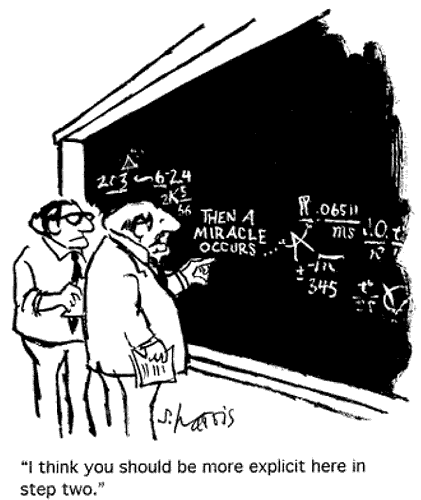
Cartoon – Wishful Thinking Not Enough

The White House is in the early stages of winding down its coronavirus task force, Vice President Pence’s office confirmed Tuesday.
The surprise decision comes as most states are preparing to loosen restrictions meant to slow the spread of the virus, while a number of areas continue to see increases in new COVID-19 cases and deaths.
Pence’s office confirmed to The Hill that the vice president told reporters at a limited briefing that his plan is to scale back the task force’s role by Memorial Day. Pence has been leading the task force since late February.
Members are likely to return to their respective departments and manage the coronavirus response from there.
Dr. Deborah Birx, who was brought in from the State Department to coordinate the White House virus response, will “continue to review and analyze data and work with the departments in agencies to help that data inform their decision making processes,” a spokesman for Pence’s office said.
The New York Times first reported on the expected demise of the task force.
The task force, which includes nearly two dozen officials from various government agencies, held near-daily press briefings for more than a month but has been less visible in recent weeks as President Trump and others transition their focus to the economic consequences of the pandemic.
There have been no coronavirus task force briefings in more than a week, and the daily meetings have become less frequent. The group was scheduled to meet Tuesday afternoon.
But the decision to formally disband the task force is sure to raise concern among public health experts who have warned the coronavirus will likely be part of life in the U.S. until there is a widely available vaccine, which could take a year or longer to develop.
https://www.axios.com/coronavirus-west-virginia-first-case-ac32ce6d-5523-4310-a219-7d1d1dcb6b44.html

The pandemic is a long way from over, and its impact on our daily lives, information ecosystem, politics, cities and health care will last even longer.
The big picture: The novel coronavirus has infected more than 939,000 people and killed over 54,000 in the U.S., Johns Hopkins data shows. More than 105,000 Americans have recovered from the virus as of Sunday.
Lockdown measures: Demonstrators gathered in Florida, Texas and Louisiana Saturday to protest stay-at-home orders designed to protect against the spread of COVID-19, following a week of similar rallies across the U.S.
Catch up quick: Deborah Birx said Sunday that it “bothers” her that the news cycle is still focused on Trump’s comments about disinfectants possibly treating coronavirus, arguing that “we’re missing the bigger pieces” about how Americans can defeat the virus.

The coronavirus pandemic is shaking bedrock assumptions about U.S. exceptionalism. This is perhaps the first global crisis in more than a century where no one is even looking for Washington to lead.
As images of America’s overwhelmed hospital wards and snaking jobless lines have flickered across the world, people on the European side of the Atlantic are looking at the richest and most powerful nation in the world with disbelief.
“When people see these pictures of New York City they say, ‘How can this happen? How is this possible?’” said Henrik Enderlein, president of the Berlin-based Hertie School, a university focused on public policy. “We are all stunned. Look at the jobless lines. Twenty-two million,” he added.
“I feel a desperate sadness,” said Timothy Garton Ash, a professor of European history at Oxford University and a lifelong and ardent Atlanticist.
The pandemic sweeping the globe has done more than take lives and livelihoods from New Delhi to New York. It is shaking fundamental assumptions about American exceptionalism — the special role the United States played for decades after World War II as the reach of its values and power made it a global leader and example to the world.
Today it is leading in a different way: More than 840,000 Americans have been diagnosed with Covid-19 and at least 46,784 have died from it, more than anywhere else in the world.
As the calamity unfolds, President Trump and state governors are not only arguing over what to do, but also over who has the authority to do it. Mr. Trump has fomented protests against the safety measures urged by scientific advisers, misrepresented facts about the virus and the government response nearly daily, and this week used the virus to cut off the issuing of green cards to people seeking to emigrate to the United States.
“America has not done badly, it has done exceptionally badly,” said Dominique Moïsi, a political scientist and senior adviser at the Paris-based Institut Montaigne.
The pandemic has exposed the strengths and weaknesses of just about every society, Mr. Moïsi noted. It has demonstrated the strength of, and suppression of information by, an authoritarian Chinese state as it imposed a lockdown in the city of Wuhan. It has shown the value of Germany’s deep well of public trust and collective spirit, even as it has underscored the country’s reluctance to step up forcefully and lead Europe.
And in the United States, it has exposed two great weaknesses that, in the eyes of many Europeans, have compounded one another: the erratic leadership of Mr. Trump, who has devalued expertise and often refused to follow the advice of his scientific advisers, and the absence of a robust public health care system and social safety net.
“America prepared for the wrong kind of war,” Mr. Moïsi said. “It prepared for a new 9/11, but instead a virus came.”
“It raises the question: Has America become the wrong kind of power with the wrong kind of priorities?” he asked.
Ever since Mr. Trump moved into the White House and turned America First into his administration’s guiding mantra, Europeans have had to get used to the president’s casual willingness to risk decades-old alliances and rip up international agreements. Early on, he called NATO “obsolete” and withdrew U.S. support from the Paris climate agreement and the Iran nuclear deal.
But this is perhaps the first global crisis in more than a century where no one is even looking to the United States for leadership.
In Berlin, Germany’s foreign minister, Heiko Maas, has said as much.
China took “very authoritarian measures, while in the U.S., the virus was played down for a long time,” Mr. Maas recently told Der Spiegel magazine.
“These are two extremes, neither of which can be a model for Europe,” Mr. Maas said.
America once told a story of hope, and not just to Americans. West Germans like Mr. Maas, who grew up on the front line of the Cold War, knew that story by heart, and like many others in the world, believed it.
But nearly three decades later, America’s story is in trouble.
The country that helped defeat fascism in Europe 75 years ago next month, and defended democracy on the continent in the decades that followed, is doing a worse job of protecting its own citizens than many autocracies and democracies.
There is a special irony: Germany and South Korea, both products of enlightened postwar American leadership, have become potent examples of best practices in the coronavirus crisis.
But critics now see America failing not only to lead the world’s response, but letting down its own people as well.
“There is not only no global leadership, there is no national and no federal leadership in the United States,” said Ricardo Hausmann, director of the Growth Lab at Harvard’s Center for International Development. “In some sense this is the failure of leadership of the U.S. in the U.S.”
Of course, some countries in Europe have also been overwhelmed by the virus, with the number of dead from Covid-19 much higher as a percentage of the population in Italy, Spain and France than in the United States. But they were struck sooner and had less time to prepare and react.
The contrast between how the United States and Germany responded to the virus is particularly striking.
While Chancellor Angela Merkel has been criticized for not taking a forceful enough leadership role in Europe, Germany is being praised for a near-textbook response to the pandemic, at least by Western standards. That is thanks to a robust public health care system, but also a strategy of mass testing and trusted and effective political leadership.
Ms. Merkel has done what Mr. Trump has not. She has been clear and honest about the risks with voters and swift in her response. She has rallied all 16 state governors behind her. A trained physicist, she has followed scientific advice and learned from best practice elsewhere.
Not long ago, Ms. Merkel was considered a spent force, having announced that this would be her last term. Now her approval ratings are at 80 percent.
“She has the mind of a scientist and the heart of a pastor’s daughter,” Mr. Garton Ash said.
Mr. Trump, in a hurry to restart the economy in an election year, has appointed a panel of business executives to chart a course out of the lockdown.
Ms. Merkel, like everyone, would like to find a way out, too, but this week she warned Germans to remain cautious. She is listening to the advice of a multidisciplinary panel of 26 academics from Germany’s national academy of science. The panel includes not just medical experts and economists but also behavioral psychologists, education experts, sociologists, philosophers and constitutional experts.
“You need a holistic approach to this crisis,” said Gerald Haug, the academy’s president, who chairs the German panel. “Our politicians get that.”
A climatologist, Mr. Haug used to do research at Columbia University in New York.
The United States has some of the world’s best and brightest minds in science, he said. “The difference is, they’re not being listened to.”
“It’s a tragedy,” he added.
Some cautioned that the final history of how countries fare after the pandemic is still a long way from being written.
A pandemic is a very specific kind of stress test for political systems, said Mr. Garton Ash, the history professor. The military balance of power has not shifted at all. The United States remains the world’s largest economy. And it was entirely unclear what global region would be best equipped to kick-start growth after a deep recession.
“All of our economies are going to face a terrible test,” he said. “No one knows who will come out stronger at the end.”
Benjamin Haddad, a French researcher at the Atlantic Council, wrote that while the pandemic was testing U.S. leadership, it is “too soon to tell” if it would do long-term damage.
“It is possible that the United States will resort to unexpected resources, and at the same time find a form of national unity in its foreign policy regarding the strategic rivalry with China, which it has been lacking until now,” Mr. Haddad wrote.
There is another wild card in the short term, Mr. Moïsi pointed out. The United States has an election in November. That, and the aftermath of the deepest economic crisis since the 1930s, might also affect the course of history.
The Great Depression gave rise to America’s New Deal. Maybe the coronavirus will lead the United States to embrace a stronger public safety net and develop a national consensus for more accessible health care, Mr. Moïsi suggested.
“Europe’s social democratic systems are not only more human, they leave us better prepared and fit to deal with a crisis like this than the more brutal capitalistic system in the United States,” Mr. Moïsi said.
The current crisis, some fear, could act like an accelerator of history, speeding up a decline in influence of both the United States and Europe.
“Sometime in 2021 we come out of this crisis and we will be in 2030,” said Mr. Moïsi. “There will be more Asia in the world and less West.”
Mr. Garton Ash said that the United States should take an urgent warning from a long line of empires that rose and fell.
“To a historian it’s nothing new, that’s what happens,” said Mr. Garton Ash. “It’s a very familiar story in world history that after a certain amount of time a power declines.”
“You accumulate problems, and because you’re such a strong player, you can carry these dysfunctionalities for a long time,” he said. “Until something happens and you can’t anymore.”


In the midst of this pandemic, science is suffering from low standards for some research, a new study argues.
The big picture: Science — which is slow, methodical and redundant — isn’t necessarily made for the immediacy and acute public interest brought on by a health crisis.
What’s happening: A new study out today in the journal Science warns many of the clinical trials and studies first published about treatments and other issues involving the current pandemic were designed poorly or had other issues that affected their outcomes.
Yes, but: While the pandemic is exacerbating these problems with misinformation and lax research standards, it isn’t the cause of them.
What’s next: Many of these issues around varying standards of research and communication could be remedied through better communication among researchers and the agencies funding their work.
%2Farc-anglerfish-washpost-prod-washpost%2FCKHPZTEE3EI6VANDS2IMTCARCE.jpg&w=908)
Gradually opening things up will take even longer — and probably will vary considerably from state to state.
Governors are feeling pressure from two sides. Many troubling questions about the coronavirus remain unanswered, such as how to get more Americans tested and whether the United States even has enough capacity to track and isolate virus cases. At the same time, they’re feeling immense pressure to restart economic activity, with tens of millions of Americans out of work and the country stuck in a deepening economic crater.
Yesterday the National Governors Association released a 10-point guide for states. The first point is to make coronavirus testing broadly available. It urges states to improve surveillance to detect outbreaks, ensure hospitals are equipped to respond to surges and create a plan to reopen in stages.
%2Farc-anglerfish-washpost-prod-washpost%2FOHHEEKEE2UI6VANDS2IMTCARCE.jpg&w=908)
Maryland Gov. Larry Hogan, chair of the National Governors Association. (Salwan Georges/The Washington Post)
The plan also warns states against opening prematurely.
“Opening without the tools in place to rapidly identify and stop the spread of the virus … could send states back into crisis mode, push health systems past capacity and force states back into strict social distancing measures,” it says.
Then there’s guidance from the Trump administration, which says states should first see a decrease in confirmed coronavirus cases over a 14-day period. That guidance is in line with what public health experts have recommended — although Trump has also frequently suggested he’d like to see states open sooner.
Some, like Trump, are chomping at the bit. Georgia Gov. Brian Kemp (R) is allowing businesses including gyms and barber shops to reopen on Friday. Colorado Gov. Jared Polis (D) has said some businesses may reopen on Monday, and retailers can have a limited number of in-store shoppers starting May 1.
%2Farc-anglerfish-washpost-prod-washpost%2FYJLSDFUDMQI6VANDS2IMTCARCE.jpg&w=908)
Polis puts on a Denver Broncos face mask during a news conference on Monday. (David Zalubowski/AP)
Other governors are much more cautious. Virginia Gov. Ralph Northam (D), for example, has issued a stay-at-home order in effect until June 10. California Gov. Gavin Newsom (D) declined yesterday to name a date for easing restrictions, saying the state hasn’t reached its six goals before reopening the economy.
Newsom, however, did indicate progress has been made with his detailed playbook for reopening the state. After a phone conversation with Trump, the governor said the two had agreed to significantly ramp up testing across California, with hundreds of thousands of new swabs on the way and 86 new testing sites opening.
But virtually every governor is working on plans, some in coordination with other governors, on how to shape the post-quarantine world.
Georgia: Certain businesses may open on Friday; theaters and restaurants can reopen on Monday. Bars, nightclubs and music venues will remain closed; schools have been closed through the end of the school year.
Kemp explained his decision to reopen tanning salons, barber shops, massage parlors and bowling alleys, saying on Monday: “I see the terrible impact of covid-19 on public health as well as the pocketbook.” Kemp said he will urge businesses to take precautions, such as screening for fevers, spacing workstations apart and having workers wear gloves and masks “if appropriate,” my Washington Post colleagues William Wan, Carolyn Y. Johnson and Joel Achenbach report.
“Georgia, according to some models, is one of the last states that should be reopening,” they write. “The state has had more than 830 covid-19 deaths. It has tested fewer than 1 percent of its residents — low compared with other states and the national rate. And the limited amount of testing so far shows a high rate of positives, at 23 percent.”
Trump blasted Kemp’s decision during his briefing last night, saying it violates his administration’s phase 1 guidelines for when to reopen.
Colorado: Polis is allowing the state’s stay-at-home order to expire Sunday, after which the state will gradually reopen businesses. Starting May 4, nonessential offices may have 50 percent of their workforce at the site, although large workplaces will be advised to conduct symptom and temperature checks.
Polis has warned the restrictions won’t all be lifted at the same time.
“The virus will be with us,” he said earlier this month. “We have to find a sustainable way that will be adapted in real time to how we live with it.”
South Carolina: Gov. Henry McMaster (R) said Monday he was allowing nonessential businesses such as department stores and retailers to open, followed by beaches on Tuesday.
But businesses must follow three rules for operating: They must limit the number of customers in the store; require patrons to be six feet apart; and follow sanitation guidelines from the Centers for Disease Control and Prevention.
“I urge everyone to remember we are still in a very serious situation,” McMaster said at a news conference. “We know that this disease, this virus, spreads easily, and we know it is deadly. So we must be sure that we continue to be strict and disciplined with our social discipline and taking care not to infect others.”
Tennessee: Gov. Bill Lee (R) said he plans to allow some businesses to reopen once his “safer-at-home” order expires in one week. But the state’s biggest cities will make their own reopening determinations. Lee has appointed a 30-member economic recovery group to create a plan.
Lee, along with Kemp and McMaster, have met with the governors of Mississippi, Alabama and Florida to consider how to reopen their economies in a coordinated way in the country’s southeast region. The number of new cases and deaths in Florida has leveled off somewhat — something the state’s governor, Ron DeSantis (R), has been pointing to as he urges a speedy reopening in his state.
The president took issue with the portrayal of comments from Redfield following an interview with our Post colleague Lena H. Sun. In that interview, Redfield warned that a second wave of the coronavirus could be worse than the current one.
“There’s a possibility that the assault of the virus on our nation next winter will actually be even more difficult than the one we just went through,” Redfield told Lena. He added: “We’re going to have the flu epidemic and the coronavirus epidemic at the same time.”
The president again repeated the claim at his daily White House coronavirus task force briefing – this time, with Redfield standing awkwardly next to him.
But Redfield also sought to “soften his words as the president glowered next to him,” Lena, Ashley Parker, Josh Dawsey and Yasmeen Abutaleb write.
“The remarkable spectacle provided another illustration of the president’s tenuous relationship with his own administration’s scientific and public health experts, where the unofficial message from the Oval Office is an unmistakable warning: Those who challenge the president’s erratic and often inaccurate coronavirus views will be punished — or made to atone,” they write.
It’s apparent “Trump is again bristling at a health official offering too dire a scenario,” our colleague Aaron Blake writes. He points out that Trump was set off a previous time when another top CDC official warned in February that the spread of the coronavirus was inevitable.
Rick Bright, previously the director of the Biomedical Advanced Research and Development Authority, said he was dismissed and pushed into a narrower role after he called for strictly vetting supposed treatments like anti-malarials repeatedly embraced publicly by the president.
“I believe this transfer was in response to my insistence that the government invest the billions of dollars allocated by Congress to address the Covid-19 pandemic into safe and scientifically vetted solutions, and not in drugs, vaccines and other technologies that lack scientific merit,” Bright said in a statement, according to the New York Times’s Michael D. Shear and Maggie Haberman.
He added: “I am speaking out because to combat this deadly virus, science — not politics or cronyism — has to lead the way.”
The president was asked about Bright during last night’s briefing and whether the official was pushed out.
“Maybe he was and maybe he wasn’t. I don’t know who he is,” Trump responded.
In late January, days after the first coronavirus case was confirmed in the United States, Azar told Trump in a meeting the coronavirus spread was “under control,” the Wall Street Journal’s Rebecca Ballhaus and Stephanie Armour report. Azar also told the president more than a million diagnostic tests would be available in weeks and that it was the “fastest we’ve ever created a test.”
These promises didn’t pan out.
“Six weeks after that Jan. 29 meeting, the federal government declared a national emergency and issued guidelines that effectively closed down the country,” Rebecca and Stephanie write. “Mr. Azar, who had been at the center of the decision-making from the outset, was eventually sidelined.”
There were numerous factors that slowed the administration’s initial coronavirus response, but “interviews with more than two dozen administration officials and others involved in the government’s coronavirus effort show that Mr. Azar waited for weeks to brief the president on the threat, oversold his agency’s progress in the early days and didn’t coordinate effectively across the health-care divisions under his purview,” they report.
Earlier this year, Azar tapped an aide to lead HHS’s day-to-day coronavirus response who had joined the agency after running a dog-breeding business for six years.
The aide, Brian Harrison, was derisively called “the dog breeder” by some within the White House, Reuters’s Aram Roston and Marisa Taylor report.
“Azar’s optimistic public pronouncement and choice of an inexperienced manager are emblematic of his agency’s oft-troubled response to the crisis,” they add. “… Harrison, 37, was an unusual choice, with no formal education in public health, management, or medicine and with only limited experience in the fields. In 2006, he joined HHS in a one-year stint as a ‘Confidential Assistant’ to Azar, who was then deputy secretary. He also had posts working for Vice President Dick Cheney, the Department of Defense and a Washington public relations company.”
Doctors are learning that covid-19, once believed to be a straightforward respiratory virus, is much more frightening. Since the earlier waves of coronavirus cases, doctors have learned that the disease attacks not just lungs but kidneys, the heart, intestines, liver and the brain. Autopsies also have shown that some coronavirus patients lungs were filled with hundreds of microclots, our Post colleague Ariana Eunjung Cha reports.
“The problem we are having is that while we understand that there is a clot, we don’t yet understand why there is a clot,” said Lewis Kaplan, a University of Pennsylvania physician and head of the Society of Critical Care Medicine. “We don’t know. And therefore, we are scared.”
“In hindsight, there were hints blood problems had been an issue in China and Italy as well, but it was more of a footnote in studies and on information-sharing calls that had focused on the disease’s destruction of the lungs,” Ariana writes.
A study found 88 percent of 320 coronavirus patients on ventilators in New York state’s largest health system died.
It’s an uptick from pre-pandemic figures. “That compares with the roughly 80 percent of patients who died on ventilators before the pandemic, according to previous studies — and with the roughly 50 percent death rate some critical care doctors had optimistically hoped when the first cases were diagnosed,” Ariana reports.
The research, published in the journal JAMA, also notes many of the hospitalized had other conditions.
“The paper also found that of those who died, 57 percent had hypertension, 41 percent were obese and 34 percent had diabetes, which is consistent with risk factors listed by the Centers for Disease for Control and Prevention,” she adds. “Noticeably absent from the top of the list was asthma. As doctors and researchers have learned more about covid-19, the less it seems that asthma plays a dominant role in outcomes.”
There’s a growing chance of a second economic downturn if there’s another surge of the coronavirus or if there’s an increase in bankruptcies and defaults, our Post colleague Heather Long reports.
Instead of a V-shaped recovery, economists say, it is increasingly likely that the recovery will be W-shaped, in which there are improvements before another downturn later this year or in the following year. That possibility is “in part because creating a vaccine is likely to take at least a year and millions of Americans and businesses are piling up debt without an easy ability to repay it,” Heather writes.
“It could be triggered by reopening the economy too quickly and seeing a second spike in deaths from covid-19, the disease the coronavirus causes,” she adds. “… This could cause many businesses, which were barely hanging on, to close again. Many Americans could become even more afraid to venture out until a vaccine is found.”
“Pretending the world will return to normal in three months or six months is just wrong,” said Diane Swonk, chief economist at Grant Thornton, told The Post. “The economy went into an ice age overnight. We’re in a deep freeze. As the economy thaws, we’ll see the damage done as well. Flooding will occur.”
 HENRY KOTULA