Some countries have stockpiles. Others have nothing. Getting a vaccine means living in the right place — or knowing the right people.
A 16-year-old in Israel can get a vaccine.
So can a 16-year-old in Mississippi.
And an 18-year-old in Shanghai.
But a 70-year-old in Shanghai can’t get one. Older people are at high risk for severe illness from Covid-19. But Chinese officials have been reluctant to vaccinate seniors, citing a lack of clinical trial data. Neither can an 80-year-old in Kenya. Low vaccine supply in many countries means only health care employees and other frontline workers are eligible, not the elderly.
Nor a 90-year-old in South Korea. Koreans 75 and older are not eligible until April 1. Only health care workers and nursing-home residents and staff are currently being vaccinated. The government initially said it was awaiting assurances that the AstraZeneca vaccine was safe and effective for older groups.
Anyone in Haiti.
Anyone in Papua New Guinea.
Anyone in these 67 countries. These countries have not reported any vaccinations, according to Our World in Data. Official figures can be incomplete, but many countries are still awaiting their first doses.
It wasn’t supposed to be like this: Covax, the global vaccine-sharing initiative, was meant to prevent unequal access by negotiating vaccine deals on behalf of all participating nations. Richer nations would purchase doses through Covax, and poorer nations would receive them for free.
But rich nations quickly undermined the program by securing their own deals directly with pharmaceutical companies. In many countries, they have reserved enough doses to immunize their own multiple times over.
Anyone who can afford a smartphone or an internet connection in India and is over 60 can get one. Mostly wealthy Indians are being inoculated in New Delhi and Mumbai, hospitals have reported, since vaccine appointments typically require registering online. Less than half of India’s population has access to the internet, and even fewer own smartphones.
And anyone who can pay $13,000 and travel to the U.A.E. for three weeks and is 65 or older or can prove they have a health condition.
A member of Congress in the United States. Friends of the mayor of Manaus, Brazil. Lawmakers in Lebanon. A top-ranking military leader in Spain. The extended family of the deputy health minister in Peru. The security detail to the president of the Philippines. Government allies with access to a so-called “V.I.P. Immunization Clinic” in Argentina. Around the world, those with power and connections have often been first in line to receive the vaccine — or have cut the line altogether.
A smoker in Illinois can get one.But not a smoker in Georgia.
A diabetic in the United Kingdom can. A diabetic in Connecticut can’t.
Countries have prioritized different underlying health conditions, with the majority focusing on illnesses that may increase the risk of severe Covid-19. In the U.S., health issues granted higher priority differ from state to state, prompting some people to travel across state borders.
A pregnant woman in New York.Not a pregnant woman in Germany. Up to two close contacts of a pregnant woman in Germany. Pregnant women were barred from participating in clinical trials, prompting many countries to exclude them from vaccine priority groups. But some experts say the risks to pregnant women from Covid-19 are greater than any theoretical harm from the vaccines.
A grocery worker in Texas, no. A grocery worker in Oklahoma, yes.
Many areas aim to stop the virus by vaccinating those working in frontline jobs, like public transit and grocery stores. But who counts as essential depends on where you live.
A police officer in the U.K. A police officer in Kenya. A postal worker in California. A postal worker in North Carolina. A teacher in Belgium. A teacher in Campeche, Mexico. Other jobs have been prioritized because of politics: Mexico’s president made all teachers in the southern state of Campeche eligible in a possible bid to gain favor with the teacher’s union.
Medical staff at jails and prisons in Colombia. A correctional officer in Tennessee. A prisoner in Tennessee. A prisoner in Florida. The virus spread rapidly through prisons and jails, which often have crowded conditions and little protective equipment. But few places have prioritized inoculating inmates.
An undocumented farm worker in Southern California. A refugee living in a shelter in Germany. An undocumented immigrant in the United Kingdom. Britain has said that everyone in the country is eligible for the vaccine, regardless of their legal status.
A Palestinian in the West Bank without a work permit. Despite leading the world in per-capita vaccinations, Israel has so far not vaccinated most Palestinians, unless they have permits to work in Israel or settlements in the occupied West Bank.
An adult in Bogotá, Colombia. An adult in the Amazonian regions of Colombia that border Brazil. In most of Colombia, the vaccine is only available to health care workers and those over 80.
But the government made all adults in Leticia, Puerto Nariño, Mitú and Inírida eligible, hoping to prevent the variant first detected in Brazil from arriving in other areas. A police officer in Mexico City. A teacher in rural Mexico.The government of populist president Andrés Manuel López Obrador has prioritized vaccinating the poor and those in rural communities, despite the country’s worst outbreaks occurring in major cities.
Native populations not federally recognized in the United States. The pandemic has been particularly deadly for Native Americans. But only tribes covered by the Indian Health Service have received vaccine doses directly, leaving about 245 tribes without a direct federal source of vaccines. Some states, including Montana, have prioritized all Native populations.
Indigenous people living on official indigenous land in Brazil.
These 43 countries, mostly high income, are on pace to be done in a year. These 148 countries, mostly low income, are on pace to take until next year or even longer. Countries like the U.S. continue to stockpile tens of millions of vaccine doses, while others await their first shipments.
“The vaccine rollout has been inequitable, unfair, and dangerous in leaving so many countries without any vaccine doses at all,” said Gavin Yamey, director of Duke University’s Center for Policy Impact in Global Health.
“It’s a situation in which I, a 52-year-old white man who can work from home and has no pre-existing medical conditions, will be vaccinated far ahead of health workers or a high-risk person in a middle- or low-income country.”
The Supreme Court announced Thursday it will no longer hear oral arguments later this month on an appeal over the controversial Medicaid work requirements program in New Hampshire and Arkansas.
Legal experts say the move likely means the case won’t be heard this term and possibly may not be heard at all, especially with the Biden administration signaling a different approach to work requirements.
“By taking the cases off the docket, the court is signaling that it won’t hear them this term and probably that it’ll never hear them at all,” University of Michigan Law Professor Nicholas Bagley told Fierce Healthcare.
A major question mark,though, is whether the court will vacate the decisions by several appellate courts that upheld lower court rulings that the programs should be struck down.
“If the Supreme Court is not going to vacate the D.C. Circuit ruling, that means the decision on the books is one that clearly explains why work requirements are not permitted under the Medicaid statute,” said Rachel Sachs, associate professor of law at Washington University, in an interview with Fierce Healthcare.
She added that it is unlikely for the case to come back and “extremely unlikely that this issue will return in the near future.”
The Biden administration asked the court back in February to cancel the oral arguments originally scheduled for March 29. The administration said in a filing that allowing the requirements to take effect won’t promote the objectives of Medicaid to extend health insurance to low-income people.
President Joe Biden’s Department of Justice called for the court to vacate judgments of appeals courts and remand the case back to the Department of Health and Human Services so it can finish a review of all the waivers.
Arkansas Attorney General Leslie Rutledge said in a statement back in February that the legal filing seeking the delay was a “politically motivated stunt designed to avoid a Supreme Court decision upholding a program that encourages personal responsibility while still providing healthcare coverage for those seeking gainful employment.”
Arkansas’ work requirements program was installed in 2018 and led to approximately 18,000 people losing Medicaid coverage before the program was struck down by a federal judge.
Appellate courts upheld judgments from lower courts that New Hampshire and Arkansas’ programs did not meet the objectives of the Medicaid program. The states appealed to the Supreme Court, which agreed to hear the cases late last year.
Court rulings have also struck down programs in other states including Kentucky and Michigan. Kentucky pulled its program in 2019 after a Democrat was elected governor.
Arkansas and New Hampshire’s attorneys general did not return requests for comment on the Supreme Court’s decision Thursday.
The Affordable Care Act (ACA) made historic strides in expanding access to health insurance coverage by covering an additional 20 million Americans.President Joe Biden ran on a platform of building upon the ACA and filling in its gaps. With Democratic majority in the Senate, aspects of his health care plan could move from idea into reality.
The administration’s main focus is on uninsurance, which President Biden proposes to tackle in three main ways: providing an accessible and affordable public option, increasing tax credits to help lower monthly premiums, and indexing marketplace tax credits to gold rather than silver plans.
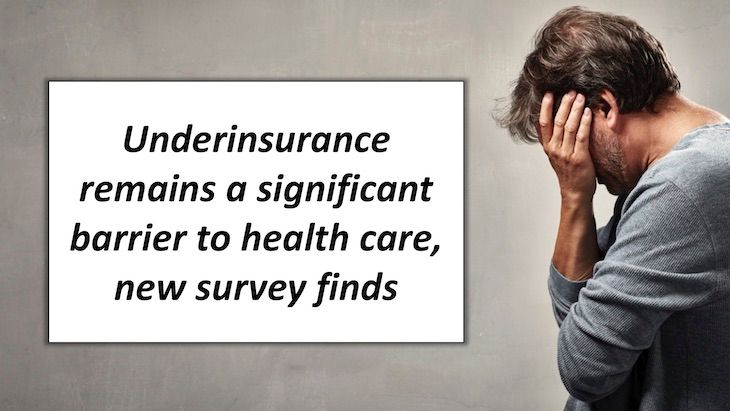
However, underinsurance remains a problem. Besides the nearly 29 million remaining uninsured Americans, over 40% of working age adults are underinsured, meaning their out-of-pocket cost-sharing, excluding premiums, are 5-10% of household income or more, depending on income level.
High cost-sharing obligations—especially high deductibles—means insurance might provide little financial protection against medical costs beneath the deductible. Bills for several thousand dollars could financially devastate a family, with the insurer owing nothing at all. Recent trends in health insurance enrollment suggest that uninsurance should not be the only issue to address.
A high demand for low premiums
Enrollment in high deductible health plans (HDHP) has been on a meteoric rise over the past 15 years, from approximately 4% of people with employer-sponsored insurance in 2006 to nearly 30% in 2019, leading to growing concern about underinsurance. “Qualified” HDHPs, which come with additional tax benefits, generally have lower monthly premiums, but high minimum deductibles. As of 2020, the Internal Revenue Service defines HDHPs as plans with minimum deductibles of at least $1,400 for an individual ($2,800 for families), although average annual deductibles are $2,583 for an individual ($5,335 for families).
A common prescription has been to expand access to Health Savings Accounts (HSAs), with employer and individual contributions offsetting higher upfront cost-sharing. Employers often contribute on behalf of their employees to HSAs, but for individuals in lower wage jobs without such benefits or without extra income to contribute themselves, the account itself may sit empty, rendering it useless.
A recent article in Health Affairs found that HDHP enrollment increased from 2007 to 2018 across all racial, ethnic, and income groups, but also revealed that low-income, Black, and Hispanic enrollees were significantly less likely to have an HSA, with disparities growing over time. For instance, by 2018, they found that among HDHP enrollees under 200% of the federal poverty level (FPL), only 21% had an HSA, while 52% of those over 400% FPL had an HSA. In short, the people who could most likely benefit from an HSA were also least likely to have one.
If trends in HDHP enrollment and HSA access continue, it could result in even more Americans who are covered on paper, yet potentially unable to afford care.
Addressing uninsurance could also begin to address underinsurance
President Biden’s health care proposal primarily addresses uninsurance by making it more affordable and accessible. This can also tangentially tackle underinsurance.
To make individual market insurance more affordable, Biden proposes expanding the tax credits established under the ACA. His plan calls for removing the 400% FPL cap on financial assistance in the marketplaces and lowering the limit on health insurance premiums to 8.5% of income. Americans would now be able to opt out of their employer plan if there is a better deal on HealthCare.gov or their state Marketplace. Previously, most individuals who had an offer of employer coverage were ineligible for premium subsidies—important for individuals whose only option might have been an employer-sponsored HDHP.
Biden also proposes to index the tax credits that subsidize premiums to gold plans, rather than silver plans as currently done.This would increase the size of these tax credits, making it easier for Americans to afford more generous plans with lower deductibles and out-of-pocket costs, substantially reducing underinsurance.
The most ambitious of Biden’s proposed health policies is a public option, which would create a Medicare-esque offering on marketplaces, available to anyone. As conceived in Biden’s proposal, such a plan would eliminate premiums and having minimal-to-no cost-sharing for low-income enrollees; especially meaningful for under- and uninsured people in states yet to expand Medicaid.
Moving forward: A need to directly address underinsurance
More extensive efforts are necessary to meaningfully address underinsurance and related inequities. For instance, the majority of persons with HDHPs receive coverage through an employer, where the employer shares in paying premiums, yet cost-sharing does not adjust with income as it can in the marketplace. Possible solutions range from employer incentives to expanding the scope of deductible-exempt services, which could also address some of the underlying disparities that affect access to and use of health care.
The burden of high cost-sharing often falls on those who cannot afford it, while benefiting employers, healthy employees, or those who can afford large deductibles. Instead of encouraging HSAs, offering greater pre-tax incentives that encourage employers to reabsorb some of the costs that they have shifted on their lower-income employees could prevent the income inequity gap from widening further.
Under the ACA, most health insurance plans are required to cover certain preventative services without patient cost-sharing. Many health plans also exempt other types of services from the deductible – from generic drugs to certain types of specialist visits – although these exemptions vary widely across plans. Expanding deductible-exempt services to include follow-up care or other high-value services could improve access to important services or even medication adherence without high patient cost burden. Better educating employees about what services are exempt would make sure that patients aren’t forgoing care that should be fully covered.
Health insurance is complicated. Choosing a plan is only the start. More affordable choices are helpful only if these choices are fully understood, e.g., the tradeoff between an HDHP’s lower monthly premium and the large upfront out-of-pocket cost when using care. Investing in well-trained, diverse navigators to help people understand how their options work with their budget and health care needs can make a big difference, given that low health insurance literacy is related to higher avoidance of care.
The ACA helped expand coverage, but now it’s time to make sure the coverage provided is more than an unused insurance card. The Biden administration has the opportunity and responsibility to make progress not only on reducing the uninsured rate, but also in reducing disparities in access and patient affordability.
Young adults were among the most likely to be uninsured prior to the Affordable Care Act, but the law’s Medicaid expansion had a significant impact on those rates, according to a new study.
Research published by Urban Institute, this week shows the uninsured rate for people aged 19 to 25 declined from 30% to 16% between 2011 and 2018, while Medicaid enrollment for this population increased from 11% to 15% in that window.
The coverage increases were felt most keenly between 2013 and 2016, when many of the ACA’s key tenets were carried out, including Medicaid expansion and the launch of the exchanges, according to the study.
“Before the ACA, adolescents in low-income households often aged out of eligibility for public health insurance coverage through Medicaid or the Children’s Health Insurance Program as they entered adulthood,” the researchers wrote. “Further, young adults’ employment patterns made them less likely than older adults to have an offer of employer-sponsored insurance coverage.”
States that expanded Medicaid saw greater declines in the number of young people without insurance, the study found.
On average, the uninsured rates among young people declined from nearly 28% in 2011 to 11% in 2018, according to the analysis. In non-expansion states, however, the uninsured rate decreased from about 33% to nearly 21%.
In expansion states, Medicaid enrollment for people aged 19 to 25 rose from 12% in 2011 to close to 21%, according to the study, while enrollment in non-expansion states remained flat.
Urban’s researchers estimate that Medicaid expansion is linked to a 3.6 percent point decline in uninsurance among young people overall, and had the highest impact on young Hispanic people. Uninsurance decreased by 6 percentage points among Hispanic young people, the study found, and that population had the largest uninsured rate prior to the ACA.
“The effects of Medicaid expansion on young adults’ health insurance coverage and health care access provide evidence of the initial pathways through which Medicaid expansions could improve young adults’ overall health and trajectories of health throughout adulthood,” the researchers wrote.
“Beyond coverage and access to preventive care, Medicaid expansion may affect young adults’ health care use in ways not examined in our report. Thus, ensuring young adults have health insurance coverage and access to affordable care is a critical first step toward long-term health,” they wrote.
Ahead of a Supreme Court hearing in March to consider the legality of imposing work requirements as a condition of gaining Medicaid coverage, the Centers for Medicare and Medicaid Services (CMS) were expected to inform states on Friday of plans to rescind the controversial Trump administration policy.
Under the previous administration, ten states had applied for and were approved to use waiver authority to impose work requirements on Medicaid enrollees, and several other states were in the process of submitting applications. Critics (including us) have long held that such requirements, while nominally intended to introduce an element of “personal responsibility” to the safety-net coverage program for low-income Americans, actually serve to hinder access to care, and jeopardize the health status of already vulnerable populations; in addition, the added expense of program infrastructure often exceeds anticipated cost savings.
The policy was a favored project of former CMS administrator Seema Verma, who helped craft a similar program for the state of Indiana before joining the Trump administration. Among states granted waiver authority to impose work requirements, only Arkansas ever fully implemented the policy, before the legality of the waivers was challenged successfully in lower courts.
The Biden administration’s recision of work requirements is part of a broader reversal of Trump-era healthcare policies. This week the Justice Department notified the Supreme Court that it was switching sides in the closely watched case questioning the constitutionality of the Affordable Care Act (ACA), although the court has already heard the case and is expected to rule this spring. Starting Monday, the Biden team will also reopen the federal insurance marketplace for a special enrollment period, bolstering funding for outreach to ensure those eligible are aware of coverage options. And as part of its proposed COVID relief legislation, the administration plans toincrease subsidies to help individuals buy coverage on the exchanges, and to increase funding to support state Medicaid programs—policies that got a boost this week from a broad coalition of healthcare industry groups, including health plans, doctors, and hospitals.
As the administration rounds out its health policy team, we’d expect a continuedfocus on strengthening the core pillars of the ACA, along with a greater focus on ensuring health equity and addressing disparities. Meanwhile, two key positions remain unfilled: CMS administrator and commissioner of the Food and Drug Administration (FDA). These slots will likely remain open until the looming confirmation battle over Biden’s nominee for Secretary of Health and Human Services (HHS), California Attorney General Xavier Becerra, has been settled.
Early data on vaccine distribution by race and ethnicity show a mismatch between those population groups receiving the vaccine, and those that have been hardest hit by the pandemic. As the graphic above shows, Black and Hispanic Americans have thus far been vaccinated at considerably lower rates in many states compared to their share of population as a whole—and these disparities are likely to worsen as states shift focus to senior populations for priority access, moving away from prioritizing essential workers, who tend to be more racially diverse.
The White population skews older, which stands to widen disparities in the near-term. Another compounding issue: vaccine hesitancy.
A recent Morning Consult poll found that, despite an overall increase in overall vaccine willingness, Black Americans remain the most hesitant, with only 48 percent willing to get the vaccine.
Meanwhile, Black and Hispanic Americans continue to be disproportionately impacted by COVID, with hospitalization and death rates nearly three to four times greater than those of White Americans.
Hesitancy will become an increasingly urgent problem as larger swathes of the population become eligible for vaccination, especially given that communities of color tend to be younger, as shown above.
Norma Leiva, a Food 4 Less warehouse manager, waits Saturday to be let into work in Panorama City, Calif. The state’s decision to expand vaccine eligibility to millions of older residents has stark consequences for communities of color disproportionately affected by the pandemic.
As a warehouse manager at a Food 4 Less in Los Angeles, Norma Leiva greets delivery drivers hauling in soda and chips and oversees staff stocking shelves and helping customers. At night, she returns to the home she shares with her elderly mother-in-law, praying the coronavirus isn’t traveling inside her.
A medical miracle at the end of last year seemed to answer her prayers: Leiva, 51, thought she was near the front of the line to receive a vaccine, right after medical workers and people in nursing homes. Now that California has expanded eligibility to millions of older residents — in a bid to accelerate the administration of the vaccines — she is mystified about when it will be her turn.
“The latest I’ve heard is that we’ve been pushed back. One day I hear June, another mid-February,” said Leiva, whose sister, also in the grocery business, was sickened last year with the virus, which has pummeled Los Angeles County — the first U.S. county to record 1 million cases. “I want the elderly to get it because I know they’re in need of it, but we also need to get it, because we’re out there serving them. If we’re not healthy, our community’s not healthy.”
Delaying vaccinations for front-line workers, especially food and grocery workers, has stark consequences for communities of color disproportionately affected by the pandemic. “In the job we do,” Leiva said, “we are mostly Blacks and Hispanics.”
Many states are trying to speed up a delayed and often chaotic rollout of coronavirus vaccines by adding people 65 and older to near the front of the line. But that approach is pushing others back in the queue, especially because retired residents are more likely to have the time and resources to pursue hard-to-get appointments. As a result, workers who often face the highest risk of exposure to the virus will be waiting longer to get protected, according to experts, union officials and workers.
The shifting priorities illuminate political and moral dilemmas fundamental to the mass vaccination campaign: whether inoculations should be aimed at rectifying racial disparities, whether the federal government can apply uniform standards and whether local decision-making will emphasize more than ease of administration.
Speed has become all the more critical with the emergence of highly transmissible variants of the virus. Only by performing 3 million vaccinations a day — more than double the current rate — can the country stay ahead of the rapid spread of new variants, according to modeling conducted by Paul Romer, a Nobel Prize-winning economist.
People with appointments wait in line to receive coronavirus vaccine in Los Angeles.
But low-wage workers without access to sick leave are among those most likely to catch and transmit new variants, said Richard Besser, president of the Robert Wood Johnson Foundation and former acting director of the Centers for Disease Control and Prevention. Because there are not enough doses of the vaccines to immunize front-line workers and everyone over 65, he said, officials should carefully weigh combating the pernicious effects of the virus on communities of color against the desire to expedite the rate of inoculation.
“If the obsession is over the number of people vaccinated,” Besser said, “we could end up vaccinating more people, while leaving those people at greatest risk exposed to ongoing rates of infection.”
The move to broaden vaccine availability to a wider swath of the elderly population — backed by Trump administration officials in their final days in office and members of President Biden’s health team — marks a departure from expert guidance set forth in December, as the vaccine rollout was getting underway.
A panel of experts advising the CDC recommended that the second priority group include front-line essential workers, along with adults 75 and older. The guidance represented a compromise between the desire to shield people most likely to catch and transmit the virus — because they cannot socially distance or work from home — and the effort to protect people most prone to serious complications and death.
People of color and immigrants are overrepresented not just in grocery jobs but also in meatpacking, public transit and corrections facilities, where outbreaks have taken a heavy toll. Black and Latino Americans are three to four timesmore likely than White people to be hospitalized and almost three times more likely to die of covid-19, the illness caused by the coronavirus, according to the CDC.
The desire to make vaccine administration equitable was central to recommendations from the Advisory Committee on Immunization Practices.
“We cannot abandon equity because it’s hard to measure and it’s hard to do,” Grace Lee, a committee member and a pediatrics professor at Stanford University’s School of Medicine, said at the time.
On Wednesday at a committee meeting, Lee said officials need both efficiency and equity to “ensure that we are accountable for how we’re delivering vaccine.”
“Absolutely agree we do not want any doses in freezers or wasted in any way,” Lee said.
But efficiency has won out in most places.
Some state leaders, such as Florida Gov. Ron DeSantis (R) and Texas Gov. Greg Abbott (R), acted on their own, lowering the age threshold to 65 soon after distribution began last year. Others followed with the blessing of top federal officials.
Biden’s advisers have said equity will be central to their efforts, calling access in underserved communities a “moral imperative” and promising, in a national vaccination strategy document, “we remain focused on building programs to meet the needs of hard-to-reach and high-risk populations.” In the meantime, they have similarly encouraged states to broaden vaccine availability to a larger segment of their older populations without providing guidance about how to ensure front-line workers remain a priority.
Experts studying health disparities say prioritizing people over 65 disproportionately favors White people, because people of color, especially Black men, tend to die younger, owing to racism’s effect on physical health. Twenty percent of White people are 65 or over, while just 9 percent of people of color are in that age group, according to federal figures.
“People are thinking about risk at an individual level as opposed to at a structural level. People are not understanding that where you work and where you live can actually bring more risks than your age,” said Camara Phyllis Jones, a family physician, epidemiologist and past president of the American Public Health Association. “It’s worse than I thought.”
The constantly changing priorities have made the uneven rollout all the more difficult to navigate. There is confusion over when, where and how to get shots, with different jurisdictions taking different approaches in an illustration of the nation’s decentralized public health system.
While praising the effort to expand access and speed up the administration of shots, Marc Perrone, president of the United Food and Commercial Workers International Union, said increasing reliance on age-based eligibility “must not come at the expense of the essential workers helping families put food on the table during this crisis.
“Public health officials must work with governors in all 50 states to end the delays and act swiftly to distribute the vaccine to grocery and meatpacking workers on the front lines, before even more get sick and die,” he said.
Mary Kay Henry, president of the Service Employees International Union, said the only way to ensure front-line workers get the vaccines they need is to involve them and their union representatives in decisions about eligibility and access. Unions, she said, could also be tapped to conduct outreach in hard-to-reach communities, including those not conversant in English.
“Essential workers who’ve been on the front lines both in health care but also across the service and care sectors — child care, airline, janitorial, security — face extraordinary risk,” she said.
Leiva, a 33-year member of UFCW Local 770, said the celebration of essential workers should come with recognition of their sacrifice, which is unevenly felt across racial groups. When the virus tore through the grocery store, she said, “every single one of them in that cluster was Hispanic.”
But with hospitals dangerously full in recent weeks, and less than half of distributed vaccine doses administered, many states broadened their top priority groups to include older adults, hoping to lessen the burden on hospitals and expedite vaccine administration.
Leiva is concerned about bringing the coronavirus into the home she shares with her elderly mother-in-law. She wants the elderly to receive the vaccine, “but we also need to get it, because we’re out there serving them. If we’re not healthy, our community’s not healthy.”
Protecting people 65 and older, officials say, saves the lives of those who face the gravest consequences and reduces the stress on intensive care units. Risk for severe covid-19 illness increases with age; 8 out of 10 deaths reported in the United States have been in people 65 and older.
Older people in the United States have also encountered enormous hurdles in gaining access to the vaccines. Faced with overloaded sign-up websites and jammed phone lines, they have sometimes spent nights waiting in line.
In more than half the states — at least 28, by one count — people 65 and older are in the top two priority groups, behind health-care workers and residents in long-term care facilities. As a result, front-line workers either fall behind the older group or are squeezed into the same pool, according to a Kaiser Family Foundation analysis.
“When you make that pool of eligible people much bigger, you’re creating much longer wait times for some of these groups,” said Jennifer Kates, a senior vice president at the foundation.
Front-line workers often labor in crowded conditions. Some live in multigenerational households. By contrast, many older adults are retired, have greater access to sign-up portals and have more time to wait in lines outside of clinics, health officials said.
People wait in line for coronavirus vaccine at a Sarasota, Fla., health department clinic.
“The 65-year-old person who is wealthier and can stay home and isn’t working and is retired and can ride it out for another two months … is less likely to get infected than the person who has to go outside every day for work,” said Roberto B. Vargas, assistant dean for health policy at Charles R. Drew University of Medicine and Science in Los Angeles.
In California, Gov. Gavin Newsom (D) announced Jan. 13 that the state was “significantly increasing our efforts to get these vaccines administered, get them out of freezers and get them into people’s arms” by increasing the number of people eligible to receive shots. “Everybody 65 and over — about 6.6 million Californians — we are now pulling into the tier to make available vaccines.”
On Jan. 25, Newsom said the state would move to an age-based eligibility system after vaccinating those now at the front of the line, including health-care workers, food and agriculture workers, teachers, emergency personnel and seniors 65 and older.
The abrupt changes confused local health officials.
Julie Vaishampayan, public health officer in San Joaquin Valley’s Stanislaus County, said the county had just finished vaccinating health-care workers and was getting ready to reach out to farm laborers at a tomato-packing company and food-processing workers. When the state added those 65 and older, the county had to pivot abruptly,as it faced a quintessential supply-and-demand dilemma.
“There isn’t enough vaccine to do it all, so how do we balance?” she said in an email. “This is really hard.”
In Tennessee, teachers were initially promised access but then were told to wait until people 70 and older got their shots. The state’s health commissioner, Lisa Piercey, said she was moving more gradually through the age gradations so as not to crowd out workers, treating the federal framework as guidance, which is often how officials have characterized it. “It’s not an either/or situation,” she said in an interview this month.
Keyona Simms puts a hat on Nylah Cooper, 2, at a day-care center in Baltimore. Day-care staff are considered essential workers in many states.
But with vaccine supply sharply limited, priorities had to be narrowed. By vaccinating older residents, she said, the state was also protecting its medical infrastructure by reducing the likelihood that older people, who are more likely to be hospitalized, would fall ill. Once there is more supply, she said, she would be able to amplify aspects of the state’s planning geared toward underserved and hard-to-reach populations. “I can’t wait to manifest that equity plan.”
In Nebraska, the health department in Douglas County, which includes Omaha, prioritized older residents over “critical industry workers who can’t work remotely” after the state expanded eligibility to residents 65 and older, according to a January news release. Meatpacking workers, grocery store employees, teachers and public transit workers were bumped lower in line.
Omaha’s teachers union had wanted its approximately 4,100 members to get shots before the district resumes full-time, in-person instruction for elementary and middle school students Tuesday. Now, they must wait until late spring, said Robert Miller, president of the Omaha Education Association.
“The fear, it goes hand in glove with going back to school five days a week,” he said, despite CDC reports that schools operating in person have seen scant transmission. “We’ve had some teachers who have multigenerational homes, who live in the basement, … and they can’t interact with their parents. We have some teachers who are staying at a different apartment away from their elder loved ones.”
Some state leaders sought to defend broadening eligibility to more of the elderly population, saying it was consistent with efforts to address racial disparities. Illinois had reduced the age requirement to 65, Gov. J.B. Pritzker (D) said recently, “in order to reduce covid-19 mortality and limit community spread in Black and Brown communities.” His office did not respond to a request for comment about how lowering the age threshold would have that effect.
In Massachusetts, state leaders announced Jan. 25 that people 65 and older and those with at least two high-risk medical conditions were next in line, ahead of educators and workers in transit, utility, food and agriculture, sanitation, and public works and public health.
That means Dorothy Williams, who runs a day-care center in a predominantly Black community where the infection rate is among the highest in Boston, has to wait. Her center stayed open throughout the pandemic, caring for children of essential workers, many of them in low-wage jobs in hospitals or nursing homes.
She recognizes the long hours and the exposure risks of those health-care aides. That means “we’re exposed,” she said, “each and every single day.” She has been able to keep the coronavirus at bay, but two weeks ago, she had a scare that forced her to close and get everyone tested after a child became ill. The tests came back negative, but the fear remains.
“And we believe that we’ll soon be able to confirm the purchase of an additional 100 million doses for each of the two FDA-authorized vaccines: Pfizer and Moderna,” Biden said. “That’s 100 million more doses of Pfizer and 100 million more doses of Moderna — 200 million more doses than the federal government had previously secured. Not in hand yet, but ordered. We expect these additional 200 million doses to be delivered this summer.”
After review of the current vaccine supply from manufacturing plants, the federal government believes it can increase overall weekly vaccination distribution to states, tribes, and territories from 8.6 million doses to a minimum of 10 million doses, starting next week.
But the pandemic is expected to get worse before it gets better, Biden said, with experts predicting the death toll as likely to top 500,000 by the end of February.
“But the brutal truth is: It’s going to take months before we can get the majority of Americans vaccinated. Months. In the next few months, masks — not vaccines — are the best defense against COVID-19,” he said.
WHY THIS MATTERS
The increases in the total vaccine order in the United States from 400 million ordered to 600 million doses will be enough vaccine to fully vaccinate 300 Americans by the end of the summer or the beginning of fall, Biden said.
“It’ll be enough to fully vaccinate 300 [million] Americans to beat this pandemic — 300 million Americans,” he said. “And this is an aggregate plan that doesn’t leave anything on the table or anything to chance, as we’ve seen happen in the past year.”
Biden’s team said they found the vaccine program to be in worse shape than they thought it would be and that they were starting from scratch.
“But it’s also no secret that we have recently discovered, in the final days of the transition — and it wasn’t until the final days we got the kind of cooperation we needed — that once we arrived, the vaccine program is in worse shape than we anticipated or expected,” Biden said.
Governors have been guessing at what they’ll receive for vaccine shipments, the president said.
The federal government is working with the private industry to ramp up production of vaccine and protective equipment such as syringes, needles, gloves, swabs and masks. The team has already identified suppliers and is working with them to move the plan forward.
Also, the Federal Emergency Management Agency is being directed to to stand up the first federally-supported community vaccination centers and to make vaccines available to thousands of local pharmacies beginning in early February.
THE LARGER TREND
Last week, Biden signed a declaration to begin reimbursing states 100% for the use of their National Guard to help the COVID-19 relief effort, both in getting sites set up and in using some of their personnel to administer the vaccines.
Biden has also said he wants to expand testing, which will help reopen schools and businesses.
He has formalized the Health Equity Task Force to ensure that the most vulnerable populations have access to vaccines.
He is also pushing for a $1.9 trillion relief package.
Hardly one month into 2021, the pressing priorities facing healthcare leaders are abundantly clear.
First, we will be living in a world preoccupied by COVID-19 and vaccination for many months to come. Remember: this is a marathon, not a sprint. And the stark reality is that the vaccination rollout will continue well into the summer, if not longer, while at the same time we continue to care for hundreds of thousands of Americans sickened by the virus. Despite the challenges we face now and in the coming months in treating the disease and vaccinating a U.S. population of 330 million, none of us should doubt that we will prevail. Despite the federal government’s missteps over the past year in managing and responding to this unprecedented public health crisis, historians will recognize the critical role of the nation’s healthcare community in enabling us to conquer this once-in-a-generation pandemic.
While there has been an overwhelming public demand for the vaccine during the past couple of weeks, there remains some skepticism within the communities we serve, including some of the most-vulnerable populations, so healthcare leaders will find themselves spending time and energy communicating the safety and efficacy of vaccines to those who may be hesitant. This is a good thing. It is our responsibility to share facts, further public education and influence public policy.COVID-19 has enhanced public trust in healthcare professionals, and we can maintain that trust if we keep our focus on the right things — namely, how we improve the health of our communities.
And as healthcare leaders diligently balance this work, we also have a great opportunity to reimagine what our hospitals and health systems can be as we emerge from the most trying year of our professional lifetimes. How do you want your hospital or system organized? What kind of structural changes are needed to achieve the desired results? What do you really want to focus on? Amid the pressing priorities and urgent decision-making needed to survive, it is easy to overlook the great reimagination period in front of us. The key is to forget what we were like before COVID-19 and reflect upon what we want to be after.
These changes won’t occur overnight. We’ll need patience, but here are my thoughts on five key questions we need to answer to get the right results.
1. How do you enhance productivity and become more efficient? Throughout 2021, most systems will be in recovery mode from COVID’s financial bruises. Hospitals saw double-digit declines in inpatient and outpatient volumes in 2020, and total losses for hospitals and health systems nationwide were estimated to total at least $323 billion. While federal relief offset some of our losses, most of us still took a major financial hit. As we move forward, we must reorganize to operate as efficiently as possible. Does reorganization sound daunting? If so, remember the amount of reorganization we mustered to work effectively in the early days of the pandemic. When faced with no alternative, healthcare moved heaven and earth to fulfill its mission. Crises bring with them great clarity. It’s up to leaders to keep that clarity as this tragic, exhausting and frustrating crisis gradually fades.
2. How do you accelerate digital care? COVID-19 changed our relationship with technology, personally and professionally. Look at what we accomplished and how connected we remain. We were reminded of how high-quality healthcare can go unhindered by distance, commutes and travel constraints with the right technology and telehealth programs in place. Health system leaders must decide how much of their business can be accommodated through virtual care so their organizations can best offer convenience while increasing access. Oftentimes, these conversations don’t get far before confronting doubts about reimbursement. Remember, policy change must happen before reimbursement catches up. If you wait for reimbursement before implementing progressive telehealth initiatives, you’ll fall behind.
3. How will your organization confront healthcare inequities? In 2020, I pledged that Northwell would redouble its efforts and remain a leader in diversity and inclusion. I am taking this commitment further this year and, with the strength of our diverse workforce, will address healthcare inequities in our surrounding communities head-on. This requires new partnerships, operational changes and renewed commitments from our workforce. We need to look upstream and strengthen our reach into communities that have disparate access to healthcare, education and resources. We must push harder to transcend language barriers, and we need our physicians and medical professionals of color reinforcing key healthcare messages to the diverse communities we serve. COVID-19’s devastating effect on communities of color laid bare long-standing healthcare inequalities. They are no longer an ugly backdrop of American healthcare, but the central plot point that we can change. If more equitable healthcare is not a top priority, you may want to reconsider your mission. We need leaders whose vision, commitment and courage match this moment and the unmistakable challenge in front of us.
4. How will you accommodate the growing portion of your workforce that will be remote?Ten to 15 percent of Northwell’s workforce will continue to work remotely this year. In the past, some managers may have correlated remote work and teams with a decline in productivity. The past year defied that assumption. Leaders now face decisions about what groups can function remotely, what groups must return on-site, and how those who continue to work from afar are overseen and managed. These decisions will affect your organizations’ culture, communications, real estate strategy and more.
5. How do you vigorously hold onto your cultural values amid all of this change? This will remain a test through 2021 and beyond. Culture is the personality of your organization. Like many health systems and hospitals, much of Northwell’s culture of connectedness, awareness, respect and empathy was built through face-to-face interaction and relationships where we continually reinforced the organization’s mission, vision and values. With so many employees now working remotely, how can we continue to bring out the best in all of our people? We will work to answer that question every day. The work you put in to restore, strengthen and revitalize your culture this year will go a long way toward cementing how your employees, patients and community come to see your organization for years to come. Don’t underestimate the power of these seemingly simple decisions.
While we’ve been through hell and back over the past year, I’m convinced that the healthcare community can continue to strengthen the public trust and admiration we’ve built during this pandemic. However, as we slowly round the corner on COVID-19, our future success will hinge on what we as healthcare organizations do now to confront the questions above and others head-on. It won’t be quick or easy and progress will be a jagged line. Let’s resist the temptation to return to what healthcare was and instead work toward building what healthcare can be. After the crisis of a lifetime, here’s our opportunity of a lifetime. We can all be part of it.
As vaccine eligibility guidelines have expanded to include adults over 65, we’ve heard from several friends and acquaintances looking for the inside scoop on getting a place in line. They’ve heard that their local health system is taking appointments, but only for established patients—do we know someone at the local system who could help them (or their mother, or their aunt with Stage IV cancer) get the shot?
One acquaintance was livid that his local hospital was prioritizing established patients:“They’re just rewarding people who have already paid them money. Is that fair?” It’s likely that system was making decisions based not on prior business relationships, but rather logistics. If patients are already “in the system”, they can be contacted and scheduled through the patient portal, fill out information online, and have their doses tracked in the EMR.
As health systems have been thrust into leading frontline vaccine distribution some have recognized an unprecedented opportunity to earn loyalty by connecting current and potential patients with the vaccine.
Outreach must provide clear information around vaccine access and how eligibility decisions are made(consider the difference in message between “we’re offering vaccines to current patients only”, and “because established patients can be quickly scheduled and monitored, we are beginning with this group, and plan to expand quickly”).
Systems’ ultimate goal should be getting vaccines to as many people as possible, as fast as possible, given supply and resource constraints.








 HENRY KOTULA