WHO declares the coronavirus outbreak a pandemic

WHO declares the coronavirus outbreak a pandemic

Image result for WHO declares the coronavirus outbreak a pandemic

The World Health Organization on Wednesday declared the rapidly spreading coronavirus outbreak a pandemic, acknowledging what has seemed clear for some time — the virus will likely spread to all countries on the globe.

Director General Tedros Adhanom Ghebreyesus said the situation will worsen.

“We expect to see the number of cases, the number of deaths, and the number of affected countries climb even higher,” said Tedros, as the director general is known.

As of Wednesday, 114 countries have reported that 118,000 have contracted Covid-19, the disease caused by the virus, known as SARS-CoV2. In the United States, where for weeks state and local laboratories could not test for the virus, just over 1,000 cases have been diagnosed and 29 people have died. But authorities here warn continuing limits on testing mean the full scale of spread in this country is not yet known.

The virus causes mild respiratory infections in about 80% of those infected, though about half will have pneumonia. Another 15% develop severe illness and 5% need critical care.

“Describing the situation as a pandemic does not change WHO’s assessment of the threat posed by this coronavirus,” Tedros said at the WHO’s headquarters in Geneva, in making the announcement. “It doesn’t change what WHO is doing, and it doesn’t change what countries should do.”

At the same time, Tedros said: “This is not just a public health crisis, it is a crisis that will touch every sector — so every sector and every individual must be involved in the fight.”

The virus, which probably originated in bats but passed to people via an as yet unrecognized intermediary animal species, is believed to have started infecting people in Wuhan, China, in late November or early December. Since then the virus has raced around the globe.

While China appears on the verge of stopping its outbreak — it reported only 24 cases on Tuesday — outbreaks are occurring and growing in a number of locations around the world including Italy, Iran and the United States.

South Korea, which has reported nearly 8,000 cases, also appears poised to bring its outbreak under control with aggressive measures and widespread testing. But other countries have struggled to follow the leads of China and South Korea — a reality that has frustrated WHO officials who have exhorted the world to do everything possible to end transmission of the virus.

“The bottom line is: We’re not at the mercy of the virus,” Tedros said on Monday. “The great advantage is that the decisions we all make as governments, businesses, communities, families and individuals can influence the trajectory of this epidemic.”

“The rule of the game is: Never give up,” he insisted.

The WHO has been criticized and second-guessed for not declaring the outbreak a pandemic sooner. Mike Ryan, head of the agency’s health emergencies program, admitted in a press conference on Monday that the agency fears that countries may interpret a pandemic declaration as a sign efforts to contain the virus have failed and they no longer need to try.

“For me, I’m not worried about the word. I’m more concerned about that the world’s reaction will be to that word. Will we use it as a call to action? Will we use it to fight? Or will we use it to give up?” Ryan asked.


Consolidation increasing stakes for payer-provider contract disputes, study finds

https://www.beckershospitalreview.com/payer-issues/consolidation-increasing-stakes-for-payer-provider-contract-disputes-study-finds.html?utm_medium=email

Image result for market consolidation

As more providers and insurers consolidate, the chances that both sides will run into disagreements over their in-network contracts have heightened, according to a report from the Center on Health Insurance Reforms from the Georgetown University Health Policy Institute in Washington, D.C. 

For the report, researchers reviewed insurance laws across six states, based on geographic diversity and recent high-profile payer-provider conflicts that took place there: California, Georgia, Massachusetts, North Carolina, Pennsylvania and Texas. Some high-profile conflicts in the states include UnitedHealthcare and Houston Methodist; Pittsburgh-based Highmark Health and UPMCCigna and San Francisco-based Dignity HealthCigna and Asheville, N.C.-based Mission Hospital; and Cigna and Irving, Texas-based Christus Health.

In interviews with regulators and insurers, researchers found both agreed that the more providers and payers consolidate, the higher the stakes for contract disputes. This will expose more consumers to care disruptions and higher out-of-pocket costs, they said. Several regulators warned that a greater number of high-profile contract disputes will take place in the future. 

State officials and insurers offered several recommendations for improving the patient experience through contract disputes, including providing members with advanced notice of possible contract termination and requiring insurers to hold their enrollees harmless if they can’t access necessary care elsewhere.


US Supreme Court Agrees to Review Affordable Care Act — for the Third Time

US Supreme Court Agrees to Review Affordable Care Act — for the Third Time

Image result for US Supreme Court Agrees to Review Affordable Care Act — for the Third Time

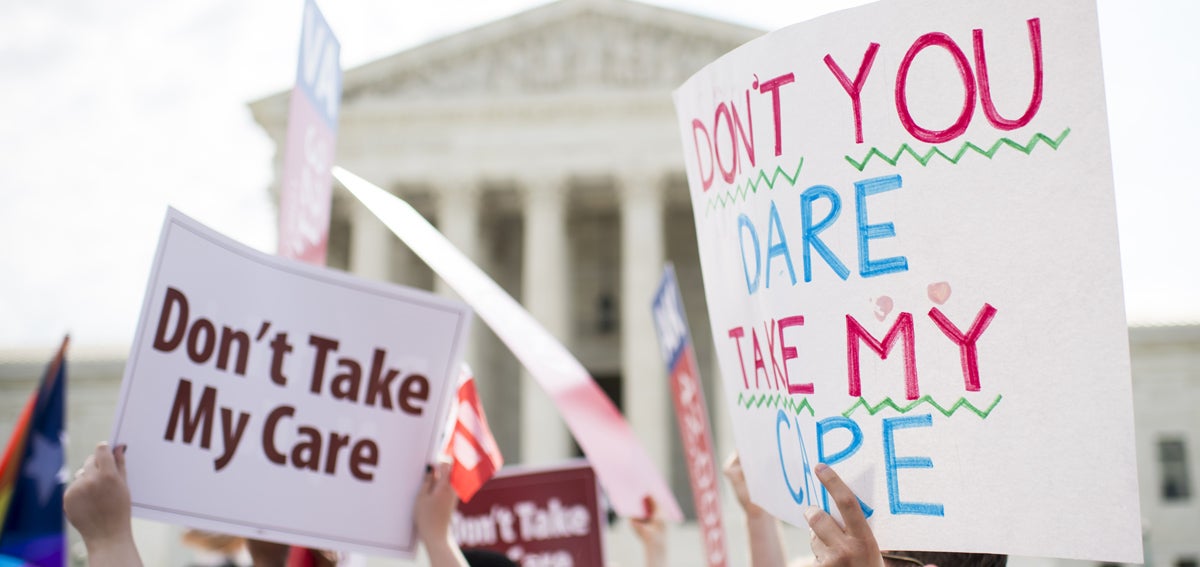
The fate of the Affordable Care Act (ACA) is once again in the hands of the US Supreme Court. On March 2, the court announced that it would hear a case challenging the health law, a wide-ranging measure that “touches the lives of most Americans, from nursing mothers to people eating at chain restaurants,” wrote Reed Abelson, Abby Goodnough, and Robert Pear in the New York Times. This will be the third time the court will rule on the ACA since President Barack Obama signed it on March 23, 2010.Essential Coverage

“The justices will review a federal appeals court decision that found part of the law . . . unconstitutional and raised questions about whether the law in its entirety must fall,” reported Robert Barnes in the Washington Post. He noted that it is one of the first cases accepted for the Supreme Court term beginning October 5, which means a decision is not likely until spring or summer of 2021.

Should the court overturn the ACA, many Americans would lose the benefits afforded under the law. As Dylan Scott wrote in Vox, “everything would go: protections for preexisting conditions, subsidies that help people purchase insurance, the Medicaid expansion.”

Let’s break down each of those categories.

Protections for Preexisting Conditions

Before the ACA, people with preexisting conditions, which included common medical conditions like asthma, diabetes, and cancer, were denied health insurance or charged higher insurance premiums. Important benefits like maternity care and mental health services frequently were carved out of the benefit packages in health plans sold in the individual market — that is, outside of employer-sponsored coverage. An issue brief (PDF) by the Department of Health and Human Services estimated that up to 133 million nonelderly Americans have a preexisting condition.

As Andy Slavitt, the former administrator of the Centers for Medicare & Medicaid Services under President Obama, wrote on Twitter, examples of being charged more included “$4,270 more for asthma, $17,060 for pregnancy, and $160,510 for metastatic cancer.”

Under the ACA, insurers are no longer allowed to deny coverage or charge higher prices to people with preexisting conditions. But if the Supreme Court rules against the ACA, these protections would vanish.

Medicaid Expansion

A key provision of the ACA is expanded eligibility for enrollment in Medicaid, a federally funded state option adopted so far by 36 states and the District of Columbia. More than 12 million adults with low incomes have gained Medicaid coverage through this provision, and research comparing expansion and nonexpansion states has linked expanded Medicaid access to better health outcomes.

According to the Urban Institute, if the ACA is repealed, “the uninsurance rate across all expansion states would increase from 9% of the nonelderly under current law to 17% under repeal. In nonexpansion states, the uninsurance rate would increase from 15% of the nonelderly to 21%.” Many of the newly uninsured would be the result of losing the Medicaid coverage the ACA provided.

“The uninsured rate for Black Americans would increase from 11% to 20% without Obamacare,” Scott reported. “There would also be a dramatic spike in uninsurance among Hispanics.”

Subsidies to Help People Purchase Insurance

To expand access to affordable health insurance for those who can’t get it through their jobs, the ACA offers federal subsidies to people with low and moderate incomes who buy insurance through the ACA insurance exchanges. The subsidies take the form of premium tax credits and cost-sharing subsidies.

Approximately 9.2 million Americans receive federal subsidies, reported Abelson, Goodnough, and Pear. “On average, the subsidies covered $525 of a $612 monthly premium for customers in the 39 states that use the federal marketplace,” they wrote.

If the ACA is overturned and the subsidies are eliminated, the cost of health insurance would become unaffordable for many of those 9.2 million people, and the uninsured population would soar.

Polls Show Public Support for the ACA

According to the February 2020 KFF Health Tracking Poll, 55% of Americans say they now favor the ACA, a new high compared to approval ratings below 40% as recently as 2016. Today 85% of Democrats express favorable views of the law, compared to 53% of independents and 18% of Republicans.

Though overall support for the health law remains partisan, many of its provisions have broad bipartisan support, KFF staff wrote in Health Affairs. For instance, large majorities of Democrats (94%), independents (88%), and Republicans (77%) have a favorable view of the ACA’s health insurance exchanges, and most Democrats (80%), independents (71%), and Republicans (54%) view the Medicaid expansion favorably.

Rising Health Costs Worsen California’s Coronavirus Threat

The global spread of the novel coronavirus disease known as COVID-19 puts threats to the ACA into perspective. Despite the coverage gains made under the ACA, nearly 28 million Americans remain uninsured, and that number would rise if the law were overturned. As Chris Sloan, associate principal at the consulting firm Avalere Health, told Caitlin Owens in Axios, we “could see uninsured or underinsured patients . . . skipping necessary treatment because they believe they can’t afford it.”

“Some lawmakers are concerned that the tens of millions who are underinsured — Americans with high deductibles or limited insurance — may also be at risk of unexpected expenses as more and more people are exposed to the virus,” Reed Abelson and Sarah Kliff reported in the New York Times.

Kristof Stremikis, director of CHCF’s market analysis and insight team, wrote in a recent blog post, “In an era when the average deductible facing a working family in California now exceeds $2,700, it’s not hard to imagine how many people missed detection and treatment opportunities because they could not afford to pay for them.”

To address some of these concerns, the California Department of Insurance (PDF) and the Department of Managed Health Care (PDF) directed all commercial health plans and Medi-Cal plans to “immediately reduce cost-sharing (including, but not limited to, co-pays, deductibles, or co-insurance) to zero for all medically necessary screening and testing for COVID-19, including hospital, emergency department, urgent care, and provider office visits where the purpose of the visit is to be screened and/or tested for COVID-19.”

Similar policies have been announced by state regulators in Washington and New York, the San Francisco Chronicle reported.


Two candidates remain: Mr. Medicare for All and Mr. Public Option

https://mailchi.mp/9e118141a707/the-weekly-gist-march-6-2020?e=d1e747d2d8

Image result for Medicare for All and Public Option

The past week in Presidential politics has been momentous—but not clarifying—for determining both the eventual Democratic nominee and the healthcare platform of the party. Between the first ballots cast in South Carolina and the last votes counted in California, the field of viable candidates for the nomination has been winnowed to two: Vermont Sen. Bernie Sanders and former Vice President Joe Biden. The coming weeks will feature a knock-down, drag-out fight for delegates in the run-up to what is likely to be a contested convention in Milwaukee in mid-July, pitting Biden’s “establishment” wing of the party against Sanders’ “progressive” wing.

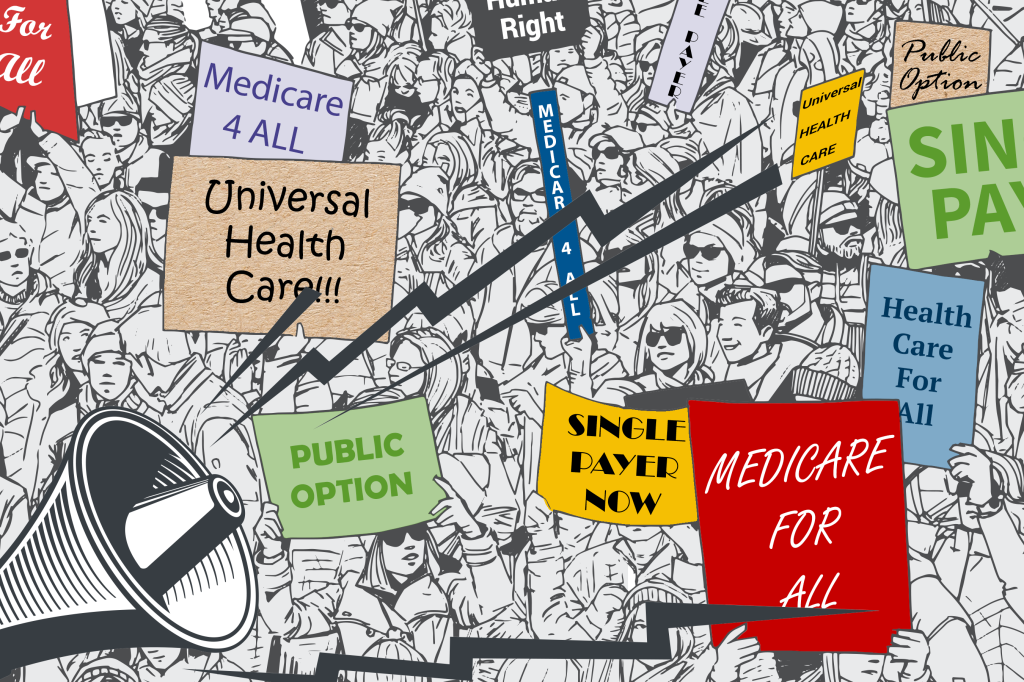
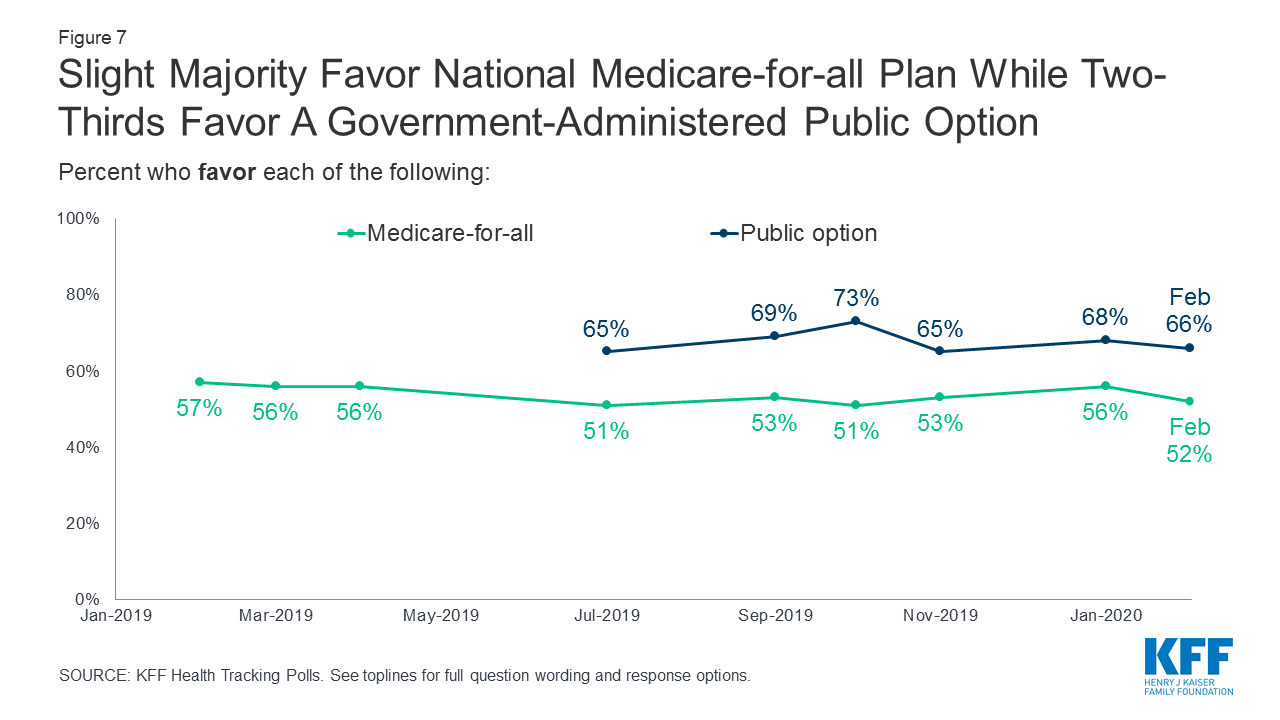
On the healthcare front, that means a continued debate between defenders of the Affordable Care Act (ACA), who want to extend coverage, as Biden does, using a government-run “public option” plan, and supporters of single-payer, “Medicare for All” (M4A) coveragewhich Sanders advocates. That’s the same argument Democrats have been having since the campaign started, and while healthcare remains the top issue of concern for primary voters, polls indicate that both plans are popular with the electorate.

We continue to believe that the public option plan is a far more likely outcome than M4A, but only if the Democrats win control of the Senate—a prospect which appears more possible given billionaire Mike Bloomberg’s post-Super Tuesday endorsement of Biden, and plans to devote his substantial campaign resources to support Democratic candidates across the ballot. Some of that money will surely be spent in Montana, where Gov. Steve Bullock is poised to announce plans to run against incumbent Sen. Steve Daines (R-MT), in a critical race that could be the most expensive Senate contest in history.

And for an indication of how the politics of a public option would play out, look no further than Colorado, where the Democratic legislature moved forward with its version of the plan this week, over the objections of the hospital and insurance lobbies.

Finally, looming over the general election campaign will be the pivotal Texas vs. California case, which the Supreme Court agreed to take up in this fall’s term. That case will ensure that healthcare will remain the centerpiece of American political debates regardless of who leads the Democratic ticket. Buckle up.


Why State Efforts to Mandate Coronavirus Testing Will Fall Short

Why State Efforts to Mandate Coronavirus Testing Will Fall Short

Image result for ERISA

To cope with incipient coronavirus outbreaks, Washington and New York have announced emergency directives requiring insurers to cover COVID-19 testing without cost-sharing. The states recognize that high deductibles and other out-of-pocket payments discourage people from getting tested, which in turn threatens public health.

Both states have acted pursuant to laws governing the regulation of insurance. In Washington, for example, the state insurance commissioner is empowered to issue orders addressing “medical coverage to ensure access to care” when the governor declares an emergency. Similarly, New York’s Superintendent of Financial Services says that it will issue an “emergency regulation” to require insurers to cover testing without cost-sharing (though the precise authority to issue that regulation is a little vague).

But the directives are more limited in scope than they appear, and will provide no help at all to the approximately 100 million people nationwide who receive coverage through self-insured employers. As with so many problems that arise in health law, the reason is the Employee Retirement Income Security Act of 1974 (ERISA).

When Congress adopted ERISA, it wasn’t thinking very hard about health insurance. It was thinking about pension plans, which many employers had chronically underfunded, leaving retired employees high and dry. So Congress adopted ERISA to offer some basic protections for employees. In exchange, Congress preempted any state laws that “relate to” employee benefit plans.

Congress carved out an exception to ERISA’s broad preemptive scope for laws regulating insurance. That’s a domain that’s traditionally been left to the states. Washington and New York can thus tell private insurers—including those that offer employer-sponsored coverage—to abide by their emergency rules.

But lots of firms don’t actually buy insurance for their employees. Instead, larger firms usually “self-insure,” meaning that they pay for their employees’ health expenses themselves. (Odds are that, if you’re employed, you work at a self-insured firm—61% of people with employer-sponsored coverage do.) And ERISA clarifies that employers, when they self-insure, aren’t to be treated as insurers.

The upshot of this convoluted scheme is that the states can’t regulate self-funded employer plans. They’re regulated, instead, by the U.S. Department of Labor under ERISA. But because Congress didn’t think of ERISA as a regulation of health insurance, it didn’t authorize the kind of emergency health regulations that Washington and New York are now drawing on.

That’s one reason the federal government has looked so feckless when it’s tried to say that it will guarantee access to testing. Vice President Pence, for example, said yesterday that testing is an “‘essential health benefit,’ which means the test will be covered by health insurance plans, Medicare and Medicaid.”

But the EHB rules don’t apply at all to large employers or to Medicare. Even if they did, insurers can (and do!) impose cost-sharing for EHBs, and could do so for a COVID-19 test. It’s a completely meaningless statement.

Nor can the federal government slide coronavirus testing into the part of the Affordable Care Act that requires coverage without cost-sharing for high-quality preventive services designated by the U.S. Preventive Services Task Force. Not only is that task force ill-equipped to move quickly, but the ACA says that its recommendations can only take effect after a “minimum interval” that “shall not be less than 1 year.” That’s much too late.

Unless I’m missing something, the federal government simply does not have the legal power to require employers to cover coronavirus testing without cost-sharing. The Association of Health Insurance Plans has said that its members may voluntarily waive cost-sharing, but they may not, and in any event AHIP doesn’t represent employers, who get to make the final call on what they do and don’t cover.

Congress will have to act—and it should act immediately to assure swift, reliable, and no-cost access to testing services. The broader lesson, though, is that Congress’s blunderbuss approach to preemption under ERISA has led to a situation in which neither the states nor the federal government is equipped to regulate the coverage practices of large, self-insured employers. That gap in legal authority could have pernicious consequences in the coming months.


Ever-Rising Health Costs Worsen California’s Coronavirus Threat

Ever-Rising Health Costs Worsen California’s Coronavirus Threat

Image result for Ever-Rising Health Costs Worsen California’s Coronavirus Threat

As California and the nation prepare for the spread of the new coronavirus disease known as COVID-19, it is important to be reminded of another significant threat to the health of our people: the high costs of health care.

It is striking that one of the first steps policymakers must consider in the wake of an outbreak is waiving consumer cost sharing such as copays and co-insurance for coronavirus testing and treatment. Why? We’ve known for decades that the use of patient cost sharing is a blunt instrument that leads people to skimp on necessary services. In an era when the average deductible facing a working family in California now exceeds $2,700, it’s not hard to imagine how many people missed detection and treatment opportunities because they could not afford to pay for them.

The discussion around COVID-19 cost sharing is a reminder that coronavirus testing and treatment is not the only thing Californians forgo because of cost. The latest CHCF health policy poll found that in the last year, more than half of California families delayed or skipped care due to cost, including avoiding recommended medical tests or treatments, cutting medication doses in half, or postponing physical or mental health care. These practices are spreading, and they are making us sicker. Forty-three percent of those who postponed care said it made their conditions worse.

A close look at the survey data (PDF) shows that many Californians experience these problems, regardless of their health insurance status, income, or residence in high- or low-cost regions. And worries over health care costs are even more widely shared. More than two-thirds of state residents are worried about medical bills and out-of-pocket costs, including almost 60% of those with employer-sponsored insurance. These concerns reflect two unfortunate realities: We are all vulnerable to disease, and no one is immune from ruinous medical bills because of it.

A key reason for the growth in cost-related problems and worries for California families is the rise in underlying expenses within our health care system. Economists point to several factors that drive systemwide expenses, including new medical technologies and Californians’ health status. But none of these factors explains away the overall rise and dramatic variation in prices for the same procedures in different parts of the state, even after controlling for the complexity of the procedure and underlying costs like physician wages.

CHCF surveys of employer-sponsored insurance over the last decade show how much of this rise is being shifted to working California families in the form of higher insurance premiums and deductibles. The chart below shows the cumulative increase of inflation and wages along with premiums and deductibles for the average California family covered by a preferred provider organization (PPO) in a workplace health plan. While wage growth has barely kept pace with inflation, family premiums increased at more than twice that rate. It is especially striking that deductibles increased almost four times as much as wages.

California will not be an affordable place to live and raise a family unless it confronts the problem of unjustified, underlying health care costs. Expanding health insurance coverage, increasing subsidies, and limiting out-of-pocket expenses solve immediate problems, but sustained progress demands that we reduce systemwide expenditures for services that are not making Californians any healthier. Evidence suggests the opportunity for savings is significant.

In his state budget (PDF) released in January, California Governor Gavin Newsom proposed establishing an Office of Health Care Affordability to address underlying health care cost trends and to develop strategies and cost targets for different sectors of the health care industry. Other states have established offices or cost commissions of this type. A recent CHCF publication examined how four states have structured and empowered their commissions to successfully do this work.

As we confront the public health threat of COVID-19, we must remember that widespread cost-related access problems and worries already afflict most families in the state. In ways that few people anticipated before this year, this cost issue isn’t just a problem for strapped families — it’s a threat to the well-being of every last one of us.


High-priced specialty drugs: Exposing the flaws in the system

https://theconversation.com/high-priced-specialty-drugs-exposing-the-flaws-in-the-system-129598

Image result for High-priced specialty drugs: Exposing the flaws in the system

My husband, Andy, has Parkinson’s disease. A year ago, his neurologist recommended a new pill that he was to take at bedtime. We quickly learned that the medication would cost US$1,300 for a one-month supply of 30 pills. In addition, Andy could obtain the drug from only one specialty pharmacy and would have to use mail order.

This was our introduction to specialty drugs.

These medications are becoming increasingly common, though many Americans are unfamiliar with the term. In 2018, the Food and Drug Administration approved 59 new medications, of which 39 are considered specialty drugs.

Specialty drugs are generally high-cost drugs requiring special handling such as refrigeration or injection, though Andy’s did not. They treat complex conditions such as cancer and multiple sclerosis.

Specialty drugs are often available only through specialty pharmacies. In addition to filling prescriptions, these outlets provide educational and support services to patients. For example, they provide refill reminders and help patients learn how to inject their drugs.

In a forthcoming articleprofessor Isaac Buck and I argue that specialty drugs raise significant legal and ethical questions. These merit attention from the public and policymakers.

Specialty drug concerns

First, the term “specialty drug” is somewhat elusive and has no clear definition. In addition, government authorities and medical experts are not the ones who decide whether a medication is designated a specialty drug. Rather, the decision is entirely up to pharmacy benefit managers, or PBMs.

PBMs administer health plans’ drug benefit programs and thereby serve insurers. PBMs have been criticized for driving up health care costs. Drugs that are specialty drugs under one insurance policy are sometimes classified differently in other policies. Furthermore, some specialty drugs are simple pills that do not involve complicated instructions, and thus, it is unclear why they are categorized as specialty drugs.

The second problem is the very high cost of specialty drugs. The average price tag of the more than 300 medications that are considered specialty drugs is approximately $79,000 per year. Almost half of the dollars that Americans pay for medications are spent on specialty drugs. In fact, Medicare spent $32.8 billion on specialty drugs in 2015.

Because of these exorbitant costs, some insurers have created what they call a “specialty tier” in their health plans. In this tier, patients’ cost-sharing responsibilities are higher than they are for medications in other tiers. If your drug is placed in a specialty tier, your coinsurance payment, or the percentage of cost that you pay, may be 25% to 33% of the drug’s price.

This leads to a situation in which you may have the least generous insurance coverage for your most expensive drugs. Under some plans you might pay $10 per month for generic drugs but hundreds of dollars per month for specialty drugs. This can translate into many thousands of dollars in annual out-of-pocket costs, even for consumers with good health insurance. There are no federal regulations in the U.S. that limit drug prices or insurers’ tiering practices.

Conflict of interest and patient choice

A third problem is conflict of interest. PBMs own or co-own the top four specialty pharmacies in the U.S., which are responsible for two-thirds of nationwide specialty drug prescription revenues.

PBMs frequently require patients to purchase their medications from the specific specialty pharmacy that they own. Thus, PBMs have much to gain from designating medications as specialty drugs. Doing so may lead to significant revenues in the form of purchases at PBM-owned specialty pharmacies.

A related problem is the limiting of patient choice. Many specialty pharmacies fill prescriptions only through mail order. Consequently, patients may be restricted to using just one pharmacy and be forced to rely on the mail for delivery.

Some patients enjoy the convenience of home delivery. Others, however, prefer the traditional approach of visiting a drugstore in person. They may worry that the mail will be late, their package will be stolen, or they will be out of town when the drugs arrive. Yet, such patients do not have the option of a brick and mortar pharmacy.

Possible corrective measures

Both political parties have stated that health care costs are a priority for them. However, they have shown a limited appetite for tackling this herculean problem.

The House recently passed a bill that would enable the federal government to negotiate prices with drug manufacturers. Such negotiations could well lower specialty drug prices. The Senate, however, is unlikely to approve the bill, and Congress is unlikely to pass sweeping legislation in a divisive election year.

There has been more success at the federal level in promoting consumer choice. Medicare rules establish that Medicare plans may not force participants to use mail-order pharmacies.

In the meantime, individual states offer useful solutions. For example, some have provided patients with relief in the form of capping out-of-pocket costs. California limits consumers’ expenditures to $250 or $500 for a 30-day supply, depending on the drug type.

At least 15 states also have pharmacy choice statutes. Several ban PBM mandates that prevent patients from freely selecting their preferred qualified pharmacy. Many ban mail-order only requirements.

Some states have recognized that PBMs should not be entirely free to designate medications as specialty drugs. Because such designations can significantly disadvantage patients and may increase patients’ costs, such states have statutory definitions for the term “specialty drug.”

They generally mandate that the drug require special administration, delivery, storage or oversight. Such requirements may justify purchase from a specialty pharmacy. However, drugs without complicated instructions should not be deemed specialty drugs.

One more option that some insurers have already adopted is allowing patients to obtain just a few pills or doses for an initial trial period. Sometimes individuals quickly learn that they cannot tolerate a medication or that it is ineffective. Such “partial fill” programs can spare patients the exorbitant cost of a full 30-day specialty drug supply.

Specialty drugs contribute significantly to the American health care cost crisis. Additional state, or better yet, federal laws should be enacted to constrain PBMs’ authority over specialty drugs. We need further regulation concerning drug classification, pricing, conflicts of interest and patient choice.


Five Healthcare Industry Changes to Watch in 2020

https://www.managedhealthcareexecutive.com/news/five-healthcare-industry-changes-watch-2020

Innovation

Industry experts expect significant changes to shake up the healthcare landscape in the next few years, which will affect both health insurers and providers. Many are the result of a shift toward value-based care, a move toward decreased care in hospital settings, technological advances, and other forces.

Here’s a look at what can payers and providers can expect to occur, why each change is occurring, and how payers and providers can prepare for each change:

1. A shift in healthcare delivery from hospital to ambulatory settings

Healthcare delivery will continue to move from inpatient to outpatient facilities. “More surgeries and diagnostic procedures that historically have required an inpatient hospital stay can now be performed more safely and efficiently in an outpatient setting,” says Stephen A. Timoni, JD, an attorney and partner at the law firm Lindabury, McCormick, Estabrook & Cooper, in Westfield, New Jersey, who represents healthcare providers in areas of reimbursement and managed care contracting. A growing volume of outpatient care will be provided in ambulatory surgery centers, primary care clinics, retail clinics, urgent care centers, nurse managed health centers, imaging facilities, emergency departments, retail clinics, and patients’ homes.

This change is occurring as the result of clinical innovations, patient preferences, financial incentives, electronic health records, telemedicine, and an increased focus on improving quality of care and clinical outcomes. “The upward trend in value-based payment models is also influencing this shift, with the goal of reducing the cost of care and improving the overall patient experience,” Timoni says.

Payers and providers can prepare for this shift by analyzing and forecasting the cost and reimbursement implications of providing care in outpatient settings compared to inpatient settings. They should continue to analyze changing patient demographics, consumer preferences, and satisfaction trends, Timoni says. Collecting and analyzing data regarding quality and clinical outcomes as the result of changes in delivery of care from inpatient to outpatient is also key. Healthcare providers should develop effective strategies to grow capacity and infrastructure for outpatient services and invest in innovative mobile technologies, diagnostic tools, and telemedicine systems.

2. Consolidation will continue industry wide

More healthcare entities will continue to merge together. “Even though the number of available partners for transactions is shrinking, new deals pop up all the time because smaller entities are being targeted or entities that had been holding out are now changing their position,” says Matthew Fisher, JD, partner and chair of the Health Law Group at Mirick O’Connell, a law firm in Westborough, Massachusetts. Increased consolidation will result in higher healthcare prices as larger sized institutions use their size to their advantage. Another impact will be narrowing the field of contracting options, which will result in greater dominance by fewer entities in a market.

This change is occurring because industry stakeholder believes that consolidation is the way to survive in a healthcare landscape still being shaped by the ACA. “The belief is that value-based care models require single unified entities as opposed to more contractual-based ventures to succeed,” Fisher says. Another factor is that momentum for consolidations across the industry has continued to build and no player wants to be left behind.

Along these lines, Timoni says that consolidation has been motivated by the evolving and challenging commercial and government reimbursement models which include lower fee-for-service payment rates, value-based payment components, and incentives to move care from inpatient to outpatient settings. “Basic economic theory suggests that consolidation of hospitals and physicians enables these combined providers to charge higher prices to private payers as the result of a lack of competition,” Timoni says. “Likewise, combined insurers are able to charge higher premiums to their subscribers.”

Payers and providers can prepare for this change by evaluating their operations and determining whether consolidation with another entity is advantageous. “This requires assessing an entity’s operations and the risks of consolidation,” Fisher says.

Timoni advises payers and providers to monitor the consolidation landscape and develop effective merger and acquisition strategies. These strategies should focus on optimizing economies of scale to reduce costs and finding the best partners to achieve improved quality of care and effectively manage population health.

3. Protecting data privacy

Ongoing attention will be given to protecting the privacy of healthcare data. New laws, at both the federal and state levels, will be considered that could introduce new regulatory requirements, Fisher says.

While a federal law in an election year may be doubtful, individual states are proceeding. The California Consumer Protection Act (CCPA), intended to enhance privacy rights and consumer protection, will become effective in 2020, for example. Even though the CCPA doesn’t cover all healthcare data, healthcare organizations will still collect additional information that could be subject to CCPA, which means more compliance obligations, Fisher says. Other states are considering how to jump on the privacy legislation bandwagon, which means that regulatory requirements will increase. “Even in the absence of legislation, payers and providers can expect individuals to assert concerns and use public pressure to drive increased attention to privacy issues,” Fisher says.

Meanwhile, debates around what is meant by privacy continue to evolve, Fisher continues. A backlash against the non-transparent sharing of healthcare data and arguable profiteering is creating anger among patients and other groups. Simultaneously, data breaches continue to be reported on a daily basis. Add in that healthcare is a prime target, and all of the factors point to healthcare needing to do more to protect data.

Payers and providers can embrace increased data privacy by focusing on existing compliance efforts, which will require taking time to better understanding HIPAA. “Ignoring or only making superficial efforts to respect data privacy is insufficient,” Fisher says. “Merely doing what is legally permissible may not be good enough.”

4. Consumerization of healthcare

As patients assume more financial responsibility for their healthcare costs due to higher premiums, co-pays, co-insurance, and deductibles, they have become more concerned with the value of the care they receive as well as cost. Patients will likely demand improved access to clearer benefits, billing, and network information to improve transparency, says Brooks Dexter, MBA, Los Angeles-based managing director and head of the healthcare M&A advisory practice at Duff & Phelps, a global consultancy firm.

“Healthcare providers must follow suit to meet value expectations and deliver more consumer-friendly services or may risk losing market share to innovative new healthcare arrangements, such as direct primary care, which offer convenient and quality care with simplified medical billing,” Dexter says. Some ways to do this are to offer better patient portals, expanded hours, improved access, and clear procedure pricing. Despite the trend, payers and providers will most likely continue to resist CMS’ efforts to force greater cost transparency by requiring hospitals to post payer-specific negotiated charges for common services that can be shopped.

Furthermore, Peter Manoogian, principal at ZS, a consulting firm focused on healthcare in Boston, says that the voices of older adults will become comparatively louder as this rapidly growing segment becomes more tech-savvy. The Trump Administration supports increased use of Medicare Advantage and expanding consumer choices. Plan options will reach a record high this year and create an unprecedented amount of choices for this population. The average number of plans a beneficiary has access to this year will be 28, up by a whopping 50% from 2017. What’s more, new entrants that boast a customer-driven approach such as Oscar Health are entering the fray in major markets such as New York and Houston.

Health plans need to be laser focused on improving their understanding and engagement of their customers—who are evolving themselves. “To stay ahead of the change, health plans need access to the right data coupled with leading-edge analytics and technology to continuously mine insights on what members are seeking in their healthcare experience, how patients and providers interact throughout their healthcare journey, and how to meet the needs of future healthcare customers,” Manoogian says.

Health plans will need to take more of a retail focus than what they’re accustomed to, Manoogian says. The bar for providing a great experience and retaining members will also increase.

5. More technological innovations will emerge

Technological innovation will continue to dramatically and rapidly change the manner in which healthcare is delivered, resulting in more personalized care, improved clinical outcomes and patient experience, and overall quality of life. “Information systems, mobile technology, high-tech digital devices, and electronic medical records will allow payers and providers to accurately measure clinical outcomes and effectively manage the continuum of medical care and their population’s overall health,” Timoni says.

One specific way that care will change is that providers will start seeing telehealth play a more critical role in care delivery as the brick-and-mortar, in-person care model becomes less common. “Telehealth will grow past a nice-to-have tool into a standard of care, particularly for low-risk and predictable appointments,” says Cindy Gaines, MSN, RN, clinical leader, Population Health Management, Philips, a company focused on transforming care through collaborative health management in Alpharetta, Georgia. This transformation will enable providers to better tailor their care to patients’ unique needs, while increasing patient autonomy and engagement.

Technological innovations are occurring due to booming private sector interest and investment in medical technology innovation. “Patients are demanding real-time health information, personalized medicine, higher quality of care, and convenient treatment options,” Timoni says. “Payers are demanding more detailed and expansive outcomes data to scientifically manage the reimbursement system to lower costs and improve their subscribers’ health. The medical and information technology fields are attracting more high-skilled workers, who will continue to drive innovation to new levels as long as investor interest is sustained.”

Regarding the increased use of telehealth, Gaines says that many appointments that occur in a hospital today can take place outside of the hospital. And, as the healthcare industry increasingly moves toward value-based care, providers need to extend their line-of-sight outside of a hospital’s four walls. For example, a low-risk follow-up appointment after an operation is usually mostly dialogue and has a predictable outcome—it could be conducted electronically. “By filling up hospitals with visits that could occur virtually, it makes it harder for patients who need face-to-face healthcare access to get it,” she says.

A lack of insurance coverage is a major impediment to telehealth adoption for most health systems. Therefore, providers should pair guaranteed reimbursement opportunities with change management workflows to advance these efforts, Gaines says. They would also be smart to leverage their patients’ everyday devices to manage their care, whether it’s on their smart phone, a fitness watch, or voice assistant.

To embrace technological innovation, payers and providers must continue to be educated and aware of the expanding medical technology landscape and develop technology investment and deployment strategies. “Consider investing and participating in technology venture capital funds and partnering with private sector technology manufacturers and research institutions,” Timoni says.


Miami man with ‘junk plan’ owes thousands after hospital visit for coronavirus symptoms

https://www.beckershospitalreview.com/finance/miami-man-with-junk-plan-owes-thousands-after-hospital-visit-for-coronavirus-symptoms.html?utm_medium=email

Image result for skinny health plans

A man in Miami went to Jackson Memorial Hospital last month to receive a test for coronavirus after developing flu-like symptoms. He didn’t have the virus, but he was hit with a $3,270 medical bill, according to the Miami Herald.   

Osmel Martinez Azcue said he normally would have used over-the-counter medicine to fight his flu-like symptoms. However, since he had recently visited China, he followed the advice of public health experts and went to the hospital to get tested for coronavirus, known as COVID-19. 

Mr. Azcue said hospital staff told him a CT scan would be necessary to screen for coronavirus. He asked to receive a flu test first. The flu test came back positive.

A few weeks after leaving Jackson Memorial Hospital, Mr. Azcue received a $3,270 medical bill. Though he was insured, Mr. Azcue had a so-called “junk plan,” which offered limited benefits and didn’t cover pre-existing conditions.

Based on his insurance plan, Mr. Azcue is responsible for $1,400 of the bill, hospital officials told the Miami Herald. However, to get the claim covered, Mr. Azcue said his insurance company requested three years of medical records to show that his flu didn’t relate to pre-existing conditions.

The sale of “junk plans,” like the one Mr. Azcue pays $180 per month for, expanded after President Donald Trump’s administration rolled back ACA regulations in 2018.

Access the full Miami Herald article here.


Half of insured adults are skipping primary care visits. Cost a major reason why

https://www.beckershospitalreview.com/finance/half-of-insured-adults-are-skipping-primary-care-visits-cost-a-major-reason-why.html?utm_medium=email

Image result for Half of insured adults are skipping primary care visits. Cost a major reason why.

In a given year by 2016, almost 50 percent of adults with commercial insurance hadn’t visited a primary care physician, according to a study published in the Annals of Internal Medicine.

For the study, researchers from Harvard Medical School in Boston, the Icahn School of Medicine at Mount Sinai in New York City and the University of Pittsburgh School of Medicine wanted to better characterize primary care declines among adults. To do so, the study authors analyzed deidentified claims data from a national private insurer that covers roughly 20 million members each year, according to NPR.

They found from 2008-16, adult visits to primary care physicians fell by nearly 25 percent. The decline was largest among younger adults. The proportion of adults with no visits to primary care physicians in a given year climbed from 38.1 percent to 46.4 percent within the same period.

While the number of preventive checkups rose — likely because the ACA made the appointments cost-free — problem-based visits, such as going to a primary care physician for sickness or injury, declined more than 30 percent, according to NPR.

Problem-based visits saw out-of-pocket costs increase 31.5 percent during the study period, which could have affected the decline, according to researchers. Additionally, visits to alternative sites like urgent care clinics grew by 46.9 percent in the study period.

“Our results suggest that this decline may be explained by decreased real or perceived visit needs, financial deterrents, and use of alternative sources of care,” the study authors concluded.